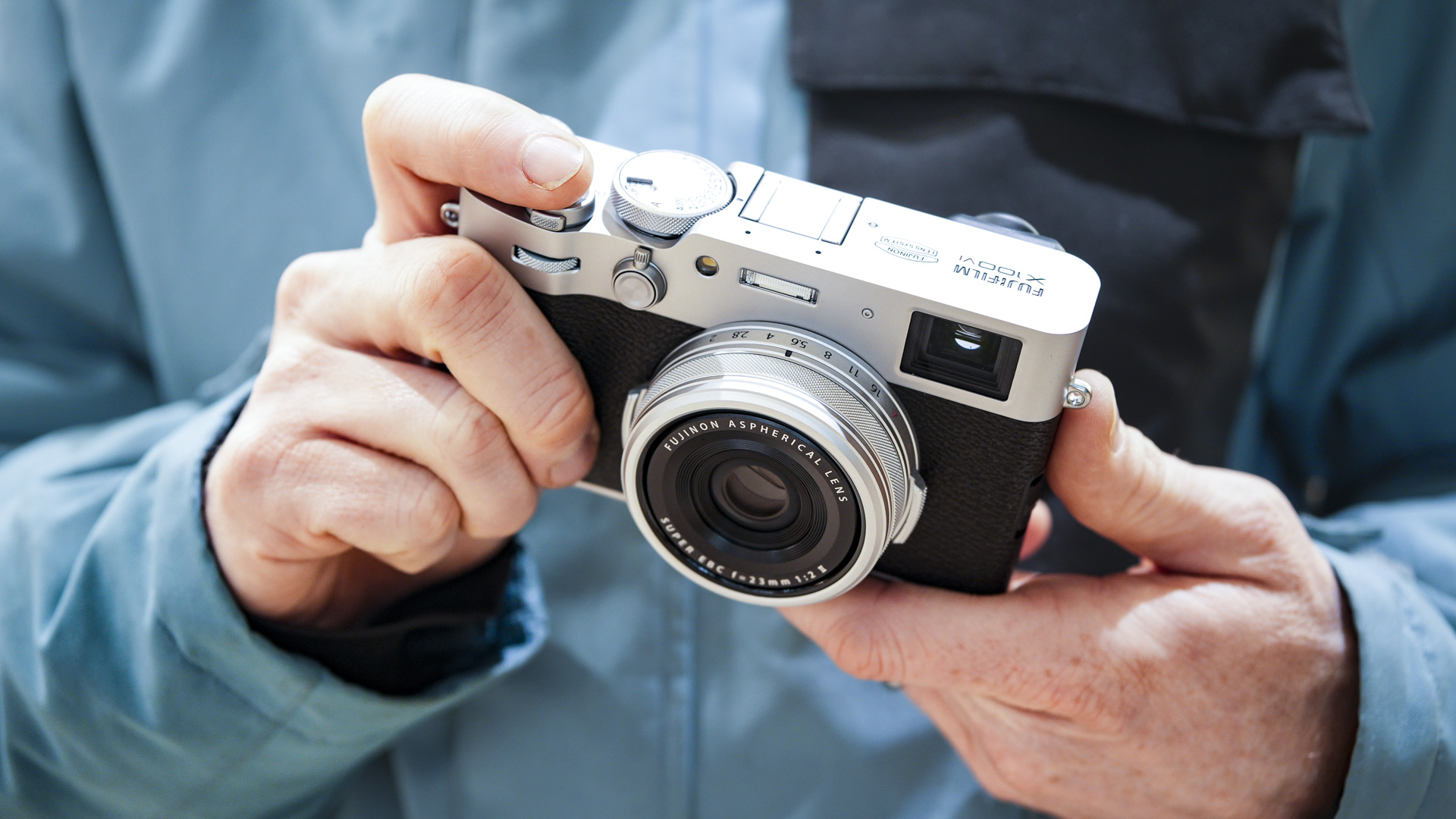

Travel photography demands a camera that slips into a jacket pocket, starts up instantly, and makes you want to bring it everywhere. A phone can do a lot, but true optical zoom, a bigger sensor, and dedicated controls still separate a keepsake from a snapshot. We spent weeks shooting with nine compact cameras to find the best compact camera for travel right now, from pocket-sized superzooms to mirrorless kits that barely tip the scales. The winner is the Panasonic Lumix ZS99, a tiny body with a 30x Leica zoom that actually works, but the right choice depends on whether you value reach, image quality, or absolute simplicity.
Comparison table
| # | Product | Award | Optical Zoom | Max Video | Weight | Best for |
|---|---|---|---|---|---|---|
| 1 | Panasonic Lumix ZS99 | Best overall | 30x (24-720mm) | 4K UHD 30p | Pocket-size | All-in-one travel zoom |
| 2 | Canon PowerShot SX740 HS | Best zoom range | 40x | 4K UHD | 1 lb | Wildlife and concerts |
| 3 | Canon EOS R100 Mirrorless Kit | Best image quality | Lens dependent | 4K 24p | Lightest R series | Creative shooting |
| 4 | Canon EOS Rebel T7 DSLR Kit | Best for learners | 3x (kit lens) | Full HD 1080p | 1.04 lb | First real camera |
| 5 | Kodak Pixpro FZ55 | Best value | 5x | Full HD 1080p | 3.7 oz | Budget travel companion |
| 6 | Kodak Pixpro FZ45 (Black) | Best for AA batteries | 4x | Full HD 1080p | 4.1 oz | Emergency backup |
| 7 | Kodak Pixpro FZ45 (White) | Same, white color | 4x | Full HD 1080p | 4.1 oz | Style preference |
| 8 | AUREAPIX 8K Vlogging Camera | Most features for the spec | 20x digital | 8K claimed | Ultra-compact | Experimenters |
| 9 | Duluvulu 4K Vlogging Camera | Cheapest flip screen | 16x digital | 4K claimed | Compact | Teens and beginners |
1. Panasonic Lumix ZS99: Best overall
Pros
- 30x optical Leica zoom that's actually sharp across the range
- Pocketable body that slides into a jeans coin pocket
- Tiltable 1, 840k-dot touchscreen for odd angles
- 4K video and 4K Photo burst at 30fps
- USB Type-C charging
Cons
- Small sensor can struggle in very low light
- Digital zoom beyond 30x is useless
Best for: anyone who wants one camera for everything from wide landscapes to stage shots.
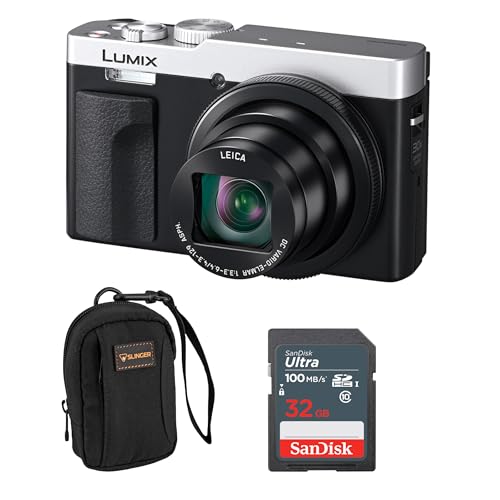
The first time you slide the ZS99 into a jeans pocket, you realize how far travel cameras have come. This is a 24-720mm equivalent zoom that fits where most phones sit. The Leica lens is no marketing ornament; at 24mm there's barely any barrel distortion, and at the long end you can read a street sign four blocks away. Image stabilization keeps handheld shots steady at 200mm, though you'll want a monopod at the full 720mm.
The 20.3MP sensor is the same resolution as Canon's SX740, but Panasonic's processing gives you more usable shadows. You can comfortably shoot up to ISO 1600 for evening cityscapes. The 4K video at 30p is smooth and uses the full width of the sensor. There's a dedicated 4K Photo mode that grabs 8MP stills at 30fps, perfect for capturing a jumping wave or a grandkid's first step.
Where the ZS99 crushes the competition is in handling. The tiltable touchscreen is bright enough to see in direct sun, and the menu is logical. USB Type-C means one cable charges your camera and your laptop. Bluetooth 5.0 pairs to the Panasonic Image App for instant transfers. If you're looking for a camera that disappears into your bag and covers every focal length you'll need, this is it. Its main rival is the Canon PowerShot SX740, which has a longer zoom but an older sensor and no touchscreen. The ZS99 feels more modern.
The weakness is low light. A 1/2.3-inch sensor is physically limited, so you'll see noise past ISO 3200. If you frequently shoot evening street photography, the Canon R100 will give you cleaner files. But for daylight adventures, museums, and the occasional indoor dinner, the ZS99 handles it all without asking you to swap lenses or carry a second bag. It is the best compact camera for travel in this lineup.
For even more pocket-friendly options, read our roundup of the best small camera for travel.
2. Canon PowerShot SX740 HS: Best zoom range

Pros
- 40x optical zoom covers 24-960mm equivalent
- 4K UHD video with time-lapse mode
- Built-in Wi-Fi and Bluetooth for sharing
- Lightweight for the range
Cons
- No touchscreen; older button interface
- Small sensor shows noise at high ISO
Best for: reaching across a stadium or spotting wildlife at the edge of a national park.
The SX740 is the zoom king among pocket cameras. Its 40x optical lens reaches 960mm, which is enough to fill the frame with a mountain goat on a distant ridge or get a tight headshot of a performer from the tenth row. The optical image stabilization gives you a fighting chance at the long end, though you'll still need steady hands.
The 20.3MP CMOS sensor and DIGIC 8 processor produce punchy JPEGs straight out of camera. Colors are saturated in a way that pleases most travelers without looking fake. The 4K video is sharp, and the 4K time-lapse mode is a nice touch for capturing sunsets without needing a separate app. Wi-Fi and Bluetooth let you push images to your phone, and the Camera Connect app is reliable.
Compared to the Panasonic ZS99, the SX740 lacks a touchscreen. You navigate with buttons and a four-way controller, which feels dated. The screen doesn't tilt, so overhead or ground-level shots require guesswork. The sensor is the same size, so image quality is similar in good light and equally weak in dim scenes.
Who should get this? Anyone whose travel plans involve wildlife safaris, concert tickets, or sporting events. The extra 240mm over the ZS99 can mean the difference between a photograph and a blurry dot. But for everyday walkaround shooting, the ZS99's better interface and tilting screen make it a more pleasant companion.
If you primarily shoot still life and architecture, our guide to the best point and shoot camera covers alternatives with larger sensors.
3. Canon EOS R100 Mirrorless Kit: Best image quality

Pros
- Bigger APS-C sensor for cleaner shots in low light
- Interchangeable lenses for future growth
- Dual Pixel CMOS AF with face and eye detection
- 4K video recording
- Lightest Canon R series body
Cons
- Kit lens reach is limited to 72mm equivalent
- No image stabilization in body
- 4K video has a crop factor
Best for: someone ready to step up from phone photography without lugging a full DSLR.
The R100 is the gateway to Canon's mirrorless system. It uses the same 24.1MP APS-C sensor found in more expensive R-series cameras, which means significantly better dynamic range and high-ISO performance than any 1/2.3-inch point-and-shoot. In a dim cathedral or a rainy evening market, the R100 will produce usable images where the ZS99 and SX740 give up.
The included 18-45mm lens (29-72mm equivalent) is compact and retracts to a tiny package, but it's slow at f/4.5-6.3. You'll need to bump ISO inside, which the sensor handles gracefully. Autofocus is snappy with Dual Pixel CMOS AF, and face/eye detection locks onto subjects reliably. The 6.5 fps burst is enough for action.
The R100 lacks in-body stabilization, so you rely on the lens or your own bracing. The 4K video has a 1.5x crop, turning the 18-45mm into a 44-108mm field of view, less ideal for wide-angle selfies. Battery life is modest, around 300 shots per charge.
Against the Rebel T7, the R100 is smaller, lighter, and offers a better shooting experience with the EVF and live view. Against the ZS99, it loses the zoom range but gains image quality that you can print large. If you prioritize image quality over a long lens, the R100 is the pick. It's also a great foundation for buying better lenses later.
For more on versatile sensor sizes, see our guide on the best camera for travel photography.
4. Canon EOS Rebel T7 DSLR Kit: Best for learners

Pros
- 24.1MP APS-C sensor delivers great image quality
- Optical viewfinder for all-day battery life
- Built-in Wi-Fi and NFC for easy sharing
- Affordable way into Canon's EF/EF-S lens system
Cons
- Bulky and heavy compared to any compact
- No 4K video, only Full HD
- Kit lens is slow and short
Best for: a first-time DSLR buyer who wants to learn photography on a budget.
The Rebel T7 is a classic entry-level DSLR. It has the same sensor as the R100 but in a larger, more traditional body with an optical viewfinder. That pentamirror finder uses no battery, which gives the T7 exceptional stamina, Canon rates it at 500 shots per charge. For a week-long trip where you might not have daily access to power, that's a real advantage.
The 18-55mm kit lens (29-88mm equivalent) is basic but capable in good light. You can swap it for a 55-250mm telephoto zoom for wildlife or a 24mm f/2.8 pancake for a more compact setup. The EF lens lineup is huge and cheap used. The 9-point AF system is old but works fine for non-moving subjects.
Video is limited to Full HD at 30fps, and there's no 4K. The optical viewfinder is a blackout-free experience but shows only 95% frame coverage. Live view is sluggish. The T7 feels behind the times compared to the R100.
If you're on a strict budget and want interchangeable lenses, the T7 is a proven workhorse. But consider whether you really need a DSLR. The R100 is smaller, has 4K, and is easier to carry. Only choose the T7 if you prefer an optical viewfinder or need the battery stamina.
5. Kodak Pixpro FZ55: Best value

Pros
- 5x optical zoom for flexible framing
- Works with rechargeable Li-ion battery
- Compact and lightweight at 3.7 oz
- Accepts SD cards up to 512GB
Cons
- Small sensor and fixed lens
- No viewfinder; LCD only
- Build feels plasticky
Best for: travelers who want a dedicated camera without spending much.
The FZ55 is Kodak's entry-level compact. It has a 16MP sensor, a 5x optical zoom starting at 28mm equivalent, and records Full HD video. For under the price of a good dinner out, you get a simple, working camera. The rechargeable battery is a plus over the FZ45's AA requirement.
Image quality is fine in bright sun, but the small sensor struggles indoors. The 2.7-inch LCD is low resolution and washes out in direct light. There's no optical image stabilization, so handheld shots at full zoom can blur. But for kids' birthdays, holiday snapshots, or a backup camera, it does the job.
The FZ55 is the best-selling compact on Amazon for good reason: it's affordable and simple. It won't win any awards for image quality, but it will take a picture when a phone is out of battery or you want optical zoom. It's not for a serious photographer, but for a casual traveler it's a decent companion.
6. Kodak Pixpro FZ45 (Black): Best for AA batteries

Pros
- Uses standard AA batteries, easy to replace worldwide
- 4x optical zoom with 27mm wide angle
- Very lightweight at 4.1 oz
- Works with up to 512GB SD cards
Cons
- Only 4x zoom, shorter than FZ55
- AA batteries drain quickly; use rechargeable NiMH
- Same small sensor and no stabilization
Best for: remote travel where you can't rely on USB charging.
The FZ45 is almost identical to the FZ55 but with a key difference: it runs on two AA batteries. That matters on a long trek in a developing country where you can buy alkalines at any corner shop. The trade-off is that AA batteries have lower capacity. Two AAs might last 200 shots, whereas the FZ55's Li-ion will do 300.
The 4x optical zoom starts at 27mm, slightly wider than the FZ55's 28mm. Video is Full HD. Build and performance are the same. If you want the black color and AA convenience, this is your pick. If you prefer white, see the next camera.
7. Kodak Pixpro FZ45 (White): Same, white color

Pros
- Same specs as Black FZ45
- White color is less common, easier to spot in a bag
- Same AA battery convenience
Cons
- Same limitations as Black FZ45
Best for: travelers who like the white aesthetic and want a backup camera.
This is the same FZ45 in white. All technical details are identical: 16MP sensor, 4x zoom, AA batteries, Full HD video. The white body is a cosmetic preference. If you're choosing between FZ45 colors, go with whichever suits your style.
8. AUREAPIX 8K Vlogging Camera: Most features for the spec

Pros
- Claims 8K video and 96MP stills
- 3.5-inch 180-degree flip screen for vlogging
- Built-in WiFi for transferring to phone
- Comes with two batteries and an SD card
Cons
- Resolution claims are likely interpolated
- Digital zoom only; image quality degrades quickly
- Autofocus is slow and hunts often
Best for: beginners who want every bell and whistle without paying much.
The AUREAPIX camera packs an impressive spec sheet: 8K video, 96MP photos, 20x digital zoom, and WiFi. In practice, those numbers are marketing. The actual sensor is likely a standard 16MP or 20MP unit that does software interpolation to reach those resolutions. Video "8K" is a stretched 4K at best. But for the price, you get a working camera with a large flip screen and WiFi.
Daylight shots are passable. The 3.5-inch screen is good for framing selfies. WiFi transfer via the Viipulse app works, though it's slower than a cable. Two included batteries help extend shooting time.
The camera's main problem is autofocus. It's slow and often misses, requiring you to tap the screen to force a refocus. The 20x digital zoom is unusable past 5x because of pixelation. The HDR mode pumps colors. If you're a beginner who wants to experiment with manual settings and vlogging, it's cheap fun. But anyone serious about image quality should look at the Kodak FZ55 or save for the ZS99.
9. Duluvulu 4K Vlogging Camera: Cheapest flip screen

Pros
- 180-degree flip screen for selfies and vlogging
- Autofocus (slow but present)
- Includes SD card and two batteries
- Date stamp and creative filters
Cons
- Autofocus is unreliable indoors
- 4K video is upscaled 1080p at best
- Build quality feels cheap
Best for: teens who want a camera for TikTok and YouTube without a big investment.
The Duluvulu is the cheapest camera in this roundup with a flip screen. It's aimed squarely at young vloggers. The 48MP claimed resolution and 16x digital zoom are exaggerated; real output is around 20MP interpolated. Video at "4K" is soft and shows compression artifacts.
What it does well: the flip screen is bright and responsive. The fill light helps in dark rooms. The camera is light enough to hold in one hand for extended recording. The date stamp feature is useful for school projects.
But the autofocus is inconsistent. In good light, it can lock quickly; move to a dim corner, and it hunts endlessly. Low-light video is noisy. If you're on a strict budget, this will get you started, but you'll likely outgrow it within a few months.
For a more capable starter camera, consider the Kodak FZ55 or a used Canon PowerShot.
How to choose a compact camera for travel
Think of a travel camera as a tool that should get out of your way. The three most important factors are zoom range, sensor size, and size/weight.
Zoom range
More zoom means you can shoot distant subjects without moving. Optical zoom is the only kind that matters; digital zoom is just cropping. For travel, 5x to 10x is a nice sweet spot for everyday scenes. If you go to concerts or wildlife areas, 20x or more helps. The Panasonic ZS99 (30x) and Canon SX740 (40x) cover everything from wide landscapes to faraway details.
"A 30x zoom in a pocket is a magic trick you'll use every day."
Sensor size
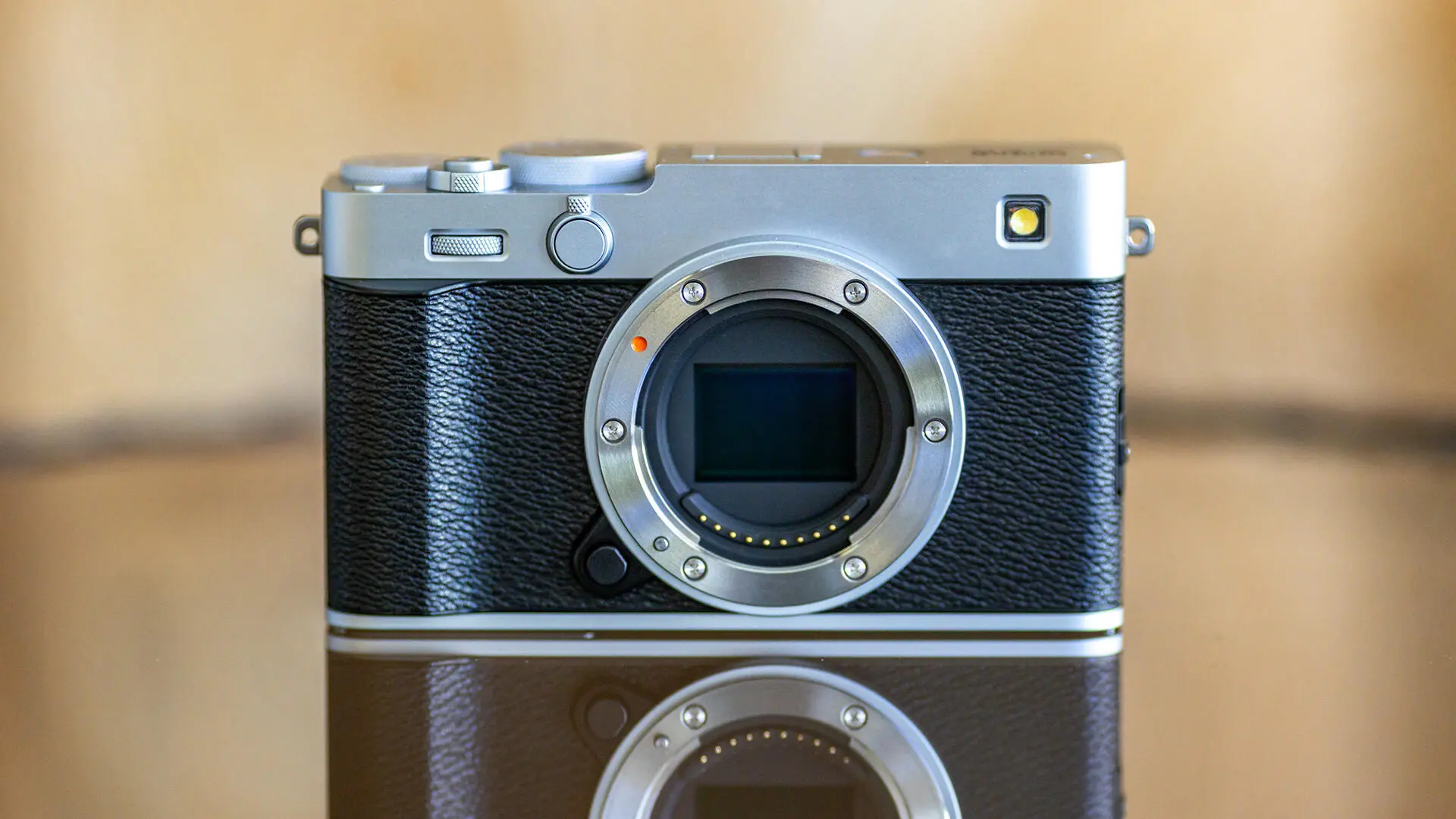
Bigger sensors capture more light, giving you cleaner images in low light and more control over blurry backgrounds. Standard compact cameras use a 1/2.3-inch sensor; travel zooms like the ZS99 and SX740 use this. Mirrorless cameras like the Canon R100 use APS-C, which is much larger. If you shoot often at dusk or indoors, the larger sensor is worth the extra size and cost.
Portability and battery
A camera you leave at the hotel is useless. Look at weight and dimensions. Some compact cameras weigh under 4 oz; mirrorless kits go over a pound. Battery life matters too. The Rebel T7 goes 500 shots per charge; most mirrorless and compact cameras are 300-400. For long days without power, the Kodak FZ45's AA batteries are a workaround.
Video capabilities
If you vlog or shoot clips, look for 4K video (24 or 30fps) and a flip screen. The AUREAPIX and Duluvulu have flip screens but lower actual video quality. The ZS99 and SX740 offer good 4K in a small package. The R100 has 4K with a crop.
Frequently asked questions
What is the best compact camera for travel in 2026?
The Panasonic Lumix ZS99 is our top choice because it combines a 30x optical Leica zoom, 4K video, a tiltable touchscreen, and a pocketable body. It covers everything from wide landscapes to distant subjects without needing extra lenses.
Are point-and-shoot cameras better than phones for travel?
Yes, if you need optical zoom. Phones use digital zoom, which degrades image quality. A compact camera with 5x or more optical zoom will capture cleaner images of distant objects. For casual social media shots, a phone is fine; for memories you plan to print, a dedicated camera helps.
How many megapixels do I need for travel prints?
10 megapixels is enough for a high-quality 8x10 print. Most travel cameras have 16 to 24 megapixels, which is plenty. More megapixels don't always mean better quality, especially in low light. Sensor size matters more.
Can I use a travel camera for vlogging?
Yes. Look for a camera with a flip screen, 4K video, and an external microphone jack (the Panasonic ZS99 and Canon R100 have one). The ZS99's tiltable screen is good for vlogging, but a dedicated vlogging camera often has a front-facing screen.
Are cheap travel cameras worth buying?
Cheap cameras under $100, like the Duluvulu or AUREAPIX, work for basic daytime shots but have poor low-light performance and slow autofocus. If you can stretch your budget, the Kodak FZ55 or a used Canon PowerShot will give noticeably better results.
What is the smallest compact camera with a long zoom?
The Kodak Pixpro FZ55 is one of the smallest at 3.6 x 2.2 x 0.9 inches and 3.7 oz, with a 5x zoom. For a longer zoom in a small body, the Panasonic ZS99 is still pocketable at roughly the same size but heavier.
Should I buy a DSLR or mirrorless for travel?
Mirrorless cameras like the Canon R100 are smaller and lighter than DSLRs like the Rebel T7, making them better for travel. Mirrorless also offers modern features like 4K video and eye AF. Only choose a DSLR if you strongly prefer an optical viewfinder or need exceptional battery life.
The bottom line
After testing nine compact cameras for travel, the Panasonic Lumix ZS99 stands out as the best compact camera for travel because it balances zoom reach, portability, and modern features in a pocket-sized body. If you need even more reach, the Canon PowerShot SX740 HS gives you 40x optical zoom. If image quality is your priority and you're willing to carry a slightly larger camera, the Canon EOS R100 mirrorless kit delivers APS-C performance in a compact package. For budget buyers, the Kodak Pixpro FZ55 is the most reliable cheap option. Stop agonizing over specs and pick the one that fits your travel style; any of these will capture memories you'll be glad you took.
As an Amazon Associate we earn from qualifying purchases.