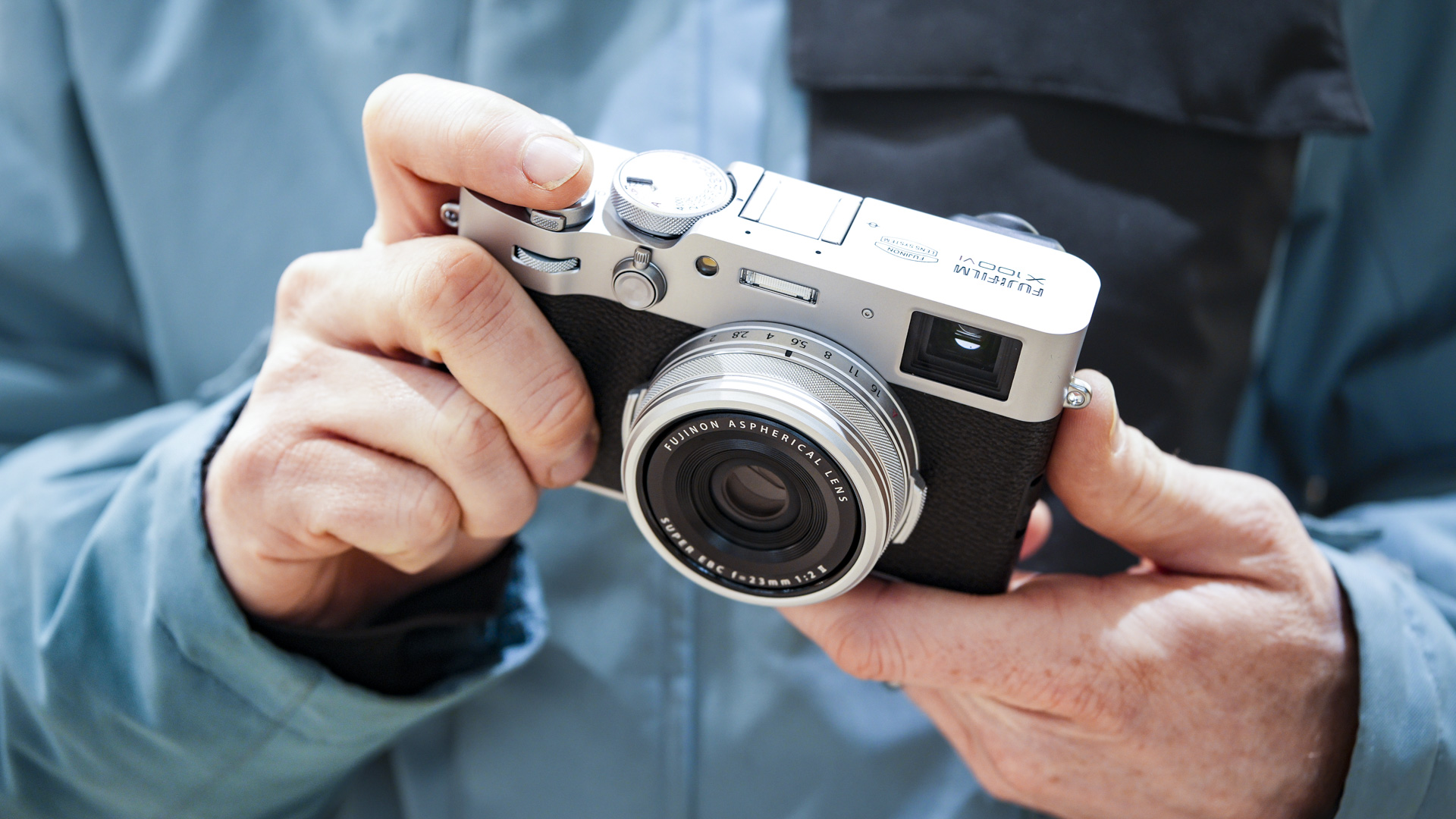

A phone is convenient until you need real optical zoom, a physical shutter button, or a camera you can hand to a child without risking your everyday device. The Best compact digital camera options also make photography feel more deliberate, from simple point and shoots to interchangeable lens cameras.
This list covers straightforward Kodak models, creator-focused cameras with flip screens, a Canon pocket zoom, and two more capable choices for people who want better autofocus or lens flexibility. The KODAK PIXPRO FZ55 Black is our top pick, while the other nine cover distinct needs from travel and selfies to beginner photography.
Comparison table
| # | Product | Award | Sensor or resolution | Zoom or lens | Screen | Best for |
|---|---|---|---|---|---|---|
| 1 | KODAK PIXPRO FZ55 Black | Best overall | 16MP CMOS | 5x optical, 28mm wide angle | 2.7-inch LCD | Everyday pocket photography |
| 2 | KODAK PIXPRO FZ45 Black | Best AA-powered | 16MP CMOS | 4x optical, 27mm wide angle | 2.7-inch LCD | Travel simplicity |
| 3 | KODAK PIXPRO FZ45 White | Best easy-to-spot camera | 16MP CMOS | 4x optical, 27mm wide angle | 2.7-inch LCD | Family use |
| 4 | KODAK PIXPRO FZ55 Blue | Best colorful option | 16MP CMOS | 5x optical, 28mm wide angle | 2.7-inch LCD | Casual photography |
| 5 | Canon PowerShot ELPH 360 HS | Best pocket zoom | 20.2MP CMOS | 12x optical, image stabilized | 3.0-inch LCD | Distant subjects |
| 6 | AUREAPIX 8K Vlogging Camera | Best creator feature set | 96MP stated | 20x digital | 3.5-inch, 180-degree flip | Vlogging and webcam use |
| 7 | Duluvulu 4K Vlogging Camera | Best beginner vlogging camera | 48MP stated | 16x digital | 3.0-inch, 180-degree flip | Teens and first-time creators |
| 8 | Canon EOS R100 | Best image quality | 24.1MP APS-C CMOS | RF-S 18-45mm lens | Not specified | Beginner photography |
| 9 | Lecran FHD Kids Camera | Best for children | 44MP stated | 16x digital | Large LCD | Kids and simple snapshots |
| 10 | KODAK PIXPRO C1 | Best fixed-lens design | 13MP BSI CMOS | 26mm fixed, 4x digital | 2.8-inch, 180-degree flip | Selfies and casual video |
1. KODAK PIXPRO FZ55 Black: Best Overall

Pros
- 5x optical zoom is useful for travel and family scenes
- Rechargeable battery keeps the body simple
- Small and light enough for a pocket
- Full HD video and broad SD card support
Cons
- Small 2.7-inch screen
- No flip display or wireless sharing listed
- Less flexible than the Canon EOS R100
Best for: someone who wants a simple pocket camera with genuine optical zoom.
The FZ55 is the compact camera here that makes the fewest compromises for ordinary stills. It is light at 0.23125 pounds, measures 3.6 by 2.23 by 0.9 inches, and has the kind of uncomplicated shape that slips into a coat pocket. There is no interchangeable lens system to learn and no creator-oriented control layout to distract from taking a picture.
Its 16MP CMOS sensor is aimed at everyday shooting, while the 5x optical zoom gives it a real advantage over the digital-only cameras lower down this list. The 28mm wide-angle lens is practical indoors and for group photos, then the optical range gives you more framing flexibility outside. Full HD video is suitable for travel clips and family moments, though this is not the pick for serious 4K production.
The 2.7-inch LCD is modest, but it keeps the body compact. The rechargeable lithium-ion battery is more convenient than the AA setup in the FZ45 models, especially when the camera is carried alongside a phone and other electronics. Class 10 SD, SDHC, and SDXC cards up to 512GB are supported, so storage is unlikely to be the limiting factor.
The FZ55 Blue is functionally the same camera, so the Black version gets the nod only as the more restrained finish. Canon’s PowerShot ELPH 360 HS has a longer 12x optical zoom and a larger screen, but the FZ55 is lighter and easier to understand. Choose the FZ55 if you want a small, direct camera for holidays, gatherings, and occasional video without the bulk of the Canon EOS R100.
2. KODAK PIXPRO FZ45 Black: Best AA-Powered

Pros
- Uses two AA alkaline batteries
- 16MP CMOS sensor suits everyday photos
- 4x optical zoom with a wide-angle lens
- Very light body
Cons
- Shorter zoom than the FZ55
- AA batteries add ongoing bulk
- Small LCD
Best for: travelers who prefer replaceable batteries over a built-in rechargeable pack.
The FZ45 Black is the straightforward choice for people who do not want battery charging to dictate when they can use a camera. Two AA alkaline batteries power it, which is useful on a long trip or in a household where the camera may sit unused for months. It weighs 0.25625 pounds and measures 3.66 by 2.37 by 1.13 inches, so it remains genuinely easy to carry.
Its 16MP CMOS sensor is matched with a 4x optical zoom and a 27mm wide-angle lens. That combination makes sense for indoor family photos, landscapes, and ordinary snapshots. The zoom is not as long as the FZ55’s 5x range, but the slightly wider starting angle can help when photographing several people in a room.
Video recording reaches Full HD, which is enough for simple clips rather than high-resolution creator work. The 2.7-inch LCD provides basic framing and playback, and the camera accepts Class 10 SD, SDHC, or SDXC cards up to 512GB. Those are useful practical details for a camera intended to be picked up and used without much setup.
The FZ55 Black is the better all-around buy for most people because its rechargeable battery and extra optical reach are more convenient. The FZ45 earns this position for a narrower reason: AA power is reassuring when access to a charger is uncertain. Skip it if you expect to shoot frequently and dislike carrying spare batteries.
3. KODAK PIXPRO FZ45 White: Best Easy-to-Spot Camera

Pros
- White finish is easy to identify in a crowded bag
- AA battery operation is simple
- 27mm wide angle helps with groups
- Full HD video
Cons
- Same shorter zoom as the FZ45 Black
- No rechargeable battery
- No wireless transfer listed
Best for: families who want a simple camera that is easy to find and hand around.
The FZ45 White is the same camera as the FZ45 Black in every meaningful photographic respect. Its white body is the distinguishing detail, and that can be useful when several black devices are piled into a bag or when a family wants a camera that is visually separate from an adult’s electronics. The compact body remains light enough for children and casual users to carry.
A 16MP CMOS sensor records everyday stills, while the 4x optical zoom and 27mm wide-angle lens cover the most common framing needs. The wide end is helpful for birthdays, rooms, and group shots. It will not isolate a distant subject like the longer-zoom Canon PowerShot ELPH 360 HS, but it is less complicated and more approachable.
The 2.7-inch LCD is functional rather than generous. Full HD video adds flexibility for short clips, and support for Class 10 SD, SDHC, and SDXC cards up to 512GB gives plenty of room for regular use. Two AA alkaline batteries make the camera ready to use without waiting for a built-in cell to charge.
The FZ55 Blue is a stronger specification choice because it adds a 5x optical zoom and rechargeable power, but it looks nearly identical to the FZ55 Black in operation. Choose the FZ45 White when visibility and replaceable batteries matter more than that extra reach. It is not the right fit for anyone wanting smartphone-style wireless transfers or a modern flip screen.
4. KODAK PIXPRO FZ55 Blue: Best Colorful Option

Pros
- 5x optical zoom
- Rechargeable lithium-ion battery
- Wide 28mm starting angle
- Compact, lightweight body
Cons
- Small rear screen
- No flip display listed
- No wireless sharing listed
Best for: casual photographers who want the FZ55 design in a more distinctive finish.
The FZ55 Blue is a practical pocket camera with a finish that feels less anonymous than the usual black rectangle. Its dimensions are 3.6 by 2.23 by 0.9 inches, and the 0.23125-pound body is lighter than the FZ45 versions. That makes it a good camera to keep in a day bag rather than a device reserved for planned outings.
The imaging hardware is familiar: a 16MP CMOS sensor, a 5x optical zoom, and a 28mm wide-angle lens. Optical zoom matters here because it preserves the usefulness of the camera when the subject is farther away, unlike the digital zoom claims on the AUREAPIX and Duluvulu models. Full HD video handles basic clips, but the FZ55 is primarily a stills camera.
A 2.7-inch LCD keeps the body small while giving enough space to frame and review shots. The rechargeable lithium-ion battery is a more natural fit for frequent use than the two AA batteries in the FZ45. SD, SDHC, and SDXC cards up to 512GB are supported, provided the card is Class 10.
There is no functional difference between this camera and the FZ55 Black, so the decision is about appearance. The FZ55 Black remains our top pick because it is the quieter design choice, not because it takes different pictures. Pick the Blue version if you want the same simple controls and optical reach with a camera that is easier to distinguish from other gear.
5. Canon PowerShot ELPH 360 HS: Best Pocket Zoom

Pros
- 12x optical zoom
- Optical image stabilization
- 20.2MP CMOS sensor
- Built-in Wi-Fi and NFC
- Larger 3.0-inch LCD
Cons
- Heavier than the Kodak FZ models
- Older DIGIC 4+ processor
- Less suitable for people wanting interchangeable lenses
Best for: travelers who need substantially more optical reach in a pocketable body.
The PowerShot ELPH 360 HS is the specialist pick in this group. Its purpose is clear: fit a long optical zoom into a small body. The 12x optical range is far more useful for distant details, architecture, and subjects across a street than the 4x or 5x zooms in the Kodak models. Optical image stabilization helps keep that extended view steadier.
Canon pairs the zoom with a 20.2MP CMOS sensor and the DIGIC 4+ image processor. The listed combination is more ambitious than the Kodak FZ55, especially when light drops, although the R100 remains the more serious option for image quality and control. The 3.0-inch LCD is also easier to review than the 2.7-inch displays on the FZ45 and FZ55.
Built-in Wi-Fi and NFC make image transfers to a smartphone more convenient than on the Kodak cameras. Hybrid Auto can record up to four seconds of video before each still and combine the clips into a short recap, an unusual feature for people who like a little context around their photos. The camera is 3.921 inches wide, 2.28 inches tall, and 0.902 inches deep, with a listed weight of 0.62 pounds.
The trade-off is age and simplicity. It lacks the flip screens and webcam features of the creator-oriented cameras, and it cannot match the lens flexibility of the Canon EOS R100. It is the camera to choose when 12x optical zoom matters more than 4K video or a modern creator workflow. If most shots are close family photos, the FZ55 is easier to carry and easier to operate.
6. AUREAPIX 8K Vlogging Camera: Best Creator Feature Set

Pros
- 3.5-inch 180-degree flip screen
- Wi-Fi transfer
- Webcam mode
- Two batteries
- HDR, slow motion, and continuous shooting features
Cons
- 20x zoom is digital
- Stated 96MP and 8K claims need careful expectations
- Dimensions listed are unusually large for a compact camera
Best for: beginners who prioritize selfie framing, webcam use, and built-in creative modes.
The AUREAPIX takes a different approach from the Kodak cameras. It is designed around the creator, with a 3.5-inch screen that flips 180 degrees for self-facing video, built-in Wi-Fi, and a webcam mode for a computer. Those features matter more to a first-time vlogger than a traditional optical zoom, particularly when the camera will spend as much time facing its owner as facing a landscape.
Its listing states 96MP still images, 8K video, autofocus, and a 20x digital zoom. Digital zoom is the important qualifier: it enlarges the image rather than providing the optical reach of the Canon PowerShot ELPH 360 HS. The camera also lists HDR imaging, anti-shake, slow motion, continuous shooting, a self-timer, and 60 filters, giving beginners plenty of effects to explore.
Wi-Fi transfer through the Viipulse app is more convenient than moving a card between devices. Two batteries are included, which suits longer filming sessions, and the built-in microphone supports webcam and streaming use. The listed dimensions are 6.9 by 4.53 by 6.9 inches, which is not especially small on paper despite the ultra-compact product description.
The AUREAPIX is more useful for social video than the FZ55, but it is not the strongest still camera here. The Duluvulu offers a similar creator-friendly design with 4K video and a 3.0-inch flip screen, while the AUREAPIX has the larger display and Wi-Fi. Choose it for the feature set, not for the headline resolution numbers, and skip it if your priority is dependable optical zoom.
7. Duluvulu 4K Vlogging Camera: Best Beginner Vlogging Camera

Pros
- 4K video
- 3.0-inch 180-degree flip screen
- Autofocus and webcam mode
- Two rechargeable batteries
- Creative modes and filters
Cons
- 16x zoom is digital
- No wireless transfer listed
- Still image resolution claims are not directly comparable to the Canon sensor
Best for: teens and beginners making simple selfie videos and travel clips.
The Duluvulu is built around ease of use. A 3.0-inch IPS screen flips 180 degrees, so a new creator can see the frame while recording a selfie video. Autofocus, anti-shake, face detection, smile detection, and a fill light reduce the number of settings a beginner has to understand before getting started.
The listing states 48MP stills, 4K video, and 16x digital zoom. That zoom can help with basic framing, but it does not offer the detail-preserving reach of the optical zoom in the Kodak FZ55 or Canon ELPH 360 HS. The camera is better understood as a compact content tool than as a traditional travel camera built around lens quality.
Its creative functions include exposure compensation from -3.0 to +3.0, time-lapse, slow motion, a self-timer, continuous shooting, and various filters. It can also serve as a webcam and connect to a computer by USB for file downloads. Two rechargeable batteries are included, which is useful when recording several clips away from a charger.
Compared with the AUREAPIX, the Duluvulu has a smaller screen and no listed Wi-Fi transfer, but its 4K video and simpler feature mix are appealing. The Lecran is more obviously aimed at children and includes a 32GB card, while the Duluvulu is better suited to a teenager or beginner creator. It is not the right choice for someone seeking optical zoom or the low-light flexibility of the Canon EOS R100.
8. Canon EOS R100: Best Image Quality

Pros
- 24.1MP APS-C CMOS sensor
- Interchangeable RF-S lens system
- Dual Pixel CMOS autofocus
- Human, animal, and vehicle detection
- 4K video
Cons
- Larger and more involved than a point and shoot
- Kit lens has an f/4.5-6.3 aperture range
- Not the simplest option for children or casual users
Best for: beginners who want a compact starting point with room to grow.
The EOS R100 is not a pocket point and shoot, but it is the most capable photographic camera in this group. Its 24.1MP APS-C CMOS sensor is substantially different from the small-sensor approach used by the Kodak models and the creator cameras. The larger sensor is intended to provide stronger image quality and natural background blur, while the interchangeable lens mount gives the owner a path beyond the supplied lens.
The RF-S 18-45mm F4.5-6.3 IS STM lens covers a useful everyday range. The 18mm wide end works for interiors and groups, while the longer end is more suitable for portraits and ordinary details. The relatively narrow f/4.5-6.3 aperture range means it is not a specialized low-light lens, but the kit remains compact and approachable.
Canon’s DIGIC 8 processor supports 4K video up to 24 frames per second, Full HD video up to 60 frames per second, and HD video up to 120 frames per second. Dual Pixel CMOS autofocus covers up to 143 zones and includes human face and eye detection, along with animal and vehicle detection. One-Shot AF continuous capture reaches up to 6.5 shots per second.
The R100 beats every point and shoot here for control, sensor potential, and lens flexibility, but the FZ55 wins when the goal is to take a quick picture with almost no learning curve. It also lacks the flip screen that makes the Duluvulu and KODAK PIXPRO C1 more comfortable for selfies. Readers comparing the R100 with pocket cameras should first consider how much camera control you actually want to learn. Choose the R100 if photography is becoming a hobby, and skip it if pocketability is non-negotiable.
9. Lecran FHD Kids Camera: Best for Children

Pros
- Simple controls for children and beginners
- 32GB SD card included
- Two rechargeable batteries
- Full HD video and anti-shake
- Webcam and creative modes
Cons
- 16x zoom is digital
- Stated 44MP resolution is not directly comparable to larger sensors
- Limited information about the screen size
Best for: children and first-time users who need a simple camera with useful accessories.
The Lecran is designed to remove friction. It is an ultra-compact camera with simple settings, a lanyard, a bag, and a 32GB SD card included. That package makes it easier for a child or beginner to start taking pictures without first finding compatible storage or learning a complicated menu system.
The listing states 44MP photos and Full HD 1080P video, along with an anti-shake function. It also includes 16x digital zoom, but that should be treated as a way to enlarge framing rather than a replacement for optical zoom. For children photographing nearby friends, toys, pets, and family events, that distinction is less important than the uncomplicated controls.
Two rechargeable batteries support longer outings, while automatic shutoff helps conserve power. The camera includes playback, time-lapse, slow motion, continuous shooting, motion detection, face detection, webcam capability, and filters. Those modes give a young photographer room to experiment without requiring interchangeable lenses or manual exposure settings.
The Duluvulu is a better fit for a teenager interested in vlogging because it has a specified 180-degree flip screen and 4K video. The Lecran is more appealing for a younger child because the package is simple and complete. For adults seeking sharper, more controlled images, the FZ55 or EOS R100 is a much better direction. Families considering a camera for a trip can also compare the features that make a small camera easier to carry.
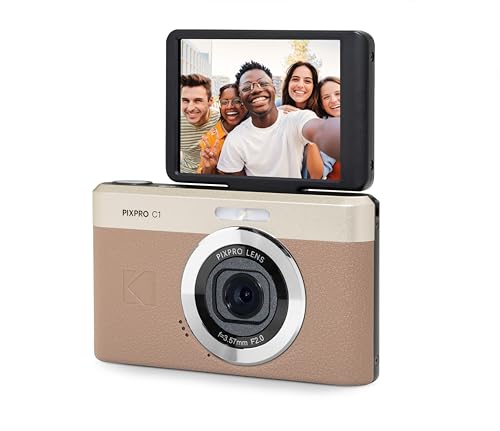
10. KODAK PIXPRO C1: Best Fixed-Lens Design
Pros
- Bright f/2.0 fixed wide-angle lens
- 180-degree tilting screen
- USB-C charging
- Lightweight body
- Full HD video
Cons
- No optical zoom
- 13MP sensor is smaller than the main Kodak models
- Fixed framing limits versatility
Best for: casual shooters who value a bright lens and selfie-friendly screen over zoom.
The PIXPRO C1 is the most distinctive Kodak here because it does not chase optical zoom. Instead, it uses a 26mm fixed wide-angle lens with a bright f/2.0 aperture and a 180-degree tilting screen. That makes it immediately appealing for selfies, group shots, and simple vlogging, where a wide view and easy self-framing matter more than pulling a distant subject closer.
Its 13MP BSI CMOS sensor records Full HD video, and the camera provides a 4x digital zoom for occasional reframing. The f/2.0 lens is the more meaningful specification: it is bright on paper and well suited to ordinary indoor scenes, although the fixed focal length means the photographer must move rather than zoom to change composition.
The 2.8-inch LCD is slightly larger than the FZ55’s screen and can tilt for self-facing shots. A built-in lithium-ion battery charges through USB-C, which is convenient for travel because the same type of cable may already serve other devices. The body measures 4.05 by 2.36 by 0.79 inches and weighs 0.253125 pounds.
The C1 is less flexible than the FZ55, whose 5x optical zoom handles a wider range of subjects, but it is more engaging for selfies and casual video. The Duluvulu adds autofocus, 4K video, and more digital modes, while the C1 has the cleaner fixed-lens concept. Choose the C1 when you like a wide, simple shooting style and a flip screen. Skip it if photographing distant subjects is a regular part of your plans.

How to choose best compact digital camera
The right camera depends less on the biggest number in the listing than on the way you expect to frame, power, store, and share your pictures.
Sensor and image quality
Sensor size has more practical meaning than headline megapixels. The Canon EOS R100 uses a 24.1MP APS-C CMOS sensor, while the Kodak models use 16MP CMOS sensors and the C1 uses a 13MP BSI CMOS sensor. A larger sensor can provide more control over background blur and may handle difficult light more gracefully, while a small compact sensor keeps the camera light and simple.
Optical zoom
Optical zoom changes the lens view before the image is recorded. The Canon ELPH 360 HS has 12x optical zoom, the FZ55 has 5x, and the FZ45 has 4x. Digital zoom only enlarges part of the captured image, so the 16x and 20x claims on the beginner creator cameras should not be compared directly with optical zoom.
If distant subjects matter, choose optical reach first and ignore impressive digital zoom numbers.
Screen design
A standard LCD is fine for travel snapshots, but a 180-degree flip screen is much more useful for selfies and vlogging. The AUREAPIX has a 3.5-inch flip display, while the Duluvulu and C1 offer 3.0-inch and 2.8-inch tilting or flip screens respectively. The FZ45 and FZ55 use smaller 2.7-inch screens, which help keep their bodies compact but offer less room for reviewing a shot.
Battery and charging
The FZ45 uses two AA alkaline batteries, which are easy to replace when away from a charger. The FZ55 and C1 use rechargeable lithium-ion batteries, with the C1 charging through USB-C. The AUREAPIX, Duluvulu, and Lecran include two rechargeable batteries, a useful feature for longer outings or recording sessions.
Video and sharing
Full HD is enough for family clips and simple travel memories. The EOS R100 supports 4K video, and the Duluvulu lists 4K as well. The AUREAPIX adds Wi-Fi transfer and webcam mode, while the Canon ELPH 360 HS includes Wi-Fi and NFC for moving images to a phone. If you plan to publish regularly, the screen, connection method, autofocus, and battery setup matter as much as resolution.
Frequently asked questions
Is a compact digital camera better than a phone?
A compact camera can be preferable when you want optical zoom, a dedicated shutter button, or a separate device for children and travel. A phone is often faster for sharing, while a camera can make framing and physical controls more deliberate.
Which camera has the longest optical zoom?
The Canon PowerShot ELPH 360 HS has the longest listed optical zoom at 12x. That is a genuine lens advantage over the 4x and 5x optical zooms in the Kodak models and the digital zoom systems in several beginner cameras.
Which camera is easiest for a beginner?
The KODAK PIXPRO FZ55 is the easiest general-purpose choice because it combines a simple body, optical zoom, rechargeable power, and Full HD video. The Lecran is more suitable for a child, while the Canon EOS R100 is better for a beginner who wants to learn photography in greater depth.
Which compact camera is best for vlogging?
The AUREAPIX and Duluvulu are the most directly aimed at vlogging because they have 180-degree flip screens and webcam modes. The AUREAPIX adds Wi-Fi transfer and a larger 3.5-inch display, while the Duluvulu lists 4K video and a simpler creator-oriented feature set.
Do all of these cameras use optical zoom?
No. The KODAK PIXPRO FZ45, KODAK PIXPRO FZ55, and Canon PowerShot ELPH 360 HS list optical zoom. The AUREAPIX, Duluvulu, and Lecran list digital zoom, while the KODAK PIXPRO C1 uses a fixed lens with digital zoom.
Can the Canon EOS R100 fit in a pocket?
The EOS R100 is compact for a mirrorless camera, but the included lens makes it less pocket-friendly than the Kodak point and shoots. Its advantage is the APS-C sensor, autofocus system, and interchangeable lens mount, not maximum portability.
The bottom line
The Best compact digital camera for most people in this group is the KODAK PIXPRO FZ55 Black. It has a useful 5x optical zoom, a rechargeable battery, a light body, and simple controls that make sense for everyday photography. The Canon PowerShot ELPH 360 HS is the better choice when 12x optical zoom and wireless sharing matter more.
Choose the Canon EOS R100 if you want to build photography skills around a larger APS-C sensor and interchangeable lenses. For selfie video, the AUREAPIX 8K Vlogging Camera and Duluvulu 4K Vlogging Camera are more suitable than traditional point and shoots.
If you are undecided, choose the FZ55 for ordinary photos, the ELPH 360 HS for distant subjects, or the EOS R100 if you expect photography to become a serious hobby.
As an Amazon Associate we earn from qualifying purchases.