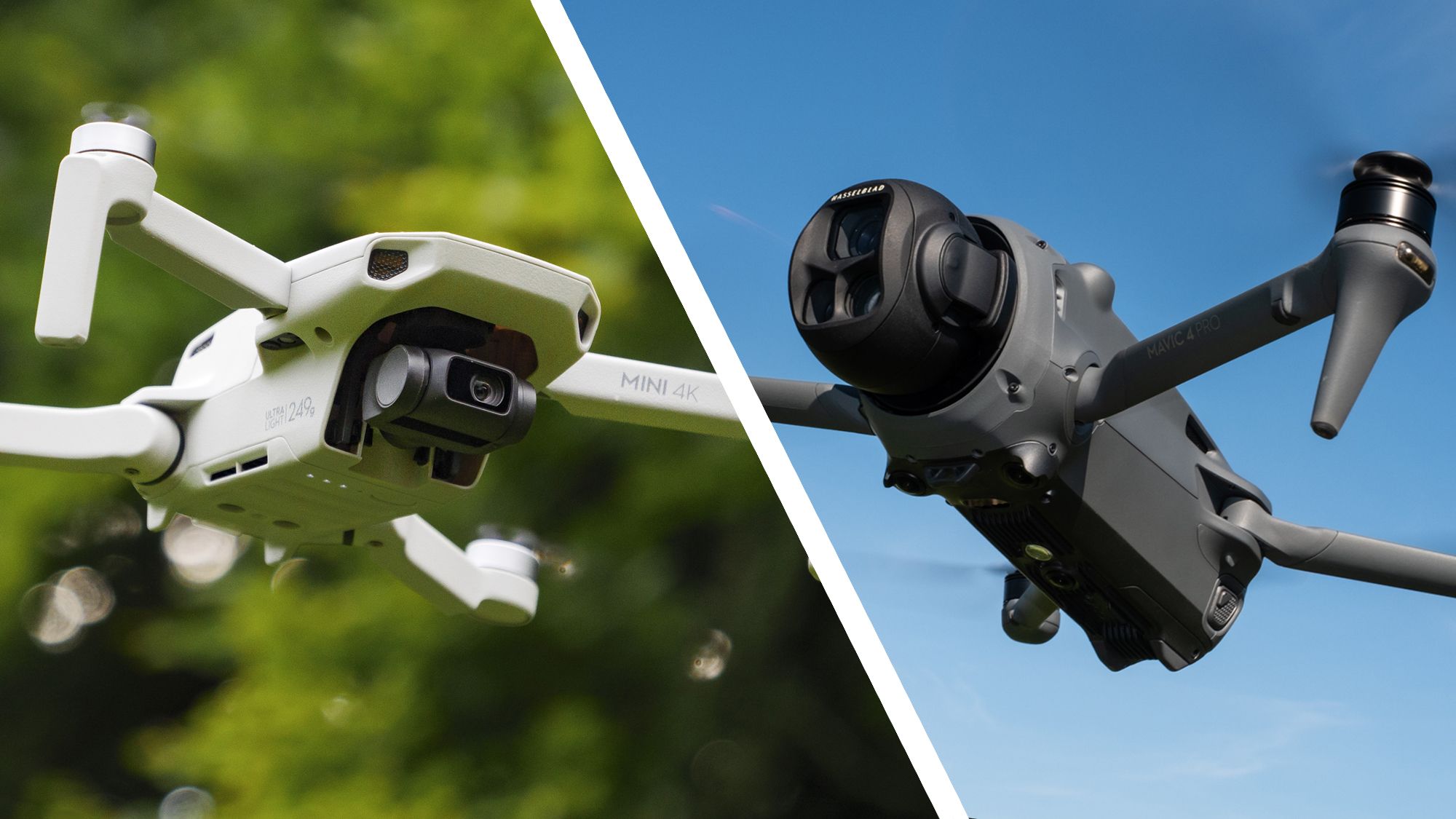

Shopping for a drone is harder than it should be. The moment you start looking, you hit a wall of spec sheets that all blur together, 4K this, gimbal that, transmission range numbers that sound impressive until you realize they're measured in ideal conditions over open water. Meanwhile, every listing promises "professional" footage, but only a handful of models actually deliver footage you'd want to show anyone.
We sorted through the current crop of sub-250g camera drones to find the ones that earn their keep. The best drone for the money right now is the DJI Mini 4K Camera Drone Combo, it's the rare package that nails the essentials without making you pay for features you'll never use. But depending on what you fly for, there are other strong contenders worth a close look, from a $60 starter that teaches you the basics to a feature-packed 4K/60fps flyer with obstacle avoidance.
| # | Product | Award | Camera & Video | Flight Time | Best for |
|---|---|---|---|---|---|
| 1 | DJI Mini 4K Camera Drone Combo | Best overall | 4K UHD, 3-axis gimbal, 10km transmission | 62 min (2 batteries) | Anyone wanting a reliable, ready-to-fly 4K drone |
| 2 | DJI Mini 4K | Best entry-level | 4K UHD, 3-axis gimbal | 31 min (1 battery) | Beginners on a tight budget |
| 3 | Karuisrc GPS Drone | Best screen controller | 4K EIS, 4.5" LCD controller | ~25 min | Pilots who want an all-in-one controller |
| 4 | Potensic ATOM SE | Best for beginners | 4K EIS, Sony sensor, 4km transmission | 62 min (2 batteries) | First-time flyers wanting GPS and smart modes |
| 5 | Ruko F11PRO 2 | Best gimbal stability | 6K photos, 4K/30fps, 3-axis mechanical gimbal | 70 min (2 batteries) | Smooth cinematic footage without post-stabilization |
| 6 | RELIDOL PK01 Drone | Best budget flyer | 1080p HD, built-in screen controller | 25 min (2 batteries) | Kids and absolute beginners |
| 7 | DJI Mini 4K Fly More Combo | Best extended flight | 4K UHD, 3-axis gimbal, 10km transmission | 93 min (3 batteries) | Long sessions without recharging |
| 8 | Oddire GPS Drone | Best budget GPS | 4K UHD, 5G WiFi transmission, 500m range | 48 min (2 batteries) | Affordable GPS with follow-me and waypoint |
| 9 | SKYROVER X1 | Best features | 4K/60fps, 48MP, 360° obstacle avoidance, 9.32-mi transmission | 96 min (3 batteries) | Tech enthusiasts who want everything |
| 10 | Bwine F7GB2 Pro | Best for high altitude | 4K UHD, 3-axis gimbal, 5x digital zoom | 75 min (3 batteries) | Flying at altitude or in strong winds |
1. DJI Mini 4K Camera Drone Combo: Best overall

Pros
- 3-axis gimbal delivers genuinely smooth 4K footage
- 10km video transmission holds up in suburban interference
- Two batteries give a real 62 minutes of flying
- QuickShots make cinematic moves one-tap easy
- Weighs under 249g, no FAA registration needed
Cons
- Propellers are loud in quiet areas
- No obstacle avoidance sensors
Best for: someone who wants a polished, dependable 4K drone that they can fly out of the box without reading a manual.
The DJI Mini 4K is the kind of drone that makes you forget you're flying a sub-$400 machine. The 3-axis gimbal is the star here, it keeps the horizon steady even when you bank hard into a 38kph Level 5 wind. You can shoot 4K footage that cuts cleanly alongside footage from DJI's pricier models. The 10km OcuSync transmission means you can fly out over a lake or a field without losing the live feed, something few drones in this class manage.
The combo comes with two 31-minute batteries, a shoulder bag, and a propeller holder. That second battery matters more than you'd think. Most single-battery drones leave you packing up after 20 minutes of actual flying (the rest is setup and landing). With two, you can get a solid hour of airtime at a park, enough to chase the golden hour light across a whole hill. The QuickShots modes (Helix, Dronie, Rocket, Circle, Boomerang) automate the kind of moves that take practice to hand-fly, and they work reliably.
The trade-off is noise. The Mini 4K's props are audible from a couple hundred feet away; you won't sneak up on wildlife or quiet neighborhoods. There's also no obstacle avoidance, so you need to keep your eyes on the drone and know the local tree height. That's a fair compromise for a drone that weighs less than a can of soda and fits in a jacket pocket. Compared to the Potensic ATOM SE, the Mini 4K offers longer transmission range and a more refined app. If you want the most capable all-rounder that still avoids the FAA registration hassle, this is the one.
2. DJI Mini 4K: Best entry-level

Pros
- Same 3-axis gimbal and camera as the combo
- One battery keeps the package small and simple
- Beginner-friendly one-tap takeoff and landing
- GPS return-to-home gives peace of mind
Cons
- Only one battery means 31 minutes total flight time
- No carrying case or extra props included
Best for: someone who wants to dip a toe into 4K drone flying without buying more than they need.
The single-battery DJI Mini 4K is the same drone as the combo above, just stripped down to the essentials. You get the drone, one battery, the RC-N1C controller, and a few cables. That's it. If you're not sure you'll fly often, or you want to test the waters before investing in extra batteries, this is the smart way in.
The flight experience is identical. The 4K video with 3-axis gimbal stabilization is just as silky, the GPS return-to-home is just as reliable, and the wind resistance is just as impressive. You can always buy more batteries later, they're the same cells used in the combo. The only real loss is that you won't have a second battery charged and waiting, which means you'll be tethered to a wall outlet after 25 minutes of actual stick time.
For someone who flies maybe once a month at the local park, that's fine. For anyone planning a vacation shoot or a weekend of exploring, the two-battery combo is the better move. We'd recommend starting here only if you're genuinely unsure about drone flying, otherwise, the combo is the smarter best drone for the money buy.
3. Karuisrc GPS Drone with EIS Camera: Best screen controller

Pros
- 4.5-inch built-in screen eliminates phone tethering
- GPS follow, orbit, and waypoint navigation
- Brushless motors for stable flight
- Automatic return on signal loss
Cons
- Camera quality is below the DJI gimbal standard
- Control range limited to 400 meters
Best for: someone who hates fumbling with a phone mount and wants an all-in-one controller.
The Karuisrc solves the single worst part of flying many budget drones: the phone mount. The remote has a bright 4.5-inch LCD screen built right in, so you see the live FPV feed without plugging in your phone or wrestling with a clamp. That alone makes it a strong candidate for anyone who wants a simpler setup.
The drone itself carries a 4K EIS camera (electronic image stabilization) and a GPS module that enables Follow Me, Orbit, and Waypoint modes. In practice, the GPS tracking works well enough for a slow walk or a bike ride, and the auto return kicks in reliably when the signal cuts out. The brushless motors handle light wind without drama.
The limitation is the camera. Electronic stabilization can't match a physical gimbal, you'll see some jello effect in windy conditions, and the 4K footage is softer than what the DJI Mini 4K produces. The 400-meter control range is also short compared to the 4km or 10km numbers from the Potensic and DJI. If you're flying close and just want a screen on your controller, this is a neat budget option. If you need long-range or cinematic quality, keep looking.
4. Potensic ATOM SE GPS Drone: Best for beginners

Pros
- Sony CMOS sensor captures solid 4K/30fps video
- Three flight modes let you progress from beginner to sport
- 62 minutes total with two intelligent batteries
- PixSync 2.0 gives stable 4km transmission
Cons
- Electronic stabilization, not a gimbal
- No QuickShots or automated cinematic modes
Best for: a first-time drone owner who wants GPS safety and room to grow.
Potensic designed the ATOM SE with a clear progression path. The SurgeFly flight control system includes a Beginner Mode that limits height and distance, a Normal Mode for everyday flying, and a Sport Mode that pushes the drone to 16 m/s in under three seconds. You can start slow and gradually unlock the full performance as your confidence builds.
The camera uses a 1/3-inch Sony sensor with ShakeVanish electronic stabilization. In good light, the 4K footage looks crisp and colors are natural. The 118-degree field of view gives a wide perspective without obvious fisheye distortion. The 4km PixSync 2.0 transmission holds a clean feed well beyond what most beginners will ever need.
The biggest difference from the DJI Mini 4K is the stabilization method. EIS crops the sensor and can't handle sharp yaw movements as well as a gimbal. You'll want to keep turns smooth, especially in wind. But for the typical beginner flying at parks and beaches, the ATOM SE delivers very usable footage. The two batteries are a welcome bonus, each lasts 31 minutes, and the drone tells you in the app when to head back. It's a strong contender for the best drone for the money for new pilots.
5. Ruko F11PRO 2 Drone: Best gimbal stability

Pros
- True 3-axis mechanical gimbal for shake-free video
- 6K photos and 4K/30fps video
- 70 minutes total flight time with two batteries
- GPS Follow, Waypoint, and Orbit modes
Cons
- Larger folded size than the DJI Mini 4K
- App interface can be finicky on first setup
Best for: someone who prioritizes buttery smooth footage over portability.
The Ruko F11PRO 2 stands out because it packs a mechanical 3-axis gimbal at a price point where most competitors use electronic stabilization. That gimbal means the footage stays level during aggressive turns and gusty conditions in a way that EIS simply can't match. Photos land at 6K resolution, and 4K/30fps video is clean and detailed.
The flight modes work well for capturing active subjects. GPS Follow locks onto a moving person (walking or biking), and Orbit Mode circles a point of interest automatically. The 70-minute total flight time (two 35-minute batteries) gives you plenty of runway to set up and re-shoot. The controller's phone holder is a bit bulky, but the range hits a claimed 10, 000 feet in open areas.
The trade-off is size. Folded, the Ruko is noticeably thicker than the DJI Mini 4K. It still fits in a small backpack, but not a jacket pocket. The first-time app pairing can be fiddly, you need to remove the gimbal cover before powering on, and the Type-C port on the side of the remote is for charging only (connecting a data cable there kills video transmission). Once you're past that, the flying experience is solid. For smooth footage without post-shake removal, this is a top pick.
6. RELIDOL PK01 Drone: Best budget flyer

Pros
- Screen on the controller, no phone needed
- 1080p HD camera with 80-degree adjustable lens
- Gesture control for selfies
- 25 minutes total with two batteries
Cons
- 1080p only, no 4K
- Short range; best kept under 100 feet
Best for: a child or first-time flyer who wants an inexpensive taste of FPV.
The RELIDOL PK01 is the cheapest drone on this list, and it doesn't pretend to be anything else. The 1080p camera records decent daytime footage, and the 80-degree adjustable lens lets you tilt the view manually. But the real selling point is the built-in screen on the remote, live feed without a phone, which is a rarity at this price.
Flight time is 25 minutes across two batteries, each giving about 12-13 minutes. The brushless motors make it more stable than toy-grade drones. Headless mode and one-key flips are fun for kids, and gesture control lets you snap a photo by waving. The controller has a child lock, which is a thoughtful addition.
The PK01 is not for anyone serious about aerial photography. The 1080p feed is grainy in low light, the range is maybe 100 meters before signal weakens, and there's no GPS or return-to-home. But as a low-risk introduction to flying, something you can hand to a 10-year-old without worrying about a $300 crash, it does exactly what it should. If you want to learn stick control before buying a real drone, this is the cheapest way in.
7. DJI Mini 4K Fly More Combo: Best extended flight

Pros
- Three batteries for 93 minutes of flight time
- Two-way charging hub charges three batteries sequentially
- Includes shoulder bag, spare props, and propeller holder
- All the virtues of the Mini 4K (gimbal, 4K, 10km range)
Cons
- Same lack of obstacle avoidance as the standard model
- Overkill if you only fly occasionally
Best for: anyone planning a vacation or a full day of shooting.
The Fly More Combo is the Mini 4K with everything you'd add later anyway. Three batteries give you 93 minutes of theoretical flight time (realistically about 75 minutes of active flying). The charging hub rotates through the batteries automatically, so you can plug in all three overnight and have a full set ready in the morning.
The bag is compact enough to throw into a daypack. The extra propellers and screwdriver mean you don't have to order parts online if you ding a blade. Everything else, the 4K gimbal camera, the 10km OcuSync transmission, the QuickShots, is identical to the standard Mini 4K.
This is the version you buy if you know you'll fly a lot. Taking a drone on a trip and only having one battery is frustrating; you spend half the day charging. With three, you can fly, land, swap, and launch again while the first battery charges. The only reason to skip it is if you're still uncertain about the hobby. For dedicated flyers, it's the best drone for the money because it removes the biggest frustration: battery anxiety.
8. Oddire GPS Drone: Best budget GPS

Pros
- GPS auto return and follow-me features
- 4K UHD camera with 110-degree wide-angle lens
- 48 minutes total flight time with two 7.7V batteries
- Brushless motor for level 5 wind resistance
Cons
- Camera quality is soft compared to gimbal drones
- 5G WiFi range is only about 500 meters
Best for: a budget-minded buyer who still wants GPS safety features.
The Oddire manages to include GPS auto return, follow-me, orbit mode, and waypoint navigation at a price that undercuts most competitors. The 7.7V batteries are a step up from the 3.7V cells used in truly cheap drones, delivering more consistent power and 48 minutes of flight time across two packs.
The 4K camera is electronically stabilized and adjustable 90 degrees via the remote or app. In bright sunlight, the footage is acceptable for social media, but the lack of a gimbal means you'll see vibrations in windy conditions. The 5G WiFi transmission tops out around 500 meters, fine for flying over a nearby field, not enough for distant landscapes.
What makes the Oddire worth considering is the combination of GPS intelligence and price. The auto return works well, and the follow-me mode tracks a subject reasonably accurately. If you're on a tight budget but want to practice GPS flying before investing in a premium drone, the Oddire is a sensible stepping stone.
9. SKYROVER X1 Drone: Best features

Pros
- 4K/60fps HDR video with 48MP photos
- 360-degree obstacle avoidance
- 9.32-mile SkyBridge transmission with 1080p/60fps live view
- 96 minutes total with 3 batteries
- AI Night Mode and vertical shooting
Cons
- Heavier than some sub-249g rivals (still under 249g)
- Obstacle avoidance can be conservative in tight spaces
Best for: a tech enthusiast who wants the latest features in one package.
The SKYROVER X1 packs more features into a sub-250g frame than any other drone we've seen at this level. The 1/1.32-inch CMOS sensor with f/1.7 aperture captures 4K/60fps HDR video and 48MP stills. The 3-axis gimbal keeps everything steady. And the 360-degree obstacle avoidance is a genuine safety net, it detects objects in all directions and slows the drone to a halt before a collision.
The SkyBridge transmission claims 9.32 miles, which is optimistic in suburban areas but easily reaches 2-3 miles in open terrain. The 1080p/60fps live feed is sharp and low-latency. AI Night Mode boosts detail in low light, and vertical shooting mode frames video directly for TikTok or Instagram without cropping. The three batteries give a combined 96 minutes of flight time.
The obstacle avoidance works but can be a little jumpy when you're navigating through tree branches or narrow gaps, it's designed for safety, not precision acrobatics. The SKYROVER X1 competes directly with the DJI Mini 4K Fly More Combo, offering more advanced camera specs and obstacle avoidance at a slightly higher investment. If you want the most feature-rich drone in this weight class, this is it.
10. Bwine F7GB2 Pro Drone: Best for high altitude

Pros
- Certified for FAA Remote ID compliance
- 4K camera with 3-axis gimbal and 5x digital zoom
- 75 minutes total with 3x2600mAh batteries
- Level 6 wind resistance, flies at up to 2000m altitude
- 3000m control range
Cons
- Bulkier than other sub-250g drones when folded
- Digital zoom reduces quality quickly
Best for: flying in mountain landscapes or windy coastal areas.
The Bwine F7GB2 Pro is built for conditions that ground other drones. The 1806 brushless motors and barometer let it operate at 2000 meters altitude, and the Level 6 wind resistance means it handles gusts that would push lighter drones sideways. The FAA Remote ID certification is already onboard, so you're compliant without any extra hardware.
The 4K camera sits on a 3-axis gimbal with 5x digital zoom. The zoom is more of a convenience than a creative tool (digital zoom softens the image), but it's handy for framing shots from a distance. The three 2600mAh batteries deliver 75 minutes of total flight time, and they meet UL 2054 safety standards. The carrying case holds everything neatly.
The trade-off is bulk. Folded, the Bwine is larger than the DJI Mini 4K, though it still fits in a backpack. The controller is also bigger. If you primarily fly at sea level, the DJI or SKYROVER is more portable. But if you live in the mountains or want to fly on a windy ridge, the Bwine is the most capable choice. It's a niche pick, but for that niche, it's the best drone for the money.
How to choose a drone for the money
The best sub-250g drones all share the same FAA-friendly weight, but they differ sharply in camera quality, flight smarts, and battery endurance. Here are the factors that actually matter.
Camera and gimbal type
The single biggest quality differentiator is whether a drone has a mechanical gimbal or relies on electronic image stabilization. A 3-axis gimbal physically moves the camera to keep it level, producing footage that looks like it came from a much more expensive drone. EIS works by cropping and shifting the image, which can introduce a wobble effect in wind. If you want footage you can use directly without post-processing, prioritize a gimbal.
Flight time and battery count
Manufacturers quote single-battery flight times, but real-world flying is shorter, account for warmup, hovering, and conservative landings. A drone with 31 minutes per battery will give you about 25 minutes of active flight. The number of batteries in the package matters more than the per-battery number. Two batteries let you stay out for an hour; three batteries let you shoot a full afternoon.
Transmission system
WiFi-based transmission is common on budget drones and works for distances under 500 meters. Dedicated digital transmission systems (OcuSync, SkyBridge, PixSync) offer ranges of 4km to 10km and much better resistance to interference. If you plan to fly over large fields or water, a digital system is worth the premium.
"A drone that loses signal and drifts away is a very expensive paperweight. GPS return-to-home is the most important safety feature you can buy."
GPS and smart modes
GPS is not optional for any drone you plan to fly outdoors. It enables return-to-home, position hold, and follow-me modes. Without GPS, a drone can drift with the wind and become hard to recover. Look for at least GPS + GLONASS support. Smart modes like waypoint flight, orbit, and cruise control add creative flexibility, but they're bonuses, not necessities.
Wind resistance
Most sub-250g drones can handle Level 4 winds (13-18 mph). Level 5 (19-24 mph) is better for coastal or breezy areas. Level 6 is rare at this weight and only found on drones like the Bwine F7GB2 Pro. Check the wind rating before flying in exposed locations.
Frequently asked questions
Do I need FAA registration for a drone under 250g?
No. Drones under 250g flown for recreational purposes do not require FAA registration or Remote ID. However, if you use the drone for commercial purposes (even if it's under 250g), registration is required. Always check the latest FAA rules on their official website.
How long does it take to learn to fly a GPS drone?
Most beginners can take off, fly, and land safely after 10 to 15 minutes with a GPS drone that has one-key takeoff and return-to-home. Manual control of orientation and smooth flying takes a few more hours of practice. Using Beginner Mode (which limits height and speed) helps build confidence.
Can I fly a drone in the rain or snow?
No. Consumer drones are not water-resistant. Moisture can short-circuit the electronics and cause a crash. Even light drizzle is risky. Some drones handle high humidity better than others, but the safe rule is to fly only in dry, clear weather.
What is the difference between a mechanical gimbal and EIS?
A mechanical gimbal uses motors to physically stabilize the camera. It works in all lighting conditions and handles fast movements well. Electronic image stabilization (EIS) uses software to crop and smooth the video. EIS works in good light but can degrade image quality and fail in low light or during sharp turns. A gimbal is always preferable for serious video.
How far can a sub-250g drone realistically fly?
Real-world range depends on obstacles, interference, and the transmission system. WiFi-based drones typically manage 300-500 meters. Drones with digital transmission (like the DJI Mini 4K) can reach 2-3 km in suburban areas and up to 10 km in open, line-of-sight conditions. Always keep the drone within visual line of sight per FAA guidelines.
What should I look for in a drone for aerial photography?
Prioritize a 3-axis mechanical gimbal, 4K video at 30fps or higher, and a sensor large enough to handle low light (1/1.3-inch or larger). The ability to shoot in a flat color profile (like D-Cinelike) gives you more flexibility in editing. Also consider whether the drone supports manual camera settings like shutter speed and ISO.
Are there any hidden costs with owning a drone?
Beyond the purchase, you may want extra batteries, a faster charger, a carrying case, and spare propellers. Some apps require in-app purchases for advanced editing features. If you fly commercially, you'll need the Part 107 license. For recreational flying, there are no recurring fees.
The bottom line
The DJI Mini 4K Camera Drone Combo is the best drone for the money because it nails the essentials, gimbal-stabilized 4K, reliable 10km transmission, two batteries, and a weight that dodges FAA registration, without piling on gimmicks. It works for beginners and experienced flyers alike, and the footage holds its own against drones costing twice as much.
If you need more flight time, the DJI Mini 4K Fly More Combo adds a third battery and a charging hub. If you want obstacle avoidance and 4K/60fps, the SKYROVER X1 is the feature king. For mountain flying, the Bwine F7GB2 Pro handles altitude and wind better than anything in its class. And if you're just starting out with a tiny budget, the RELIDOL PK01 gets you in the air for pocket change.
Think about where you'll fly, how much time you want in the air, and whether you need that gimbal. Everything else is adjustable. The right drone for you is the one you'll actually take out and fly.
As an Amazon Associate we earn from qualifying purchases.