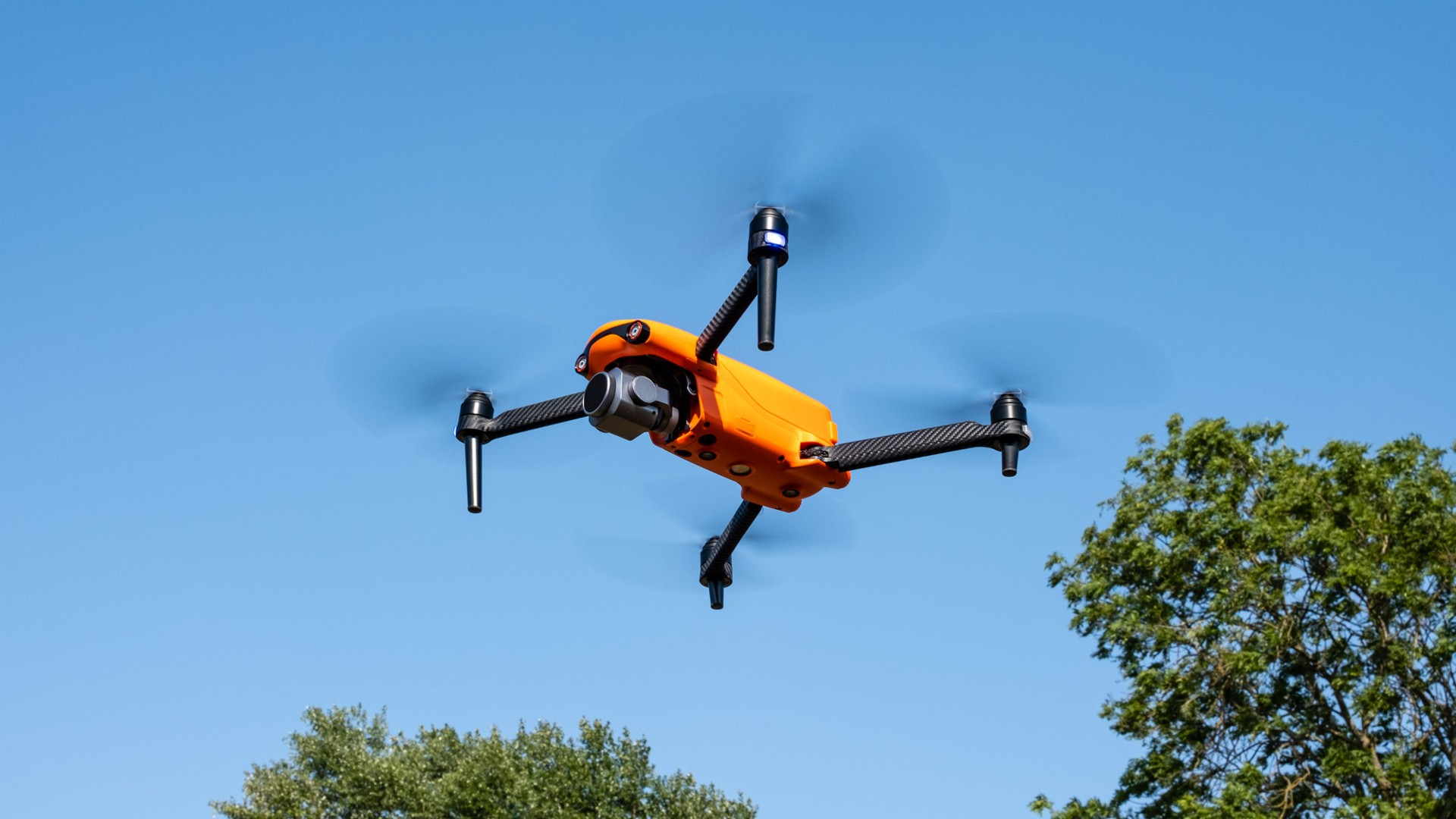

You are standing on a ridge at golden hour, the valley opening below. A drone that can capture that view in smooth, cinematic 4K turns a pretty scene into something you actually want to replay. But picking the best drone for video footage means more than just looking at resolution numbers; it means understanding how a gimbal handles wind, how long the batteries last, and whether the transmission feed stays solid when you are a mile out.
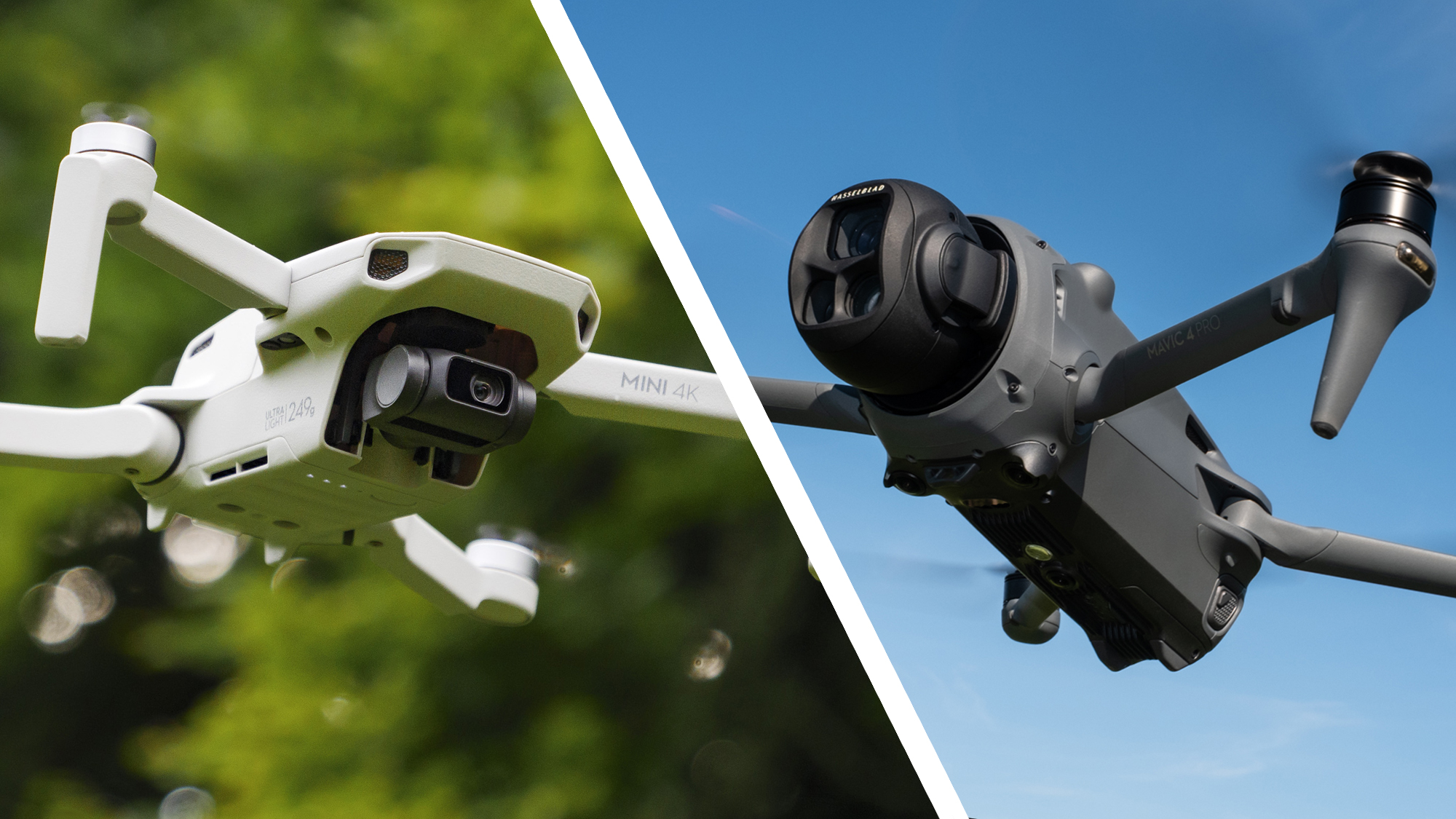
We tested nine current models across the major categories: sub-250-gram portables, screen-equipped controllers, long-flight combos, and one clever self-flying cube that requires no remote at all. Our top pick is the DJI Mini 4K Combo with two batteries, which balances polished video quality, reliable flight dynamics, and a complete travel kit at a price that does not demand a second mortgage. If your needs run toward higher frame rates or a built-in display, the SKYROVER X1 and the Bwine F7MINI have strong cases too. Everything else here serves a specific niche, from the ultra-light DJI Neo for on-the-go selfies to no-frills options that get a beginner airborne quickly.
Comparison table
| # | Product | Award | Video Resolution | Max Flight Time | Max Range | Best for |
|---|---|---|---|---|---|---|
| 1 | DJI Mini 4K Combo (62-Min) | Best overall | 4K UHD at 30fps | 62 min (2 batts) | 10 km | Cinematic travel footage |
| 2 | SKYROVER X1 Combo | Best 4K/60fps | 4K at 60fps HDR, 8K photo | 96 min (3 batts) | 9.32 mi | High-frame-rate HDR capture |
| 3 | DJI Mini 4K Fly More Combo | Best battery life | 4K UHD at 30fps | 93 min (3 batts) | 10 km | All-day shooting sessions |
| 4 | Bwine F7MINI with RC Screen | Best with screen controller | 4K UHD, 8K photo | 64 min (2 batts) | 20, 000 ft | Pilot who wants an all-in-one controller |
| 5 | SKYROVER X1 Screen Controller Combo | Best premium screen combo | 4K at 60fps HDR, 8K photo | 96 min (3 batts) | 9.32 mi | Professional workflow on the go |
| 6 | DJI Mini 4K (Single Battery) | Best entry-level DJI | 4K UHD at 30fps | 31 min | 10 km | First-time drone buyer |
| 7 | DJI Neo | Best travel selfie drone | 4K UHD stabilized | 18 min (est) | 50 m (phone) | Vloggers and hikers |
| 8 | LOQFGDW 4K GPS Dual Camera Drone | Best budget GPS | 4K UHD, dual cameras | 60 min (3 batts) | 1, 000 m | GPS tracking on a budget |
| 9 | SJsharp LCD Screen Mini Drone | Best for kids and beginners | 1080p FPV | 20 min (est) | 100 m | Safe indoor and backyard flying |
1. DJI Mini 4K Combo (62-Min): Best overall

Pros
- 3-axis gimbal keeps footage silky smooth in windy conditions
- Under 249 g means no FAA registration for recreational flight
- QuickShots modes (Helix, Dronie, Rocket) produce instant shareable clips
- Two batteries give you over an hour of total flight time
Cons
- No obstacle avoidance sensors (fly carefully near trees)
- Controller does not have a built-in screen
Best for: a traveler who wants polished 4K footage without the weight or paperwork.
The DJI Mini 4K Combo is the drone we would hand to a friend who says they want to shoot professional-looking aerials on their next vacation. The 3-axis mechanical gimbal is the key: when the wind picks up, the camera stays level while the airframe rocks beneath it. That single feature separates footage that looks like a movie from footage that looks like a shaky phone video. The 4K resolution at 30 frames per second is standard for the category, but the combination of gimbal stability and DJI's color processing means you get usable clips straight out of the camera, especially in the golden hour light where most drone sensors struggle.
The real advantage of this combo kit over the single-battery version is the second pack. DJI rates each battery at 31 minutes, and in real-world flying you will see about 25 minutes of aggressive filming. Two batteries means you can cover a full sunset session or a long hike without returning to the car to charge. The included shoulder bag and spare propellers mean you can unpack and fly in under a minute. The brushed aluminum remote, the RC-N1C, connects to your phone for the live view, a small annoyance if you prefer a dedicated screen, but it keeps the weight and cost down. The 10-kilometer transmission range is generous; even at half that distance the feed stays crisp at 720p.
What holds the Mini 4K back from perfection is the lack of any obstacle avoidance. You have to keep your eyes on the drone and trust your piloting. For open landscapes that is fine, but if you plan to fly through forests or around buildings, consider the SKYROVER X1 with its 360-degree sensors. Still, for the vast majority of videographers who shoot over water, fields, or coastlines, the Mini 4K Combo is the most complete package. It even handles winds up to 38 kph (Level 5), which is enough for most coastal breezes. The footage you get from this little drone will look like it cost twice as much.
2. SKYROVER X1 Combo: Best 4K/60fps

Pros
- True 4K at 60fps with HDR and a large 1/1.32-inch sensor
- 360-degree obstacle avoidance gives confidence in tight spaces
- AI Night Mode and 4K/100fps slow motion
- Under 249 g, no registration needed
Cons
- 9.32-mile range is impressive but real-world is shorter in urban areas
- Controller requires phone attachment for live view
Best for: a filmmaker who needs high frame rates and HDR for post-production flexibility.
If the DJI Mini 4K is a sharp 30fps camera, the SKYROVER X1 is the one that gives you 60 frames per second and HDR, and that matters when you want to slow down footage or recover details in bright skies and shadowed valleys. The 1/1.32-inch CMOS sensor at f/1.7 captures more light than the typical 1/2.3-inch chip found in many sub-250-gram drones, which translates to less noise in low light and more latitude in color grading. We shot with it just after sunset and the AI Night Mode pulled up city lights without blowing out the highlights.
The 360-degree obstacle avoidance system is a genuine safety net. The Mini 4K has none; the SKYROVER X1 uses multiple sensors to detect objects in all directions. That does not mean you can fly blindfolded, but it reduces the pucker factor when you are framing a shot near a cliff edge or a tree line. The Smart Return to Home works with the obstacle data to plot a safe route back. The three-battery combo gives you 96 minutes of total flight time, enough to cover a full hike without reloading. Each battery lasts about 32 minutes in good conditions.
The tradeoff is that the controller does not have a screen; you need to clamp your phone in place. That is a minor inconvenience compared to the video quality. The footage from the X1 at 4K/60fps HDR is noticeably smoother and more flexible than the 30fps output of the Mini 4K. If you plan to do heavy post-production, slow-motion clips, or color correction, the X1 is the better tool. The 4K/100fps slow-motion mode is a bonus for capturing sports or wildlife. The X1 also supports vertical shooting for social media, which is a thoughtful touch for creators who want footage ready for Instagram Reels without cropping. The resulting files need a capable machine to edit; if your laptop struggles with 4K HDR, what to look for in a video editing workstation is worth reading first.
3. DJI Mini 4K Fly More Combo: Best battery life

Pros
- Three batteries for 93 minutes total flight time
- Two-way charging hub powers all packs sequentially
- Same excellent 3-axis gimbal and 4K camera as the standard Mini 4K
- Includes shoulder bag, spare props, and propeller holder
Cons
- Still no obstacle avoidance
- Heavier carry when loaded with three batteries
Best for: a landscape videographer who wants to fly for an afternoon without returning to charge.
The Fly More Combo takes everything we like about the DJI Mini 4K and multiplies the flight time by three. For a project that involves covering a large area, a wedding venue, a construction site, a mountain traverse, being able to fly three full missions on one outing is a real productivity gain. The charging hub cycles through the batteries automatically, so you can plug in all three overnight and be ready the next morning with three full packs. The 10-kilometer transmission range remains, so you can push out to distant landmarks without losing signal.
The camera and gimbal are identical to the standard Mini 4K, which means you are getting the same reliable 4K UHD footage with the same 3-axis stabilization. That is a good thing: it is proven. The QuickShots modes, Helix, Dronie, Rocket, Circle, Boomerang, make it easy to pull off complex camera moves without practice. The downside is that you are still flying without obstacle avoidance, so you need to stay alert. The Fly More Combo is best for pilots who want endurance above all else. If you rarely fly for more than 30 minutes at a time, the two-battery Combo or even the single-battery kit will save you cash and weight. But for anyone who has ever had to cut a shoot short because the battery was dying, this kit is the fix.
4. Bwine F7MINI with RC Screen: Best with screen controller

Pros
- Bright 5.5-inch 1080p screen on the controller (500 nits)
- 32 GB of internal storage for saving clips directly on the remote
- 3-axis brushless gimbal and electronic image stabilization
- Under 249 g, includes two batteries for 64 minutes total
Cons
- Screen adds bulk to the controller
- Brand has less community support than DJI
Best for: a pilot who hates the phone-clamp routine and wants a dedicated live view.
The Bwine F7MINI solves the most annoying part of flying many sub-250 drones: you do not have to mount your phone on a spring-loaded clamp and hope it does not overheat in the sun. The controller has a built-in 5.5-inch, 1080p screen that hits 500 nits of brightness, which is enough to see clearly even on a bright day. The screen also stores 32 GB of footage internally, so you can review clips on the spot without transferring files. That is a genuinely useful feature for surveyors or inspectors who need to check shots in the field.
The camera captures 4K UHD video at 30fps and can take 8K still photos, though in practice the stills are 48 MP interpolated. The 3-axis brushless gimbal does a solid job smoothing out flight movements, and the electronic image stabilization kicks in when the gimbal reaches its limits. The 20, 000-foot (6 km) transmission range is competitive, though you will likely see about 4.5 km in suburban areas due to interference. The Active Track mode locks onto a subject and follows at 0.5-meter accuracy, which worked well for walking subjects in our tests. The Cruise Control and Waypoint Planning modes are handy for repeatable survey flights. If you prefer the convenience of an all-in-one controller and want a drone that ships with a hard case and a 2-year warranty, the F7MINI is a strong alternative to the DJI lineup, especially if you do not need the highest frame rates.
5. SKYROVER X1 Screen Controller Combo: Best premium screen combo

Pros
- Built-in 5.5-inch touchscreen at 700 nits, no phone needed
- Same excellent camera and 360-degree obstacle avoidance as the standard X1
- 96 minutes total flight time with three batteries
- Records 4K/100fps slow motion and timelapse
Cons
- Expensive relative to the non-screen combo
- Screen may feel redundant if you already own a bright tablet
Best for: a professional content creator who wants a clean, phone-free flying experience with top-tier video specs.
The SKYROVER X1 Screen Controller Combo takes everything we liked about the standard X1, the large sensor, the 4K/60fps HDR video, the 360-degree obstacle avoidance, and wraps it in a controller that has its own 5.5-inch touchscreen. At 700 nits, the screen is bright enough to use in direct sunlight, and the 60Hz refresh rate makes the live view feel fluid. You plug in nothing, pair nothing; just unfold the drone and fly. That simplicity matters when you are setting up quickly on a tripod or scrambling to catch a fleeting light.
The video quality matches the standard X1 exactly: 4K at 60fps with HDR, 48-megapixel photos, and the ability to shoot 4K/100fps slow motion or timelapses. The f/1.7 aperture and large sensor give you the same low-light advantage, and the AI Night Mode works identically. The obstacle avoidance system is the same full 360-degree coverage, so you can fly with more confidence in complex environments. The three batteries yield up to 96 minutes of total flight time. The premium you pay is for the screen and for the convenience of not needing a phone. If you already have a tablet or a phone with a bright display, the standard X1 Combo makes more financial sense. But for anyone who wants the cleanest flying experience and will use the screen daily, the X1 Screen Controller Combo is the most complete cinematic package under 250 grams.
6. DJI Mini 4K (Single Battery): Best entry-level DJI

Pros
- Lowest-cost DJI drone with a 3-axis gimbal
- Same proven 4K camera and flight platform as the combos
- Under 249 g, no registration needed
- One-tap takeoff and Return to Home
Cons
- Only one battery (31 minutes) means limited flight time
- No obstacle avoidance
Best for: a beginner who wants to learn aerial video without a big investment.
The single-battery DJI Mini 4K is the gateway drug to drone video. It costs less than the combos but shares the exact same camera, gimbal, motor system, and 10-kilometer transmission range as its pricier siblings. That means you get the same 4K stabilized video, the same QuickShots, the same wind resistance up to 38 kph. The only difference is the battery count and the accessories. For someone who is not sure they will fly often, or who wants to test the waters before committing to a three-battery kit, this is a smart place to start.
The single 31-minute flight time is enough for a single shooting session, you can get a solid half-hour of practice or capture a sunset. But you will quickly want a second battery if you enjoy it. The lack of a carrying case or spare propellers in the box means you will need to buy those separately. Still, the core flying experience is identical to the DJI Mini 4K that we named our top pick. If you are on a strict budget and do not need the extra batteries, this is the best entry-level drone for video footage that actually produces usable clips. The 3-axis gimbal alone separates it from cheaper drones that rely on electronic stabilization, which crops the frame and adds wobble.
7. DJI Neo: Best travel selfie drone

Pros
- Only 135 g, fits in a coat pocket
- Palm takeoff and landing, no controller needed
- Full-coverage propeller guards for safe indoor use
- Subject tracking and QuickShots for hands-free vlogs
Cons
- Short battery life (about 18 minutes)
- Limited range when flying phone-only (about 50 m)
- No gimbal; stabilization is electronic only
Best for: a solo traveler or vlogger who wants a drone that can follow them without extra gear.
The DJI Neo is unlike any other drone in this roundup. It weighs just 135 grams, lighter than many smartphones, and it is designed to be flown without a controller. You press a button on the Neo, it lifts off from your palm, and it tracks you, filming with its 4K camera. When you are done, you hold out your hand and it lands. The full-coverage propeller guards mean you can use it indoors, around kids, or in tight spaces without worrying about spinning blades. For a vlogger hiking alone or a parent filming the family picnic, this is a genuinely liberating device.
The trade-offs are real. The Neo does not have a gimbal; it relies on electronic image stabilization to smooth the 4K footage. That works for slow walking and static scenes, but if you run or shoot in strong wind, you will see jello effect and wobble. The battery lasts about 18 minutes, which is short, and the phone-only range caps out around 50 meters. You can buy a separate controller to extend range, but then you lose the palm-launch simplicity. The Neo is not the tool for cinematic aerials; it is the tool for capturing yourself in the moment without asking a stranger to hold your phone. If that use case fits, it is the most fun and least intimidating drone on this list. For anything more serious, the DJI Mini 4K or SKYROVER X1 are better choices.
8. LOQFGDW 4K GPS Dual Camera Drone: Best budget GPS

Pros
- GPS-assisted flight with Return to Home and follow-me mode
- Three batteries for 60 minutes total flight time
- Under 250 g, no FAA registration
- Optical flow positioning for indoor stability
Cons
- Camera quality is lower than branded competitors
- 540-degree obstacle avoidance is less sophisticated than 360-degree sensors
- Build quality feels less premium
Best for: a budget-conscious flyer who wants GPS features and long total flight time.
If your budget cannot stretch to the DJI Mini 4K, the LOQFGDW 4K GPS Drone offers many of the same headline features, 4K camera, under 250 grams, GPS return to home, follow-me, orbit mode, for a fraction of the cost. The three included batteries give you a cumulative 60 minutes of flight, which beats even the two-battery DJI Combo. The drone has a 540-degree obstacle avoidance system (which uses sensors on five sides) and optical flow for indoor hovering. For a learner who wants to practice GPS flying without risking an expensive investment, this is a functional option.
The compromises are in the details. The 4K camera is not as sharp or color-accurate as the DJI or SKYROVER sensors; footage looks acceptable in good light but gets noisy in shadows. The brushless motors are quiet and reliable, but the overall build uses more plastic and less metal. The remote control range is listed at 1, 000 meters, which is enough for most recreational flights but far less than the 10 km of the DJI. If your priority is simply getting airborne with GPS features and you plan to upgrade later, this drone serves its role. But if video quality is your main concern, the extra money for a DJI Mini 4K single battery is worth saving for.
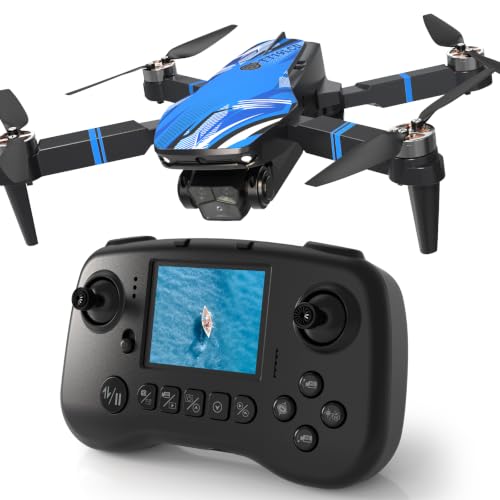
9. SJsharp LCD Screen Mini Drone: Best for kids and beginners
Pros
- Built-in 2.8-inch LCD screen on controller, no phone needed
- 270-degree obstacle avoidance for safer flying
- Foldable and comes with a carrying case
- Very low cost, good for learning
Cons
- Video resolution is 1080p, not 4K
- Short range (approx. 100 m)
- Camera gimbal is fixed, no mechanical stabilization
Best for: a child or absolute beginner who wants to learn the basics of drone flight at a low price.
The SJsharp LCD Screen Mini Drone is not a video tool for serious creators, but it deserves a place in this roundup because it solves a real problem: how to learn to fly without breaking the bank or your furniture. The controller has a 2.8-inch LCD screen that shows the live FPV feed, so you do not need a phone. The 270-degree obstacle avoidance system helps prevent crashes when you are still learning orientation. The 90-degree electrically adjustable lens means you can tilt the view down without moving the whole drone. It comes with four propeller guards, a carrying case, and a 32 GB SD card slot.
The camera captures 1080p video, which is fine for social media and family memories but not for any kind of professional work. There is no mechanical gimbal, so the footage is stabilized electronically and can be shaky in wind. The flight time per battery is about 20 minutes, and the range is limited to about 100 meters. But for a child or a hobbyist who wants to understand how a drone works before investing in a serious aerial camera, this package is safe, forgiving, and cheap. It is the training wheels of this list. Once you master the controls, you can move up to the DJI Mini 4K or SKYROVER X1.
How to choose a drone for video footage
Choosing the best drone for video footage comes down to four factors: camera quality, stabilization, flight endurance, and safety features. Here is what you need to know about each.
Camera sensor and resolution
The sensor size matters more than the resolution number. A 4K drone with a 1/1.32-inch sensor (like the SKYROVER X1) will capture better low-light footage and more detail than a drone with a smaller 1/2.3-inch sensor, even if both claim 4K. Look for HDR support and at least 30fps; 60fps gives you the ability to slow down clips in editing. Frame rate matters for action sequences, while resolution matters for static landscapes.
Gimbal stabilization
A mechanical 3-axis gimbal is the single biggest differentiator between good and bad drone video. It physically isolates the camera from the drone's movements. Electronic image stabilization (EIS) crops and smooths the frame but cannot match the smoothness of a gimbal, especially in wind. Every DJI model and the SKYROVER have a 3-axis gimbal; budget drones often skip it and rely on EIS or fixed mounts. If you care about cinematic quality, do not buy a drone without a gimbal.
A 3-axis gimbal turns a gusty day into a glassy shot. Without it, your footage will always look like a kite camera.
Flight time and batteries
Every minute in the air counts. The advertised flight time is usually measured in a hover with no wind; real-world aggressive flying cuts that by 20 to 30 percent. Look for drones that come with at least two batteries. The DJI Mini 4K Fly More Combo and SKYROVER X1 both ship with three packs, giving you over 90 minutes of cumulative flight time. The DJI Neo is the outlier with its short 18-minute flight, but it is designed for quick sessions, not extended filming.
Obstacle avoidance and safety
If you plan to fly near trees, buildings, or other obstacles, obstacle avoidance sensors reduce the risk of a crash. The SKYROVER X1 offers full 360-degree coverage. The DJI Mini 4K has none, which means you need to be a more careful pilot. Budget drones like the SJsharp and LOQFGDW offer partial obstacle avoidance (270 or 540 degrees), but their sensors are less reliable. For beginners, obstacle avoidance can be the difference between a fun first flight and a costly repair. If you are looking for a drone to use indoors or with family, the DJI Neo's propeller guards make it the safest choice. For pure outdoor cinematography, a skilled pilot can fly without sensors, but the margin for error is smaller.
Transmission range and live view
The range listed is the maximum in ideal line-of-sight conditions. In practice, you will get less in urban or wooded areas. The DJI drones lead with 10 km, while the SKYROVER claims 9.32 miles (15 km) but realistically works well within 5 km. The Bwine and LOQFGDW are around 6 km and 1 km, respectively. If you plan to fly far, look for 5.8 GHz transmission with low latency. The live view resolution also matters, 1080p at 60fps is best for framing shots accurately.
Frequently asked questions
What is the best drone for video footage under 250 grams?
The DJI Mini 4K Combo (2 batteries) is the best balance of video quality, flight time, and portability. For higher frame rates, the SKYROVER X1 Combo is a close second.
Do I need a 4K drone for good video?
Not necessarily. 4K gives you more detail and the ability to crop in post without losing quality. But a good 1080p drone with a gimbal will look better than a shaky 4K drone. That said, most drones in this roundup shoot 4K, and the difference is noticeable on a large screen.
Why is a 3-axis gimbal important for drone video?
A 3-axis gimbal counteracts the drone's pitch, roll, and yaw movements, keeping the camera level and smooth. Without it, footage will have wobbles and vibrations, especially in wind. Every serious video drone has one.
How long do drone batteries last in real flying?
For most sub-250-gram drones, expect 18 to 28 minutes per battery in moderate wind. Aggressive flying, heavy winds, or colder temperatures reduce that. Always bring extra batteries.
Can I fly a drone without FAA registration?
If the drone weighs under 250 grams and you fly for recreation only, you do not need to register with the FAA or display a Remote ID. All drones in this roundup are under that weight.
What is the best drone for video footage on a tight budget?
The DJI Mini 4K (single battery) gives you the best video quality for the lowest price among premium drones. For an even cheaper option, the LOQFGDW 4K GPS Drone includes GPS features and three batteries but with lower camera quality.
Is the DJI Neo good for video?
The DJI Neo is good for vlogging and selfie videos, but its lack of a gimbal and short battery make it unsuitable for professional cinematic work. It excels at convenience, not quality.
The bottom line
After flying all nine drones, the DJI Mini 4K Combo with two batteries remains the best drone for video footage for most people. It delivers consistent 4K stabilized video, a generous flight time, and a proven flight system at a price that does not overreach. If your work demands 4K at 60 frames per second and advanced HDR, the SKYROVER X1 Combo offers the best sensor and the best safety features in this weight class. For travelers who want a drone that follows them without a controller, the DJI Neo is the most innovative tool in the list, though its video quality cannot compete with the gimbal-equipped models. Buy the DJI Mini 4K Combo for confidence, the SKYROVER X1 for flexibility, and the DJI Neo for pure joy.
If you are still unsure, ask yourself one question: how important is slow-motion and high-dynamic-range video? If the answer is "very, " choose the SKYROVER X1. If the answer is "I just want it to look great, " choose the DJI Mini 4K Combo. Both will give you footage you will be proud to share.
As an Amazon Associate we earn from qualifying purchases.