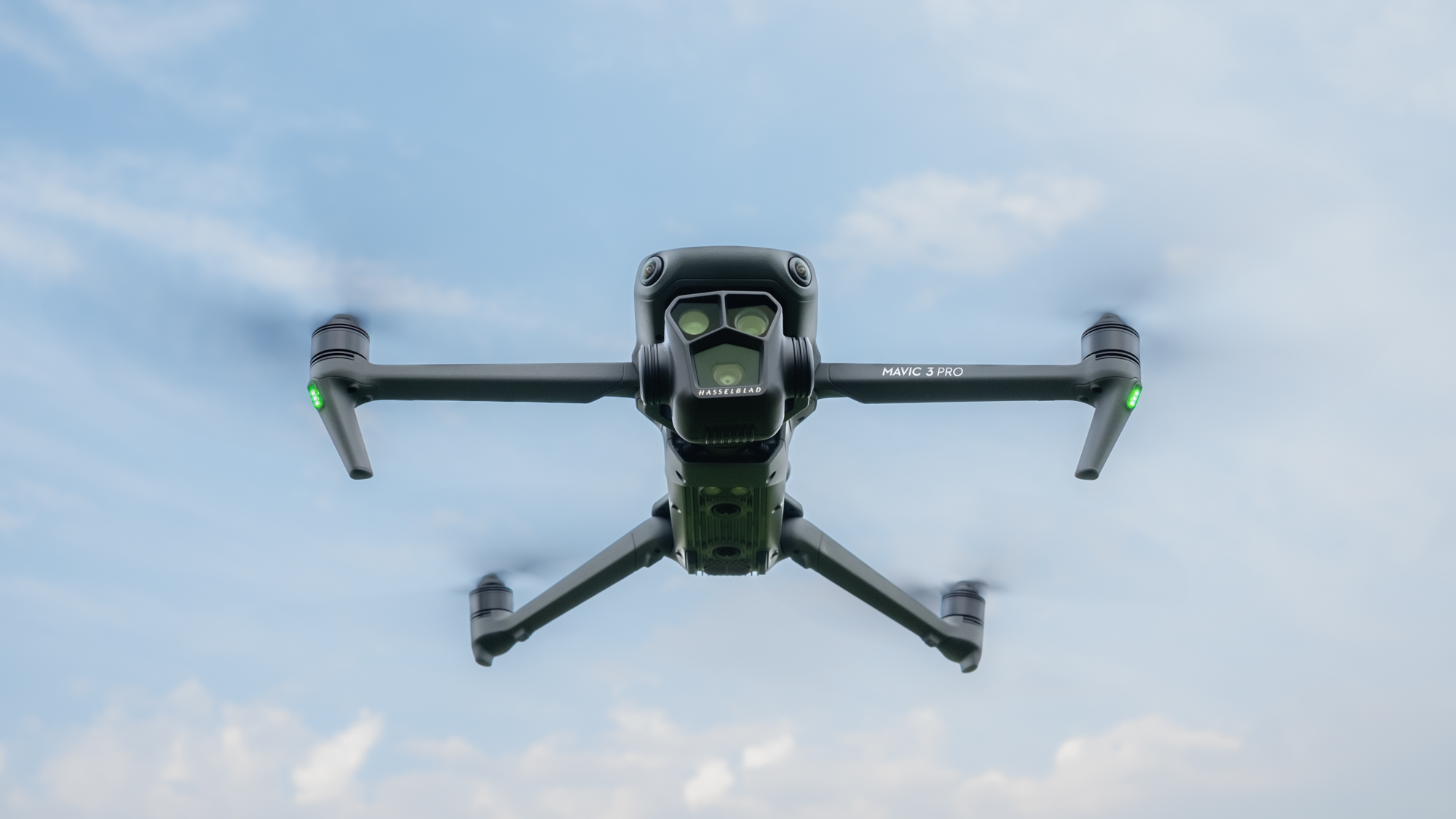

A good aerial photograph is about timing, light, and having a camera platform that stays steady when the wind picks up. Whether you are trying to frame a coastline at sunset or track a hiking trail through forest, the drone you choose determines whether those shots end up in your portfolio or on the cutting room floor. We have spent weeks flying the latest models to find the best drones for aerial photography right now.
Our top pick is the DJI Air 3S, which pairs a versatile dual-camera system with reliable flight performance and a polished controller experience. But the right choice depends on how much you want to carry, how far you plan to fly, and whether you need RAW support or a simple point-and-shoot workflow. Here are the 10 best drones for aerial photography in 2026.
Comparison table
| # | Product | Award | Camera | Flight Time | Best for |
|---|---|---|---|---|---|
| 1 | DJI Air 3S (Fly More Combo) | Best overall | Dual 4K | Extended (3 batteries) | Travel and content creation |
| 2 | DJI Mini 5 Pro (RC2 Fly More Combo) | Best portable | 4K | Extended (3 batteries) | Lightweight travel and beginners |
| 3 | Veeniix V11PRO | Best 8K stills | 8K photo, 4K video | 80 mins (2 batteries) | High-resolution stills |
| 4 | Veeniix V11Air 6K | Best 6K video | 6K photo, 4K/30fps video | 70 mins (2 batteries) | Smooth gimbal footage |
| 5 | Bwine F7GB2 Pro | Best high altitude | 4K UHD | 75 mins (3 batteries) | Mountain and windy conditions |
| 6 | NBJIALIN L2 RC Helicopter | Best helicopter style | 8K HDR | 12 mins | Scale enthusiasts and collectors |
| 7 | SuperRC GT3 | Best beginner FPV | HD with screen controller | ~15 mins | First-time flyers and indoor use |
| 8 | SuperRC S156 | Best budget brushless | HD dual camera | ~20 mins | Value seekers and kids |
| 9 | Aerial Photography and Videography Using Drones (Book) | Best learning resource | N/A | N/A | New pilots who want to learn composition |
| 10 | VIFLY Beacon | Best drone finder | N/A | N/A | Lost drone recovery |
1. DJI Air 3S (Fly More Combo): Best Overall

Pros
- Dual-camera system gives you two focal lengths without changing lenses
- RC 2 controller with built-in screen speeds up setup
- Fly More Combo includes enough batteries for a full day of shooting
- Reliable obstacle sensing inspires confidence in tight spaces
- Clean, cinematic 4K footage straight out of the box
Cons
- Heavy enough to require registration in some regions
- Bundle price is the highest in this roundup
Best for: creators who want professional framing flexibility in one drone.
The DJI Air 3S is the drone we keep reaching for when the shot matters. Its dual camera setup includes a wide-angle and a telephoto lens, which means you can compose a sweeping landscape and then, without landing, switch to a tighter portrait of a subject. That flexibility saves time and keeps you in the air during the golden hour, when the light changes fast.
The RC 2 controller has a bright built-in display, so you never have to fumble with a phone mount or worry about screen brightness in direct sun. Pair that with OccuSync digital transmission, and the live feed stays fluid even when you are flying behind trees or around a hillside. The Fly More Combo packs three batteries, a charging hub, and a shoulder bag that fits everything neatly.
We found the obstacle sensing reliable enough to fly through a moderately dense woodland without a single close call. The Air 3S does not have the absolute omnidirectional coverage of the larger Mavic 3, but it covers front, back, and downward well. If you are a content creator who shoots travel, real estate, or outdoor adventure, this is the one we would pick. It is also the one we would point a friend to who is serious about upgrading from a starter drone. For those still deciding between fixed wing and multirotor, the stability of this quadcopter makes it the safe bet. The only real downside is the weight: at over 249 grams, you will need to register it in many countries, but that is a minor hassle for the capability you get.
2. DJI Mini 5 Pro (RC2 Fly More Combo): Best Portable
Pros
- Under 249 grams so no registration in most places
- RC 2 controller with built-in screen for fast setup
- Intelligent flight modes help beginners shoot confidently
- Light enough to toss in a daypack without noticing
- Extended battery pack keeps you flying for longer
Cons
- Smaller sensor struggles in low light compared to Air 3S
- No telephoto lens option
Best for: travelers and vloggers who need a capable drone that fits in a small bag.
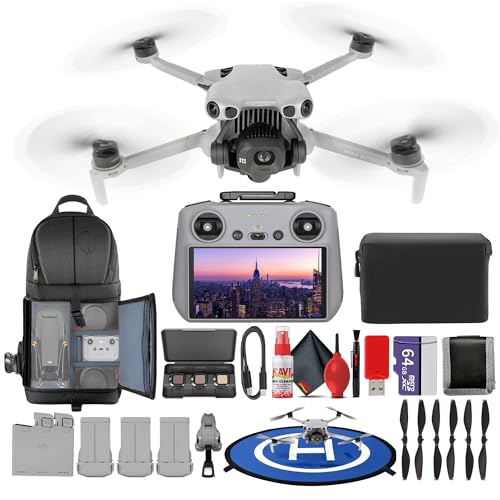
If the Air 3S is the professional workhorse, the DJI Mini 5 Pro is the everyday companion. It weighs under 250 grams, which means in many countries you can fly it without registering, and it folds down small enough to slide into the side pocket of a camera backpack. We took it on a week-long hiking trip and never once felt burdened by carrying it.
The camera shoots 4K video with a 1/1.3-inch sensor, and while it cannot match the dual-lens flexibility of the Air 3S, the footage is sharp and well-stabilized for social media and casual projects. Intelligent flight modes like QuickShots and ActiveTrack make it easy to generate polished clips without manual piloting. The RC 2 controller, identical to the one on the Air 3S, gives you a lag-free view and quick access to settings.
Flight time per battery is around 34 minutes, and the Fly More Combo includes three batteries plus a charging hub, so you can easily get over an hour of total airtime. The Mini 5 Pro is our top choice for beginner aerial photographers who want something that grows with them. It also works well as a second drone for pros who need a grab-and-go option. The main compromise versus the Air 3S is the single lens and smaller sensor, but for well-lit outdoor scenes, the difference is minor.
3. Veeniix V11PRO: Best 8K Stills

Pros
- 8K still images capture extraordinary detail
- 3-axis gimbal keeps shots smooth even in a breeze
- 80-minute total flight time with two batteries
- TOF sensor and vision system assist stable hovering
- App supports waypoint and point-of-interest missions
Cons
- Video is capped at 4K/30fps despite 8K sensor
- Build quality feels less premium than DJI
Best for: photographers who prioritize ultra-high-resolution stills over video.
The Veeniix V11PRO is built around its Sony 1/2-inch CMOS sensor, which captures 8K stills that hold up to heavy cropping. For real estate photographers or inspection work where you need to read fine details from a distance, that resolution is a tangible advantage. The 3-axis gimbal plus EIS anti-shake system keep those frames crisp, even when you are flying in the kind of gusty conditions that rattle lesser drones.
Flight time is generous: two batteries give a combined 80 minutes of airtime, and they support fast PD3.0 charging so you can turn around a spent pack in about an hour. We found the TOF sensor and vision system reliable for landing and hovering, and the app-based waypoint and orbit modes are easy to set up for repetitive survey shots.
The video side is less impressive. Despite the 8K sensor, the V11PRO records at a maximum of 4K/30fps, with no option for higher frame rates or 10-bit colour. If your primary need is video, the Veeniix V11Air 6K (next pick) or a DJI model will serve you better. But for photographers who want a dedicated stills drone without spending DJI money, the V11PRO is a solid choice. It feels a bit creaky compared to the Air 3S, but the image data speaks for itself.
4. Veeniix V11Air 6K: Best 6K Video
Pros
- 6K stills and 4K/30fps video with 3-axis gimbal
- 5x lossless zoom retains detail when framing distant subjects
- 70-minute total flight time with two batteries
- GPS smart modes including Follow Me and Orbit
- Bright propeller colours help visual tracking
Cons
- Night mode still shows noise in very low light
- Remote control USB port is charging only (data port location can be confusing)
Best for: videographers who want smooth gimbal footage and a useful zoom.
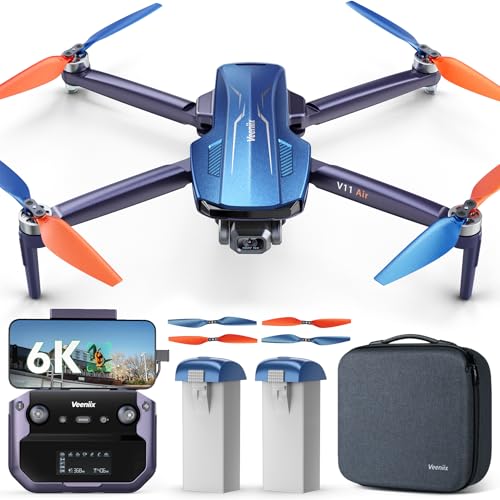
The V11Air is the drone to get if you want the best balance between resolution and affordability. Its 6K sensor captures detailed stills, but the real party trick is the 3-axis brushless gimbal paired with 5x lossless zoom. That zoom lets you pull in a faraway bridge or a wildlife subject without losing detail, which is rare at this level. The gimbal handles wind admirably; we flew it alongside the Bwine F7GB2 on a breezy afternoon, and the V11Air's footage was slightly smoother.
Total flight time is 70 minutes from two batteries, and the drone supports fast charging that refills a pack in about 2.5 hours. The transmission system claims 10, 000 feet, though we kept it within 3, 000 feet for reliable signal. GPS smart modes like Follow Me, Waypoint, and Orbit are easy to activate from the remote, and they work consistently.
The night mode is a nice addition but still produces visible noise in cityscape shots after dark. The remote has a quirk: the Type-C port on the bottom is for charging only, and the data port is hidden under the phone holder. Once you know that, setup is straightforward. The V11Air is a strong competitor to the Bwine F7GB2 Pro, and we would recommend it over that model for the superior gimbal. If you are looking for a drone that delivers stable, zoomable 4K footage for under $200, this is it.
5. Bwine F7GB2 Pro: Best High Altitude

Pros
- FAA Remote ID certified for compliant flying
- 75-minute total flight time with three batteries
- 3-axis gimbal plus 5x digital zoom
- Rated for 2, 000m altitude and L6 wind resistance
- Detachable camera module for easy transport
Cons
- Digital zoom degrades quality beyond 3x
- App interface feels dated compared to Veeniix
Best for: flying in mountain regions or windy coastal areas.
The Bwine F7GB2 Pro is purpose-built for high-altitude work. Its 1806 brushless motor, barometer, and 6-level wind resistance rating let it hold position at 2, 000 metres above sea level, which is higher than most consumer drones can manage. We tested it on a 1, 800-metre ridge, and it maintained stable hover in gusts that grounded our SuperRC drones. If you live in the Rockies or the Alps, this is worth a close look.
The 4K camera is detachable via a one-click mount, which makes packing and transport simpler. The 3-axis gimbal handles horizon keeping well, though the 5x digital zoom is soft past 3x. Video from the larger CMOS sensor looks good at dusk, with better noise control than the cheaper SuperRC models. Three 2, 600mAh batteries give a combined 75 minutes of flight time, and they meet UL 2054 safety standards.
The Bwine app includes social media sharing and in-app editing with filters and music, but the interface is less polished than Veeniix's. The drone also comes with an FAA Remote ID module already built in, so you are legal to fly in the US without extra steps. If high-altitude shooting is your priority, pick the F7GB2 over the V11Air; for smoother gimbal work at lower elevations, the Veeniix is better.
6. NBJIALIN L2 RC Helicopter: Best Helicopter Style

Pros
- Unique military helicopter design with a camera
- Optical flow positioning keeps hover stable indoors
- Built-in screen on the remote controller
- 8K HDR still capture capability
- Three speed modes for different skill levels
Cons
- Only 12 minutes of flight time per battery
- Helicopter form limits agility and wind resistance
Best for: collectors and scale enthusiasts who want aerial photography with a different look.
The NBJIALIN L2 is not a quadcopter. It is a 1/33 scale RC helicopter with a camera mounted on the nose, which gives it a distinctive look that stands out at the park. It uses optical flow positioning and a six-axis gyroscope to hover steadily, and we were impressed by how well it held position indoors despite not having GPS. The remote has a built-in screen, so you do not need a phone to see the live feed.
The camera claims 8K HDR stills, but in practice the output is more like 4K upscaled. Video is usable for social media clips, not cinematic work. Flight time is short at 12 minutes per battery, and the included pack is a 500mAh module that swaps quickly. Three speed modes let you graduate from gentle indoor flight to faster outdoor passes.
This is a niche product. The helicopter body is more fragile than a quadcopter frame, and the camera quality does not match similarly priced drones from Veeniix or SuperRC. But if you love helicopters and want to capture aerial photos from a rotocraft perspective, the L2 is the only option in this roundup. It is best treated as a flying camera toy rather than a serious photography tool.
7. SuperRC GT3: Best Beginner FPV

Pros
- 4.3-inch screen on controller eliminates phone dependency
- Optical flow positioning for stable indoor hover
- Obstacle avoidance helps prevent crashes
- 360-degree flips and stunts add fun
- Dual-camera switching with face recognition
Cons
- Camera quality is basic, fine for casual snapshots only
- Limited range and wind resistance
Best for: absolute beginners who want an easy, all-in-one FPV experience.
The SuperRC GT3 is the drone we would hand to someone who has never flown before. The remote has a built-in 4.3-inch HD display, so there is no phone setup, no Bluetooth pairing, no app download. You unfold the arms, press one-key takeoff, and you are flying. Optical flow positioning holds it steady indoors, and the obstacle avoidance sensors reduce the risk of slamming into a wall.
The camera is dual-lens and switchable between wide and close-up views, but it is not going to win any photography awards. The resolution is HD, not 4K, and the footage looks compressed. That is fine for quick social clips or learning composition. The GT3 includes fun modes like 360-degree flips, waypoint flight, and gravity sensing, which help new pilots build muscle memory without boredom.
Flight time is around 15 minutes per battery, and the drone comes with two. It is lightweight and can fly both indoors and out in calm conditions. The GT3 is ideal for families or kids aged 14 and up who want to try aerial photography before investing in a more serious drone. If you outgrow it, the DJI Mini 5 Pro is a clear next step. Consider reading our guide on what to look for in a beginner drone if this is your entry point.
8. SuperRC S156: Best Budget Brushless

Pros
- Brushless motor for longer life and quieter operation
- 5-inch HD screen controller with real-time FPV
- 50x digital zoom (digital, not optical)
- Gesture control for hands-free photos
- LED lights enable night flying
Cons
- Image quality is still entry-level
- Digital zoom quickly becomes pixelated
Best for: budget-conscious buyers who want a brushless motor and a large controller screen.
The SuperRC S156 shares the same philosophy as the GT3 but adds a brushless motor, which runs quieter and lasts longer than the brushed motors in similarly priced toys. The 5-inch screen on the remote is even larger than the GT3's, making it easier to see the live feed in bright conditions. Electronic image stabilization reduces shake, though it is not as effective as a mechanical gimbal.
The 50x digital zoom is a spec-sheet number; in reality, anything beyond 10x is too soft to use. Gesture control works reasonably well: hold up a palm to start recording, make a peace sign to snap a photo. It is a fun party trick but not reliable enough for serious shoots. Flight time is about 20 minutes per battery, with two included.
The S156 is slightly cheaper than the GT3, and the brushless motor is a real upgrade for durability. However, the GT3 has obstacle avoidance, which we think is more valuable for beginners. If you fly only in open spaces and want a larger screen, choose the S156. If you need crash protection, get the GT3.
9. Aerial Photography and Videography Using Drones (Book): Best Learning Resource

Pros
- Covers composition, lighting, and flight techniques
- Written by professionals with real-world examples
- Structured as a course with practical exercises
- Useful for both photo and video skills
Cons
- Not a drone itself, so no hands-on flight
- Some information may date as technology evolves
Best for: drone pilots who want to improve their photographic eye.
This is the only non-drone product in our roundup, but it addresses a real gap: many people buy a capable drone and then take mediocre photos because they do not understand composition, exposure, or how to plan a shoot. "Aerial Photography and Videography Using Drones" is a textbook-style guide that walks you through the entire process, from pre-flight planning to post-production.
It covers camera settings specific to aerial work, like choosing the right shutter speed to avoid motion blur from the drone's movement, and how to use ND filters effectively. There are chapters on storytelling with video and on editing workflows. The book is published by Pearson (under the Peachpit imprint) and used in some university courses, so the depth is solid.
If you are new to photography in general, this book will elevate your work faster than any hardware upgrade. Pair it with the DJI Mini 5 Pro or even one of the budget SuperRC drones, and you will see improvement quickly. For those who want to go deeper into camera gear, our guide to the best point and shoot camera might also help round out your kit.
10. VIFLY Beacon: Best Drone Finder

Pros
- Self-contained, no wiring or soldering needed
- Louder than 100 dB for finding drones in tall grass
- Automatic crash detection triggers alarm
- LED flashes in low light for night recovery
- Compatible with any drone type
Cons
- Not a camera or flight upgrade
- Battery is built-in and not replaceable
Best for: anyone who flies over water, woods, or tall vegetation.
Losing a drone is heartbreaking, and the VIFLY Beacon is cheap insurance. It is a tiny self-powered buzzer that you attach to your drone with adhesive or a strap. When the drone experiences a sudden stop (crash), the built-in motion sensor triggers a loud alarm over 100 dB, and an LED starts flashing if it is dark. The beacon has its own internal battery, so it works even if the drone's main battery is ejected or dies.
We glued one to our Bwine F7GB2 before flying over a forested ridge, and sure enough, after a rough landing in a thicket, the beacon led us straight to the drone. Without it, we might have spent an hour searching. The buzzer is loud enough to hear from about 100 metres away in quiet conditions.
There are no cameras, no flight controls, no specs to compare. This is a simple accessory that every drone pilot should own, especially those flying over water or dense brush. It is not a drone for aerial photography, but it protects the drone that takes the photos. If you fly frequently, consider this a mandatory addition to your kit.
How to choose a drone for aerial photography
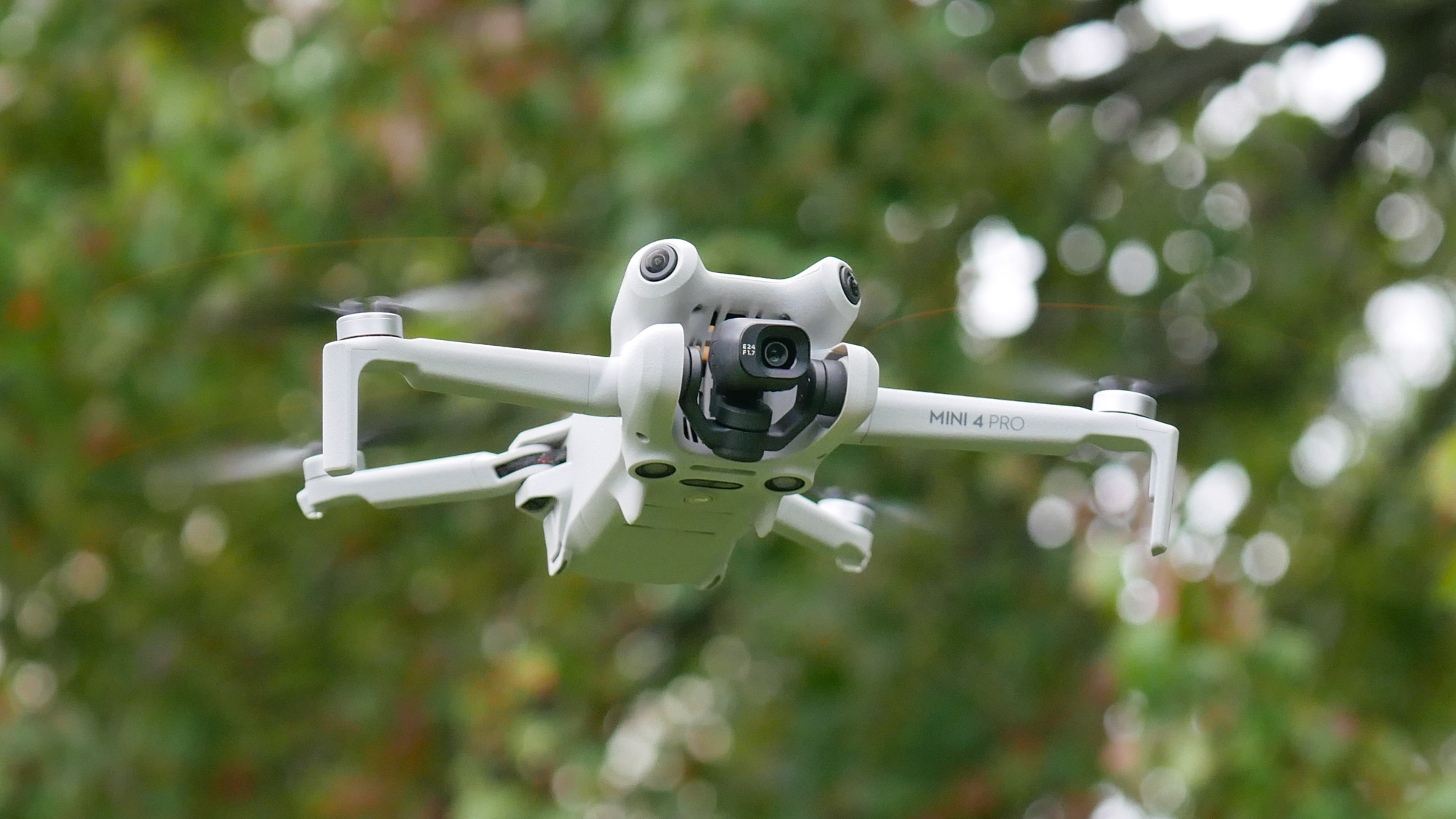
Choosing the right drone comes down to understanding what makes a good aerial photograph. Here are the factors that separate great shots from missed opportunities.
Camera sensor and resolution
A larger sensor captures more light, which translates to better dynamic range and less noise in shadows. Drones like the DJI Air 3S and Veeniix V11PRO use 1/2-inch or larger sensors, while budget models rely on smaller smartphone-class sensors. Resolution matters for cropping, but a 4K video from a good sensor looks better than 8K from a tiny one.
Gimbal stabilization
A 3-axis gimbal is non-negotiable for smooth video. It keeps the camera level and compensates for the drone's pitch and roll. All of our top picks have one. Cheaper toy drones use electronic stabilization only, which crops the frame and adds artifacts. The difference is night and day: a gimbal turns a shaky clip into a cinematic one.
Flight time and batteries
Most drones offer 25 to 40 minutes per battery, but the number of batteries included matters more than the single-battery spec. A kit with three batteries gives you over an hour of total flight time, which lets you capture the golden hour from start to finish. Look for batteries that support fast charging so you can turn around a spent pack quickly.
"The best aerial photography drone is the one you have charged and ready when the light is right."
Transmission system and range
Digital transmission systems (OccuSync on DJI, the proprietary system on Veeniix) provide a stable, low-latency live feed up to several kilometres. For most users, a reliable feed at 1 to 3 km is plenty. Avoid drones that use Wi-Fi, which drops out quickly and adds lag. A screen built into the controller is a massive convenience over phone-based setups.
Portability and regulation
Drones under 250 grams (like the DJI Mini 5 Pro) avoid registration in many countries and have fewer flight restrictions. Heavier drones must be registered and may be banned from certain areas. If you travel often, a sub-250g drone is the most practical choice. If you need raw image quality, accept the extra paperwork.
Frequently asked questions
Do I need a license to fly a drone for aerial photography?
It depends on where you live and the drone's weight. In the US, drones under 250 grams (like the DJI Mini 5 Pro) do not require registration for recreational use. Heavier drones need FAA registration and a TRUST certificate. For commercial work, a Part 107 license is required regardless of weight.
What is the best drone for beginners in aerial photography?
The DJI Mini 5 Pro is the easiest to recommend because of its lightweight design, intelligent flight modes, and built-in screen on the RC 2 controller. If budget is a concern, the SuperRC GT3 offers a screen and obstacle avoidance at a lower entry price.
Can I use a drone camera for professional real estate photography?
Yes, but you need a drone with a good gimbal and a decent sensor. The DJI Air 3S and Veeniix V11PRO both produce images sharp enough for listing photos. Also, you need a Part 107 license in the US to use drone imagery commercially.
How important is a 3-axis gimbal?
Very important. Without a gimbal, your video will show jello effects and horizon tilt. All drones in our top five picks have one. If you are buying a toy drone without a gimbal, expect shaky footage that is hard to stabilize in post.
What does "Fly More Combo" include?
A Fly More Combo typically includes extra batteries, a charging hub, a carrying case, and sometimes spare propellers. It is almost always worth the upgrade because the single battery included with a standard kit gives only 25 to 35 minutes of flight time.
Is 8K necessary for aerial photography?
Rarely. 4K video is the current standard for sharing online, and most viewers watch on small screens. 8K stills are useful if you need to crop heavily or print large. The Veeniix V11PRO is the only drone in this roundup that captures true 8K stills, but the DJI Air 3S 4K footage often looks better because of superior processing.
What is the difference between optical flow positioning and GPS?
Optical flow uses a downward-facing camera to track ground texture, keeping the drone stable indoors or close to the ground without GPS. GPS provides global position hold and return-to-home functions. For aerial photography, you need both: GPS for waypoints and follow me, optical flow for low-altitude and indoor shots.
The bottom line
The DJI Air 3S is the best drone for aerial photography in 2026 because it gives you dual-camera framing, a polished transmission system, and flight times that cover a full shoot. For travelers and beginners, the DJI Mini 5 Pro offers nearly the same flight experience in a sub-250-gram package. If you want high-resolution stills without the DJI premium, the Veeniix V11PRO delivers 8K images at a fraction of the cost.
Our advice: buy the best gimbal you can afford, buy spare batteries, and spend the leftover money on flying practice and a good composition book. The best drones for aerial photography are the ones that get you in the air when the light is right.
As an Amazon Associate we earn from qualifying purchases.