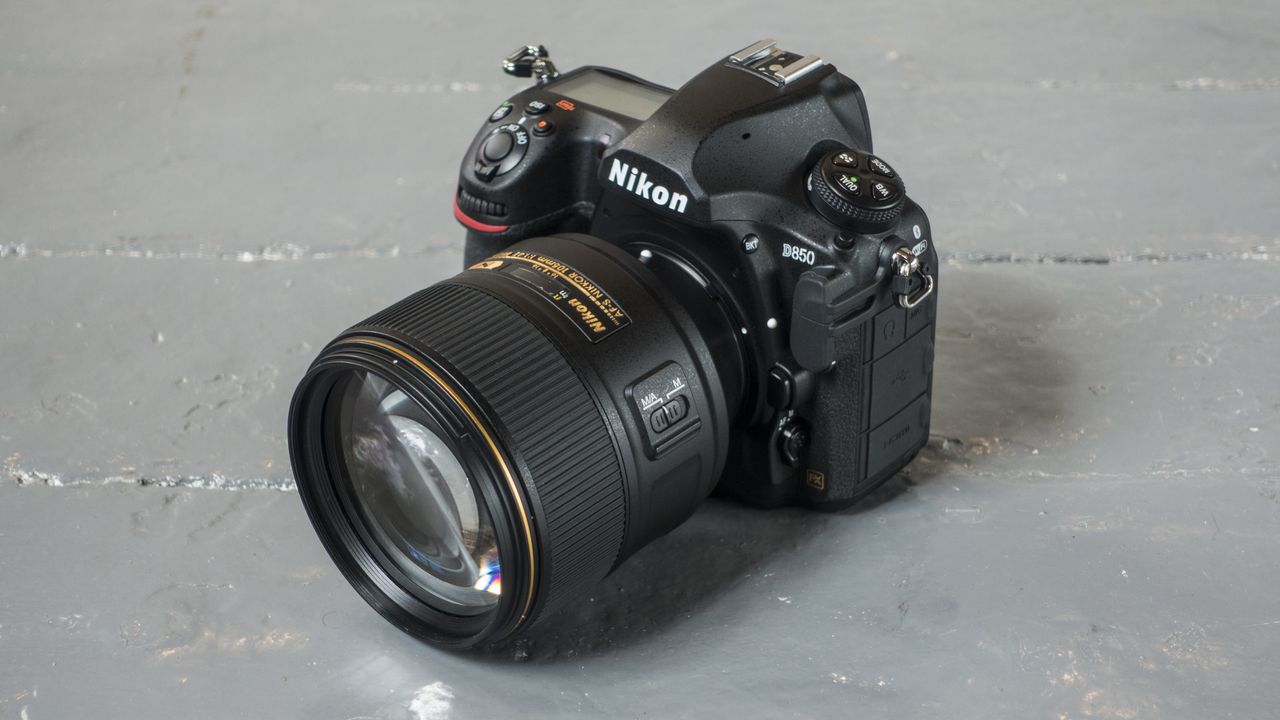

A DSLR still makes sense when you want a real optical viewfinder, tactile controls, and access to a deep lens system without relying on a phone-sized body. The problem is that current listings mix capable cameras with old models, renewed kits, bridge cameras, and bundles overloaded with accessories.
This guide compares 10 options ranging from beginner-friendly Canon bodies to Nikon's faster D7500, along with a superzoom alternative and older renewed DSLR kits. The best DSLR camera for most beginners is the Canon Rebel T7 18-55mm, while the Nikon D7500 18-140mm is the stronger choice for action and advanced shooting.
Comparison
| # | Product | Award | Sensor | Lens or zoom | Best for |
|---|---|---|---|---|---|
| 1 | Canon Rebel T7 18-55mm | Best overall | 24.1MP APS-C CMOS | EF-S 18-55mm | New photographers |
| 2 | Canon Rebel T7 Dual Lens | Best Canon kit | 24.1MP APS-C CMOS | 18-55mm and 75-300mm | Portraits and distant subjects |
| 3 | Nikon D7500 18-140mm | Best for action | 20.9MP DX | AF-S DX 18-140mm VR | Wildlife and sports |
| 4 | Nikon D7500 Body | Best enthusiast body | 20.9MP DX | Lens not included | Existing Nikon owners |
| 5 | Canon Rebel T7 Renewed | Best renewed starter | 24.1MP APS-C CMOS | 18-55mm | First interchangeable-lens camera |
| 6 | Canon Rebel T7 Bundle | Best ready-to-shoot kit | 24.1MP APS-C CMOS | 18-55mm | Travel and family photography |
| 7 | Kodak Pixpro AZ528 | Best fixed-lens alternative | 16MP BSI CMOS | 52x optical zoom | Wildlife reach without changing lenses |
| 8 | Nikon D40 Renewed | Best simple Nikon | 6.1MP CCD | 18-55mm | Basic manual photography |
| 9 | Canon Rebel T7 3-Lens Kit | Best accessory kit | 24.1MP APS-C CMOS | 18-55mm plus wide angle and telephoto | New photographers wanting extras |
| 10 | Canon Rebel T7 20-Piece Bundle | Best large bundle | T7 sensor | 18-55mm plus accessories | An all-in-one starter set |
1. Canon Rebel T7 18-55mm: Best Overall

Pros
- Detailed 24.1MP APS-C sensor
- Built-in Wi-Fi and NFC
- Familiar controls for beginners
- Compatible with Canon EF and EF-S lenses
Cons
- Nine-point autofocus system is limited
- Optical viewfinder shows approximately 95% of the scene
- Full HD video only
Best for: beginners who want a straightforward Canon DSLR with a useful starter lens.
The Canon Rebel T7 18-55mm is the camera we would hand to a new photographer who wants to learn photography rather than simply collect a large kit. Its controls are approachable, the optical viewfinder makes composing outdoors comfortable, and the 18-55mm lens covers everyday scenes, portraits, and casual travel without making the camera feel intimidating.
The 24.1MP APS-C CMOS sensor gives photographs enough detail for substantial crops and larger prints. Its ISO range runs from 100 to 6400, with expansion to 12800, so the camera can handle indoor family pictures and evening scenes better than a basic compact camera. Higher ISO settings will not eliminate the need for good light, but they give beginners room to keep shooting when conditions are less than ideal.
Autofocus is the main compromise. The nine-point system with AI Servo AF is perfectly usable for portraits, landscapes, and ordinary family moments, but it is not as flexible for a subject moving unpredictably across the frame. The optical viewfinder covers approximately 95% of the final image, which means the edges can include a little more than you saw while composing. Built-in Wi-Fi and NFC help move photos to a compatible mobile device, and Canon's EOS Utility Webcam Beta Software can turn the camera into a webcam on compatible Mac and Windows computers.
Compared with the Canon Rebel T7 Dual Lens, this version is easier to carry and less costly to manage because it includes only the lens most beginners use first. The Nikon D7500 18-140mm is plainly more capable for action, with a denser autofocus system and faster continuous shooting, but it is a more demanding camera. Readers who want immediate long-lens reach should choose the dual-lens Canon instead. Everyone else gets the cleanest introduction to the Canon system here.
The weakness is not hidden by the pleasant handling. The T7 is an entry-level body, and the nine-point autofocus system can become frustrating once sports or fast-moving wildlife enters the picture. For family photography, travel, portraits, and learning exposure, it remains the best DSLR camera in this group.
2. Canon Rebel T7 Dual Lens: Best Canon Kit

Pros
- Includes standard and telephoto lenses
- 24.1MP APS-C sensor
- Wi-Fi and NFC built in
- Full HD video recording
Cons
- Nine-point autofocus is dated
- Telephoto lens adds considerable bulk
- No advanced weather protection listed
Best for: beginners who want to photograph both everyday subjects and distant scenes from the start.
The Canon Rebel T7 Dual Lens gives the basic T7 platform a much wider shooting envelope. The included EF-S 18-55mm lens is the natural everyday option, while the EF 75-300mm lens lets a new photographer try birds, field sports, stage performances, and compressed portraits without immediately shopping for another lens.
Image quality is the same fundamental strength as the single-lens T7. The 24.1MP APS-C CMOS sensor records plenty of detail, and the ISO range of 100 to 6400, expandable to 12800, covers the familiar daylight-to-indoor progression. Full HD 1080p video is available, though this is primarily a stills camera and should not be treated like a modern video-first body.
The nine-point AF system and AI Servo AF can keep up with deliberate subjects, but the system requires more anticipation than the Nikon D7500. The optical viewfinder shows approximately 95% coverage, while Wi-Fi and NFC make sharing easier after a day outside. The listing also identifies Dual Pixel CMOS AF and eye detection AF, which gives this kit a more useful live-view angle than the basic description alone suggests, though the optical viewfinder remains the more DSLR-like way to shoot.
The extra lens is the reason to choose this model over the Canon Rebel T7 18-55mm. It reaches far beyond the standard zoom, but that reach comes with a practical cost in weight and bag space. The Nikon D7500 18-140mm offers a more convenient single-lens range and much stronger autofocus, while this Canon is a more approachable starting point for someone who specifically wants to learn with two focal-length options.
The telephoto lens is not a substitute for a high-performance wildlife setup. Its reach is useful, but a moving subject can expose the limitations of the autofocus system quickly. Choose it when variety matters more than speed, and when having a second lens immediately available will encourage you to photograph beyond the usual family snapshots.
3. Nikon D7500 18-140mm: Best for Action

Pros
- 51-point autofocus system
- Up to 8 frames per second continuous shooting
- Tilting touchscreen LCD
- 4K Ultra HD video
- Versatile 18-140mm lens
Cons
- Heavier and more advanced than beginner models
- 20.9MP resolution is lower than the T7
- Lens and body make a larger kit
Best for: photographers who need faster focusing and shooting for wildlife, sports, and active subjects.
The Nikon D7500 18-140mm is the clear performance step up in this collection. It feels designed for the photographer who has already moved beyond automatic modes and wants controls that respond quickly when a subject moves. The included AF-S DX NIKKOR 18-140mm f/3.5-5.6G ED VR lens is a sensible companion, covering wide scenes through moderate telephoto without forcing a lens change every few minutes.
Its 20.9MP DX-format sensor does not match the Canon T7's 24.1MP count, but resolution is only one part of a camera's behavior. The D7500's 51-point autofocus system includes 15 cross-type sensors and group-area AF, giving it a much denser focusing network for subjects that refuse to stay still. Continuous shooting reaches up to 8 frames per second, a major difference from the entry-level Canon bodies when timing a jump, wingbeat, or running player.
The camera also has a 3.2-inch, 922K-dot tilting LCD with touch functionality. That helps when shooting from a low angle or checking settings without relying entirely on the viewfinder. Video support includes 4K Ultra HD and 1080p Full HD, with stereo sound, auto ISO, power aperture control, and 4K time-lapse features. The 18-140mm lens gives a 35mm-format equivalent reach of approximately 1.5 times its stated focal length, which makes the telephoto end more useful than the number alone suggests.
Compared with the Nikon D7500 Body, this kit is the easier recommendation for anyone starting from scratch because the lens is already matched to the DX body. Existing Nikon owners with suitable glass should consider the body-only version instead. The Canon Rebel T7 Dual Lens gives beginners more obvious focal-length variety, but the D7500 is the one to choose when autofocus and burst speed matter more than a simple menu system.
The weakness is its learning curve and physical presence. The body weighs 1.66 pounds before adding the lens, and the controls reward familiarity rather than hiding every decision behind an automatic mode. It is not the sensible pick for someone who only wants an occasional family camera. For action, demanding outdoor work, and photographers who want room to grow, this is the most capable best DSLR camera pick here.
4. Nikon D7500 Body: Best Enthusiast Body

Pros
- 51-point autofocus with 15 cross-type sensors
- Up to 8 frames per second shooting
- Tilting 3.2-inch touchscreen
- 4K video support
- Wi-Fi and Bluetooth connectivity
Cons
- Lens is not included
- More camera than a beginner may need
- DX format limits compatibility with some full-frame priorities
Best for: Nikon users who already own lenses and want a faster, more advanced DSLR body.
The Nikon D7500 Body is the specialist choice in this list. It is the same serious DX-format camera as the 18-140mm kit, but without a lens, so its appeal depends entirely on what is already in your camera bag. That distinction matters. A new photographer looking for a complete setup should not choose this by accident.
The core hardware is strong. The 20.9MP sensor, 51-point AF system, 15 cross-type sensors, and group-area AF are built for better subject acquisition than the T7 family can provide. Up to 8 frames per second continuous shooting gives the camera a much better chance of catching the right instant, especially when paired with a suitable Nikon telephoto lens.
The 3.2-inch 922K-dot tilting LCD responds to touch and is useful for low-angle compositions, menu navigation, and quick image checks. Video includes 4K Ultra HD and 1080p Full HD with stereo sound, auto ISO, power aperture control, and 4K time-lapse. Built-in Wi-Fi and Bluetooth work through the Nikon SnapBridge app, giving the body a more current connection experience than many older DSLRs.
The D7500 Body beats the Canon Rebel T7 models on speed, focusing, and control depth, but it does not offer the immediate simplicity of those cameras. Against the Nikon D7500 18-140mm, it is the more flexible purchase only for someone who has a preferred lens already. If you need a complete kit, the lens-equipped Nikon removes an important decision and is the better starting point.
The body weighs 1.66 pounds, so this is not a featherweight travel camera even before a lens is attached. The lack of an included lens is the decisive limitation, not a minor footnote. Choose it when your Nikon lens collection already gives you the range you need, and skip it if you are building a system from nothing.
5. Canon Rebel T7 Renewed: Best Renewed Starter

Pros
- 24.1MP APS-C CMOS sensor
- 18-55mm lens included
- Wi-Fi and NFC
- Scene Intelligent Auto mode
- Compact entry-level body
Cons
- Renewed condition requires careful inspection
- Nine-point autofocus is limited
- Optical viewfinder coverage is approximately 95%
Best for: first-time DSLR buyers who want the T7 experience in a renewed single-lens kit.
The Canon Rebel T7 Renewed has the same basic photographic identity as the top pick, which is good news for beginners. It pairs a familiar 18-55mm lens with a body that is light enough for day trips and uncomplicated enough for someone moving up from a phone or compact camera.
The 24.1MP CMOS sensor supports detailed stills, while the ISO range runs from 100 to 6400 and expands to 12800. Canon's Scene Intelligent Auto mode can simplify the first few sessions, but the camera also leaves room to learn aperture, shutter speed, and ISO manually. The 3-inch LCD is straightforward, and the optical viewfinder keeps the traditional DSLR shooting experience intact.
Autofocus uses nine points with AI Servo AF. That is adequate for portraits, landscapes, and casual events, but less reassuring for fast movement than either Nikon D7500 model. Wi-Fi and NFC are useful for moving images to a mobile device, and the camera can connect to Canon's webcam software on compatible computers. The body weighs 2.5 pounds according to the listing, which is still manageable but noticeably more than the lighter specification shown for the new single-lens T7.
The Canon Rebel T7 18-55mm is the cleaner recommendation when you want a new kit and the Canon Rebel T7 Bundle is more convenient if the included card and bag matter. This renewed model makes sense for a buyer who wants the same core controls and image sensor while accepting that condition and included accessories need closer attention.
Renewed equipment can vary in cosmetic condition and battery history, and the listing does not give us a detailed refurbishment checklist. That uncertainty is the real drawback. Check the included items and return terms carefully, then choose this model for uncomplicated family, travel, and learning photography rather than demanding action work.
6. Canon Rebel T7 Bundle: Best Ready-to-Shoot Kit
Pros
- 24.1MP APS-C CMOS sensor
- 18-55mm lens included
- 64GB memory card
- Shoulder bag included
- Wi-Fi and NFC connectivity
Cons
- Bundle is heavier than the basic kit
- Nine-point autofocus remains limited
- Accessory quality is not detailed
Best for: beginners who want the camera, standard lens, memory card, and carrying bag together.
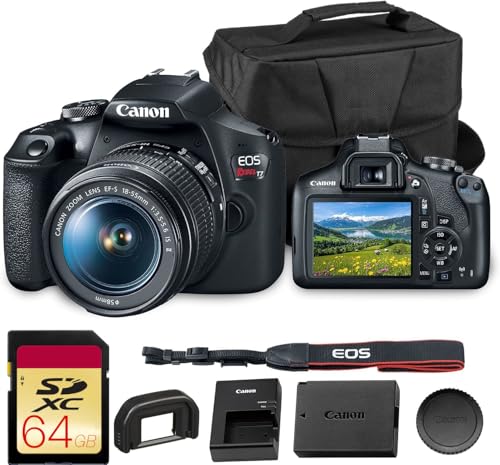
The Canon Rebel T7 Bundle removes the small barriers that can keep a new camera in its box. The package includes the T7 body, 18-55mm lens, LP-E10 battery, charger, eyecup, body cap, neck strap, shoulder bag, and a 64GB memory card. That makes it a practical first setup for a traveler or family photographer who wants to start shooting immediately.
The camera itself is familiar T7 territory. Its 24.1MP APS-C CMOS sensor captures detailed stills, while the 100 to 6400 ISO range, expandable to 12800, offers useful flexibility indoors and outdoors. The optical viewfinder is bright and traditional, and the 3-inch LCD provides a simple way to review images and navigate the menu system.
Canon's EF and EF-S lens compatibility gives the body a clear upgrade path. Wi-Fi and NFC can transfer photos to compatible devices, while the simple automatic modes help new owners get started before taking control of exposure settings. The included 18-55mm lens is not exciting, but it is the right kind of ordinary: useful for landscapes, people, travel details, and everyday scenes without adding another decision.
The Canon Rebel T7 18-55mm is the better choice if you already own a memory card and bag, while the Canon Rebel T7 Dual Lens offers much more reach for wildlife and distant subjects. The Nikon D7500 18-140mm is stronger for speed and autofocus, but its body and lens are a bigger commitment for someone learning the basics.
The bundle's weakness is that the extra items add weight, and the listing does not specify the quality of every accessory beyond the camera components. A bundled card is convenient, not a reason to overlook the camera's entry-level autofocus. Buy this kit when completeness matters and your photography will center on people, places, and ordinary moments.
7. Kodak Pixpro AZ528: Best Fixed-Lens Alternative

Pros
- 52x optical zoom
- 24mm wide-angle view
- Optical image stabilization
- Six frames per second burst mode
- Wi-Fi and Full HD video
Cons
- Not a DSLR or interchangeable-lens camera
- 16MP sensor is smaller than the Canon T7 sensor
- Long zoom performance depends heavily on light and technique
Best for: travelers and wildlife beginners who want extreme reach without carrying multiple lenses.
The Kodak Pixpro AZ528 is the outlier, and it earns a place because some people searching for the best DSLR camera really want one thing: a camera that can frame a bird, athlete, or distant landmark without changing lenses. The AZ528 is a fixed-lens digital camera, not a DSLR, but its 52x optical zoom gives it a very different kind of usefulness.
The lens starts at a 24mm wide angle, which is broad enough for landscapes and group scenes, then reaches far into telephoto territory. Optical image stabilization works across the zoom range to counter hand movement, an important feature when the lens is fully extended. The camera weighs 1.12 pounds, considerably less than a DSLR body paired with a long telephoto lens.
Its 16MP BSI CMOS sensor is smaller than the 24.1MP APS-C sensor in the Canon Rebel T7, so the DSLR remains the stronger choice for tonal flexibility, lens control, and large crops. The Kodak counters with a six frames per second burst mode, Full HD 1080p video, and Wi-Fi for transfers and remote control from a phone or tablet. It accepts Class 10 SD, SDHC, or SDXC cards up to 512GB, according to the listing.
The AZ528 is easier to carry than the Canon Rebel T7 Dual Lens and far less fussy when a subject changes distance. The Nikon D7500 18-140mm produces a more advanced photographic result and focuses more convincingly on action, but it does not provide the same extreme reach in this kit. Choose Kodak when convenience and zoom range matter more than interchangeable lenses and the optical viewfinder experience.
The limitation is fundamental: you cannot swap the lens when your subject or style changes. A smaller sensor also means less flexibility in difficult light, even with stabilization. This is the right alternative for travel, casual wildlife, and distant subjects, but it is not the right choice for someone specifically seeking the control and system growth of a DSLR.
8. Nikon D40 Renewed: Best Simple Nikon

Pros
- Compact DSLR body
- 18-55mm lens included
- Optical viewfinder
- Built-in flash and hot shoe
- Rechargeable battery included
Cons
- 6.1MP sensor is very old by current standards
- 2.5-inch LCD is small
- Memory card is not included
- Burst shooting reaches only 2.5 frames per second
Best for: photographers who want a basic Nikon DSLR experience and do not need modern resolution or speed.
The Nikon D40 Renewed is a reminder that a DSLR's appeal is not only about megapixels. It has the direct controls, optical viewfinder, and physical grip that make a camera feel different from a phone, and the included 18-55mm AF-S DX Zoom-Nikkor lens gives it a familiar starting range.
The 6.1MP CCD sensor is the obvious dividing line. It can produce enough detail for photo-quality 14 by 19-inch prints according to the listing, but it leaves much less room for cropping than the Canon Rebel T7 or Nikon D7500. This camera suits deliberate compositions and modest output, not heavy editing or large files for extensive reframing.
The 2.5-inch LCD offers three display options, while the built-in flash and hot shoe support simple indoor shooting and external flash expansion. Startup and shutter response are described as fast, but continuous shooting reaches only 2.5 frames per second. The included rechargeable EN-EL9 battery is useful, but a memory card is not included, so the kit is not entirely ready on arrival.
The Canon Rebel T7 Renewed is a much stronger first DSLR for most people because its sensor has substantially more resolution and its wireless sharing is more current. The Nikon D7500 Body is in another class for autofocus and speed. The D40's argument is simplicity, compact dimensions, and access to a traditional Nikon shooting experience without the feature density of newer models.
Renewed condition adds another layer of uncertainty to an already old camera. Buyers should inspect the battery, lens, viewfinder, and card compartment as soon as it arrives. Choose the D40 for learning basic composition and manual exposure, and skip it if you expect modern connectivity, high-resolution cropping, or dependable action performance.
9. Canon Rebel T7 3-Lens Kit: Best Accessory Kit

Pros
- 24.1MP APS-C CMOS sensor
- Standard, wide-angle, and telephoto lenses
- 128GB memory card
- Included flash and tripod
- Built-in Wi-Fi and NFC
Cons
- Renewed camera
- Third-party accessory quality may vary
- Nine-point autofocus limits fast action
Best for: beginners who want several ways to frame subjects without assembling a kit piece by piece.
The Canon Rebel T7 3-Lens Kit is built around abundance. It includes the T7 body and 18-55mm lens, plus wide-angle and telephoto lenses, a 128GB memory card, case, filter kit, flash, tripod, and other accessories. For a beginner, that creates immediate opportunities to experiment with perspective, distant subjects, and more controlled lighting.
The camera underneath is still the familiar T7. Its 24.1MP APS-C sensor and DIGIC 4+ processor are suitable for everyday stills, and the 3-inch 920K-dot LCD provides a clear review screen. Full HD 1080p video records at 30 frames per second, while the nine-point AF system with AI Servo AF is aimed more at general photography than serious sports work.
Built-in Wi-Fi and NFC support sharing and connection to compatible mobile devices. Scene Intelligent Auto, Basic+, Creative Auto, and the on-board feature guide make the body approachable for someone learning what each control does. The lens mix is the main attraction, but exact optical performance and construction details for the extra lenses are not provided, so they should be treated as experimentation tools rather than guaranteed professional optics.
The Canon Rebel T7 20-Piece Bundle offers even more accessories, while the Canon Rebel T7 Dual Lens has a simpler and more clearly defined two-lens setup. The 3-Lens Kit is more interesting for landscapes and creative framing because it adds a wide-angle option, but the Nikon D7500 18-140mm remains a better camera for moving subjects.
The weak point is the uncertainty around the renewed body and accessory quality. A large box of extras does not improve the T7's autofocus, and a tripod or flash can be less useful if it is poorly made. Choose this kit when experimentation is the goal and you are willing to evaluate each accessory separately.
10. Canon Rebel T7 20-Piece Bundle: Best Large Bundle

Pros
- Canon T7 body with 18-55mm lens
- 32GB SanDisk memory card
- Tripod and carrying case
- Wide-angle and telephoto accessories
- Wi-Fi and NFC
Cons
- Renewed camera body
- Bundle includes many unspecified accessories
- Very heavy listed package weight
- Basic autofocus system
Best for: new photographers who specifically want a broad starter package with storage and support accessories.
The Canon Rebel T7 20-Piece Bundle is aimed at the person who wants one box to cover the first stage of photography. It includes the camera and 18-55mm lens, a 32GB SanDisk card, tripod, case, wide-angle lenses, and other accessories. The optical viewfinder and Canon body provide the DSLR foundation, while the extras offer ways to try different setups immediately.
The listing confirms Wi-Fi and NFC, including wireless remote control through the Camera Connect app. That is more useful than a pile of generic accessories because it changes how the camera can be positioned for group shots, self-portraits, and low-interference compositions. The lens types are identified as telephoto, prime, and wide angle, but the specific focal lengths are not supplied.
The T7 sensor and autofocus platform remain entry-level. The 24.1MP APS-C sensor is capable of detailed images, and the optical viewfinder keeps the framing experience direct, but the nine-point AF system is not built for demanding movement. The 18-55mm lens is the sensible everyday optic; the extra lenses may broaden the kit, but their usefulness depends on their actual construction and optical quality.
The Canon Rebel T7 3-Lens Kit is the closer alternative, with a larger memory card and a more explicitly listed set of wide-angle and telephoto additions. The Canon Rebel T7 Bundle is a cleaner option when you want fewer extras and a named 64GB card. For a stronger camera rather than a bigger box, the Nikon D7500 Body is the better foundation if you already have compatible lenses.
The listed package weight is 7.319 pounds, which makes this a poor choice for anyone expecting a light travel kit. The other concern is that a 20-piece count can obscure what matters most, namely the body, standard lens, battery, and card. Choose this bundle only if you will use the tripod, case, and additional lenses, and if you are comfortable checking each renewed component.
How to choose best dslr camera
The right DSLR depends less on the number of accessories in a listing than on the camera body, lens coverage, autofocus, and the way you intend to carry it.
Sensor size and resolution
The Canon T7 models use 24.1MP APS-C CMOS sensors, while the Nikon D7500 uses a 20.9MP DX sensor. Both are much more substantial than the 6.1MP CCD in the Nikon D40, especially when cropping or editing images. Resolution helps, but sensor generation, processing, and lens quality also shape the final photograph.
Autofocus and burst speed
Autofocus matters most when people, animals, or vehicles move. The T7's nine-point system works for predictable subjects, while the D7500's 51-point system, 15 cross-type sensors, group-area AF, and up to 8 frames per second shooting give it a clear advantage for action. The D40 reaches 2.5 frames per second, so it belongs with slower, more deliberate photography.
A long lens helps you reach a subject, but a responsive autofocus system helps you catch the moment.
Lens coverage
An 18-55mm lens is a sensible first optic for everyday photography. The Canon Dual Lens kit adds a 75-300mm lens for distant subjects, and the Nikon 18-140mm covers a broad range without a lens change. The Kodak AZ528 takes a different approach with a fixed 52x optical zoom, trading system flexibility for convenience.
Viewfinder and screen
An optical viewfinder lets you compose without the delay or glare that can affect screen shooting in bright conditions. The T7 models provide approximately 95% viewfinder coverage, while the D7500 adds a tilting 3.2-inch, 922K-dot touchscreen. The D40 has a smaller 2.5-inch LCD, which is adequate for basic checks but less comfortable for reviewing detail.
Connectivity and video
Wi-Fi and NFC make it easier to move photographs to a phone or use a compatible mobile device as a remote control. The Nikon D7500 adds Bluetooth through SnapBridge, while the Canon cameras support Wi-Fi and NFC. Video ranges from Full HD on the Rebel T7 and Kodak to 4K Ultra HD on the D7500. Decide whether video is a central feature or simply a useful extra.
For a broader look at cameras built around still photography, how interchangeable-lens cameras handle different shooting styles can help clarify the difference between an entry-level DSLR and a more advanced body. Travelers may also want to consider the lens and body compromises that shape a lighter travel kit.
Frequently asked questions
Is the Canon Rebel T7 good for beginners?
Yes. The Canon Rebel T7 combines a 24.1MP APS-C sensor, straightforward controls, Scene Intelligent Auto features, and an 18-55mm starter lens. Its nine-point autofocus system is the main limitation, especially for fast action.
Is the Nikon D7500 better than the Canon Rebel T7?
The Nikon D7500 is better for action, advanced controls, continuous shooting, and video because it has a 51-point autofocus system, up to 8 frames per second shooting, and 4K support. The Canon Rebel T7 is easier to approach and is a sensible choice for ordinary family, travel, and portrait photography.
Should I buy the Nikon D7500 body or the kit?
Buy the body if you already own compatible Nikon lenses that cover your intended subjects. The 18-140mm kit is more practical for a new Nikon user because it provides a versatile lens without requiring another purchase decision.
Is the Kodak Pixpro AZ528 a DSLR?
No. It is a fixed-lens digital camera with a 52x optical zoom and a 16MP BSI CMOS sensor. It can be a useful alternative for distant subjects, but it does not offer interchangeable lenses or the same APS-C sensor experience as the Canon and Nikon DSLRs.
Are renewed DSLR cameras safe to buy?
A renewed camera can be a sensible way to obtain an older body, but condition, battery health, included accessories, and return terms deserve attention. Inspect the viewfinder, lens, card slot, controls, and battery as soon as the camera arrives.
Does a 75-300mm lens help with wildlife photography?
It provides substantially more reach than an 18-55mm lens, which helps frame distant animals and sports subjects. The Canon Rebel T7 Dual Lens kit is useful for learning this style, though the camera's nine-point autofocus system is less capable for fast movement than the Nikon D7500.

The bottom line
The best DSLR camera in this group for most new photographers is the Canon Rebel T7 18-55mm. It balances a detailed 24.1MP sensor, simple controls, useful wireless connectivity, and a practical starter lens. Choose the Canon Rebel T7 Dual Lens instead when distant subjects are part of the plan from day one.
The Nikon D7500 18-140mm is the stronger pick for sports, wildlife, and photographers who have outgrown entry-level autofocus. Its 51-point system, 8 frames per second shooting, tilting touchscreen, and 4K video make it the more capable body, though it is heavier and less beginner-focused.
If you are undecided, start with the Canon T7 for simplicity, or choose the Nikon D7500 when fast-moving subjects matter more than an easy learning curve.
As an Amazon Associate we earn from qualifying purchases.