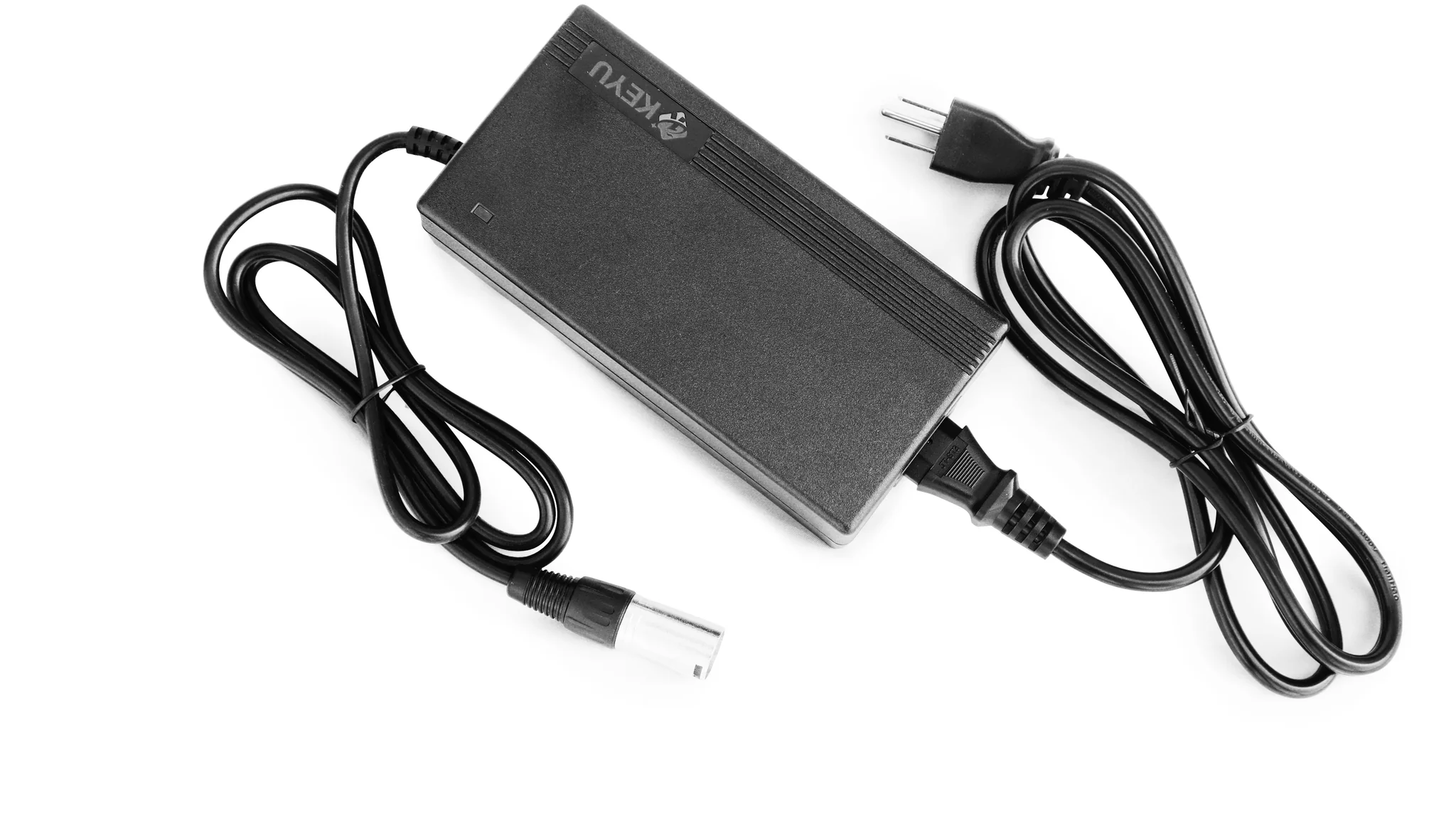

A replacement ebike charger can look right and still be unusable if its output voltage or barrel connector is wrong. The products here are aimed mainly at 48V lithium battery packs, but their plug options, safety claims, and compatibility warnings differ sharply.
Our Best ebike batteries and chargers picks focus on chargers rather than replacement battery packs. Hyleton is the strongest all-around option, while the other four make sense for specific connector needs. One product has a serious title-to-specification mismatch that buyers should catch before ordering.
The Hyleton UL Charger is the best pick for most 48V ebike owners, with the QKIIP charger close behind and a wider seven-connector package.
| # | Product | Award | Output | Connectors | Input | Best for |
|---|---|---|---|---|---|---|
| 1 | Hyleton UL Charger | Best overall | 54.6V, 2A | 3 plug options | 100V to 240V | Safety-conscious 48V ebike owners |
| 2 | QKIIP 54.6V 2A Charger | Best connector range | 54.6V, 2A | 7 connectors | 100V to 240V | Households with several ebikes |
| 3 | Suptopone 5-Plug Charger | Best five-plug option | 54.6V, 2A | 5 connectors | 100V to 240V | Common ebike and scooter plugs |
| 4 | Suptopone DC2.1 Charger | Best single-plug replacement | 54.6V, 2A | 5.5 by 2.1mm DC2.1 | 100V to 240V | Lectric owners with a matching port |
| 5 | PUKOKAL 7-Plug Charger | Best to avoid without verification | Conflicting specifications | Not clearly established | Conflicting specifications | Buyers who can resolve the listing mismatch |
1. Hyleton UL Charger: Best Overall

Pros
- UL, TUV, SGS, CE, FCC, and RoHS certification claims
- V0 flame-retardant housing
- 54.6V, 2A output for 48V lithium batteries
- Temperature, over-voltage, over-current, and short-circuit protection
- Three interchangeable connector options
Cons
- Not compatible with scooters or hoverboards
- Only intended for 48V batteries
- Three connector choices are fewer than QKIIP provides
Best for: 48V ebike owners who want the clearest safety and compatibility information.
The Hyleton is the charger we'd start with because its limitations are unusually explicit. It is made only for 48V lithium ebike batteries, and the listing specifically excludes 24V, 25.2V, 29.4V, 36V, 42V, 52V, and 58.8V packs. That narrow compatibility is not a flaw when it matches your bike. It is useful information that reduces the chance of plugging the charger into an incompatible battery.
Its electrical specification is the familiar 54.6V and 2A combination for a 48V lithium pack. The 54.6V figure is the charging output, while 2A describes the charging current. Hyleton also lists a 100V to 240V input range, so the adapter can handle a broad range of mains voltages. The charger uses constant-current and constant-voltage charging, then manages the final stage rather than simply pushing current continuously.
The safety package is the main reason it takes the top spot. Hyleton claims UL certification along with TUV, SGS, CE, FCC, and RoHS certifications. It also specifies over-voltage, over-current, short-circuit, and over-temperature protection, plus a V0 flame-retardant ABS and PC housing. Those claims should not replace checking the markings on the unit when it arrives, but they give this model a more complete safety story than the Suptopone DC2.1 Charger.
Hyleton supplies a built-in 5.5 by 2.5mm or 5.5 by 2.1mm DC option, an 18mm XLR plug, and a 12mm three-pin plug. That covers several common formats, although QKIIP's seven connectors offer more room for uncertainty. The product also claims aviation aluminum connectors, high-density cables, and an intelligent temperature control chip. Hyleton says the temperature control can reduce operating temperature by 30 percent, but that is a manufacturer claim rather than a result we can independently verify.
The weakness is straightforward: this is not a universal charger in the broad sense. The listing says it is not for electric scooters or hoverboards, even though some other products in this group advertise scooter compatibility. Skip it if your battery label does not clearly say 48V lithium, or if your bike needs a connector outside the three included formats. For a standard 48V ebike battery and a buyer who puts safety documentation first, Hyleton is the most sensible choice.
2. QKIIP 54.6V 2A Charger: Best Connector Range

Pros
- Seven connector options
- 54.6V, 2A output for 48V lithium packs
- 100V to 240V universal input
- Over-voltage, over-current, overload, temperature, and short-circuit protection
- Red and green charging indicators
Cons
- Connector matching still requires careful checking
- Not compatible with lead-acid batteries
- Less detailed certification information than Hyleton
Best for: households or repair drawers that need one charger with several common plug formats.
QKIIP's defining advantage is flexibility. It includes seven connectors rather than forcing the buyer to identify one replacement plug before ordering. That is useful when a charger has gone missing, when a family has more than one 48V ebike, or when the original adapter used a less familiar connector. It remains a 48V lithium charger, not a safe catch-all for every electric bike battery.
The output is 54.6V at 2A, and the product is intended for 48V 13S lithium-ion packs. QKIIP says the battery voltage should be marked as 48V and warns against use with other voltages or lead-acid chemistry. Its input range is 100V to 240V, which gives it the same broad mains compatibility as Hyleton. Red indicates charging, while green means the battery is full, disconnected, or not charging.
The connector set includes 5.5 by 2.1mm and 5.5 by 2.5mm one-prong DC plugs, 9mm and 12mm three-prong plugs, an 8mm DC connector with a central pin, a three-pin male XLR, and a three-prong female universal plug. The breadth beats Hyleton on paper, but it also creates more opportunities for a buyer to select the wrong tip. The plug must fit physically and match the battery's electrical requirements. A snug connection alone does not prove compatibility.
QKIIP lists protection against over-voltage, overload, over-current, over-temperature, and short circuits, along with a fire-resistant casing. Those features are reassuring for a replacement adapter, though Hyleton gives a more specific certification list. QKIIP also names compatibility with brands and models including Rad Power, Radrunner 2, Ancheer, Aventon, Jetson Haze, and Lectric. That should be treated as a prompt to compare your original charger's label, not as a guarantee for every model in those families.
The charger is listed at 8 inches long, 3 inches wide, and 1 inch high. Those dimensions suggest a compact adapter, but the seven-tip kit may be less tidy to store than the single-plug Suptopone DC2.1 Charger. QKIIP is the better pick when connector uncertainty is the problem, while Hyleton is preferable when certification and a tighter compatibility brief matter more. Choose QKIIP only after confirming that the battery is a 48V lithium pack and that one of the included connectors matches its port.
3. Suptopone 5-Plug Charger: Best Five-Plug Option

Pros
- Five connector formats in one package
- 54.6V, 2A charging output
- CC-CV charging mode
- Red and green status indicator
- Short-circuit, overload, overcurrent, and over-voltage protection
Cons
- Does not support lead-acid battery packs
- Fewer connectors than QKIIP
- Compatibility still depends on the exact battery port
Best for: riders who need several common connector formats without the larger seven-tip assortment.
The Suptopone 5-Plug Charger occupies the middle ground between the broad QKIIP kit and the dedicated DC2.1 model. It is a replacement charger for 48V lithium battery packs, but it includes enough connector variety to cover several ebike and electric scooter designs. That makes it a practical option when the plug is uncertain but the buyer does not need every connector listed by QKIIP.
Its output is 54.6V at 2A, with a 100V to 240V input and support for 50Hz or 60Hz mains frequency. The product describes this as smart charging for 48V lithium-ion packs and says it uses CC-CV operation. In plain terms, the charger supplies a controlled current during the main charging stage and changes its behavior as the battery approaches full charge.
The five connectors are a 5.5 by 2.5mm one-prong DC plug, an 8mm mini three-prong connector, a 12mm standard three-prong connector, an 8mm RCA connector, and a three-pin male XLR connector. That set differs from QKIIP's seven-piece selection, especially around the DC and universal three-prong options. The product dimensions are listed as 7.5 inches high, 4.7 inches wide, and 2 inches long, with a listed weight of 0.8125 pounds.
The indicator changes from red while charging to green when the battery is full. Suptopone also says the charger automatically maintains the battery after charging. Its listed protections cover short circuit, overload, overcurrent, and over-voltage. There is no stated fire-resistant case or certification list in the supplied product details, so Hyleton remains the more convincing choice for buyers who are prioritizing documented housing and certification claims.
A five-tip kit can be more useful than a single connector, but it also makes the buying decision less automatic. Compare the battery label, charging socket, and original adapter before selecting a tip. If you are also checking an older battery for signs of damage, how to measure battery condition safely can help you understand what a charger cannot diagnose.
Compared with the Suptopone DC2.1 Charger, this model makes sense only when you need connector choice. Compared with QKIIP, it gives up two plug formats. It is a reasonable middle pick for a standard 48V lithium ebike, provided the connector and chemistry are confirmed first.
4. Suptopone DC2.1 Charger: Best Single-Plug Replacement

Pros
- Dedicated 5.5 by 2.1mm DC2.1 connector
- 54.6V, 2A output
- 100V to 240V input
- Red and green charging indicator
- CC-CV charging and listed electrical protections
Cons
- Explicitly not suitable for 5.5 by 2.5mm ports
- No alternate connector included
- Not for lead-acid battery packs
Best for: a 48V lithium ebike with a confirmed 5.5 by 2.1mm charging socket.
The Suptopone DC2.1 Charger is the least complicated product here when its connector matches. Instead of sorting through a bag of tips, the buyer gets a charger equipped with a 5.5 by 2.1mm DC connector. That focused design is appealing for a replacement kept with one bike, especially when the original charger used the same barrel format.
The electrical figures match the other credible 48V options: 54.6V output at 2A, with an input range of 100V to 240V and a stated mains frequency range of 50Hz to 60Hz. It is intended for 48V lithium-ion battery packs and not lead-acid batteries. The red indicator shows charging, and green indicates a full battery or a maintenance state.
The crucial detail is the warning about 5.5 by 2.5mm ports. Those two barrel sizes can look similar, but they are not interchangeable for this product. Suptopone specifically says the DC2.1 connector is not suitable for 5.5 by 2.5mm. That makes this charger more dependent on careful measurement or confirmation than the QKIIP and Suptopone 5-Plug Charger, both of which include multiple options.
Suptopone lists short-circuit, overload, overcurrent, and over-voltage protection, and says the charger uses CC-CV operation. The supplied product information lists dimensions of 7.5 inches high, 4.7 inches wide, and 2 inches long. It does not provide a certification claim or a stated flame-resistant case, so Hyleton has the stronger published safety profile.
This is also a good place to separate connector compatibility from battery health. A correct plug and correct voltage will not repair a battery with a failed management system, damaged cells, or a swollen case. For readers comparing other small electronics in the same travel kit, the right way to match cables with adapters follows the same basic lesson: physical fit is only one part of compatibility.
The DC2.1 model is a better choice than a multi-plug charger when the port is confirmed and there is no reason to carry spare tips. It is a poor choice when the port is unknown. Buyers with a Lectric ebike should verify the exact charging socket rather than relying only on the brand reference in the product title.
5. PUKOKAL 7-Plug Charger: Best to Avoid Without Verification

Pros
- Product title claims seven plug options
- Product title references 54.6V and 2A
- LED status information is supplied in the listing
- Aluminum housing is described in the specifications
Cons
- Features describe a 12V LiFePO4 charger instead
- Features specify 14.6V and 20A, not 54.6V and 2A
- The supplied connector details do not establish ebike compatibility
Best for: only a buyer who confirms the actual product specification with the seller before ordering.
PUKOKAL is the outlier in this roundup, and not in a useful way. Its product title says it is a seven-plug, 54.6V, 2A charger for a 48V lithium ebike battery. The supplied feature data describes something entirely different: a dedicated charger for 12.8V nominal, four-cell LiFePO4 batteries with a 14.6V output and 20A current.
That is not a minor wording issue. A 54.6V charger for a 48V lithium-ion ebike pack and a 14.6V charger for a 12V-class LiFePO4 battery serve different battery systems. The feature data says this product is intended for RVs, golf carts, marine trolling motors, and off-grid solar systems. It also describes a 0V recovery function, a 20A constant-current stage, and the ability to recharge a 12V 100Ah LiFePO4 battery.
The hardware details reinforce the mismatch. The feature list names an Anderson connector and M8 ring terminals, rather than the familiar small ebike barrel, XLR, RCA, or three-pin connectors described by the other products. It also claims an aluminum alloy housing, dual cooling fans, roughly 300W continuous output, and a three-stage charging algorithm. Those are plausible details for a high-current LiFePO4 charger, but they do not support the 48V ebike use stated in the title.
The listing does include useful safety language, including over-voltage, over-current, short-circuit, reverse-polarity, and over-temperature protection. It also describes a red LED for active charging and green for a full battery, automatic cutoff, or standby. None of those features resolves the central voltage problem. A sophisticated charging algorithm is still the wrong tool when the battery chemistry and voltage do not match.
This is why PUKOKAL belongs at the bottom, despite the attractive connector count in the title. The other four products consistently describe 54.6V and 2A output for 48V lithium packs. PUKOKAL's feature data instead points to 14.6V and 20A for LiFePO4. Readers comparing battery chemistries can use the differences between LiFePO4 battery systems as a useful starting point, but they should not assume that charger category is interchangeable with an ebike lithium-ion setup.
Do not order this model for a 48V ebike unless the live listing, label, connector package, and seller response all confirm the required 54.6V output. If those details cannot be reconciled, choose Hyleton, QKIIP, or one of the Suptopone chargers instead.
How to choose best ebike batteries and chargers
The most important decision is not the number of included plugs. It is matching the charger's output, battery chemistry, and connector to the pack already installed on your ebike.
Battery voltage and chemistry
A battery marked 48V typically needs a charger with a 54.6V charging output when it is a compatible lithium-ion pack. That does not make every 54.6V adapter suitable for every battery, and it does not make a charger for a 12V LiFePO4 pack interchangeable with an ebike charger.
Check the battery label before ordering. Reject any charger that lists a different nominal voltage, a different charging voltage, or lead-acid compatibility when your pack is lithium-ion. The PUKOKAL listing shows why reading the feature details matters more than trusting a short product title.
Output current
The 2A output shared by the first four products controls the rate at which the charger supplies current. A higher current is not automatically safer or better. The battery and its management system need to support the charger, and the adapter's output must match the original specification.
A 54.6V, 2A charger is a direct match only when the battery is a compatible 48V lithium pack and the original charging requirements agree. Do not substitute the 20A output described in PUKOKAL's feature data for a 2A ebike charger.
A connector can fit perfectly while the charger is electrically wrong.
Connector format
Barrel plugs that look nearly identical can have different inner diameters. Suptopone's DC2.1 model specifically warns that its 5.5 by 2.1mm plug is not suitable for a 5.5 by 2.5mm port. Measure the original plug, inspect the battery socket, and compare the connector description before connecting anything.
Multi-plug models such as QKIIP and the five-plug Suptopone offer more choices, but they do not remove the need to identify the correct tip. More connectors are useful only when one of them is the correct electrical and physical match.
Safety protections
Look for over-voltage, over-current, short-circuit, and over-temperature protection. A fire-resistant or flame-retardant housing can add another layer of protection, and Hyleton provides the most detailed certification and housing claims in this group.
Safety features are not a substitute for supervision and correct matching. Stop using a charger if the battery becomes unusually hot, smells abnormal, swells, or shows visible damage.
Status indicators and charging behavior
Red and green LEDs make it easier to see whether the charger is actively charging or has reached its final state. Hyleton and both Suptopone models describe a red-to-green indicator change, while QKIIP says green can also mean disconnected or not charging.
CC-CV charging is a useful term to look for because it describes a controlled charging process that changes as the battery approaches full. It does not guarantee compatibility, battery health, or a particular charging time.
Frequently asked questions
Can a 54.6V charger charge a 48V ebike battery?
It can, when the battery is a compatible 48V lithium-ion pack designed for a 54.6V charging output. Confirm the battery label and the original charger specification before connecting it. Do not use it on a 36V, 52V, lead-acid, or other incompatible battery.
Are all 48V ebike charger connectors interchangeable?
No. The 5.5 by 2.1mm and 5.5 by 2.5mm barrel connectors are a clear example of plugs that can look similar but are not the same. Compare the connector size and electrical requirements, not just the outside shape.
Is a multi-plug charger safer than a single-plug charger?
Not by itself. A multi-plug charger gives you more connector choices, but the battery still needs the correct voltage, chemistry, and plug. A single-plug model can be the better option when its connector is already confirmed.
Can these chargers work with lead-acid batteries?
The QKIIP, both Suptopone models, and Hyleton are described for lithium batteries, with the Suptopone and QKIIP listings explicitly excluding lead-acid packs. Use a charger designed for the battery chemistry and voltage in your bike.
How do I know which charger output my battery needs?
Read the label on the battery and the original charger. Look for nominal battery voltage, charging output, current, and connector information. If the label is missing or unreadable, contact the bike manufacturer rather than guessing.
Is the PUKOKAL charger suitable for a 48V ebike?
The supplied listing data is contradictory. Its title says 54.6V and 2A for a 48V ebike, while its features describe 14.6V and 20A charging for a 12V-class LiFePO4 battery. Treat it as unsuitable unless the actual product labeling and seller confirmation resolve that conflict.
The bottom line
The Best ebike batteries and chargers pick is the Hyleton UL Charger for a standard 48V lithium ebike battery. Its 54.6V, 2A output, three connector options, broad protection list, and detailed certification claims make it the most complete choice, provided your battery port matches.
Choose the QKIIP 54.6V 2A Charger when seven connector options are more useful than a tighter safety specification. The Suptopone 5-Plug Charger is a sensible middle option, while the DC2.1 model is appropriate only for a confirmed 5.5 by 2.1mm port. Avoid PUKOKAL until its conflicting voltage and chemistry information is verified.
If you are undecided, read the battery label first, then match the charging voltage and connector before considering any other feature.
As an Amazon Associate we earn from qualifying purchases.