

Waking with a stiff neck often has less to do with your mattress than with the gap between your head and shoulder. A pillow that is too flat lets the neck drop, while one that is too tall can push it upward all night. The right contour has to support that space without making it feel as if your head is trapped.
The Best ergonomic pillow choices below take different approaches. Some use a hollow center and removable insert, some offer two fixed heights, and others rely on layered foam or a softer top cushion. We also found meaningful differences in cover fabrics, dimensions, cooling design, and how well each shape suits side and back sleeping.
Our top pick is the Cozyplayer Grey, with the CloudCoz 5X Support close behind for sleepers who want a broad butterfly shape. The rest of the lineup covers adjustable loft, side-sleeper support, cooling covers, and softer contouring.
Comparison table
| # | Product | Award | Size | Height or adjustment | Best for |
|---|---|---|---|---|---|
| 1 | Cozyplayer Grey | Best overall | 23.2 x 13.4 x 5.1 inches, Queen | Rotate 180 degrees or remove insert | Sleepers who need tunable neck support |
| 2 | CloudCoz 5X Support | Best for broad support | Standard | Contoured design with six zones | Side sleepers and readers |
| 3 | Osteo Cervical Pillow | Best adjustable alternative | 25.5 x 16.5 x 5.2 inches, Queen | Two thicknesses and removable insert | Side and back sleepers |
| 4 | Royal Therapy Pillow | Best layered design | 24 x 14 x 5 inches, Queen | Remove middle foam layer | Sleepers uncertain about loft |
| 5 | Derila Ergo Pillow | Best cooling cover | 21.25 x 14.17 x 4.72 inches | Fixed contour | Restless sleepers who sleep warm |
| 6 | C Cushion Lab Deep Sleep | Best plush contour | 15.8 x 7.1 inches listed | Dual-density foam | Side and back sleepers wanting cushioning |
| 7 | CloudNook Cervical Pillow | Best two-height design | 60 x 36 x 13 cm | 5.5-inch and 3.5-inch sides | Sleepers switching positions |
| 8 | Cozyplayer Dark Grey | Best dark-cover option | 23.2 x 13.4 x 5.1 inches, Queen | Rotate 180 degrees or remove insert | Sleepers wanting the Cozyplayer shape |
| 9 | Cozyplayer White | Best white-cover option | 23.2 x 13.4 x 5.1 inches, Queen | Rotate 180 degrees or remove insert | Sleepers who prefer a white cover |
1. Cozyplayer Grey: Best Overall

Pros
- Hollow center cradles the head
- Six contour zones support the neck, shoulders, and arms
- Height changes by rotating the pillow or removing the insert
- Cooling Q-Max 0.4 Arc-Chill case
- Queen-size shape works for several sleeping positions
Cons
- Requires an adjustment period
- Memory foam may need 48 hours of airing out
- Cooling depends on room conditions and the sleeper
Best for: sleepers who want a contour pillow with more than one usable height.
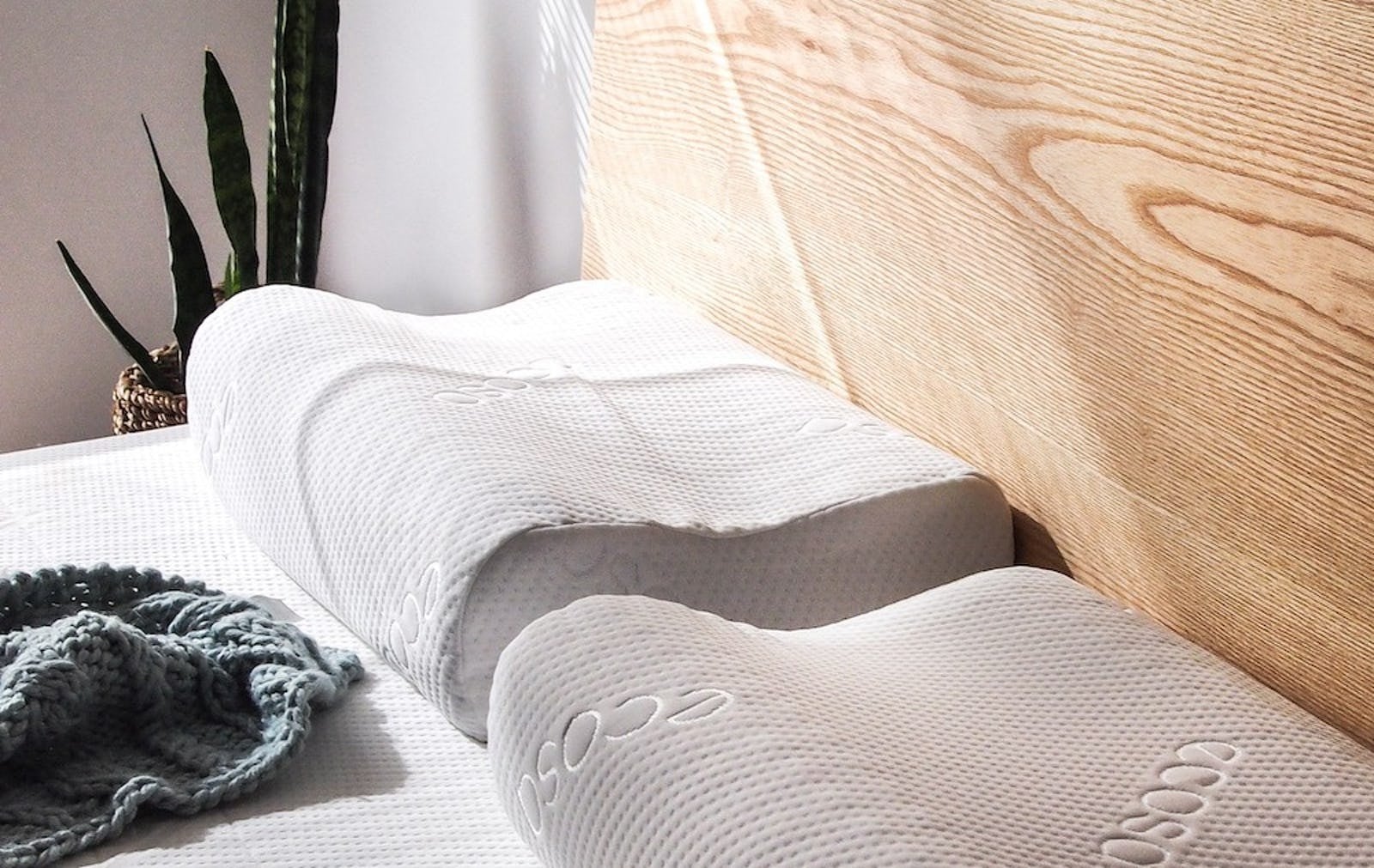
The Cozyplayer Grey is the pillow we would start with when the main problem is waking up unsure whether the loft is wrong or the shape is wrong. Its hollow concave center gives the head a defined place to rest, while the surrounding contour is intended to keep the neck from collapsing toward the mattress. That shape feels more structured than an ordinary bed pillow, but it is not simply a tall block of foam.
The design includes six contour zones for the head, neck, shoulders, and arms. The 23.2 by 13.4 by 5.1-inch Queen size gives it enough surface area to accommodate movement without losing the central support area. A 15-degree incline is built into the contour, according to the product details, and the pillow can be rotated 180 degrees to change the feel. Removing the bottom insert provides another way to reduce the effective height. That adjustability matters because side sleepers often need more loft than back sleepers, and small changes in shoulder width can make a fixed contour feel very different.
Its cover is one of the more specific cooling designs in this group. Cozyplayer lists a Q-Max 0.4 Arc-Chill fabric and says the case is made with a dense 3D mesh for airflow. The core is described as 98% breathable memory foam. Those details suggest a cooler surface and better ventilation than a tightly woven, non-removable cover, although the listing sensibly notes that the cooling effect varies with the environment and the individual.
Compared with the nearly identical Cozyplayer Dark Grey and Cozyplayer White, the Grey version has the same dimensions, adjustment system, and general construction. The more important comparison is with the CloudCoz 5X Support. CloudCoz gives you a larger-feeling butterfly design with an extended armrest area, while Cozyplayer is easier to fine-tune under the neck. The Osteo Cervical Pillow also offers adjustment, but its larger 25.5 by 16.5-inch footprint may take up more of the bed.
The weakness is that this is not a pillow to judge after a single nap. The manufacturer advises airing it out for 48 hours, and the listing warns that the body may need time to adjust to the shape. People who dislike a defined center or frequently sleep on their stomach may find the raised contours intrusive. For everyone else, especially sleepers who have repeatedly bought pillows that were almost the right height, the removable insert makes this the most flexible starting point.
2. CloudCoz 5X Support: Best for Broad Support

Pros
- Six contour zones cover the neck, shoulders, and arms
- Butterfly design supports either side
- Extended armrest area helps with side sleeping and reading
- Open-cell foam and breathable cover are designed for airflow
- Listed as CertiPUR-US and Oeko-Tex certified
Cons
- Fixed dimensions provide less height adjustment than Cozyplayer
- The broad shape may feel too substantial for small sleepers
- The claimed far-infrared benefit is not something to rely on
Best for: side sleepers who want a wide support area and space for their arms.
CloudCoz takes the contour pillow idea and spreads it outward. Instead of concentrating on a small neck cradle, it uses a butterfly-shaped design with six contour zones and an extended armrest area. That makes it one of the more interesting options for side sleepers who tend to fold an arm under the pillow or shift between sleeping and reading positions.
The product is listed in a Standard size, though the supplied details do not provide measurements. What they do explain is the construction: a hollow center, support across the shoulders, and a stated 20% larger surface support area than a standard side-sleeper pillow. The shape is designed to work on either side, so turning over does not put you against a dramatically different edge. That broad platform is the main reason to choose CloudCoz over the more compact Derila Ergo Pillow.
CloudCoz uses open-cell memory foam with a stated permeable cell rate exceeding 99%, plus a milk silk and 3D mesh fiber pillowcase. Those numbers are manufacturer claims, but the underlying approach is sensible. Open-cell foam and a ventilated cover can make a contour pillow less stuffy than dense foam covered in a heavy fabric. The case is also described as cooling, although the product itself does not promise the same kind of removable height adjustment found on Cozyplayer or Osteo.
The foam is described as zero-pressure memory foam with non-temperature technology, meaning the maker intends for it to maintain a consistent firmness through seasonal changes. It is also listed as CertiPUR-US, Oeko-Tex, and ISPA certified. Those certifications are useful material information, but they do not guarantee that the shape will suit every neck. A contour that is comfortable for a broad-shouldered side sleeper can feel much too high for a smaller back sleeper.
The biggest limitation is adjustability. The CloudCoz shape offers plenty of support zones, but there is no listed removable insert or alternate height. Its claims about graphene fabric and far-infrared energy should be treated as marketing rather than the reason to buy it. Pick this over Cozyplayer when surface area and arm support matter more than fine-tuning the loft. It is a strong fit for side sleepers who want the pillow to stay present when they move.
3. Osteo Cervical Pillow: Best Adjustable Alternative

Pros
- Large Queen-size sleeping surface
- Two thicknesses from a 180-degree rotation
- Removable bottom insert adds another height option
- 3D mesh cooling case
- CertiPUR-US and Oeko-Tex listed
Cons
- Heavier 4-pound construction
- Needs airing before use
- Large footprint may overwhelm a narrow pillow area
Best for: side and back sleepers who want several ways to alter pillow height.
The Osteo Cervical Pillow is built for the sleeper who knows that fixed loft is risky. Its hollow center creates a defined cradle for the head, while the outer contours support the neck and shoulders. The pillow is 25.5 inches long and 16.5 inches wide, making it the broadest clearly measured option here. That extra room is useful if you move around, but it also means the pillow has a more substantial presence than the Royal Therapy Pillow or Derila Ergo Pillow.
Adjustment comes from two mechanisms. Rotating the pillow 180 degrees gives you a higher or lower side, and the removable bottom insert lets you reduce the height further. The listing gives the Queen size as 5.2 inches and 4.1 inches, which indicates the two main height options. Those figures are more useful than a vague claim of “adjustable” because they show that the change is meaningful rather than merely cosmetic.
The cover uses 3D mesh fiber to encourage airflow, and the product describes the memory foam as odorless. It also advises airing the pillow for 48 hours so the foam can fully expand and any natural odor can dissipate. The cover and core are not the only considerations here. At 4 pounds, this is a relatively heavy pillow, so it is less convenient to move around than the 1.15-pound Royal Therapy Pillow or the roughly 2.1-pound Derila Ergo Pillow.
Osteo is closest in spirit to Cozyplayer. Both use a hollow center, a contour for the cervical area, and a removable insert. The Osteo is larger, with a more generous shoulder and arm area, while Cozyplayer has a more explicit cooling fabric specification and a slightly more compact Queen footprint. The Royal Therapy gives you three foam layers instead of Osteo's insert system, so it may be the better fit if you want to remove a complete middle layer rather than a bottom section.
The real drawback is bulk. A large pillow can help a side sleeper maintain a stable position, but it can also make it harder to find a comfortable place for the shoulder. Stomach sleepers should be cautious with any contour this pronounced, even with the lower setting. Choose Osteo when you want a roomy pillow and several loft configurations, particularly if side sleeping is your default.
4. Royal Therapy Pillow: Best Layered Design

Pros
- Three-layer foam construction
- Middle layer can be removed
- Medium firmness balances cushioning and support
- Queen dimensions suit side and back sleepers
- Washable rayon cover made from bamboo
Cons
- Less tailored contouring than the hollow-center designs
- No specific cooling fabric technology is listed
- Stomach sleepers may find the contour too tall
Best for: sleepers who want to adjust foam thickness without changing the pillow's orientation.
Royal Therapy is the least theatrical design in this group, and that is part of its appeal. Rather than relying on a pronounced hollow center, it uses a medium-firm contour with a three-layer memory foam construction. The middle layer can be removed, allowing the sleeper to lower the loft while keeping the same outer shape.
The Queen pillow measures 24 by 14 by 5 inches and weighs 1.15 pounds. That combination gives it a broad enough surface for side and back sleeping without the heft of the 4-pound Osteo. Its medium firmness is intended to split the difference between plush cushioning and structural support. In practice, that makes it a more approachable design for someone who wants a cervical shape but does not want the strong central cradle of Cozyplayer or CloudCoz.
Royal Therapy says the foam is ventilated and responds to body temperature. It also lists CertiPUR-US memory foam and an OEKO-TEX washable rayon cover made from bamboo. The cover is intended to wick moisture, which can make the surface feel less clammy, but the data does not identify a specific mesh structure or cooling measurement. If you regularly sleep hot, Derila Ergo and the Cozyplayer models provide more explicit cover details.
The removable middle layer is a different kind of adjustment from the rotating designs. Osteo and Cozyplayer change the pillow's height and contour depending on orientation, while Royal Therapy preserves its familiar shape and simply changes the amount of foam inside. That may be easier for a sleeper who shifts positions during the night and does not want to remember which side should face upward.
Its weakness is that it offers less guidance for people who need a pronounced neck cradle. The design supports natural alignment, but the product information does not describe the same six-zone architecture or extended arm areas found on CloudCoz. It is also not the first pick for stomach sleepers who prefer a very low, flexible pillow. Choose Royal Therapy if you want a lighter, layered pillow with a straightforward way to reduce loft.
5. Derila Ergo Pillow: Best Cooling Cover

Pros
- Removable, machine-washable zip-off cover
- Cooling and temperature-regulating cover
- CertiPUR-US and OEKO-TEX listed
- Lighter than several larger contour pillows
- Butterfly shape supports back and side sleeping
Cons
- Fixed contour has no listed insert adjustment
- Smaller footprint than Osteo and Cozyplayer
- The contour may not suit stomach sleepers
Best for: warm sleepers who prioritize a washable, breathable cover.
Derila Ergo is the cleanest choice for someone whose first complaint about a memory foam pillow is heat. Its cover is removable, machine washable, and described as breathable and temperature regulating. That is more practical than a cooling claim alone because the cover can be taken off for washing and replaced with a fresh one. The product also recommends having an extra cover available, though that extra cover is not part of the listed pillow.
The pillow measures 21.25 by 14.17 by 4.72 inches and weighs about 2.1 pounds. It is shorter than the 23.2-inch Cozyplayer and the 25.5-inch Osteo, so it takes up less room across the bed. The butterfly design lifts and supports the head and neck, with the maker saying that the elevation helps keep the airways more open. That should not be read as a medical treatment, but the shape can make sense for sleepers who want a stable cervical position.
Derila uses high-density memory foam that adapts to the head and absorbs movement. Its case has a zip closure and is designed to encourage airflow from the moment you lie down. The foam and cover are also listed as CertiPUR-US and OEKO-TEX certified. These details give the Derila a more complete hygiene and materials story than some of the simpler entries, though it lacks the height adjustment offered by Royal Therapy, Osteo, and Cozyplayer.
Compared with CloudCoz, Derila is more compact and easier to manage, but it gives up CloudCoz's broad armrest area. Compared with Royal Therapy, Derila has the stronger cover specification, while Royal Therapy lets you change its internal loft. This is a useful trade-off: choose Derila if sweat and washable fabric are the recurring problems, and choose Royal Therapy if the main issue is uncertainty about height.
The fixed contour is the main reason to skip it. A sleeper who needs to remove foam or change orientation will have fewer ways to make Derila work. Its listed 4.72-inch height may also feel too tall or too low depending on shoulder width and mattress firmness. For warm side or back sleepers who want a defined shape and a cover they can wash, it is the most convincing fit.
6. C Cushion Lab Deep Sleep: Best Plush Contour

Pros
- Dual-density foam combines a soft top with a supportive base
- Sculpted side bolsters help side sleepers
- Sweeping shoulder line supports closer back sleeping
- Smooth washable cover
- Designed for side and back position changes
Cons
- Listed dimensions are unusual and less complete than competitors
- No removable insert or layer adjustment is listed
- The four-pound weight is substantial
Best for: side and back sleepers who prefer cushioning over a rigid contour.
The C Cushion Lab Deep Sleep Pillow feels aimed at sleepers who reject firm, sharply sculpted cervical pillows. Its key idea is a dual-density foam construction with a softer top layer over a supportive foundation. That should create a gentler first contact while preserving enough structure to keep the neck from sinking too far.
The shape uses side bolsters, a sweeping shoulder line, and a center contour. Those details matter more than the word “ergonomic” on the package. Side bolsters can give the head a wider landing area when turning onto the side, while the shoulder line is intended to let a back sleeper move closer to the pillow without running into a tall wall. The maker specifically positions it for side and back sleepers who change position during the night.
The supplied product dimensions list a length of 15.8 inches, a width of 7.1 inches, and a weight of 4 pounds. Those measurements are notably different from the larger bed-pillow footprints listed for Royal Therapy, Cozyplayer, and Osteo, so shoppers should pay close attention to the product images and current listing before ordering. The size information does not provide a conventional overall height, which makes fit harder to predict from measurements alone.
C Cushion Lab includes a smooth washable cover described as cool and designed to reduce drag on skin and hair. That is a different priority from Derila's explicitly temperature-regulating zip-off cover. The Deep Sleep case focuses more on surface feel and washability, while the foam focuses on cushioning. It may suit people who find dense memory foam too unforgiving.
The weakness is a lack of adjustability. Unlike Royal Therapy, there is no listed removable layer, and unlike Cozyplayer, there is no alternate orientation or insert. The four-pound weight also makes it a substantial object to move or reshape on the bed. If you are still deciding between foam support and a softer pillow surface, how different sleeping positions change the support you need can help frame the choice.
Pick this one for its feel and shape, not for fine control. It is the better match for side and back sleepers who want their head gently cushioned rather than held in a deep hollow. Sleepers who need a clearly documented height or a low stomach-sleeping profile should look at Royal Therapy or CloudNook instead.
7. CloudNook Cervical Pillow: Best Two-Height Design

Pros
- Two clearly stated sleeping heights
- 50D medium memory foam
- Removable cooling 3D mesh cover
- 3 to 5-second rebound time is specified
- Suitable for side, back, and stomach sleeping according to the listing
Cons
- No removable foam insert is listed
- Core cannot be washed
- Requires 24 to 48 hours to expand after unpacking
Best for: sleepers who want an easy high-side and low-side choice.
CloudNook makes its height choice unusually easy to understand. One side is listed at 5.5 inches for side sleepers, while the other is 3.5 inches for back and stomach sleepers. Instead of removing foam or experimenting with a complex shape, you turn the pillow over and try the other side for several nights.
The product is listed as 60 by 36 by 13 centimeters, and the listing also provides dimensions of 16 by 6 inches. Because those measurements do not line up neatly, shoppers should treat the stated size as approximate and check the current listing carefully. The more useful fit information is the two-sided height design. Side sleepers generally need extra space to fill the shoulder gap, while back and stomach sleepers often need less elevation.
CloudNook uses high-density 50D memory foam described as medium in feel. Its rebound time is listed as three to five seconds, suggesting a slower, body-conforming response rather than an instantly springy pillow. The removable cover uses cool-touch fabric and breathable 3D mesh, with moisture-wicking properties intended to help warm sleepers. The memory foam core itself is not washable, so the cover is the part that needs regular care.
Compared with Cozyplayer, CloudNook has fewer adjustments but a simpler decision. Cozyplayer's insert and rotation can produce a more tailored result, while CloudNook's high and low sides are easier to understand at bedtime. It is also less elaborate than CloudCoz, which offers six contour zones and a larger arm support area. CloudNook may be the more approachable design for someone new to cervical pillows.
The biggest concern is that the listing's measurements are inconsistent, and there is no insert to make a small correction after choosing a side. The 5.5-inch side could be too tall for a narrow-shouldered sleeper, while the 3.5-inch side may not fill the gap for a broad-shouldered side sleeper. The product also needs 24 to 48 hours to expand after unpacking. It is a good choice when you want a clear two-height experiment rather than a highly sculpted pillow.
8. Cozyplayer Dark Grey: Best Dark-Cover Option

Pros
- Same adjustable contour design as the top Cozyplayer
- Hollow center and six support zones
- Q-Max 0.4 Arc-Chill cooling case
- Rotates for a different height
- Bottom insert can be removed
Cons
- Requires time to adapt to the contour
- May have a temporary foam odor
- Cooling performance varies by conditions
Best for: sleepers who want the Cozyplayer design with a dark grey cover.
The Cozyplayer Dark Grey is not a different design from the Cozyplayer Grey. It has the same 23.2 by 13.4 by 5.1-inch Queen dimensions, hollow concave center, 15-degree contour, six support zones, and adjustable insert system. The meaningful distinction in this list is the dark grey color and the separate product listing, not a different foam architecture.
That shared design makes it a flexible choice for sleepers who are still working out their preferred height. Rotate the pillow 180 degrees to change the contour, or remove the bottom insert for a lower arrangement. The center is intended to cradle the head while the outer zones support the neck, shoulders, and arms. Those zones make it more supportive than a standard rectangular memory foam pillow, though they can also make it feel less natural to someone who regularly sleeps on the stomach.
The cooling case uses the same Q-Max 0.4 Arc-Chill specification and dense 3D mesh described for the Grey version. The core is listed as 98% breathable memory foam. The maker says the cover can reduce skin temperature by 5 degrees Celsius, but the listing also acknowledges that cooling depends on individual and ambient conditions. That qualification is important. A cooling fabric can feel fresh at first without keeping every sleeper cool in a warm room.
The direct comparison with Cozyplayer Grey comes down to cover preference and the exact listing you choose. The construction details supplied for both are effectively the same. The CloudNook offers a more obvious two-height arrangement, while the Cozyplayer provides more ways to tune the pillow through rotation and insert removal. For a broader surface, Osteo remains the stronger alternative, but it is heavier and larger.
This pillow has the same limitations as the top Cozyplayer. It may need 48 hours of airing, and the manufacturer says the body can require time to adjust. The design also depends on centering the head and neck in the support area, so restless sleepers may not get the intended benefit if they slide away from the middle. Choose this version when you like the Cozyplayer approach and specifically prefer the darker cover.
9. Cozyplayer White: Best White-Cover Option

Pros
- Adjustable by rotation and insert removal
- Six contour zones support the upper body
- Hollow center positions the head
- Cooling 3D mesh case
- Queen size suits side and back sleepers
Cons
- White cover may show marks more easily
- Foam may need airing before use
- The defined contour is not ideal for everyone
Best for: sleepers who want the Cozyplayer design with a white cover.
The Cozyplayer White is the third version of the same core pillow design in this roundup. Its 23.2 by 13.4 by 5.1-inch Queen format uses a hollow center, a 15-degree incline, and six contour zones. The white cover is the distinguishing detail here, so the right reason to choose it is preference for that finish rather than a different support profile.
The pillow can be rotated 180 degrees, and the bottom insert can be removed to alter the height. That gives back and side sleepers a way to experiment without buying a second contour pillow. The six zones are described as supporting the neck, shoulders, and arms, while the hollow center creates a dedicated place for the head. The design is more structured than the CloudNook's two-sided shape and less broad than Osteo's 25.5-inch length.
Its cover uses the same Q-Max 0.4 Arc-Chill cooling fabric and dense 3D mesh construction associated with the other Cozyplayer entries. The manufacturer says the pillow core is 98% breathable memory foam and notes that the cooling effect depends on personal and room conditions. The listing also advises airing the pillow for 48 hours because memory foam can have a slight odor. Those are practical setup details that should not be skipped.
The White model compares directly with Cozyplayer Grey and Cozyplayer Dark Grey, both of which use the same listed dimensions and adjustment method. It also shares their main advantage over Royal Therapy: rotating the pillow changes the contour itself, not merely the amount of foam. Royal Therapy is lighter and uses a removable middle layer, while the Cozyplayer models offer a more pronounced hollow-center feel.
The cover color is the obvious drawback for everyday use. A white surface can make marks more visible, and the product details supplied here do not specify a different washable construction from the other Cozyplayer variants. The contour also requires accurate positioning, so people who move dramatically across the pillow may not stay in the support zone. For a white-cover preference and a flexible cervical shape, this version does the job.

How to choose best ergonomic pillow
The right ergonomic pillow is less about the most elaborate contour and more about matching height, shape, and surface feel to the way you sleep.
Loft and adjustment
Loft is the distance between the mattress and the head when your neck is supported. Side sleepers usually need more height because the shoulder creates a wider gap, while back sleepers often need less. A pillow that is too high can push the chin toward the chest, and one that is too low can let the head tilt toward the mattress.
Adjustable designs make this easier to correct. Cozyplayer and Osteo let you rotate the pillow and remove an insert, while Royal Therapy lets you remove its middle foam layer. CloudNook offers a simpler high-side and low-side approach. A fixed pillow such as Derila can still work, but it gives you less room to adapt.
Contour shape
A hollow center can keep the head from sliding and give the neck a defined support ridge. Butterfly shapes extend farther toward the shoulders and arms, which can help side sleepers who like to hug or rest an arm near the pillow. A sweeping shoulder line, such as the one described for C Cushion Lab, is intended to let back sleepers move closer to the pillow.
Look for a shape that supports the neck without forcing the head into one narrow position. If you frequently sleep on your stomach, a very tall or deeply sculpted contour may be uncomfortable. The support changes needed for side sleeping and back sleeping are different enough that position should guide the design.
An adjustable pillow is useful only if its lowest setting is genuinely comfortable, not just technically available.
Foam response and firmness
Memory foam can feel slow and conforming or more responsive depending on its density and construction. CloudNook lists 50D foam with a three to five-second rebound time, while Royal Therapy uses layered foam with a softer top and supportive base. C Cushion Lab also uses dual-density foam, prioritizing cushioning over a hard-edged contour.
Medium firmness is a reasonable starting point for many sleepers, but firmness is not the same as height. A soft, tall pillow can still push the neck upward, while a firmer, lower pillow can keep the spine more level. If you tend to move around, a slightly more responsive surface may feel easier to reposition on than very slow foam.
Cooling and cover care
Memory foam can retain heat, so the cover matters. Removable mesh or zip-off covers are easier to wash and can improve airflow at the surface. Derila has a removable machine-washable cover, CloudNook uses a removable cooling 3D mesh case, and the Cozyplayer models list a Q-Max 0.4 Arc-Chill cover.
Cooling claims are not guarantees. Room temperature, bedding, humidity, and personal sleep temperature all affect the result. A washable cover is the more dependable feature because it helps keep the sleeping surface fresh even if the cooling sensation is subtle. People who spend long hours at a desk may also want to consider how neck support fits into a full ergonomic sleep and work setup.
Size and sleeping area
A larger pillow provides more room to turn, but it can crowd the shoulder and take up more of the bed. Osteo measures 25.5 by 16.5 inches, Cozyplayer measures 23.2 by 13.4 inches, and Royal Therapy measures 24 by 14 inches. Derila is shorter at 21.25 inches long.
Check the pillow's footprint against your mattress and preferred position. Broad-shouldered side sleepers may appreciate the extra surface, while smaller sleepers may find a compact design easier to center. Also check whether the published dimensions are consistent. CloudNook's listing provides both metric and inch measurements that do not match perfectly, so the actual listing should be reviewed before ordering.
Frequently asked questions
Are ergonomic pillows good for side sleepers?
They can be, provided the loft fills the space between the shoulder and head without tilting the neck upward. Side sleepers often benefit from a broader contour or side bolster, such as those used by CloudCoz and C Cushion Lab. Adjustable pillows are helpful when shoulder width or mattress firmness makes the correct height difficult to predict.
Can stomach sleepers use a cervical pillow?
Some can, but a tall or deeply contoured pillow may force the neck into an uncomfortable angle. CloudNook lists a lower 3.5-inch side for back and stomach sleepers, while adjustable pillows such as Cozyplayer and Osteo can be lowered by changing their configuration. Stomach sleepers should favor the lowest comfortable position and avoid forcing the neck into a central cradle.
How long does it take to adjust to an ergonomic pillow?
Many sleepers need several nights to adapt to a shaped pillow because the head and neck rest in a different position. Cozyplayer advises allowing the body time to adjust, and CloudNook suggests trying each side for several nights. If discomfort increases rather than gradually settling, the height or contour may be wrong.
Should memory foam pillows be aired out?
Yes, especially when the product instructions recommend it. Cozyplayer and Osteo advise airing their pillows for 48 hours, while CloudNook recommends allowing 24 to 48 hours to expand after unpacking. Air the pillow in a well-ventilated area and use it only when it has fully expanded and the odor has dissipated.
Are cooling pillow covers effective?
A cooling cover can feel cooler at first and may improve airflow, but the effect depends on the room and the sleeper. Derila uses a removable temperature-regulating cover, CloudNook lists cool-touch 3D mesh, and Cozyplayer specifies Q-Max 0.4 Arc-Chill fabric. These features help at the surface, but they cannot eliminate all heat from memory foam.
Can an ergonomic pillow relieve neck pain?
A pillow can support a more neutral sleeping position, which may reduce strain caused by poor alignment. It cannot diagnose or treat the source of persistent neck pain. If pain, numbness, weakness, or headaches continue, seek advice from a qualified medical professional rather than relying on a pillow alone.

The bottom line
The Best ergonomic pillow in this group is the Cozyplayer Grey because its hollow center, six contour zones, and removable insert give sleepers several ways to find a workable height. The CloudCoz 5X Support is the better pick for side sleepers who want a broader butterfly shape and more room for the arms, while Osteo is the stronger alternative for shoppers who want a large pillow with adjustable thickness.
Royal Therapy is the sensible layered option, Derila stands out for its washable cooling cover, and CloudNook keeps height selection simple with two distinct sides. The three Cozyplayer color variants use the same listed support design, so choose among them based on cover preference.
If you are undecided, start with an adjustable pillow and use the lowest comfortable setting before moving higher.
As an Amazon Associate we earn from qualifying purchases.