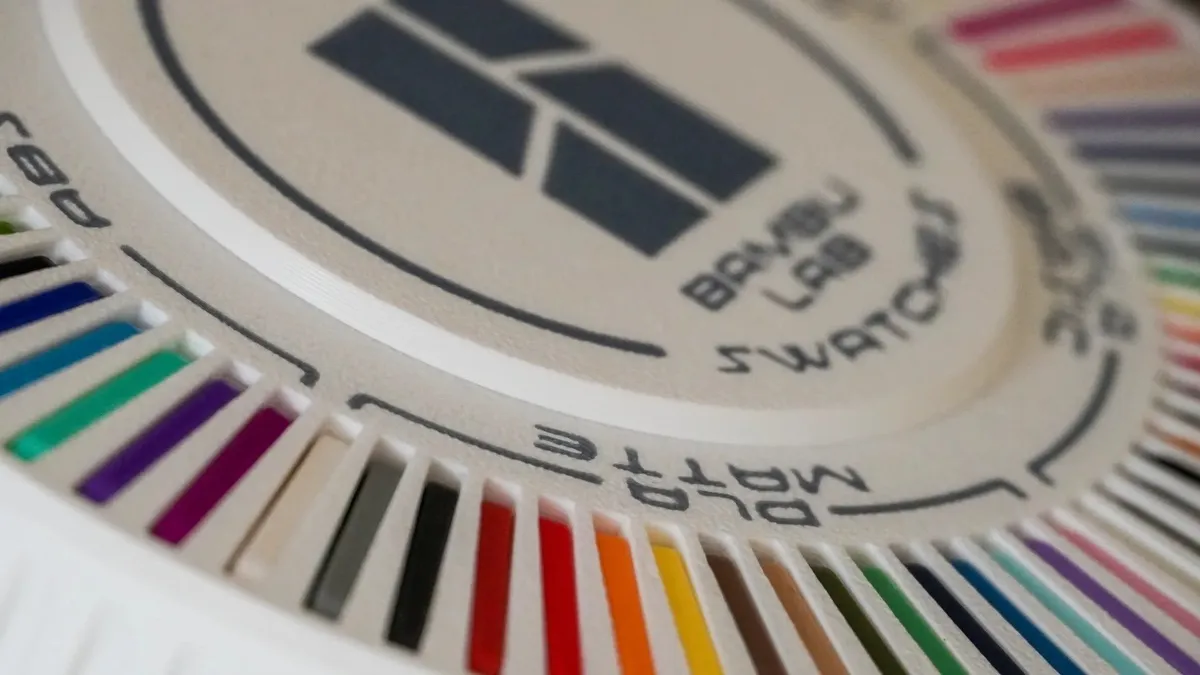

A Bambu printer can make PLA feel effortless, until a spool feeds poorly, a small roll does not fit the AMS, or a glossy filament exposes every layer line. The material matters, but so do diameter consistency, spool dimensions, finish, and how much filament you actually need for a project.
Our Best best filament for bambu printer picks cover dependable full-size rolls, small color assortments, matte finishes, silk PLA+, and a pre-dried option designed around Bambu Lab presets. The right choice depends on whether you want easy everyday printing, multicolor experimentation, or a surface finish that needs little post-processing.
For most Bambu owners, Bambu Lab PLA White is the best starting point. The rest of the list ranges from the dependable SUNLU PLA Black to compact sample-style assortments and more decorative materials.
Comparison table
| # | Product | Award | Format | Diameter | Best for |
|---|---|---|---|---|---|
| 1 | Bambu Lab PLA White | Best overall | 1 kg with spool | 1.75 mm, ±0.03 mm | Reliable everyday Bambu printing |
| 2 | SUNLU PLA Black | Best everyday alternative | 1 kg | 1.75 mm, ±0.02 mm | Routine models and utility parts |
| 3 | MarsWork PLA Basic Red | Best pre-dried option | 1 kg with spool | 1.75 mm | New users who want a ready-to-print roll |
| 4 | Bambu Lab Matte PLA Cyan | Best matte finish | 1 kg with spool | 1.75 mm | Low-glare models and visible layer lines |
| 5 | Dynta PLA Color Set | Best color sampler | Six 250 g rolls | 1.75 mm, ±0.02 mm | Beginners and small multicolor projects |
| 6 | SUNLU PLA+ Color Set | Best PLA+ assortment | Eight 250 g rolls | 1.75 mm, ±0.02 mm | Trying stronger PLA+ in many colors |
| 7 | SUNLU Silk PLA+ | Best decorative filament | Four 250 g rolls | 1.75 mm, ±0.02 mm | Glossy display pieces |
| 8 | SUNLU PLA Mini Spools | Best small-roll variety | Eight 250 g rolls | 1.75 mm, ±0.02 mm | Accent colors and test prints |
| 9 | Bambu Lab PLA Black | Best black OEM roll | 1 kg with spool | 1.75 mm | Dark functional and display prints |
| 10 | Bambu Lab Matte PLA Red | Best matte red | 1 kg with spool | 1.75 mm | Red models with a subdued surface |
1. Bambu Lab PLA White: Best Overall

Pros
- RFID helps Bambu Studio identify the filament
- 1 kg spool suits substantial projects
- Reusable spool reduces waste
- Designed for smooth, high-speed printing
Cons
- Only one color is included
- The listing gives limited technical detail beyond the core features
- A full-size spool is less convenient for occasional color changes
Best for: Bambu owners who want a straightforward white PLA roll with printer-friendly identification.
Bambu Lab PLA White is the least complicated recommendation here. It is a full 1 kg spool of white PLA, supplied on a reusable spool, and its RFID system lets Bambu Studio identify the material and configure suitable print settings. That matters when the goal is to load a roll and get on with a model rather than manually select a generic profile every time.
The filament is specified at 1.75 mm with a stated accuracy of plus or minus 0.03 mm. That tolerance is not the tightest claim in this group, but it is still intended to support steady extrusion. The listed performance claims include toughness, strength, smooth appearance, and high-speed printing. Those traits make white PLA a practical default for prototypes, organizers, signs, figures, and parts where a clean neutral color is more useful than a special effect.
Compared with SUNLU PLA Black, this roll has a more integrated Bambu workflow because of RFID. SUNLU gives a tighter stated diameter tolerance and a broad range of recommended settings, but it does not offer the same automatic identification feature in the supplied details. MarsWork PLA Basic Red counters with pre-drying and a quick-swap spool, so it is more interesting for anyone worried about moisture or frequent spool changes.
White is not a glamorous color, and that is part of its appeal. It shows dirt and surface defects more readily than black, and this listing does not provide a detailed temperature range or mechanical specification. The spool is also a substantial commitment if your projects usually use a few grams of filament at a time. For a Bambu owner who wants a dependable primary material and appreciates automatic recognition, though, this is the clearest first choice.
2. SUNLU PLA Black: Best Everyday Alternative

Pros
- 1.75 mm filament with stated ±0.02 mm accuracy
- Neat winding helps reduce feeding problems
- Works with almost all 1.75 mm FDM printers
- Clear nozzle, bed, and speed guidance
Cons
- No RFID feature is listed
- Black can hide some surface detail
- The spool is not a small-format option
Best for: frequent printing with a familiar black PLA and manually selected material profiles.
SUNLU PLA Black is the roll to reach for when you want a plain, repeatable material without committing to a specialty finish. Its stated dimensional accuracy is 1.75 mm plus or minus 0.02 mm, a useful specification for stable flow through a Bambu hotend. SUNLU also says the filament is neatly wound to reduce tangles and jams, which is the sort of unexciting detail that becomes important during a long print.
The recommended nozzle range is 200 to 230 degrees Celsius, with a bed range of 50 to 65 degrees Celsius and a suggested print speed of 50 to 100 mm/s. Those numbers give a useful starting point for a Bambu profile, though they are not a promise that every model or printer will use the same settings. Black PLA is especially practical for brackets, bins, mounts, and workshop parts where color consistency matters more than a showpiece surface.
This roll is a more manual experience than Bambu Lab PLA White. The Bambu spool has RFID and is specifically described as compatible with AMS, while SUNLU's supplied information focuses on broad 1.75 mm FDM compatibility. If you prefer automatic material recognition, Bambu Lab has the edge. If you care more about a tighter stated diameter tolerance and a clearly described conventional PLA profile, SUNLU is the more appealing alternative.
The weakness is simply that black is not forgiving when you are inspecting fine details under ordinary room light. It can make small grooves and lettering harder to see, and there is no supplied claim about RFID or a reusable spool. People printing decorative models may prefer Bambu Lab Matte PLA Cyan or one of the silk options. For routine work, this remains a sensible choice, especially for owners who already know how to select a PLA profile in Bambu Studio.
3. MarsWork PLA Basic Red: Best Pre-Dried Option

Pros
- Triple-dried and sealed with desiccant
- Listed moisture level is under 0.3 percent
- Tuned for the Bambu Lab PLA Basic preset
- Quick-swap reusable spool design
Cons
- Only red is supplied
- The quick-swap system adds a spool format to manage
- There is no stated diameter tolerance in the supplied features
Best for: beginners who want a sealed, pre-dried PLA roll aligned with a Bambu preset.
Moisture is one of the easiest ways to turn a simple PLA print into a troubleshooting session. MarsWork PLA Basic Red addresses that concern directly. The filament is described as triple-dried, sealed with desiccant, and shipped with moisture below 0.3 percent. That does not eliminate the need for sensible storage after opening, but it gives a new user a cleaner starting point than a roll that has been sitting exposed to humid air.
The other important claim is that the material is tuned for the Bambu Lab PLA Basic preset. That is more relevant to Bambu owners than a generic statement about compatibility because it points to a particular starting workflow. The product is 1.75 mm PLA on a 1 kg spool, and the listed spool dimensions are approximately 7.09 inches in length and width, with a height of about 2.76 inches. Those dimensions may matter when planning storage or checking a spool holder.
The quick-swap reusable spool is the feature that separates this roll from SUNLU PLA Black and Bambu Lab PLA White. MarsWork says users can press and lift to swap the filament, then strap a partly used roll for storage and reuse the spool with another color. That can be tidy for people who rotate materials often. Bambu Lab's RFID integration is still more convenient for automatic identification, while SUNLU provides more explicit diameter and temperature information.
The main limitation is the lack of a stated diameter tolerance in the supplied product details. Buyers who place a high priority on a published measurement should choose one of the SUNLU rolls instead. Red also limits the role of this particular spool, although it is a useful color for signs, figures, enclosures, and accents. If your priority is opening a sealed roll and using a Bambu PLA Basic preset with minimal preparation, MarsWork is the strongest fit.
4. Bambu Lab Matte PLA Cyan: Best Matte Finish

Pros
- Matte surface reduces distracting reflections
- Full 1 kg spool with reusable spool format
- Described as tough and durable
- Neat winding supports easier feeding
Cons
- Cyan is a specific color commitment
- The supplied details do not include a temperature range
- Matte surfaces can soften the look of tiny details
Best for: visible models where a subdued cyan surface is more appealing than glossy PLA.
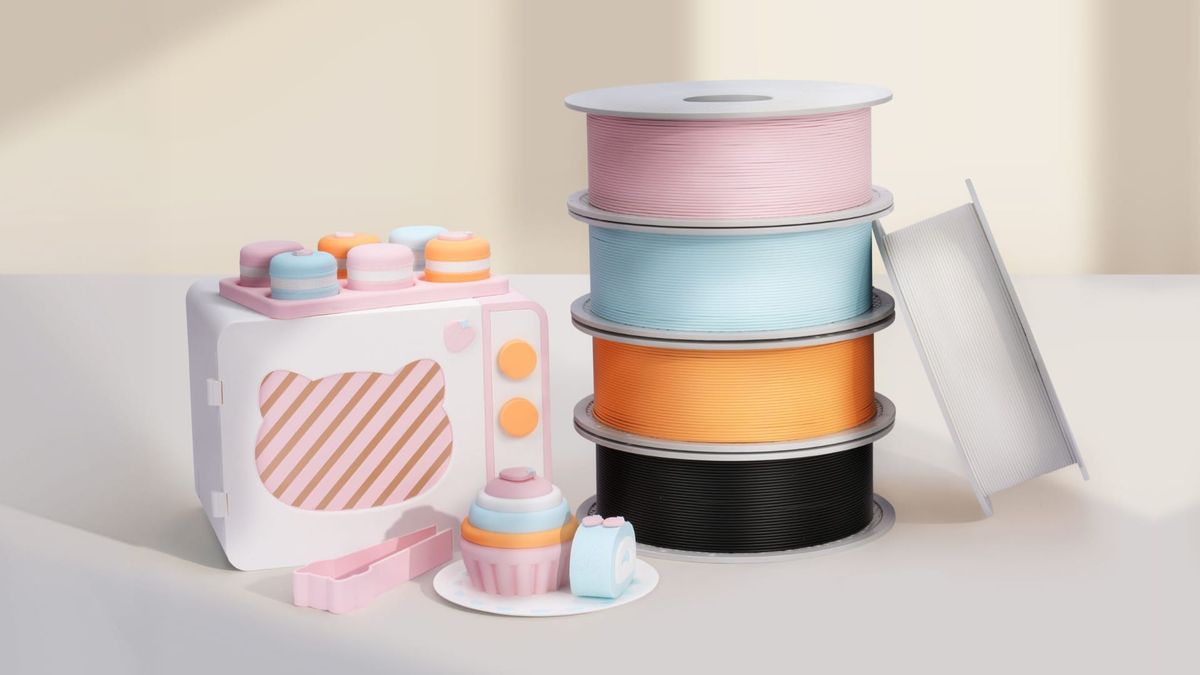
Bambu Lab Matte PLA Cyan makes a strong case for choosing filament by surface finish rather than by material family alone. Matte PLA tends to reduce reflections, so layer changes and minor surface irregularities are less visually distracting on display models. The cyan color is vivid without the shine of silk PLA, which suits figures, signs, desk accessories, and geometric objects that need a calmer appearance.
The supplied details describe high-quality PLA, smooth extrusion, dimensional accuracy intended to support clog-free performance, and tough mechanical properties with impact resistance. They do not provide an exact diameter tolerance or a nozzle temperature range, so the useful takeaway is that this is positioned as an easy-to-use Bambu Lab PLA material rather than a highly documented engineering filament. It arrives on a spool, with a stated size of 1 kg.
Compared with SUNLU Silk PLA+, this Bambu Lab material is the quieter visual choice. Silk PLA is designed to catch the light and shift as a model turns, while matte cyan hides reflections and gives broad surfaces a more even appearance. Bambu Lab PLA White is the safer neutral option for general use, but it lacks the matte finish that makes this roll more attractive for objects that stay on a shelf or desk.
Matte filament is not automatically better for every model. Its lower-gloss surface can make very fine edges appear less sharp, and cyan will not suit every project. The listing also leaves more of the setup to the printer's existing profile than the SUNLU products do. Choose it when the finished appearance matters and you want a complete 1 kg spool of Bambu Lab PLA, not when you need a color sampler or a filament with extensive published settings.
5. Dynta PLA Color Set: Best Color Sampler

Pros
- Six colors supplied at 250 g each
- 1.75 mm diameter with ±0.02 mm accuracy
- Vacuum-sealed with desiccant
- Recommended nozzle and bed ranges are clearly stated
Cons
- Narrow 53 mm inner bore needs a fit check
- Small rolls may require an AMS adapter
- The listing recommends using opened filament within three months
Best for: beginners who want several colors for small projects without six full-size rolls.
A six-color set changes how you plan a first batch of prints. Dynta PLA Color Set includes black, white, red, green, blue, and purple in 250 g portions, giving a beginner enough material to explore color without storing a large roll of every shade. The smaller quantities also make sense for classroom projects, test models, and decorative pieces that use only a little of each color.
Dynta states a 1.75 mm diameter with plus or minus 0.02 mm accuracy. It recommends a nozzle temperature of 190 to 230 degrees Celsius and a heated bed temperature of 45 to 60 degrees Celsius. The filament is vacuum-sealed with desiccant, and the product description says it is mechanically wound to help prevent bubbles, tangles, and clogging. Those details make the set easier to evaluate than an assortment with no published starting ranges.
The important Bambu-specific issue is the spool. Each roll uses a 53 mm inner bore and is described as compatible with printer spool axles up to 53 mm. Dynta names the Bambu Lab A1 mini among its compatible models, but the supplied details do not promise direct AMS use. That makes SUNLU PLA Mini Spools a close comparison, since SUNLU also says its 250 g rolls may need a compatible adapter for Bambu AMS or AMS lite. Full-size rolls such as Bambu Lab PLA White avoid this small-spool question.
This is not the set we would choose for a long run of one color. Six 250 g rolls mean more changes, more storage decisions, and less continuous material per spool. The product also recommends using it within three months of opening for optimal performance, so keeping every color exposed for a long time is not ideal. For a new owner learning color planning, or anyone making small multicolor models, Dynta is the most approachable assortment here.
6. SUNLU PLA+ Color Set: Best PLA+ Assortment

Pros
- Eight colors supplied in 250 g rolls
- PLA+ is described as stronger than standard PLA
- 1.75 mm diameter with ±0.02 mm accuracy
- Neat winding and broad FDM compatibility
Cons
- Small spool dimensions need checking before loading
- No RFID feature is listed
- PLA+ settings differ from standard PLA profiles
Best for: makers who want many colors and the added toughness associated with PLA+.
SUNLU PLA+ Color Set is aimed at the user who wants a color drawer rather than a single workhorse roll. It includes eight 250 g spools in black, white, gray, red, Klein blue, green, sunny orange, and vivid yellow. That range is more useful for multicolor characters, labels, small enclosures, and accent parts than a pair of large neutral rolls would be.
SUNLU lists a 1.75 mm diameter with plus or minus 0.02 mm accuracy. It describes the PLA+ as stronger than ordinary PLA, with brighter color, better layer adhesion, and resistance to clogging, bubbling, tangling, warping, and stringing. The recommended nozzle range is 210 to 235 degrees Celsius, while the bed range is 55 to 65 degrees Celsius. Those settings are notably warmer than the standard SUNLU PLA Black guidance, so the material should not simply be treated as an identical drop-in profile.
The eight rolls measure 140 mm in diameter, 36 mm wide, and use a 53 mm hub hole. That compact format is useful for storage, but it is also the reason to check the Bambu printer or AMS setup before buying. Dynta PLA Color Set uses a similar small-roll concept and offers a lower nozzle starting point, while SUNLU Silk PLA+ is the more eye-catching option for display pieces. This set is the more practical choice when toughness and color range matter together.
Small spools create more handling work than a 1 kg roll. You need to keep the filament end secured, check how the roll sits on the printer, and select a suitable PLA+ profile. The listing also says to check spool compatibility, which is advice worth taking seriously for AMS users. Choose this set for varied projects and stronger PLA+ characteristics, not for the simplest possible single-color workflow.
7. SUNLU Silk PLA+: Best Decorative Filament

Pros
- Four multicolor combinations create shifting visual effects
- Glossy surface needs little finishing
- PLA+ is described as tougher than standard PLA
- Each roll is vacuum-sealed with desiccant
Cons
- Glossy effects are less useful for hidden functional parts
- Four 250 g rolls require more spool changes
- AMS fit may require attention to the small format
Best for: display models, cosplay pieces, and decorative prints that benefit from color movement.
SUNLU Silk PLA+ is the most visually distinctive filament in this roundup. Its four 250 g rolls use red and gold, blue and green, red and blue, and green and purple combinations. As the model rotates, the colors are intended to shift, giving curved surfaces a changing appearance rather than a single flat tone.
The silk finish is described as smooth, satin-like, vivid, and glossy. That makes a noticeable difference on display objects because the surface catches light without requiring sanding or painting. SUNLU also describes the material as PLA+, with improved impact resistance and flexibility compared with standard PLA. The 1.75 mm filament has a stated accuracy of plus or minus 0.02 mm, and the spools are machine-wound to support consistent feeding.
This material has a different job from Bambu Lab Matte PLA Cyan. Matte PLA suppresses reflections and makes a model look understated, while silk PLA uses reflections as part of the design. SUNLU PLA+ Color Set is the better choice if you want solid colors and a broader practical palette. Silk PLA+ wins when a vase, figurine, prop, or display model should attract attention from across the room.
The trade-off is that the finish can distract from fine mechanical details, and the small rolls are less convenient for a large single-color print. The supplied details describe vacuum-sealed storage bags with desiccant, but they do not provide a specific printing temperature range. For a first spool, standard PLA is easier to predict. For a project where color movement and shine are central to the result, this is the most interesting option.
8. SUNLU PLA Mini Spools: Best Small-Roll Variety

Pros
- Eight compact rolls provide many colors
- 1.75 mm diameter with ±0.02 mm accuracy
- Low-warp PLA is intended for standard profiles
- Spools are neatly wound for consistent feeding
Cons
- AMS or AMS lite use may need an adapter
- 250 g rolls run out sooner on large prints
- The listing identifies the brand as YOOPAI while naming SUNLU PLA
Best for: accent parts, test prints, and makers who prefer several compact color options.
The appeal of SUNLU PLA Mini Spools is practical variety. The set contains eight 250 g rolls in white, red, orange, yellow, green, blue, cyan, and purple. That is enough range for color accents, small models, prototypes, and test prints without filling a shelf with large rolls that may sit unused.
SUNLU states that the filament is designed for standard PLA profiles and offers low warping with dependable layer adhesion. The diameter is specified as 1.75 mm plus or minus 0.02 mm. Each spool measures 140 mm in diameter and 36 mm in width, with a 53 mm center hole. The product description also emphasizes neat winding, which helps prevent loose loops and feeding interruptions if the filament end is secured during storage.
The small format is the key difference from SUNLU PLA Black. The black roll is simpler for long continuous prints, while this set is better when the project needs several colors in modest amounts. Dynta PLA Color Set supplies six colors and gives a more explicit nozzle and bed range. SUNLU offers eight colors and standard PLA positioning, but the Bambu AMS setup still deserves a fit check.
The product description says AMS or AMS lite users should search MakerWorld for a compatible 250 g spool adapter before use. That makes this less convenient than a full-size Bambu Lab spool for automatic multicolor printing. It is also not the right pick for a large object that will consume most of a roll. Pick it when flexibility and color choice matter more than uninterrupted printing, especially for small projects.
9. Bambu Lab PLA Black: Best Black OEM Roll

Pros
- Full 1 kg roll with spool
- RFID is suited to Bambu's material workflow
- Black works for functional and display models
- Reusable spool is included
Cons
- The supplied listing has almost no feature detail
- Black can make fine details harder to inspect
- No diameter tolerance or temperature range is provided
Best for: Bambu owners who want a full black OEM-style roll for regular printing.
Bambu Lab PLA Black is the most stripped-back product in the set. Its listing identifies a 1.75 mm RFID PLA roll with a 1 kg capacity and spool, in black. That is enough to establish its role as a full-size everyday material, but it leaves out the richer performance details supplied for the white Bambu Lab roll and the SUNLU alternatives.
The spool dimensions are listed at approximately 8.58 inches long, 8.03 inches wide, and 2.72 inches high, with a weight of about 2.20 pounds. The product is supplied with a reusable spool, and the RFID feature is relevant to Bambu owners because it can help the printer ecosystem identify loaded filament. A full-size roll also makes more sense for brackets, bins, mounts, and other objects that would make quick work of a small sample spool.
Bambu Lab PLA White is the stronger recommendation when you want documented claims about diameter accuracy, toughness, strength, and automatic configuration. SUNLU PLA Black is more informative on the filament itself, with a stated ±0.02 mm tolerance and recommended printing settings. This Bambu Lab roll makes its case through the combination of the OEM family, RFID, spool format, and color rather than through a long published specification sheet.
That lack of detail is the main reason it sits below the other full-size workhorse choices. There is no supplied temperature range or exact diameter tolerance to help when tuning a profile. Black is also less revealing than white or cyan when checking tiny surface features. If you want a straightforward dark roll that fits the Bambu workflow and you are comfortable using the printer's established PLA settings, it remains a reasonable pick.
10. Bambu Lab Matte PLA Red: Best Matte Red

Pros
- Matte finish gives red models a subdued surface
- RFID supports automatic material identification
- Full 1 kg spool is suited to larger prints
- Reusable spool is included
Cons
- Red is a narrow color choice
- The listing provides very little performance information
- No exact diameter tolerance or temperature range is supplied
Best for: larger red models where a matte appearance is preferable to a glossy finish.
Bambu Lab Matte PLA Red serves a very specific purpose: a full-size red spool with a low-gloss appearance and Bambu-friendly RFID. Matte red can work especially well for figurines, signs, props, and decorative parts where standard shiny PLA would look too bright. The spool is listed as 1 kg with a spool, so it is better suited to substantial projects than the small rolls from Dynta or SUNLU.
The product details identify the color as Scarlet Red and list dimensions of approximately 8.27 inches long, 8.66 inches wide, and 2.95 inches high. The supplied features do not include a diameter tolerance, printing temperature, strength claim, or detailed finish explanation beyond the product title. That makes it difficult to tune from the listing alone, although Bambu Lab's RFID workflow can reduce the amount of manual material selection involved.
This roll is closely related to Bambu Lab Matte PLA Cyan, but the colors serve different projects. Cyan is more versatile for bright modern objects, while scarlet red is a deliberate choice for strong visual accents. SUNLU Silk PLA+ offers a more dramatic finish and multicolor movement, but the matte Bambu roll is less reflective and comes in a full-size spool. Bambu Lab PLA White remains the better neutral general-purpose choice.
The narrow color role and sparse published specifications keep it from ranking higher. If you need a material for mechanical parts or want detailed starting temperatures, SUNLU PLA Black or MarsWork PLA Basic Red gives you more information to work with. Choose this roll when the project specifically calls for a large amount of matte scarlet red and you prefer RFID-supported Bambu handling.
How to choose best filament for bambu printer
The Best best filament for bambu printer is not defined by color alone. Start with the printer's spool path, then weigh diameter consistency, material finish, moisture handling, and the amount of filament your projects normally consume.
Spool fit and AMS handling
A full-size spool is usually the simplest option for a Bambu printer's external holder, while compact rolls need more attention. Dynta and both small SUNLU assortments use 53 mm hub dimensions, and the SUNLU mini-spool listing specifically says AMS or AMS lite use may require an adapter. Check the spool diameter, width, and center hole before loading a small roll into an enclosed feed system.
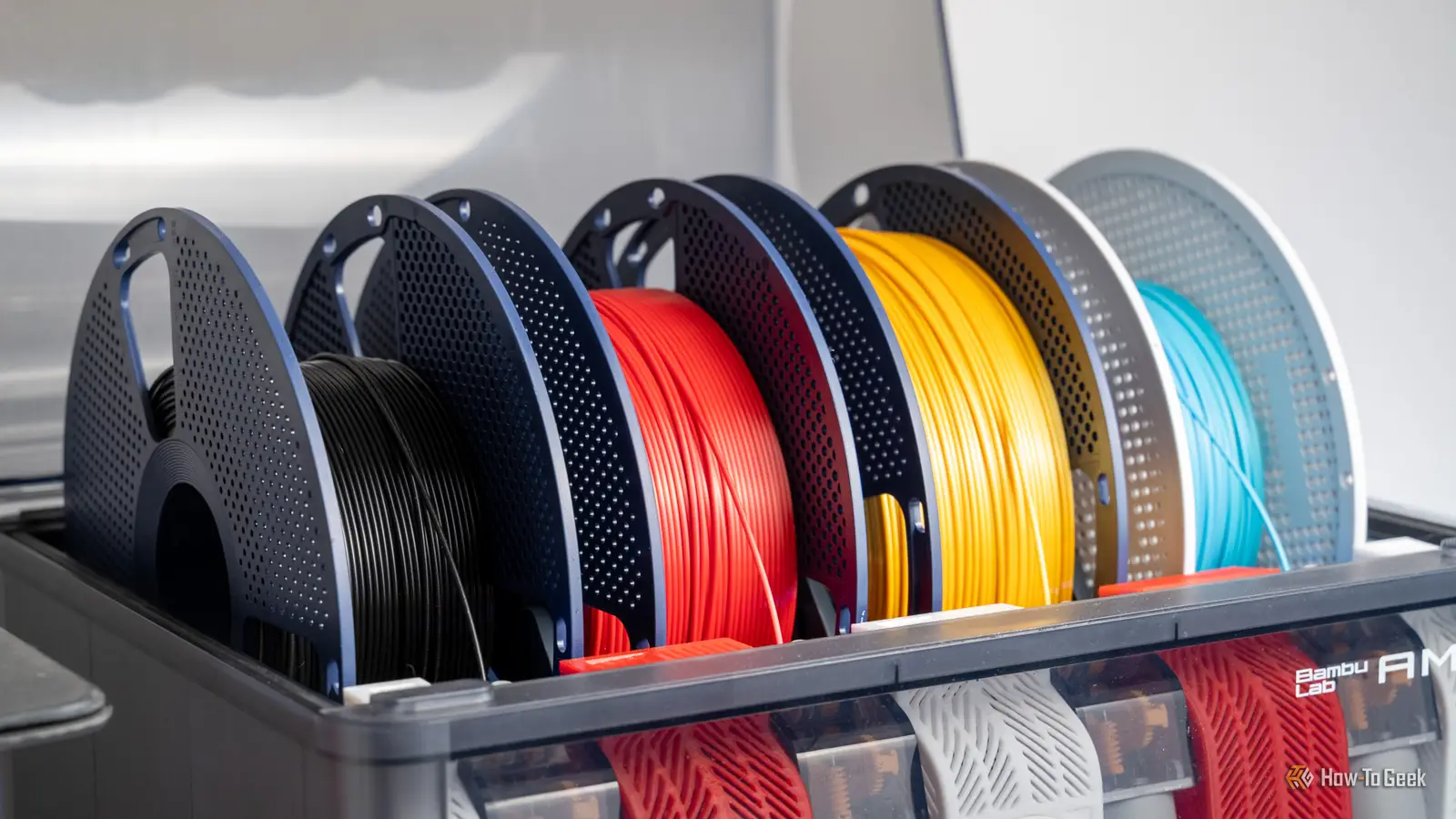
RFID is another part of the handling experience. The Bambu Lab PLA rolls in this list include RFID in their titles, and the white roll is described as allowing Bambu Studio to identify the filament and configure suitable settings. That does not make third-party filament unusable, but it does make material selection more automatic.
Diameter consistency
Filament is pushed through a narrow nozzle, so changes in diameter can affect extrusion, surface consistency, and the risk of feeding trouble. Dynta, SUNLU PLA, SUNLU PLA+, SUNLU Silk PLA+, and SUNLU mini spools state 1.75 mm with plus or minus 0.02 mm accuracy. Bambu Lab PLA White states plus or minus 0.03 mm, while several other listings do not provide a numerical tolerance.
A published tolerance is useful, but it is only one part of the picture. Neat winding, dry storage, and a properly secured filament end also influence whether a roll feeds cleanly.
For Bambu printers, a spool that fits the feed system cleanly is more useful than a specialty color that creates loading friction.
Standard PLA and PLA+
Standard PLA is the easiest place to begin for models, prototypes, decorative objects, and many household parts. SUNLU PLA Black lists a nozzle range of 200 to 230 degrees Celsius and a bed range of 50 to 65 degrees Celsius. Dynta lists 190 to 230 degrees Celsius for the nozzle and 45 to 60 degrees Celsius for the bed.
PLA+ is positioned as stronger and tougher than ordinary PLA in the SUNLU PLA+ and silk PLA+ descriptions. SUNLU recommends 210 to 235 degrees Celsius for its PLA+ assortment and a 55 to 65 degree bed range. Do not assume a standard PLA profile and a PLA+ profile will behave identically.
Finish and color
Glossy silk PLA+ is designed to reflect light and create color shifts. Matte PLA reduces reflections and gives models a calmer surface. Standard PLA sits between those extremes and is usually the most adaptable for functional objects.
Color also affects inspection. Black can make fine details harder to see, while white exposes dirt and surface defects. Cyan and scarlet red are more specific choices, but they can make a model look finished without paint.
Moisture and storage
Several products use vacuum sealing and desiccant. MarsWork goes further by describing triple drying and a moisture level below 0.3 percent before opening. Dynta recommends using its filament within three months of opening for optimal performance.
After opening any roll, keep the filament end secured and store it in a dry container when possible. Small rolls are especially easy to forget after a single accent print, so label them and avoid leaving loose filament exposed.
For users still deciding which Bambu machine suits their workspace, how a beginner-friendly 3D printer handles the first setup can help put filament choice in context.
Frequently asked questions
Can I use third-party PLA in a Bambu printer?
Yes. The SUNLU, Dynta, and MarsWork products in this list are described as compatible with 1.75 mm FDM printers, and MarsWork specifically mentions Bambu Lab printers. You may need to select a material profile manually and confirm that the spool fits your holder or AMS setup.
Is RFID required for Bambu filament?
No. RFID can make identification and profile selection more convenient, but it is not required for a roll to print. The Bambu Lab products include RFID-related features, while the third-party options rely on manual selection and printer settings.
Are 250 g spools suitable for a Bambu AMS?
They may require an adapter or a spool fit check. SUNLU says its 250 g spools may need a compatible adapter for AMS or AMS lite, while Dynta highlights a 53 mm inner bore and asks buyers to check the axle size. Full-size spools are generally simpler when automatic feeding is the priority.
Should I choose matte PLA or silk PLA?
Choose matte PLA when you want fewer reflections and a more subdued appearance. Choose silk PLA when shine, color movement, and display impact matter more than a neutral surface. Matte PLA is usually the calmer choice for broad visible surfaces, while silk PLA is more decorative.
Does PLA+ need different settings from standard PLA?
It can. SUNLU lists a 210 to 235 degree Celsius nozzle range for its PLA+ bundle, while its standard PLA Black listing recommends 200 to 230 degrees Celsius. Use the filament maker's suggested range as a starting point, then follow the profile and printer guidance for your particular model.
How should I store an opened filament spool?
Secure the loose end so it cannot form loops, then store the spool in a dry environment. Vacuum-sealed packaging and desiccant help before opening, but they do not protect a roll indefinitely once it is exposed to air. Small assortments deserve particular attention because individual colors may sit unused between projects.
The bottom line
The Best best filament for bambu printer for most owners is Bambu Lab PLA White. Its 1 kg spool, reusable spool format, RFID identification, and stated focus on smooth, strong, high-speed printing make it the easiest all-purpose recommendation. SUNLU PLA Black is the better alternative for buyers who want a published ±0.02 mm diameter accuracy and clear standard PLA starting settings.
Choose MarsWork PLA Basic Red if pre-drying and a Bambu PLA Basic preset matter most. For appearance-led projects, Bambu Lab Matte PLA Cyan and SUNLU Silk PLA+ offer more distinctive finishes, while Dynta and the two SUNLU assortments make it easier to explore several colors without collecting full-size rolls.
If you are undecided, start with a full-size standard PLA spool that fits your printer cleanly, then add small assortments or specialty finishes once you know which colors and surfaces your projects actually use.
As an Amazon Associate we earn from qualifying purchases.