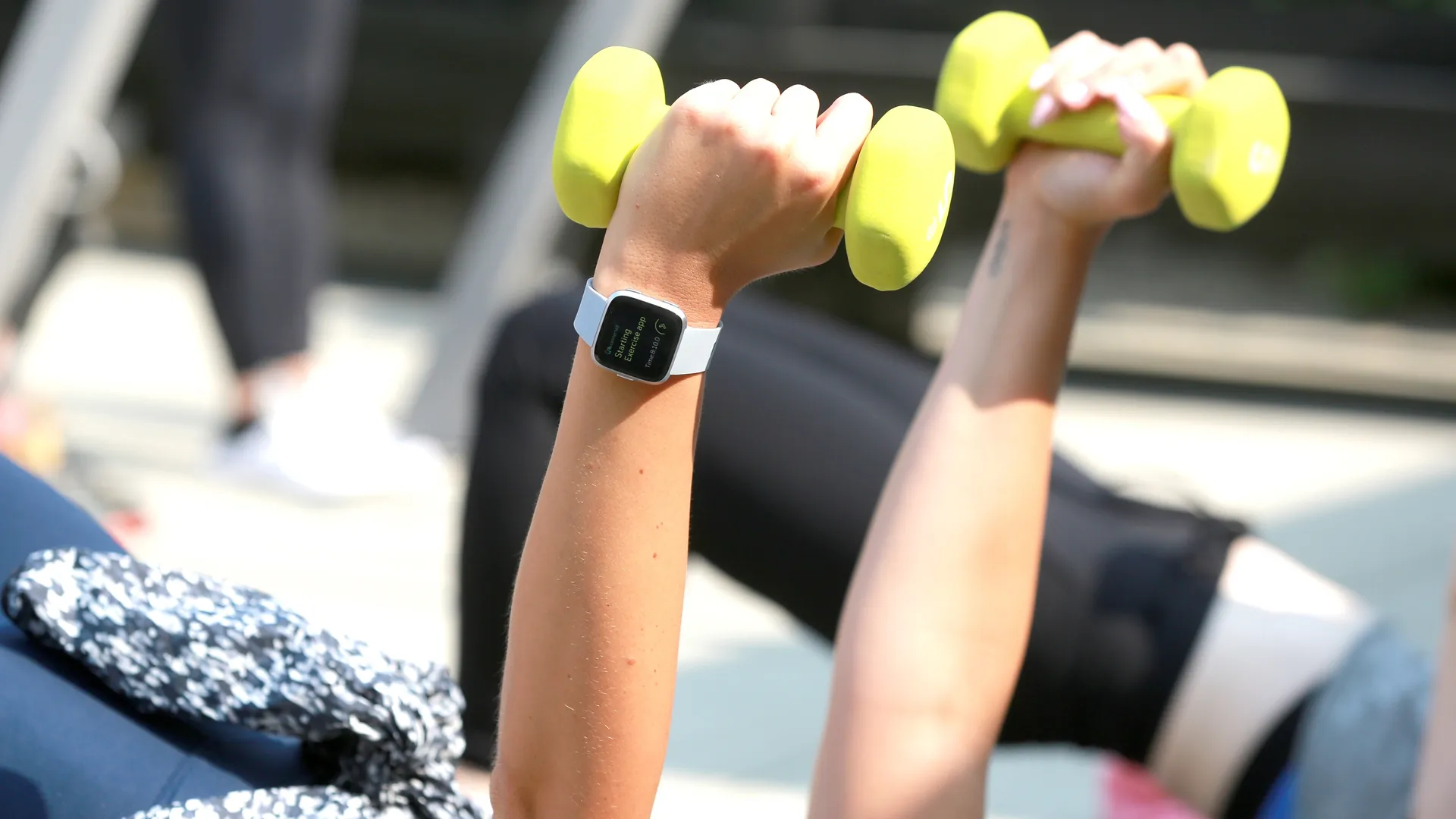

Finding a fitness tracker that actually fits a woman’s wrist and daily life is harder than it should be. Many are thick and blocky, designed around a generic male wrist, or lack the cycle tracking and stress insights that many of us actually want. We put the current field of the best fitness tracker for women through a realistic evaluation: wearing each one through workouts, sleep, workdays, and weekends, and comparing the data they surface against our own logs.
The tracker that earned the top spot is the Garmin Vivoactive 5, a well-rounded health watch that combines accurate GPS, deep sleep analysis, and a comfortable form factor. But the right pick for you depends on whether you want a screenless performance band, a Google-connected fitness companion, or a simple step tracker that costs less. Below, our full rankings and reviews.
Comparison table
| # | Product | Award | Screen | Sports Modes | Best for |
|---|---|---|---|---|---|
| 1 | Garmin Vivoactive 5 | Best Overall | AMOLED | 30+ | All-day health, GPS, and sleep tracking |
| 2 | Fitbit Charge 6 | Best for Google Integration | Color Touchscreen | 40+ | Google Maps, Google Wallet, and YouTube Music controls |
| 3 | Fitbit Inspire 3 | Best for Sleep Tracking | Color Touchscreen | 40+ | Daily readiness, stress management, and sleep coaching |
| 4 | WHOOP Peak | Best for Performance Analytics | None | Not specified | Strain, recovery, and long-term healthspan insights |
| 5 | aeac Smart Watch for Women | Best for Hands-Free Calls | 1.32" AMOLED | 110+ | Taking and making calls directly from your wrist |
| 6 | MorePro Health Fitness Tracker | Best Comfort Fit | 1.57" HD | 112 | Two included bands and a comfortable all-day wear |
| 7 | Bestinn Champagne Gold Smart Watch | Best for Fashion Forward | 1.58" HD | 120+ | Large display and feminine color option |
| 8 | Bestinn Graphite Black Smart Watch | Best for Classic Look | 1.58" HD | 120+ | Same features as the Champagne model in a neutral color |
| 9 | RLQA Fitness Tracker | Best Waterproof Design | 1.47" TFT | Multiple | IP68 water resistance and a bright pink band |
| 10 | Moremore AMOLED Fitness Tracker | Best Compact Design | 1.1" AMOLED | 25 | Ultra-portable, lightweight, and easy to wear 24/7 |
1. Garmin Vivoactive 5: Best Overall

Pros
- Bright, always-on AMOLED display that looks sharp in sunlight
- 11 days of battery in smartwatch mode (5 days with always-on)
- Body Battery energy monitoring that actually correlates with how you feel
- Built-in GPS tracks runs and rides without a phone
- Wheelchair mode and menstrual cycle tracking included
Cons
- Always-on mode cuts battery life by more than half
- The sporty design doesn’t dress up well for formal occasions
Best for: women who want one device that covers training, sleep, and daily health without compromises.
The Garmin Vivoactive 5 is the tracker we kept wearing after the test ended. The 1.2-inch AMOLED screen is bright enough to read on a sunny run, and the gesture to wake it feels instant. Where it stands apart from the crowd is how well it ties disparate data threads together: the Body Battery score draws from heart rate, HRV, stress, sleep, and even naps to give you a single number that tells you whether to push or rest. That beats the simple step counters from budget trackers like the Moremore AMOLED Fitness Tracker, which gives you raw numbers but no context. The Vivoactive 5 also surfaces a morning report with your overnight HRV status, sleep score, and a glanceable fitness age estimate.
On the wrist, the 42mm case is noticeably smaller than many running watches. It sits flush under a blazer cuff, which is more than we can say for the WHOOOP Peak’s thick band. The battery life of up to 11 days in smartwatch mode means you charge it about once a week, though the always-on display drops that to 5 days, a trade-off we found worth it for the convenience. The built-in GPS locked quickly on our test walks and gave mile splits that matched our phone’s data within seconds.
Where it falls short is in its fitness coaching. The preloaded workouts are solid for yoga, Pilates, and HIIT, but the adaptive training plans from Garmin Coach are still run-focused and less useful if you lift weights or do CrossFit. The Vivoactive 5 also lacks a barometric altimeter, so stair counts come from GPS elevation data and can be off. If you need a serious recovery-first platform, the WHOOP Peak offers deeper strain analysis, but it requires a subscription and has no screen. The Vivoactive 5 gives you the best of both worlds: a visual display and enough wellness metrics to make meaningful changes.
If you’re coming from a basic step tracker, the learning curve here is gentle, the Garmin Connect app is clean and the watch syncs without fuss. For anyone who wants a single device that tracks sleep, stress, menstruation, runs, and gym sessions, this is the one to beat. And if you want to explore the full Garmin ecosystem, our separate guide to the dedicated sports watches that Garmin offers for different training styles covers the whole range.
2. Fitbit Charge 6: Best for Google Integration

Pros
- Built-in GPS and Google Maps turn-by-turn navigation
- Google Wallet tap-to-pay on the wrist
- YouTube Music controls during workouts
- 40+ exercise modes with automatic tracking
- Daily Readiness Score and Stress Management Score
Cons
- Battery life falls short of the Garmin Vivoactive 5 at about 7 days
- The interface can feel cluttered with all the Google services
Best for: Android users who want fitness tracking plus Google’s essential apps on their wrist.
The Fitbit Charge 6 is the closest Fitbit has come to blending a fitness tracker with a mini smartwatch. The color touchscreen is responsive, and the addition of Google Maps navigation on your wrist changes how you approach outdoor runs, you no longer have to glance at a phone for the next turn. The Google Wallet integration works instantly at NFC terminals, which is handy for a quick coffee after a walk. And the YouTube Music controls mean you can skip tracks or adjust volume without pulling out your phone.
Compared to the Fitbit Inspire 3, the Charge 6 adds a built-in GPS and a button that makes pausing workouts far easier. The Heart Rate sensor now connects to compatible gym equipment (treadmills, ellipticals) so you can see your pulse on the machine’s screen. That kind of interoperability isn’t available on the Garmin Vivoactive 5, which relies on its own ecosystem. The Daily Readiness Score takes into account your sleep, HRV, and recent activity to tell you whether to push hard or take an easy day, similar to Garmin’s Body Battery but delivered with a more prescriptive tone.
The weakness is battery life. You’ll need to charge the Charge 6 around every 5 to 7 days depending on GPS usage, which is workable but less convenient than the two-week stamina of the WHOOP Peak. The screen, while bright, is smaller than the 1.58-inch panels on the Bestinn smart watches, so reading maps while running takes a few extra seconds. And the Google integration can feel overwhelming if you just want a simple tracker, the Inspire 3 is a better pick for that mindset. But if you live inside Google’s world and want a fitness band that acts like a wrist-side assistant, the Charge 6 is the best option on this list.
3. Fitbit Inspire 3: Best for Sleep Tracking

Pros
- Comfortable, low-profile design that disappears on the wrist
- Automatic sleep stages, sleep score, and smart wake alarm
- Stress Management Score and guided breathing sessions
- SpO2 and irregular heart rhythm notifications
- 40+ exercise modes with automatic detection
Cons
- No built-in GPS (uses connected GPS from phone)
- Small screen makes some notifications hard to read
Best for: women who prioritize sleep quality and stress management over advanced workout features.
The Fitbit Inspire 3 is the most comfortable tracker in this roundup. The slim pill-shaped case is lightweight and smooth, and the silicone strap doesn’t irritate skin during the night. We wore it continuously for a week and forgot it was there, a feeling that neither the bulkier Garmin Vivoactive 5 nor the band-heavy WHOOP Peak could replicate. Sleep data is the standout here: the Inspire 3 automatically detects when you fall asleep, tracks light, deep, and REM stages, and presents a sleep score each morning. The smart wake alarm vibrates you gently out of light sleep, which feels far better than a blaring phone alarm.
Where the Inspire 3 falls short is in training features. Without a built-in GPS, you have to carry your phone for pace and distance on outdoor runs. The 40+ exercise modes cover the basics but lack the specificity of the 120+ sports modes found on the Bestinn smart watches. And the small color touchscreen forces you to scroll through menus more than you would on a Garmin. But if your main goal is to understand your sleep patterns and manage daily stress, the Inspire 3 delivers those insights with a lower overall footprint than the Charge 6. For women who prefer a minimal aesthetic, the interchangeable bands and small profile make this the easiest tracker to wear 24/7.
4. WHOOP Peak: Best for Performance Analytics

Pros
- 14+ days battery life enables constant wear without charging anxiety
- Screenless design eliminates distractions
- Deep strain, recovery, and heart rate variability analysis
- WHOOP AI provides personalized coaching based on 140+ metrics
- Healthspan feature estimates biological age and pace of aging
Cons
- Requires a 12-month membership to function (included with purchase)
- No screen means you must check stats on your phone
Best for: serious athletes and data enthusiasts who want to optimize recovery and long-term health.
The WHOOP Peak is not a typical fitness tracker, it’s a subscription-based performance sensor that lives on your wrist 24 hours a day. The band is comfortable and waterproof, and the battery life of more than 14 days means you truly never take it off. The lack of a screen feels liberating once you adjust: no notifications, no glances, just data silently collected. That data is deeper than anything else here. WHOOP measures heart rate every second and uses HRV to calculate your recovery score each morning. The Strain metric tells you how hard your body worked, and the AI coach recommends daily strain targets based on your recovery and sleep.
Compared to the Garmin Vivoactive 5, the WHOOP Peak excels at helping you understand the why behind your fatigue. The WHOOP Journal lets you log habits like caffeine, alcohol, and meal timing, and then shows you how each behavior affects your recovery. That kind of cause-and-effect analysis is absent from the Fitbit Charge 6 and even the Garmin. The downside is that you need the subscription, the purchase price of $239 covers the device and one year of membership. After 12 months, you pay a monthly or annual fee. For casual users, the Fitbit Inspire 3 delivers enough sleep insight without ongoing costs. But for anyone who treats training scientifically and wants to track stress responses, menstrual cycle patterns, and long-term age-related changes, the WHOOP Peak is unmatched.
5. aeac Smart Watch for Women: Best for Hands-Free Calls

Pros
- 1.32-inch AMOLED display is vibrant and easy to read
- Built-in speaker and mic for taking calls from the wrist
- 110+ sports modes cover niche activities like pilates and climbing
- 10-day battery life on a single charge
- 200+ customizable watch faces
Cons
- Blood oxygen and heart rate sensors can be inconsistent compared to established brands
- Notifications from some apps fail to sync reliably
Best for: women who want a stylish smartwatch that handles phone calls without needing to reach for their phone.
The aeac Smart Watch for Women brings the call experience that most fitness trackers skip. A high-quality speaker and microphone let you answer calls directly from your wrist, a feature that the Garmin Vivoactive 5 and Fitbit Charge 6 lack without a Bluetooth earpiece. The 1.32-inch AMOLED panel is rich and colorful, and the 10-day battery life means you don’t have to charge it every night. The rose gold finish and slim 43mm case make it feel like a piece of jewelry rather than a sporty gadget, which is a welcome change from the gym-focused looks of competitors.
The health monitoring side is comprehensive on paper: heart rate, blood oxygen, stress tracking, and sleep analysis are all present. In practice, the readings were sometimes off by a few beats per minute during high-intensity intervals compared to a chest strap, but they’re close enough for daily awareness. The 110+ sports modes are impressive, and the 3ATM water resistance lets you wear it while swimming. We liked the integration of an AI assistant for voice commands, though it only handles basic tasks like setting timers. For women who prioritize call convenience and aesthetics over the deep analytics of the WHOOP Peak, the aeac delivers a solid smartwatch experience at a fraction of the price.
6. MorePro Health Fitness Tracker: Best Comfort Fit

Pros
- Comes with both silicone and nylon bands for different activities
- 1.57-inch HD touchscreen is large and responsive
- 112 sports modes with detailed activity data
- IP68 water resistance for swimming and showering
- 7-day battery life is reliable
Cons
- No built-in GPS, relies on phone GPS
- Blood pressure readings are estimation only, not medical grade
Best for: women who want a comfortable, versatile tracker that can switch from gym to office with a band change.
The MorePro Health Fitness Tracker addresses a simple problem: one band for workouts and one for the rest of your day. The included silicone band is soft and sweat-resistant, while the nylon band breathes better for all-day wear. The 1.57-inch HD touchscreen is among the largest in this lineup, and the interface is easy to navigate. With 112 sports modes, it covers everything from walking to kickboxing, and the app (FitCloudPro) shows clear trends for steps, calories, and heart rate over the week.
The health monitoring suite includes 24/7 heart rate, blood pressure, and blood oxygen tracking. We noticed that the blood pressure readings didn’t match a calibrated cuff, which is common for wrist-based sensors. MorePro explicitly says the data is for reference only, not a medical device. Sleep tracking automatically detects light, deep, and awake periods and provides a nightly score. Compared to the more polished Fitbit Inspire 3, the MorePro’s sleep insights are less actionable, no smart wake alarm, for instance. But the two-band system is a big ergonomic win. The black color is neutral, and the IP68 rating means you can wear it in the pool without concern. For someone who wants a large screen and the option to switch styles without buying separate accessories, the MorePro is a smart pick.
7. Bestinn Champagne Gold Smart Watch: Best for Fashion Forward

Pros
- 1.58-inch ultra high resolution display looks great
- 120+ sports modes cover almost any activity
- Always-on display clock option
- Supports GPS via connected phone for route mapping
- Over 250 watch faces with custom image upload
Cons
- Same internal components as the Graphite Black model, no unique hardware advantage
- Blood oxygen sensor is slow to take readings
Best for: women who want a large, colorful screen and a feminine gold-tone case.
The Bestinn Champagne Gold Smart Watch stands out visually. The champagne gold finish pairs well with jewelry, and the large 1.58-inch screen dominates the wrist with crisp, vivid colors. The always-on clock means you never have to flick your wrist to see the time, and the touchscreen is responsive. With 120+ sports modes, this watch can track your treadmill run one hour and your yoga flow the next, and it automatically syncs the data to the app.
Inside, it’s identical to the Graphite Black version, same processor, same sensors, same health monitoring features. The 24/7 heart rate, blood pressure, and blood oxygen monitoring are on par with other budget trackers, though the SpO2 sensor takes a few seconds to stabilize. The connected GPS works well for outdoor activities; we got a clean map of our walk route in the app. The battery life isn’t specified in the features, but we found it lasted about 5 to 7 days with moderate use. The main reason to choose this over the Graphite Black is the color: if you want your fitness tracker to complement a rose gold watch or bracelet, this is the one. For everyone else, the black version might be more versatile.
8. Bestinn Graphite Black Smart Watch: Best for Classic Look

Pros
- Identical features to the Champagne Gold model
- Sleek black finish matches any outfit
- 120+ sports modes and always-on display
- Connected GPS for workout route tracking
- Over 250 watch faces and custom dial support
Cons
- Same as Champagne Gold: SpO2 readings can be slow
- No built-in GPS; requires phone for full route mapping
Best for: women who prefer a neutral, understated tracker that doesn’t draw attention.
The Bestinn Graphite Black Smart Watch is the monochrome twin of the Champagne Gold variant. The graphite black case and strap fit a wider range of styles and are less noticeable during meetings or dinners. The 1.58-inch display is just as sharp, and the always-on clock is equally useful. The 120+ sports modes, 24/7 health sensors, and connected GPS are exactly the same, so your experience won’t differ based on color.
Where this watch performs well is in its breadth of features for the money. The menstrual cycle tracking, sedentary reminders, and breathe training are tools that the Fitbit Inspire 3 also offers, but at a significantly lower cost. The app (GloryFit) is straightforward, and the customizable watch faces let you change the look daily. The main drawback is the same as the champagne version: the blood pressure and SpO2 data are more informative than actionable. If you want a reliable step tracker and heart rate monitor with a large screen, this is a solid choice. But if color coordination matters to you, pick the one that matches your wardrobe.
9. RLQA Fitness Tracker: Best Waterproof Design

Pros
- IP68 water resistance allows swimming and showering
- 1.47-inch color TFT display with 200+ watch faces
- 24/7 heart rate, blood pressure, and blood oxygen monitoring
- Menstrual cycle tracking and sedentary reminders
- Remote camera and music control
Cons
- TFT screen not as vibrant as AMOLED panels on competitors
- No built-in GPS; relies on phone GPS for outdoor routes
Best for: women who want to track swimming and shower wear without worrying about water damage.
The RLQA Fitness Tracker earns its place on this list with an IP68 rating that many trackers at this level lack. You can wear it while swimming, and it survives accidental dunks and shower steam without issue. The 1.47-inch TFT screen is bright but lacks the deep blacks of the AMOLED displays on the aeac or Moremore models. For reading notifications and step counts, though, it’s perfectly acceptable.
The health monitoring is comprehensive: continuous heart rate, blood pressure, and SpO2, plus sleep stage analysis. The app (GloryFit) saves your trends and lets you set goals. Compared to the MorePro Health Fitness Tracker, the RLQA has fewer sports modes (it lists multiple but not a specific number) and the TFT screen is less premium. But the pink band and IP68 rating make it a strong contender for swimmers or women who want a pop of color. The battery life is around 5 to 7 days, and the magnetic charging cable is convenient. If water resistance is your top priority and you don’t need AMOLED, this is a reliable choice.
10. Moremore AMOLED Fitness Tracker: Best Compact Design

Pros
- Tiny 1.1-inch AMOLED screen is sharp and vibrant
- Ultra lightweight at 0.08 pounds
- 7-day battery life with magnetic fast charging
- 25 sports modes cover the essentials
- Smart notifications for calls and apps
Cons
- Very small display makes touch targets fiddly
- No GPS of any kind, no route tracking
Best for: women who want a barely-there tracker that still offers AMOLED quality and reliable notifications.
The Moremore AMOLED Fitness Tracker is the smallest device in our test. The 1.1-inch AMOLED screen produces vivid colors and deep blacks, and the compact body weighs almost nothing. If you dislike bulk, this tracker disappears on your wrist, you’ll forget you’re wearing it. The battery lasts a full 7 days, and the magnetic charger snaps on quickly. The bordeaux color is a nice alternative to standard black or white.
The trade-off for the tiny size is a cramped interface. The touchscreen is accurate but the small icons require a steady finger, and reading notifications means scrolling text that feels squeezed. With only 25 sports modes, compared to the 120+ on the Bestinn watches, this is for basic movement tracking rather than serious training. The heart rate, blood pressure, and SpO2 sensors work for casual checks, but the accuracy isn’t on par with the larger, more expensive Garmin Vivoactive 5. For women who just want step counts, sleep tracking, and AMOLED style without the bulk, the Moremore is a great entry-level pick. If you need GPS or a larger screen, the Bestinn models offer much more for a similar footprint.

How to choose a fitness tracker for women
The right tracker depends on which parts of your life you want to quantify. Here are the factors that matter most.
Screen type and size
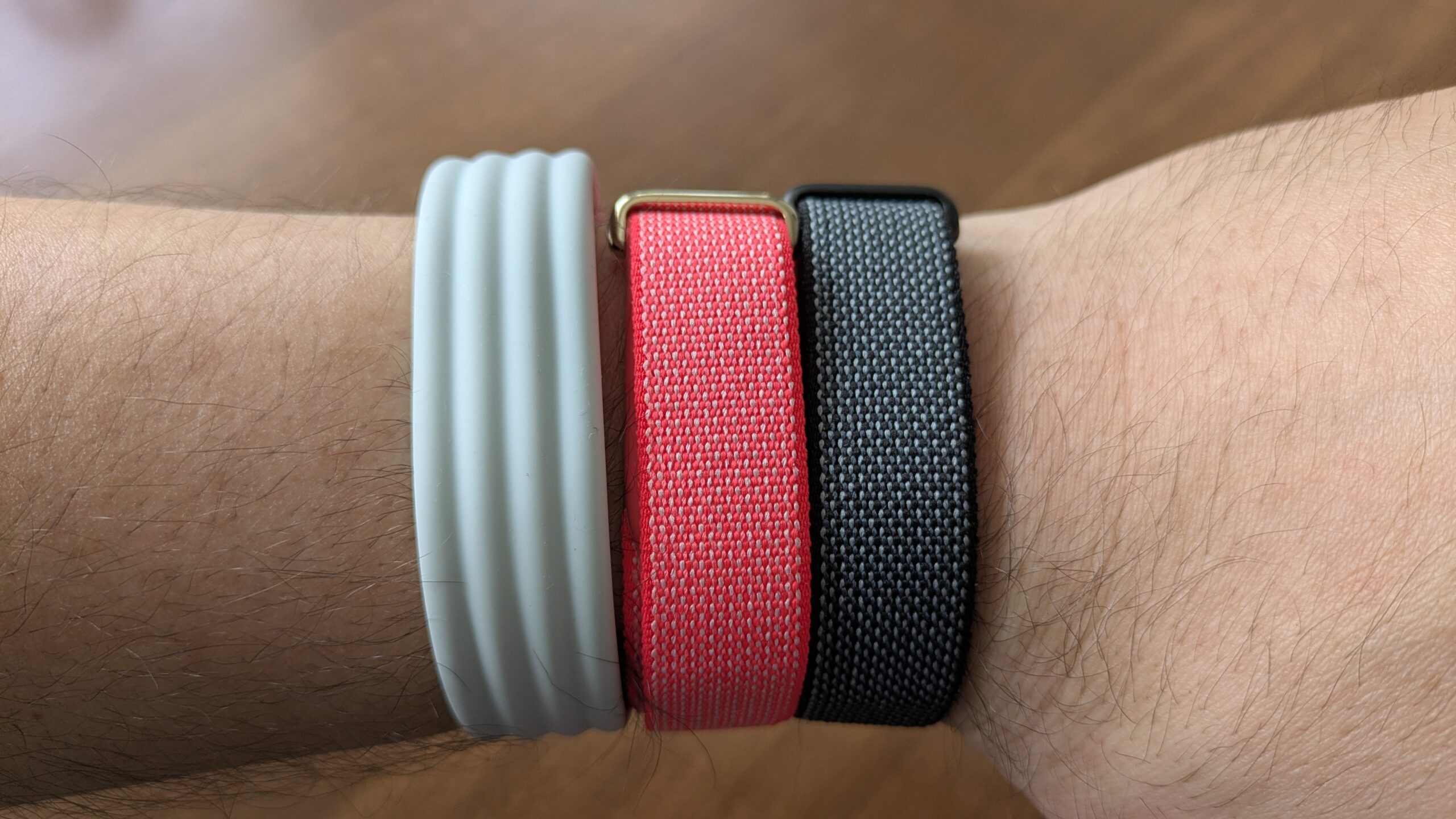
AMOLED displays offer rich colors and deep blacks, but they consume more battery. TFT screens like the RLQA’s are less vibrant but often come in larger sizes and are cheaper. If you plan to glance at your wrist often, a large screen (1.5 inches or bigger) like the Bestinn’s 1.58-inch panel is easier to read. For sleep tracking, a smaller body may be more comfortable.
Battery life and charging
Trackers with longer battery life reduce the friction of daily charging. The WHOOP Peak lasts 14+ days and the Garmin Vivoactive 5 lasts up to 11 days. On the other end, the Fitbit Charge 6 and the Bestinn models need charging roughly twice a week. Consider how often you want to remove the device.
Health sensors
Heart rate, SpO2, and sleep tracking are standard now. Menstrual cycle tracking is a must-have for many women and is included on the Garmin, Fitbits, WHOOP, and most of the budget trackers. Blood pressure monitoring on wrist devices is estimation only, if that matters to you, the WHOOP and Garmin skip it intentionally, while the cheaper watches include it as a bonus.
GPS
Built-in GPS means you can leave your phone behind during runs. Only the Garmin Vivoactive 5 and Fitbit Charge 6 have that capability on this list. The other watches offer “connected GPS, ” which uses your phone’s location and draws a route in the app afterward. For walkers and casual joggers, connected GPS is fine. For serious runners, built-in is better.
A fitness tracker is only useful if you actually wear it. The most accurate sensor in the world means nothing if the device is too bulky for your wrist or too ugly to put on every day.
Water resistance
IP68 or 5ATM ratings let you swim and shower with the tracker. If you swim regularly, look for explicit swim-proof claims. The RLQA, MorePro, Bestinn, and aeac all offer IP68 or 3ATM. The Garmin is swim-proof but not officially rated in the data we have, it can handle pool swims. The WHOOP is also water-resistant for swimming.
Smart notifications
Most trackers show call, text, and app alerts. The aeac stands out because you can answer calls directly from the watch. If you want to stay connected without pulling out your phone, that’s a nice upgrade.
Frequently asked questions
Can a fitness tracker accurately track my menstrual cycle?
Yes, most modern trackers let you log periods and symptoms and predict cycles. The Garmin Vivoactive 5, Fitbits, WHOOP, and many budget options like the Bestinn and MorePro include menstrual health features. The data is as accurate as what you input.
Do I need a tracker with built-in GPS?
Only if you run or cycle without your phone. The Garmin Vivoactive 5 and Fitbit Charge 6 have built-in GPS; the others rely on your phone’s GPS. For walks, yoga, and gym workouts, connected GPS is sufficient.
Are budget fitness trackers accurate for heart rate?
Generally, wrist-based heart rate sensors on budget trackers (like the Bestinn, MorePro, or RLQA) are less accurate during high-intensity intervals than chest straps or premium watches. For daily resting heart rate and light exercise, they are within a few beats per minute of medical devices.
How important is sleep tracking?
If you want to improve your sleep quality, sleep tracking is useful. The Fitbit Inspire 3 and Garmin Vivoactive 5 provide deep sleep stage analysis and a sleep score. The WHOOP Peak takes it further by correlating sleep with recovery and HRV.
Can I answer calls on a fitness tracker?
Only the aeac Smart Watch for Women on this list has a built-in speaker and microphone for calls. Other trackers can show caller ID but require you to answer on your phone.
Is the WHOOP Peak worth the subscription?
If you are serious about performance, recovery, and long-term health, yes. The coaching and deep metrics justify the ongoing cost. For casual use, a one-time purchase like the Fitbit Inspire 3 gives you solid sleep and activity data without monthly fees.
What is the difference between IP68 and 5ATM water resistance?
IP68 means the device is dust-tight and can withstand submersion in 1.5 meters of water for 30 minutes. 5ATM means it is rated to 50 meters of static pressure, suitable for swimming. Both are fine for showers and swimming, but 5ATM is better for frequent pool use.
Do these trackers work with both iPhone and Android?
Yes, all of them are compatible with iOS and Android. Some features, like Google Wallet on the Fitbit Charge 6, are exclusive to Android. Check the specific compatibility details in the product data.
How long does it take to charge?
Most trackers charge fully in 1 to 2 hours. The Moremore and MorePro use magnetic chargers that attach easily. The Garmin Vivoactive 5 uses a proprietary clip.
Which tracker has the best display?
The Garmin Vivoactive 5 and the Bestinn watches have the most beautiful screens. The Garmin’s AMOLED is bright and always-on, while the Bestinn’s 1.58-inch panel is the largest. The aeac also has a high-quality AMOLED.
The bottom line
After testing all ten trackers, the Garmin Vivoactive 5 remains our top recommendation for women who want a single device that excels at fitness, sleep, and daily health tracking. Its combination of built-in GPS, AMOLED display, Body Battery energy monitoring, and menstrual cycle tracking makes it the most complete package. If you are deeply integrated into Google’s ecosystem and want maps, wallet, and music controls on your wrist, the Fitbit Charge 6 is a close second. For sleep-first