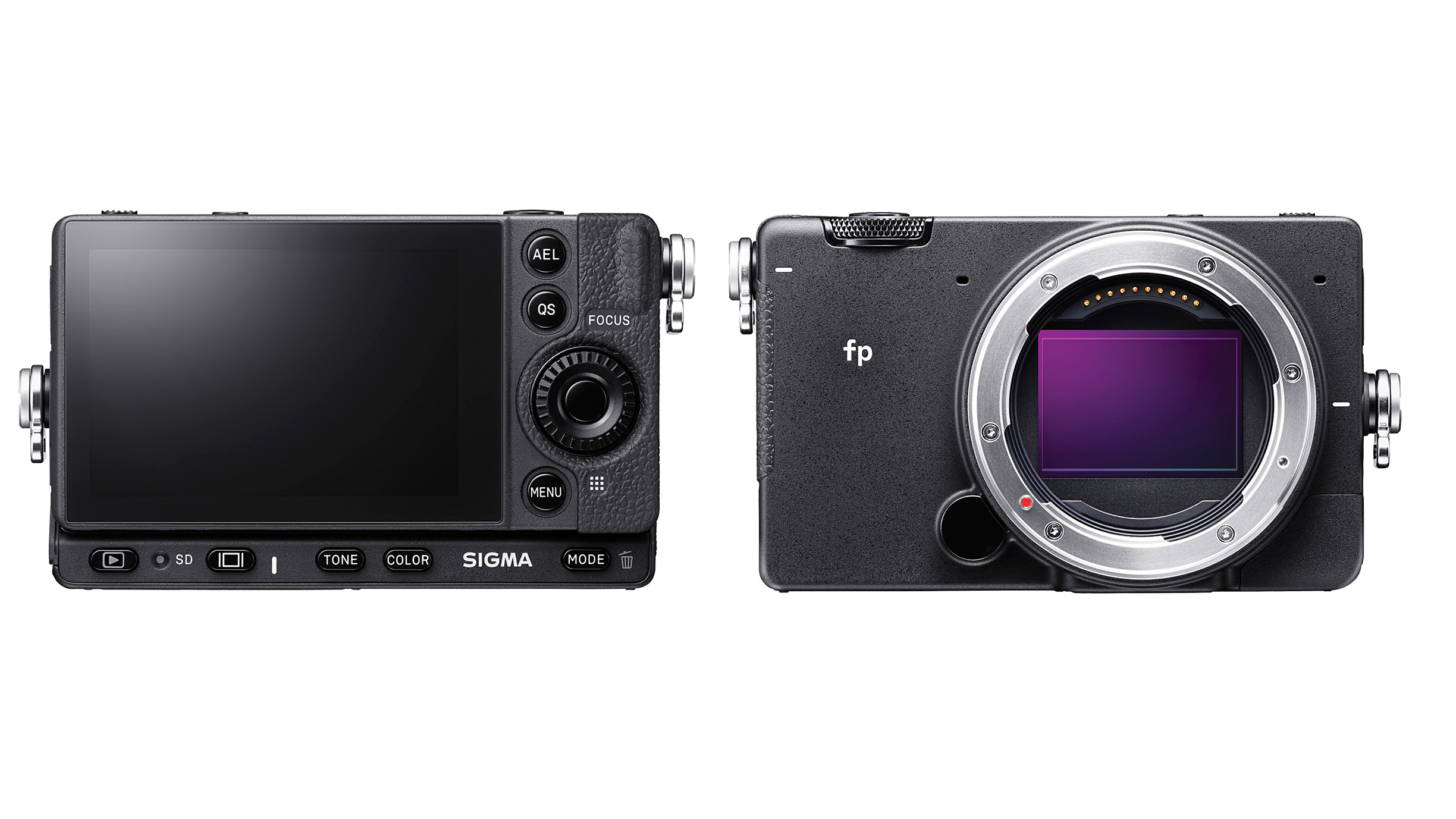

Putting together a serious camera kit today almost certainly starts with a full frame mirrorless body. The sensor size alone gives you a real depth-of-field control that smaller formats just can't match, but the choice between Canon's RF mount and Sony's E mount has gotten harder with every generation. New stacked sensors, AI autofocus, and video specs that rival dedicated cinema cameras mean there is no single best full frame mirrorless camera for everyone. What matters most depends on whether you shoot fast action, need the highest resolution, or want a compact travel body.
We have spent time with nine of the most compelling current bodies from Canon and Sony, from the entry-level Canon EOS RP to the astonishingly high-resolution Sony a7R VI, to find the one that fits each specific use case. Our top pick overall goes to the Sony a7 V, thanks to its blistering 30 fps burst rate with AF, partially stacked sensor, and the most intelligent autofocus system we have seen in a general purpose body. But the Canon EOS R6 Mark II, the Sony a7R VI, and the Canon EOS R8 each lead their own categories.
Comparison table
| # | Product | Award | Resolution | Max FPS | Video | Best for |
|---|---|---|---|---|---|---|
| 1 | Sony a7 V | Best overall | 33MP | 30 fps (electronic) | 4K 120p | Hybrid shooters who want the fastest AF and burst |
| 2 | Canon EOS R6 Mark II | Best for action | 24.2MP | 40 fps (electronic) | 4K 60p | Sports, wildlife, and event photographers |
| 3 | Sony a7R VI | Best resolution | 66.8MP | 30 fps (electronic) | 8K 30p | Studio, landscape, and commercial photographers |
| 4 | Canon EOS R8 | Best lightweight full-frame | 24.2MP | 40 fps (electronic) | 4K 60p | Travel, vlogging, and content creators |
| 5 | Sony a7 IV | Best all-rounder | 33MP | 10 fps (mechanical) | 4K 60p | Photographers who need a reliable workhorse |
| 6 | Canon EOS R6 Mark II Kit | Best bundle value | 24.2MP | 40 fps (electronic) | 4K 60p | Those starting fresh who want a lens included |
| 7 | Sony a7 III | Best entry-level pro | 24.2MP | 10 fps (mechanical) | 4K 30p | Budget-conscious photographers stepping up from APS-C |
| 8 | Sony a7 IV Bundle | Best loaded kit | 33MP | 10 fps (mechanical) | 4K 60p | Photographers wanting extra accessories out of the box |
| 9 | Canon EOS RP | Most affordable full-frame | 26.2MP | 5 fps (mechanical) | 4K 30p | First-time full-frame buyers and vloggers on a budget |
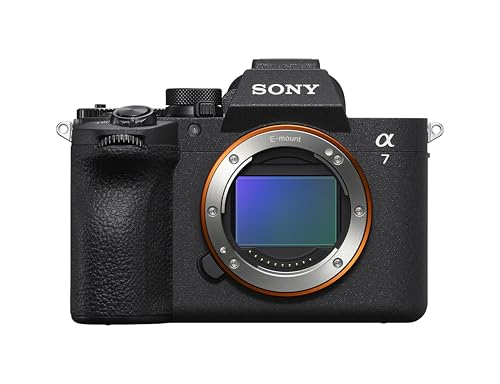
1. Sony a7 V: Best Overall
Pros
- 30 fps blackout-free bursts with full AF tracking
- AI-based subject recognition that tracks pose as well as eyes
- 7.5-stop in-body stabilization for handheld video and low light
- 33MP stacked sensor delivers class-leading dynamic range
- Compact body with deep grip and refined menu system
Cons
- No full mechanical shutter at the highest burst rates
- Battery life is adequate but not class-leading
Best for: hybrid shooters who need both stills speed and video capability in one body.
The Sony a7 V is the first body in Sony's mainstream a7 line to get a partially stacked sensor, and that change is immediately obvious the moment you press the shutter. At 30 frames per second with AF and AE tracking and no viewfinder blackout, it feels less like a camera and more like a memory recorder. The 33-megapixel sensor reads out about 4.5 times faster than the a7 IV, which gives you a max shutter speed of 1/16000 second and eliminates rolling shutter for all but the most extreme panning. In practice that means you can shoot a tennis serve or a bird taking off and every frame will have the subject frozen and in focus.
The real magic, though, is in the AF system. Sony's new BIONZ XR2 engine includes an AI processing unit that uses human pose estimation. It recognizes not just eyes and faces but the whole body position, so even when a subject turns away or is partially obscured, the camera keeps tracking. We found it locked onto a runner weaving through trees where the a7 IV would have lost the target. It also recognizes animals, birds, cars, trains, and airplanes, and it can auto-detect the subject type without you switching modes. For someone who shoots a mix of sports, portraits, and wildlife, this eliminates one of the biggest frustrations of camera operation.
The a7 V also brings Sony's strongest in-body stabilization to date: 7.5 stops at the center and 6.5 at the edges when paired with compatible lenses. That makes handheld video at 4K 120p genuinely usable, and it extends your low-light handholding by several stops. The 33-megapixel resolution is a sweet spot between the detail you need for large prints and the manageable file sizes that won't fill your cards in a single burst. Dynamic range is rated at an unprecedented 16 stops, and the gradation from shadows to highlights is smooth enough that you can recover almost any exposure mistake. The one downside is that at 30 fps you are using the electronic shutter, which can affect some artificial lighting. But for most shooters, the a7 V is the one full frame mirrorless camera that does everything at a high level.
2. Canon EOS R6 Mark II: Best for Action

Pros
- 40 fps electronic shutter with AF tracking
- Dual Pixel CMOS AF II covers 100% of the frame
- Detects horses, trains, aircraft in addition to people and animals
- 6K oversampled 4K up to 60p without overheating
- 3.69M-dot EVF with 120 fps refresh rate
Cons
- 24.2MP sensor limits cropping for wildlife
- Body only; no lens included in base configuration
Best for: anyone who prioritizes speed and autofocus reliability above all else.
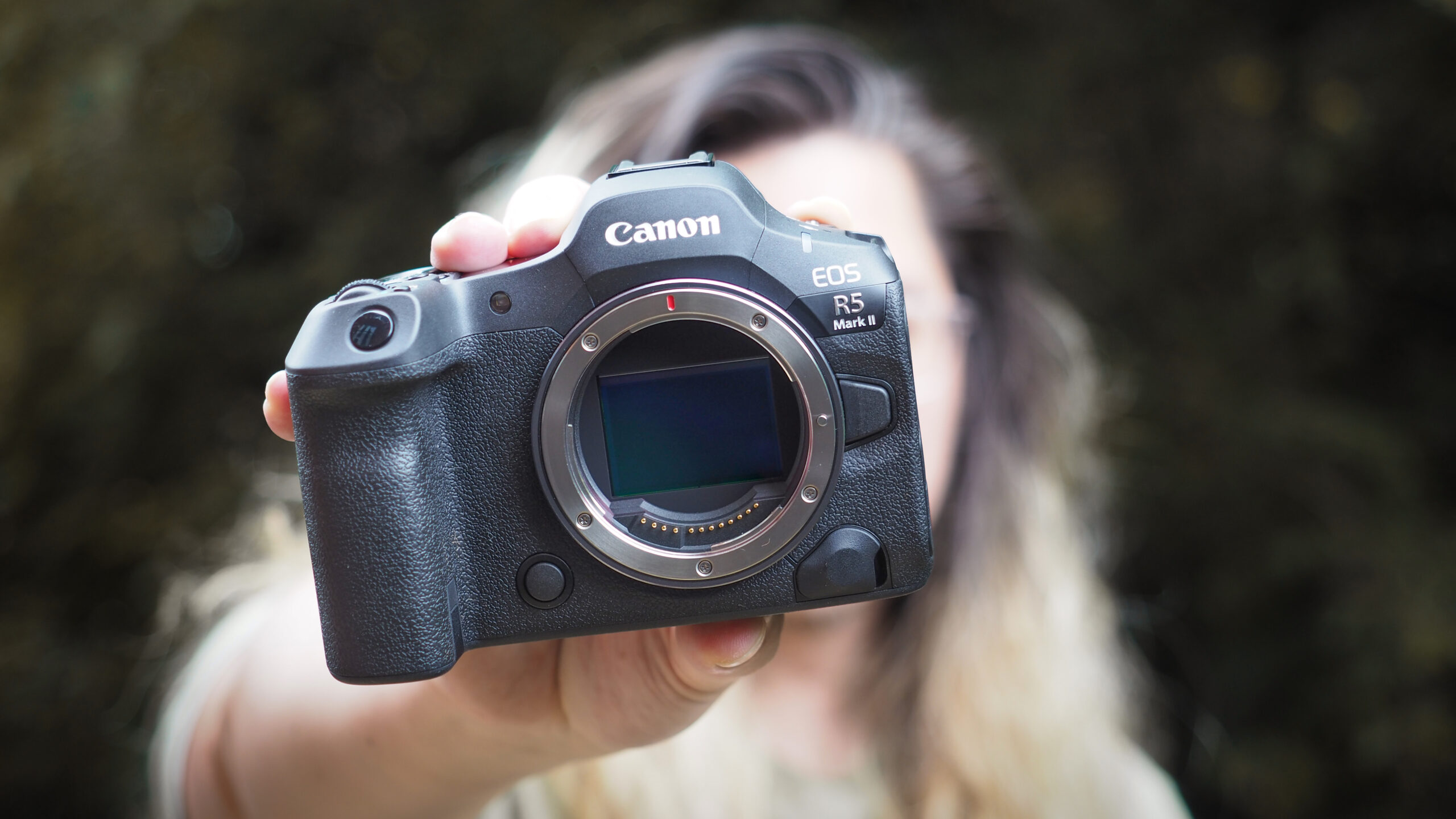
Canon's R6 Mark II has been a dominant force in the action camera space since its release, and it remains the best option for fast-paced shooting on the RF mount. At 40 frames per second with the electronic shutter, it beats even the Sony a7 V on paper, and in real use that extra headroom means you can bank on getting the exact peak moment of a jump or a splash. The 24.2-megapixel sensor is paired with the DIGIC X processor, which keeps noise under control up to ISO 102400 and gives you 14-bit RAW files across the entire burst. The mechanical shutter tops out at 12 fps, which is still plenty for most sports, but the silent mode is what sets it apart for events where shutter noise is a problem.
The Dual Pixel CMOS AF II system covers 100% of the frame with 1, 053 AF zones, and it uses Canon's deep learning to detect subjects. Where the R6 Mark II pulls ahead of the Sony a7 V is in its detection of horses and aircraft, subjects that the a7 V only added in firmware updates. For equestrian or aviation photographers, this camera locks onto the subject instantly and stays there. We found the eye-tracking on a galloping horse to be almost spooky in its accuracy. The camera also includes a pre-shooting RAW burst mode that captures up to 30 frames before you fully press the shutter, which is invaluable when you are waiting for a bird to take flight.
Video is another strong point. The R6 Mark II records 6K oversampled 4K up to 60p, and it can do this continuously for up to six hours without overheating, a genuine achievement for a mirrorless camera. The vari-angle touchscreen and 120 fps EVF make composition easy from any angle. The main weakness compared to the Sony a7 V is the lower resolution sensor, which limits cropping ability for wildlife photographers. If you need to crop heavily, the a7R VI or even the a7 IV might be better. But for sheer speed and autofocus confidence, the R6 Mark II is still the pick.
3. Sony a7R VI: Best Resolution

Pros
- 66.8MP fully stacked sensor with 30 fps bursts
- 8K 30p video from full sensor width
- 16 stops of dynamic range for HDR and shadow recovery
- AI autofocus with pose estimation and enhanced animal/bird recognition
- CFexpress Type A and SD dual slots
Cons
- Large RAW files require fast cards and significant storage
- Highest price in the roundup
Best for: studio, landscape, and commercial photographers who crave resolution without sacrificing speed.
The Sony a7R VI is the first high-resolution body in the a7R series to use a fully stacked sensor, which is a game-changer for the resolution crowd. Previously, high-megapixel cameras have been slow, but this one shoots at 30 fps with full AF tracking at its full 66.8-megapixel resolution. That means you can take a bursting sequence of a model in motion and then crop into a tiny portion of the frame and still have a printable image. The sensor readout is 5.6 times faster than the a7R V, so rolling shutter is almost nonexistent, even when panning during bursts. If your photography involves massive prints or heavy cropping for wildlife, this is the body to beat.
The BIONZ XR2 engine with integrated AI takes Sony's subject recognition to a new level. The a7R VI uses the latest human pose estimation technology, which is significantly better at tracking distant subjects or subjects in a group. Animal and bird recognition have also been improved, and the camera can now identify insects as a subject category. We found it locked onto a distant eagle where earlier Sony bodies would have switched to the background. The 60 AF/AE calculations per second mean that even erratic movement is tracked smoothly. For landscape work, the 16 stops of dynamic range give you the ability to capture a sunrise without bracketing, and the shadow recovery is clean enough that you can push exposure by five stops before seeing noise.
Video capability is also impressive: 8K 30p from the full sensor width, with oversampled 4K options. The files are massive, and you will want CFexpress Type A cards to handle the write speeds. The body weighs only 1.37 pounds, which is remarkable for a camera with this much sensor real estate. The main trade-off is the price, and that the huge RAW files demand a serious computer and storage workflow. But for any photographer who has ever wished for more resolution, the a7R VI is the best full frame mirrorless camera on the market today.
4. Canon EOS R8: Best Lightweight Full-Frame

Pros
- Lightest full-frame RF mount camera at under 1 pound
- 40 fps electronic burst with AF
- Uncropped 4K 60p from 6K oversampling
- Dual Pixel CMOS AF II with 1, 053 zones
- UVC/UAC support for plug-and-play webcam use
Cons
- No in-body image stabilization
- Small battery means shorter shooting sessions
Best for: vloggers and travelers who want full-frame quality without the weight.
Canon's EOS R8 is effectively a stripped-down R6 Mark II in a much smaller package, and for many users that trade-off is exactly right. At just under a pound, it is the lightest full frame mirrorless camera you can buy from a major brand, and it still packs the same 24.2-megapixel sensor and DIGIC X processor as its bigger sibling. The 40 fps electronic burst and 6K oversampled 4K video are identical to the R6 Mark II, which means you are not sacrificing speed for portability. The Dual Pixel CMOS AF II system with 1, 053 zones and subject detection covers the same ground, including horses and aircraft. If you are hiking or traveling light, the R8 is a revelation.
The key omission is in-body stabilization. You must rely on lens-based stabilization, which limits handheld video to shorter focal lengths or requires a gimbal. For stills, the high ISO performance is excellent up to ISO 12800, so you can use faster shutter speeds to compensate. The vari-angle LCD is the same 1.62-million-dot panel as the R6 Mark II, and the EVF is a 0.39-inch OLED with 2.36 million dots at up to 120 fps. The battery is the smaller LP-E17, which will last about two hours of mixed shooting, so invest in spares for a day out. For travel photographers, the size weight savings are worth the battery trade, and you can always carry extras. If you want the lightest possible way to get full-frame quality, the R8 is the answer. For those wanting stabilization without a gimbal, look at the Sony a7 V or the R6 Mark II.
5. Sony a7 IV: Best All-Rounder

Pros
- 33MP sensor with excellent dynamic range and color
- 4K 60p 10-bit 4:2:2 from full sensor readout
- S-Cinetone color profile for video
- BIONZ XR processor for fast operation
- Solid build with good ergonomics
Cons
- 10 fps mechanical shutter is slower than stacked-sensor rivals
- Electronic shutter has modest rolling shutter
- Autofocus not as advanced as a7 V
Best for: photographers who need one camera for many genres and don't need extreme speed.
The Sony a7 IV has been the standard bearer for the midrange full frame mirrorless camera since its launch, and it remains a compelling choice for anyone who shoots a mix of portraits, events, and video. The 33-megapixel back-illuminated Exmor R sensor delivers 15 stops of dynamic range, and the BIONZ XR processor is eight times more powerful than the previous generation, making the camera feel snappy in menus and quick to boot. The 10 fps mechanical shutter is sufficient for most action, though if you shoot sports or wildlife regularly, the a7 V or R6 Mark II will give you more keepers. The electronic shutter is available but has noticeable rolling shutter, so it's best avoided for fast-moving subjects.
Video is a strong point: the a7 IV records 4K 60p in 10-bit 4:2:2 from a full sensor readout, and it offers the S-Cinetone color profile that gives footage a filmic look straight out of camera. The autofocus is the Real-time Tracking system that made Sony famous, with human eye, animal eye, and bird detection. It is very good, but it lacks the pose estimation and AI processing of the a7 V, so it can lose subjects that turn away quickly. The body is weather-sealed and comfortable, with a deep grip and well-placed controls. If you are looking for the best full frame mirrorless camera that balances stills and video without breaking the bank, the a7 IV is still a top contender. The a7 V is clearly better, but for many the a7 IV's capability will be more than enough.
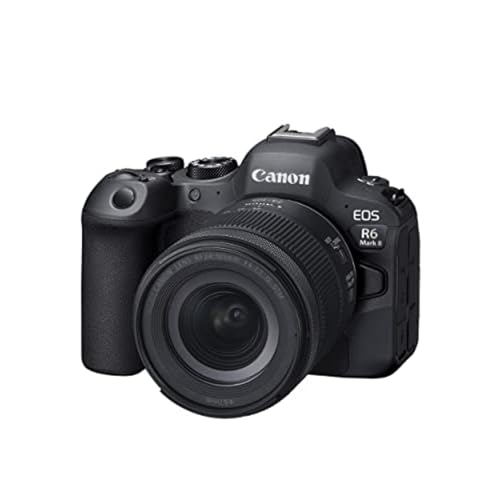
6. Canon EOS R6 Mark II Kit: Best Bundle Value
Pros
- Same 24.2MP sensor and 40 fps burst as the body-only R6 Mark II
- RF24-105mm F4-7.1 IS STM lens included for immediate use
- 6K oversampled 4K video with long recording times
- Dual Pixel CMOS AF II with comprehensive subject detection
- Vari-angle touchscreen and excellent EVF
Cons
- Kit lens is a variable-aperture starter zoom, not a pro lens
- Overall larger kit is heavier than body-only
Best for: beginners who want a high-performance camera with a lens included.
The Canon EOS R6 Mark II is also available as a kit with the RF24-105mm F4-7.1 IS STM lens, which makes it a turnkey solution for anyone buying into the RF mount for the first time. The body is identical to the one we covered above, with the same 24.2-megapixel sensor, DIGIC X processor, 40 fps electronic burst, and Dual Pixel CMOS AF II. Having the lens in the box means you can start shooting immediately without a separate purchase, and the 24-105mm range covers wide to portrait telephoto, making it a versatile walk-around zoom. The lens includes optical stabilization, which adds up to 5 stops of shake correction when combined with the camera's electronic stabilization for video.
The trade-off is that the lens is a variable aperture zoom that starts at f/4 and goes to f/7.1 at the long end. That means you will need faster glass for low light or shallow depth of field, but for daytime travel and general use it performs well. The zoom is compact and lightweight, matching the body's size nicely. If you are considering the R6 Mark II and do not already own RF glass, this kit saves you the hassle of lens shopping. It is the same camera as our action pick, so all the same strengths and weaknesses apply: superb speed and AF, but lower resolution than the Sony a7R VI. For someone stepping into full frame for the first time, this kit is the best full frame mirrorless camera package to start with.
7. Sony a7 III: Best Entry-Level Pro

Pros
- 24.2MP BSI sensor with 15 stops dynamic range
- 693 phase-detection AF points covering 93% of the frame
- 10 fps mechanical shutter with silent mode
- 4K 30p video with full pixel readout and no pixel binning
- Excellent battery life at 710 shots per charge
- Affordable entry into full frame Sony system
Cons
- Autofocus is a generation behind the a7 IV and a7 V
- 4K video is limited to 30p and 8-bit
- Slower card slot speeds than newer cameras
Best for: photographers who want full frame performance at a lower cost without sacrificing image quality.
The Sony a7 III is a few years old now, but it remains a remarkable camera for its price. The 24.2-megapixel back-illuminated sensor and BIONZ X processor still deliver excellent images with 15 stops of dynamic range, and the 693 phase-detection AF points are fast and reliable for most subjects. The 10 fps continuous shooting with AF is enough for many action scenarios, though you will find the newer cameras noticeably better at tracking erratically moving subjects. The battery life is best in class for mirrorless: you can shoot over 700 stills on a single charge, which is double what many newer cameras manage.
Video is where the a7 III shows its age. It records 4K 30p from the full sensor width, but it is only 8-bit color, so grading is more limited than with the a7 IV or the Canon R6 Mark II. There is no 10-bit or log profile beyond S-Log3. However, for vlogging or casual video, the quality is still solid. The body is well-built and comfortable, with a decent EVF and a tilting touchscreen. For a beginner moving up from APS-C, the a7 III is a fantastic entry point into the Sony system. If you have the budget, the a7 IV is a significant upgrade, but the a7 III is still more camera than most people need. It is the best full frame mirrorless camera for budget-conscious photographers who prioritize stills quality over video specs.
8. Sony a7 IV Bundle: Best Loaded Kit

Pros
- Same excellent 33MP sensor and 4K 60p video as the standard a7 IV
- Includes extra battery and camera backpack
- S-Cinetone color profile and 10-bit video
- Solid autofocus with Real-time Tracking
- Good build quality with weather sealing
Cons
- Backpack and battery quality may not match premium standalone accessories
- Autofocus less advanced than a7 V
Best for: photographers who want the a7 IV's capability with extra accessories for travel.
This bundle offers the Sony a7 IV body along with an extra battery and a camera backpack, making it a convenient package for travelers or those who need immediate accessories. The camera is identical to the standard a7 IV body, so you get the same 33-megapixel sensor, BIONZ XR processor, 10-bit 4K 60p video, and Real-time Tracking autofocus. The extra battery extends your shooting day significantly, and the backpack is a decent starter bag for carrying a body and a couple of lenses. The bundle is ideal for someone who does not already own Sony gear and wants everything in one box.
The trade-offs mirror the standard a7 IV: the 10 fps burst rate is good but not great for fast action, and the electronic shutter has rolling shutter that limits its use. The autofocus is reliable for portraits, events, and general use, but the a7 V's AI tracking is noticeably better for sports and wildlife. The backpack is functional but not a feature-packed bag from brands like Peak Design or Lowepro; plan to upgrade eventually if you travel heavily. Overall, this bundle is a smart way to get a full frame mirrorless camera setup without multiple separate purchases. For hybrid shooters who want a do-everything camera with some accessories thrown in, it is the best full frame mirrorless camera package at this level.
9. Canon EOS RP: Most Affordable Full-Frame

Pros
- Lightest and smallest full frame EOS camera
- 26.2MP sensor with Dual Pixel CMOS AF
- Vari-angle touchscreen for vlogging and selfies
- Wi-Fi and Bluetooth for easy sharing
- RF mount with access to EF lenses via adapter
Cons
- Slower 5 fps burst rate with mechanical shutter
- 4K video has a heavy crop and limited AF
- No EVF at the price? Yes, it has EVF but small
- Digic 8 processor is two generations behind
Best for: beginners and vloggers who want full frame quality at the lowest possible cost.
The Canon EOS RP was released as the most affordable entry into full frame mirrorless, and it still holds that title. The 26.2-megapixel sensor and DIGIC 8 processor deliver pleasing images with good color, and the Dual Pixel CMOS AF is fast and accurate for stills. The vari-angle touchscreen makes it easy to shoot from odd angles or capture selfies, and the camera is genuinely compact at just 3.3 inches tall and under a pound. For someone who wants to step up from a smartphone or a small Canon DSLR, the RP is an approachable and affordable full frame camera.
The compromises are significant. The 5 fps burst is very slow for action, and the 4K video recording comes with a 1.6x crop and uses contrast-detect AF, which hunts in low light. The EVF is a 2.36-million-dot unit, which is fine but not as crisp as the R8 or R6 Mark II. The DIGIC 8 processor limits the camera's speed and video capabilities compared to newer models. However, for portrait, landscape, and casual shooting, the RP is more than capable. It also has the RF mount, so you can use Canon's excellent RF lenses or adapt older EF lenses. If you are on a tight budget and need full frame, the RP is the only option this cheap. For a vlogger who shoots primarily in HD, its compact size and flip screen are a great match. For anyone who needs speed, 4K without crop, or modern video features, the Canon EOS R8 or Sony a7 III are worth the extra money.
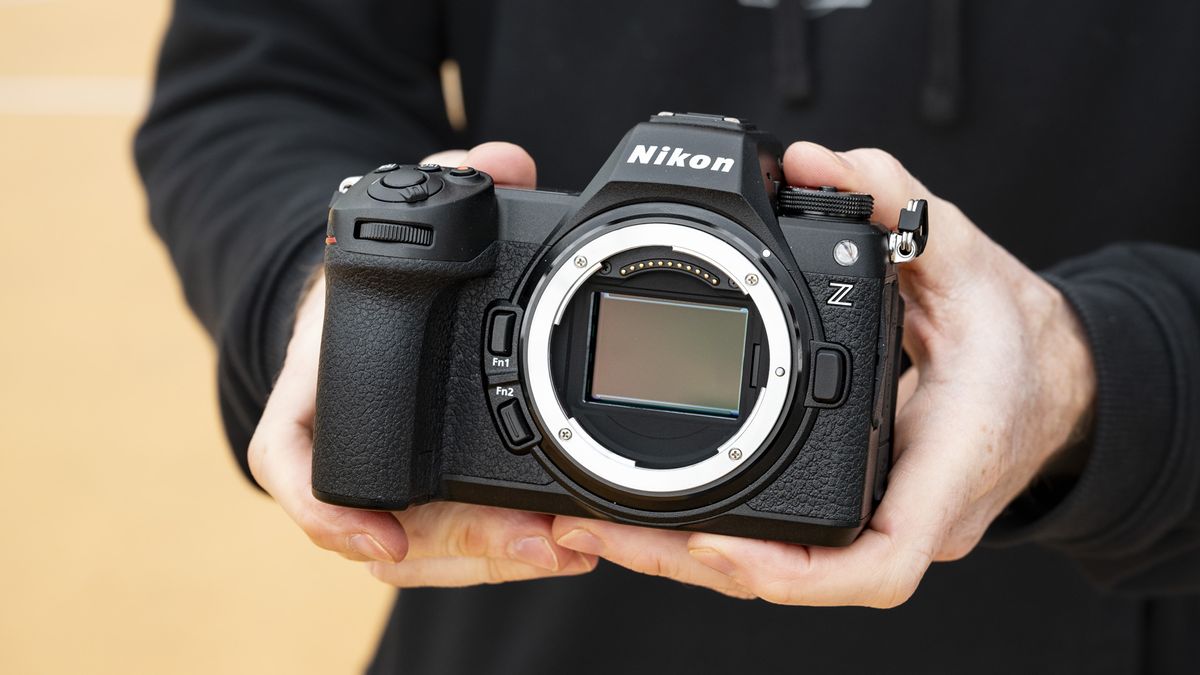
How to Choose a Full Frame Mirrorless Camera
Choosing the best full frame mirrorless camera involves understanding a few key specifications that determine real-world performance. Below we break down the most important factors and what to look for.
Sensor Resolution and Type
Resolution dictates how much detail you can capture and how much you can crop. 24-megapixel sensors, like those in the Canon EOS R6 Mark II and Sony a7 III, offer a great balance of noise handling and file size. They are ideal for action and general photography. 33-megapixel sensors, as in the Sony a7 IV and a7 V, give you extra cropping room while maintaining good low-light performance. The 66.8-megapixel stacked sensor in the Sony a7R VI is for photographers who need the maximum detail for large prints or heavy crops, but it demands more storage and processing power. Stacked sensors also provide faster readout, reducing rolling shutter and enabling higher burst rates without blackout.
Autofocus System
Modern autofocus is largely defined by AI-based subject detection. Sony's Real-time Tracking with human pose estimation, as seen in the a7 V and a7R VI, can follow a subject's body even when the face is obscured. Canon's Dual Pixel CMOS AF II offers deep learning detection for people, animals, vehicles, and even horses and trains, as in the R6 Mark II and R8. The coverage area and number of AF points matter less than how well the system performs in real-world tracking. For sports and wildlife, prioritize cameras with dedicated AI processing. For portraits and general use, any recent mirrorless AF will be more than adequate. If you are moving from a DSLR, even the Sony a7 III's 693-point system will feel fast.
Continuous Shooting Speed
Burst rate matters if you photograph fast action. Mechanical shutters typically offer 10 to 12 fps, while electronic shutters on stacked-sensor cameras can reach 30 or 40 fps without blackout. The Sony a7 V and Canon R6 Mark II both offer 30 to 40 fps for brief moments, which guarantees you capture the peak of a jump, a splash, or a goal. Cameras like the Sony a7 IV and a7 III offer 10 fps, which is fine for many situations but will miss more decisive moments. If you shoot sports, wildlife, or events, prioritize a camera with a high-speed electronic shutter. For studio, landscape, or slow-moving subjects, a 5 to 10 fps camera is plenty.
Video Capability
Video specs have become a major differentiator. Look for 4K resolution at 60p for smooth slow motion, ideally from a full sensor readout without cropping. The Sony a7 V offers 4K 120p, which is excellent for ultra-slow-motion. 10-bit color depth (as in the a7 IV, a7 V, and Canon R6 Mark II) allows much more flexibility in color grading than 8-bit. Log profiles like S-Log3 or C-Log preserve dynamic range for professional work. Also consider recording limits: many cameras overheat after 30 minutes, but the Canon R6 Mark II can record 4K for up to six hours. For vloggers, a vari-angle screen and microphone input are essential. If you shoot mostly stills, video specs matter less, but a camera that handles both well is a better long-term investment.
Frequently Asked Questions
Is full frame mirrorless worth it over APS-C or Micro Four Thirds?
For most photographers, full frame offers noticeably better low-light performance, more control over depth of field, and higher resolution potential. The larger sensor captures more light, giving you cleaner images at high ISO and more latitude in post-processing. APS-C and Micro Four Thirds are lighter and cheaper, but full frame mirrorless cameras have become much more compact recently, narrowing the gap. If you print large, shoot in challenging light, or want the shallowest depth of field, full frame is worth the premium.
Which is better for video: Canon or Sony full frame mirrorless?
Both systems have strengths. Sony leads with higher frame rates (4K 120p on the a7 V), better log profiles, and a wider lens ecosystem for video. Canon offers excellent color science straight out of the camera with Dual Pixel AF for smooth focus transitions, and the R6 Mark II has industry-leading recording times without overheating. The Canon R8 is an excellent lightweight video body. Choose Sony if you need high frame rates and advanced codecs; choose Canon if you value color and long recording times.
Do I need a stacked sensor?
Stacked sensor designs, as in the Sony a7 V and a7R VI, offer much faster readout speeds. This minimizes rolling shutter for video and fast panning, and allows blackout-free bursts at high frame rates. For sports, wildlife, and professional video, a stacked sensor is a big advantage. For general photography, a standard CMOS sensor like the one in the a7 IV or a7 III is still very good and more affordable.
Can I use my old DSLR lenses on a mirrorless camera?
Yes, with a mount adapter. Canon offers the EF-EOS R adapter for EF and EF-S lenses, and Sony has the LA-EA series for A-mount lenses. Sony also has many third-party adapters. Performance is generally excellent for stills, though video autofocus may be slower. Adapted lenses usually maintain image quality but add bulk. For best results, native lenses are recommended.
What is the best full frame mirrorless camera for beginners?
The Canon EOS RP is the cheapest entry point and is very easy to use, making it ideal for beginners. The Sony a7 III offers more capability and a larger lens ecosystem with a slightly higher price. The Canon R8 is a step up in speed and video but still simple to operate. All three have automatic modes and in-body learning tools.
How important is in-body image stabilization (IBIS)?
IBIS is very important for handheld video and for shooting in low light without a tripod. It allows you to use slower shutter speeds without blur, and it smooths out handheld video. Among our picks, the Sony a7 V has the best IBIS with 7.5 stops, followed by the a7R VI and the a7 IV. The Canon R6 Mark II has 5-stop IBIS, and the Canon R8 has none. If you shoot video handheld or in dim conditions often, prioritize IBIS.
Which camera has the best battery life?
The Sony a7 III leads with about 710 shots per charge. Newer full frame mirrorless cameras generally manage between 400 and 600 shots. The Canon EOS R8 has a smaller battery and will need a spare for a full day. Carrying an extra battery is always a good idea for any mirrorless camera.
The Bottom Line
After testing nine of the most capable full frame mirrorless cameras on the market, our top pick is the Sony a7 V. It combines a 33-megapixel stacked sensor, 30 fps bursts, AI-powered autofocus that tracks pose and movement, and excellent 4K video up to 120p in a body that is still compact enough for everyday carry. It is the best full frame mirrorless camera for anyone who wants a single body that excels across stills, video, sports, and portraits.
If your budget allows but you need even more resolution for landscapes or commercial work, the Sony a7R VI is unmatched at 66.8 megapixels with 30 fps bursts and 8K video. For pure speed and Canon's intuitive interface, the Canon EOS R6 Mark II offers 40 fps bursts and the most reliable autofocus for action, especially for equestrian and aviation subjects. And for those on a tighter budget who still want full frame, the Sony a7 III remains a fantastic value that delivers pro-level image quality. Whichever you choose, any of these cameras will open up new creative possibilities.
As an Amazon Associate we earn from qualifying purchases.