

A galaxy projector can turn a blank ceiling into a calming nebula, but the difference between models is substantial. Some are little more than colored mood lights, while others use replaceable discs to show recognizable planets, constellations, and deep-space scenes.
We compared these 10 options by the details that matter most: projection clarity, coverage, scene variety, controls, sleep features, and how well each one fits a bedroom or gathering. The HODANS Northern Galaxy is our top pick, while this list also includes smart lighting from Govee, disc-based planetarium projectors, an astronaut lamp, and a rechargeable option.
Comparison table
| # | Product | Award | Projection | Coverage or scenes | Best for |
|---|---|---|---|---|---|
| 1 | HODANS Northern Galaxy | Best overall | Dual lens, aurora and stars | 33 effects, 16 aurora effects | Bedrooms, sleep, and parties |
| 2 | MuliVid 13 Disc Planetarium | Best for astronomy variety | Disc projection, 360-degree rotation | 13 discs, 135 to 754 square feet | Kids and space enthusiasts |
| 3 | Rossetta 3D 60 Scene | Best 3D scene library | Naked-eye 3D projection | 60 scenes across 12 themes | Parties and family rooms |
| 4 | Govee 7 Zone Stardust | Best smart projector | Seven customizable light zones | Up to 540 square feet, 50+ scenes | Smart homes and game rooms |
| 5 | Fussion 13 Disc Planetarium | Best simple planetarium | Disc projection, 360-degree rotation | 13 discs, 135 to 754 square feet | Bedroom ceilings |
| 6 | Govee Galaxy Light 2 Pro | Best image quality | 4-megapixel HD lens | Up to 301 square feet, 20+ scenes | Detailed projections |
| 7 | Rossetta Dual Lens | Best for sound and light effects | Dual lens, aurora and nebula | 58 mixed effects | Music, sleep, and parties |
| 8 | Mooyran Astronaut | Best decorative design | Nebula and breathing stars | 8 nebula effects | Kids’ rooms and desks |
| 9 | POCOCO 5K Disc | Best rechargeable model | 2-megapixel lens, 5K discs | Multiple disc series | Flexible placement |
| 10 | HERHOTER Aurora | Best compact mood light | Colored stars and flowing aurora | Seven background colors | Occasional ambient lighting |
1. HODANS Northern Galaxy: Best Overall

Pros
- Combines aurora, stars, sound, and Bluetooth audio
- 33 lighting atmospheres provide plenty of variety
- Eight built-in white noise options
- Four brightness and flow-speed levels
- Compact 4.3 by 6.3 by 3.9-inch design
Cons
- Projection details are less astronomy-focused than disc models
- Built-in speaker and white noise machine add complexity
- No rechargeable operation is listed
Best for: someone who wants one flexible projector for sleep, relaxing light, and parties.
The HODANS Northern Galaxy is the easiest projector here to recommend to a general bedroom audience because it does not force you to choose between a star display and a useful ambient-light machine. Its dual-lens design throws stars and aurora effects at the same time, creating a fuller scene than a small single-effect lamp. The elephant-shaped housing also reads as decor instead of looking like a piece of technical equipment left on a nightstand.
Its lighting system offers four colors, 33 lighting atmospheres, three modes, and 16 northern-light effects. Brightness and flow speed each have four adjustment levels, so it can move from a gentle background glow to a more active party display. Those controls matter because a projector that looks impressive for five minutes can become distracting at bedtime if the movement or brightness cannot be softened.
The sound features make this model more versatile than the MuliVid 13 Disc Planetarium or Fussion 13 Disc Planetarium. Eight built-in white noises cover options such as ocean waves, forest birds, a rivulet, and lullaby sounds. Bluetooth support lets it act as a speaker, and its rhythm mode can make the lights respond to music. That is a useful combination for a movie-night backdrop or a small gathering, though the listing does not provide speaker power or audio-quality details.
At 4.3 by 6.3 by 3.9 inches, it is easy to fit on a bedside table, shelf, or desk. The real compromise is that its visuals are atmospheric rather than scientifically presented. If recognizable planets and galaxy subjects matter more than color movement, the MuliVid or Fussion models are better fits. The HODANS is the one to keep for a buyer who wants relaxing light, sleep sounds, and music playback in one compact unit.
2. MuliVid 13 Disc Planetarium: Best for Astronomy Variety

Pros
- Includes 13 named space scenes
- Focus adjustment and 360-degree rotation
- Projects from 1.5 to 16 feet
- Coverage range reaches 754 square feet
- One, two, and four-hour shutoff options
Cons
- Requires a dark room for the clearest image
- USB powered rather than rechargeable
- No speaker or built-in white noise feature is listed
Best for: kids and adults who want recognizable astronomy subjects instead of only colored nebula light.
The MuliVid 13 Disc Planetarium is a different kind of galaxy projector from the HODANS Northern Galaxy. It is built around physical projection discs, so its appeal is the ability to show specific subjects rather than endlessly blend colors. The package includes 13 discs, with one installed in the projector, and the subjects range from the Solar System, Earth, and Moon to the Milky Way, Black Hole, Wormhole, and Laniakea Supercluster.
That selection gives a child something to explore and gives an adult more control over the mood of a room. The discs include brief introductions to their featured subjects, which adds an educational element absent from most aurora lamps. The projector also has an adjustable focus, a useful detail when the image is spread across a wall or ceiling rather than placed close to the device.
The stated projection distance runs from 1.5 to 16 feet, with 9.84 feet recommended. Coverage is listed from 135 to 754 square feet, a broad range that makes placement important. At the shorter end, the image should occupy a smaller area with stronger detail. At the longer end, it can cover a large ceiling, but the room needs to be dark enough to preserve contrast. The 360-degree rotation lets you redirect the image toward a wall, floor, or ceiling without lifting the projector.
A one or two-hour timer is available, and the default automatic shutoff occurs after four hours. The 5.19 by 6.69 by 5.9-inch body is larger than the Fussion model, and at 1.36 pounds it is not as effortless to move around. Still, the MuliVid is the stronger choice for anyone who wants a small planetarium display. Choose the HODANS instead if sleep sounds and Bluetooth music matter more than disc-based astronomy.
3. Rossetta 3D 60 Scene: Best 3D Scene Library

Pros
- 60 dynamic 3D scenes across 12 themes
- Combines projection, ambient lighting, night light, and speaker
- Adjustable focus, brightness, and projection angle
- Covers 130 to 385 square feet
- Bluetooth and built-in background audio
Cons
- Larger body than simple star projectors
- Scene library extends beyond galaxy imagery
- No rechargeable operation is listed
Best for: families and hosts who want animated visual variety beyond a traditional star field.
The Rossetta 3D 60 Scene is the most ambitious visual-effects model in this group. It is not limited to stars and nebulae. Its naked-eye 3D display covers 60 high-definition scenes across 12 themes, including oceans, wildlife, forests, festivals, and cosmic subjects. That makes it more adaptable for a family room or party than a projector designed only for bedtime.
The 4-in-1 design combines a 3D projector, ambient light, night light, and Bluetooth speaker. The scenes are intended to create a sense of depth without special glasses, while adjustable brightness helps keep the effect from overwhelming a darker bedroom. Its 220-degree adjustable angle is more constrained than the 360-degree movement offered by the MuliVid, but it still provides useful positioning flexibility on a shelf or table.
Projection works from 10 to 20 feet and covers 130 to 385 square feet. That is a more focused range than the very broad coverage claims of the MuliVid and Fussion, which may suit buyers who want a defined wall display rather than the largest possible ceiling wash. The focus control is important here because 3D scenes lose their impact quickly when edges look soft. A one or two-hour timer is included, and the anti-slip base should help keep the unit steady.
Bluetooth playback can replace the built-in background tracks, so the projector can function as an audiovisual centerpiece during a gathering. The tradeoff is size: at 7.76 inches long, 5 inches wide, and 5.59 inches tall, it takes more room than the HODANS. It is also less specifically astronomical than the Govee Galaxy Light 2 Pro. Pick the Rossetta when broad scene variety and entertainment matter more than a precise planetarium presentation.
4. Govee 7 Zone Stardust: Best Smart Projector

Pros
- Seven independently customizable light zones
- Matter, Alexa, and Google Assistant compatibility
- Up to 540 square feet of coverage
- More than 50 scenes and 18 white noise options
- Quiet operation and sleep mode
Cons
- Smart controls require more setup than a basic remote
- Visuals are mood-focused rather than disc-based astronomy
- The tall body needs more shelf clearance
Best for: smart-home owners who want detailed control over color, motion, and room-wide coverage.
The Govee 7 Zone Stardust is the strongest fit for a connected home. Its seven light zones can be adjusted individually, allowing the nebula effect to look layered instead of like one undifferentiated wash of color. You can set each zone's color, brightness, speed, and motion, then switch between flowing and breathing effects depending on whether the room is being used for relaxation or entertainment.
Matter compatibility is the headline feature, with support for Alexa and Google Assistant as well. That gives it an advantage over the HODANS and Rossetta Dual Lens if the rest of your lighting already lives in a smart-home system. Voice controls are useful when the projector is across the room, though a simple remote remains easier for a child or guest who does not use the same platform.
Field-of-view lenses expand coverage to a stated 540 square feet, enough to make this a serious option for a large bedroom, living room, or game room. More than 50 scene modes provide quick starting points, while 18 white noise options add a sleep-oriented layer. The ultra-quiet motor and automated sleep mode are particularly relevant for light sleepers. The projector stands about 8.94 inches high, so it needs a stable surface with more vertical clearance than the small HERHOTER.
Its weakness is the lack of physical astronomy discs. If you want to show the Solar System or named galaxies, the MuliVid and Fussion are more appropriate. If you are setting up a room where lighting needs to react to voice commands, music, or changing activities, the Govee 7 Zone Stardust is the more capable tool. Readers comparing room projectors may also want to consider how much wall and ceiling coverage a room projector really needs before choosing a placement.
5. Fussion 13 Disc Planetarium: Best Simple Planetarium

Pros
- 13 astronomy discs with one pre-installed
- 360-degree angle adjustment
- Two rotation speeds
- Focus knob for wall, ceiling, and floor displays
- Compact 1.15-pound body
Cons
- USB power adapter is not included
- Bright rooms reduce image clarity
- No speaker or smart-home control is listed
Best for: a bedroom or child’s room that needs a straightforward rotating planetarium display.
The Fussion 13 Disc Planetarium is the practical alternative to the MuliVid. It uses the same basic idea, a set of 13 film discs covering subjects such as the Solar System, Earth, Moon, Milky Way, and several named deep-space formations. One disc is installed, and the remaining discs can be swapped in as interests change. The result is more educational and recognizable than the flowing color effects from the Govee 7 Zone Stardust.
Its projection distance reaches 16.4 feet, with a recommended distance within 9.84 feet. Coverage is listed from 135 to 754 square feet. A focus knob helps sharpen the image, while 360-degree angle adjustment makes it possible to aim the display at a ceiling, wall, or floor. Two rotation speeds give a little control over the movement, which is useful when a fast rotation would be too stimulating at bedtime.
The compact 5.7 by 5.7 by 4.33-inch body weighs 1.15 pounds, so it is easy to shift between a nightstand and a shelf. It runs over USB-C, but a 5V/2A adapter is required and is not included. That power detail should be considered before setting it up in a child’s room. The package includes a USB-C cable, cleaning cloth, and user manual, which is a useful set for maintaining the discs and keeping the projection clear.
The Fussion lacks the MuliVid’s more explicit positioning around an enlarged projection area, and neither model offers Bluetooth audio. The Fussion is the better pick for a buyer who wants the same core astronomy experience in a compact package with a simple control scheme. Skip it if you want music, white noise, or changing aurora colors rather than static space subjects in motion.
6. Govee Galaxy Light 2 Pro: Best Image Quality

Pros
- 4-megapixel high-definition optical lens
- 230-lumen light source
- Eight film discs and more than 20 scenes
- Matter, Alexa, Google Assistant, and SmartThings support
- 360-degree adjustment and two-hour auto-off
Cons
- Heavier and larger than most models here
- Covers less area than the Govee 7 Zone Stardust
- Requires a darker room for its clearest image
Best for: viewers who care about projection sharpness and smart control more than maximum room coverage.
The Govee Galaxy Light 2 Pro is the image-quality specialist in this roundup. Its 4-megapixel optical lens is designed to preserve detail and reduce distortion, while the glass-injected film is said to provide 17 percent higher light transmittance. Those numbers matter most when a projection is large enough to expose fuzzy edges or when the image contains fine star and nebula detail.
An output of 230 lumens gives the projector more visual presence than a very dim sleep lamp, though Govee still recommends a darker room for the best result. Its 90-degree wide-angle design expands the projection angle by 12.5 percent and covers up to 301 square feet. That is enough for a bedroom or smaller living space, but it falls short of the Govee 7 Zone Stardust's stated 540-square-foot reach.
The included eight film discs, 21 or more white noise options, and more than 20 scenes create more than 3, 200 combinations. The projector can be rotated through 360 degrees, and the lens itself turns for focus adjustment. A two-hour auto-off timer handles bedtime use. The Govee Home app can save up to six preferred lighting scenes to the physical button, so frequently used settings do not have to be rebuilt every time.
SmartThings, Matter, Alexa, and Google Assistant support give it a broad advantage over the disc projectors from MuliVid and Fussion. Its 10.71 by 8.07 by 7.87-inch body and 4.41-pound weight are the real drawbacks. This is not the projector to carry from room to room. It is the one to install carefully in a preferred location when clean, detailed images matter most. For a wider look at image-focused equipment, the practical differences between sharpness and room coverage are worth understanding before you buy.
7. Rossetta Dual Lens: Best for Sound and Light Effects

Pros
- Dual lens combines stars, nebula, and aurora effects
- 58 mixed lighting effects
- 15 white noise sounds
- Bluetooth 5.4 speaker with music sync
- Remote, customization, and one or two-hour timer
Cons
- Tall, narrow shape may be less stable on some surfaces
- Audio quality is not specified
- Visual detail is less astronomy-focused than disc projectors
Best for: bedrooms and social spaces where sound and reactive lighting are equally important.
The Rossetta Dual Lens is closest to the HODANS Northern Galaxy in spirit, but its feature mix is slightly more elaborate. It combines a dual-lens star projector, color-changing aurora light, nebula projection, Bluetooth speaker, and white noise machine. The two optical systems help create a busier, more layered ceiling effect, while 58 mixed light effects give the remote plenty to work with.
Its 15 white noise sounds include ocean waves, rain, and crickets. That makes it a more complete sleep companion than a basic aurora lamp, particularly for a bedroom shared by children and adults. The built-in Bluetooth 5.4 speaker adds a second use case, and sound-activated rhythm mode makes the lights pulse and change with music. The listing does not provide speaker wattage or audio specifications, so it is best treated as an atmosphere feature rather than a replacement for a dedicated speaker.
The remote adjusts brightness, rotation speed, lighting modes, and music settings. A one or two-hour timer supports sleep, while the listing also says it can run all night without shutting off. The body is 9.45 inches tall and about 3.94 inches wide and deep, with a listed weight of 1.08 pounds. Its narrow footprint saves table depth, but it needs a stable surface because the height makes placement more important.
The HODANS remains the simpler all-purpose recommendation, with a shorter body and a clearly stated four-level brightness and flow-speed system. The Rossetta wins when 15 sound options, Bluetooth 5.4, and a larger library of mixed effects are more appealing. It is not the right fit for someone seeking labeled planets or scientifically oriented projections. For a party room or relaxing bedroom that needs both audio and light, it is a capable middle ground.
8. Mooyran Astronaut: Best Decorative Design

Pros
- Distinctive astronaut housing
- Eight nebula effects with breathing green stars
- Magnetic head allows projection-angle adjustment
- Remote control and 45 or 90-minute timer
- Removable moon base and poseable arm
Cons
- Adapter and battery are not included
- Shorter timer choices than most models
- No speaker or white noise feature is listed
Best for: children’s rooms, desks, and buyers who want the projector itself to be part of the decor.
The Mooyran Astronaut earns its place through design as much as projection. The astronaut body, removable moon base, poseable arm, and magnetic head make it look like a decorative object even when the light is off. That gives it a clear advantage over plain cylindrical lamps when the projector will sit on a child’s shelf or remain visible on a desk.
The projection system offers eight nebula effects paired with breathing green stars. The remote can change brightness, rotation speed, and breathing rate, giving more control than the small HERHOTER Aurora. The astronaut’s magnetic head adjusts the projection angle, which is a more playful approach than turning an entire projector body. It works for bedrooms, game setups, home theaters, and movie nights.
A 45 or 90-minute timer automatically shuts the lamp off as the user falls asleep. That is shorter and less flexible than the one, two, and four-hour settings on the MuliVid or the half-hour to four-hour choices on the HERHOTER. The product does not include an adapter or battery, so the power arrangement needs attention before it is given as a gift.
At 9.64 inches high, it is a tall object despite its listed weight of 0.9 pounds. The narrow 1.44-inch width figure suggests a slim profile, but the base and poseable design still need a safe, stable surface. The Mooyran is not the strongest projector for detailed astronomy or broad smart-home control. It is the one to choose when a child or gift recipient will enjoy the astronaut figure almost as much as the nebula light.
9. POCOCO 5K Disc: Best Rechargeable Model

Pros
- Rechargeable operation supports flexible placement
- 2-megapixel optical lens
- 5K discs use detailed etched imagery
- Battery and plug power options
- 15, 30, and 60-minute timer settings
Cons
- Projection angle adjusts through only 30 degrees
- The product data does not specify battery runtime
- Very low listed dimensions make the physical size unclear
Best for: buyers who want disc-based star imagery without keeping the projector beside an outlet.
The POCOCO 5K Disc stands apart because it is rechargeable. Most projectors in this group are designed around a USB cable, which is fine for a bedside table but limits where the display can go. Battery and plug power give the POCOCO more freedom for a shelf, a temporary party setup, or a location where cable management would spoil the room.
Its optical system uses a 2-megapixel lens and 5K discs made with photolithography. The product is aimed at detailed star, constellation, Milky Way, and planetary imagery rather than a broad color wash. A 1-watt LED source is designed for gentle night lighting, and the automatic timer turns the lamp off after two hours according to the listing. The additional timer settings are 15, 30, and 60 minutes, so the exact shutoff choice depends on which control mode is being used.
The disc selection includes constellation and starry-sky sets as well as planetary discs, with separate series available for children. The lamp has a disc rotation function and a 30-degree adjustable angle. That adjustment is much less flexible than the 360-degree systems on the MuliVid, Fussion, and Govee Galaxy Light 2 Pro, so placement needs more care. It is better suited to directing a controlled image than filling every surface in a large room.
The main missing detail is battery runtime. The listing confirms rechargeable use but does not say how long the battery lasts, so buyers should not assume it will run through an entire evening without charging. Its listed dimensions are also unusually small and should be checked carefully against the intended surface. Pick the POCOCO over the disc-based MuliVid or Fussion when cable-free placement matters most, and choose one of those models when larger coverage and precise angle control matter more.
10. HERHOTER Aurora: Best Compact Mood Light

Pros
- Compact 3.3 by 3.3 by 3-inch design
- Seven LED background colors
- Remote adjusts brightness, speed, and effects
- Sound mode responds to nearby audio
- Timer settings from 30 minutes to four hours
Cons
- No disc-based astronomy scenes
- Sound mode turns the light off when no sound is detected
- No speaker or white noise feature is listed
Best for: a small bedroom, desk, or occasional party setup that needs simple colored ambience.
The HERHOTER Aurora is the smallest and simplest projector here. Its job is to add colored stars and a flowing aurora effect to a wall or ceiling without taking over the room. The 3.3-inch square footprint and 3-inch height make it easy to place on a crowded nightstand, desk, or shelf.
It has red, green, and blue LEDs, multiple color mixes, and seven background colors. The remote changes colors, brightness, lighting mode, effect, and aurora movement speed. A sound mode can react to nearby audio, which gives it a little party appeal, though the light turns off when no sound is detected in that mode. That behavior is worth knowing before using it as continuous ambient lighting.
The timer options run from 30 minutes through one, two, three, and four hours. Sleep mode can shut the projector off after an hour without operation. Those settings are more flexible than the Mooyran Astronaut’s 45 and 90-minute choices, although the Mooyran provides a more distinctive physical design and a more adjustable projection head.
The HERHOTER cannot compete with the MuliVid or Fussion for astronomy content, and it has none of the smart-home features found on the Govee projectors. It also lacks the HODANS and Rossetta Dual Lens sound features. That is not a problem if the goal is a small, uncomplicated mood light. Choose it for occasional color and motion, not for sharp planets, wide coverage, or a full sleep-audio system.
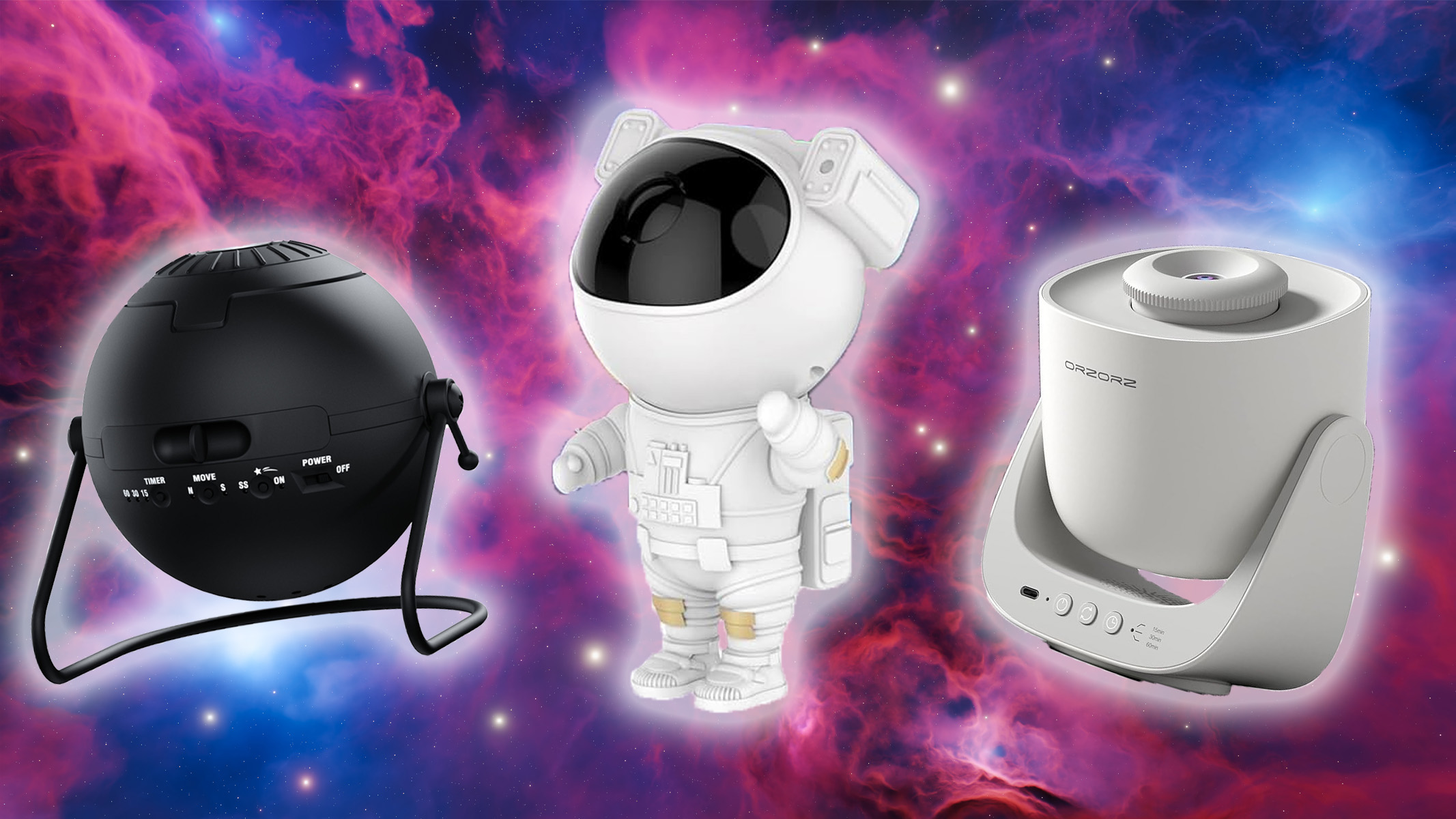
How to choose best galaxy projector
The right galaxy projector depends on whether you want atmospheric color, recognizable astronomy scenes, smart lighting control, or a projector that can also handle sound.
Projection type
Aurora and nebula projectors use colored light and motion to create a mood across a wall or ceiling. They are usually more relaxing and visually broad than disc models. Disc projectors show specific subjects such as Earth, the Solar System, constellations, or the Milky Way, making them better for educational use and viewers who care about recognizable detail.
Image clarity and brightness
A sharper lens helps preserve small stars and fine nebula patterns when the image is enlarged. The Govee Galaxy Light 2 Pro specifies a 4-megapixel lens and 230 lumens, while the POCOCO lists a 2-megapixel lens. Brightness is only useful when the room can control ambient light. A bright bedroom can wash out even a capable projector, so look for focus adjustment and plan to switch off nearby lamps.
Coverage and placement
Coverage figures tell you how much wall or ceiling a projector is designed to reach, but they do not guarantee equal detail across the whole area. The MuliVid and Fussion list coverage from 135 to 754 square feet, while the Govee 7 Zone Stardust lists up to 540 square feet. A smaller bedroom may benefit more from a focused, sharp image than from maximum spread.
Controls and smart features
A remote is enough for changing brightness, color, rotation, and timers from bed. App and voice controls add convenience when the projector is part of a larger smart-home setup. Matter, Alexa, Google Assistant, and SmartThings support give the Govee models a clear advantage, while physical discs keep the MuliVid and Fussion easy to understand without an app.
Sleep features
For bedside use, prioritize quiet operation, dimming, white noise, and a timer that matches your routine. The HODANS offers eight white noise options, the Rossetta Dual Lens offers 15, and the Govee models provide larger sound libraries. A projector with no timer can stay on longer than intended, while a very short timer may shut off before you are asleep.
A sharp disc display is for looking at the sky, while an aurora projector is for changing the feeling of the room.
If portability matters, the features that make a projector easy to move deserve attention beyond the light effects themselves. Outdoor setups also need more than a dramatic projection, including a suitable power arrangement and a properly dark environment. For those uses, how to handle brightness and placement outside is a useful companion read.
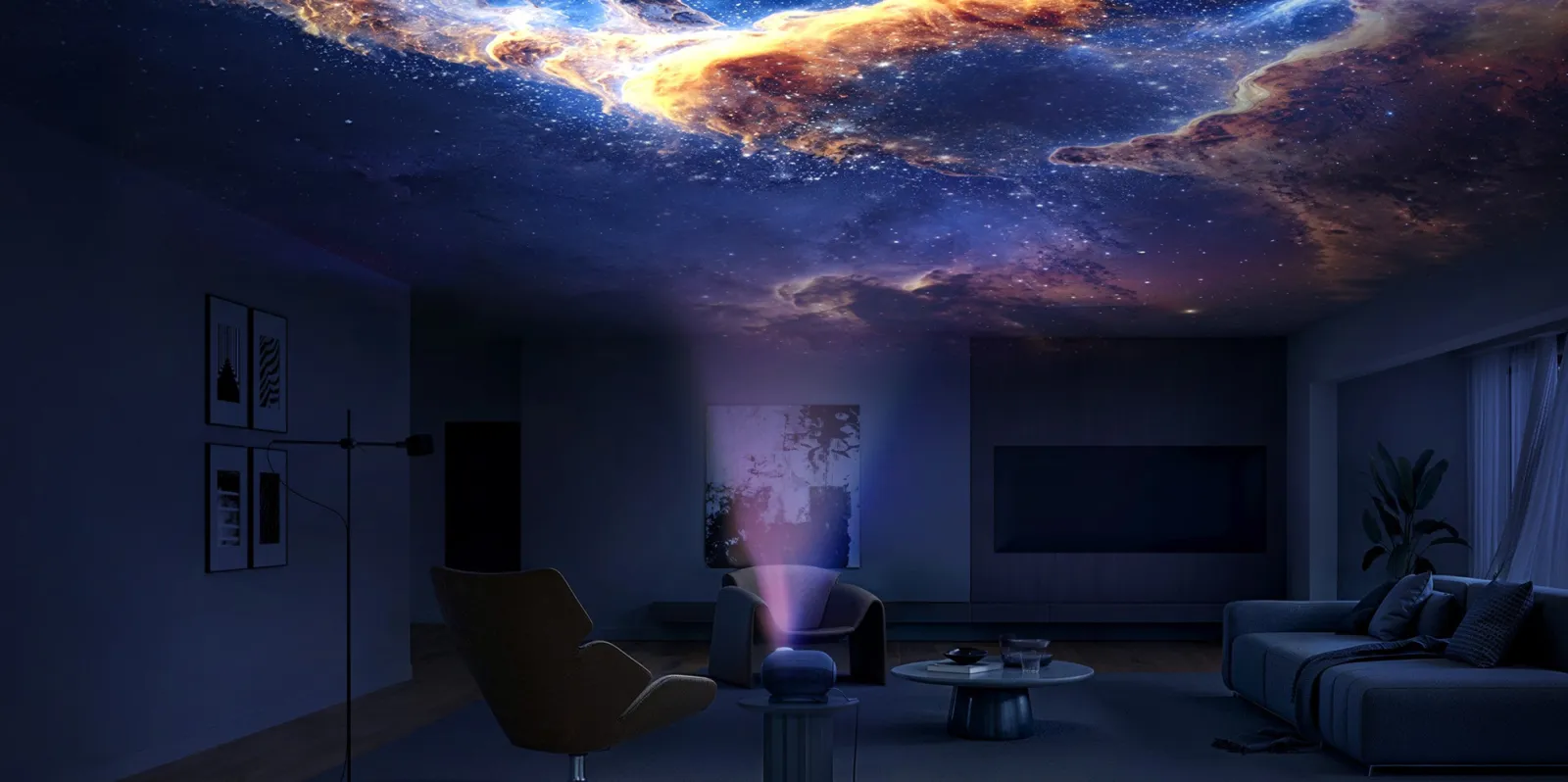
Frequently asked questions
Are galaxy projectors suitable for bedrooms?
Yes, many are designed for bedrooms and include timers, dimming, or quiet operation. The HODANS, Rossetta Dual Lens, Govee 7 Zone Stardust, and Govee Galaxy Light 2 Pro also include white noise features. A dark room will usually produce a clearer image and may let you use a lower brightness setting.
Which projector shows real astronomy subjects?
The MuliVid 13 Disc Planetarium and Fussion 13 Disc Planetarium include 13 discs covering subjects such as the Solar System, Earth, Moon, Milky Way, and named galaxies. The POCOCO also uses detailed discs for constellations, star fields, and planetary imagery. These models are a better fit than color-only aurora lamps for children interested in space.
Do galaxy projectors need an internet connection?
Basic projectors with a remote and physical discs do not need an internet connection. Smart models from Govee may use an app or smart-home platform for their advanced controls, but their core lighting functions can still be operated through the device or included controls. Check the setup requirements if voice control is important.
Can a galaxy projector cover an entire ceiling?
Some can cover a large ceiling when placed at the recommended distance in a dark room. The MuliVid and Fussion list coverage up to 754 square feet, while the Govee 7 Zone Stardust lists up to 540 square feet. Larger coverage generally means the image needs careful focus and placement to remain clear.
Are galaxy projectors safe to leave on while sleeping?
Use the built-in timer whenever possible, especially in a child’s room. The products here offer different shutoff periods, including 30 minutes, 45 minutes, one hour, two hours, and four hours depending on the model. Follow the product instructions and keep the projector on a stable surface with its ventilation area unobstructed.
Can these projectors play music?
The HODANS Northern Galaxy and both Rossetta models include Bluetooth speaker functions. The HODANS and Rossetta models also offer sound-responsive lighting modes. The Govee projectors provide white noise options, but the supplied data does not identify them as Bluetooth music speakers.
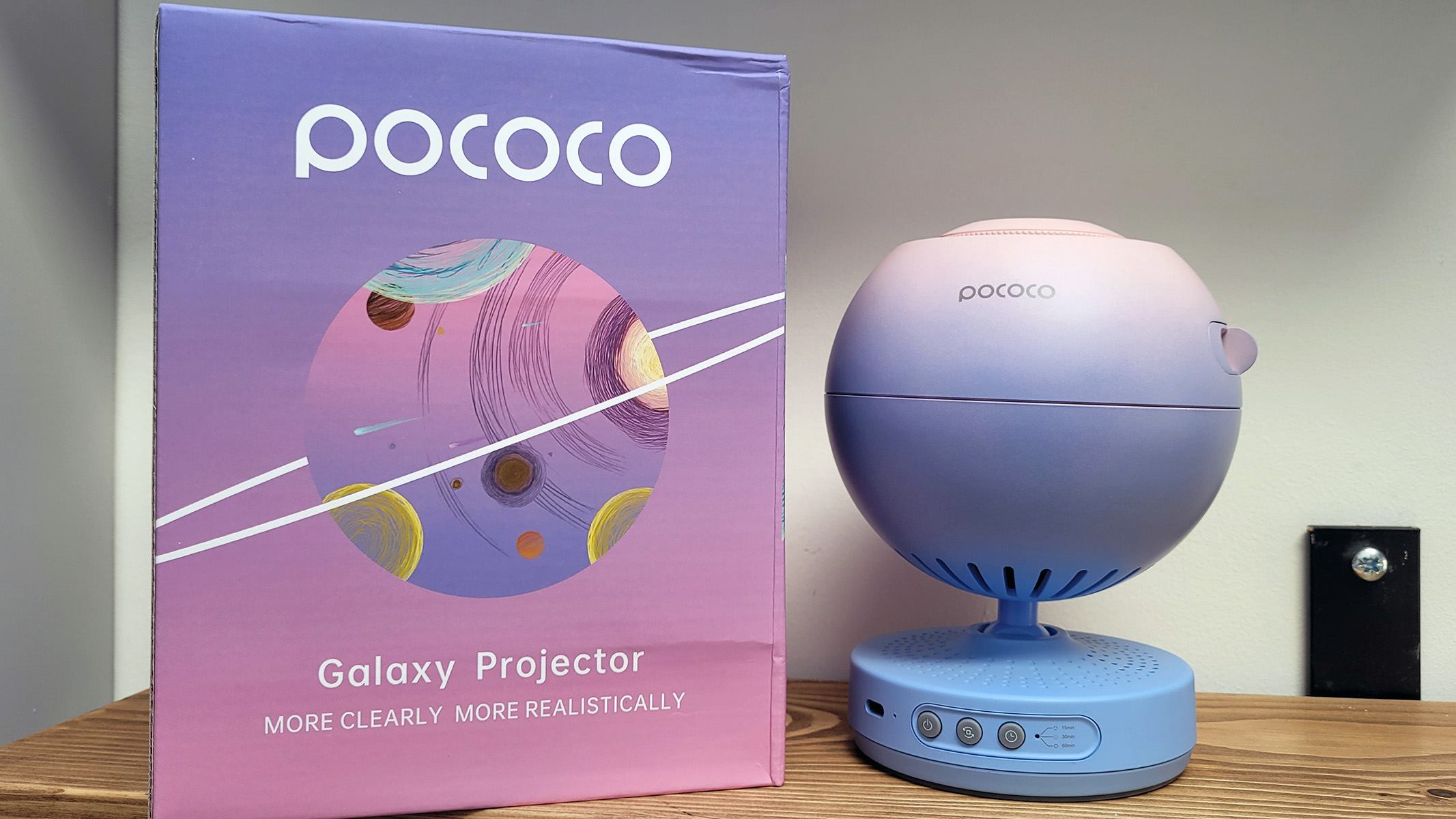
The bottom line
The HODANS Northern Galaxy is the Best galaxy projector for most bedrooms because it combines aurora and star effects with eight white noise options, Bluetooth audio, music sync, and useful brightness and speed controls. It is more versatile than the disc projectors and less dependent on an app than the Govee models.
Choose the MuliVid 13 Disc Planetarium when recognizable astronomy subjects matter most. It offers 13 discs, focus adjustment, 360-degree rotation, and very broad stated coverage. For sharper smart-controlled imagery, the Govee Galaxy Light 2 Pro is the specialist pick, while the Govee 7 Zone Stardust is better for large rooms and highly customized ambient lighting.
If you are undecided, choose HODANS for relaxing atmosphere and sound, or MuliVid for a true planetarium-style display.
As an Amazon Associate we earn from qualifying purchases.