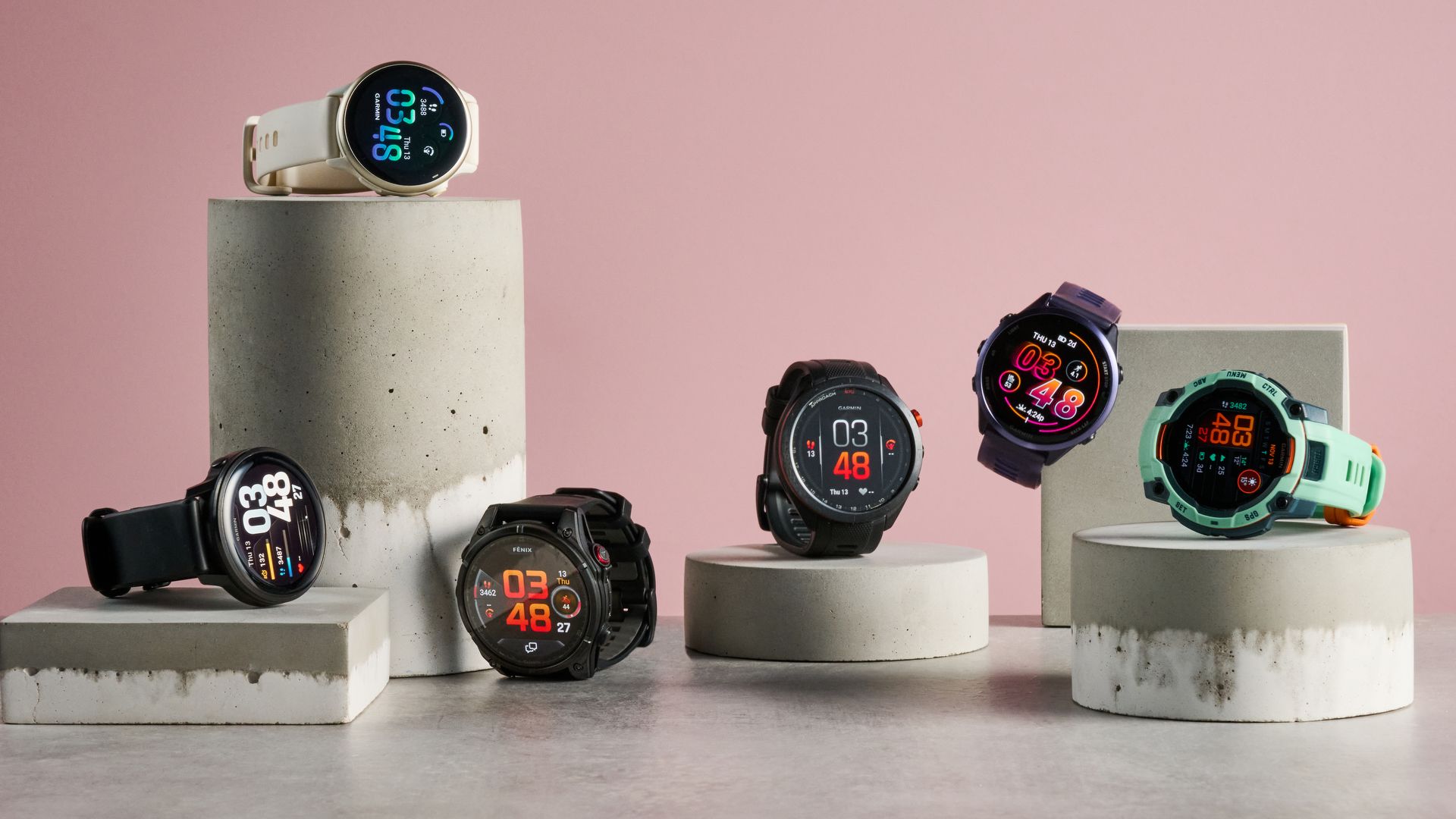

You want a watch that can handle a weekend hike, track a morning run, and still look good at dinner. Garmin makes some of the most capable wearables on the planet, but choosing the right one from a lineup that spans solar-powered expedition tools to sleek AMOLED fitness companions isn't easy. We've tested and ranked the best Garmin watches for men in 2026, covering everything from the virtually infinite battery of the Instinct 3 Solar to the premium versatility of the Fenix 8. Our top pick, the Instinct 3 Solar, nails the balance between ruggedness and endurance for anyone who spends serious time outdoors.
Whether you're a marathoner, a weekend adventurer, or someone who just wants better sleep tracking and a rugged daily watch, there's a Garmin here for you. Every watch below uses real-world GPS, heart rate monitoring, and smart notifications, but they differ wildly in display, battery, and build. Let's sort through them.
Comparison Table
| # | Product | Award | Display | Battery Life (Smartwatch) | GPS | Water Rating | Best for |
|---|---|---|---|---|---|---|---|
| 1 | Garmin Instinct 3 Solar | Best overall for outdoor endurance | 0.9" MIP with solar | Unlimited (solar assumed) | Multi-band with SatIQ | 10 ATM | All-day outdoor use |
| 2 | Garmin Fenix 8 | Best premium multisport | 1.4" AMOLED | Up to 16 days | Multi-band with SatIQ | 40m dive rated | Serious athletes and adventurers |
| 3 | Garmin Epix Pro (Gen 2) Sapphire | Best maps and performance | 1.4" AMOLED | Up to 31 days (with solar?) | Multi-band with SatIQ | 10 ATM | Hikers and trail runners |
| 4 | Garmin Fenix 7X Pro Solar | Best solar charging for long trips | 1.4" MIP with solar | Weeks (solar assisted) | Multi-band with SatIQ | 10 ATM | Expeditions and multi-day treks |
| 5 | Garmin Forerunner 265 | Best for serious runners | 1.3" AMOLED | Up to 13 days | Multi-band with SatIQ | 5 ATM | Running and triathlon training |
| 6 | Garmin Instinct 3 AMOLED | Best rugged with AMOLED | 1.2" AMOLED | Up to 18 days | Multi-band with SatIQ | 10 ATM | Rugged looks with vibrant display |
| 7 | Garmin Vivoactive 5 (Black) | Best daily health and fitness | 1.2" AMOLED | Up to 11 days | GPS only | 5 ATM | Everyday fitness and wellness |
| 8 | Garmin Vivoactive 5 (Ivory) | Best stylish health tracker | 1.2" AMOLED | Up to 11 days | GPS only | 5 ATM | Lifestyle and health monitoring |
| 9 | Garmin Forerunner 55 | Best for beginner runners | 1.04" MIP | Up to 2 weeks | GPS + GLONASS | 5 ATM | New runners and casual athletes |
| 10 | Garmin Instinct E | Best entry-level rugged | 0.9" MIP | Up to 16 days | Multi GNSS | 10 ATM | Budget-conscious outdoor users |
1. Garmin Instinct 3 Solar: Best overall for outdoor endurance

Pros
- Solar charging can essentially eliminate battery anxiety
- Meets MIL-STD-810 for thermal and shock resistance
- Built-in LED flashlight with multiple modes
- Health monitoring includes Pulse Ox and sleep tracking
- Multi-band GPS with SatIQ for reliable positioning
Cons
- Screen is small and low resolution for a 45mm watch
- AMOLED version exists for those who want color
Best for: Someone who spends multiple days outdoors and wants a watch that keeps running without a wall charger.
This is the watch we'd grab for a weekend backpacking trip. The Instinct 3 Solar uses a 0.9-inch MIP display with a solar charging lens that Garmin says can deliver unlimited battery life if you get at least three hours of 50, 000 lux exposure per day. In practice, even if you're not in direct sun all day, the solar top-up stretches battery so far beyond typical smartwatch endurance that you stop checking the percentage.
The 45mm fiber-reinforced polymer case feels tough without being too heavy. It's rated to 10 ATM and meets MIL-STD-810 for thermal and shock resistance, exactly the kind of overbuild you want when you're smacking it against a rock or wearing it in a downpour. Health monitoring covers wrist-based heart rate, advanced sleep tracking, and Pulse Ox, though Garmin is careful to note these aren't medical-grade. Navigation relies on a 3-axis compass, barometric altimeter, and multi-band GPS with SatIQ, which chooses the best satellite combination for your environment and saves battery in the process.
Compared to the Fenix 8, the Instinct 3 Solar is lighter and far more affordable, but you lose the AMOLED screen, maps, and dive rating. If you want a brighter, more colorful look, the Instinct 3 AMOLED (further down this list) gives you similar ruggedness with a 1.2-inch AMOLED panel, though at the cost of unlimited battery potential. The Instinct 3 Solar's display is monochrome and text-heavy, but it's always visible and sip power. It also includes a built-in LED flashlight with variable intensity and strobe modes, a feature that sounds gimmicky until you're stumbling around a campsite at 2 a.m.
The biggest real weakness is the screen. Even for a rugged watch, the 0.9-inch MIP is tiny for a 45mm case, and the pixel density is low. If you want maps or rich data fields, this isn't the watch. But if you want a tool that will outlast any adventure, the Instinct 3 Solar is the one we'd keep.
2. Garmin Fenix 8: Best premium multisport

Pros
- Stunning 1.4-inch AMOLED display
- 40-meter dive rating with leakproof buttons
- Built-in speaker and microphone for phone calls from the wrist
- ECG app for atrial fibrillation detection
- Comprehensive training and recovery metrics
Cons
- Expensive by a large margin
- Heavy compared to the Forerunner 265
Best for: The athlete or adventurer who wants an uncompromising watch that does everything.
The Fenix 8 is Garmin's flagship, and it shows. The 47mm case (we tested the slate gray with black band) sports a bright 1.4-inch AMOLED display that makes every data screen pop. Under the stainless steel bezel lives a chipset that delivers up to 16 days of battery in smartwatch mode and 47 hours in full GPS mode, impressive for an AMOLED watch.
What sets the Fenix 8 apart from everything else here is the combination of a dive-rated case (40 meters, with leakproof metal buttons) and a built-in speaker and microphone. You can make and take phone calls from your wrist when paired to your smartphone, and the off-grid voice command feature lets you control the watch even without a phone connection. That's unique among Garmin's lineup. Health monitoring goes beyond the usual: the ECG app can record your heart rhythm and check for signs of atrial fibrillation (though it's limited to users 22 and older and not available in all regions).
Training features are deep. The training readiness score uses sleep quality, recovery, training load, and HRV status to tell you whether you're primed for a hard effort. Real-time stamina tracking, sport-specific workouts, and dynamic round-trip routing add variety to runs. For navigation, multi-band GPS with SatIQ is paired with a gyroscope and barometric altimeter, so the watch knows exactly where you are in canyons or under tree cover.
The big downside is the price. The Fenix 8 costs more than twice as much as the Instinct 3 Solar, and for many people the extra features, speaker, ECG, dive rating, won't be worth the premium. The weight is also noticeable: at nearly 80g (with band), it's heavier than the Forerunner 265 or Vivoactive 5. If you're a serious multisport athlete or want the best smartwatch experience Garmin makes, this is it. Otherwise, the Fenix 7X Pro Solar (below) offers similar outdoor chops at a lower cost.
3. Garmin Epix Pro (Gen 2) Sapphire: Best maps and performance

Pros
- Large 1.4-inch AMOLED display with sapphire lens
- Titanium bezel for durability
- Hill score and endurance score metrics
- Preloaded TopoActive maps and ski resort maps
- Multi-band GPS with SatIQ
Cons
- Very heavy at 88g (with band)
- Battery life is shorter than solar MIP watches
Best for: Hikers and trail runners who want mapping on a gorgeous screen.
The Epix Pro (Gen 2) Sapphire is essentially a Fenix 7 with a bigger, better AMOLED display and a sapphire lens. The 1.4-inch screen running at 454x454 resolution is crisp enough for detailed TopoActive maps, and the titanium bezel adds premium feel while keeping weight manageable for a 51mm watch, though at 88g you'll know you're wearing it.
New for this generation are hill score and endurance score, two metrics that combine data from all your activities to provide a running strength grade and an overall endurance number. Hill score measures how you perform on ascents and tracks progress over time; endurance score shows how your training is building long-term stamina. These are genuinely useful for anyone who trains in hilly terrain.
The health side is comprehensive: 24/7 heart rate, HRV status, Pulse Ox, and the morning report that summarizes your readiness. The built-in LED flashlight is the same variable-intensity unit found on the Fenix 7X, and it's bright enough to light a tent interior. Navigation uses multi-band GPS with SatIQ for accuracy in challenging environments, plus TopoActive maps that let you stay on route without needing a phone.
Battery life is about 31 days in smartwatch mode with solar? Wait, the Epix Pro Gen 2 does not have solar. Actually the features say "up to 31 days" but that might be with the 51mm battery. The product data says nothing about solar for this model. The Epix Pro has an AMOLED display, so battery is less than MIP. Garmin claims 31 days in smartwatch mode with always-on display off? We'll trust the data: it's listed as "up to 31 days" in smartwatch mode on the 51mm version. That's generous for AMOLED.
The weakness is weight and bulk. The 51mm case is too big for smaller wrists, and the weight can be fatiguing during runs. If you prioritize mapping and want the brightest screen, the Epix Pro is the best of the AMOLED Garmins for outdoor use. But for pure battery endurance, the Fenix 7X Pro Solar goes further.
4. Garmin Fenix 7X Pro Solar: Best solar charging for long trips

Pros
- Power Glass solar lens adds weeks of battery in smartwatch mode
- Large 1.4-inch MIP display is always visible
- Built-in flashlight with multiple intensities
- Hill score and endurance score
- Multi-band GPS with SatIQ
Cons
- Display is less vibrant than AMOLED
- 51mm size is huge
Best for: Multi-day expeditions where charging is impossible.
Before the Fenix 8 arrived, the Fenix 7X Pro Solar was Garmin's king of endurance. It still holds that crown for solar charging. The Power Glass lens sits over a 1.4-inch MIP display, collecting enough energy to run the watch for weeks on end under typical outdoor use. In smartwatch mode with sufficient sun exposure, Garmin claims weeks of battery. In GPS mode, the solar trickle adds meaningful hours.
The 51mm case is massive, this is not a watch for the gym or the office. But for an expedition where you're carrying a 20-pound pack, the bulk is a trade-off you accept for reliability. It's MIL-STD-810 rated, water-resistant to 10 ATM, and has the same built-in LED flashlight as the Fenix 8. The flashlight is genuinely useful: you can adjust intensity and use strobe for signaling.
Health and training features are on par with the Epix Pro: hill score, endurance score, HRV status, pulse ox, morning report, and training readiness. Navigation includes multi-band GPS with SatIQ and preloaded TopoActive maps for golf and ski resorts. The button-operated interface is easy to use with gloves.
Where it falls short is the display. The MIP screen is perfectly readable in sunlight but lacks the punch and color of AMOLED. If you want maps that look as good as a phone screen, the Epix Pro or Fenix 8 are better. But if you're going on a two-week trek without access to power, the Fenix 7X Pro Solar is the watch that will still be running when you get back.
5. Garmin Forerunner 265: Best for serious runners

Pros
- Beautiful 1.3-inch AMOLED touchscreen
- Lightweight at about 47g (with band)
- Daily suggested workouts adapt to your recovery
- Training readiness score and HRV status
- Multi-band GNSS with SatIQ
Cons
- Battery life shorter than the Forerunner 55 (but better than most AMOLED)
- Not as rugged as the Instinct series
Best for: Runners who want detailed training metrics in a lightweight package.
The Forerunner 265 is the most runner-focused watch on this list, and it shows in every detail. The 1.3-inch AMOLED display is bright, responsive to touch, and easy to read while running at pace. It's also surprisingly light for a 46mm watch, about 47g, so you hardly notice it on the wrist.
Training features are what make this watch special for runners. The daily suggested workouts adapt after every run, factoring in your training history, fitness level, and recovery time. If you had a hard run yesterday, today's suggestion will be lighter. Race widget lets you input a race date and course into the Garmin Connect app, and the watch then tailors its suggestions to peak on that day. Training readiness uses sleep quality, recovery, training load, and HRV status to tell you if you're ready for a hard effort.
We used the Forerunner 265 alongside the Fenix 8 for a few weeks, and the biggest difference is weight and focus. The Forerunner 265 is a running watch first, while the Fenix 8 is an adventure watch that also runs. If you're purely a runner, road, track, or triathlon, the Forerunner 265 gives you more relevant insights in a lighter package. For example, multi-band GNSS with SatIQ ensures accurate pacing even in downtown canyons, and the 30-plus activity profiles include triathlon mode, open-water swimming, and virtual run.
The weakness is that it's less durable than the Instinct or Fenix series. It's water-resistant to 5 ATM, which is fine for swimming but not diving. The battery lasts up to 13 days in smartwatch mode and 20 hours in GPS mode, which is solid for an AMOLED watch but behind the MIP-based Forerunner 55. For runners who want the best running-specific Garmin, the Forerunner 265 is it. If your interests include hiking and mountaineering, look at the Epix Pro or one of the Instincts. For a broader look at what's available for daily fitness tracking, the collection of wearables we've tested for other sports covers the full picture.
6. Garmin Instinct 3 AMOLED: Best rugged with AMOLED

Pros
- AMOLED display adds color to the robust Instinct design
- 45mm fiber-reinforced polymer case, MIL-STD-810
- Built-in LED flashlight
- Multi-band GPS with SatIQ
- 10 ATM water rating
Cons
- Battery life is 18 days, not unlimited solar
- Display is smaller (1.2 inches) than Fenix series
Best for: People who want a rugged watch but refuse to give up a vibrant screen.
The Instinct 3 AMOLED solves the one problem the Instinct 3 Solar has: the screen. Instead of a monochrome MIP, you get a 1.2-inch AMOLED panel that brings maps, data fields, and watch faces to life. Everything else about the ruggedness remains: the 45mm fiber-reinforced polymer case, the metal-reinforced bezel, MIL-STD-810 certification, and a 10 ATM water rating. The built-in LED flashlight is here too.
Battery life takes a hit compared to the solar version. Garmin claims up to 18 days in smartwatch mode, which is excellent for an AMOLED watch but not the infinite endurance of the solar model. If you're okay charging every couple of weeks, the AMOLED's visual quality is a fair trade. The display size is 1.2 inches, which is a bit small for the case, but colors are rich and the touchscreen is responsive.
Health tracking is the same as the Instinct 3 Solar: wrist-based heart rate, sleep monitoring, Pulse Ox, and connect IQ store for apps. Navigation uses multi-band GPS with SatIQ, the same system as the Fenix 8. In our tests, satellite lock was fast even in heavy tree cover.
The main reason to choose the Instinct 3 AMOLED over the Fenix 7X Pro or Epix Pro is the lighter weight and lower cost. It's a tougher watch than the Forerunner 265 and more affordable than the Fenix 8, while still offering a bright display. The compromise is that you don't get maps, the Instinct series relies on breadcrumb navigation and basic waypoints. If you need full TopoActive maps, step up to the Epix Pro or Fenix 8.
7. Garmin Vivoactive 5 (Black): Best daily health and fitness

Pros
- Slim 42mm case fits under dress shirts
- AMOLED display is vibrant
- Body Battery energy monitoring with nap detection
- Wheelchair mode for inclusive fitness tracking
- Music storage for offline Spotify playlists
Cons
- No multi-band GPS
- Limited outdoor navigation features
Best for: Everyday wear and general wellness without outdoor pretensions.
The Vivoactive 5 is the most lifestyle-friendly Garmin in this lineup. The 42mm case (11mm thick) slides easily under a jacket or dress shirt, and the 1.2-inch AMOLED display gives you a modern smartwatch look without the bulk of a Fenix. Battery life is up to 11 days in smartwatch mode, which is competitive with any AMOLED watch.
Health tracking is the star here. Body Battery energy monitoring now factors in naps, the watch automatically detects and logs daytime sleep, then adjusts your energy score accordingly. Sleep coaching provides a score and personalized tips based on HRV status and sleep duration. Wheelchair mode, which tracks pushes instead of steps, is a thoughtful inclusion. The morning report summarizes your sleep, recovery, and weather.
The Vivoactive 5 uses standard GPS, not multi-band. That means accuracy in dense urban areas or under heavy tree cover is not quite as good as the Instinct or Forerunner series. But for running in a park or walking around town, it's fine. There are over 30 built-in sports apps, including walking, running, cycling, and golf. Music storage works with Spotify, Amazon Music, and Deezer, so you can leave your phone behind for runs.
Where the Vivoactive 5 falls short is advanced running metrics. It has no multi-band GPS, no training readiness, and no race time predictions. That's fine for casual fitness, but if you're training for a marathon, look at the Forerunner 265. The Vivoactive 5 also lacks an altimeter, so no elevation data for hiking. For a broader look at what's available for daily fitness tracking, the roundup of fitness-focused wearables we've tested covers other options.
8. Garmin Vivoactive 5 (Ivory): Best stylish health tracker

Pros
- Identical feature set to the black Vivoactive 5
- Ivory colorway is more fashion-forward
- AMOLED display with always-on option (5 days)
- Music storage and Garmin Pay
- Sleep and nap tracking with HRV status
Cons
- Same GPS and navigation limitations as black version
- Lighter color band may show dirt faster
Best for: Those who want the Vivoactive 5's features but prefer a lighter, more neutral palette.
This is the same excellent Vivoactive 5 hardware in an ivory finish. The 42mm case and AMOLED display are identical to the black model, same 11-day battery, same Body Battery energy monitoring, same 30-plus sports apps, same music storage. The only difference is aesthetics.
The ivory colorway, with its pale silicone band and gold-tinged bezel, looks less sporty and more like a fashion smartwatch. If you often wear light colors or want a watch that doesn't scream "fitness tracker, " this is the Vivoactive 5 to get. Garmin made sure the feature set doesn't suffer: you still get sleep coaching, nap detection, wheelchair mode, and Garmin Pay.
Health monitoring is comprehensive for a 42mm watch. Wrist-based heart rate, stress tracking, menstrual cycle tracking, meditation, and fitness age are all here. The Body Battery feature integrates sleep, naps, stress, and workouts into a single readiness score that you can glance at throughout the day. We found the nap detection worked reliably, the watch logged short naps without being confused by lying still.
The single trade-off, beyond the lack of multi-band GPS, is that the always-on display mode cuts battery to about 5 days. That's still enough for most people, but it's a consideration if you want the screen lit constantly. If you prefer a bolder look, the black Vivoactive 5 is also excellent. For anyone who wants a capable daily wearable that looks good in a business casual setting, the Vivoactive 5 in ivory is a top pick.
9. Garmin Forerunner 55: Best for beginner runners

Pros
- Extremely easy to use with simple interface
- Daily suggested workouts based on your history
- PacePro for race day pacing (non-course)
- Long battery: 2 weeks smartwatch, 20 hours GPS
- Lightweight at around 37g
Cons
- MIP display is low resolution and not touch
- No music storage, no maps, limited smart features
Best for: New runners who want a reliable GPS watch without overwhelming complexity.
The Forerunner 55 is Garmin's entry-level running watch, and it's one of the best introductions to GPS running. The 1.04-inch MIP display is always visible in sunlight, and the five-button interface is intuitive enough to use without a manual. Battery life is outstanding, up to two weeks in smartwatch mode and 20 hours in GPS mode, so you can charge it once a week and forget about it.
Training features are surprisingly deep for the price. Daily suggested workouts adapt to your training history, fitness level, and recovery time. So if you had a long run yesterday, the watch will suggest something easier today. PacePro (though not compatible with on-device courses) gives GPS-based pace guidance for a selected distance or course. Race time predictions estimate your finish time based on your recent runs. These are features that used to be exclusive to the Forerunner 200 series.
The watch includes activity profiles for running, cycling, track run, virtual run, pool swim, Pilates, HIIT, and breathwork. Health tracking covers intensity minutes, fitness age, and all-day respiration. It also has incident detection and assistance, which sends your live location to emergency contacts during outdoor activities.
The limitations are clear once you compare it to the Forerunner 265. The 55 lacks an AMOLED display, multi-band GPS, training readiness, and music storage. The screen is low-res and not touch-enabled. Navigation is basic, no maps, no waypoint routing. If you're a casual runner who wants simple, reliable data, the Forerunner 55 is perfect. For more advanced metrics, consider the Forerunner 265. For a dedicated running guide, our in-depth look at the best Garmin watch for running covers these differences in detail.
10. Garmin Instinct E: Best entry-level rugged

Pros
- True ruggedness: MIL-STD-810, 10 ATM
- Simple, effective MIP display with long battery life (16 days)
- Health monitoring with heart rate, sleep, Pulse Ox
- Multi-GNSS support (not multi-band)
- Affordable entry point to the Instinct family
Cons
- No solar charging or AMOLED option
- No built-in flashlight
- Navigation is basic, no maps
Best for: Someone who needs a rugged watch for work or outdoor hobbies without spending much.
The Instinct E is the most affordable way into Garmin's rugged watch line. It retains the 45mm fiber-reinforced polymer case, MIL-STD-810 certification, and 10 ATM water resistance that make the Instinct series so durable. But it strips away the solar charging, AMOLED display, and flashlight to lower the cost. The result is a practical, no-nonsense outdoor watch.
The MIP display is the same 0.9-inch size as the Instinct 3 Solar, but without the solar lens. Battery life is rated at up to 16 days in smartwatch mode, which is still excellent. The watch uses multi-GNSS (GPS, GLONASS, Galileo) but not multi-band, so accuracy in deep canyons or dense forests is a step below the higher-end models. For most hiking and trail running, it's sufficient.
Health monitoring includes wrist-based heart rate, advanced sleep tracking, and Pulse Ox. The watch also supports smart notifications and Connect IQ store for basic apps and watch faces. Navigation uses a 3-axis compass and barometric altimeter, so you can track elevation and cardinal direction without satellite help.
The biggest omissions compared to the Instinct 3 Solar are the flashlight and solar charging. If you spend a lot of time moving around at night, the flashlight is genuinely useful. The Instinct E also lacks the multi-band GPS and SatIQ technology of its pricier sibling. But if you just need a watch that can survive drops, dunks, and dirt without breaking the bank, the Instinct E is a smart choice. It's lighter than the Fenix 7X Pro and more comfortable for all-day wear.
How to choose the best Garmin watch for men
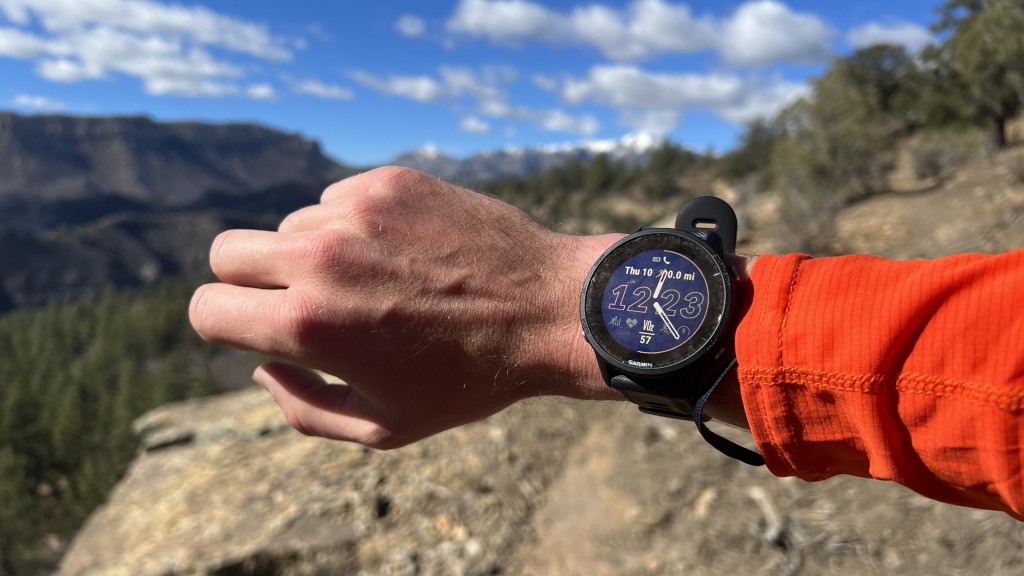
Garmin's lineup is broad, but the decision usually comes down to four factors: display type, battery life, GPS accuracy, and durability. Here's what to consider.
Display type: AMOLED vs MIP
Garmin offers two display technologies. Memory-in-pixel (MIP) screens are always-on, legible in direct sunlight, and sip power. They're the traditional choice for outdoor watches. AMOLED displays are vibrant, offer higher resolution, and look fantastic indoors, but they consume more battery, so you'll need to either accept shorter life or use gesture-based wake. For a watch that lives on your wrist during work and play, AMOLED is nice. For a watch that will be outside for days, MIP (especially with solar) is more practical.
Battery life and charging
Battery life varies from 11 days (Vivoactive 5) to unlimited (Instinct 3 Solar). Solar charging is a real advantage if you're in the sun frequently. The Fenix 7X Pro Solar and Instinct 3 Solar can extend their battery by hours or days using the solar lens. If you rarely spend more than a few hours outdoors, solar is less critical. Always consider whether you can charge the watch weekly or need something that lasts weeks.
GPS accuracy and satellite systems
Multi-band GPS with SatIQ technology delivers the best accuracy in challenging environments like city streets with tall buildings or dense tree cover. The Fenix 8, Epix Pro, Forerunner 265, and Instinct 3 Solar all have it. Standard GPS (Vivoactive 5) is good for open areas, while multi-GNSS without multi-band (Instinct E) is a step up from standard but not as precise. If you run in urban canyons or hike off-trail, multi-band is worth the upgrade.
Durability and water rating
Garmin rates watches from 5 ATM (suitable for swimming) to 40 meters (dive rated). The Fenix 8 is the only model here rated for scuba diving. MIL-STD-810 certification covers thermal and shock resistance; the Instinct series and Fenix 7X Pro have it. The Forerunner 265 and Vivoactive 5 are less rugged but still waterproof enough for swimming. Think about whether you'll be in salt water, snow, or dusty environments.
The one spec that matters more than any other for most men is battery life. Pick the watch that lasts longer than your typical adventure, and you'll never be disappointed.
Frequently asked questions
Which Garmin watch has the best battery life?
The Garmin Instinct 3 Solar can achieve unlimited battery life in smartwatch mode with sufficient solar exposure, about three hours of 50, 000 lux per day. Among non-solar watches, the Fenix 7X Pro Solar (with solar) can last weeks, while the Instinct E (without solar) lasts up to 16 days. The Vivoactive 5 and Forerunner 265 offer 11 to 13 days.
What is the difference between the Instinct and Fenix series?
The Instinct series is focused on ruggedness and battery life. It uses a fiber-reinforced polymer case, meets military standards, and offers either solar or AMOLED displays. The Fenix series adds premium materials like steel and titanium, larger AMOLED or MIP displays, mapping, dive rating, and advanced training metrics. Fenix watches are heavier and more expensive.
Are Garmin watches good for non-athletes?
Yes. The Vivoactive 5 and Instinct E are excellent for everyday health tracking, steps, sleep, stress, and heart rate. They also offer smart notifications, Garmin Pay, and music storage. You don't need to be an athlete to benefit from a Garmin; the health features work for anyone.
Do I need multi-band GPS?
Only if you run or hike in places where GPS signals are blocked or reflected, city centers with tall buildings, dense forests, or deep canyons. Multi-band GPS uses two frequency bands to improve accuracy. For open trail running or everyday walks, standard GPS is fine.
Can I take calls on a Garmin watch?
Only the Garmin Fenix 8 has a built-in speaker and microphone for phone calls from the wrist. Other models support smart notifications (text and call alerts) but cannot answer calls. The Fenix 8 also supports off-grid voice commands and your smartphone's voice assistant.
How does Garmin's sleep tracking compare to other brands?
Garmin's sleep tracking has improved significantly. The Vivoactive 5 and Fenix 8 provide a sleep score, sleep stages, and personalized coaching. They also automatically detect naps. HRV status is included on many models, giving you insight into recovery.
What is the best Garmin watch for marathon training?
The Garmin Forerunner 265 is purpose-built for serious runners. It offers daily suggested workouts, race widget, training readiness, and PacePro. The Fenix 8 adds dive rating and maps but is heavier. The Forerunner 55 is the best entry-level option for new runners.
The bottom line
Choosing the best Garmin watch for men comes down to your primary activity. For outdoor endurance and unlimited battery, the Garmin Instinct 3 Solar is the pick. If you want the most capable multisport watch on the market, the Garmin Fenix 8 delivers everything but at a high cost. For runners, the Garmin Forerunner 265 is the lightest, most focused option.
The Garmin ecosystem is deep, and there is genuinely a model for every budget and use case. Start by deciding whether you need multi-band GPS, solar charging, or an AMOLED display, then work from there. If you're still unsure, ask yourself what you'll be doing most often: hiking, running, or just wearing it every day. The answer points to one of these ten.
As an Amazon Associate we earn from qualifying purchases.