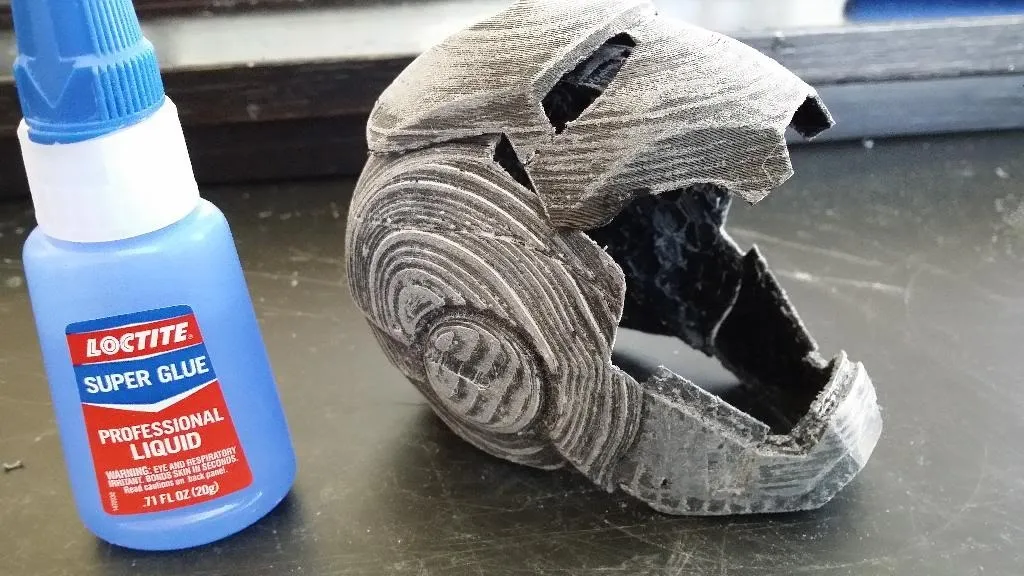

A failed PLA assembly usually does not fail at the big, obvious surfaces. It fails at a tiny gap, a rough layer line, or a joint where liquid adhesive runs before the parts are aligned. The right formula matters just as much as the strength of the bond.
This guide to the Best best glue for pla filament covers two different jobs: cyanoacrylate adhesives for joining printed parts and PVP adhesives for keeping a print attached to its build plate. The ten picks range from thick gel for uneven seams to thin capillary glue for fine cracks.
For most printed-part repairs, ARKA 3D Printing Super Glue Gel is the pick we'd keep. The rest of the lineup covers liquid CA, model repair, bulk supplies, and build-plate adhesion.
Comparison table
| # | Product | Award | Formula | Supported materials | Best for |
|---|---|---|---|---|---|
| 1 | ARKA 3D Printing Super Glue Gel | Best overall | Gel | PLA, ABS, PETG, TPU, ASA, Nylon | Uneven seams and functional repairs |
| 2 | KRAFTPROTZ 3D Printing Super Glue Liquid | Best thin adhesive | Liquid | PLA, ABS, PETG, TPU, ASA, Nylon | Tight seams and micro cracks |
| 3 | ALECPEA 3D Print Glue | Best controlled bead | Thick CA | PLA, ABS, PETG, Resin, TPU | Models and irregular joints |
| 4 | Y'allCanDiy Plastic Glue | Best fast-setting repair glue | CA | PVC, ABS, Acrylic, PLA | Small plastic repairs |
| 5 | USKICH Anti-Clog Super Glue | Best multi-bottle kit | CA | PLA, ABS, PVC, Acrylic | Workshops and frequent repairs |
| 6 | Creality PVP Glue Sticks | Best solid bed adhesive | PVP stick | PLA, ABS, PETG, PC, PA, TPU | General build-plate adhesion |
| 7 | TEQStone 3D Printer Glue Stick | Best pack for print farms | PVP stick | ABS, PLA, PETG | Repeated first-layer work |
| 8 | Magigoo MO2016 | Best all-surface adhesive | Liquid applicator | ABS, PLA, PETG, HIPS, TPU | Mixed filament and plate types |
| 9 | Wefuit Bambu Lab Adhesive | Best liquid bed glue | Liquid | PLA, PETG, PET, ABS, ASA, TPU | Bambu-style hot beds |
| 10 | Viomis Ultra-Thin Capillary Glue | Best for fine joints | Ultra-thin CA | PLA, ABS, PETG, TPU | Detailed multi-part prints |
1. ARKA 3D Printing Super Glue Gel: Best Overall

Pros
- Thick gel stays on vertical seams
- Precision tip includes an anti-clog needle
- Bonds PLA, ABS, PETG, TPU, ASA, and Nylon
- Rated for heat and moisture exposure up to 110 °C
Cons
- Gel is slower to wick into hairline cracks
- One bottle is less convenient for multiple workstations
- The thick formula can leave squeeze-out if overapplied
Best for: makers repairing uneven seams, broken parts, and functional printed assemblies.
The first thing to know about ARKA 3D Printing Super Glue Gel is that it behaves like a glue for parts that do not fit perfectly. It stays where it is placed instead of immediately running down a vertical wall, which makes it easier to manage on a large seam, an angled joint, or a repair with visible layer irregularities.
Its compatibility list is unusually broad for this group. The formula is intended for PLA, ABS, PETG, TPU, ASA, and Nylon, so it can cover a mixed-material bench without switching bottles every time a project changes. The claimed heat resistance up to 110 °C also gives it a more practical role in RC parts, mechanical fits, and outdoor printed components than a basic craft adhesive.
The precision tip is one of the more useful details here. The anti-clog needle is designed to keep the opening usable between applications, while the gel consistency helps prevent a fresh bead from spreading across nearby detail. That combination makes ARKA easier to control than KRAFTPROTZ 3D Printing Super Glue Liquid when the joint is loose or upright. KRAFTPROTZ has the advantage when the gap is extremely narrow.
The weakness is the same trait that makes it so useful. Thick glue does not flow deeply into a hairline fracture as readily as a capillary adhesive, and applying too much can create a raised seam. It is also a single 1.76 oz tube, so a print farm with several benches may prefer USKICH Anti-Clog Super Glue and its six-bottle format.
For a general PLA repair drawer, ARKA is the most balanced choice. It is the one we'd choose for broken housings, broad seams, and parts that need a little gap-filling rather than just a microscopic bond line.
2. KRAFTPROTZ 3D Printing Super Glue Liquid: Best Thin Adhesive

Pros
- Thin formula reaches micro gaps and cracks
- Precision needle tip is designed to resist clogging
- Supports PLA, ABS, PETG, TPU, ASA, and Nylon
- Claims heat and water resistance up to 110 °C
Cons
- Liquid can run on vertical surfaces
- Less forgiving on loose-fitting joints
- Requires careful placement around finished details
Best for: detailed models and assemblies with tight-fitting seams.
KRAFTPROTZ 3D Printing Super Glue Liquid is the opposite of ARKA's gel. It is made for the moment when two printed pieces already fit well and the adhesive needs to travel into the joint rather than sit on top of it. That capillary action is especially useful on fine seams, narrow fractures, and high-resolution models.
The material coverage is broad: PLA, ABS, PETG, TPU, ASA, and Nylon are all listed. KRAFTPROTZ also calls out resin prints, RC parts, drones, electronics, and outdoor components. Its claimed heat resistance reaches 110 °C, which is a useful figure for parts exposed to warmth, although it does not turn a thin CA bond into a flexible joint.
The needle tip supports pinpoint placement and is intended to remain fluid between uses. Used sparingly, a thin adhesive can leave a cleaner-looking seam than a gel because less material remains on the outside of the joint. The tradeoff is control. On an upright part or a rough, open seam, KRAFTPROTZ can run before the pieces are fully aligned. ARKA is the safer choice for that kind of repair.
The 1.76 oz bottle is substantial for a liquid CA adhesive, but it is still one bottle. Users who split work between several benches may find the multi-bottle USKICH kit more practical. Users who mainly assemble precise model parts should choose KRAFTPROTZ instead.
Skip this one if your printed pieces have large gaps or need a filler-like adhesive. For clean, close-fitting PLA seams where penetration matters more than gap bridging, it is the stronger fit.
3. ALECPEA 3D Print Glue: Best Controlled Bead

Pros
- High-viscosity formula stays in the contact area
- Three precision applicator tips
- Clear bond line suits display models
- Positions in 45 seconds and fully cures in 24 hours
Cons
- Not intended for repeatedly flexed joints
- Full cure takes longer than the initial set
- Thick formula is not ideal for micro cracks
Best for: model makers who need a neat, controlled bead on uneven parts.
ALECPEA 3D Print Glue is a useful middle ground between an ordinary thin CA and a heavy gel. Its high-viscosity formula is designed to bridge small irregular gaps, remain on upright surfaces, and form a controlled bead instead of racing away from the joint. That is a good match for props, miniatures, architectural models, and printed housings with imperfect edges.
The 30g bottle comes with three precision applicator tips. That matters on small figures and detailed assemblies because the tip can place glue along a limb, base, panel, or narrow edge without flooding nearby texture. The clear formula is also aimed at keeping a repair less conspicuous when the joint will remain visible.
ALECPEA says the joint positions in 45 seconds and reaches full cure in 24 hours. Those are different stages, and the distinction is important. You can align the parts and move to the next task fairly quickly, but the finished assembly should not be treated as fully cured immediately. That makes it less immediate than Y'allCanDiy Plastic Glue, which claims a 15-second set, but more suited to careful model assembly.
The product description specifically cautions against hinges and repeatedly flexed joints. That is the real limitation here. A fixed display model or rigid prop section is a natural match, while a flexible TPU connection or moving mechanism should be approached with care. The thick consistency also gives up the deep penetration of Viomis Ultra-Thin Capillary Glue.
Choose ALECPEA when neat placement and gap coverage matter more than instant handling. It is a particularly sensible pick for printed parts that look close together but have enough surface irregularity to defeat a watery adhesive.
4. Y'allCanDiy Plastic Glue: Best Fast-Setting Repair Glue

Pros
- Claims a 15-second setting time
- Precision applicator tips
- Clear formula for seams and cracks
- Intended for models, toys, miniatures, and plastic repairs
Cons
- The listed material range is narrower than the top CA picks
- Fast setting leaves less time for alignment
- Full curing instructions are less specific than the initial set claim
Best for: quick repairs on rigid plastic parts and models.
Y'allCanDiy Plastic Glue is aimed at the common repair bench rather than a specialized printing workflow. Its appeal is simple: clean and dry the surfaces, apply a small amount, press the parts together, and let the adhesive set. The brand claims a 15-second drying time, which can be convenient when a model repair needs to get back into assembly quickly.
The product is described for PVC, ABS, acrylic, and other plastics, with PLA specifically included in the title. It is also positioned for model airplanes, plastic toys, model cars, miniatures, and 3D printing repair. That broad project focus makes it more approachable than a highly runny capillary glue, especially for someone repairing a broken printed bracket or a simple decorative part.
Precision applicator tips help with small joints, cracks, and seams. The clear color is another practical detail for visible repairs, although no clear adhesive should be treated as invisible when a joint is heavily overfilled. Compared with ALECPEA, Y'allCanDiy prioritizes quick handling over a stated 45-second positioning window and 24-hour full cure.
The main drawback is that the feature list does not give the same broad filament coverage as ARKA or KRAFTPROTZ. It also says the adhesive should be allowed to cure before heavy use without specifying a full cure interval. That makes it a weaker fit for a loaded mechanical part or a joint that will be flexed repeatedly.
Pick it for fast, ordinary plastic repairs where the parts fit cleanly. If the break has a gap, needs heat and moisture resistance, or involves a flexible material, the more specifically filament-focused alternatives are safer choices.
5. USKICH Anti-Clog Super Glue: Best Multi-Bottle Kit

Pros
- Six 1 fl oz bottles
- Anti-clog caps and six extra applicator caps
- Claims a 5 to 30 second bond time
- Clear adhesive for models, toys, and printed parts
Cons
- A large kit may be excessive for occasional users
- The feature list gives less detail on full cure
- The material list does not include PETG or TPU in the main compatibility claim
Best for: shared workshops and makers who keep CA glue at several work areas.
USKICH Anti-Clog Super Glue stands out because it treats storage and availability as part of the adhesive problem. The kit contains six 1 fl oz bottles, plus six extra applicator caps. That makes more sense for a workshop with multiple stations than a single large bottle that must keep moving from bench to bench.
The formula is described as clear, odorless, and suitable for PLA, ABS, PVC, acrylic, 3D prints, toys, and Legos. The brand claims bonding in 5 to 30 seconds. That range leaves room for the usual differences in surface fit and application, but it communicates the intended use clearly: small, quick repairs rather than long clamping sessions.
The anti-clog cap is the most distinctive feature. CA adhesive can become frustrating when the tip dries or narrows after storage, so a cap designed to limit clogging is useful. The side-squeeze bottle is also intended for vertical applications and to reduce dripping. That gives it a practical advantage over a plain liquid bottle when several people are working on detailed models.
The limitation is that the product's main compatibility language does not call out PETG or TPU as clearly as ARKA and KRAFTPROTZ do. It is also not the most informative pick for heavy-use mechanical assemblies because the listed details focus on initial bonding rather than full-cure behavior or temperature performance.
USKICH is the right choice when quantity and distribution matter. For one person's occasional PLA repair, ARKA is easier to recommend. For a club, classroom, or busy maker space, having six capped bottles ready to use is the more compelling design.
6. Creality PVP Glue Sticks: Best Solid Bed Adhesive

Pros
- PVP solid adhesive for the build plate
- Supports PLA, ABS, PETG, PC, PA, and TPU
- Water cleanup after the plate cools
- Four-stick pack
Cons
- This is for bed adhesion, not joining finished parts
- The glue stick must be capped to prevent drying
- Requires applying only to the active print area
Best for: users who need a straightforward way to improve first-layer adhesion.
Creality PVP Glue Sticks serve a different purpose from the CA adhesives above. They are designed for the hot bed or build plate, where the aim is to keep the first layer attached and reduce model shedding, warping, and print errors. They are not the right tool for bonding two finished PLA parts together.
The PVP formula is listed as suitable for PLA, ABS, PETG, PC, PA, and TPU. That range gives it a useful role for a mixed-material printer, particularly when switching between ordinary PLA and more demanding materials. The instructions also recommend applying glue only to the effective printing area instead of coating the entire plate.
Cleanup is simple after the build plate cools. The residue can be removed with water, which is less involved than dealing with a cured CA seam. The white stick format is also familiar and easy to spread, although a liquid applicator such as Wefuit Bambu Lab Adhesive may cover a plate more uniformly.
Creality's main weakness is convenience between uses. The cap should be replaced immediately to prevent the stick from drying, and the product does not offer the same broad surface list or stated long-use claim as Magigoo MO2016. It is a practical generalist rather than a specialized answer for every plate and filament combination.
Buy this when your PLA prints lift at the edges or lose first-layer grip. If the question is how to attach a printed arm to a printed body, move to a CA adhesive instead.
7. TEQStone 3D Printer Glue Stick: Best Pack for Print Farms

Pros
- Six PVP glue sticks
- Designed for ABS, PLA, and PETG
- Compatible with textured and smooth PEI, glass, aluminum, and flexible plates
- Water-soluble cleanup
Cons
- Intended for build plates, not part assembly
- The material coverage is narrower than Creality's list
- The green stick color may be less visually neutral
Best for: frequent printing where a dependable supply of bed adhesive matters.
TEQStone 3D Printer Glue Stick is a bed-adhesion product with a broad surface focus. It is listed for textured and smooth PEI, glass, aluminum, flexible plates, and other build surfaces. That makes it a useful option for a printer collection that does not use one uniform plate material.
The formula is PVP and the supported filaments are ABS, PLA, and PETG. TEQStone says the adhesive improves first-layer adhesion, reduces deformation and printing errors, and makes removal easier. Its water-soluble formula can be wiped with a damp cloth or rinsed with water, so cleanup is uncomplicated when a print is finished.
The six-stick format is the reason to choose it over Creality's four-stick pack. A single printer owner may not need that many open sticks at once, but a shared workshop or print farm can keep them at different stations. TEQStone also claims that each 36g stick can support more than 100 prints, although actual use will depend on coating thickness and the size of the active print area.
The material coverage is not as extensive as Creality's inclusion of PC, PA, and TPU, and it does not replace a part-bonding adhesive. It is also a green PVP stick, which may be less visually neutral than a clear liquid when residue remains on a transparent plate.
Choose TEQStone for repeated first-layer work across several plate types. For a single printer that uses unusual engineering filaments, Creality's broader listed compatibility is more persuasive.
8. Magigoo MO2016: Best All-Surface Adhesive

Pros
- Supports ABS, PLA, PETG, HIPS, and TPU
- Intended for glass, PEI, BuildTak, Kapton, and flex plates
- Releases after cooling and cleans with water
- Odorless and non-flammable according to the listing
Cons
- Not a CA adhesive for joining finished prints
- One 50mL bottle
- Requires shaking, pressing, and applying to the active area
Best for: users who switch between filaments and build-plate surfaces.
Magigoo MO2016 is the most versatile bed adhesive in this group on paper. It supports ABS, PLA, PETG, HIPS, and TPU, while the surface list includes flex plates, glass, PEI, BuildTak, Kapton, and more. That combination is valuable when a printer setup changes often and one adhesive needs to work across several materials.
Application is a shake, press, and spread process. The product is designed to cover only the active printing area, rather than the whole build plate. Once the plate cools, prints are intended to release more easily, and the adhesive can be cleaned with water. Those details make it more manageable than an adhesive that stays stubbornly on the plate.
Magigoo also claims more than 100 prints from the bottle and describes the formula as odorless and non-flammable. The 50mL size is clearly marked in the product information. For home, office, and educational settings, the lack of odor is a meaningful advantage, particularly when the printer is near a work area.
The catch is category confusion. Magigoo helps a model stay attached while printing, but it will not replace ARKA or KRAFTPROTZ for joining two cured parts. It is also a single bottle, while TEQStone supplies six solid sticks for users who prefer a familiar swipe-on format.
Select Magigoo if you need one liquid bed adhesive for a varied printer setup. It is the strongest fit here for people moving among PLA, PETG, ABS, and different plate surfaces.
9. Wefuit Bambu Lab Adhesive: Best Liquid Bed Glue

Pros
- Liquid applicator spreads across the active print area
- Supports PLA, PETG, PET, ABS, ASA, and TPU
- Works with glass, PEI, PEO, BuildTak, and aluminum plates
- Water-soluble and described as odorless
Cons
- A thin coat is recommended before each job
- The product is for hot-bed adhesion, not repairs
- Applicator technique matters more than with a solid stick
Best for: users who prefer liquid coverage on Bambu-style and other hot beds.
Wefuit Bambu Lab Adhesive is designed around the build plate rather than printed-part assembly. Its liquid format is intended to spread more evenly and quickly than a solid stick, while the applicator head opens a valve when pressed. That should make it easier to cover a defined print area without reaching for a separate brush.
The listed filament range includes PLA, PETG, PET, ABS, ASA, and TPU. The surface coverage is just as broad, with low-temperature and high-temperature plates, textured and smooth surfaces, glass, PEI, PEO, PET, BuildTak, and aluminum included. That makes it a flexible choice for a printer setup with more than one plate style.
Wefuit recommends a thin coat before each job and says a little goes a long way. The liquid is water-soluble, so a wet rag or water can remove residue from the build plate. The listing also describes the adhesive as leaving practically no residue on the plate or prints, and as odorless for home or studio use.
The need to apply a fresh thin coat each time is the main limitation. A solid stick can feel quicker for a small print area, while Magigoo makes a stronger case for users who want a stated long-use routine across many materials. Wefuit's advantage is the applicator and liquid spread, not part-repair strength.
Pick Wefuit when bed coverage and compatibility with varied surfaces matter most. It is especially sensible for users who prefer liquid application and are comfortable wiping the plate after printing.
10. Viomis Ultra-Thin Capillary Glue: Best for Fine Joints

Pros
- Ultra-thin formula flows into micro gaps
- Anti-clog tip for small applications
- Listed for PLA, ABS, PETG, and TPU
- Claims a temperature range from -40 °C to 110 °C
- Dried adhesive can be sanded or painted
Cons
- Thin formula is difficult to control on open seams
- One bottle
- Not suited to repeatedly flexed joints unless the fit is appropriate
Best for: high-detail assemblies where the seam is narrow and hard to reach.
Viomis Ultra-Thin Capillary Glue is built for the smallest joints in the group. Its formula is intended to flow through capillary action into fine cracks and structural seams, which is the right behavior for multi-part models with close-fitting edges. It is less about filling a visible gap and more about reaching the adhesive line that is already there.
The listed materials are PLA, ABS, PETG, and TPU. Viomis also calls out hybrid materials such as Wood-PLA and Carbon Fiber, though the listing does not provide a separate detailed compatibility chart for those blends. The glue is described as drying clear and as being sandable and paintable after curing, which suits post-processing on display pieces.
The anti-clog tip is designed for micro-drops and precise control. Viomis claims resistance to heat and vibration, with a stated temperature range from -40 °C to 110 °C, plus UV-safe behavior. Those claims make it interesting for RC models, drones, and mechanical designs, though the thin formula still depends heavily on a clean, close-fitting joint.
This is not the adhesive to reach for when two warped edges need a thick bridge. ALECPEA 3D Print Glue stays in that kind of irregular contact area more effectively, and ARKA is easier to manage on vertical seams. Viomis can also run into a recess or across a finished surface if too much is applied.
Choose it for fine, high-detail parts that are already aligned. If the seam is visible, loose, or uneven, start with a gel or thicker CA instead.
How to choose best glue for pla filament
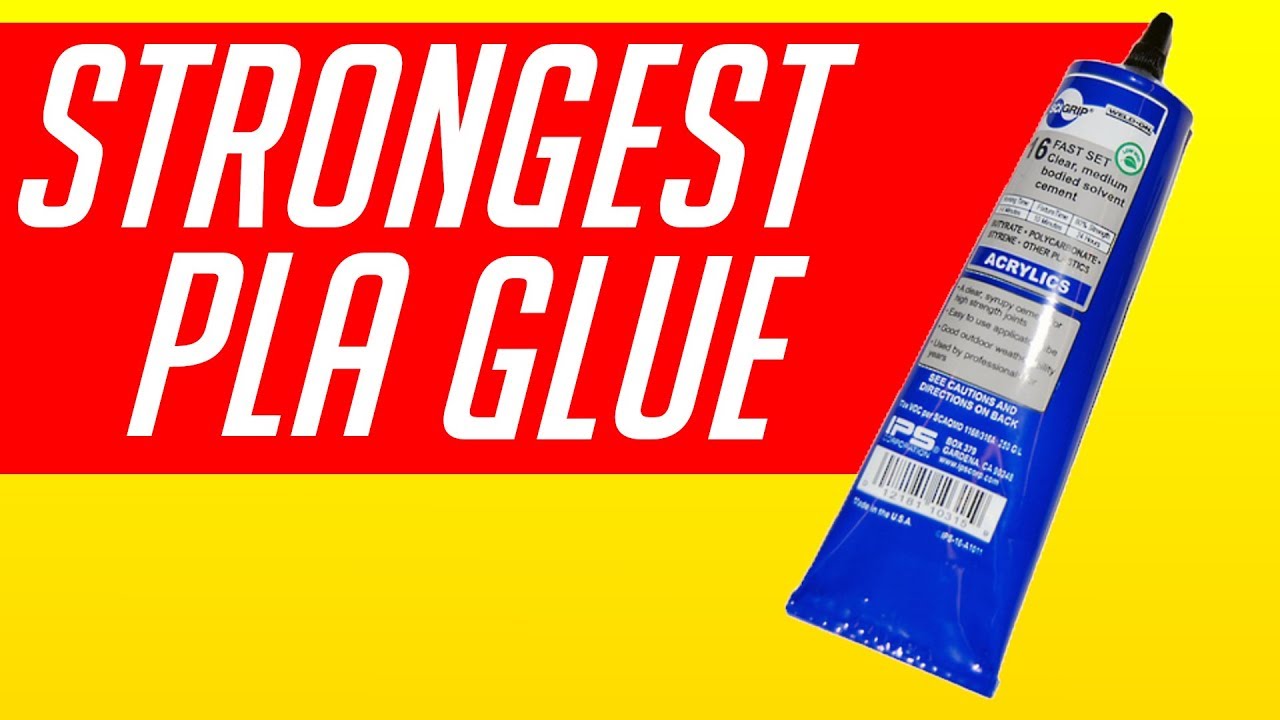
The first decision is simple: are you joining printed parts, or keeping a print attached to the build plate? Those jobs call for different adhesive types, even though product listings often use similar language.
Adhesive type
Thin and ultra-thin cyanoacrylate adhesives flow into tight seams through capillary action. They suit close-fitting parts, micro cracks, and detailed assemblies. Gel and thick CA formulas stay on the surface, making them better for uneven edges, vertical joints, and small gaps.
PVP sticks and liquid bed adhesives are for the build plate. They help the first layer grip during printing and are not substitutes for CA when assembling a finished model.
Joint fit
A close joint gives thin CA somewhere to travel. A rough or open joint needs a thicker formula that remains between the parts. ARKA and ALECPEA are better starting points for irregular edges, while KRAFTPROTZ and Viomis make more sense when the parts already meet cleanly.
Match the glue's movement to the gap: thin for penetration, thick for staying power on an uneven seam.
Setting and curing
A quick initial set helps hold an assembly in place, but it is not the same as full cure. Y'allCanDiy claims a 15-second set, USKICH lists a 5 to 30 second bond time, and ALECPEA states 45 seconds for positioning with full cure in 24 hours. Treat a newly joined part gently until the stated curing stage has passed.
Do not choose solely by the fastest number. A glue that sets before the parts are aligned can create a crooked seam that is harder to fix than a slower bond.
Applicator control
Precision tips matter on miniature parts and narrow seams. Anti-clog needles or caps help keep CA bottles usable after storage, while multiple applicator caps are useful for workshops. For bed adhesive, a liquid applicator can spread a thin coat, while a stick offers a familiar swipe-on method.
Material and surface coverage
Check both sides of the job. For part assembly, look for the filament in the product's compatibility list, such as PLA, ABS, PETG, TPU, ASA, or Nylon. For bed adhesion, check the plate surface as well. Magigoo and Wefuit list several surfaces, while Creality and TEQStone focus on common build-plate materials.
If your projects involve more than filament, how the chosen filament affects printed-part strength can help set realistic expectations for the finished joint. The adhesive cannot compensate for a brittle material or a badly fitted connection.
Cleanup and finishing
Clear CA can still leave a visible ridge or residue if too much is used. A sandable and paintable formula, such as Viomis, is useful when the seam will be finished later. Water-soluble PVP bed adhesives are easier to remove after cooling than cured repair glue.
Paint choice matters after assembly too, especially on visible props and models. Consider which coatings hold up on finished printed surfaces before committing to a glue that may leave a raised seam.
Frequently asked questions
Is super glue suitable for PLA filament?
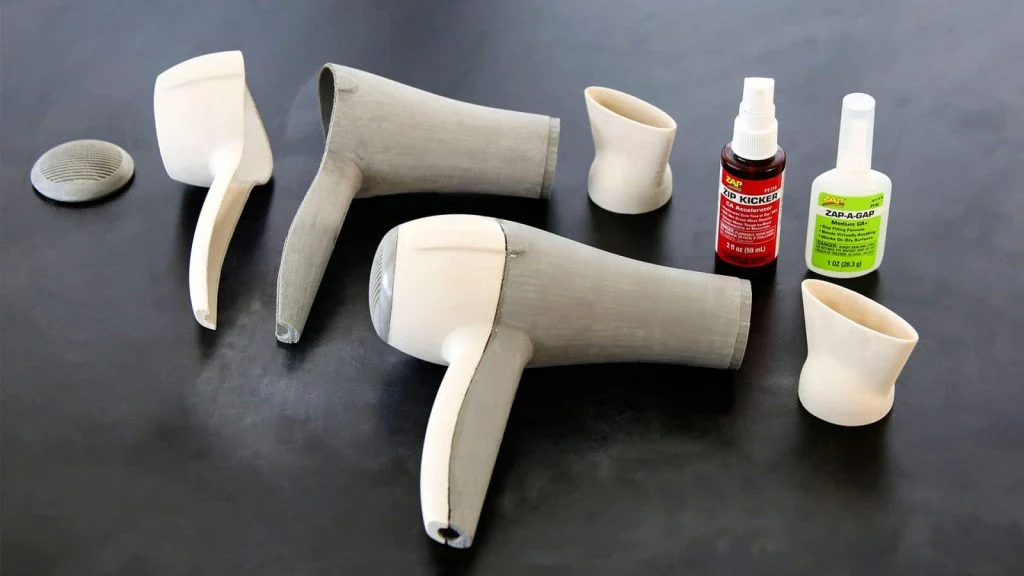
Cyanoacrylate super glue is commonly used to join finished PLA parts, and several products here specifically list PLA compatibility. Choose a thin formula for close seams or a gel for uneven contact areas. Clean, dry surfaces and careful application matter as much as the adhesive type.
What is the difference between PLA repair glue and 3D printer bed glue?
Repair glue joins two finished parts, usually with a CA formula. Bed glue is applied to the build plate before printing, usually as a PVP stick or water-soluble liquid, to improve first-layer adhesion. A bed adhesive is not intended to bond a broken model together.
Should I use gel or liquid glue on a PLA print?
Use gel when the parts have a gap, a vertical seam, or an uneven edge. Use liquid or ultra-thin glue when the pieces fit closely and the adhesive needs to wick into a narrow joint. ARKA is the more forgiving gel pick, while KRAFTPROTZ and Viomis favor penetration.
How long should PLA glue cure?
The answer depends on the formula. ALECPEA lists 45 seconds for positioning and 24 hours for full cure, while Y'allCanDiy claims a 15-second set. Initial setting does not mean the joint is ready for heavy loads, so follow the product's curing guidance and handle new repairs gently.
Can these adhesives bond PETG and TPU?
Several products list PETG and TPU, including ARKA, KRAFTPROTZ, Viomis, Creality, Magigoo, and Wefuit. TPU is flexible, so a rigid CA bond may not be suitable for every repeatedly flexed joint. Test the adhesive on a hidden area before relying on it for a moving part.
How do I prevent a CA glue tip from clogging?
Use only a small amount, wipe the tip if needed, and close the cap promptly. ARKA, KRAFTPROTZ, USKICH, and Viomis specifically include anti-clog or anti-dryout features. Store the bottle as directed and do not leave the applicator exposed between uses.
Can build-plate glue prevent PLA warping?
Build-plate adhesives are designed to improve first-layer grip and reduce lifting or warping. They work alongside correct bed temperature, leveling, and a clean plate. They cannot fix every cause of warping, especially if the print settings or bed surface are unsuitable.
The bottom line
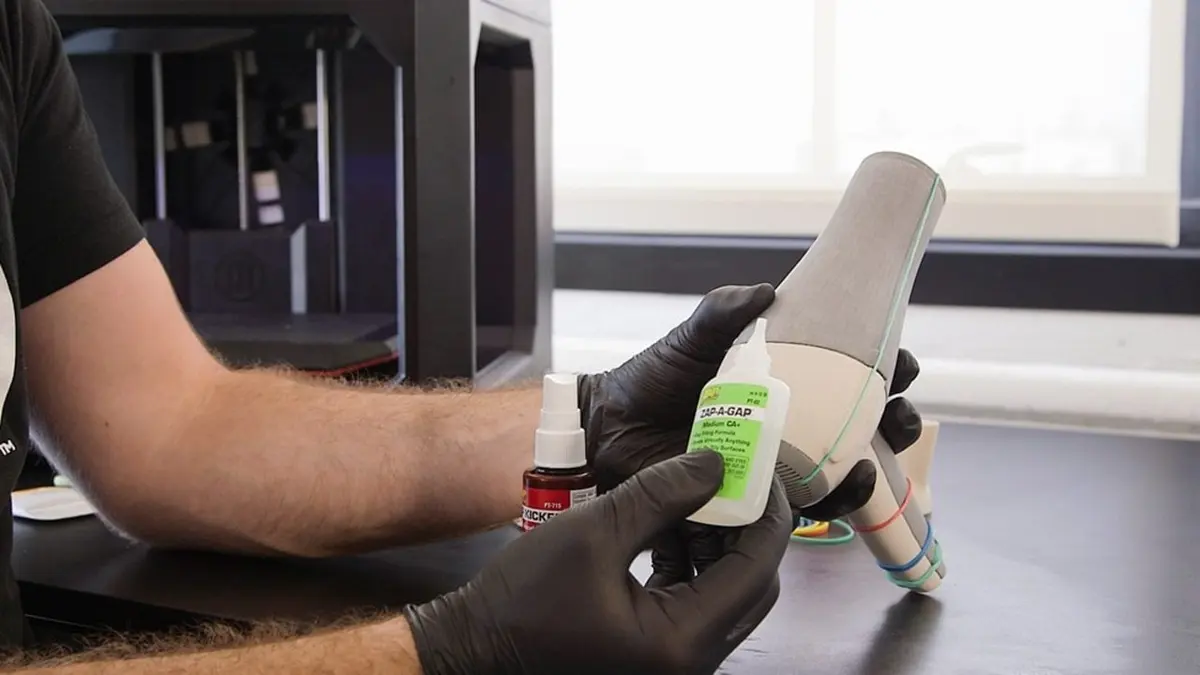
The Best best glue for pla filament depends on the job, but ARKA 3D Printing Super Glue Gel is the strongest all-purpose pick for joining printed parts. Its thick formula is easier to control on uneven seams, and its listed compatibility with PLA, ABS, PETG, TPU, ASA, and Nylon gives it room to grow with a mixed-material workshop. Choose KRAFTPROTZ 3D Printing Super Glue Liquid instead when the joint is tight and needs capillary flow.
For build plates, Magigoo MO2016 is the most flexible option across filament types and surfaces, while Creality PVP Glue Sticks are the straightforward general-purpose choice. If you are undecided, choose thick gel for imperfect part fit, thin CA for precise seams, and PVP only when the problem is first-layer adhesion.
As an Amazon Associate we earn from qualifying purchases.