

A confusing map display can turn a familiar trip into a stressful one, especially when a driver has to squint at a small screen or decode a rapid sequence of turns. The best gps for seniors should make the next instruction obvious, speak clearly, and avoid burying basic navigation under unnecessary menus.
We compared nine dedicated navigators, from straightforward Garmin car units to large-screen truck and RV models and two handheld GPS devices for hiking. The best pick for most drivers is Garmin Drive 53, while the range also includes a larger premium navigator, refurbished alternatives, and capable outdoor units.
Comparison table
| # | Product | Award | Screen | Map and guidance features | Best for |
|---|---|---|---|---|---|
| 1 | Garmin Drive 53 | Best overall | 5-inch high-resolution glass touchscreen | North America maps, spoken directions, landmark guidance | Most older drivers |
| 2 | Garmin DriveSmart 76 | Best large screen | 7-inch high-resolution display | Voice Assist, Wi-Fi updates, smartphone features | Drivers who want maximum readability |
| 3 | Garmin Drive 53 Renewed | Best renewed Garmin | 5-inch high-resolution glass touchscreen | North America maps, driver alerts, landmark guidance | Buyers comfortable with a renewed unit |
| 4 | Garmin Drive 52 Renewed | Best simple interface | 5-inch display | U.S. and Canada maps, traffic-ready, driver alerts | Drivers who prefer familiar menus |
| 5 | GWURXT 9-Inch Navigator | Best truck and RV screen | 9-inch touchscreen | North America maps, seven vehicle modes, 29 voice languages | Larger vehicles and broad visibility |
| 6 | Garmin DriveSmart 65T Renewed | Best refurbished bundle | DriveSmart 65 display | U.S. and Canada maps, mount and case bundle | Drivers wanting a supplied kit |
| 7 | Garmin eTrex 22x | Best rugged handheld | 2.2-inch sunlight-readable display | TopoActive maps, GPS and GLONASS, 25-hour battery | Hiking and trail navigation |
| 8 | LONGRUF 9-Inch Navigator | Best spoken guidance | 9-inch touchscreen | North America maps, 40-plus voice languages, vehicle modes | Drivers who rely on audio prompts |
| 9 | NiesahYan Handheld GPS | Best outdoor battery | 3.2-inch sunlight-readable display | USA Topo maps, multi-GNSS, compass and altimeter | Outdoor users wanting long runtime |
1. Garmin Drive 53: Best Overall

Pros
- Bright 5-inch glass touchscreen
- Simple route display with spoken directions
- Helpful alerts for curves, speed changes, and school zones
- Landmark-based Garmin Real Directions guidance
Cons
- Smaller display than the DriveSmart 76
- Smartphone-linked features are limited compared with the DriveSmart line
Best for: older drivers who want a clear, dedicated car navigator without a cluttered interface.
The Garmin Drive 53 gets the important thing right first: it makes the route easy to read without turning the dashboard into a second computer screen. Its 5-inch glass capacitive touchscreen is large enough for ordinary driving, and the high-resolution display gives roads, turns, and map labels a crisp appearance. The menus are less distracting than the feature-heavy interfaces on some larger navigators, which matters for anyone who wants to enter a destination and get moving.
Garmin includes detailed North America map updates, spoken turn-by-turn directions, and Real Directions landmark guidance. That last feature is useful when an instruction can be tied to something visible, such as a building or landmark, rather than only a street name. The Drive 53 also shows food, fuel, and rest areas along an active route, plus upcoming cities and milestones. Those details give a driver more context without requiring a separate search during a trip.
The safety layer is well judged. Alerts cover school zones, speed changes, and sharp curves, giving the driver an extra reminder when the road demands attention. The national parks directory and Tripadvisor ratings for restaurants, hotels, and attractions make it more useful on a road trip than a bare turn-by-turn unit. Drivers who need traffic, weather, or parking information should look at Garmin DriveSmart 76, which adds connected features when paired with a compatible phone.
The main limitation is the 5-inch screen. It is readable, but the 7-inch DriveSmart 76 is easier to glance at when the navigator is mounted farther away or when map labels need to be larger. The Drive 53 also does not have the DriveSmart 76's built-in Wi-Fi updating and voice assistant features. For the driver who wants direct controls, spoken directions, sensible alerts, and no need to learn a complicated system, this is the navigator we would choose.
2. Garmin DriveSmart 76: Best Large Screen

Pros
- Large 7-inch high-resolution screen
- Garmin Voice Assist and hands-free calling
- Built-in Wi-Fi for map and software updates
- Live traffic, weather, parking, and smart notifications with a phone
Cons
- More features and setup than the Drive 53
- Several connected functions require a compatible smartphone
Best for: drivers who want the clearest dashboard display and are comfortable pairing a phone.
The Garmin DriveSmart 76 is the obvious choice when screen size is the deciding factor. Its 7-inch high-resolution display is substantially easier to read from a normal driving position than a compact 5-inch unit. That extra space also gives the map more room to show the upcoming turn, surrounding roads, and useful route context at the same time. For drivers with changing eyesight or for anyone who mounts the navigator low on the dashboard, this is a meaningful improvement.
The DriveSmart 76 is more than a large map display. Garmin Voice Assist lets the driver ask for directions to places, while hands-free calling works when the navigator is paired with a compatible smartphone using Bluetooth. Alexa is built in as well, with access to functions such as music, audiobooks, and news when the Garmin Drive app is running on the phone. Those additions can be helpful, but they should not be mistaken for completely independent features. The phone pairing and app setup are part of the experience.
Built-in Wi-Fi makes map and software updates easier because the navigator can update without a computer. Pairing it with the Garmin Drive app adds live traffic, fuel information, parking, weather, smart notifications, and traffic cameras. The unit also includes a dual USB charger with an extra charging port, a small but practical touch for a car carrying more than one device. Road-trip tools include a national parks directory, Tripadvisor information, millions of Foursquare points of interest, and the HISTORY database of notable sites.
This is a more capable machine than Garmin Drive 53, but it is not as calm and simple. A driver who only wants a dedicated screen and spoken directions may find the extra connected options unnecessary. The Drive 53 is the better fit for minimalism, while the DriveSmart 76 wins for visibility and connected convenience. If reading the map at a glance is the highest priority, and a phone is available for setup, the larger screen is worth choosing.
3. Garmin Drive 53 Renewed: Best Renewed Garmin
Pros
- Bright 5-inch capacitive touchscreen
- Spoken directions and landmark guidance
- Driver alerts for curves, school zones, and speed changes
- Familiar Garmin interface
Cons
- Renewed condition may not suit buyers who want new hardware
- No listed Wi-Fi updating or voice assistant
Best for: drivers who want the Drive 53's interface in a renewed listing.
The Garmin Drive 53 Renewed is functionally the closest match to the top pick in this group. It uses the same bright, high-resolution 5-inch glass capacitive touchscreen, the same basic spoken navigation approach, and the same style of simple on-screen menus. That makes it an appealing option for someone who has already used a Garmin Drive unit and wants the same kind of route guidance without moving to a larger, more feature-packed interface.
Its core navigation tools are well suited to older drivers. The screen presents the route plainly, while spoken turn-by-turn instructions reduce the need to study the display. Garmin Real Directions adds landmark guidance, and driver alerts cover school zones, speed changes, sharp curves, and other road conditions. Food, fuel, rest areas, upcoming cities, and milestones appear along the active route. The North America map coverage and national parks directory also make this a practical road-trip companion.
Compared with Garmin Drive 52 Renewed, the Drive 53 has a newer-feeling display specification and a lighter body. The product information lists the unit at about 0.15 pounds, with dimensions of 4.97 by 3.33 by 0.67 inches. Those compact proportions should make it easy to position without taking over the windshield. The DriveSmart 76 remains the better choice for a large visual target, but it also asks more from the driver in terms of pairing and feature management.
The important qualification is the renewed designation. Buyers who want factory-fresh hardware should choose the new Garmin Drive 53 instead. This model also does not list the DriveSmart 76's Wi-Fi updates, smartphone-linked traffic, or voice assistant. It makes sense for the person who values Garmin's familiar navigation language and wants a compact unit, provided the renewed condition is acceptable.
4. Garmin Drive 52 Renewed: Best Simple Interface

Pros
- Straightforward 5-inch display
- Simple on-screen menus
- Driver alerts and travel data
- Traffic-ready without requiring a smartphone
Cons
- Heavier and older than the Drive 53 design
- Map coverage is listed for the U.S. and Canada rather than North America
Best for: drivers who want a basic Garmin navigator with traffic support and familiar controls.
The Garmin Drive 52 Renewed is the plainspoken option in the Garmin group. Its 5-inch display and simple menus are designed around the central task of getting from one place to another. There is less emphasis on voice assistants and smartphone notifications, which can be a benefit for a driver who finds modern connected interfaces distracting. The maps are described as bright and easy to see, and the unit provides spoken directions for keeping eyes forward.
Garmin includes driver alerts for upcoming hazards, sharp curves, and speed changes. The unit is also traffic-ready out of the box, so it can provide real-time traffic information without requiring a phone. That is a notable distinction from systems whose traffic functions only appear after app pairing. U.S. and Canada map updates are included, and the navigator adds travel-oriented tools such as a national parks directory, Tripadvisor ratings, the HISTORY database, and millions of Foursquare points of interest.
The physical design is less compact than the newer Drive 53. Product information lists dimensions of 5.5 by 3.3 by 0.8 inches and a weight of 0.88 pounds. That extra bulk is not a deal breaker in a stable dashboard mount, but it gives the Drive 52 a more dated feel. The Drive 53 is the stronger choice when a lighter unit, North America coverage, and a sharper glass touchscreen matter more.
The weakness is not complexity. It is age and the renewed condition. This is a good fit for someone who wants basic controls and traffic without smartphone setup, but it is not the pick for a large screen, current connected features, or the most compact hardware. For drivers who want a simple dedicated navigator and mostly travel in the U.S. and Canada, the Drive 52 remains easy to understand.
5. GWURXT 9-Inch Navigator: Best Truck and RV Screen
Pros
- Very large 9-inch display
- Seven vehicle modes
- Multiple route choices and unit settings
- Voice guidance in 29 languages
Cons
- Large body needs careful mounting
- Updates require connecting to a computer
Best for: truck, bus, RV, and car drivers who prioritize a large route display.
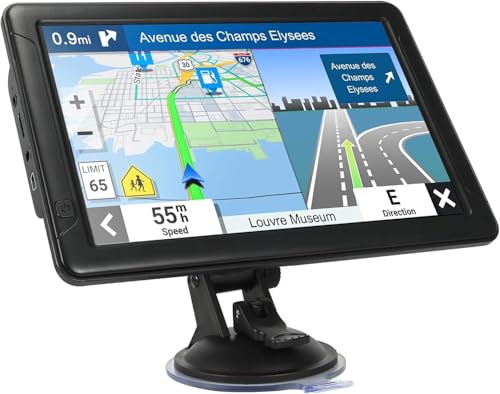
The GWURXT 9-Inch Navigator takes a different approach from the compact Garmin units. Its 9-inch screen is the main event, giving the driver a broad map view and large on-screen information. Product dimensions list a width of 10.24 inches, so this is not a navigator to tuck into a small corner of the windshield. It is better suited to a truck, RV, or wide dashboard where a large display can be positioned without blocking the driver's view.
The software is built around varied vehicle use. Seven modes cover car, truck, bus, taxi, bicycle, emergency, and pedestrian travel. Truck and bus drivers can enter vehicle length, width, height, and weight information, which helps the system account for restrictions. Four route choices are available: fast, green, shortest, and simple. The navigator also accepts postal code addresses, coordinates, favorite locations, and points of interest, giving it more input flexibility than a basic address-only device.
Spoken guidance is available in 29 languages, with speed limit alerts, lane assistance, turn guidance, speed camera warnings, and red-light warnings. The screen shows estimated arrival time, remaining distance, current speed, and lane guidance. Map coverage includes the U.S., Canada, and Mexico, with free lifetime map updates through a computer and the included USB cable. The supplied kit includes a mount, sunshade visor, car charger, Type-C cable, and manual.
The weak point is the ownership experience around size and updates. The 9-inch body is much less discreet than Garmin Drive 53, and the product information says updates connect to a PC. That may be less convenient than the DriveSmart 76's built-in Wi-Fi. Still, for an RV driver who needs a large display and vehicle-specific routing, this is a more suitable tool than a small car navigator.
6. Garmin DriveSmart 65T Renewed: Best Refurbished Bundle

Pros
- Larger DriveSmart display than the 5-inch Garmin models
- U.S. and Canada maps
- Includes vehicle mount, USB cable, and power cable
- Bundle includes a dash mount and hard case
Cons
- Renewed hardware
- The listing does not provide a full feature list for the 65T
Best for: drivers who want a larger Garmin navigator with accessories supplied in one kit.
The Garmin DriveSmart 65T Renewed is the practical bundle pick. The listing identifies it as a refurbished Garmin navigator with preloaded U.S. and Canada maps, a vehicle power cable, suction cup mount, USB cable, quick-start manual, and a 90-day refurbished warranty. It also includes a dual 12V and 24V electronic car socket, a weighted dash mount, and a hard EVA case. Those accessories make the package easier to move between vehicles or store when the navigator is not in use.
Its 6.8-inch body gives it a wider visual target than the 5-inch Drive 53 and Drive 52. Product dimensions are 6.8 by 3.9 by 0.7 inches, so the screen should be more comfortable for a driver who wants to see route information without leaning forward. The larger chassis does need a sensible mounting position, especially in a smaller car, but it is still more restrained than the 9-inch truck and RV units.
The navigation details listed here are less extensive than those supplied for Garmin DriveSmart 76, so buyers should not assume every feature is identical. What is clear is the inclusion of U.S. and Canada maps and the supplied hardware needed to install the unit. The DriveSmart 76 is the more compelling choice for voice assistant functions, Wi-Fi updates, and phone-linked traffic and weather. The 65T makes more sense when the included storage and mounting accessories are useful.
The refurbished status is the key compromise. The listing says the unit is refurbished to factory specifications with limited or no wear, and it includes a 90-day warranty, but it is not the same proposition as buying new hardware. Drivers who want a larger Garmin screen and a complete installation kit can make good use of it. Those who want the clearest feature documentation should select one of the newer, more fully described models.
7. Garmin eTrex 22x: Best Rugged Handheld

Pros
- Rugged handheld form
- Sunlight-readable color screen
- TopoActive maps for cycling and hiking
- GPS and GLONASS support
- Up to 25 hours from two AA batteries
Cons
- Much smaller display than car navigators
- Physical handheld controls are less familiar to drivers
Best for: hikers and outdoor users who need trail maps rather than dashboard directions.
The Garmin eTrex 22x belongs in this roundup for a different reason. It is not a car navigator, and its 2.2-inch screen would be a poor substitute for the broad display on GWURXT 9-Inch Navigator. It is a compact handheld designed for trails, cycling, and outdoor navigation, making it the right choice for a senior who needs reliable route information away from the road.
The sunlight-readable color screen has 240 by 320 pixels, and the unit comes with TopoActive maps containing routable roads and trails for cycling and hiking. Its support for both GPS and GLONASS satellite systems can help it track in more challenging environments than GPS alone. The 8 GB of internal memory provides room for map downloads, and a microSD card slot adds storage flexibility.
The physical design is easy to carry. It measures 4 by 2.1 by 1.3 inches and weighs about 0.31 pounds. Instead of relying on a rechargeable battery, it runs on two AA batteries for up to 25 hours in GPS mode. That is useful for long outings because spare batteries can be carried separately and replaced without finding a power outlet or USB cable.
Its weakness is the small screen and outdoor-oriented interface. A driver who wants large street labels and simple spoken turns should choose Garmin Drive 53 or Garmin DriveSmart 76. The eTrex 22x is for someone who walks, hikes, or cycles and needs a rugged handheld with trail mapping, long battery life, and straightforward satellite positioning.
8. LONGRUF 9-Inch Navigator: Best Spoken Guidance

Pros
- Large 9-inch touchscreen
- More than 40 voice languages
- Vehicle modes for cars, trucks, buses, and more
- FM transmission can send navigation audio through the car
Cons
- Large physical footprint
- Map updates may require a Windows PC or external TF card
- Product instructions recommend a full initial charge
Best for: drivers who want large visual prompts and strong spoken direction options.
The LONGRUF 9-Inch Navigator is aimed at drivers who would rather hear the instruction clearly than keep checking the screen. Its 9-inch touchscreen provides a large view of the route, while spoken turn-by-turn directions are available in more than 40 voice languages. The unit can also transmit navigation audio into the vehicle through its FM function. This is not an FM radio, but it can help make prompts easier to hear through the car speakers.
The feature set covers the basics thoroughly. The navigator accepts postcodes, addresses, coordinates, favorites, and points of interest, then offers fast, green, short, or easy route choices. It displays current speed, remaining distance, estimated arrival time, street names, and active lane assistance. Speed camera alerts, sound warnings, and route planning add more reminders during a trip. A driver who wants audio reinforcement may find this more reassuring than a unit that only shows a small visual arrow.
Seven vehicle modes cover car, truck, pedestrian, bicycle, emergency, bus, and taxi use. The system can account for width, height, and weight restrictions, which gives it a clear role in larger vehicles. It comes with North America maps for the U.S., Canada, and Mexico, and the listing describes free lifetime updates. Those updates connect to a Windows PC or may use an external TF card if the system supports it.
The unit's size is both its advantage and its drawback. Product dimensions list a width of 5.5 inches and a length of 9.19 inches, making it less flexible to mount than Garmin DriveSmart 76. The Garmin has a smaller 7-inch screen but a more polished connected ecosystem and built-in Wi-Fi. Choose LONGRUF when audible prompts, language choice, and vehicle modes matter more than compact mounting.
9. NiesahYan Handheld GPS: Best Outdoor Battery

Pros
- 3.2-inch sunlight-readable display
- Physical buttons and anti-slip design
- Multi-GNSS support
- IP66 water-resistant design
- Up to 36 hours of rechargeable battery life
Cons
- Not designed as a car navigator
- Outdoor setup has more specialized controls than a simple dashboard unit
Best for: hikers who want a larger handheld screen, long battery life, and outdoor sensors.
The NiesahYan Handheld GPS is the more modern outdoor alternative to the eTrex 22x. Its 3.2-inch screen is larger than the eTrex display and is described as sunlight readable, which helps on exposed trails. Physical buttons and an anti-slip design are useful when fingers are cold, wet, or occupied. This is a handheld navigator for hiking and camping, not a replacement for the car-focused Garmin units in the first six positions.
Its satellite support is unusually broad for this group. It uses GPS, Galileo, BeiDou, and QZSS, a multi-GNSS arrangement intended to improve positioning reliability. The listing also claims location precision within 6 feet. A three-axis compass can show heading even while stationary, while the barometric altimeter adds elevation information. Those tools are meaningful on trails, where knowing direction and changes in elevation can be as important as knowing the next turn.
The device includes USA Topo maps and 32 GB of internal memory for map downloads. Its IP66 water-resistant design is intended for outdoor conditions, and the rechargeable battery can run for up to 36 hours on a full charge. USB-C charging is convenient for someone already carrying a modern phone cable. That battery figure gives it an advantage over the eTrex 22x when the user prefers rechargeable power instead of carrying two AA batteries.
The limitation is specialization. It will not provide the same kind of simple car route display or dashboard mounting experience as Garmin Drive 53. Its physical controls and compass features also mean there is more to learn before a first hike. For a senior who spends time outdoors and wants long runtime, a sunlight-readable screen, and weather resistance, it is the stronger handheld choice.
How to choose best gps for seniors
The right navigator depends less on the number of features than on how easily the driver can see, hear, and act on the next instruction.
Screen size and readability
A 5-inch screen is a sensible starting point for a compact car navigator. It keeps the route visible without taking up too much windshield or dashboard space. A 7-inch display such as the one on Garmin DriveSmart 76 is easier to read when mounted farther away, while a 9-inch model makes sense in a truck or RV with room for a broad dashboard display.
Resolution, brightness, and screen finish matter as much as diagonal size. A high-resolution glass display can make road labels and arrows look cleaner. A huge screen is not automatically better if it sits at an awkward angle or blocks visibility.
Spoken directions and audio clarity
Spoken turn-by-turn prompts reduce the need to look down at the display. Look for landmark guidance, street-name announcements, lane assistance, and a way to make the audio clearly audible in the vehicle. The LONGRUF unit can transmit navigation sound through the car's FM system, while Garmin's more advanced units add phone-linked voice features.
A clear spoken instruction at the right moment is more useful than a crowded map full of information.
Menu simplicity
A navigator should make common tasks obvious: entering an address, searching for a point of interest, canceling a route, and finding the next turn. Garmin Drive 53 and Drive 52 Renewed keep those jobs relatively direct. Truck-focused models add vehicle dimensions, route profiles, and multiple navigation modes, which are useful when needed but unnecessary for a driver who only wants ordinary car routing.
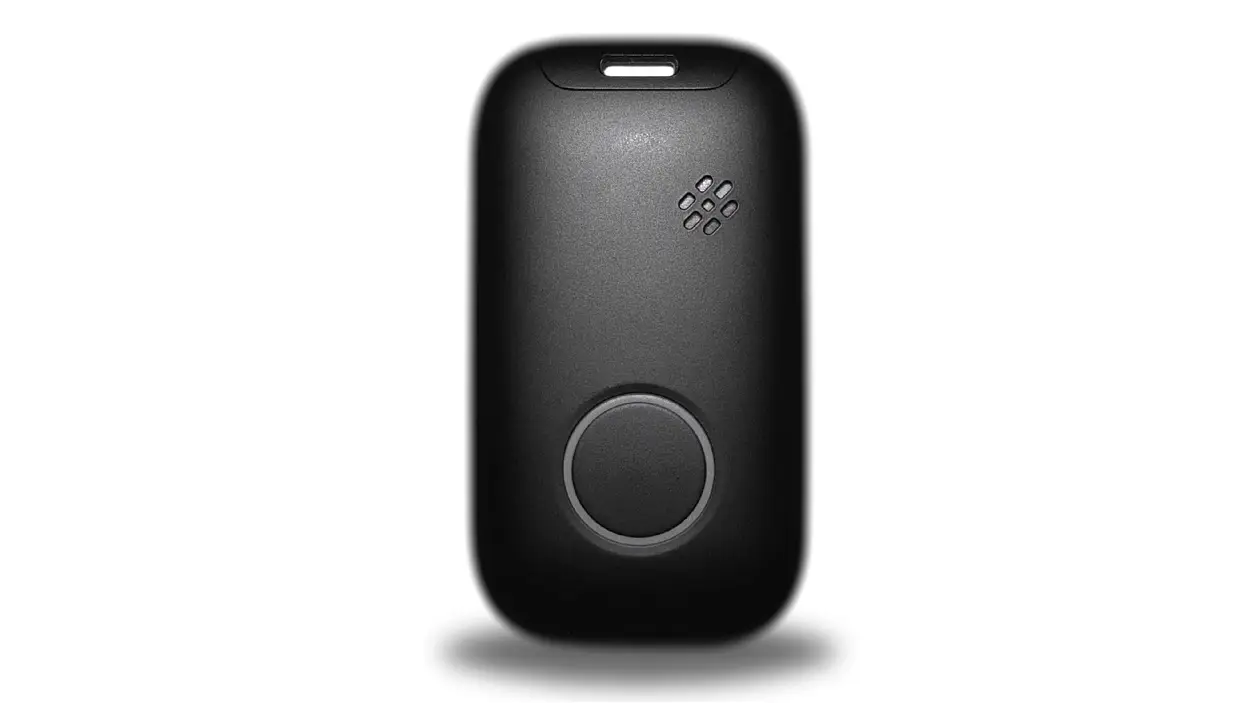
If the driver also needs a connected phone, a look at how a phone can support safer everyday communication may help complete the setup. The navigator should still remain usable when the phone is not convenient to handle.
Map coverage and updates
Check where the included maps apply before choosing a unit. The Drive 53 and DriveSmart 76 list North America coverage, while the Drive 52 Renewed lists the U.S. and Canada. The GWURXT and LONGRUF models include the U.S., Canada, and Mexico and describe free lifetime updates, but their update process involves a computer or memory card.
Built-in Wi-Fi is simpler than connecting a navigator to a computer. The DriveSmart 76 has that convenience. Other units may be perfectly usable, but the owner needs to be willing to perform updates through the specified cable or computer process.
Vehicle type and mounting
A compact 5-inch navigator is easier to place in a typical car. A 7-inch unit increases readability without reaching the physical scale of the 9-inch truck and RV models. If the navigator is intended for a large vehicle, vehicle dimensions and route restrictions become more important than compactness.
Mounting stability also matters. A large screen needs a firm position that does not obstruct the driver's view. The GWURXT includes a suction cup and back clip, while the DriveSmart 65T Renewed package includes a suction mount and weighted dash mount.
Handheld outdoor navigation
For hiking, the priorities change. A sunlight-readable screen, physical buttons, water resistance, trail maps, satellite support, and battery life matter more than spoken street directions. The eTrex 22x uses GPS and GLONASS, preloads TopoActive maps, and runs for up to 25 hours on two AA batteries. The NiesahYan model adds a 3.2-inch display, multi-GNSS support, a three-axis compass, barometric altimeter, IP66 water resistance, and up to 36 hours of rechargeable battery life.
Drivers who are also comparing dedicated dashboard navigation can see the navigation features that matter on ordinary car trips before deciding between a car unit and a handheld.

Frequently asked questions
Are dedicated GPS navigators easier for seniors than phone navigation?
They can be. A dedicated navigator stays mounted in one place, uses a larger route display than many phones, and provides spoken directions without requiring the driver to handle a phone during the trip. Models such as the Garmin Drive 53 are focused on navigation rather than calls, messages, and unrelated notifications.
Is a 5-inch GPS screen large enough?
A 5-inch screen is large enough for many cars when it has a bright, high-resolution display and is mounted within comfortable viewing distance. Drivers who want larger map labels or have the navigator positioned farther away may prefer a 7-inch or 9-inch unit. The larger models need more dashboard or windshield space.
Do these GPS units need a phone connection?
Not all of them. The Garmin Drive 53, Drive 52 Renewed, and the two 9-inch models provide core navigation without a phone. The DriveSmart 76 can work with a phone for live traffic, weather, parking, smart notifications, hands-free calling, and some voice features.
Can a GPS navigator work without cellular service?
A dedicated navigator uses satellite positioning and stored maps, so its basic route guidance does not depend on cellular service in the same way a phone navigation app may. Map updating is a separate matter. Some models require a computer, while the DriveSmart 76 supports updates through built-in Wi-Fi.
Which model is suitable for an RV or truck?
The GWURXT 9-Inch Navigator and LONGRUF 9-Inch Navigator are the most directly suited to larger vehicles because they include truck and RV-oriented vehicle modes. Both describe settings for dimensions or restrictions, and both provide large displays. Entering accurate vehicle information is important before following a route in a large vehicle.
Are handheld GPS units good for driving?
They are better suited to hiking, cycling, and outdoor navigation. The Garmin eTrex 22x and NiesahYan Handheld GPS use trail-oriented maps and compact displays, so they are not as convenient for street navigation as a car navigator. Choose one only when outdoor use is the main need.

The bottom line
The Garmin Drive 53 is our top choice for the Best GPS for Seniors because it combines a clear 5-inch touchscreen, spoken directions, landmark guidance, useful driver alerts, and straightforward controls. Drivers who need a larger display and do not mind pairing a phone should choose Garmin DriveSmart 76, whose 7-inch screen, Wi-Fi updates, Voice Assist, and connected traffic features make it the more capable upgrade.
For trucks and RVs, the GWURXT 9-Inch Navigator offers the most useful combination of a broad display and vehicle modes, while hikers should choose Garmin eTrex 22x for replaceable-battery simplicity or NiesahYan Handheld GPS for longer rechargeable runtime and outdoor sensors.
If you are undecided, choose the Garmin Drive 53 for ordinary driving, and move up to a larger screen only when readability or vehicle size demands it.
As an Amazon Associate we earn from qualifying purchases.