

A power outage turns a radio from a retro curiosity into a practical lifeline. The right model should keep receiving weather information after the Wi-Fi goes down, give you usable light, and offer more than one way to restore its battery. The wrong one can leave you squinting at tiny controls or cranking for little useful energy.
Our Best hand crank emergency radio picks range from the compact Emgykit to larger radios with 12000mAh batteries, solar panels, alarms, reading lamps, and phone charging. We paid close attention to reception features, charging choices, control layout, weather alerts, and portability.
The Mesqool Solar Emergency Radio is our top pick, while the other nine cover automatic alerts, compact emergency kits, rugged weather protection, and straightforward backup operation.
Comparison table
| # | Product | Award | Battery | Reception | Charging and lighting | Best for |
|---|---|---|---|---|---|---|
| 1 | Mesqool Solar Emergency Radio | Best overall | 12000mAh | NOAA, AM, FM | Solar, hand crank, flashlight, reading lamp | A complete home emergency kit |
| 2 | Raynic Emergency Radio | Best for alert monitoring | 5000mAh | NOAA, AM, FM, SW | Six charging options, flashlight, reading lamp | Automatic weather alerts |
| 3 | Emgykit Compact Radio | Best lightweight | 2000mAh | NOAA, AM, FM | Solar, hand crank, Type-C, flashlight | A small go-bag radio |
| 4 | OnLyee 12000mAh Emergency Radio | Best for lighting | 12000mAh | NOAA, AM, FM | Solar, hand crank, Type-C, 5W light | Blackout lighting and charging |
| 5 | Midland ER310 | Best established design | Not specified | Weather, AM, FM | Emergency crank operation | Buyers who want a simple radio |
| 6 | FosPower A1 Emergency Radio | Best compact power backup | 2000mAh | NOAA, AM, FM | USB, solar, hand crank, flashlight | Basic household preparedness |
| 7 | Leaton 10000mAh Emergency Radio | Best for easy controls | 10000mAh | NOAA, AM, FM | USB-C, solar, hand crank, dual lights | Seniors and glove-friendly use |
| 8 | Roxicosly Black Emergency Radio | Best for automatic alerts | 12000mAh | NOAA | Solar, hand crank, flashlight, reading lamp | Severe-weather preparation |
| 9 | Roxicosly Army Green Emergency Radio | Best for outdoor backup | 12000mAh | NOAA | Solar, hand crank, flashlight, reading lamp | Camping and storm kits |
| 10 | Nitigo 10000mAh Weather Radio | Best for headphone listening | 10000mAh | NOAA, AM, FM | Solar, hand crank, USB, dual lights | Private listening during outages |
1. Mesqool Solar Emergency Radio: Best Overall

Pros
- Large 12000mAh battery
- Large 8500mm² monocrystalline solar panel
- NOAA, AM, and FM reception
- Flashlight and soft reading lamp
- Large controls and non-slip grip
Cons
- Heavier than compact alternatives
- No automatic alert feature is listed
- Battery should be fully charged before first use
Best for: households that want one radio to handle information, lighting, and emergency charging.
The Mesqool is the easiest radio here to recommend as a general household backup. It feels designed around the moment when the room is dark, the forecast matters, and nobody wants to decode a complicated control panel. Its large tuning knob, responsive buttons, clear labels, and non-slip grip should make it manageable in low light or for anyone who dislikes fiddly electronics.
Its 12000mAh lithium battery gives it a substantial reserve for radio listening, lights, and USB device charging. That capacity is one of the main reasons it rises above the smaller FosPower and Emgykit. The charging system is equally useful: there is an 8500mm² monocrystalline solar panel, a hand crank with an extended arm, and the usual battery charging arrangement. The product claims that three minutes of cranking can restore useful power, but the practical lesson is simpler: the crank is an emergency fallback, not a replacement for keeping the unit charged.
Reception covers NOAA, AM, and FM, with a high-sensitivity signal chip, noise-reduction circuitry, and an extended antenna. Those details matter more than an impressive list of bands when the main purpose is receiving weather information clearly. A focused flashlight is rated to reach 260 feet, and the flip-up reading lamp provides softer illumination. Both lights have two brightness levels, so the radio can handle finding your way outside or lighting a bedside table.
The weakness is its size and weight. At 6.8 by 2.9 by 4.7 inches and 1.59 pounds, it is less appealing for a tiny hiking kit than the Emgykit. It also does not list automatic NOAA alerts, a feature the Raynic and both Roxicosly models provide. If you need a radio that wakes you when an alert arrives, choose the Raynic instead. For a home drawer, car kit, or storm cabinet, the Mesqool gives the broadest mix of useful hardware and approachable controls.
2. Raynic Emergency Radio: Best for Alert Monitoring

Pros
- Automatic NOAA weather alert scanning
- Digital tuning with HD LCD display
- AM, FM, SW, and NOAA reception
- Six charging options
- Headphone jack and SOS alarm
Cons
- Smaller battery than the largest models
- AAA batteries are not included
- IPX3 protection is limited compared with IPX6 radios
Best for: anyone who wants weather warnings without leaving the radio tuned all day.
The Raynic stands apart because it behaves more like an alert appliance than a basic portable radio. Its automatic NOAA alert function can scan for emergency and weather warnings while the unit is in standby. That is a meaningful advantage for a bedside table, where a radio that must be monitored constantly is not much help while you sleep.
The large HD LCD shows the battery level and current frequency, while digital tuning makes it easier to return to a known station than a loose analog dial. Reception includes AM, FM, shortwave, and the weather band. The display backlight can be turned off with a long press of the dimmer button, which helps conserve power in a blackout and avoids putting a bright screen beside a bed.
Its rechargeable battery is listed at 5000mAh, or 18500mWh, and the radio has six charging options: its built-in battery, an AC adapter, USB input, hand crank, solar panel, and three AAA batteries. The AAA cells are not included, but the ability to install them gives this model a useful last-resort path when the internal battery is depleted. A 3W flashlight, 2.5W reading lamp, USB phone output, and SOS button add practical emergency functions.
The Raynic is also one of the more considerate radios for shared spaces. A 3.5mm headphone jack lets one person listen without disturbing others, and its 1.2-pound body is relatively manageable at 6.8 by 3.7 by 2.9 inches. The tradeoff is weather resistance rated IPX3, which is less protection than the IPX6 Leaton and OnLyee. Pick the Raynic when automatic alerts and a readable display matter most. Pick the Mesqool when a bigger battery and stronger lighting package matter more.
3. Emgykit Compact Radio: Best Lightweight

Pros
- Weighs about half a pound
- Compact 5.16 by 2.6 by 2.09-inch body
- NOAA, AM, and FM reception
- Type-C, solar, and hand crank charging
- 140-lumen flashlight and SOS alarm
Cons
- Smaller 2000mAh battery
- No automatic alert feature is listed
- Fewer lighting features than larger radios
Best for: hikers, travelers, and anyone building a compact emergency bag.
The Emgykit makes the most sense when carrying space matters more than battery endurance. At roughly 0.51 pounds and close to five inches long, it is dramatically easier to slip into a daypack, glove compartment, or small emergency pouch than the 1.59-pound Mesqool. It is not trying to be a tabletop power center. It is a small radio with the core tools needed when the lights go out.
The 2000mAh rechargeable battery is modest beside the 10000mAh and 12000mAh models, so expectations need to stay realistic. It can power the radio and provide emergency phone charging, but it is not intended to act as a large reserve for several devices. Type-C charging, solar charging, and hand cranking give you three ways to keep it available, with USB-C being the sensible method for routine preparation.
Reception covers AM, FM, and NOAA weather broadcasts. The radio also has a 3W three-LED flashlight rated at 140 lumens, enough for finding a path through a dark room or handling a small task. Its SOS function sounds a siren above 80 decibels after the button is held for three seconds. That alarm is a useful addition in a compact product, although it will not replace a larger reading lamp when you need to illuminate a room.
The small dimensions require compromises. Controls and the speaker cannot be as spacious as those on the Leaton, and there is no listed automatic NOAA alert system. The Raynic is a better bedside warning device, while the FosPower offers a more established compact format with a warranty. The Emgykit is the one to choose when weight is the deciding factor and the radio will spend most of its life packed away until needed.
4. OnLyee 12000mAh Emergency Radio: Best for Lighting

Pros
- 12000mAh rechargeable battery
- 8500mm² solar panel
- 5W flashlight and 12-LED reading lamp
- IPX6 water resistance
- NOAA, AM, and FM reception
Cons
- Larger and heavier than compact radios
- NOAA reception requires tuning to a station
- No headphone jack is listed
Best for: blackout preparation where lighting is nearly as important as radio reception.
The OnLyee is built around the reality that a blackout creates several problems at once. You need information, but you also need to move around, read, and keep a phone alive. Its 5W flashlight is the standout feature, and the separate 12-LED reading lamp should spread softer light across a table, tent, or room.
The 12000mAh battery gives it the same headline capacity as the Mesqool and makes it a more capable phone-charging platform than the Emgykit or FosPower. It can be restored through an 8500mm² solar panel, a hand crank, or Type-C input. The solar panel is much more useful than the decorative panels found on many small radios, although solar charging still depends on available light and is best treated as a way to extend runtime.
The radio receives NOAA weather broadcasts plus AM and FM. Its DSP signal processing is intended to reduce noise, and the 57mm speaker is specified as producing clear, room-filling audio. The unit also includes a 120dB SOS alarm. IPX6 water resistance adds confidence for rain and splashes, especially when the radio is used in a garage, campsite, or vehicle kit.
OnLyee does not list automatic alert scanning, so it is not as hands-off as the Raynic or Roxicosly Black. The 6.81 by 2.91 by 4.76-inch body and 1.59-pound weight also make it a substantial item to carry. Readers assembling a more complete backup plan for prolonged outages may appreciate its lighting and phone output, while lightweight travelers should look at Emgykit. Choose OnLyee for a dark home or campsite where broad illumination is a priority.
5. Midland ER310: Best Established Design

Pros
- Straightforward emergency radio design
- AM, FM, and weather reception listed
- Hand crank operation
- One-pound body
- Eight-inch length remains portable
Cons
- Product details list few functions
- Battery capacity is not specified
- Solar and phone-charging features are not listed
Best for: buyers who want a simple emergency radio without an elaborate feature set.
The Midland ER310 is the outlier in this group. The listing provides far fewer technical claims than the newer radios, which can be frustrating if you are trying to compare battery size, lighting output, or charging methods. At the same time, that simplicity may appeal to someone who wants a recognizable emergency radio rather than a multifunction power bank with a radio inside.
The title identifies AM, FM, and weather radio reception, along with emergency crank operation. Those are the essential functions for receiving broadcasts when household power is unavailable. The lack of a stated battery capacity means we cannot assume it will match the endurance of the Mesqool, Leaton, or Nitigo. Solar charging, a USB output, automatic alerts, and a headphone jack are also not listed in the supplied product details.
Its dimensions are 8 by 2.4 by 3.4 inches, and the stated weight is one pound. That makes it longer than the Raynic and Emgykit, but still manageable in a drawer or vehicle kit. The elongated shape may be easier to grip while tuning or cranking, though the available information does not specify the control layout or lighting system.
The Midland is therefore a choice for clarity of purpose rather than feature density. The FosPower offers more documented charging and lighting functions in a smaller body, while the Raynic adds a display and automatic alerts. If you want a straightforward AM/FM and weather crank radio from a dedicated radio brand, the ER310 deserves consideration. Skip it if your emergency plan depends on a large battery, solar replenishment, or phone charging.
6. FosPower A1 Emergency Radio: Best Compact Power Backup

Pros
- NOAA, AM, and FM reception
- USB, solar, and hand crank charging
- 2000mAh power bank
- Flashlight and four-LED reading light
- Limited lifetime warranty
Cons
- Small battery compared with newer large-capacity radios
- No automatic alert function is listed
- Basic 1W flashlight
Best for: a compact household or car kit that needs basic radio, light, and phone backup.
The FosPower A1 is a sensible middle ground for people who do not need a large battery. Its 6.2 by 2.9 by 2.1-inch body and 0.925-pound weight make it easier to store than the full-size Mesqool and OnLyee. It still covers the central emergency tasks: receiving weather information, producing light, and providing a little USB power when a phone needs to send a message.
The built-in power bank is rated at 7400mWh, or 2000mAh. That is enough to make a difference in an emergency, but it is not in the same class as the 10000mAh Leaton or 12000mAh Roxicosly models. Charging options include USB, the solar panel, and the hand crank, with AAA batteries also listed as a power source. That mix is useful because it avoids depending on one charging method.
Reception includes NOAA emergency broadcasts as well as AM and FM stations. Lighting comes from a 1W flashlight and a four-LED reading light. These are modest outputs compared with the OnLyee's 5W flashlight and the Leaton's larger LED assemblies, but the simpler arrangement keeps the radio reasonably compact. An SOS alarm is also included for signaling.
The A1 does not list automatic NOAA monitoring, so you must use it as a manually monitored radio. The smaller battery also makes it less suitable as a central home power reserve. FosPower's limited lifetime warranty is a meaningful ownership detail, though warranty coverage does not change the hardware limitations. Choose it when you want a compact, documented set of essentials. Move up to Raynic for automatic alerts or to Leaton for more battery and stronger lighting.
7. Leaton 10000mAh Emergency Radio: Best for Easy Controls

Pros
- 10000mAh battery
- USB-C, solar, and hand crank charging
- IPX6 water resistance
- Large knobs and tactile buttons
- 48-LED lamp, 20-LED flashlight, and SOS alarm
Cons
- No S.A.M.E. technology
- Manual NOAA tuning is required
- Heavier than compact models
Best for: home users who want readable controls and substantial emergency lighting.
The Leaton's strongest quality is not its battery figure. It is the attention paid to operation. Large tuning knobs, tactile buttons, and a clear speaker make it a good fit for low-light use, gloved hands, or anyone who does not want to navigate a tiny digital interface. That makes it more approachable than the Raynic for users who prefer direct manual control.
Its 10000mAh rechargeable battery can charge a smartphone more than twice according to the product information, although actual results depend on the phone and usage. USB-C input supports 2A charging, while solar and hand crank charging provide alternatives when an outlet is unavailable. The 5V/1A USB output is intended for emergency phone charging rather than powering demanding devices.
The lighting arrangement is unusually extensive. A 48-LED reading lamp can spread light across a room or tent, while a 20-LED flashlight handles more focused tasks. A 120dB SOS alarm and built-in compass add emergency and navigation functions. The radio receives NOAA, AM, and FM broadcasts, but the product explicitly says it does not support S.A.M.E. technology. You must manually tune to the local weather station instead of relying on automated location-specific alerts.
The Leaton measures 6.2 by 2.5 by 3.9 inches and weighs about 1.1 pounds. IPX6 water resistance gives it better storm protection than the Raynic's IPX3 rating, though it is not as easy to carry as the Emgykit. For readers comparing power sources that work away from an outlet, this radio is a small but useful supplement rather than a substitute for a full power station. Pick it for large controls, strong lighting, and manual reliability. Choose Raynic if automatic alerts are nonnegotiable.
8. Roxicosly Black Emergency Radio: Best for Automatic Alerts

Pros
- 12000mAh battery
- 8500mm² monocrystalline solar panel
- Automatic NOAA alerts
- 5W flashlight and 12-LED reading lamp
- IPX6 water resistance
Cons
- Heaviest radio in this roundup
- NOAA and other band details are limited
- Large body takes more storage space
Best for: severe-weather preparation where automatic warnings and long runtime matter.
The Roxicosly Black combines the two features most emergency buyers tend to prioritize: a large battery and automatic weather warnings. Its NOAA system scans the weather bands and triggers a nine-second alarm, so the radio can provide a warning without being left at full volume on a broadcast. That gives it a clear advantage over the Mesqool, OnLyee, Leaton, and Nitigo, whose supplied details do not list automatic alerts.
The built-in battery is rated at 12000mAh, and the large 8500mm² monocrystalline panel is designed to collect more sunlight than small decorative panels. The radio also supports hand crank charging and is described as having five charging methods. The data does not identify every one of those five methods, so it is better to focus on the confirmed solar and crank options rather than assume a particular cable or battery arrangement.
Lighting is handled by a 5W adjustable-beam flashlight and a 12-LED reading lamp, with multiple brightness levels. That makes the unit useful during a blackout, not merely during a weather bulletin. IPX6 water resistance should help it cope with rain and splashes, while the loud SOS alarm can draw attention outdoors.
The compromise is bulk. At 6.8 by 2.88 by 4.74 inches and about 1.82 pounds, it is the heaviest model here. It is more suited to a shelf, storm cabinet, or vehicle kit than a small backpack. The Raynic is lighter and adds shortwave, an LCD, and a headphone jack, while the Roxicosly offers a larger battery and stronger listed water resistance. Pick the Black version when automatic alerts and endurance outweigh portability.
9. Roxicosly Army Green Emergency Radio: Best for Outdoor Backup

Pros
- 12000mAh battery
- Large 8500mm² solar panel
- Automatic NOAA alerts
- IPX6 water resistance
- Adjustable flashlight and reading lamp
Cons
- Heavy for a portable radio
- Band details are less complete than Raynic's
- No headphone jack is listed
Best for: camping and outdoor emergency kits that need weather alerts and lighting.
The Army Green Roxicosly is nearly the same hardware proposition as the Black version, which makes its appeal easy to understand. It is a large emergency power and information tool, not a pocket radio. The combination of automatic NOAA alerts, a 12000mAh battery, and IPX6 water resistance suits a campsite, cabin, or storm kit where the radio may be exposed to damp conditions.
Its 8500mm² monocrystalline solar panel is designed for more productive sunlight collection than a small panel. A hand crank provides another recovery method, and the listing describes five ways to charge the unit. The product also claims that one minute of cranking can provide power for calls, lighting, or news updates. Treat that as an emergency-use claim rather than a measure of full battery charging, but the reinforced crank and high-efficiency dynamo are still useful design details.
The flashlight has an adjustable beam and multiple brightness levels, while the 12-LED reading lamp provides wider illumination. The nine-second NOAA alarm is the feature that most clearly separates it from the manual-tuning Leaton and Nitigo. It can notify you about severe weather rather than requiring constant listening, which is particularly useful when the radio is sitting in a tent or cabin.
The dimensions are 6.8 by 2.88 by 4.74 inches, and the weight is about 1.82 pounds. That is a lot to add to a hiking pack, and the unit does not list a headphone jack or the broader AM/FM reception details found on Raynic. The Black Roxicosly appears to offer the same core platform, so choose between these two based on the finish you prefer. For more compact outdoor carry, the Emgykit is much easier to pack.
10. Nitigo 10000mAh Weather Radio: Best for Headphone Listening

Pros
- 10000mAh battery
- NOAA, AM, and FM reception
- 3.5mm headphone jack
- Solar, hand crank, and USB charging
- Rotating reading lamp and SOS alarm
Cons
- No automatic alert feature is listed
- Heavier than the smallest radios
- Solar panel details are not specified
Best for: people who want a larger battery and private radio listening during outages.
The Nitigo is a conventional multifunction emergency radio with one welcome detail: a 3.5mm headphone jack. That lets one person listen to news or weather information without filling a shared room with audio. It is a small feature, but useful at night, in a tent, or when several people are trying to rest during a long outage.
The 10000mAh battery gives it considerably more reserve than the Emgykit and FosPower. Solar, hand crank, and USB charging provide multiple ways to keep it operating. The listing does not specify the solar panel size or claim automatic charging behavior, so the sensible routine is to charge it by USB before storing it and use solar or cranking as backup methods.
Reception covers NOAA, AM, and FM, with an adjustable high-gain antenna intended to improve signal strength and reduce noisy audio. A bright LED flashlight handles focused illumination, while the 180-degree rotating reading lamp can direct light where it is needed. The SOS alarm and flashing light add a signaling option if the radio is used outdoors or in a vehicle emergency.
At 6.56 by 2.24 by 3.43 inches and about 1.26 pounds, it is portable without being truly lightweight. The Raynic is the stronger choice for automatic alerts, digital tuning, and shortwave, while the Leaton offers larger documented lighting hardware and IPX6 protection. Choose Nitigo when the headphone jack, 10000mAh battery, and flexible lamp matter more than automated warnings.
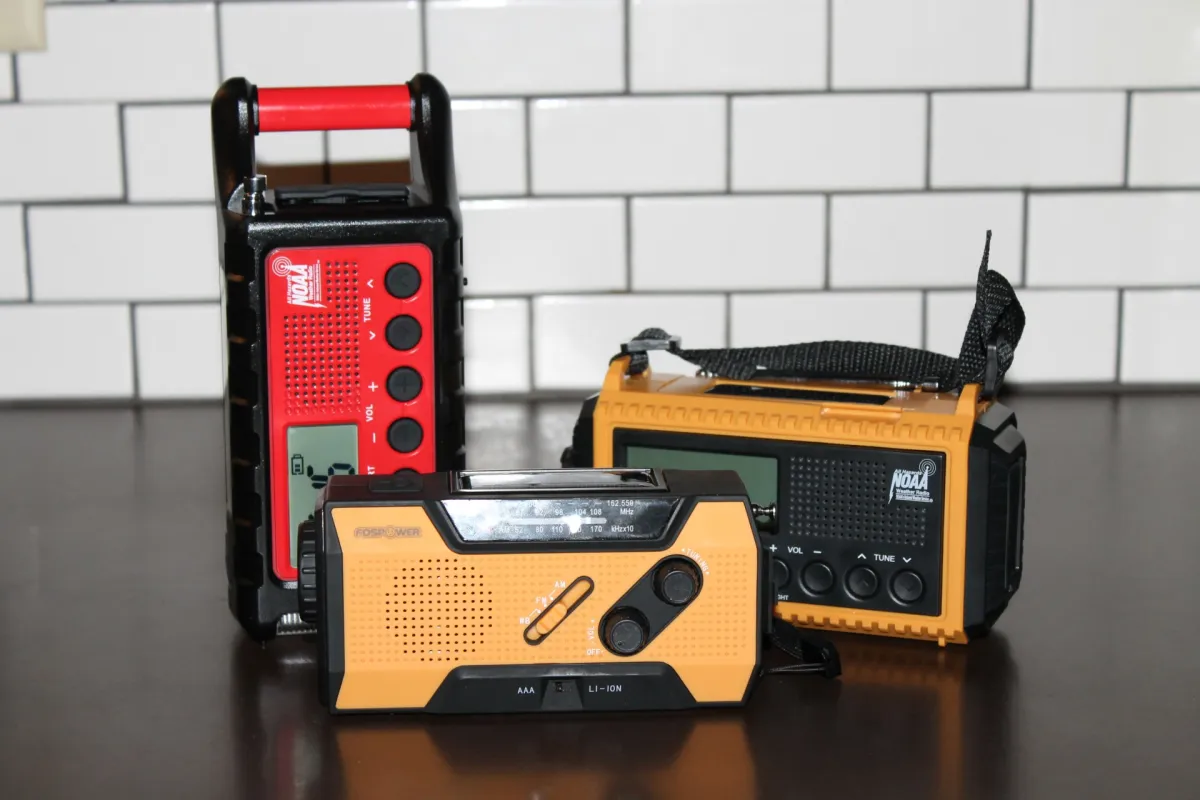
How to choose best hand crank emergency radio
A good emergency radio should match the way you expect to use it. Start with alert behavior and reception, then consider battery capacity, charging recovery, controls, lighting, and protection from rain.
Weather alert behavior
NOAA reception is not the same as automatic NOAA alerts. A manually tuned radio requires you to select and monitor the local weather station, while an alert-capable model can notify you when a warning arrives. Raynic and both Roxicosly models list automatic alert functions. Leaton explicitly lacks S.A.M.E. technology, and the other models do not list automatic alerts in the supplied details.
A radio that receives weather broadcasts is useful, but a radio that can wake you for a warning is useful when you are not listening.
Battery capacity
Battery capacity affects how long the radio can run and how much emergency phone charging it can provide. The 12000mAh Mesqool, OnLyee, and Roxicosly models have the largest listed reserves, followed by the 10000mAh Leaton and Nitigo. The 2000mAh Emgykit and FosPower are easier to carry, but they are better treated as small emergency boosts than as household power reserves.
Charging options
Hand cranking is a fallback, not a pleasant daily charging method. Look for a rechargeable battery that can be topped up through USB or USB-C, then use the solar panel and crank when normal charging is unavailable. The Mesqool, OnLyee, and Roxicosly radios stand out for their large solar panels. Raynic adds a particularly broad set of options, including AAA batteries.
Controls and display
Large knobs and tactile buttons are valuable during a blackout, especially for older users or anyone wearing gloves. Leaton is explicit about its large controls, while Mesqool also lists a large tuning knob and clear labels. Raynic takes the opposite approach with digital tuning and an LCD that shows the frequency and battery level. Neither approach is automatically better, but the choice affects how quickly you can find a station under stress.
Lighting and signaling
A focused flashlight helps with walking and repairs, while a reading lamp is better for a room, tent, or table. Mesqool, OnLyee, Leaton, and the Roxicosly models provide both types of light. An SOS alarm can attract attention, but check whether the radio's output and controls suit your surroundings before relying on it as a signaling device.
Size and weather resistance
A compact radio is easier to store and carry, but larger radios generally have more room for batteries, speakers, controls, and lights. Emgykit is the clear lightweight option. OnLyee, Leaton, and both Roxicosly models list IPX6 water resistance, while Raynic lists IPX3. If your kit may see heavy rain, the protection rating deserves as much attention as the battery.
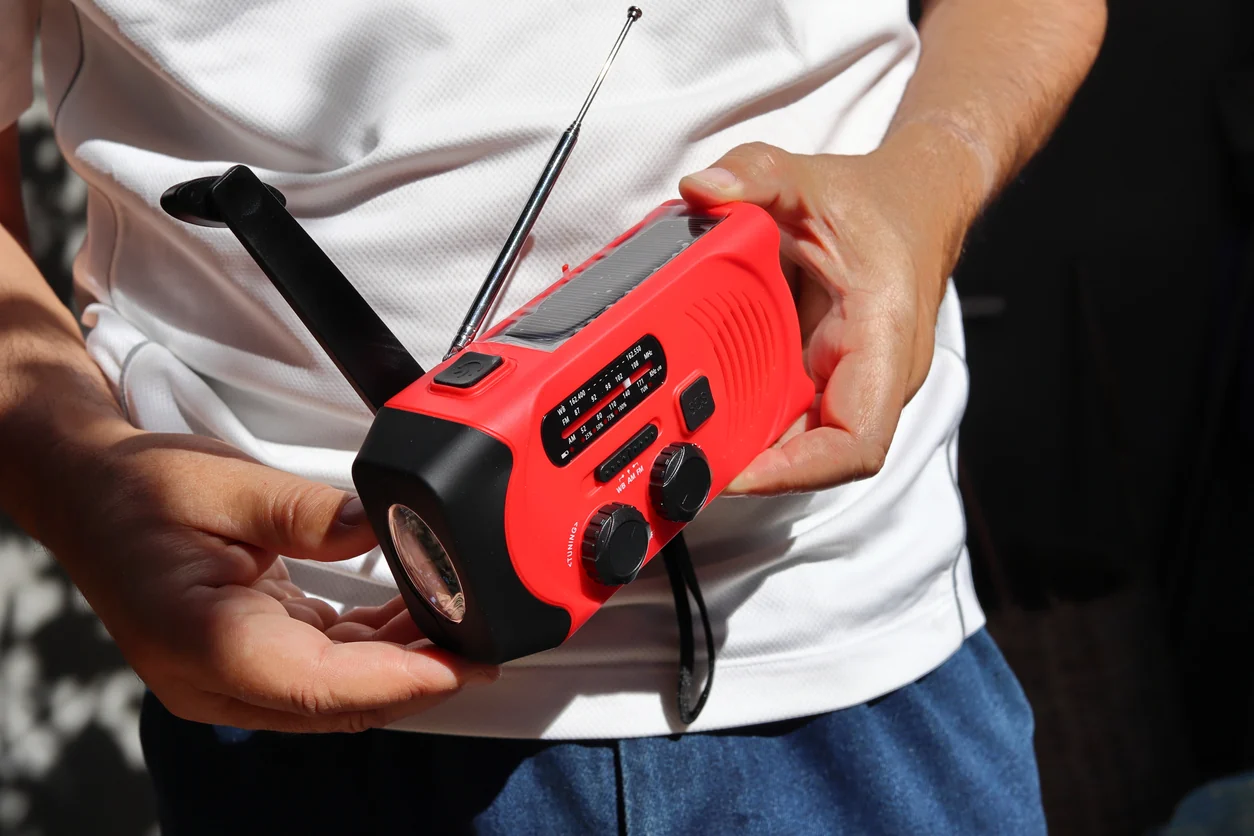
Frequently asked questions
Do hand crank emergency radios work without electricity?
Yes. A hand crank generator can provide enough energy to run the radio, lights, or emergency functions when the internal battery is depleted. The crank is intended for short-term recovery, so fully charge the radio before storing it and use the crank as a backup.
Is a solar panel enough to charge an emergency radio?
Solar charging can extend runtime, but it depends heavily on direct sunlight and panel size. The Mesqool, OnLyee, and Roxicosly models list large 8500mm² panels, while several smaller radios do not specify panel dimensions. Solar is most useful as a maintenance and backup method, not as the only charging plan.
What is the difference between NOAA reception and automatic NOAA alerts?
NOAA reception lets you listen to weather broadcasts after tuning to the appropriate station. Automatic alert support allows the radio to monitor for warnings and sound an alarm when an alert is issued. Raynic and both Roxicosly radios list automatic alert features, while Leaton requires manual tuning.
Can these radios charge a phone?
Several can provide emergency USB phone charging. Battery size affects how useful that function will be, so the 10000mAh and 12000mAh models have more reserve than the 2000mAh Emgykit and FosPower. Phone charging can also consume power needed for radio listening and lighting.
Which emergency radio is easiest to carry?
The Emgykit is the lightest and smallest model in this group at about 0.51 pounds and close to 5.16 inches long. FosPower is also relatively compact at about 0.925 pounds. Larger radios such as Mesqool and the Roxicosly models offer more battery and lighting but are better suited to a home or vehicle kit.
Do any of these radios support headphones?
Raynic and Nitigo list a 3.5mm headphone jack. That is useful when one person needs to monitor weather information without disturbing others. The other supplied product details do not list headphone support.
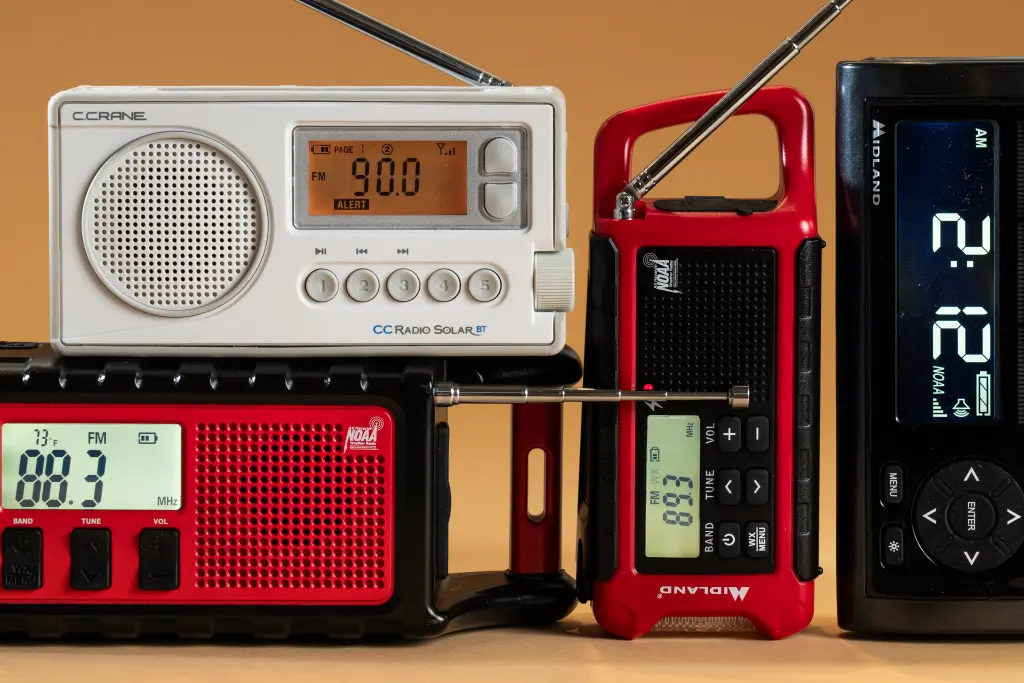
The bottom line
The Best hand crank emergency radio for most households is the Mesqool Solar Emergency Radio. It combines a 12000mAh battery, a large solar panel, NOAA, AM and FM reception, two useful types of light, and controls that should remain approachable in a dark room. The Raynic Emergency Radio is the better specialist pick when automatic alerts, digital tuning, shortwave, and headphone listening matter more than maximum battery capacity.
For a compact kit, choose the Emgykit Compact Radio. For severe-weather monitoring with automatic warnings and a large battery, the Roxicosly Black Emergency Radio is the stronger fit, while the Leaton 10000mAh Emergency Radio is the better option for large controls and manual operation.
If you are undecided, choose Mesqool for a home kit, Raynic for automatic alert monitoring, or Emgykit when every ounce matters.
As an Amazon Associate we earn from qualifying purchases.