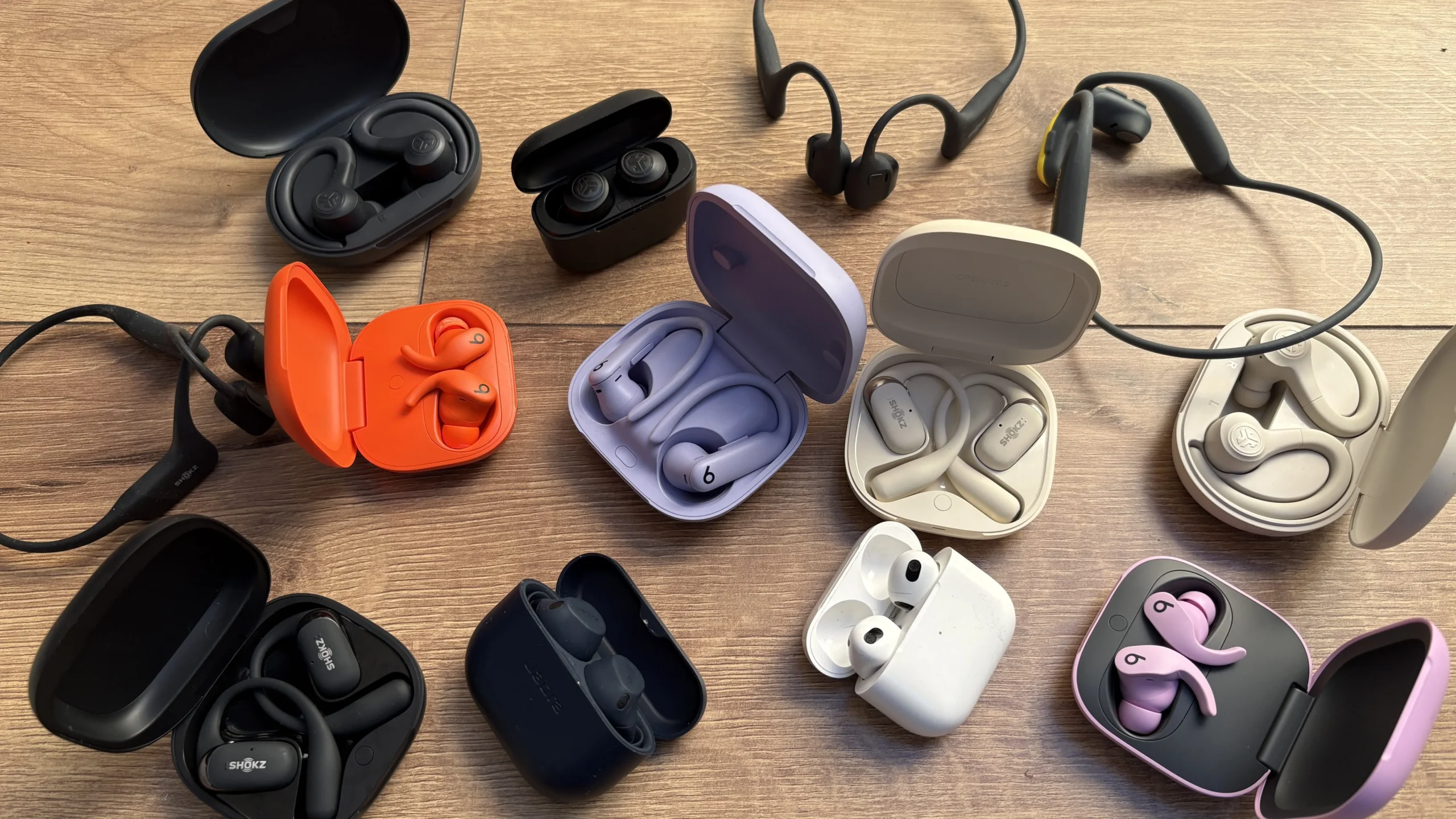

A good running headset should stay put when your pace changes, let you hear what is happening around you, and survive sweat without turning every mile into a fit adjustment. That is a harder combination to find than a strong-sounding pair of everyday headphones.
Our guide to the Best headphones for running covers open-ear bone-conduction designs, ear-hook earbuds, noise-cancelling models, and one lightweight on-ear option. We ranked them by how well their real features suit outdoor movement, with particular attention to stability, awareness, controls, battery life, and weather resistance.
SHOKZ OpenRun Pro 2 is our top pick, while the list also includes the more adjustable Soundcore V20i, rugged JBL Endurance Peak 4, secure Beats Powerbeats Pro 2, and several simpler choices for shorter workouts.
Comparison table
| # | Product | Award | Design | Battery | Protection | Best for |
|---|---|---|---|---|---|---|
| 1 | SHOKZ OpenRun Pro 2 Black | Best overall | Open-ear bone conduction and air conduction | 12 hours | Not specified | Outdoor runners who want awareness and stronger sound |
| 2 | Soundcore V20i | Best adjustable fit | Open-ear true wireless earbuds | Not specified | Not specified | Everyday runs and flexible ear positioning |
| 3 | JBL Endurance Peak 4 | Best weather resistance | Ear-hook earbuds with ANC | 12 hours, up to 48 with case | IP68 | Rainy, sandy, and demanding outdoor workouts |
| 4 | Beats Powerbeats Pro 2 | Best for training features | ANC earbuds with secure earhooks | Up to 45 hours with case | IPX4 | Runners who want heart-rate tracking |
| 5 | PSIER Bone Conduction | Best lightweight bone conduction | Open-ear bone conduction | 10 hours | IPX5 | Long runs with minimal ear pressure |
| 6 | bmani Sport Earbuds | Best physical controls | Ear-hook wireless earbuds | 8 hours per earbud, up to 80 with case | Sweat and dust resistant | Runners who dislike touch controls |
| 7 | GNMN V7 | Best sealed-ear battery | ANC earbuds with earhooks | 8 hours, up to 96 with case | IPX7 | Wet workouts and long charging intervals |
| 8 | Beats Solo 4 | Best on-ear sound | Wireless on-ear headphones | Up to 50 hours | Not specified | Treadmill running and everyday listening |
| 9 | Beats Flex | Best neckband design | Magnetic wireless neckband earbuds | 12 hours | Not specified | Short runs and runners who want a hard-to-lose pair |
| 10 | SHOKZ OpenRun Pro 2 Orange | Best bright-color option | Open-ear bone conduction and air conduction | 12 hours | Not specified | Runners who want the OpenRun Pro 2 in orange |
1. SHOKZ OpenRun Pro 2 Black: Best Overall

Pros
- Open-ear design preserves awareness of traffic and nearby runners
- Combines bone conduction and air conduction for fuller sound
- Secure memory-wire frame and ear hooks
- 12-hour listening time
- Wind-resistant call microphones
Cons
- Open-ear audio cannot isolate a loud gym or traffic
- No water-resistance rating is listed
- More specialized than a conventional pair of earbuds
Best for: outdoor runners who want awareness without giving up as much bass and detail.
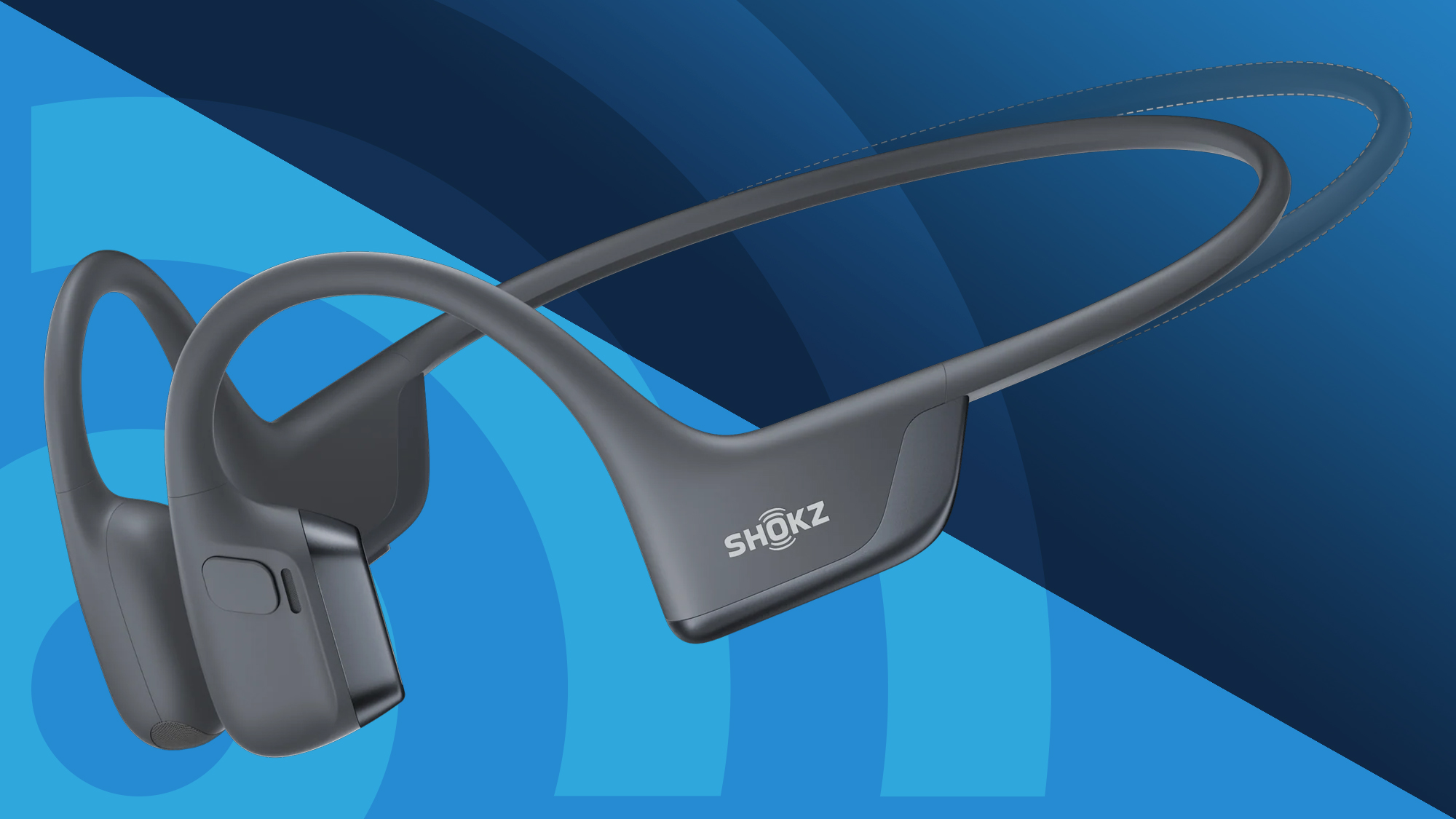
The SHOKZ OpenRun Pro 2 Black is the pair we would reach for first before a road run. It sits outside the ear canal, so you can hear approaching vehicles, conversations, and the general sound of the street while music plays. The frame uses a memory-wire alloy with ergonomic ear hooks, giving it a more anchored feel than loose open earbuds.
Its most important audio feature is the dual-driver approach. Bone conduction handles the clear high-frequency detail, while air conduction adds deeper bass, making this a more satisfying listen than a basic bone-conduction headset. The 12-hour battery is enough for several training sessions between charges, and dedicated EQ modes in the SHOKZ app let you switch between the standard presentation and a louder mode for noisier surroundings.
Calls are better considered here than on many sport headsets. The two wind-resistant microphones use AI noise reduction, with the product claiming filtering for background noise and wind up to 15 miles per hour. That does not make a breezy roadside call studio-clean, but it addresses a common weakness of open designs. The light frame also weighs about 0.067 pounds, so it should not feel like a substantial addition to a running kit.
Compared with the PSIER Bone Conduction, the OpenRun Pro 2 has the more ambitious audio system and a better-developed app experience. The Soundcore V20i is easier to position because each side can rotate independently, but it does not offer the same stated 12-hour runtime or dual conduction design. The weakness is that open-ear listening still loses impact in heavy traffic, and the listing does not provide a water-resistance rating. Choose it for road and park running, but skip it if you need strong isolation or a clearly documented wet-weather rating.
2. Soundcore V20i: Best Adjustable Fit

Pros
- Four positions let you tune the fit around your ears
- Open design keeps outside sounds audible
- Large 16mm drivers and BassUp processing
- Four microphones with AI call enhancement
- Tune-synced customizable lights
Cons
- Battery duration is not specified in the product details
- No water-resistance rating is listed
- Open-ear playback remains vulnerable to surrounding noise
Best for: runners who find fixed open-ear frames uncomfortable or difficult to stabilize.
The Soundcore V20i takes a different route from the SHOKZ models. These are true wireless open-ear earbuds, with each earbud positioned outside the canal and four adjustable positions to help you find a secure angle. That adjustability matters for running because ear shape varies widely, and a rigid one-piece frame can press in the wrong place.
Sound comes from 16mm drivers with titanium-coated domes and BassUp processing. The larger driver size is intended to give bass more presence without sealing the ear, though the open construction still means low frequencies will be less forceful beside traffic or wind than they would be with sealed earbuds. The design keeps the ear canals unobstructed, which is useful on long runs when heat and pressure become irritating.
Calls are a particular strength on paper. Four microphones and an AI algorithm are included to improve voice clarity, so this is better suited to switching between a run and a call than a basic sport headset. The product also has customizable lights that sync with music. Those lights are decorative rather than training-focused, but they give the V20i a distinctive character for evening routines.
The listed weight is about 0.168 pounds, and the compact dimensions make the V20i less visually imposing than a full band-style headset. It is a more flexible fit than the SHOKZ OpenRun Pro 2 Black, while the SHOKZ has the clearer published battery figure and more explicit running-oriented frame. If you want the deepest sound or a defined wet-weather rating, look at the JBL Endurance Peak 4 or GNMN V7 instead. The V20i is the better answer for runners who value adjustability and awareness above isolation.
3. JBL Endurance Peak 4: Best Weather Resistance

Pros
- IP68 water and dust protection
- TwistLock fit with adaptable silicone ear hooks
- Adaptive noise cancelling and Smart Ambient modes
- Multipoint connection
- Strong case battery capacity
Cons
- Ear hooks and charging case are bulkier than open-ear options
- ANC reduces the listed earbud runtime
- Noise isolation is not ideal for every outdoor route
Best for: runners who train in rain, dust, heat, and other difficult conditions.
The JBL Endurance Peak 4 is built for runners who do not want to check the forecast before every workout. Its IP68 rating covers both water and dust, and the product specifically calls out sweat, rain, salt water, sand, humidity, and high temperatures. That makes it the most convincing choice here for harsh outdoor use, at least from the protection information provided.
The fit combines JBL’s TwistLock design with oval tubes and liquid silicone ear hooks that use memory wire. The hooks take the impact of movement, while the in-ear tips create the seal needed for bass and noise control. Four noise-sensing microphones support adaptive noise cancelling, and Smart Ambient can bring outside sound back in when you need to hear a cyclist, crossing signal, or conversation.
Audio comes from 10mm dynamic drivers with JBL Pure Bass and spatial sound. The companion app adds Personi-fi 3.0, which adapts the sound after a hearing test, plus activity-oriented modes and a relaxation mode. Battery life is stated as 12 hours from the earbuds with ANC off, with three additional full charges in the case for up to 48 hours total. With ANC on, the listing specifies eight hours from the earbuds and 24 hours from the case.
The six-microphone call system is unusually extensive for a running model, with three microphones per earbud and wind reduction. Multipoint lets you connect to two Bluetooth devices, while Google Fast Pair, Audio Switch, and Finder are useful additions for Android users. The trade-off is physical bulk compared with the Soundcore V20i, and the sealed fit is less naturally aware than the SHOKZ OpenRun Pro 2 Black. Pick JBL when durability and environmental control matter more than the lightest possible design.
4. Beats Powerbeats Pro 2: Best for Training Features

Pros
- Secure earhooks with five ear tip sizes
- Active noise cancelling and Transparency mode
- Built-in heart-rate monitoring
- Up to 45 hours with the charging case
- Wireless Qi charging case
- Strong Apple and Android feature support
Cons
- IPX4 protection is less robust than JBL’s IP68 rating
- ANC is not suitable for every roadside run
- Charging cable is sold separately
Best for: runners who want workout metrics and a highly secure sealed fit.
The Beats Powerbeats Pro 2 is the most feature-heavy training headset in this group. Its earhooks wrap around the ears rather than relying on friction alone, and five ear tip sizes make it easier to establish a stable acoustic seal. Beats says the nickel-titanium hooks are 20 percent lighter than the previous generation, with enough flexibility to accommodate different ear shapes.
The headline feature is heart-rate monitoring from sensors in the earbuds. The sensors pulse more than 100 times per second, allowing compatible training apps to capture heart-rate data without a chest strap or watch. That is a meaningful distinction for runners who want workout information without adding another wearable. The earbuds also offer ANC for gym noise and Transparency mode for outside awareness.
Battery life reaches up to 45 hours with the charging case, and a five-minute Fast Fuel charge provides up to 1.5 hours of playback. The case supports Qi wireless charging. Adaptive EQ adjusts frequencies to the listening environment, while Apple users get Personalized Spatial Audio with head tracking. Android owners still get feature access through the Beats app, including controls, heart-rate monitoring, and battery widgets.
The six microphones, Class 1 Bluetooth, tactile controls, and separate volume rockers make this a capable all-purpose training pair. It is more secure and more data-oriented than the JBL Endurance Peak 4, but JBL has the much stronger IP68 protection rating. The SHOKZ OpenRun Pro 2 Black is a safer fit for traffic-heavy routes because it leaves the ears open. Choose Powerbeats Pro 2 for structured training, gym sessions, and runners who want heart-rate data built into the listening gear.
5. PSIER Bone Conduction: Best Lightweight Bone Conduction
Pros
- 23g frame is notably light
- Open-ear design supports situational awareness
- Bluetooth 6.0 with stated 33-foot range
- Up to 10 hours of listening
- IPX5 sweat and rain protection
- Adjustable strap and flexible memory-titanium frame
Cons
- Sound leakage reduction is stated as up to 50 percent, not eliminated
- No independent earbud adjustment
- App features may be unnecessary for a simple running setup
Best for: runners who want a light open-ear frame with a documented water-resistance rating.
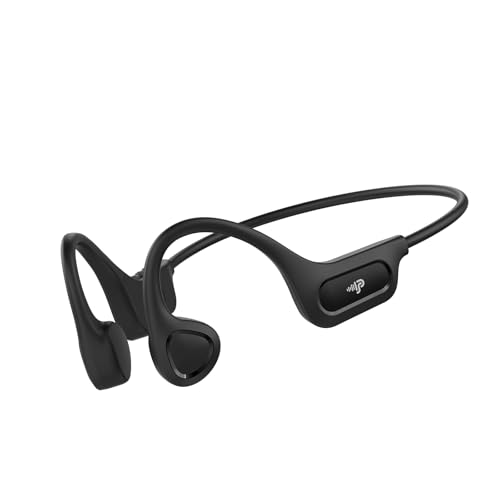
The first thing to know about the PSIER Bone Conduction is its weight. At 23 grams, it is designed to disappear during a long session, and the open construction leaves the ear canals free. A flexible memory-titanium frame contours around the head, while the included adjustable strap helps accommodate different head sizes.
The product uses 13mm bone-conduction drivers with 90dB sensitivity and Bluetooth 6.0. The stated 60ms low latency should help keep video and audio aligned, while the stated range reaches 33 feet. For running, the more useful detail is the 10-hour battery at 50 percent volume. USB-C charging takes about two hours from empty to full, and the product lists 200 hours of standby time.
PSIER also includes an IPX5 rating, which covers sweat and rain but does not make the headphones suitable for underwater use. Its acoustic sealing is claimed to reduce leakage by up to 50 percent. That could make music less intrusive to nearby people, though an open-ear headset will still behave differently from sealed earbuds. The Boean app adds adjustable EQ presets and an AI music-creation feature, but the EQ is the part that matters most for a runner.
Compared with the SHOKZ OpenRun Pro 2 Black, PSIER is lighter and has a clearer published protection rating, while SHOKZ offers the more advanced dual bone and air conduction system and a longer stated battery. The Soundcore V20i offers more fit positions, but its product details do not list a battery duration or water rating. Skip PSIER if you need powerful isolation. For a light, open frame on ordinary road and trail runs, it is a sensible alternative to the top SHOKZ.
6. bmani Sport Earbuds: Best Physical Controls

Pros
- Physical main and volume buttons
- Adjustable ear hooks
- 10mm dynamic drivers
- Up to 8 hours per earbud
- LED case shows charging status and remaining case power
Cons
- Protection is described generally rather than given an IP rating
- No active noise cancelling
- Alternating earbud use is needed for the full stated case runtime
Best for: runners who want dependable button presses instead of touch gestures.
The bmani Sport Earbuds are straightforward running earbuds with one unusually practical choice: physical controls. Separate main and volume buttons are easier to operate with sweaty fingers than touch surfaces, and they reduce accidental commands when adjusting a hat, sunglasses, or hair. That alone will appeal to runners who have had touch controls misfire mid-stride.
Each earbud is rated for up to eight hours, while the charging case is described as extending alternating use to 80 hours. The case has a digital display for its remaining power and separate LED indicators for the earbuds. This is not as sophisticated as the battery reporting in a phone app, but it makes the charging state visible without guesswork.
The sound comes from 10mm dynamic drivers, with the product describing crisp treble and rich bass. Dual microphones handle calls, and automatic reconnection begins when the earbuds are removed from the case. The adjustable hooks are intended to follow different ear shapes and hold the earbuds in place during running, cycling, and gym work.
The protection language is limited to a sweat-resistant and dust-resistant build, with no IP number provided. That puts it behind the JBL Endurance Peak 4, whose IP68 rating is much easier to interpret, and behind the GNMN V7, which lists IPX7. It also lacks the open awareness of the PSIER Bone Conduction. Still, the bmani pair makes sense for runners who value tactile controls, a visible case display, and a secure hook design over advanced noise modes.
7. GNMN V7: Best Sealed-Ear Battery

Pros
- IPX7 water protection
- ANC and Transparency modes
- Ear hooks and customizable ear tips
- Up to 96 hours with the case
- 16mm drivers
- Dual LED battery display
Cons
- Product spelling and naming are inconsistent
- ANC can reduce awareness near traffic
- No exact noise-reduction performance beyond the stated 45dB claim
Best for: runners who want sealed earbuds, ear hooks, and long intervals between charging.
The GNMN V7 combines three features that are useful for demanding workouts: ear hooks, noise control, and a substantial charging case. Soft hooks and customizable ear tips are meant to keep the earbuds stable during intense movement, while the in-ear seal helps preserve bass and reduce outside sound.
Its ANC mode is described as offering up to 45dB of noise reduction, and Transparency mode lets sound from the surroundings back in. That choice is important for running. ANC can make a treadmill or gym more comfortable, but Transparency is the mode to use when you need environmental awareness outdoors. The earbuds can also be used independently in single-ear mode.
Battery life is stated as eight hours from a full charge and up to 96 hours with the case. A dual LED display shows the battery levels of the case and earbuds, and USB-C fast charging is included. The 16mm drivers are intended to provide clear highs, rich mids, and punchy bass, with a large acoustic chamber designed to limit sound loss.
The IPX7 rating is a meaningful advantage over models that only mention sweat resistance, though it does not make the GNMN an open-ear headset. The JBL Endurance Peak 4 is a stronger choice if dust protection, multipoint connection, and more developed app features matter. The Beats Powerbeats Pro 2 has better-known training tools, including heart-rate monitoring. Pick GNMN for sealed sound, ear-hook stability, and a case that can go a long time between charges, but use Transparency mode on roads.
8. Beats Solo 4: Best On-Ear Sound

Pros
- Up to 50 hours of battery life
- Lightweight on-ear construction
- Adjustable ear cups and flex-grip headband
- Personalized Spatial Audio with head tracking
- USB-C and 3.5mm audio support
- Apple and Android compatibility
Cons
- On-ear pads can become warm during longer runs
- No water-resistance rating is listed
- Headband is less secure than ear hooks during vigorous outdoor running
Best for: treadmill sessions and runners who also want headphones for everyday listening.
The Beats Solo 4 is the odd fit in a list dominated by sport earbuds, but it has a clear use case. On a treadmill, indoor track, or stationary bike, the on-ear design provides a more familiar music experience than bone conduction. The flex-grip headband and adjustable, angled ear cups are designed to stay stable without the pressure of a sealed in-ear tip.
Battery life is the headline. The Solo 4 can run for up to 50 hours, and a 10-minute Fast Fuel charge adds up to five hours of playback. It also supports high-resolution lossless audio through USB-C or a 3.5mm cable, which gives it a broader role than a workout-only headset. Class 1 Bluetooth is included for extended range and fewer dropouts.
The acoustic design uses updated drivers for Beats sound, while Personalized Spatial Audio with dynamic head tracking adds a more immersive presentation on compatible devices. One-touch pairing works with both iOS and Android, and a built-in microphone handles calls and voice assistants. The listed weight is 1.16 pounds for the product package dimensions, but the headphones themselves are described as ultralight in the product features, so the exact wearable weight is not provided.
For a better sense of the sound trade-off, how workout headphones handle music and movement is a useful comparison point. The Solo 4 is less secure and less weather-ready than the Beats Powerbeats Pro 2, and it cannot match the outside awareness of the SHOKZ OpenRun Pro 2 Black. Choose it for indoor running and general listening. Outdoor runners who encounter rain or sharp pace changes should use a hook or open-ear design instead.
9. Beats Flex: Best Neckband Design
Pros
- Magnetic earbuds pause and restart playback
- Flex-Form cable rests around the neck
- Four ear tip options
- 12 hours of listening time
- Apple W1 chip and Class 1 Bluetooth
- Works with Apple and Android devices
Cons
- Neckband can bounce during faster running
- No water-resistance rating is listed
- Wired connection between the earbuds limits the open feel of true wireless models
Best for: casual runners who want earbuds that are difficult to drop or misplace.
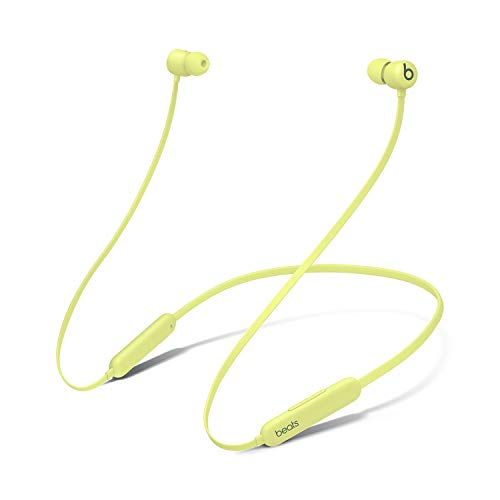
The Beats Flex keeps the two earbuds connected by a flexible neckband. That is an old-fashioned arrangement compared with true wireless models, but it solves a real running annoyance: if an earbud loosens, it stays attached instead of landing on the pavement. The magnetic earpieces also pause playback when joined and restart when separated.
Four ear tip options help create a comfortable fit, while the Flex-Form cable is intended to rest around the neck without excessive pressure. Battery life reaches 12 hours, which is plenty for repeated shorter sessions. On-device controls handle music, calls, and voice assistants, so basic adjustments do not require reaching for a phone.
The Apple W1 chip supports easy pairing within the Apple ecosystem, and Class 1 Bluetooth is intended to provide extended range with fewer dropouts. Android compatibility is included, so this is not limited to iPhone owners. The built-in microphone includes wind reduction for voice clarity, though the neckband itself can pick up movement noise if it shifts against clothing.
Compared with the bmani Sport Earbuds, the Flex is easier to keep track of but lacks ear hooks. The PSIER Bone Conduction is lighter around the ears and keeps the canals open, while the Flex provides a more conventional earbud sound. Because no water-resistance rating is listed, it is best reserved for dry conditions. It suits runners who want a simple, connected pair for short routes and do not want to worry about dropping individual earbuds.
10. SHOKZ OpenRun Pro 2 Orange: Best Bright-Color Option

Pros
- Open-ear awareness for outdoor routes
- Dual bone-conduction and air-conduction drivers
- 12-hour battery
- Memory-wire frame and ergonomic ear hooks
- EQ modes in the SHOKZ app
- Wind-resistant microphones
Cons
- No water-resistance rating is listed
- Open-ear audio is less forceful in loud areas
- The orange version has the same fit limitations as the black version
Best for: runners who want the OpenRun Pro 2 design in a more visible color.
The SHOKZ OpenRun Pro 2 Orange is functionally the same model as the black OpenRun Pro 2 in this list. Its reason to exist here is visibility and color preference, not a different feature set. The open-ear frame keeps the ear canals clear, and the memory-wire construction with ergonomic hooks is designed to stay stable during running and cycling.
The dual-driver system mixes bone conduction for detail with air conduction for bass. That gives it more musical weight than a basic bone-conduction design, although it cannot create the sealed, quiet presentation of the Beats Powerbeats Pro 2 or JBL Endurance Peak 4. The battery is rated for 12 hours, and the SHOKZ app provides Classic and Volume Boost modes for different listening environments.
Wind-resistant microphones and AI noise reduction support calls, with the product claiming background filtering for wind speeds up to 15 miles per hour. The frame is light enough for extended use, and the open arrangement avoids the damp, plugged-up feeling some runners get from in-ear tips. It is also easy to hear a conversation without removing the headset.
The orange version shares the black model’s missing water-resistance specification, so it is not the pick for rain-focused training. If you are comparing it with the PSIER Bone Conduction, SHOKZ has the stronger dual-driver design and an equal 12-hour battery compared with PSIER’s 10 hours, while PSIER provides the clearer IPX5 rating. Select this version when awareness is the priority and a brighter finish helps you keep track of the headset in a crowded gym bag.
How to choose best headphones for running
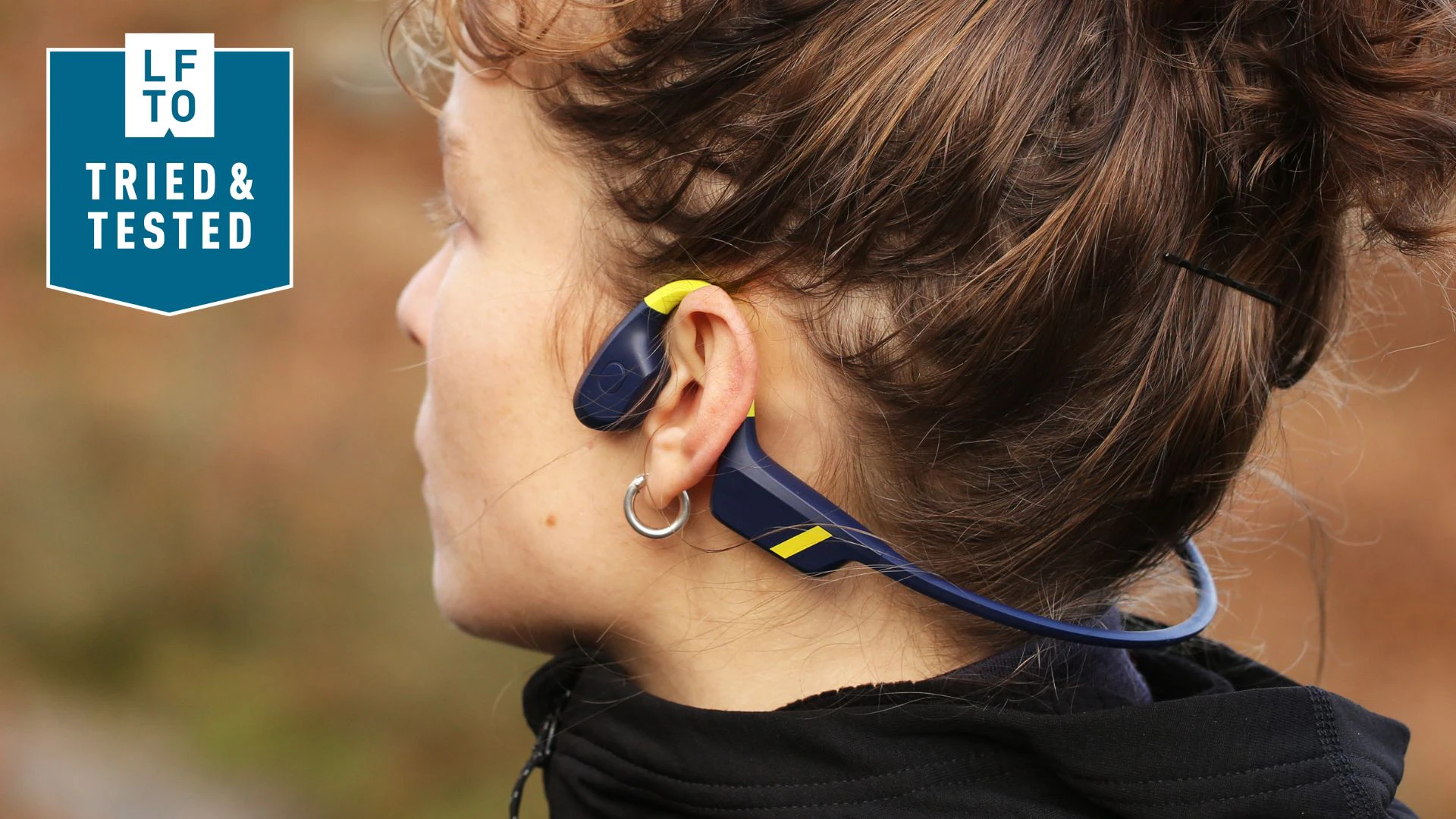
The right running headphones depend less on maximum loudness than on how securely and safely they work at your usual pace and location.
Fit and stability
Running creates repeated impact, so a headset that feels fine while standing can loosen after several miles. Ear hooks, memory-wire frames, adjustable open-ear arms, and multiple ear tip sizes all provide different ways to control movement.
The Beats Powerbeats Pro 2, JBL Endurance Peak 4, bmani Sport Earbuds, and GNMN V7 use hooks. The Soundcore V20i offers four positions, while the SHOKZ models use a one-piece frame. A good fit should remain stable without painful pressure, and you should not need to push the earbuds back into place during a run.
Open awareness
Open-ear and bone-conduction headphones leave the ear canal open, making it easier to hear traffic, cyclists, and other runners. They are usually the safer style for routes with changing surroundings, but music can sound thinner when wind, traffic, or loud gym equipment competes with it.
Transparency modes offer a compromise on sealed earbuds. The JBL Endurance Peak 4, Beats Powerbeats Pro 2, and GNMN V7 provide ways to bring outside sound back in. For more detail on the trade-offs between different workout designs, the fit and awareness choices that matter during exercise are worth considering before you buy.
For road running, a clear view of your surroundings is more useful than the strongest possible isolation.
Water and dust protection
Sweat resistance and waterproofing are not interchangeable. An IPX5 rating, as listed for the PSIER model, is different from the IPX7 rating on GNMN V7, and JBL’s IP68 rating also addresses dust. Models without an IP rating should not be treated as suitable for heavy rain simply because they are marketed for sport.
Think about your actual route. Indoor treadmill runners can prioritize fit and controls, while trail and road runners who train through changing weather should favor a clearly stated rating.
Battery and charging
Battery figures can describe one charge, total case capacity, or a mixture of both. JBL lists 12 hours from the earbuds and up to 48 hours with the case when ANC is off. GNMN lists eight hours from the earbuds and up to 96 hours with its case. Beats Flex and SHOKZ OpenRun Pro 2 each list 12 hours for the headphones themselves.
A case display is useful if you want to check charge quickly, while Fast Fuel can rescue a pair before a run. The Beats Solo 4 has the longest stated single-device runtime at up to 50 hours, but its on-ear construction makes it less suitable for wet outdoor running.
Sound control and call quality
Physical controls are easier to use when your hands are wet or you are wearing gloves. The bmani Sport Earbuds and Beats Powerbeats Pro 2 use tactile controls, while app-based EQ appears on PSIER, SHOKZ, and JBL models.
Microphone count does not guarantee perfect calls, but wind reduction and voice-processing features help outdoors. JBL lists six microphones, Beats Powerbeats Pro 2 lists six, and Soundcore V20i uses four microphones with AI enhancement. If calls are part of your training routine, those details matter more than decorative features.
Frequently asked questions
Are open-ear headphones safer for running?
Open-ear headphones let you hear more of your surroundings than sealed earbuds, which can be useful near traffic, cyclists, and other pedestrians. They do not make a route automatically safe, and high volume can still mask environmental sounds. The SHOKZ OpenRun Pro 2 and PSIER Bone Conduction are the clearest examples in this list.
Should runners use noise cancelling?
Noise cancelling is useful on treadmills, in gyms, and on indoor tracks where constant background noise is distracting. Outdoors, Transparency mode or an open-ear design is usually more appropriate because ANC can reduce awareness of nearby sounds. The JBL Endurance Peak 4, Beats Powerbeats Pro 2, and GNMN V7 all provide a way to manage outside sound.
Do bone-conduction headphones have strong bass?
Bone-conduction headphones generally have a different bass presentation from sealed earbuds because they do not create an in-ear acoustic seal. SHOKZ OpenRun Pro 2 adds air-conduction drivers to improve bass, while PSIER uses large 13mm bone-conduction drivers. The result is more open and situationally aware, but not as isolated or forceful as a sealed pair.
What keeps running earbuds from falling out?
Ear hooks, a properly sized ear tip, and an adjustable frame are the main solutions. Beats Powerbeats Pro 2 uses earhooks with five tip sizes, JBL uses TwistLock and silicone hooks, and GNMN adds soft hooks with customizable tips. A secure fit should be firm without creating pressure points.
How much battery life is enough for running?
For most individual runs, eight to 12 hours on the earbuds is enough for repeated sessions before charging. A charging case becomes more useful when you travel or train several days in a row. The Beats Solo 4 has the longest listed single-device runtime, while JBL, GNMN, bmani, and Beats Flex emphasize extended case or neckband use.
Can running headphones handle rain and sweat?
Only models with a suitable protection rating should be chosen specifically for wet conditions. JBL Endurance Peak 4 lists IP68, GNMN V7 lists IPX7, PSIER lists IPX5, and Beats Powerbeats Pro 2 lists IPX4. The SHOKZ, Beats Solo 4, Beats Flex, Soundcore V20i, and bmani listings do not provide a comparable IP number.
The bottom line
The Best headphones for running in this group are the SHOKZ OpenRun Pro 2 Black for outdoor awareness and balanced open-ear sound, and the JBL Endurance Peak 4 for runners who need robust weather protection and adjustable noise control. SHOKZ is the more natural road-running choice, while JBL is better suited to wet, dusty, and changing environments.
Choose the Beats Powerbeats Pro 2 if heart-rate monitoring, ANC, and a locked-in ear-hook fit matter more than open awareness. For a lighter open-ear alternative, the PSIER Bone Conduction is compelling, and the Soundcore V20i is the easiest to fine-tune around different ears.
If you are undecided, choose an open-ear model for roads and an ear-hook model with Transparency mode for mixed indoor and outdoor training.
As an Amazon Associate we earn from qualifying purchases.