
A dead battery, a missing headphone jack, and a noisy commute can turn a simple listening session into a series of compromises. The right pair depends less on a long feature list than on how you actually listen, where you use them, and whether wireless convenience matters.
Our Best headphones under $100 picks include wireless models with active noise cancellation, lightweight on-ear sets, wired headphones for laptops and tablets, and compact earbuds with USB-C. The Soundcore Q20i is the one we'd choose for most people, while the rest cover more specific needs.
Comparison table
| # | Product | Award | Type | Battery | Connection | Best for |
|---|---|---|---|---|---|---|
| 1 | Soundcore Q20i Black | Best overall | Over-ear ANC | 40 hours with ANC, 60 hours normal | Bluetooth 5.0, AUX | Commuters and remote workers |
| 2 | Sony WH-CH520 | Best wireless on-ear | On-ear wireless | Up to 50 hours | Bluetooth | Lightweight everyday listening |
| 3 | Soundcore Q20i White | Best for travel | Over-ear ANC | 40 hours with ANC | Bluetooth, AUX | Flights and busy offices |
| 4 | Apple EarPods USB-C | Best USB-C wired earbuds | Wired earbuds | Not applicable | USB-C | Phones, tablets, and calls |
| 5 | JBL Tune 510BT | Best bass-focused wireless | On-ear wireless | Up to 40 hours | Bluetooth | Bass-led casual listening |
| 6 | BERIBES 65H Bluetooth Headphones | Best battery life | Over-ear wireless | Up to 65 hours | Bluetooth 6.0, 3.5mm | Long listening sessions |
| 7 | Botesty Sound Wired Headphones | Best wired over-ear | Over-ear wired | Not applicable | 3.5mm | School and travel |
| 8 | Sony ZX110 Black | Best compact wired | On-ear wired | Not applicable | 3.5mm | Portable wired listening |
| 9 | Sony ZX110 White | Best lightweight wired | On-ear wired | Not applicable | 3.5mm | Simple everyday use |
| 10 | Koss KPH7 | Best ultra-light option | On-ear wired | Not applicable | 3.5mm | Basic portable listening |
1. Soundcore Q20i Black: Best Overall

Pros
- Hybrid active noise cancellation with four microphones
- Up to 40 hours with ANC enabled
- App-based EQ with 22 presets
- Dual-device Bluetooth connections
- Wired Hi-Res audio through AUX
Cons
- Transparency and ANC features are unavailable in AUX mode
- Over-ear design is less compact than on-ear alternatives
- No wireless listening when the battery is empty without switching to the cable
Best for: commuters, travelers, and home workers who want one versatile wireless pair.
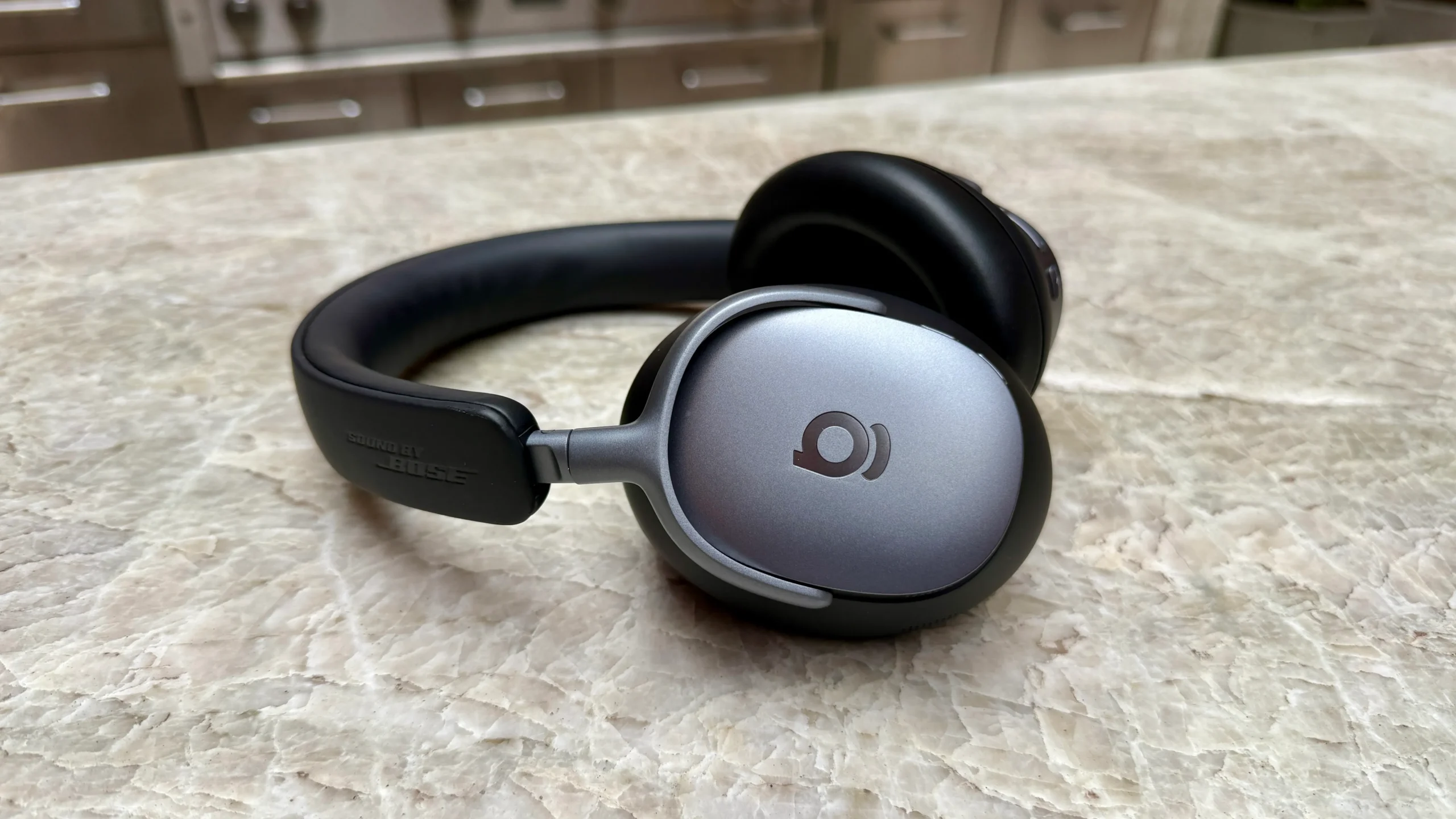
The Soundcore Q20i Black is the easiest pair to recommend because it solves several common headphone problems at once. The over-ear fit gives it a more enclosed feel than the Sony WH-CH520 or JBL Tune 510BT, and its hybrid active noise cancellation makes a meaningful difference around steady background sound. It is the pair we'd keep nearby for a commute, a workday, and an evening playlist without changing headphones between each activity.
Its four microphones support the noise-control system, which can filter background sound in offices, on crowded transport, and on busy streets. ANC listening lasts up to 40 hours, while normal mode stretches that figure to 60 hours. A five-minute charge adds four hours of listening, a useful detail when a last-minute departure leaves little time to prepare. The headphones weigh 0.57 pounds, so they are reasonably easy to wear for long periods, though the larger earcups are less discreet than an on-ear design.
Sound is more adjustable here than on most of the simpler picks. The 40mm dynamic drivers use BassUp in wireless mode, and the Soundcore app offers 22 EQ presets plus manual customization. You can also move between ANC, Normal, and Transparency modes, or turn on built-in white noise. Bluetooth 5.0 supports dual connections, letting the headphones stay linked to a phone and laptop at once. The included AUX route adds Hi-Res certified audio and keeps listening possible when wireless features are not the priority.
The important limitation is that ANC, Transparency, and the app do not apply in AUX mode. This is also not the lightest design in the roundup, and listeners who dislike a warm, bass-forward presentation may need to adjust the EQ. The black Q20i beats the Sony WH-CH520 when isolation and over-ear comfort matter, while the Sony remains the better fit for people who want a lighter headset on the ears.
Choose the Soundcore Q20i Black if you want the broadest set of useful features in one pair. Its combination of noise control, long battery life, dual-device switching, and adjustable sound gives it the strongest claim as our lead pick.
2. Sony WH-CH520: Best Wireless On-Ear

Pros
- Up to 50 hours of battery life
- Lightweight 0.324-pound construction
- Multipoint connection for two devices
- EQ customization in the Sony app
- Built-in microphone for hands-free calls
Cons
- On-ear fit offers less isolation than the Soundcore Q20i
- No active noise cancellation
- Wireless-only feature set in the listed product details
Best for: listeners who want a light wireless headset for everyday music and calls.
The Sony WH-CH520 feels like the practical counterpoint to the Soundcore Q20i. It does not try to block the world or surround the ears with a large enclosure. Instead, it keeps the build light, the controls straightforward, and the battery unusually generous for an on-ear pair. The 0.324-pound weight is one of its clearest advantages when you wear headphones for several hours at a time.
Battery life reaches up to 50 hours, with quick charging through the included USB Type-C cable. That makes it a strong choice for a work bag or a long trip where charging opportunities may be irregular. The swivel earcups and adjustable headband help with packing and fit, while the cushioned pads are intended for all-day use. The on-ear layout is less isolating than the over-ear Q20i, but it also feels less enclosing for listeners who dislike sealed earcups.
Sony includes several useful wireless conveniences. The Headphones Connect app can customize the EQ, and DSEE is intended to improve the quality of compressed music files. Multipoint pairing lets the headphones remain connected to two devices, which is useful when moving between a computer and phone. A built-in microphone handles hands-free calls, and Fast Pair can help locate the headphones through Google's Find My Device app if they go missing.
The weakness is the same trait that makes this headset comfortable and portable: the on-ear design leaves more of the outside world audible. There is no active noise cancellation, so it is not the pick for a loud plane or a bustling train. The trade-off involved in moving from wired to wireless listening is especially clear here, since the Sony gains freedom from a cable but cannot provide the passive enclosure of the Soundcore.
Pick the Sony WH-CH520 when low weight and long wireless listening matter more than maximum isolation. It is a better everyday companion than the heavier Q20i for people who spend most of their time in quieter rooms.
3. Soundcore Q20i White: Best for Travel

Pros
- Hybrid ANC uses internal and external microphones
- 40 hours of listening with ANC
- Transparency mode for announcements and street awareness
- Simultaneous connection to two devices
- AUX support with Hi-Res certified audio
Cons
- ANC and Transparency do not work in AUX mode
- Larger over-ear profile takes more room than on-ear sets
- Sound may need EQ adjustment for different music styles
Best for: travelers who need noise control, long battery life, and a wired fallback.
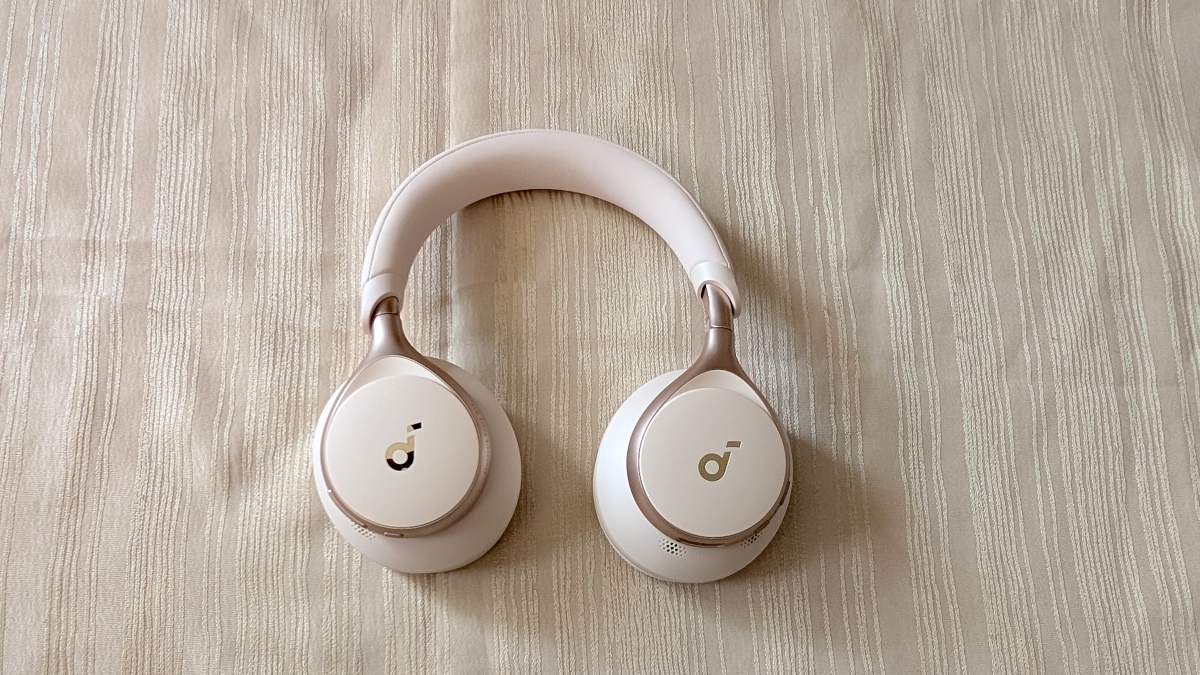
The Soundcore Q20i White is the same capable Q20i platform as the black version, but it earns a separate place here because the travel use case is so strong. Its over-ear cups create a quieter starting point than the Sony on-ear models, and hybrid ANC uses two internal and two external microphones to reduce outside noise. That makes a long ride or flight easier to manage without pushing the volume as hard.
With ANC active, the battery lasts up to 40 hours. Normal mode extends listening to 60 hours, and a five-minute charge provides four more hours. Those figures make the Q20i more forgiving than the JBL Tune 510BT when charging is easy to forget. The 0.54-pound weight is close to the black version, and the standard-size construction should be easier to wear for extended periods than many heavier over-ear headphones.
The app gives travelers control over more than just volume. There are 22 EQ presets, manual EQ adjustment, and three listening modes: ANC, Normal, and Transparency. Transparency is useful when you need to hear a station announcement or speak with someone without removing the headphones. Dual-device connectivity allows a laptop and phone to remain linked, while the AUX cable provides a wired route and Hi-Res certified audio when a compatible source calls for it.
The color does not change the core behavior, so the choice between this model and the black Q20i is purely about finish. The more meaningful decision is between Q20i and the Sony WH-CH520. Sony is lighter and more open, but the Q20i is the clear choice when isolation and flexible listening modes matter. Its main weakness is the limitation in AUX mode: plugging in the cable turns off the active listening features.
The Soundcore Q20i White suits a traveler who wants one pair for aircraft noise, hotel rooms, phone calls, and casual music. Choose it over the black model only if the white finish better suits your gear.
4. Apple EarPods USB-C: Best USB-C Wired Earbuds

Pros
- USB-C connection works with compatible devices
- Built-in remote controls playback, calls, and volume
- Integrated microphone for calls and voice commands
- Very light 0.07-pound design
- No battery to recharge
Cons
- Only works with devices that have a USB-C port
- Earbud fit is less isolating than over-ear headphones
- Wired design limits movement compared with Bluetooth models
Best for: USB-C phone and tablet users who want simple wired controls.
The Apple EarPods USB-C are the most immediately convenient option for someone whose device has a USB-C port and whose main concern is avoiding wireless charging. They are small, light, and ready the moment they are plugged in. At 0.07 pounds, they are dramatically lighter than every over-ear and on-ear model here, and there is no battery indicator to monitor before leaving home.
The earbud shape follows the geometry of the ear rather than using traditional circular buds. That can feel more natural for listeners who do not like silicone tips, though fit remains personal and the design cannot seal out the surroundings like the Soundcore Q20i. The speakers are engineered to maximize sound output and minimize sound loss, according to the product details. That makes them suitable for everyday music, video, and spoken audio, but they are not the right tool for strong isolation.
The built-in remote is the real reason to choose these EarPods. A pinch of the cord controls music and video playback, adjusts volume, and answers or ends calls. The integrated microphone is designed to capture speech for phone calls, FaceTime, and Siri. Those controls are more direct than reaching for a phone, while the USB-C connection avoids Bluetooth pairing.
Compatibility is narrow by design. The EarPods work with devices that have a USB-C port, so shoppers should check the source before ordering. They also give up the freedom of the Sony WH-CH520 and the noise control of either Soundcore Q20i. For people choosing between earbuds and larger headphones, our guide to how much outside sound different earbud shapes let through can help clarify the fit decision.
Choose the Apple EarPods USB-C for a phone, tablet, or other compatible device when reliable controls and zero charging are more important than wireless freedom. They are a focused wired option, not a universal replacement for over-ear headphones.
5. JBL Tune 510BT: Best Bass-Focused Wireless

Pros
- JBL Pure Bass sound
- Up to 40 hours of battery life
- Two-device wireless switching
- Five-minute charge adds two hours
- Foldable design with adjustable headband
Cons
- No active noise cancellation
- On-ear construction provides limited isolation
- Fit may require careful headband adjustment
Best for: listeners who want simple Bluetooth headphones with a bass-led sound.
The JBL Tune 510BT keeps its appeal uncomplicated. It is an on-ear Bluetooth headset built around JBL's Pure Bass sound, with physical controls on the earcup and a foldable frame. If your playlists lean toward pop, hip-hop, electronic music, or other bass-forward recordings, this is a more obvious fit than the neutral simplicity of the Sony ZX110.
Wireless playback lasts up to 40 hours, and a full recharge takes as little as two hours through the USB-C cable. A five-minute top-up adds two hours of listening, which is enough to get through a commute or a workout when the battery is nearly empty. The adjustable headband is designed to fit a range of head sizes, and the compact folding shape is easier to pack than an over-ear ANC model.
The Tune 510BT can switch between two devices, so a phone call does not require manually disconnecting from a computer. A microphone on the earcup handles hands-free calls, and a button can activate Siri or Google Assistant. The controls are more accessible than phone-based playback, especially when the headphones are used while walking or working.
Bass is also the central limitation. The product information emphasizes JBL Pure Bass rather than an EQ system or multiple sound modes, so listeners who want to reshape the presentation have less control than they get with the Soundcore Q20i or Sony WH-CH520. There is no ANC, and the on-ear pads let more environmental sound through. JBL also notes that a tight fit may need adjustment, so headband comfort deserves attention.
The JBL Tune 510BT is the right pick for a listener who wants familiar bass character, simple buttons, and long wireless sessions. Choose the Sony WH-CH520 for a lighter, more app-adjustable experience, or the Soundcore Q20i when reducing outside noise is the priority.
6. BERIBES 65H Bluetooth Headphones: Best Battery Life

Pros
- Up to 65 hours of wireless playtime
- Six selectable EQ modes
- Bluetooth 6.0 with two-device connection
- 3.5mm wired mode when powered off
- Lightweight 0.38-pound construction
Cons
- No active noise cancellation listed
- Sound controls depend on preset EQ modes
- Product details give limited information about call performance
Best for: listeners who want long battery life and multiple sound presets.
The BERIBES 65H Bluetooth Headphones are built for people who dislike charging. Their headline feature is endurance, but the more interesting detail is how much flexibility they provide around that long runtime. They are over-ear, foldable headphones with a 3.5mm cable included, so they can continue working as wired headphones when the battery is depleted.
The claimed playtime reaches 65 hours, and standby time is listed at more than 950 hours after a full charge. The 0.38-pound construction keeps them lighter than the Soundcore Q20i, despite using an over-ear design. Adjustable headband and memory protein earmuffs are intended to support long sessions, though the fit and seal will still depend on the listener's head shape.
Sound comes from dual 40mm dynamic drivers, with six EQ modes for balanced sound, stronger bass, and mid-treble emphasis. That is a more hands-on approach than the JBL Tune 510BT, which presents its Pure Bass tuning without a listed set of listening modes. Bluetooth 6.0 is listed with a transmission range of up to 33 feet, and two devices can connect at once.
The missing feature is active noise cancellation. The over-ear cups may provide some passive separation, but the BERIBES cannot match either Q20i model in a noisy commute. Call performance is supported by a microphone, yet the product details provide less explanation than Sony, JBL, or Apple. The supplied 3.5mm audio cable and Type-C charging cable are useful, but the controls and connection behavior are less fully documented.
Choose the BERIBES 65H Bluetooth Headphones if battery life is your first concern and you want EQ presets plus a wired fallback. Skip them for frequent flights or offices where active noise reduction matters more than endurance.
7. Botesty Sound Wired Headphones: Best Wired Over-Ear

Pros
- Foldable over-ear design
- 4.9-foot braided nylon cable
- Adjustable headband and rotating earcups
- Built-in microphone
- Compatible with many 3.5mm devices
Cons
- Volume must be adjusted on the connected device
- Microphone support varies by desktop and laptop
- Devices without a 3.5mm jack need an adapter
Best for: students and travelers who need a simple wired over-ear headset.
The Botesty Sound Wired Headphones are the practical school and travel pair in this list. They use a familiar 3.5mm plug, fold for storage, and provide an over-ear fit without asking the user to pair or charge anything. The beige finish is distinctive, but the more useful details are the long braided cable and the rotating earcups.
The cable measures 4.9 feet, giving enough reach for a tablet, laptop, or seatback device without keeping the source pressed against your body. Its nylon braid is intended to resist tangling, while the curved plug is designed for flexibility. The 90-degree rotating earcups and adjustable headband help the headphones fit different users, including adults and children. Memory protein cushions are included for longer listening sessions.
A built-in microphone supports calls, online learning, and meetings. The product notes that the microphone is not supported on desktops and certain laptops, so compatibility needs to be checked before relying on it for school or work. The multifunction button is available on phones and tablets, but volume cannot be adjusted from the headphones. That is a meaningful difference from the Apple EarPods and wireless models with earcup controls.
The Botesty is also less compact than the Sony ZX110 and much less light than the Koss KPH7. Its over-ear design can be more comfortable and immersive, but it takes up more room in a bag. Devices without a 3.5mm headphone jack need a conversion adapter, another point to confirm before buying.
The Botesty Sound Wired Headphones make sense when a student, child, or traveler needs a cable that reaches comfortably and a foldable over-ear frame. Pick them over the Sony options for over-ear coverage, but choose Apple EarPods for USB-C convenience and more dependable device-side controls.
8. Sony ZX110 Black: Best Compact Wired

Pros
- Lightweight 0.57-pound construction
- Swiveling earcups for storage
- Closed-back on-ear design
- 3.5mm L-shaped plug
- 12 Hz to 22 kHz frequency range
Cons
- Wired connection only
- No built-in microphone listed
- On-ear pads provide less isolation than over-ear cups
Best for: portable wired listening from devices with a 3.5mm jack.
The Sony ZX110 Black is the uncomplicated headphone most people picture when they need a spare pair. It has a cable, a 3.5mm plug, padded on-ear cups, and no wireless setup to troubleshoot. The swiveling earcups make it easier to store in a bag, which is the feature we'd value most when carrying it as a backup for travel or school.
Sony uses 1.38-inch neodymium dynamic drivers, and the listed frequency range runs from 12 Hz to 22 kHz. Those specifications suggest room for bass, midrange, and treble across common music, though frequency range alone does not predict the character of the sound. The closed-back construction helps keep the presentation contained and offers some separation from nearby noise.
The cable is 3.94 feet long and ends in an L-shaped 3.5mm stereo mini plug. Its 24-ohm impedance should suit common portable sources, while the 0.57-pound weight keeps the headphones manageable for daily carry. The cushioned earpads and adjustable headband make them more comfortable than the barebones Koss KPH7 for many listeners, although the on-ear fit still puts pressure directly around the ears.
There is no microphone listed for this version, so it is not the right choice for frequent calls or online classes. It also cannot match the freedom of the Sony WH-CH520 or the isolation of the Soundcore Q20i. The white Sony ZX110 uses the same basic design and specifications, so the decision between them comes down to finish rather than performance.
Choose the Sony ZX110 Black for straightforward wired listening, especially when compact storage matters. It remains a more complete everyday headphone than the Koss, while the Botesty is better if you specifically want an over-ear fit and a microphone.
9. Sony ZX110 White: Best Lightweight Wired

Pros
- 0.2625-pound listed weight
- Swiveling earcups
- Cushioned closed-back design
- 12 Hz to 22 kHz frequency range
- L-shaped 3.5mm plug
Cons
- No wireless connection
- No microphone listed
- On-ear fit does not isolate like over-ear headphones
Best for: listeners who want an especially light wired Sony headphone.
The Sony ZX110 White is the lighter-listed version of the ZX110 design, and that distinction makes it worth separating from the black entry. The product information lists its weight at 0.2625 pounds, substantially below the black model's listed 0.57 pounds. The basic listening experience remains familiar: a wired on-ear frame, cushioned pads, closed-back construction, and swiveling cups for easier storage.
The 1.38-inch neodymium dynamic drivers are designed for a punchy response, while the stated frequency range runs from 12 Hz to 22 kHz. This is a sensible setup for everyday music, podcasts, and video from a device with a headphone jack. The on-ear cups are less enclosing than the Botesty Sound model, but they also avoid the bulk of a full over-ear headset.
The L-shaped 3.5mm plug is convenient for portable devices, and the earcups swivel when the headphones go into a bag. Sony lists the design as a travel-friendly option, with cushioned earpads intended to improve comfort. There is no battery to maintain, and no pairing process, so the headphones are ready whenever a compatible source is available.
The compromise is a lack of modern extras. There is no microphone listed, no wireless mode, and no app-based sound adjustment. The Koss KPH7 is even lighter at 0.18 pounds, but the Sony offers a closed-back design and a wider stated frequency range. The black ZX110 is the more direct comparison, and its listed weight makes the white version the preferable choice for readers who are especially sensitive to headphone weight.
The Sony ZX110 White is a good fit for a light, no-fuss wired setup. Choose it for portable music and video, but look to Apple EarPods if your device has only USB-C or to the Sony WH-CH520 if you need wireless listening.
10. Koss KPH7: Best Ultra-Light Option

Pros
- Very light 0.18-pound construction
- Adjustable headband
- 3.5mm plug
- Four-foot cord
- Foldable portable design
Cons
- Narrower listed frequency range of 80 Hz to 18, 000 Hz
- No microphone listed
- Basic on-ear construction
Best for: simple portable listening where minimum weight matters.
The Koss KPH7 is the stripped-down choice for anyone who wants headphones that barely register in a bag. Its listed weight is 0.18 pounds, lighter than the Sony ZX110 models and far below the wireless over-ear options. The adjustable headband keeps the fit simple, while the four-foot cord gives enough reach for a portable player, tablet, or laptop with a 3.5mm jack.
Koss lists a deep bass response and a frequency range of 80 Hz to 18, 000 Hz. That range is narrower than the Sony ZX110's stated 12 Hz to 22 kHz range, so the Sony is the more convincing pick for listeners who want a broader stated response. The KPH7 is better understood as a basic portable headset rather than a finely adjustable music system.
Its 32-ohm impedance and 91 dB SPL sensitivity are included in the product details, along with the 3.5mm plug. Those figures describe how the headphones interact with a source, but they do not add controls or wireless features. There is no microphone listed, so calls and online meetings are outside its strongest use case.
The KPH7's low weight is also tied to its simpler construction. It lacks the closed-back feel of the Sony ZX110 and the over-ear cushion of the Botesty Sound headphones. The Sony WH-CH520 is the better pick when long wireless listening and phone calls matter, while the KPH7 remains appealing for a spare pair that can be carried without much thought.
Choose the Koss KPH7 if the lightest possible wired option is the goal. Readers who want stronger isolation, a microphone, or a fuller set of controls should move up to another pick in this roundup.
How to choose best headphones under $100
The right pair starts with the way you listen. Focus on the connection, fit, battery demands, and control features that match your devices and surroundings.
Connection type
Wired headphones avoid charging and pairing, but the plug must match the source. The Sony ZX110, Botesty Sound, and Koss KPH7 use 3.5mm connections, while the Apple EarPods use USB-C. Wireless models are easier to use while moving, and multipoint Bluetooth is useful if you switch between a phone and computer.
Check your device before choosing. A phone without a 3.5mm jack needs an adapter for the wired Sony, Botesty, or Koss models. A USB-C pair is not automatically compatible with every device that has a charging port, so the source requirements still matter.
Earbud, on-ear, and over-ear fit
Earbuds are the smallest option and leave the ears open to more surrounding sound. On-ear headphones such as the Sony WH-CH520 and JBL Tune 510BT sit on the ear, keeping the design light but offering less passive isolation. Over-ear models surround the ears and generally create a more enclosed listening space.
Fit affects comfort more than a specification sheet can show. A listener who dislikes pressure around the ears may prefer earbuds, while someone who wants a stronger barrier against nearby sound should consider the Soundcore Q20i. Adjustable headbands, swiveling cups, and cushioned pads all help, but none can replace a good personal fit.
Noise control
Active noise cancellation uses microphones and signal processing to reduce outside sound. It is most useful against consistent noise from transport, air conditioning, or an office, rather than sudden voices and nearby conversations. In this group, the Soundcore Q20i models are the only picks with listed hybrid ANC.
Transparency mode serves the opposite purpose by mixing outside sound into the listening experience. It is useful for announcements and quick conversations. If you mostly listen at home or in quiet classrooms, ANC may matter less than comfort and sound control.
Buy noise cancellation for the places you listen, not for a feature you will leave switched off.
Battery and charging
Wireless battery life determines how often the headphones need attention. The BERIBES model lists up to 65 hours, the Sony WH-CH520 up to 50 hours, and the Soundcore Q20i up to 40 hours with ANC enabled. JBL lists up to 40 hours, with a five-minute charge adding two hours.
Quick charging is useful when short preparation windows are common. A wired model avoids this entire decision, but it requires a compatible port and keeps the source physically connected. Consider both your longest listening session and how often you remember to charge devices.
Calls and controls
A built-in microphone is important for phone calls, video meetings, and voice assistants. Apple EarPods provide an inline remote for volume, playback, calls, and Siri, while Sony, JBL, Soundcore, and BERIBES list microphones for hands-free calling. The Botesty Sound microphone has compatibility limits on desktops and some laptops.
Physical controls are useful when the phone is in a pocket or bag. App-based EQ and listening modes add flexibility, but they also make the experience more dependent on a companion app. The Soundcore Q20i and Sony WH-CH520 offer the most adjustment in this group.
Frequently asked questions
Are wired or wireless headphones better for daily use?
Wired headphones are ready without charging and can be a better fit for desks, tablets, and backup use. Wireless models are more convenient when walking or moving around, especially when they support multipoint connections. The better choice depends on your device ports and how much cable freedom matters.
Do any of these headphones have active noise cancellation?
The Soundcore Q20i Black and Soundcore Q20i White list hybrid active noise cancellation. They also include Normal and Transparency modes. The Sony, JBL, BERIBES, Botesty Sound, Apple, and Koss models do not list active noise cancellation.
Which pair is best for a phone without a headphone jack?
The Apple EarPods USB-C are designed for devices with a USB-C port. The 3.5mm models require a compatible headphone jack or an adapter. Wireless models such as the Sony WH-CH520, JBL Tune 510BT, and Soundcore Q20i avoid both wired connector issues.
Can the Soundcore Q20i connect to two devices?
Yes. Both Q20i entries list dual-device connections, allowing a phone and laptop to remain connected at the same time. Audio can switch between them when a call or other device activity needs attention.
Which headphones have the longest listed battery life?
The BERIBES 65H Bluetooth Headphones list up to 65 hours of playtime. The Sony WH-CH520 lists up to 50 hours, while the Soundcore Q20i lists 40 hours with ANC and 60 hours in Normal mode. Wired headphones do not need battery power.
Are the Sony ZX110 Black and White models different?
The two Sony ZX110 entries use the same basic wired on-ear design, including swiveling cups, cushioned pads, 3.5mm connection, and the stated 12 Hz to 22 kHz range. The listed weight differs, with the white model shown as lighter. The finish is the most visible distinction.
The bottom line
The Soundcore Q20i Black is the strongest all-round answer for Best headphones under $100 because it combines ANC, long battery life, dual-device Bluetooth, app EQ, Transparency mode, and AUX listening. The white Q20i offers the same capabilities for shoppers who prefer that finish.
For a lighter wireless design, choose the Sony WH-CH520. For a wired connection, the Apple EarPods USB-C are the cleanest choice for compatible devices, while the Sony ZX110 White is a sensible 3.5mm option.
If you are undecided, choose the Q20i for noisy places, the WH-CH520 for lightweight wireless listening, and the EarPods when your device has USB-C.
As an Amazon Associate we earn from qualifying purchases.