

Hearing loss becomes especially frustrating when voices blur into background noise, the television keeps getting louder, or tiny controls make an aid harder to use than it should be. The Best hearing aids in this roundup take different approaches to that problem, from simple analog dials to touchscreen control cases and app-based adjustments.
We focused on the details that matter day to day: speech processing, fit, controls, charging, listening modes, and how much fuss each device introduces. These are OTC hearing aids and hearing amplifiers, so readers with sudden, severe, or one-sided hearing loss should seek professional medical advice before choosing one.
Audien Atom One is our top pick for its unusually straightforward controls, discreet fit, rechargeable design, and guided setup. The rest of the list ranges from long-runtime models to Bluetooth-enabled devices and options built around multiple listening modes.
Comparison table
| # | Product | Award | Battery | Controls or modes | Best for |
|---|---|---|---|---|---|
| 1 | Flaygo 16-Channel | Best overall | 80 hours with case | One button, four levels | Discreet daily use |
| 2 | Audien Atom One | Best simple controls | 24 hours | Analog volume and frequency dials | First-time OTC users |
| 3 | ZHANZHSQL 100H | Best battery display | 100 hours with case | One button, five levels | Travel and extended use |
| 4 | Audien Atom X | Best touchscreen case | 48+ hours | Four modes, touchscreen case | Hands-free streaming |
| 5 | Oricle Standard 2.0 | Best completely-in-canal design | 60 hours | Five levels, memory | A stable, discreet fit |
| 6 | Karthus 16-Channel | Best two-mode design | 80+ hours with case | Quiet and noise-canceling modes | Switching between home and crowds |
| 7 | ZHANZHSQL RIC | Best RIC-style fit | 100 hours with case | Five levels, volume memory | Direct, natural sound |
| 8 | FVUH In-Ear | Best mode flexibility | 35 hours stated in title | Three modes, buttons | Simple mode switching |
| 9 | Villear OTC | Best behind-the-ear comfort | Over 24 hours per charge | Four modes, one button | TV and conversation listening |
| 10 | ELEHEAR Beyond Pro | Best Bluetooth features | 20 hours per charge | App, soundscapes, translation | Connected users |
1. Flaygo 16-Channel: Best Overall

Pros
- 16-channel digital processing
- Small 3.5g design
- USB-C charging and 80-hour case total
- One-button operation
- Whistling suppression
Cons
- Only four volume levels
- No Bluetooth or app control
- The feature set is less adjustable than Audien Atom X
Best for: someone who wants a discreet rechargeable aid with simple physical controls.
The Flaygo 16-Channel is the most balanced model here. It keeps the physical design small and the operation uncomplicated, while still including the processing features that make a noticeable difference in ordinary conversations. The 3.5g weight should help reduce the feeling of having something lodged in the ear, especially for people who wear glasses or need an aid through a long day.
Its built-in 16-channel digital chip is intended to separate speech from background sound, and the whistling suppression system addresses one of the most irritating problems with poorly fitted amplifiers. That does not make it a substitute for a professionally adjusted device, but it gives the Flaygo a more considered approach than a simple volume booster. Four volume levels are available through the one-button control, which is easy to understand but not as finely adjustable as the five-level systems on the ZHANZHSQL 100H and Oricle Standard 2.0.
Battery handling is another strength. A two-hour USB-C charge is claimed to provide up to 80 hours through the charging box, with the case able to recharge the aids four times. That is the sort of arrangement that works well for someone who wants to put the aids away at night and avoid thinking about them again for several days. The charging case also makes the pair easier to keep together than loose hearing devices.
The limitation is customization. There are no dedicated listening modes, smartphone controls, or Bluetooth features, so the Flaygo cannot match the Audien Atom X for flexibility or the ELEHEAR Beyond Pro for connected features. Its four volume steps may also feel broad to users who need very precise adjustment. Anyone with more complicated hearing needs should be cautious about relying on a generic preset.
For straightforward daily conversations, television, and family gatherings, the Flaygo has the right priorities. It is the one we would keep for a user who wants discreet hardware, long case endurance, and minimal setup rather than a feature-heavy interface.
2. Audien Atom One: Best Simple Controls

Pros
- Separate volume and frequency dials
- No app or tiny buttons
- Three dome sizes
- Automatic power on and off
- Guided setup session included
Cons
- One-day battery per charge
- Analog controls require deliberate adjustment
- No Bluetooth streaming
Best for: a first-time user who wants tactile controls and a discreet in-ear design.
The Audien Atom One makes a persuasive case for keeping hearing aids simple. Instead of asking the user to learn an app or locate a button, it uses two analog dials. One controls volume and the other controls frequency, with clockwise and counterclockwise movement providing an immediately understandable adjustment. That is particularly useful for someone who finds touchscreens or small electronic buttons difficult to operate.
The nano design sits discreetly in the ear, and the included small, medium, and large silicone domes give the user a better chance of finding a secure seal. Because the design is universal, either aid can fit either ear. A pull wire is included for removal, which is a small but practical detail for an aid that sits inside the canal. Fit matters as much as the electronics here, since an imperfect seal can contribute to feedback and an unnatural sound.
Battery life is rated at 24 hours on a charge, with the USB-C dock taking about three hours to recharge the devices. The automatic behavior is welcome: removing an aid from the dock powers it on, while returning it powers it off. That removes one more tiny switch from the daily routine, though the one-day runtime means the charging dock needs to become part of the nightly habit.
The Atom One is less adaptable than the Flaygo 16-Channel in its battery system and less capable than the Audien Atom X in modes and streaming. It also does not provide Bluetooth, so phone calls, music, and television audio remain ordinary acoustic listening. Its advantage is the control scheme. The frequency dial gives users a direct way to shape the sound without navigating menus, and the included Audien Sound Check session can help with initial insertion and adjustment.
The user who should choose this model is someone who values a tactile, low-tech experience above extended battery life. It is also a sensible option for a first pair, provided the wearer has mild to moderate hearing loss and is comfortable making small manual adjustments.
3. ZHANZHSQL 100H: Best Battery Display
Pros
- 16-channel processing
- 25 hours of stated single-use battery
- 100 hours with charging case
- LED battery display
- Five volume levels
Cons
- No app or Bluetooth controls
- One-button operation limits customization
- Brand and model naming are not especially clear
Best for: users who want long case endurance and a visible battery status.
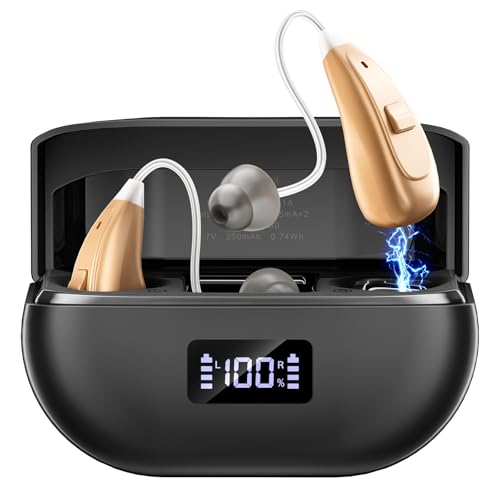
The ZHANZHSQL 100H is built around stamina. The product claims more than 25 hours of use from the aids themselves and more than 100 hours when the charging case is included. That makes it a useful candidate for travel, spare-room storage, or anyone who does not want a daily charging routine. The case has an LED display, so the remaining power is easier to check than on models that offer no visible battery readout.
Sound processing uses 16 channels, with the stated goal of reducing background noise while emphasizing speech. Channel-based processing can be useful when the listening environment changes because it gives the device more frequency areas to work with than a basic amplifier. The listing also describes automatic memory, which keeps the previous volume setting after power cycling. That is a better experience than starting from an unknown level every time.
The controls are deliberately senior-friendly. A single button provides five volume levels, and the automatic memory preserves the selected setting. The aids are claimed to weigh 3 grams each and use medical-grade materials with a sculpted in-ear shape. Those details point toward a discreet fit, though comfort will still depend on the ear tip and the individual ear canal.
Compared with the Audien Atom One, this model offers more volume steps and substantially more case endurance, but it gives up the Atom One's separate frequency dial and guided Audien setup. The Flaygo 16-Channel has a similarly simple operating idea and a smaller stated weight, while the ZHANZHSQL 100H counters with its LED display and longer claimed total runtime. None of these models offers the connected control found on the ELEHEAR Beyond Pro.
The main weakness is the absence of deeper adjustment. Five volume levels are helpful, but they cannot compensate for every hearing profile, and the one-button interface cannot provide the same degree of control as a frequency dial or smartphone app. Choose it when battery visibility and long periods away from an outlet matter more than fine personalization.
4. Audien Atom X: Best Touchscreen Case

Pros
- Touchscreen charging case
- Four listening modes
- Bluetooth streaming
- Automatic power control
- Audien guided setup
Cons
- Case-based interface must stay nearby
- 48+ hour total battery claim is lower than several rivals
- More features mean more setup
Best for: users who want streaming and multiple presets without relying on a phone app.
The Audien Atom X is the most ambitious design in the group. Its CaseControl system puts a touchscreen on the charging case, allowing the user to view battery status, change volume, and select settings without tiny buttons or a smartphone. That is a smart middle ground for someone who wants modern controls but does not want to manage a hearing aid through an app.
Four preset modes cover conversation, crowds, television, and quieter comfort listening. The modes are not the same as a professionally programmed hearing profile, but they do give the wearer a quick way to change the device's behavior as the environment shifts. The touchscreen also makes those changes more visible than a sequence of beeps or button presses.
Bluetooth is the feature that most clearly separates the Atom X from the rest of the list, apart from ELEHEAR Beyond Pro. The aids can pair with smartphones, tablets, or televisions for calls, music, and TV audio. The built-in A2 Max processor is described as supporting natural sound, and the case includes UV cleaning while charging. The battery claim is 48 or more hours, with the portable case handling both charging and settings management.
That case is also the product's main compromise. The controls are convenient when the case is at hand, but a user cannot simply leave it in another room and expect to change modes from the aid itself. The Flaygo 16-Channel and Oricle Standard 2.0 are more straightforward for users who want immediate physical control. The Atom One is simpler still, although it lacks the Atom X's streaming and presets.
Audien includes six pairs of ear domes in multiple sizes, a wax guard kit, and a guided Sound Check session. Those inclusions make the initial setup less intimidating, but the Atom X is still best suited to someone willing to learn its system. Pick it for connected listening and visible controls, not for the shortest possible learning curve.
5. Oricle Standard 2.0: Best Completely-in-Canal Design

Pros
- Completely-in-canal design
- Soft silicone ear tips
- 60 hours of stated battery life
- Five sound levels
- Automatic on and off
Cons
- No Bluetooth or app
- Long press is required for manual power control
- Less information about the processing architecture
Best for: someone who wants a stable, low-profile aid with uncomplicated volume adjustment.
The Oricle Standard 2.0 takes a quieter approach than the Atom X. It is a completely-in-canal design with soft silicone ear tips, so the device sits inside the ear rather than using a visible behind-the-ear module. For users who care most about discretion and stability, that physical design may matter more than a long list of electronic features.
Oricle describes the aid as compact and designed to remain stable during extended wear. The soft tips are intended to reduce irritation, while the in-ear construction helps keep the aid from slipping. As always, a deeper fit is not automatically more comfortable for every wearer. Anyone sensitive to a plugged-ear sensation should compare this style with the RIC design of the ZHANZHSQL RIC or the behind-the-ear arrangement of the Villear OTC.
The controls offer five sound levels and smart memory. A long press of five seconds turns the device on or off, while removing it from the case powers it on automatically and returning it powers it down. The stated battery life reaches up to 60 hours on a single charge, and the portable case can recharge the aids away from a wall outlet. That gives the Oricle more stamina than the Audien Atom One, though less than the longest-running models here.
Oricle emphasizes advanced noise cancellation and clearer conversations, but the listing does not provide a channel count or a more detailed processor description. That makes direct technical comparison harder. The ZHANZHSQL 100H and Flaygo 16-Channel state their 16-channel processing, while the Karthus 16-Channel adds two named environment modes.
The Oricle is not the pick for streaming, app adjustments, or detailed sound personalization. It is a better fit for a wearer who wants the aid to stay unobtrusive, remember the preferred level, and behave predictably in a charging case. If you are still deciding between in-ear and behind-the-ear designs, how a discreet canal fit changes everyday hearing comfort can help frame the trade-off, even though bone conduction uses a different method entirely.
6. Karthus 16-Channel: Best Two-Mode Design

Pros
- 16-channel digital DSP
- Quiet and noise-canceling modes
- 24+ hours from a full charge
- 80+ hours with the case
- Feedback reduction
Cons
- Only two environment modes
- No Bluetooth or app
- Deep in-ear fit may not suit everyone
Best for: users who want a simple switch between quiet rooms and noisier surroundings.
The Karthus 16-Channel is appealing because it gives the user a clear choice rather than a crowded menu. Quiet Mode is aimed at ordinary daily listening, while Noise-Canceling Mode is intended for crowded places. That two-mode arrangement is less flexible than the four presets on the Audien Atom X or Villear OTC, but it may be easier for someone who does not want to remember what several modes do.
The 16-channel digital DSP is paired with background-noise reduction and feedback control. The latter is important because a high-pitched whistle can make a hearing aid unpleasant to wear and conspicuous in conversation. Karthus also describes the aids as small and deep-fitting, with a design intended to sit almost invisibly in the ear.
A full charge is claimed to provide more than 24 hours of use, while the portable case brings total endurance above 80 hours. A two-hour charge is listed as sufficient for a full recharge. That is a practical combination for daily wear, and it puts the Karthus ahead of the Audien Atom One for case endurance while remaining easier to understand than a more feature-heavy connected device.
The trade-off is the narrow adjustment range. There is no app, Bluetooth streaming, or separate frequency control. The Flaygo 16-Channel offers a similar discreet concept with one-button volume adjustment and a longer stated case total, while the ZHANZHSQL 100H adds five volume levels and a battery display. The Karthus makes most sense for someone who specifically values its two environment settings.
The deep in-ear design can also be a deal-breaker for people who dislike occlusion or pressure. Try different tip sizes and start at a conservative volume when first using it. Choose this model when the main listening question is simply quiet room or noisy place, not when you need remote adjustments or streaming.
7. ZHANZHSQL RIC: Best RIC-Style Fit

Pros
- Receiver-in-canal design
- 16-channel processing
- Five volume levels
- Volume memory
- 100-hour total battery claim
Cons
- No Bluetooth
- The product information contains an unusual size entry
- Maximum amplification is stated as 40dB ±5dB
Best for: users who prefer a receiver-in-canal layout and direct button controls.
The ZHANZHSQL RIC stands apart from the deeper in-ear products because its receiver-in-canal design places the speaker near the entrance of the ear canal. That can create a more natural listening feel for some users, while the behind-ear portion carries the controls and electronics. It is a useful alternative to the Oricle Standard 2.0 for anyone who finds a completely-in-canal aid too enclosed.
Its 16-channel chip is described as distinguishing voices from background noise and reducing echoes. The device also claims amplification up to 40dB ±5dB. That number should not be treated as a personal prescription or a guarantee of suitability. Hearing loss varies substantially, and an aid that is too strong or poorly fitted can make sound harsh rather than clear.
The control scheme is practical. Brief presses of the plus and minus buttons move through five volume levels, while holding plus for three seconds turns the device on or off. Volume memory keeps the last setting, so the user does not have to repeat the same adjustment each time. The package includes several soft silicone tips, including small, medium, and large options, which gives the wearer a reasonable starting point for fit.
Battery life is claimed at 25 hours per charge, with the case providing three to four full charges for up to 100 hours in total. An LED display shows the remaining power. That puts the ZHANZHSQL RIC among the more convenient options for multi-day use, although it does not offer the Bluetooth connection of the Audien Atom X or ELEHEAR Beyond Pro.
The product information includes an unusual rectangular pack size entry that does not match the description of a small hearing aid, so we would not use that field to judge the physical dimensions. The meaningful choice is the RIC layout, button control, and direct sound path. Choose it for those qualities, especially if a receiver-in-canal fit seems more comfortable than a deep in-ear design.
8. FVUH In-Ear: Best Mode Flexibility

Pros
- Three listening modes
- 16-channel DSP
- No left or right distinction
- Compact in-ear design
- USB charging support
Cons
- Battery claims are inconsistent
- No app or Bluetooth
- Button controls require remembering the mode sequence
Best for: users who want several preset listening modes in a compact aid.
The FVUH In-Ear offers more preset flexibility than its compact design initially suggests. One button switches among Normal, Noise Reduction, and Enhanced Clarity modes, allowing the wearer to respond to a change from a quiet room to a louder environment without a phone or complicated menu. The controls are intended to work without a left or right distinction, so either unit can fit either ear.
The 16-channel sound processing is described as separating voices from buzz and background noise. The design uses soft ear tips and weighs a stated 0.01 pound, with the aim of remaining discreet during conversations, television, and phone calls. That lightweight approach may be comfortable for extended wear, although a deep in-ear aid will not suit everyone.
Battery information needs careful reading. The title states 35 hours of battery life with the charging case, while the feature text says a two-hour charge provides up to 140 hours of use. Those claims conflict, so we would not choose the FVUH solely for its endurance. It does support charging through a Type-C cable and can use power banks, laptops, and other USB power sources.
Compared with the Karthus 16-Channel, the FVUH offers three modes instead of two but has less clearly stated battery information. The Flaygo 16-Channel is simpler to operate, while the ZHANZHSQL 100H provides a more clearly described LED battery display. The FVUH's appeal is the middle ground: some environment control without moving to the touchscreen or app-based systems.
The main weakness is that the one-button interface can make mode changes less transparent than a touchscreen or a set of dedicated controls. Users who need precise, repeatable adjustments may prefer the Audien Atom One's separate dials. Pick the FVUH when switching among three presets matters and you are prepared to verify the actual runtime through regular use.
9. Villear OTC: Best Behind-the-Ear Comfort

Pros
- Four listening modes
- Automatic on and off
- More than 24 hours per charge
- Case provides multiple extra charges
- Thin tube and soft earbud
Cons
- Behind-the-ear design is more visible
- No Bluetooth or app
- Listing spells the water-resistance claim inconsistently
Best for: television and conversation listening where comfort matters more than an invisible in-ear body.
The Villear OTC uses a behind-the-ear module connected to a soft earbud by a thin tube. That makes it the visual opposite of the Oricle Standard 2.0 and Karthus 16-Channel, but it can reduce pressure inside the ear canal. For someone who dislikes a deep-fitting aid, this layout may be easier to tolerate through a full day.
Villear includes four listening modes: Normal, Restaurant, Outdoor, and Music. A long press changes modes, while a short press adjusts volume. Voice prompts announce the mode change, which is useful when the device is out of sight behind the ear. Automatic power on and off occurs when the units leave or return to the charging case, reducing the number of manual steps.
The upgraded DSP chip is described as reducing whistling and background noise, with 16-channel processing for more precise sound adjustment. The aids provide more than 24 hours of use on one charge, and the case adds multiple charges. The case itself is stated to recharge fully in about 1.5 hours, which is a useful detail for users who tend to charge devices at short notice.
Villear has more named environment settings than the Karthus 16-Channel, but it lacks the Karthus's deeper in-ear discretion. It also cannot compete with the Audien Atom X or ELEHEAR Beyond Pro for Bluetooth features. The listing includes an IP65 waterproof claim in the title, while the feature text does not explain the testing or limits, so we would not treat it as permission for swimming or heavy water exposure.
This is the model to consider when comfort and mode variety outweigh visibility. If television dialogue and family conversations are the main goals, a behind-the-ear design can be a sensible physical choice. For readers comparing hearing-focused devices with ordinary audio gear, the sound traits that matter most for spoken voices are more relevant than bass or music-focused specifications.
10. ELEHEAR Beyond Pro: Best Bluetooth Features

Pros
- Bluetooth connectivity
- App-based adjustments
- 30% clearer speech claim
- Music mode and soundscapes
- Fast charging
Cons
- 20-hour single-charge runtime
- Requires a smartphone for its richest controls
- More complicated than physical-button models
Best for: connected users who want app adjustments, streaming, and translation features.
The ELEHEAR Beyond Pro is the most like a connected wearable in this roundup. Its Bluetooth support and ELEHEAR app open up adjustments that the physical-control models cannot provide. The app works with iOS and Android, and the interface includes voice adjustments and 20 soundscapes. Those extra sounds are not essential to hearing conversations, but they give the device a broader role for focus, relaxation, or commuting.
The headline sound feature is VocClear 2.0, which claims 30 percent clearer speech and enhanced high-frequency detail up to 8500Hz. The listing also states latency of 8ms and includes a Music mode. These are meaningful ambitions for someone who wants one device for voices and music, though a specification alone cannot predict how natural it will sound with a particular hearing profile.
The receiver-in-canal design is described as featherlight, with a contour that follows the ear and multiple dome sizes for fit. Automatic on and off occurs when the aids leave or return to the case. Battery life reaches up to 20 hours on a charge, while a 15-minute fast charge provides up to six hours of use. The case provides four additional full charges, extending the time between wall outlets.
This model also supports real-time translation across 20 languages, including Spanish, French, Italian, Japanese, and Chinese. That is an unusual feature for an OTC hearing aid, but it depends on the app and a connected device, so it should be considered an extra rather than the reason to buy it. Remote support from hearing care specialists is also available through the app.
The obvious drawback is complexity. Someone who wants to put an aid in, press a button, and start listening will be better served by the Flaygo 16-Channel or Audien Atom One. The ELEHEAR Beyond Pro is for users comfortable with smartphone setup who want Bluetooth, sound customization, and a faster path to streaming. It is the most capable connected option here, but not the simplest.
How to choose best hearing aids
The right hearing aid is the one whose processing, fit, controls, and charging routine match how you actually listen each day.
Speech processing
Channel count and noise reduction describe how the aid handles different parts of the sound spectrum. Models such as the Flaygo 16-Channel, Karthus 16-Channel, ZHANZHSQL 100H, ZHANZHSQL RIC, FVUH In-Ear, and Villear OTC state that they use 16-channel processing. That can help the device distinguish speech from background sound, but channel count alone does not guarantee natural audio.
Fit and physical design
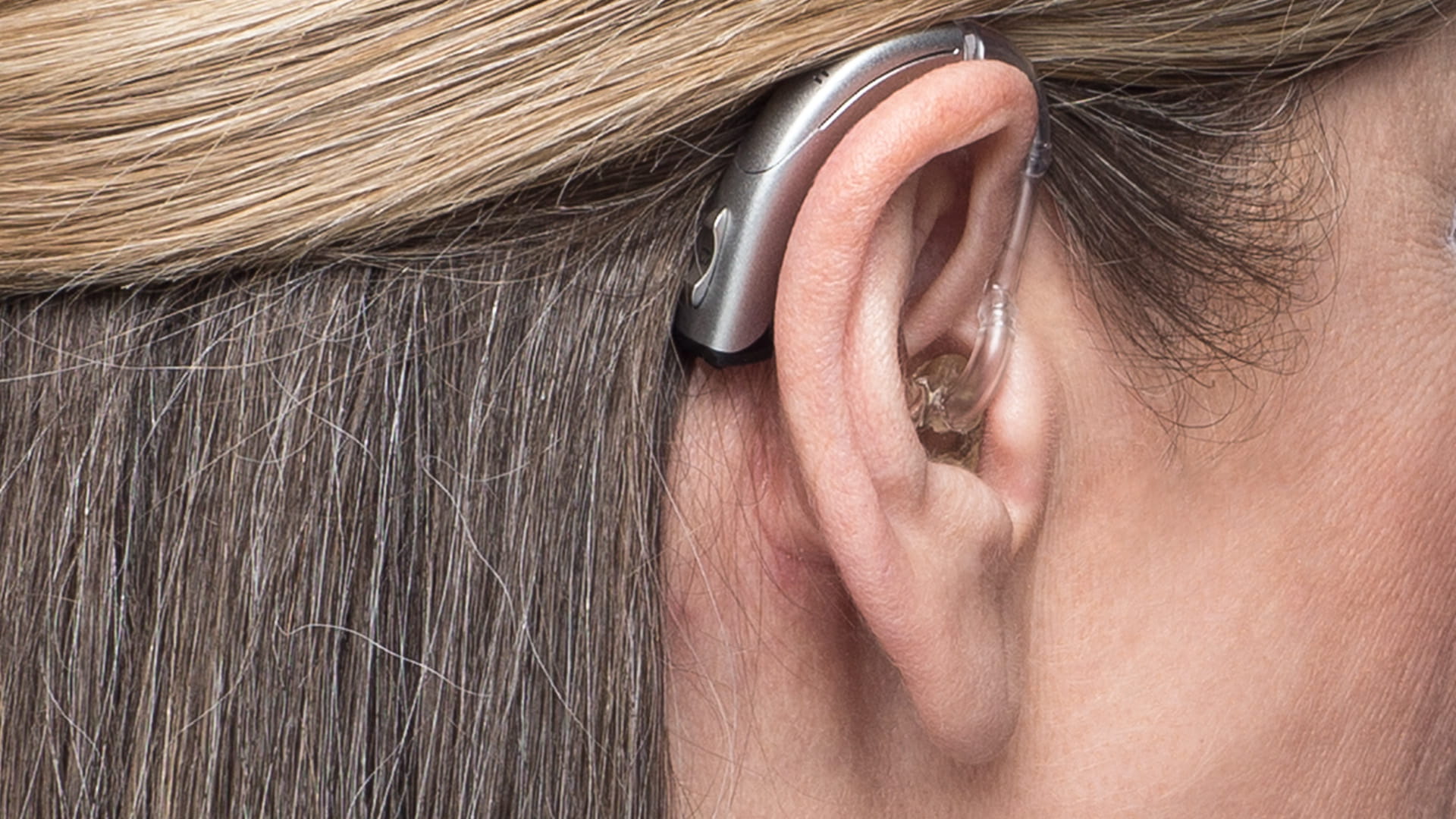
A completely-in-canal model such as Oricle Standard 2.0 sits deeper and stays discreet, while the ZHANZHSQL RIC and ELEHEAR Beyond Pro place the receiver near the ear canal. Villear uses a behind-the-ear module and thin tube, which may be more comfortable for users who dislike pressure inside the ear. Soft tips and multiple sizes matter because a loose fit can cause feedback, while an overly tight fit can become tiring.
The best preset cannot rescue a hearing aid that does not stay comfortably sealed in your ear.
Controls and listening modes
Physical dials are easiest to understand on the Audien Atom One. One-button systems keep operation simple, but they may limit precision. The Audien Atom X uses a touchscreen case, while ELEHEAR adds app controls. Preset modes are useful when they have clear purposes, such as television, conversation, restaurant, or outdoor listening. More modes are not automatically better if switching between them is confusing.
Battery and charging
Look at both single-charge runtime and the extra power supplied by the case. The Atom One is rated for 24 hours, while the Audien Atom X claims 48 or more hours with its case. Several products claim totals of 80 or 100 hours. The FVUH listing contains conflicting battery claims, so treat that model's runtime cautiously. Automatic on and off is also worth seeking because it reduces daily button presses.
Connectivity
Bluetooth and app support matter if you want calls, music, television streaming, or remote adjustments. Audien Atom X and ELEHEAR Beyond Pro offer the strongest connected feature sets here. The other models keep the experience independent of a smartphone, which is often preferable for users who prioritize simple operation.

Frequently asked questions
Are these hearing aids suitable for every type of hearing loss?
No. These are OTC hearing aids and amplifiers intended for adults with certain levels of hearing difficulty. Sudden hearing loss, severe hearing loss, one-sided loss, pain, drainage, dizziness, or rapidly changing hearing should be evaluated by a medical professional.
What is the easiest model to operate?
Audien Atom One is the most direct because it uses separate analog dials for volume and frequency. Flaygo 16-Channel, Oricle Standard 2.0, and ZHANZHSQL 100H also keep operation simple with physical controls and limited levels.
Which model has Bluetooth?
Audien Atom X and ELEHEAR Beyond Pro include Bluetooth features. Atom X uses a touchscreen charging case for settings and supports calls, music, and television audio, while Beyond Pro adds app adjustments, soundscapes, and translation features.
Do rechargeable hearing aids need to be charged every night?
Not always, but nightly charging is a practical habit for many models. The stated single-charge runtimes range from 20 hours on ELEHEAR Beyond Pro to more than 25 hours on several other devices, with charging cases adding multiple extra charges.
Are in-ear hearing aids more discreet?
Usually, a completely-in-canal or deep in-ear design is less visible than a behind-the-ear device. Oricle Standard 2.0, Karthus 16-Channel, and Audien Atom One emphasize discreet in-ear designs, while Villear OTC uses a behind-the-ear module for a potentially less enclosed fit.
How can I reduce whistling?
Start with the correct ear tip size and make sure the aid is inserted as directed. Several models, including Flaygo 16-Channel, Karthus 16-Channel, and Villear OTC, describe feedback or whistling reduction, but a poor physical seal can still create problems.
The bottom line
The Best hearing aids in this group begin with Audien Atom One for users who want the clearest, least intimidating control scheme. Its analog volume and frequency dials, multiple dome sizes, automatic power behavior, and guided setup make it a strong first step. Flaygo 16-Channel is the better fit for someone who wants longer case endurance, 16-channel processing, and one-button operation in a discreet body.
Choose Audien Atom X if Bluetooth streaming, four listening modes, and a touchscreen charging case are central to your routine. Choose ELEHEAR Beyond Pro when app control, translation, and connected audio matter more than a shorter single-charge runtime. For a behind-the-ear design, Villear OTC offers four modes and a soft earbud that may suit users who dislike deep in-ear devices.
If you are undecided, start with the simplest control system you will comfortably use every day, then choose the fit that stays comfortable for a full conversation.
As an Amazon Associate we earn from qualifying purchases.