

A bedroom, spare room, or corner desk can produce surprisingly clean recordings, but only if the microphone, room treatment, and computer connection work together. A bright, echoing room can undermine an otherwise capable mic, while a complicated interface can stop a new setup before the first take.
We compared the microphones, interfaces, isolation shields, vocal booths, and recording guide in this group to find the Best home recording studio starting points for different kinds of creators. The list ranges from complete USB kits to larger pop-up booths and a proper audio interface package.
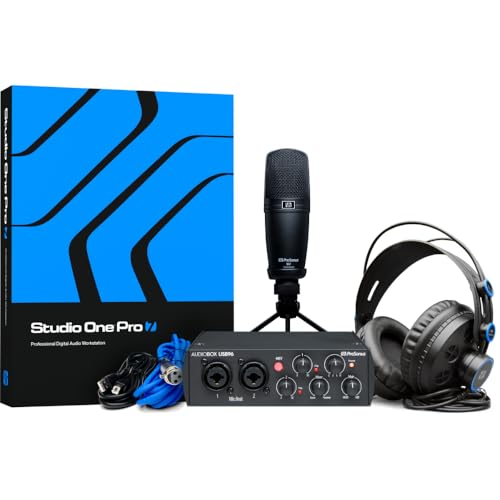
For most people, the PreSonus AudioBox USB 96 is the strongest starting point because it combines an interface, microphone, headphones, stand, cables, and software. The other picks cover simpler USB recording, room control, portable vocal work, and learning the craft.
Comparison table
| # | Product | Award | Connection or format | Isolation or included gear | Best for |
|---|---|---|---|---|---|
| 1 | PreSonus AudioBox USB 96 | Best overall | USB audio and MIDI interface | M7 mic, HD7 headphones, stand, software | A complete first studio |
| 2 | Dejasound DJM5 | Best USB mic kit | USB, 3.5mm monitoring | Five-panel shield, pop filter, tripod | Mobile and desktop creators |
| 3 | FIFINE T669 | Best simple microphone | USB | Boom arm, shock mount, double pop filter | Voice recording at a desk |
| 4 | Iyrany Portable Booth | Best pop-up booth | Portable one-person booth | Acoustic cover, phone or tablet holder | Vocalists and voiceover work |
| 5 | Snap Studio Vocal Booth | Best full booth kit | Portable one-person booth | Sound blankets, lights, mount, bag | A more complete booth setup |
| 6 | TroyStudio Vocal Booth | Best desktop isolation | Stand or table use | 2-inch foam, cable holes | Tight recording spaces |
| 7 | Dmsky Isolation Shield | Best adjustable shield | Stand or desktop use | Five panels, pop filter, tripod | Seated or standing recording |
| 8 | Ramzi Isolation Shield Stand | Best stand flexibility | Stand or desktop use | Foldable shield, steel stand | Flexible mic positioning |
| 9 | Lunacme XL Booth | Best roomy booth | Portable XL booth | Thickened blankets, phone or tablet stand | Taller users and larger spaces |
| 10 | Majosta Recording Guide | Best learning resource | Book | Complete recording guide | New producers learning fundamentals |
1. PreSonus AudioBox USB 96: Best Overall
Pros
- Includes the core hardware for a first studio
- AudioBox USB 96 supports vocals and instruments
- M7 condenser microphone and HD7 headphones are included
- Studio One Artist and Studio Magic software are included
- All required cables and a desktop stand are supplied
Cons
- More equipment to set up than a single USB microphone
- The package does not solve room echo by itself
- A full interface workflow can feel unfamiliar to beginners
Best for: someone building a usable recording setup rather than adding one more microphone.
The AudioBox USB 96 package makes the most sense when the goal is to start recording instead of collecting isolated pieces. The box includes the AudioBox USB 96 audio and MIDI interface, an M7 large-diaphragm condenser microphone, HD7 headphones, a desktop microphone stand, and the required cables. That combination removes several common gaps in a first setup.
The interface is the key distinction. A USB microphone such as the FIFINE T669 plugs directly into a computer and keeps the signal path simple. The AudioBox package is a better foundation for someone who expects to record vocals alongside instruments, use MIDI, or monitor through dedicated headphones. It also gives the user a more traditional studio layout, with the microphone and headphones connected through the interface rather than relying on a single all-in-one USB mic.
The included Studio One Artist and Studio Magic software give a new producer somewhere to record, edit, and experiment. Software alone does not make a finished track, but having the interface, mic, headphones, stand, cables, and recording tools in one package makes the first session much less fragmented. If you are unsure which other pieces belong in a setup, our advice on the equipment a small recording space actually needs is a useful companion.
There is a real limitation: no interface package can fix a room that rings with hard-surface reflections. The AudioBox package also asks more of the owner than the Dejasound DJM5, which has a built-in monitoring jack, mute control, and isolation shield. Skip the PreSonus if you only want quick voice calls or occasional narration. Choose it if you want the most coherent path into recording vocals, instruments, and computer-based production.
2. Dejasound DJM5: Best USB Mic Kit

Pros
- Direct USB connection to PC, laptop, or smartphone
- Cardioid pattern suits front-facing voice recording
- Built-in echo control, volume adjustment, mute, and headphone monitoring
- Five-panel foldable isolation shield is included
- Lightning and Type-C adapters are supplied
Cons
- USB design limits expansion compared with an audio interface
- The compact tripod is less adaptable than a full stand
- Its shield still cannot soundproof a room
Best for: creators who want one portable kit for podcasts, vocals, and mobile recording.
The DJM5 is designed around convenience. It arrives as a microphone kit rather than a bare capsule, with a tripod, pop filter, five-panel shield, headphones, foam cover, microphone cable, and adapters for Lightning and Type-C devices. That makes it particularly practical for someone moving between a laptop, phone, and desktop rather than building a fixed interface-based station.
The microphone uses a cardioid polar pattern and a 16mm diaphragm. Cardioid capture favors sound from the front and helps reduce unwanted room information behind the microphone, while the 16mm diaphragm is a useful fit for spoken voice and singing. The listed 30Hz to 16kHz frequency response covers the normal voice range, and the 192kHz/24-bit sampling specification gives recording software a high-resolution digital signal.
The controls are more useful than the feature list first suggests. A 3.5mm monitor headphone jack allows direct listening, while volume adjustment, echo control, and a mute button make the mic easier to manage during a livestream or remote recording. The five-panel shield measures 27.55 by 10.23 inches, and the complete kit weighs 4.1 pounds, so it is portable without being a pocket accessory.
The FIFINE T669 has a more useful boom arm for a permanent desk position, and the PreSonus AudioBox USB 96 is the clear step up for instruments and future expansion. The DJM5 wins when phone compatibility and a contained setup matter more than adding XLR hardware later. Its weakness is that the small tripod and foldable shield demand careful placement, and the shield reduces reflections rather than blocking outside sound. Choose it for flexible spoken-word and vocal recording, not as a substitute for room treatment.
3. FIFINE T669: Best Simple Microphone

Pros
- Plug-and-play USB connection for PC and laptop
- Cardioid condenser capsule focuses on the speaker
- Boom arm offers 30 inches of reach
- Double pop filter helps reduce plosive bursts
- Shock mount and long USB cable are included
Cons
- Not compatible with Xbox
- USB connection does not offer an interface upgrade path
- No isolation booth or shield is included
Best for: a desk-based podcaster, narrator, or streamer who wants a focused USB setup.
The T669 is the least complicated route from a desk to a recorded voice. It includes the microphone, a steel scissor-arm stand, shock mount, double pop filter, and an 8.2-foot USB-B to USB-A/C cable. The arm is the part that makes it feel more like a permanent recording tool than a microphone perched beside a keyboard.
Its cardioid condenser capsule is intended to capture the speaker from the front while limiting some ambient sound. That does not turn a reflective room into a treated booth, but it gives the user a sensible starting position. The microphone is also described as handling high sound-pressure levels, which makes it suitable for more than quiet narration, though placement and input level still matter for loud vocals.
The arm rotates 180 degrees up and down and extends 135 degrees forward and backward, with a stated 13-inch fixed horizontal arm and 30-inch reach. That range makes it easier to pull the microphone toward the speaker and move it away when not recording. The C-clamp and detachable desktop mount provide two ways to secure it, while the double pop filter uses two layers to soften bursts of air on consonants such as “p” and “b.”
The Dejasound DJM5 includes more room-control hardware and mobile adapters, but the T669 is cleaner for someone who simply wants a microphone hovering in front of a desk. The PreSonus AudioBox USB 96 is better for instruments and a growing studio. The T669’s weakness is its dependence on the computer’s USB workflow and its lack of built-in acoustic treatment. It is the right first microphone for voice recording, provided the owner is willing to manage room reflections with placement, furnishings, or a separate shield.
4. Iyrany Portable Booth: Best Pop-Up Booth

Pros
- One-person pop-up design
- 31.5 by 31.5 inch footprint
- 73-inch height
- Quick setup with a cover and frame
- Phone or tablet holder and travel bag included
Cons
- Takes more floor space than a desk shield
- Does not create complete soundproofing
- Large enough that storage still needs planning
Best for: vocalists and voiceover creators who need a larger controlled space around the microphone.
The Iyrany booth changes the recording environment around the performer instead of putting a small screen behind the microphone. Its 31.5 by 31.5 inch footprint creates a 6.88-square-foot recording area, with a listed height of 73 inches. That is enough room for a one-person setup and is notably more accommodating than a desktop box.
The frame and acoustic cover are designed to deploy as a single pop-up system. The listing describes setup as unfolding the frame and slipping on the sound-dampening cover, with a stated setup time of about 60 seconds. That matters for bedrooms, offices, dorms, and temporary recording spaces where a permanent vocal booth would be impractical.
The booth uses durable Oxford fabric with multilayer acoustic pads and is described as absorbing up to 90 percent of reverberation and room noise. That claim should be read as a description of intended acoustic treatment, not a promise of silence. The more useful benefit is a less reflective space around the microphone, which can make voiceovers and vocals easier to edit and place in a mix.
The Snap Studio Vocal Booth is taller and includes wireless multicolor LED lights, while the TroyStudio Vocal Booth takes up far less room on a desk. The Iyrany sits between those approaches with a stable one-person footprint, a phone or tablet holder, and a travel bag. Its weakness is the floor space it occupies, and anyone seeking isolation from loud neighbors should not confuse it with soundproof construction. It suits singers, teachers, streamers, and voiceover artists who need repeatable room control.
5. Snap Studio Vocal Booth: Best Full Booth Kit

Pros
- Pop-up booth built around sound-absorbing blankets
- Fits users up to 6 feet 8 inches
- 5.5-square-foot interior
- Wireless multicolor LED lights with remote
- Phone or tablet mount, mic adapter, and duffel included
Cons
- Not full soundproofing
- Larger footprint than a microphone shield
- Accessory style may vary
Best for: creators who want a portable vocal enclosure with useful recording accessories already included.
Snap Studio’s booth is aimed at users who want a defined recording space rather than a small reflection filter. The pop-up design uses Pro Sound Blankets to absorb reflections and create a drier vocal signal. That is a sensible solution for singers, podcasters, rappers, and voiceover artists working in rooms where bare walls and floors make recordings sound boxy.
The interior covers 5.5 square feet, and the booth is designed to fit singers up to 6 feet 8 inches. Those dimensions make it more useful for standing performances than a desk shield, while still keeping the enclosure portable. The listed outside dimensions are about 82.7 inches high and 32.8 inches wide and deep, so the owner needs to reserve a genuine floor footprint rather than treating it as a small desktop accessory.
The accessory package gives it a more finished feel. It includes wireless multicolor LED lights with a remote control, a smartphone and tablet mount, a microphone adapter, and a diamond-stitched duffel bag. The listing notes that accessory style may vary, so buyers should see those extras as part of the package without assuming a particular cosmetic design.
The Iyrany Portable Booth offers a slightly smaller footprint and a phone or tablet holder, while the Lunacme XL Booth is designed for an even roomier enclosure. The Snap Studio booth is the better fit for someone who wants the booth itself to be the center of the setup. Its major weakness is shared by every portable booth here: it dampens reflections but is not full soundproofing. For choosing the right listening environment after recording, how speakers reveal mix problems in a room is worth considering.
6. TroyStudio Vocal Booth: Best Desktop Isolation

Pros
- Compact desktop or stand-mounted design
- 2-inch thick dense egg-crate foam
- Cable and microphone stand holes
- Folds for transport and storage
- Compatible with many microphone types
Cons
- Smaller than a walk-in-style vocal booth
- Stand compatibility is limited to diameters below 0.86 inches
- Incorrect setup can cause instability
Best for: recording voice at a desk when floor space is limited.
The TroyStudio booth is a compact foam enclosure for the microphone rather than the performer. Its interior measures 8 by 10 by 12 inches, with an exterior size of 12 by 12 by 16 inches. That small scale is its central advantage: it can sit on a desk or attach to a suitable stand without taking over the room.
Five pieces of high-density foam line the enclosure, and the foam is 2 inches thick. The material is shaped as egg-crate acoustic foam, which helps absorb reflections close to the microphone. The booth also has holes for audio cables and microphone stands, so the enclosure does not require the user to abandon a normal desktop arrangement.
TroyStudio says the unit weighs about 2 pounds and folds to 12 by 12 by 6 inches. Setup is described as taking about a minute, with disassembly taking about 20 seconds. The design accepts vocal microphones, condenser microphones, USB microphones, phones, and recorder pens, though the stand-mount option has a stated diameter limit of less than 0.86 inches.
The Dmsky Isolation Shield and Ramzi Isolation Shield Stand are more flexible when the microphone must move between seated and standing positions. The TroyStudio is better when the desk is the recording location and the main problem is nearby room reflection. Its limitation is obvious: it cannot surround a singer or block sound arriving from across the room. Choose it for narration, podcasts, and close microphone work in a tight space.
7. Dmsky Isolation Shield: Best Adjustable Shield

Pros
- Five foldable panels with adjustable angles
- Stand or desktop use
- Heavy-duty tripod included
- Pop filter and thread adapters supplied
- Suitable for seated or standing recording
Cons
- Microphone is not included
- The multi-part stand takes room to position
- Shielding is not the same as soundproofing
Best for: users who want one isolation setup that can move between a desk and a stand.
The Dmsky package is built around adjustability. Its isolation shield has five folding panels that can be positioned through 180 degrees, allowing the user to change how much of the microphone’s surrounding area is covered. That is more adaptable than a fixed desktop box when the speaker, microphone, or room arrangement changes from session to session.
The shield uses a reflective layer, filter layer, and absorbing layer, with high-density acoustic foam intended to reduce reflected sound and outside interference. Acoustic shields work best when placed close behind and around the microphone, where they can reduce some nearby reflections. They do not stop a refrigerator, traffic, or another person in the next room from reaching the capsule.
The included stand can be used at a desk or mounted to a boom through the adjuster. Its stated height is 78.7 inches, with a usable adjustment range from 42 to 71.5 inches. A heavy-duty tripod supports the shield, and the package includes a pop filter, a storage tray, and 3/8-inch to 5/8-inch adapters for broader microphone mounting compatibility.
The Ramzi Isolation Shield Stand offers a similar stand-centered concept and a 26dB reduction claim, while the Dmsky adds a pop filter and more explicit panel-angle adjustment. The TroyStudio Vocal Booth is smaller and lighter for a fixed desk. Dmsky’s weakness is that it includes no microphone, so it is a treatment accessory rather than a complete studio. Pick it when you already own a microphone and need seated and standing flexibility.
8. Ramzi Isolation Shield Stand: Best Stand Flexibility

Pros
- Foldable isolation shield with three-layer acoustic design
- Desktop and boom-arm mounting options
- Height adjusts from 42 to 71.5 inches
- Weighted triple-leg base
- Quick-release adapters and thread adapters included
Cons
- Microphone is not included
- Shield remains a local reflection treatment
- More stand hardware than a simple desk filter
Best for: creators who need a stable shield for both seated and standing sessions.
The Ramzi is a microphone stand first and an isolation shield second, which gives it a different feel from the TroyStudio box. The stand has a weighted triple-leg base and a steel clamp with a screw-locking mechanism. That arrangement is useful when the microphone must stay at a consistent height rather than being placed directly on the desk.
The shield uses a sandwich construction with a sound-reflective layer, a filter layer, and an absorption layer. The front panel is backed by lightweight ABS plastic, and the shield is described as having a 17.1-inch diameter when folded into its stated form. The purpose is to control reflections around the microphone, not to create a silent booth.
Height adjustment runs from 42 to 71.5 inches, with a full stand height listed as 72.8 inches. The system can be used as a desktop recording screen or attached to a boom arm, and the quick-release adapters help with changing the position. The package includes two universal thread adapters for 3/8-inch to 5/8-inch connections, but no microphone.
The Dmsky Isolation Shield is the closer rival, with five panels adjustable through 180 degrees and a supplied pop filter. Ramzi is preferable when the stand’s base and height range matter more than maximum panel articulation. Its weakness is the same as Dmsky’s: it needs a separate microphone and cannot replace treatment throughout the room. It is a practical fit for a creator who alternates between seated narration and standing vocals.
9. Lunacme XL Booth: Best Roomy Booth

Pros
- XL portable booth for vocals and voiceover
- Thickened soundproofing blankets
- Foldable frame and travel bag
- Phone or tablet stand included
- Suitable for compact studios and larger rooms
Cons
- Requires the largest amount of floor planning among the small booths
- No microphone or interface is included
- Noise reduction claims do not mean complete sound isolation
Best for: taller performers and users who want more space around the microphone.
The Lunacme XL Booth is the roomiest option in this group. Its listed size is 81 by 43.3 by 43.3 inches, giving a taller performer more room to work than a desktop shield or small foam box. The extra space also makes it more plausible for expressive vocal takes where standing position and breathing room matter.
The booth uses soundproofing blankets with increased thickness, according to the listing, and is intended to absorb reverberation and noise around the performer. The frame is designed to pull out, after which the soundproofing cloth is placed over it. That all-in-one approach is easier to manage than assembling a permanent enclosure, especially for a home studio that must be packed away.
A carrying bag supports transport, and the included phone or tablet stand can hold lyrics, recording controls, or reference material. The booth is described for gaming, podcasting, singing, and voiceover work, so its main role is controlling the recording area around a single creator rather than treating an entire room.
The Snap Studio Vocal Booth has a smaller stated interior and includes lighting, while the Iyrany Portable Booth is shorter and slightly more compact. Lunacme makes the most sense for taller users or anyone who dislikes the cramped feel of a small booth. Its weakness is the floor space required, and it still will not silence external activity. Choose it when performer comfort and a larger controlled zone matter more than minimal storage.
10. Majosta Recording Guide: Best Learning Resource

Pros
- Dedicated guide to home studio recording
- Useful before buying or connecting equipment
- Physical book format
- Fits alongside microphone and interface purchases
Cons
- It is a guide, not recording hardware
- No microphone, interface, or acoustic treatment is included
- The available product details do not specify chapter contents
Best for: beginners who need a foundation before putting a recording system together.
The Majosta book is the outlier here, but it has a legitimate role in a home studio roundup. A microphone and interface can record sound immediately, yet they do not explain gain staging, microphone placement, room reflections, monitoring, or the order in which a new producer should learn those tasks. A guide can prevent a pile of equipment from becoming a confusing desk ornament.
The available product information identifies it as Home Studio Recording: The Complete Guide and lists a physical book measuring 11 by 8.25 by 1.21 inches. There are no feature details that support claims about particular chapters, software examples, exercises, or included media, so those should not be assumed.
That lack of hardware is also its boundary. The book cannot replace the PreSonus AudioBox USB 96 when the goal is to record vocals and instruments, and it cannot reduce reflections like the TroyStudio Vocal Booth. It is best used before or alongside those products, especially by someone who wants to understand why a recording sounds muddy, distant, or overly reverberant.
A new creator who already knows the fundamentals should start with hardware instead. For everyone else, the guide can make the rest of the setup easier to evaluate. It is not a studio in a box, but it is the most appropriate pick here for learning the decisions that make a small recording space work.

How to choose best home recording studio
The right setup depends on what you record, how much of the room you need to control, and whether you want a direct USB path or a more expandable interface.
Microphone connection
USB microphones send audio directly to a computer, and some also support phone connections through included adapters. That makes the Dejasound DJM5 and FIFINE T669 straightforward choices for podcasts, narration, streaming, and vocal demos.
An audio interface adds another step but supports a more traditional studio workflow. The PreSonus package is the only product here that combines an interface with a microphone, headphones, stand, cables, and software. Choose USB for simplicity, and choose an interface when instruments, MIDI, or future microphone changes matter.
Polar pattern and microphone type
A cardioid microphone favors sound arriving from the front. That is useful for a single speaker because it places less emphasis on some sound behind the capsule, but it does not eliminate reflections from side walls, ceilings, or desks.
Condenser microphones can capture detailed vocals and spoken word, while their sensitivity makes room control more important. The Dejasound lists a cardioid pattern, 16mm diaphragm, and 30Hz to 16kHz response. The FIFINE also uses a cardioid condenser capsule, while the PreSonus package includes an M7 large-diaphragm condenser microphone.
A microphone hears the room as part of the performance, so treatment and placement matter almost as much as the capsule.
Acoustic treatment
A microphone shield, desktop box, or portable booth reduces some reflections near the recording position. The TroyStudio uses 2-inch dense foam in a compact enclosure, while Dmsky and Ramzi use foldable layered shields. These are useful when the main problem is a reflective area close to the microphone.
A larger booth surrounds the performer and microphone with acoustic material. Iyrany, Snap Studio, and Lunacme offer more room treatment than a desk shield, but none should be treated as complete soundproofing. If the concern is sound entering from outside, room location, doors, windows, and recording time still matter.
Space and portability
Measure the available floor and desk area before choosing treatment. A compact shield can fit beside a computer, while Iyrany uses a 31.5 by 31.5 inch footprint and Snap Studio measures about 32.8 inches wide and deep. Lunacme is listed at 43.3 inches wide and deep, so it needs a more deliberate recording corner.
For creators who pack equipment away after each session, a foldable frame and travel bag are significant advantages. The larger booths are still portable, but their footprint affects setup and storage more than a microphone kit or desktop foam enclosure.
Monitoring and accessories
Monitoring lets the speaker hear the recorded signal and catch noise, clipping, or unwanted room sound. The Dejasound includes a 3.5mm headphone-monitoring jack, while the PreSonus package includes HD7 headphones. The other microphones and shields need to be considered alongside the computer or interface used with them.
A pop filter helps control plosive bursts, a shock mount can reduce mechanical vibration, and a stand determines whether the microphone stays in a consistent position. The FIFINE includes all three types of support, while the Dmsky and Ramzi packages focus on isolation and stand flexibility rather than supplying a microphone.

Frequently asked questions
Is a USB microphone enough for a home recording studio?
A USB microphone can be enough for podcasts, voiceovers, streaming, and basic vocal work. The Dejasound DJM5 and FIFINE T669 both connect directly to a computer, so they avoid the extra hardware required by an interface. An interface becomes more useful when you want to record instruments, use MIDI, or change microphones later.
Does a portable vocal booth soundproof a room?
No. The booths in this roundup are designed to absorb reflections and reduce some room noise around the microphone. They do not block all sound from neighbors, traffic, appliances, or other people in the home.
Should a microphone shield go in front of or behind the microphone?
A shield is generally positioned around the rear and sides of the microphone so it can reduce reflections returning toward the capsule. The exact placement depends on the microphone and room, so leave enough space for the performer and avoid enclosing the capsule so tightly that the recording becomes unnaturally dull.
Is the PreSonus package suitable for a first studio?
Yes, if you want an interface-based setup for vocals and instruments. It includes the AudioBox USB 96, M7 condenser microphone, HD7 headphones, a desktop stand, cables, and recording software. It is less immediate than a single USB microphone, but it provides a more complete recording foundation.
What is the difference between a desktop booth and a full portable booth?
A desktop booth surrounds the microphone with foam or a small shield, while a full portable booth creates a treated area around the performer and microphone. The TroyStudio is designed for the desk or a compatible stand. Iyrany, Snap Studio, and Lunacme need floor space but can provide broader control over vocal reflections.
Can these microphones connect to a phone?
The Dejasound DJM5 includes Lightning and Type-C adapters and is explicitly designed for PC, laptop, and smartphone use. The FIFINE T669 is described for PC and laptop use and includes a USB-B to USB-A/C cable. Phone compatibility for the other products depends on the device, adapters, and recording setup used.

The bottom line
The PreSonus AudioBox USB 96 is the strongest Best home recording studio starting point because it brings together the interface, microphone, headphones, stand, cables, and software needed for a serious first setup. The Dejasound DJM5 is the easier alternative for direct USB and smartphone recording, especially when a built-in shield and headphone jack matter.
For room control, choose the Snap Studio Vocal Booth or Iyrany Portable Booth when you can spare floor space, and choose the TroyStudio Vocal Booth when the microphone must stay on a desk. If you are undecided, start with the PreSonus package for a complete studio path, or the Dejasound if simplicity and portability come first.
As an Amazon Associate we earn from qualifying purchases.