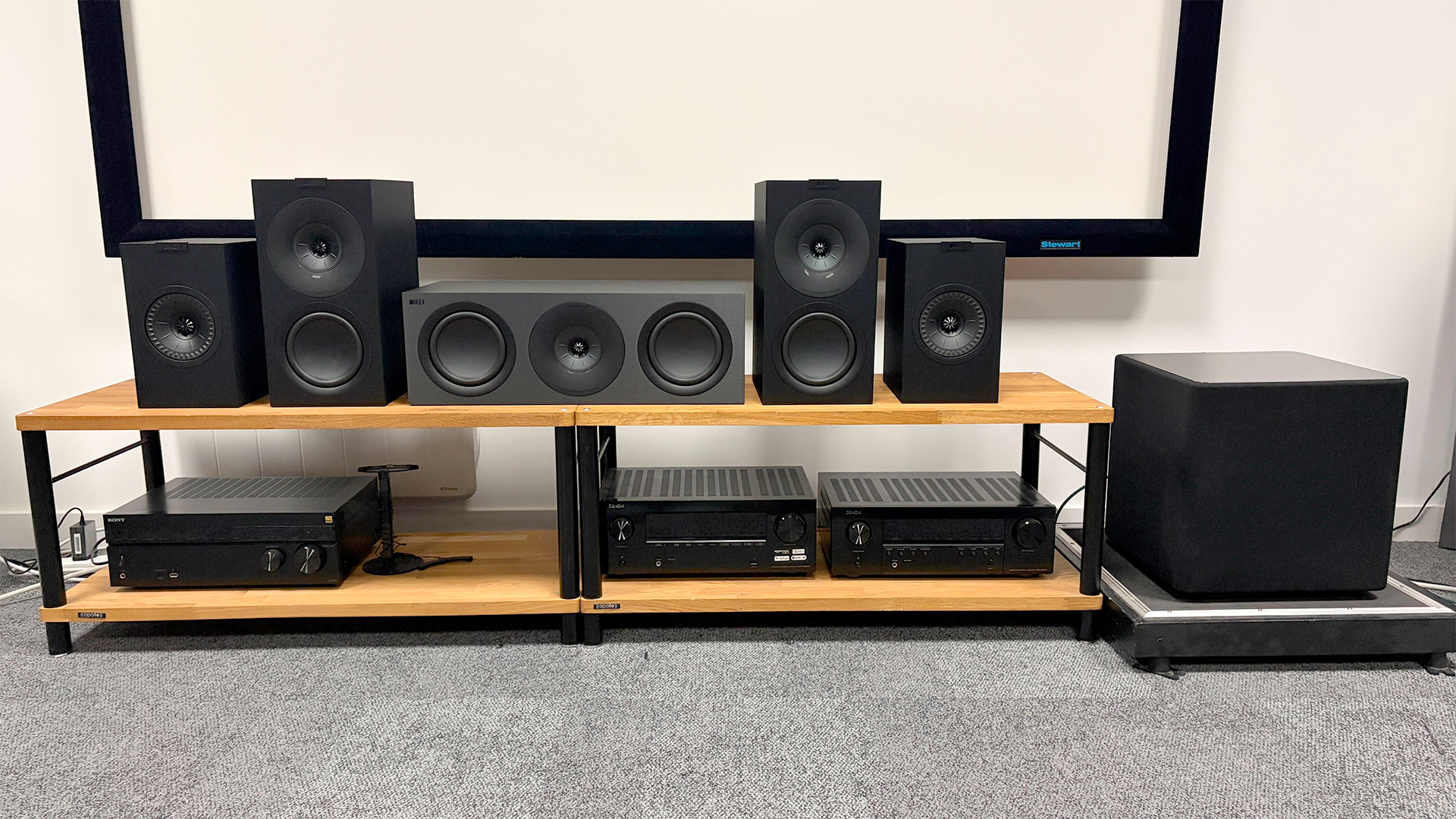

A TV can have a sharp picture and still make every film feel flat when dialogue comes from a thin pair of built-in speakers. The right surround system adds a center channel for voices, a subwoofer for impact, and speakers that give effects somewhere to go beyond the screen. Our Best home theater sound system picks cover compact soundbars, wireless Atmos packages, and traditional receiver-based systems.
The biggest choice is not simply how many channels appear on the box. It is how much wiring your room can handle, whether you want real speakers behind the sofa, and whether your TV or game console needs modern video pass-through. We have ranked these 10 systems by the experience they promise and the compromises each design makes.
For most people, the ULTIMEA Aura A60 Pro is the best starting point, with a broad 7.1-channel layout, Dolby Atmos, four surround speakers, and unusually detailed app control. The rest of the list ranges from easy living-room upgrades to powerful systems for dedicated movie spaces.
Comparison table
| # | Product | Award | Channels | Subwoofer | Best for |
|---|---|---|---|---|---|
| 1 | ULTIMEA Aura A60 Pro | Best overall | 7.1 Dolby Atmos | 5.25-inch wired | Full surround without a receiver |
| 2 | Sony BRAVIA Theater 6 | Best for BRAVIA TVs | 5.1 Dolby Atmos and DTS:X | Included | Simple cinematic sound |
| 3 | ULTIMEA 5.1.2ch Atmos Bar | Best Atmos control | 5.1.2 | Included | Adjustable height effects |
| 4 | ULTIMEA Poseidon M60 | Best compact setup | 5.1 Dolby Atmos | Wired wooden | Rooms without rear-speaker space |
| 5 | ULTIMEA Skywave X40 | Best wireless Atmos | 5.1.2 | Wireless | Cable-conscious home theaters |
| 6 | LG S40TR | Best LG TV pairing | 4.1 | Wireless | Easy TV control |
| 7 | ULTIMEA Skywave X70 | Best for large rooms | 7.1.4 | 10-inch wireless | Big bass and height effects |
| 8 | Yamaha YHT-4950U | Best traditional setup | 5.1 | Included | Receiver-based systems |
| 9 | ULTIMEA Skywave X50 | Best wireless power | 5.1.4 | Wireless | High-output immersive sound |
| 10 | Yamaha YHT-4970U | Best for modern gaming | 5.1 Dolby Atmos | Powered | 4K/120 and 8K sources |
1. ULTIMEA Aura A60 Pro: Best Overall

Pros
- 7.1-channel layout creates a broad soundstage
- Dolby Atmos support adds height effects
- Four surround speakers give effects room to move
- App includes 121 presets and 10-band equalization
Cons
- The subwoofer is wired
- Rear speaker arrangement still requires careful cable planning
- Dolby Atmos depends on compatible content and connection
Best for: someone who wants a complete surround layout without adding an AV receiver.
The ULTIMEA Aura A60 Pro is the system we would recommend first to a reader who wants to move beyond a single soundbar. Its appeal is immediate: instead of trying to simulate a room full of speakers from one cabinet, it uses a 7.1-channel arrangement with three main channels and four surround speakers. The result should feel more anchored around the seating position, particularly during action scenes where sound needs to travel from the front of the room to the sides and rear.
The package uses two wired front surround speakers and two wired rear surround speakers, while the rear right surround speaker pairs wirelessly with the soundbar. That is a slightly unusual arrangement, so buyers should study their room before ordering. It is not a fully cable-free system. Still, the rear wireless connection can reduce the most awkward run across the room, and the recommended room size of 108 to 270 square feet gives a useful guide to where the system makes sense.
Bass comes from a 5.25-inch wired subwoofer using BassMX technology. That should provide more physical weight than a soundbar alone, while the Dolby Atmos processing adds a vertical layer to compatible movie soundtracks. The system's strongest feature may be the Ultimea app. Its 121 EQ presets, six listening modes, 10-band control, and custom adjustments offer much more room to shape dialogue, bass, or nighttime listening than the simpler controls on the LG S40TR.
Compared with the Sony BRAVIA Theater 6, the Aura A60 Pro gives you more surround speakers and deeper control over the sound profile. The Sony is the cleaner recommendation for a BRAVIA TV owner who wants an integrated experience, while the ULTIMEA is more flexible for a mixed-brand setup. Readers who want the least wiring should skip this model and consider the fully wireless Skywave systems instead.
The limitation is that this is a room-dependent system. The speaker layout needs space, and the blend of wired and wireless connections is less tidy than the Skywave X40. For a medium-sized room and a buyer willing to spend time positioning speakers, though, the Aura A60 Pro offers the most convincing all-around package here.
2. Sony BRAVIA Theater 6: Best for BRAVIA TVs

Pros
- Dedicated center channel helps dialogue stay clear
- Dolby Atmos and DTS:X support
- Rear speakers and subwoofer are included
- BRAVIA TV integration adds convenient control
- Bluetooth supports wireless music streaming
Cons
- Less channel separation than the top ULTIMEA systems
- BRAVIA-specific features are less useful with other TV brands
- The package has a large main soundbar
Best for: a BRAVIA TV owner who wants a coordinated surround system with clear speech.
The Sony BRAVIA Theater 6 takes a more polished, straightforward approach than the Aura A60 Pro. It is a 5.1-channel system built around three front-firing speakers, two rear speakers, and a subwoofer. The important piece is the dedicated center channel, which gives dialogue a defined home instead of asking the left and right channels to handle voices while also carrying music and effects.
Support for both Dolby Atmos and DTS:X makes the Sony a good fit for streaming movies and discs with modern surround formats. Its Multi Stereo mode can send the same sound through all speakers when you want a room-filling presentation rather than precise front-to-back effects. That is useful for music or ordinary television, where a strict surround mix may not be available.
Sony's BRAVIA pairing is the real differentiator. Compatible BRAVIA TVs can control the system from the television menu, and Voice Zoom 3 is designed to make dialogue easier to hear. The BRAVIA Connect app handles volume, sound profiles, and advanced settings from a phone, while Bluetooth lets the system serve as a music speaker when the TV is off.
This is the more approachable choice than the Yamaha YHT-4950U because it avoids a separate receiver and speaker-wire setup. It is also a more conventional 5.1 arrangement than the 4.1-channel LG S40TR. The trade-off is that the Sony does not offer the same number of physical surround channels or the expansive app-based EQ control found on the Aura A60 Pro.
The main reason to skip it is simple. If your television is not a compatible BRAVIA model, some of the most appealing integration features disappear. It remains a capable standalone surround package, but its strongest case is for someone already invested in Sony's TV ecosystem. That buyer gets clear dialogue, familiar controls, and a cinema-like layout without needing to learn an AV receiver.
3. ULTIMEA 5.1.2ch Atmos Bar: Best Atmos Control

Pros
- Up-firing drivers support a true 5.1.2 layout
- HDMI eARC supports lossless Atmos transmission
- 13-step surround adjustment and 10-band EQ
- 121 sound presets and OTA updates
- Compact 31.5-inch soundbar
Cons
- Not compatible with DTS
- Height effects depend on ceiling and room geometry
- Wired connections remain part of the installation
Best for: listeners who want to tune Atmos and surround effects from an app.
The ULTIMEA 5.1.2ch Atmos Bar is a strong option when the goal is height in the soundstage without moving up to a receiver. Its 5.1.2 layout combines surround channels with two up-firing Atmos drivers. Those drivers bounce sound from the ceiling to create the impression of effects above the listener, which can make rain, aircraft, and thunder feel less confined to the screen.
The up-firing units use neodymium magnets and 18-core voice coils, details that point to a design focused on directing high-frequency information upward. The actual result will depend heavily on the ceiling and the room, so this is not a guarantee of overhead sound in every living room. A reasonably reflective, unobstructed ceiling should give the system a better chance than a very high or heavily textured one.
HDMI eARC is an important inclusion. The system supports up to 37 Mbps of bandwidth for lossless 5.1.2-channel audio, while CEC can synchronize power, volume, and input changes between the TV and soundbar. That connection matters more than a long feature list because it helps preserve the detail and channel information that Atmos tracks contain. If your TV has only standard ARC, the system can still work, but the eARC advantage will not be available.
The Ultimea app makes this model more adjustable than the Sony BRAVIA Theater 6. It provides 13 surround-level steps from minus 6 to plus 6, a 10-band graphic EQ, 121 presets, and OTA updates. Compared with the Poseidon M60, this is the more serious pick for Atmos experimentation. The Poseidon is easier to place, but it has no rear speakers and cannot create the same physical separation.
The weakness is its lack of DTS compatibility. Buyers with a large disc collection or sources that depend on DTS should look elsewhere, including the Sony or Yamaha systems. For streaming-focused households with an eARC-equipped TV, this ULTIMEA offers a compact route to a tunable Atmos presentation.
4. ULTIMEA Poseidon M60: Best Compact Setup

Pros
- Five built-in speakers simplify placement
- Side-firing drivers widen the front soundstage
- VoiceMX processing focuses on dialogue
- 300W peak output and 45 Hz to 18 kHz response
- Bluetooth 5.4 and HDMI eARC
Cons
- No rear speakers
- Wired subwoofer limits placement
- Atmos immersion is less physical than on rear-speaker systems
Best for: a smaller room where rear speakers would be awkward or unwanted.
The ULTIMEA Poseidon M60 is the sensible choice for someone who wants surround flavor without placing speakers behind the sofa. Its five built-in speakers include two side-firing drivers, so the system tries to push the soundstage wider from the front of the room. Setup is designed to take less than a minute, a meaningful advantage for a television in an apartment, bedroom, or multipurpose lounge.
The system supports 5.1-channel Dolby Atmos and uses DSP to create a broad presentation from the single soundbar. It does not provide the same physical rear-channel separation as the Aura A60 Pro or Sony BRAVIA Theater 6, but the side-firing layout should make effects feel less narrow than a basic two-channel bar. Its claimed latency below 0.5 ms also suits television and gaming, where a visible mismatch between image and sound is distracting.
A dedicated wired wooden subwoofer supplies the low end. It has an 18 mm high-excursion driver and a 5.3-liter tuned cabinet, with a stated response from 45 Hz to 18 kHz and peak output up to 300W. Those figures suggest a system designed to add proper impact to explosions and music rather than merely make voices louder. BassMX processing is intended to keep the subwoofer tighter as it moves more air.
The app gives the Poseidon M60 a useful degree of adjustment. You can select from 121 presets, use a 10-band EQ, and change surround levels across 13 steps. Bluetooth 5.4 handles wireless music, and HDMI eARC can carry lossless Dolby Atmos audio up to 37 Mbps. If you are comparing it with the room-filling effect of separate rear speakers, remember that the M60 creates width and processing rather than true sound from behind you.
The obvious compromise is the missing rear stage. The M60 will not match the more enveloping Skywave X50 or Aura A60 Pro for a dedicated movie room. It is the better answer for anyone who values a clean installation, wants a real subwoofer, and cannot sensibly run speaker cables around the seating area.
5. ULTIMEA Skywave X40: Best Wireless Atmos

Pros
- Fully wireless setup with dual 5 GHz transmission
- 5.1.2-channel Atmos layout
- Sub-bass reaches a stated 35 Hz
- 530W peak output
- 4K HDR pass-through
Cons
- Long 43.31-inch soundbar needs suitable furniture
- Wireless systems still require power near each component
- Fewer channels than the Skywave X70
Best for: someone who wants Atmos and rear speakers without long signal cables.
The ULTIMEA Skywave X40 addresses the most frustrating part of a multi-speaker system: getting signal cables from the front of the room to the back. Its components communicate over dual 5 GHz wireless transmission, and the system is designed as a fully wireless setup. Power cords still matter, of course, but removing the long audio runs makes placement much easier.
This is a 5.1.2-channel system, so it combines rear surround information with upward-firing Atmos channels. Its Gravus bass system is rated down to 35 Hz, while the 530W peak output gives the bar enough headroom for loud movie effects. The figures do not tell the whole story, but they do explain why this system is aimed at a larger and more cinematic presentation than the Poseidon M60.
ULTIMEA uses a GaN amplifier that is described as up to 98 percent efficient, with lower heat and faster response than a silicon amplifier. The NEURACORE engine adds 24-bit/192kHz processing, a triple-core DSP, dual-core MCU, and distortion below 0.5 percent according to the product information. Those are processing claims rather than a substitute for room placement, but they show that the X40 is built around more than basic soundbar enhancement.
The 4K HDR pass-through is useful when sources connect through the system before reaching the TV. It is intended to preserve 4K Ultra HD and HDR content without signal loss. This model also suits people who are trying to understand what changes when a surround system goes wireless, because it removes one major installation obstacle while retaining separate speakers.
The X40 is not the obvious choice for a very small room. Its soundbar is 43.31 inches long, and the separate speakers need sensible positions to make the Atmos channels convincing. The Skywave X70 offers more channels and a much larger subwoofer, while the X40 is easier to live with. Choose it when cable reduction matters almost as much as cinematic scale.
6. LG S40TR: Best LG TV Pairing
Pros
- Wireless rear speakers and subwoofer
- Dolby Audio and DTS Digital compatibility
- Clear Voice Plus improves speech intelligibility
- WOW Orchestra works with compatible LG TVs
- Compact 28.4-inch soundbar
Cons
- 4.1-channel design has no dedicated center channel
- Three-band EQ is less flexible than ULTIMEA apps
- Not a Dolby Atmos system
Best for: an LG TV owner who wants simple control and a tidy surround upgrade.
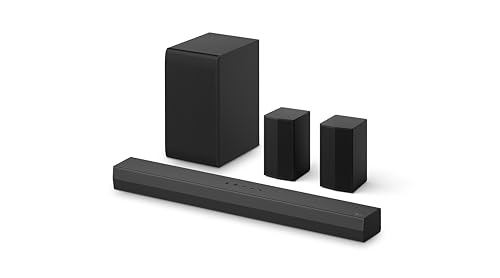
The LG S40TR is less ambitious than the Atmos systems here, but that restraint is part of its appeal. It uses four channels, a wireless subwoofer, and wireless rear speakers to produce a genuine surround arrangement without requiring a separate receiver. The 28.4-inch soundbar is also easier to fit beneath a smaller TV than the long Skywave bars.
Dolby Audio and DTS Digital compatibility cover common television and movie sources, while the Smart Up-Mixer can turn two-channel material into a wider multi-channel presentation. Clear Voice Plus analyzes the output and emphasizes speech through the center portion of the soundstage. It does not have a dedicated center channel in the same way as the Sony, so dialogue clarity comes from processing and channel design rather than an extra speaker.
LG's strongest advantage is its television integration. WOW Interface lets an LG TV remote adjust volume, sound modes, connection status, and other settings on screen. WOW Orchestra can combine the sound from a compatible LG TV and soundbar, and the wireless rear speakers avoid the need for a special receiver. These features are much less compelling if you use a different TV brand.
The LG app offers a three-band equalizer for bass, treble, and mid-range. That is enough for basic adjustments, but it is not as granular as the Aura A60 Pro's 10-band EQ or the Ultimea Atmos Bar's 121 presets. Readers focused on low-frequency impact may also want to compare how a larger dedicated unit handles deep bass in a home cinema, since the S40TR's compact format has natural limits.
This is the system to choose when ease matters more than height effects or elaborate tuning. Skip it if Dolby Atmos is a requirement, or if you want the most precise front-channel dialogue possible. For an LG television in a modest room, though, the S40TR gives you rear sound and simple daily control with minimal fuss.
7. ULTIMEA Skywave X70: Best for Large Rooms

Pros
- 7.1.4-channel immersive layout
- 10-inch wireless subwoofer
- Bass reaches a stated 20 Hz
- 980W peak output
- 4K HDR pass-through and app control
Cons
- Heavy 48.5-pound package
- Large subwoofer needs floor space
- More system than a small room requires
Best for: a spacious room where powerful bass and a full height stage are priorities.
The ULTIMEA Skywave X70 is the most forceful system in this group. Its 7.1.4 layout adds more surround and height channels than the X40, and the wireless design keeps the installation cleaner than a traditional receiver package. This is not a discreet soundbar upgrade. The 48.5-pound package and large subwoofer make it a serious piece of living-room hardware.
The 10-inch wireless subwoofer is the defining component. ULTIMEA rates it down to 20 Hz and gives the system a 980W peak output, with Gravus technology intended to keep bass powerful without becoming loose at higher levels. That combination is suited to blockbuster effects, large orchestral scores, and rooms where a smaller subwoofer would struggle to create physical impact.
Like the X40 and X50, the X70 uses a GaN amplifier and NEURACORE processing. The stated processing specification includes 24-bit/192kHz audio, distortion below 0.5 percent, and support for up to 17 channels. The 7.1.4 configuration does not mean every source will produce discrete sound in every channel, but it gives compatible Atmos material more places to build movement around and above the listener.
It also supports 4K HDR pass-through, CEC synchronization, OTA updates, a 10-band EQ, and 121 sound presets through the ULTIMEA app. Those controls are valuable because a large system can sound excessive if the subwoofer or height channels are not balanced for the room. The X50 has a higher stated peak output, but the X70's 10-inch subwoofer and 7.1.4 layout make it the more complete choice for a large seating area.
The weakness is scale. A small room may become bass-heavy, and the system will need careful placement to justify its extra channels. If you want a compact wireless Atmos package, choose the X40. If your room has space for serious low-frequency energy and you want the most ambitious ULTIMEA layout, the X70 is the one to keep in mind.
8. Yamaha YHT-4950U: Best Traditional Setup

Pros
- Includes AV receiver, five speakers, and subwoofer
- Four HDMI inputs
- YPAO room optimization
- Flexible speaker placement
- Bluetooth streaming
Cons
- Wired installation
- No wireless functionality
- Older 4K-focused video platform than the newest Yamaha
Best for: someone who prefers a conventional receiver and separate speakers.
The Yamaha YHT-4950U is the traditional alternative to every soundbar-led system on this list. The box includes an AV receiver, five speakers, a subwoofer, speaker wire, and the connections needed to build a conventional 5.1 setup. That means more installation work, but it also means the front, center, surround, and low-frequency duties are handled by physically separate components.
Yamaha lists four HDMI inputs and a frequency response of 28 Hz to 25 kHz. The receiver also supports Bluetooth for music and podcast streaming. This is a useful arrangement for someone with several source devices who wants them routed through one central component rather than relying on the input limitations of a soundbar.
YPAO room optimization is the feature that makes the package easier to balance. An included microphone measures the room and helps configure the system, while virtual cinema front placement provides flexibility when the rear speakers cannot sit directly behind the listening position. Each of the four smaller speakers measures 4 by 6 by 4 inches, the center speaker is 10 by 4 by 4 inches, and the subwoofer measures 11 by 11 by 13 inches, so placement is manageable but not invisible.
Compared with the Yamaha YHT-4970U, this model is less suited to cutting-edge gaming and modern Atmos sources. The newer Yamaha adds Dolby Atmos, 4K/120, 8K/60, HDMI eARC, VRR, and ALLM. The YHT-4950U makes more sense for a buyer whose main sources are television, films, music, and ordinary 4K equipment. It is also a clearer choice than the LG S40TR for anyone who wants an actual receiver.
The trade-off is cable management. The product information explicitly notes that it has no wireless functionality, so every speaker placement decision includes a wire path. Choose the YHT-4950U if you are comfortable with that traditional approach and want room correction, multiple HDMI inputs, and a genuine five-speaker front-to-back layout.
9. ULTIMEA Skywave X50: Best Wireless Power

Pros
- Fully wireless 5.1.4-channel arrangement
- 760W peak output
- Sub-bass reaches a stated 28 Hz
- GaN amplifier and NEURACORE processing
- 4K HDR pass-through
Cons
- Long 43.31-inch soundbar
- Large system needs deliberate placement
- X70 offers more conventional surround channels
Best for: listeners who want high output, wireless setup, and four Atmos height channels.
The ULTIMEA Skywave X50 sits between the X40 and X70, but it has a distinct character. Its 5.1.4 layout gives it four height channels, more than the X40, while its fully wireless design avoids the long signal cables required by the Yamaha systems. It is aimed at someone who wants a bold, immersive presentation and does not want an AV receiver in the equipment rack.
The Gravus subwoofer is rated down to 28 Hz, and ULTIMEA lists 760W of peak output. Those figures put the X50 closer to a dedicated cinema system than a basic television soundbar on paper. In practice, the room will determine how much of that output is useful, but the extra headroom should help the system keep effects substantial without immediately sounding strained.
The X50 uses the same core technology family as the X40 and X70. Its GaN amplifier is described as up to 98 percent efficient, while NEURACORE provides 24-bit/192kHz processing, up to 2, 000 MIPS, and distortion below 0.5 percent according to the supplied specifications. The system also supports 4K HDR pass-through, allowing compatible sources to reach the TV without giving up the picture format.
Its four height channels give the X50 a more ambitious overhead presentation than the Aura A60 Pro, while the X70 adds two more conventional surround channels and a larger 10-inch subwoofer. The X50 therefore suits a room that needs convincing Atmos movement but does not need the X70's physical scale. The app's 10-band EQ and 121 presets are useful for taming bass or adjusting sound modes, and dual 5 GHz transmission helps keep the wireless speakers connected.
The drawback is size rather than capability. The main bar is 43.31 inches long, and the system is visually more prominent than the LG S40TR or Poseidon M60. Anyone choosing between this and a bass-focused setup should consider whether more low-end impact changes the kind of system your room needs. Pick the X50 when wireless freedom and four height channels matter more than a receiver-based upgrade path.
10. Yamaha YHT-4970U: Best for Modern Gaming

Pros
- Dolby Atmos and DTS Virtual:X
- 4K/120 and 8K/60 video support
- HDMI eARC, VRR, and ALLM
- Automatic room correction with included microphone
- Bluetooth Multipoint supports two source devices
Cons
- Wired speaker installation
- Receiver-based setup takes more effort
- The product information does not provide receiver dimensions
Best for: a console or PC setup that needs modern HDMI features and real speakers.
The Yamaha YHT-4970U is the most future-facing traditional package here. It combines a Dolby Atmos AV receiver with two front speakers, a center speaker, two surround speakers, and a powered subwoofer. The layout is familiar, but the receiver adds the connectivity that newer game consoles, PCs, and streaming devices increasingly need.
Its video support is the major reason to choose it. The system handles 4K at 120 frames per second and 8K at 60 frames per second, along with Dolby Vision and HDR10+ dynamic range technologies. HDMI eARC and ARC are included, as are ALLM and VRR for gaming. Those features help the receiver act as the central switch for a modern TV setup rather than becoming a bottleneck between a console and display.
For sound, the package supports Dolby Atmos and DTS Virtual:X, with a center speaker dedicated to dialogue. An included setup microphone lets the receiver measure room acoustics and speaker characteristics, then automatically optimize the presentation. That room correction is particularly useful when the sofa cannot sit perfectly in the center or the speakers must be placed around existing furniture.
Bluetooth Multipoint allows two source devices to pair with the receiver and switch between them. Yamaha also includes four custom Scene presets, sound modes, a Quick Guide, speaker wire, a subwoofer cable, and an on-screen settings menu. Compared with the older YHT-4950U, the YHT-4970U is the clear choice for high-refresh gaming and newer video standards. Compared with the Skywave X50, it is less convenient to install but more conventional and easier to expand around a receiver.
The weakness is the wiring and the learning curve. Someone who wants a quick soundbar installation should choose the Sony or LG instead. The YHT-4970U is for the buyer who wants the flexibility of a receiver, the clarity of a center speaker, and HDMI features that will not immediately feel dated.
How to choose best home theater sound system
The right system depends on the room, the sources connected to the TV, and how much separation you want between front, rear, and height effects.
Channel layout
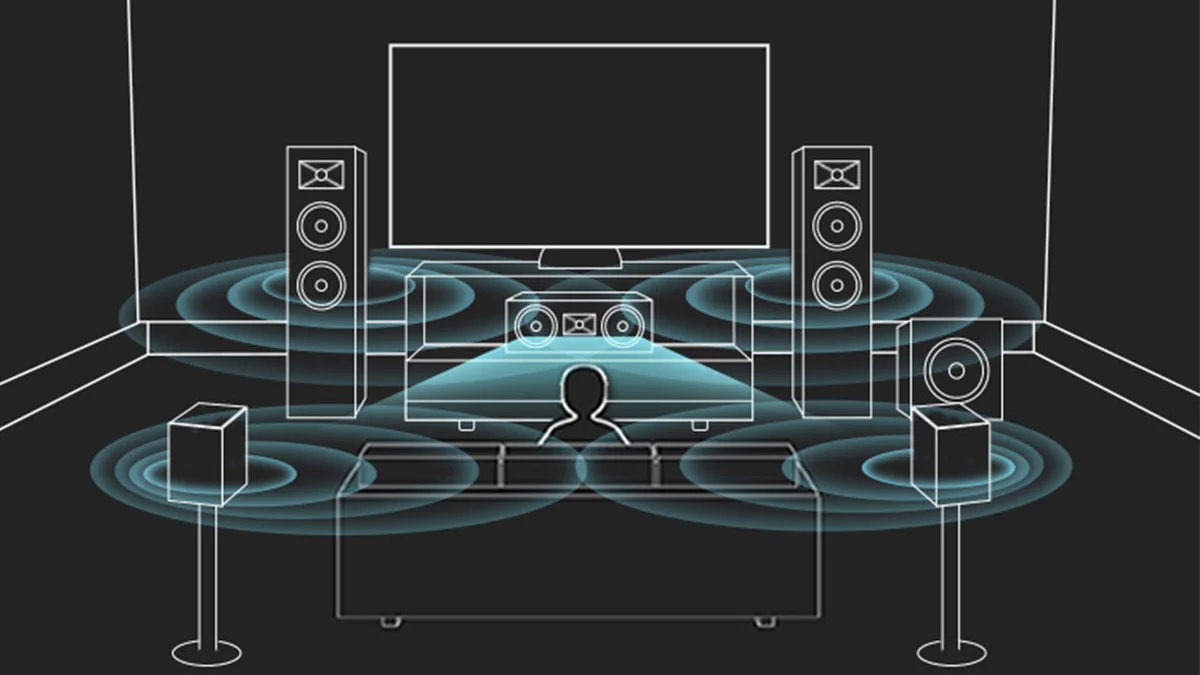
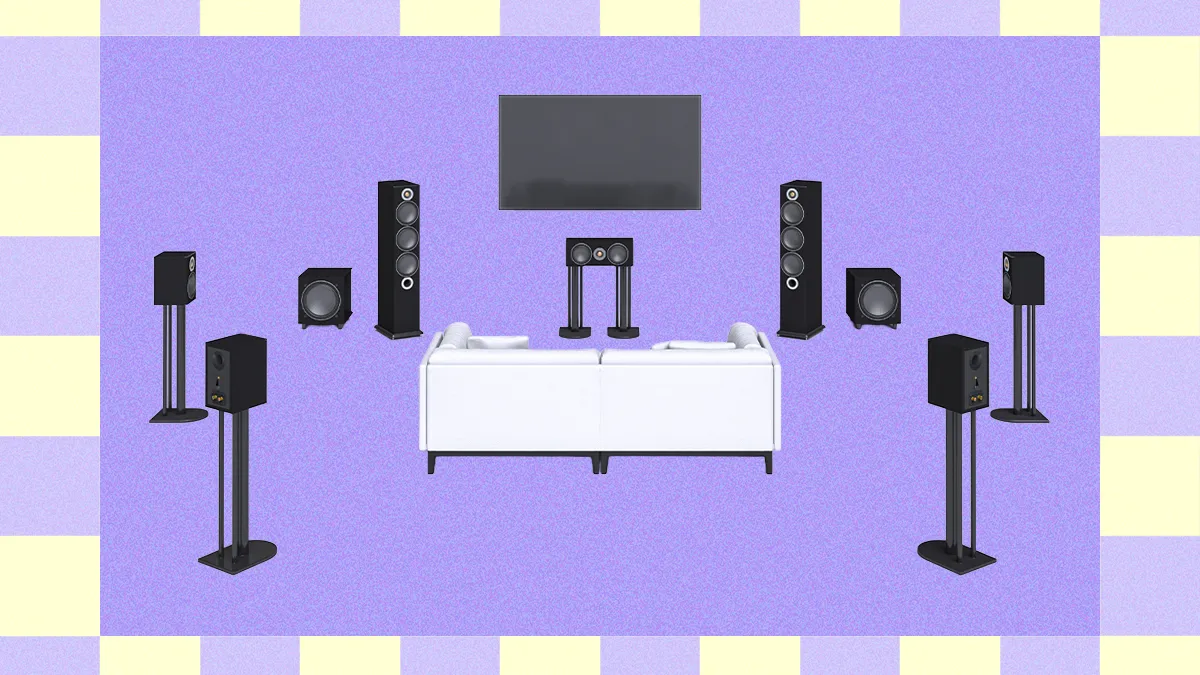
Channel numbers describe how many audio positions the system is designed to reproduce. A 5.1 system has front, center, surround, and subwoofer duties, while 5.1.2 adds two height channels. A 7.1.4 system such as the Skywave X70 has more physical positions for movement around and above the listener.
More channels do not automatically mean better sound in a cramped room. Separate rear speakers usually create more convincing effects behind the sofa than virtual processing, while up-firing Atmos drivers work best when the ceiling can reflect sound back toward the listening position.
Dialogue channel
A dedicated center channel keeps speech anchored to the middle of the screen. The Sony BRAVIA Theater 6 and Yamaha packages make this a central part of their design, while systems such as the LG S40TR use processing to improve voice clarity.
Look for a center channel or a specific dialogue feature if you often use lower listening levels, watch dialogue-heavy dramas, or find that voices disappear when music and effects become loud. VoiceMX and Clear Voice Plus can help, but they do not replace good speaker placement.
Subwoofer design
A subwoofer handles the low-frequency information that makes explosions, engines, music, and weather effects feel substantial. The Poseidon M60 uses a wired wooden subwoofer with an 18 mm high-excursion driver, while the Skywave X70 uses a wireless 10-inch unit rated down to 20 Hz.
A larger room generally benefits from a more capable subwoofer, but uncontrolled bass can overwhelm a small space. Placement matters as much as the headline frequency figure. Keep the subwoofer clear of corners if the bass becomes boomy, and make sure a wireless model has a nearby power outlet.
Connection format
HDMI eARC is important when you want to send high-bandwidth audio formats from a compatible TV to the sound system. The ULTIMEA Atmos Bar lists support for up to 37 Mbps of lossless 5.1.2 audio, while the Yamaha YHT-4970U adds HDMI switching and gaming features.
Check the ports on both the TV and source devices before buying. ARC may be sufficient for basic sound, but eARC is the safer choice for high-quality Atmos tracks. A receiver with 4K/120, 8K/60, VRR, and ALLM is especially useful when a console connects through the audio system.
Wireless installation
Wireless rear speakers remove long audio cables, but they do not remove power requirements. The Skywave X40, X50, and X70 use dual 5 GHz transmission, while the Sony and LG also include wireless elements.
Wireless is useful when running cable around a room would be difficult. It is less important if the speakers will sit close to the TV or if you are already planning a concealed in-wall installation. A wired Yamaha system can be the cleaner long-term choice for someone who wants traditional receiver control.
Buy the channel layout your room can place correctly, not the largest number printed on the box.
Frequently asked questions
Do all of these systems support Dolby Atmos?
No. The ULTIMEA Aura A60 Pro, ULTIMEA 5.1.2ch Atmos Bar, Poseidon M60, Skywave X40, Skywave X70, Skywave X50, Sony BRAVIA Theater 6, and Yamaha YHT-4970U list Dolby Atmos support. The LG S40TR lists Dolby Audio and DTS Digital compatibility, while the Yamaha YHT-4950U is described as a 5.1-channel system without Atmos support in the supplied product details.
Is a soundbar system better than a receiver-based system?
Neither design is universally better. Soundbar systems are generally easier to install and often include wireless rear speakers, while receiver-based systems provide separate speakers, more inputs, and greater control over placement and upgrades. The Yamaha YHT-4950U and YHT-4970U are the receiver-based choices here.
Do wireless surround speakers need power cables?
Yes. Wireless transmission removes the audio signal cable, but the speakers still need electricity. Plan for outlets near the rear speakers and subwoofer before choosing a wireless package.
Does HDMI eARC matter for Dolby Atmos?
It can. HDMI eARC supports higher-bandwidth audio transmission than standard ARC and is used by several systems here for lossless Atmos formats. Your TV and source also need to support the relevant audio format for eARC to provide its full benefit.
How many channels are enough for a living room?
A 5.1 system is enough for many living rooms, particularly when it has a dedicated center channel, rear speakers, and a subwoofer. Move to 5.1.2 or 5.1.4 if height effects are important and your room has a suitable ceiling. Seven or more surround channels make more sense when seating and speaker placement allow the extra separation to be used.
Can these systems stream music from a phone?
The Sony BRAVIA Theater 6, LG S40TR, ULTIMEA Poseidon M60, and Yamaha systems list Bluetooth support. The ULTIMEA Skywave models also include app connectivity for adjustments and updates. The exact phone features depend on the connection and the system's supported controls.
Do up-firing Atmos speakers work in every room?
No. They rely on sound reflecting from the ceiling, so ceiling height, surface, and obstructions affect the result. If your room is not suitable for reflected height effects, a system with well-placed surround speakers may provide a more noticeable improvement than simply choosing a larger Atmos channel count.

The bottom line
The ULTIMEA Aura A60 Pro is our top pick for the Best home theater sound system because it combines a real 7.1-channel layout, Dolby Atmos, four surround speakers, and unusually flexible app tuning. It is the strongest fit for a medium-sized room where the owner wants immersive sound without committing to an AV receiver.
Choose the Sony BRAVIA Theater 6 for a polished setup around a compatible BRAVIA TV, or the Yamaha YHT-4970U if modern gaming connections and receiver control matter more than easy installation. For wireless Atmos, the ULTIMEA Skywave X40 is the most balanced choice, while the X70 is better suited to a large room with space for serious bass.
If you are undecided, choose the Aura A60 Pro for physical surround separation, the Sony for effortless TV integration, or the Yamaha YHT-4970U for long-term HDMI flexibility.
As an Amazon Associate we earn from qualifying purchases.