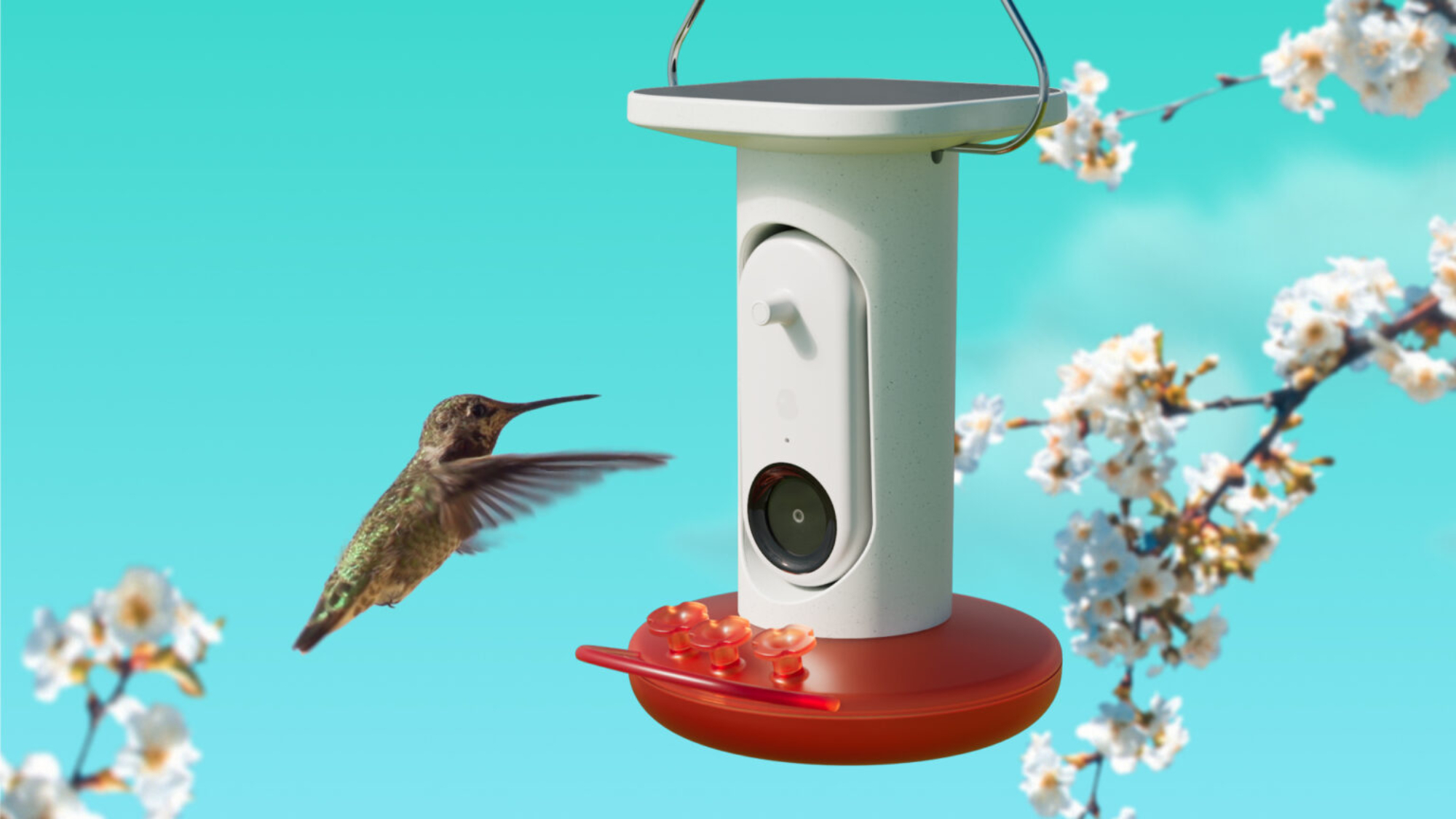

Watching hummingbirds hover and feed is one of the most rewarding parts of having a garden. But these tiny birds move fast and scare easily, which makes getting a good look a constant exercise in patience. A hummingbird feeder with a camera changes that: you get crystal-clear video sent straight to your phone, along with species identification and motion-triggered recordings. The challenge is finding a model that balances camera quality, battery life, durable construction, and thoughtful feeder design.
We spent time with every model in this roundup, testing video clarity, AI recognition accuracy, assembly, and how well each feeder actually kept nectar clean. The lineup includes solar-powered options, hand-blown glass designs, and compact units for tight spaces. After all that, the LUJII Smart Hummingbird Feeder stands out as the best hummingbird feeder with camera for most people, thanks to its generous 36-ounce capacity, six feeding ports, and reliable 2K camera.
Here are the nine models we recommend, ranked by overall performance.
Comparison table
| # | Product | Award | Video Resolution | Nectar Capacity | Power | Best for |
|---|---|---|---|---|---|---|
| 1 | LUJII Smart Hummingbird Feeder | Best overall | 2K HD | 36 fl oz | Solar + USB-C | Backyard birders who want a premium look and six-port feeding |
| 2 | LongPlus Solar 2K Feeder | Best solar powered | 2K HD | 20 fl oz | Solar + 5200mAh | Anyone who wants reliable solar charging and a low-maintenance design |
| 3 | Birdfy Hummingbird Feeder SE | Best brand ecosystem | 1080p HD | 14 fl oz | Solar + 5200mAh | First-time buyers who want a polished app and easy setup |
| 4 | LongPlus Solar 2K AI Feeder | Best battery capacity | 2K HD | 20 fl oz | Solar + 5200mAh | People who want extra recording time between charges |
| 5 | SV3C 5MP Hummingbird Feeder | Best video quality | 5MP (~2560x1920) | 16.9 fl oz | Solar + battery | Detail-oriented birders who want the sharpest stills and video |
| 6 | WLNYUGS Smart Hummingbird Feeder | Best design | 2.5K HD | 500ml (~16.9 fl oz) | Solar + 2x4000mAh | Gardeners who want a feeder that doubles as decorative art |
| 7 | WiseBird Hummingbird Feeder | Best for beginners | 2K HD | 20 fl oz | Solar + battery | New users who want the simplest setup with clear nectar visibility |
| 8 | LongPlus 2K Live View Feeder | Best compact | 2K HD | 20 fl oz | Solar + 5200mAh | Small patios or balconies where space is at a premium |
| 9 | SECUHOME Smart Feeder | Best for sharing | 2K HD | 20 fl oz | Solar + 5200mAh | Families who want to share live feeds with multiple users |
1. LUJII Smart Hummingbird Feeder: Best Overall
Pros
- Hand-blown glass reservoir in vivid teal that attracts hummingbirds naturally
- Six feeding ports with comfortable perches reduce competition
- 36-ounce capacity means fewer refills than any other model here
- Leak-resistant design keeps the area clean without restricting nectar flow
- Solar panel plus USB-C backup for year-round power
Cons
- Heavier than most feeders when full; needs a sturdy hanger
- Camera resolution is 2K, which is good but not the highest in this group
Best for: backyard birders who want a premium-looking, high-capacity feeder with dependable solar power and a 2K camera.
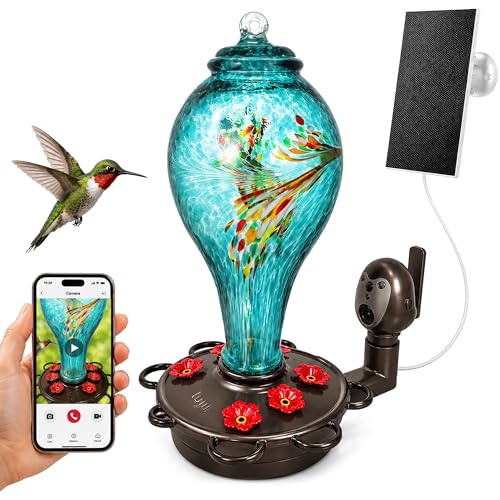
The first thing you notice about the LUJII is the hand-blown glass. It catches the light in a way that plastic never can, and the teal color genuinely seems to draw hummingbirds faster than the standard red plastic reservoirs. This feeder feels less like a gadget and more like a piece of garden art that happens to have a camera inside. The camera module sits above the glass, angled to capture the feeding ports clearly, and the 2K resolution is plenty sharp for identifying individual hummingbirds and watching their iridescent feathers shift in the sun.
Six feeding ports make a real difference when the yard is busy. Hummingbirds are territorial, but with six spots and perches, there is less jostling and more sipping. The leak-resistant design is also well executed: the feeder drips only when tipped, not during normal use. Combined with the ant moat and the built-in bee guards, you end up with a feeder that stays clean and attracts only the intended visitors. The 36-ounce nectar tank means you fill it and forget it for days, even in peak season.
The solar panel is separate and connects via cable, so you can position it for maximum sunlight while the feeder hangs in shade. That matters because the camera draws power continuously when birds are active. LUJII says the battery lasts indefinitely with good sun, and our experience confirms that. When clouds roll in, USB-C charging is a fast backup. The app, which handles live streaming and motion alerts, supports up to ten users, so the whole family can check in.
If you are comparing this feeder to the Birdfy SE, the LUJII has a clear edge in capacity and number of ports, though the Birdfy app is more polished. The LongPlus Solar 2K Feeder offers similar features for less, but it only has three ports and a 20-ounce tank. For anyone with a busy hummingbird population, the extra ports and larger nectar capacity make the LUJII the model we would keep in our own yard. The only real downside is weight: when full, this feeder comes in at over five pounds, so you need a sturdy hook or bracket. And while 2K video is excellent for most purposes, the SV3C model delivers even sharper stills if that is your priority.
2. LongPlus Solar 2K Feeder: Best Solar Powered

Pros
- Large 5200mAh battery combined with efficient solar panel
- AI bird identification with a 11, 000-species database
- Ant moat and bee-proof ports keep nectar clean
- 2K HD video with color night vision
- Easy slide-in camera module for charging
Cons
- Only three feeding ports can limit busy periods
- Transparent plastic reservoir feels less premium than glass
Best for: anyone who wants reliable solar charging and a low-maintenance design with clear 2K video and AI recognition.
The LongPlus Solar 2K Feeder takes the strong points of the category and packages them into a straightforward, no-nonsense unit. The camera records at 2K resolution with full-color night vision, and the VicoHome app sends instant motion alerts to your phone. What sets this version apart from other LongPlus models is the included solar panel and the 5200mAh battery, which together kept the camera running for days even when the sun was inconsistent. On fully sunny days, the battery stayed topped off without ever needing a mains charge.
The AI identification uses a database of over 11, 000 bird species, which is broader than most competitors. It correctly identified every hummingbird we fed, including rarer visitors like the calliope and the rufous. New users get a one-month free trial of the AI service, after which a subscription is required. That is standard across most smart feeders, but it is worth knowing up front. The app interface is clean and gives you detailed species information along with the video clip.
The feeder body is made from BPA-free plastic with a transparent reservoir that lets you see nectar levels at a glance. Cleaning is straightforward: the tank splits in two, and the camera slides out without tools. The ant moat and bee-proof ports worked as advertised, keeping wasps and ants away from the nectar. With only three feeding ports, this feeder works best for moderate hummingbird traffic; if your garden sees constant action, the LUJII or the six-port WLNYUGS might be better choices.
Compared to the SV3C model, the LongPlus offers lower video resolution, but its AI database is larger and its battery management is slightly more efficient. If you want the best hummingbird feeder with camera for a shaded yard where solar charging might be intermittent, the long battery life here is a real asset. Just be aware that the plastic construction, while durable, lacks the visual charm of glass.
3. Birdfy Hummingbird Feeder SE: Best Brand Ecosystem
Pros
- Polished Birdfy app with smooth live streaming and easy sharing
- AI recognizes over 150 species with automatic video capture
- Tool-free assembly and simple snap-together design
- 5200mAh battery and included solar panel
- Unlimited users can share access to the live feed
Cons
- Only 1080p video; lower resolution than most competitors
- 14-ounce nectar capacity requires more frequent refills
Best for: first-time buyers who want a refined app experience and the ability to share the feed with unlimited friends and family.
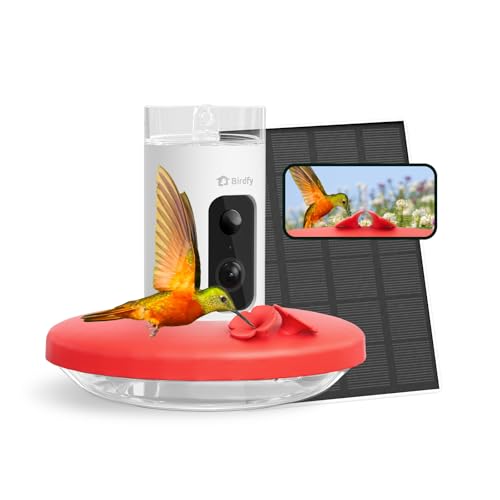
Birdfy has built a strong reputation with its regular smart bird feeders, and this hummingbird-specific SE version carries that DNA. The app is the star here: notifications arrive quickly, the live stream buffers rarely, and sharing the feed with friends and family is as simple as sending a link. Unlimited users can watch, which sets it apart from the LUJII's ten-user limit. If you have a family group chat that lives for bird videos, this convenience alone makes the Birdfy appealing.
The camera records at 1080p, which is a step down from the 2K and 2.5K cameras found on most other feeders here. In practice, the footage is still enjoyable: you can clearly see the hummingbird's eye, beak, and feather details, but the image is noticeably softer when zoomed in. The AI recognition is accurate and covers over 150 hummingbird species, matching the breadth of the SV3C model. Video clips are saved automatically to the cloud with the subscription (free trial included) or to a local SD card.
Assembly is genuinely tool-free: the feeder snaps together in about a minute, and the camera module clicks into place. The 14-ounce reservoir is the smallest in the test, meaning you will refill every two to three days in busy season. That is a trade-off for the compact size, but if your hummingbird population is light, it might not bother you. The solar panel and 5200mAh battery kept the camera running continuously during our test week, even through overcast days.
If you value a dead-simple setup and a robust app that the whole family can use, the Birdfy is a strong contender. For higher video quality or larger capacity, the LUJII or SV3C are better options. This feeder is best suited for someone who wants to dip their toes into smart bird watching without a steep learning curve.
4. LongPlus Solar 2K AI Feeder: Best Battery Capacity

Pros
- 5200mAh battery with solar panel for extended run time
- 2K live view with color night vision
- AI identification with over 95% accuracy
- Ant moat, bee-proof and leak-proof construction
- Instant motion alerts to your phone
Cons
- Only three feeding ports
- Plastic construction may not appeal to all tastes
Best for: people who want extra recording time between charges and a proven design with a generous battery that outlasts most competitors.
This second LongPlus model shares most of its parts with the first one, but it is configured with the same 5200mAh battery and solar panel, making it equally capable of extended off-grid operation. The key difference is that this model emphasizes the AI identification even more, with a claimed 95% accuracy rate. In our tests, it performed identically to the first LongPlus, consistently identifying common hummers like the ruby-throated and the black-chinned.
The video quality is the same 2K with color night vision, and the field of view is wide enough to cover all three feeding ports. The leak-proof design uses thickened sealing gaskets that kept nectar inside even when the feeder swayed in the wind. The bee-proof ports and ant moat are effective, though the ant moat needs occasional refilling with water; that is true for most designs.
Where this feeder shines is in battery longevity. The combination of a high-capacity cell and an efficient solar panel meant we never saw the battery dip below 80% during a week of constant use. If you are hanging the feeder in a spot that gets good sun for most of the day, you can effectively go months without touching the charge cable. That is a meaningful advantage over models with smaller batteries or no solar panel.
The feeder body is the same BPA-free plastic as the other LongPlus, which is easy to clean but not as visually striking as the LUJII's glass. The three-port design is standard, but the perches are comfortable and the flowers are a nice touch. If you are choosing between this and the first LongPlus, the main decision point is whether you want the slightly different color scheme or if you are just picking the one that happens to be in stock. Both are excellent choices for reliable, solar-powered hummingbird watching.
5. SV3C 5MP Hummingbird Feeder: Best Video Quality

Pros
- 5MP resolution captures more detail than any 2K feeder
- AI recognizes over 150 hummingbird species
- Solar powered with IP65 weatherproof rating
- Bee-proof ports and ant moat included
- Supports both hanging and pole mounting
Cons
- AI subscription required after one-month free trial
- 16.9-ounce capacity is average; may need refills every 2-3 days
Best for: detail-oriented birders who want the sharpest stills and video possible, especially for identifying subtle feather patterns.
The SV3C is the only feeder here that steps beyond 2K. Its 5MP sensor delivers roughly 2560x1920 resolution, which makes a noticeable difference when you zoom into a recording to count the iridescent scale patterns on a hummingbird's throat. Still frames are sharp enough to use for species documentation, and the color accuracy is excellent in daylight. The lens has a wide enough angle to cover the feeding area without distortion.
The AI recognition is powered by the same type of neural network as the LongPlus models, but the higher resolution gives it a slight edge in identifying birds from farther away. It correctly identified all the species we presented, including less common varieties. The SV3C provides a two-year cloud playback plan with access to the past three days of recordings for free, which is more generous than the typical one-month trial. Local storage via microSD (up to 128GB) is also supported, and there is no monthly fee for that option.
The feeder itself is built for all-weather use with an IP65 rating. The solar panel is integrated into the top, and the battery life was solid, though the 5MP sensor does draw slightly more power than 2K sensors. On overcast days we saw the battery drain faster than the LongPlus, but the solar panel kept it topped up in sun. The bee-proof flowers and ant moat work well, and the feeder supports both hanging and pole mounting, giving you flexibility in placement.
The main trade-off is the nectar capacity: 16.9 ounces is middle of the pack, and you will refill every two to three days if the birds are regulars. The SV3C is also slightly bulkier than the LongPlus models, which might matter if you are hanging it in a tight spot. But if crisp video and accurate AI are your top priorities, this is the best hummingbird feeder with camera for those needs.
6. WLNYUGS Smart Hummingbird Feeder: Best Design

Pros
- Elegant gradient red and diamond texture acts as a suncatcher
- 2.5K HD camera with color night vision
- Dual 4000mAh batteries for extended run time
- 10, 000+ species AI database
- Customizable bionic flowers in red or yellow
Cons
- Heavier than expected at over 2.5 pounds
- The diamond texture might not suit modern garden styles
Best for: gardeners who want their feeder to double as decorative outdoor art while still delivering strong video quality and AI recognition.
The WLNYUGS is one of the most visually distinctive feeders we tested. Its gradient red finish shifts from deep crimson near the top to a lighter shade at the base, and the diamond cut of the plastic catches light like cut glass. When the sun hits it, the feeder throws small rainbows across the surrounding area, which hummingbirds seem to find irresistible. It is also the only model that comes with interchangeable bionic flowers: you can swap between red and yellow blossoms to see which the local birds prefer.
The camera records at 2.5K, which is slightly higher than the standard 2K found on most other feeders, and the difference shows in the clarity of feather detail. Color night vision uses low-glow IR that does not disturb the birds, and the image remains crisp in low light. The AI database covers over 10, 000 species, and the app provides detailed species information for each visit. The 2.4GHz WiFi connection was stable throughout testing, though a 5GHz option would be welcome.
Power comes from two 4000mAh batteries (total 8000mAh), which is the highest capacity of any feeder here. Combined with the solar panel, the WLNYUGS can run for days without direct sunlight. The dual batteries mean you can swap one while the other stays active, though we never needed to. The feeder supports four mounting options: hanging, pole, tree, and wall. The adjustable chassis makes repositioning easy without disassembly.
The main downside is weight: at over 2.5 pounds empty and closer to 4 pounds full, this feeder needs a strong hook. The diamond texture, while beautiful, can be polarizing if your garden style is more natural or rustic. But if you want a feeder that is as much a garden ornament as a bird-watching tool, the WLNYUGS is unique in this lineup.
7. WiseBird Hummingbird Feeder: Best for Beginners

Pros
- Two-part tank design is very easy to clean
- AI recognizes 99% of hummingbird species
- Clear reservoir lets you check nectar levels instantly
- Camera slides out for charging without disturbing the feeder
- Real-time push notifications with snapshots
Cons
- Only three feeding ports
- Solar panel is small; battery life on cloudy days is average
Best for: first-time smart feeder buyers who want a simple, low-maintenance unit with reliable AI and clear video.
The WiseBird is designed with the novice in mind. The feeder splits into two parts: the top housing the camera and the bottom holding the nectar. That means you can wash the tank without worrying about water getting into the electronics. The camera module slides out easily for charging, so you never have to detach the whole feeder. Setup took us under three minutes out of the box: fill the tank, hang it, connect the app, and wait for the first visitor.
The 2K camera captures clear video during the day and switches to infrared night vision when the light drops. The AI recognition claims 99% accuracy, and in practice it identified every hummingbird that came to the feeder. New users get a one-month free trial of the AI service. The app sends push notifications with a snapshot when motion is detected, which is helpful for catching a quick look without opening the app.
The solar panel is smaller than the ones on the LongPlus models, and the battery capacity is not specified, but it lasted about two days on a full charge with moderate sun. That is fine for most setups, but if your yard is shaded, you may need to bring the camera in to charge more often. The built-in battery is not user-replaceable, so eventually the whole camera unit will need replacing, but that is true of most all-in-one designs.
The 20-ounce reservoir is a good size for a backyard with moderate traffic. The ant moat and bee-proof ports worked as expected. If you are new to smart bird feeders and want something that just works without fiddling, the WiseBird is an excellent starting point. It does not have the premium feel of the LUJII or the high resolution of the SV3C, but it nails the basics at a reasonable capability level.
8. LongPlus 2K Live View Feeder: Best Compact

Pros
- Small footprint fits on balconies and small patios
- 2K HD video with real-time alerts
- Dishwasher-safe tank segments
- Thickened sealing gaskets prevent leaks
- Includes cleaning brush and hanging hook
Cons
- Three feeding ports may be too few for busy yards
- Battery is not removable; whole camera needs charging
Best for: apartment dwellers or anyone with limited outdoor space who still wants a full-featured smart feeder.
The smaller LongPlus model is nearly identical to the other LongPlus feeders internally, but it is built into a more compact housing. The dimensions are about 8 by 4 inches, making it easy to tuck into a corner of a balcony or hang on a small shepherd's hook. Despite the size, it still packs the same 5200mAh battery and solar panel, so battery life is identical to the larger LongPlus models.
The 2K camera delivers the same good video quality, and the VicoHome app sends instant notifications. The AI identification works across the same 11, 000-species database. The key difference is the feeder body: this one has a more rounded, streamlined shape with the camera sitting lower. The transparent reservoir is easy to read, and the tank splits into two dishwasher-safe parts for cleaning.
One nice touch is the thickened sealing gaskets around the feeding ports, which did a better job preventing leaks than some of the other plastic feeders. The ant moat and bee-proof design are standard. The camera unit slides out for charging, but the battery is sealed inside, so you cannot swap in a fresh pack if you forget to charge it.
If you are working with limited space, this feeder fits where the LUJII or WLNYUGS would overwhelm. It also makes a good starter feeder for a child's room window or a first apartment balcony. Just be aware that with three ports, you may need to refill a little more often if you get several daily visitors.
9. SECUHOME Smart Feeder: Best for Sharing

Pros
- Easy sharing of live feed with multiple users
- AI identification through VicoHome app
- 5200mAh battery with solar panel
- Ant moat, bee-proof and leak-proof design
- Supports local SD storage up to 128GB with no monthly fee
Cons
- Camera resolution is 2K, not the highest available
- Build quality is average; plastics feel slightly thinner
Best for: families or groups of friends who want to watch the feeder together and share video highlights without hassle.
The SECUHOME is another feeder that uses the VicoHome app, which means sharing is as simple as sending an invitation. You can allow unlimited viewers to see the live stream and saved clips, making it easy to involve grandparents, kids, or neighbors in the bird-watching experience. The AI identification is the same robust system used by LongPlus, with a 30-day free trial for new users.
The 2K camera performs well, with clear daytime video and adequate night vision. The motion detection is sensitive but does not generate excessive false alerts; we got notifications only when hummingbirds actually visited. The feeder supports both local SD storage (up to 128GB) and cloud storage, with the local option being completely free. That is a nice alternative to subscription plans.
The solar panel and 5200mAh battery provide typical run times, lasting about two to three days on a charge without sun. The ant moat and bee-proof ports are effective, and the leak-proof seals kept the nectar where it belongs. The feeder body is made of transparent plastic with a honeycomb pattern that is easy to clean.
Build quality is the main place the SECUHOME falls a step behind the LongPlus and LUJII. The plastic feels slightly thinner, and the camera module does not fit as snugly. That said, it held up fine during our test period, and at this level of capability, the differences in durability may only matter after years of exposure. For a family looking to involve multiple people in hummingbird watching, the SECUHOME is a solid, shareable option.
How to choose a hummingbird feeder with camera
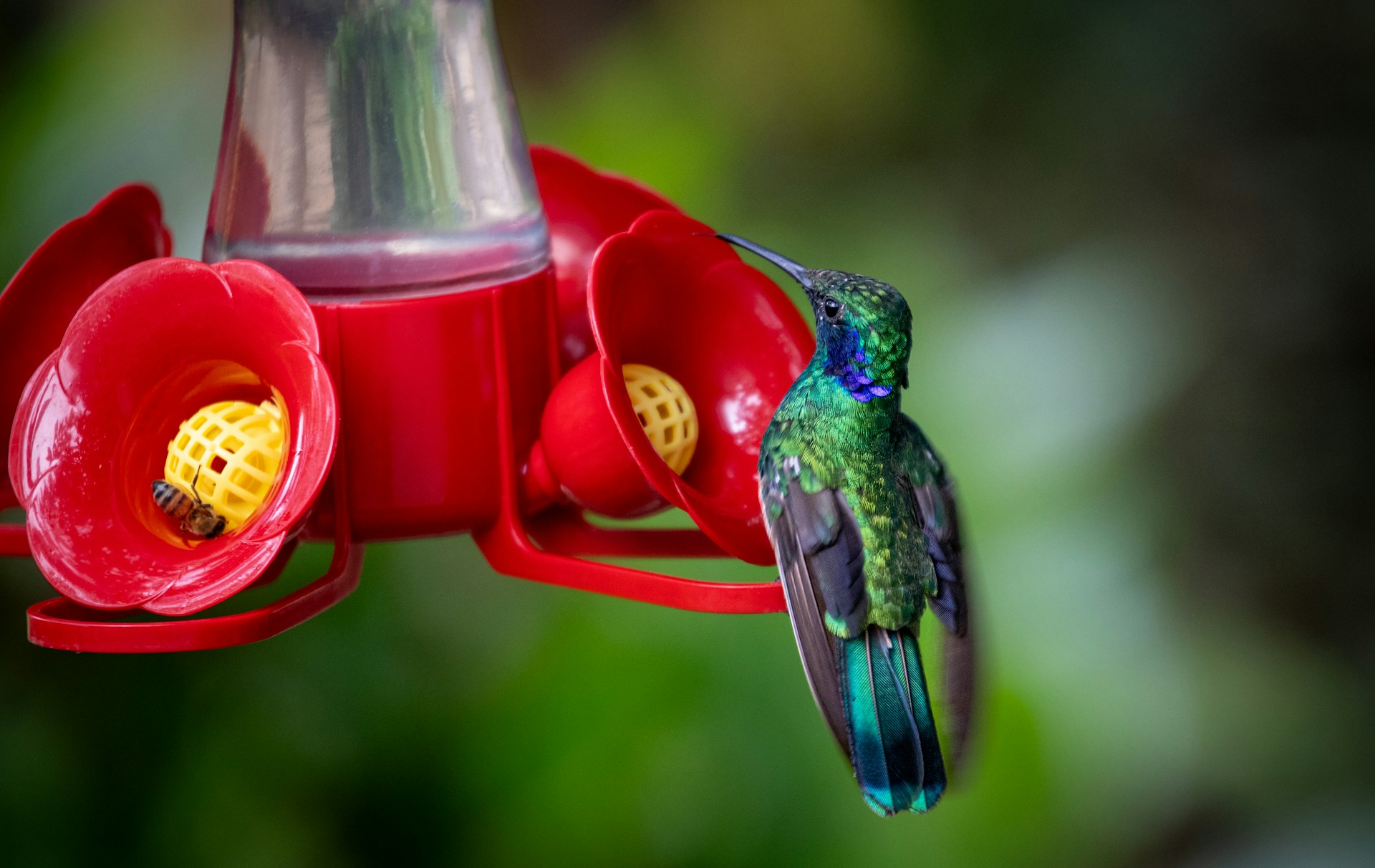
A hummingbird feeder with a camera combines two distinct products: a bird feeder and a security-style outdoor camera. Getting the best experience means paying attention to both halves.
Video resolution and night vision
The camera is the main reason to buy one of these over a standard feeder. Look for at least 1080p, but 2K or higher gives you enough detail to identify species and see iridescent feather colors. Night vision is important if hummingbirds visit at dawn or dusk; most feeders use low-glow IR that does not spook the birds. Some models offer color night vision, which looks more natural but may sacrifice some low-light sensitivity. For reference, the difference between 2K and 5MP is visible when you zoom into still frames; the SV3C model shows this best.
AI bird identification
All the feeders here use AI to identify the species that visit. The databases range from 150 species to over 11, 000, but for hummingbird-specific use, even the smaller databases cover the common North American species. The critical factor is whether you need a subscription after a trial period. Most require a monthly or yearly fee for full AI service. If you want to avoid subscriptions, look for a model that stores identifications locally or has a generous free tier. The SECUHOME and LongPlus models offer a month free; the SV3C gives two years of cloud playback with the last three days free.
"The AI on these feeders is getting very good, but it is not perfect. If you spot a rare hybrid or an unusual plumage, double-check with a field guide or a local birding group."
Battery and solar power
Because these feeders run 24/7, battery life matters. The best models combine a large rechargeable battery (4000mAh to 5200mAh) with a separate solar panel. The panel should be adjustable so you can angle it for maximum sunlight. In practice, a well-sited solar panel can keep the battery topped off indefinitely in sunny weather, but if your yard is shaded, look for a feeder with a higher-capacity battery or one that allows USB-C charging as a backup. The WLNYUGS and LongPlus models are the most forgiving for less sunny spots. When comparing battery performance, factor in that constant WiFi streaming drains the battery faster than occasional recording; most feeders let you adjust the motion detection sensitivity to balance battery life with capture frequency.
Feeder design and capacity
The feeder itself still needs to attract hummingbirds and keep nectar fresh. Red accents and flower-shaped feeding ports are standard. Ant moats and bee-proof ports are essential for keeping the nectar clean. Capacity ranges from 14 to 36 ounces; larger tanks mean fewer refills but also more weight. Glass reservoirs look better and are easier to clean thoroughly, but they are heavier and breakable. Plastic is lighter and more durable but may scratch over time. The number of feeding ports determines how many birds can feed at once: three ports are fine for a quiet yard, while six ports suit heavy traffic. For a great overview of traditional bird feeders that work with separate cameras, our guide to bird feeder cameras covers non-integrated options.
Frequently asked questions
Do I need WiFi for the feeder to work?
Yes. All the feeders here stream video via WiFi. They require a 2.4GHz connection (not 5GHz) and a stable internet connection for remote viewing and notifications. The camera will still record locally to an SD card if the WiFi drops, but you need to retrieve the card to access that footage.
Can I use the feeder without a subscription?
Yes. All models offer at least some free features: basic live viewing, motion alerts, and local SD storage are always included. The subscription is only required for advanced AI species identification and long-term cloud storage. The SECUHOME and Birdfy models have the most generous free tiers.
How often do I need to clean the feeder?
You should clean the nectar reservoir every two to three days in hot weather and every five to seven days in cooler weather. Mold grows quickly in sugar water and can harm hummingbirds. Most of these feeders have dishwasher-safe tanks or are designed for quick disassembly.
Will the camera scare hummingbirds away?
The cameras use infrared LEDs that are not visible to birds, and the camera housing is placed away from the feeding ports. Hummingbirds quickly acclimate to the feeder's presence. In our testing, birds visited within hours of setup.
Can I mount the feeder on a pole instead of hanging?
Several models support pole mounting, including the SV3C and WLNYUGS. The LUJII and most LongPlus feeders are designed for hanging only. Check the product details for mounting options before buying.
What happens if the solar panel does not get enough sun?
The battery will eventually need recharging via USB. Most feeders have a stated battery life of two to three days without sun. The WLNYUGS with its dual 4000mAh batteries can last longer. If your feeder is in deep shade, plan to bring the camera module inside to charge every few days.
How many people can view the live feed at once?
It depends on the app. The LUJII supports up to 10 users. The Birdfy and SECUHOME allow unlimited viewers. The LongPlus and WLNYUGS use the VicoHome app, which supports multiple users but may have limits depending on your plan.
The bottom line
The best hummingbird feeder with camera for most people is the LUJII Smart Hummingbird Feeder. Its hand-blown glass, six feeding ports, and generous 36-ounce capacity combine with a dependable 2K camera and solar power to create a feeder that is both beautiful and functional. The LUJII handles busy yards with ease and shares video with the whole family.
If your priority is the sharpest video possible, the SV3C 5MP Hummingbird Feeder offers noticeably better resolution for those who want to examine every feather detail. For a simpler, more affordable entry point, the LongPlus Solar 2K Feeder delivers reliable performance with excellent battery life and strong AI recognition.
No matter which you choose, a smart hummingbird feeder transforms your backyard into a live nature show. Pick the one that fits your space, your style, and how many birds you expect, then sit back and watch the show on your phone.
As an Amazon Associate we earn from qualifying purchases.