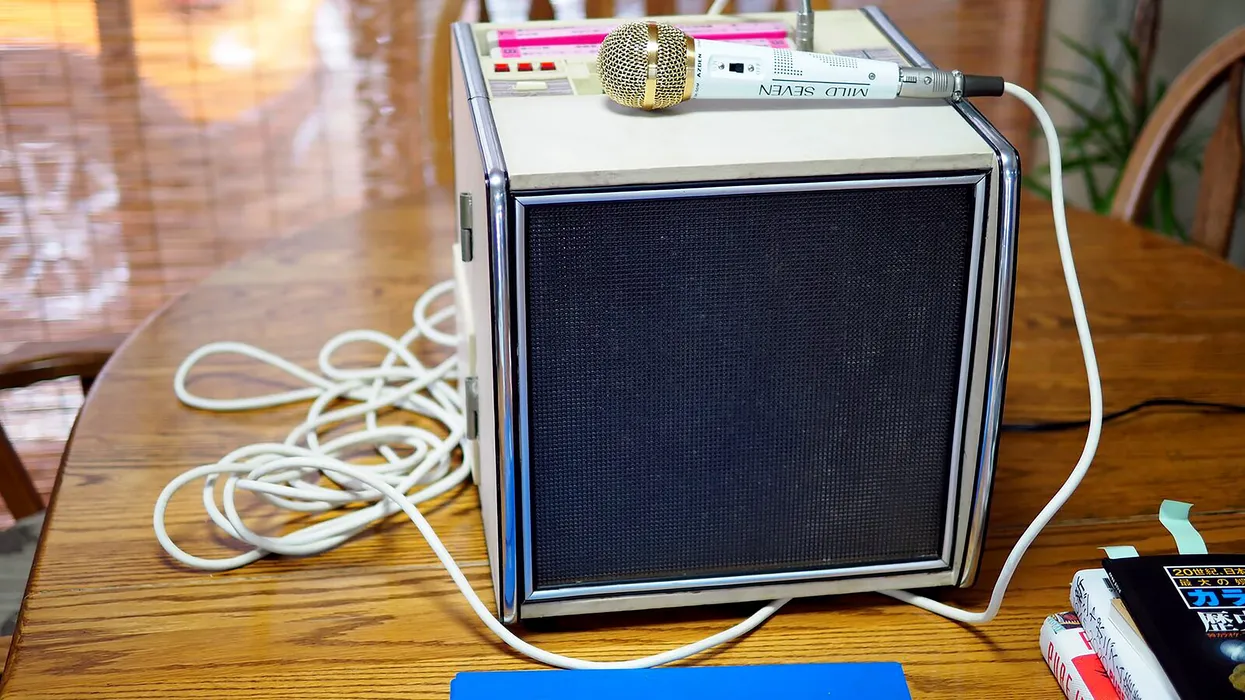

A karaoke night can fall apart before the first chorus if the microphones lag, the lyrics require a second device, or the speaker runs out of room-filling sound. The Best best karaoke machines make that setup much less frustrating by combining wireless microphones, playback controls, vocal effects, and party-friendly portability.
The products here range from compact 15W speakers to substantial systems with built-in displays, rechargeable microphone storage, TV connections, and peak outputs up to 460W. Our top pick is the Ikarao Break X2, while the rest cover lightweight travel, three-microphone family singing, long battery life, and simple speaker-only setups.
Comparison table
| # | Product | Award | Output | Screen | Battery or playback | Microphones | Best for |
|---|---|---|---|---|---|---|---|
| 1 | Ikarao Break X2 | Best overall | 300W peak | 10.1-inch tablet | Up to 8 hours | 2, self-charging | A complete karaoke setup |
| 2 | PPMIC MS75 | Best screen-free system | 200W peak | None | 6, 000mAh battery | 2 | TV-based karaoke |
| 3 | HWWR S68 | Best low-latency microphones | 200W peak | None | 6, 800mAh battery | 2 | Backyard parties |
| 4 | Ikarao Shell S2 | Best portable smart system | 140W peak | Built-in display | Up to 8 hours | 2, self-charging | Portable lyric control |
| 5 | PPMIC MS75-T | Best for three singers | 300W peak | None | 7, 000mAh battery | 3 | Family group singing |
| 6 | VERKB Portable Karaoke | Best battery life | 200W peak | Tablet slot | Over 20 hours | 2, rechargeable | Long outdoor sessions |
| 7 | VOSOCO T03 | Best simple party speaker | Not stated | None | 4 to 8 hours | 2 | Easy home parties |
| 8 | CYY Portable Karaoke | Best lightweight pick | 15W | None | 6 to 8 hours | 2 | Small rooms and travel |
| 9 | Peski Portable Karaoke | Best compact battery pick | 15W | None | Up to 10 hours | 2, rechargeable | Kids and casual singing |
| 10 | Ikarao Break X1 | Best high-output system | 460W peak | 13.3-inch display | Up to 6 hours | 2, self-charging | Large gatherings |
1. Ikarao Break X2: Best Overall

Pros
- Built-in 10.1-inch rotating lyrics display
- Two microphones store and charge inside the speaker
- Wi-Fi access to karaoke apps and a large song library
- 300W peak output with up to 8 hours of party time
Cons
- Heavier than compact speaker-only machines
- Depends on Wi-Fi for its broadest song selection
- The display is smaller than the Break X1's
Best for: anyone who wants the most complete karaoke setup without assembling separate equipment.
The Ikarao Break X2 is the one we'd put in the center of a living room. It removes the two recurring annoyances of home karaoke: finding a screen for lyrics and figuring out where the microphones went. The 10.1-inch tablet sits in the speaker, rotates 180 degrees, and gives the group a clear place to follow songs. The two wireless microphones slide into built-in storage slots, where they charge automatically.
That screen is more than a lyrics window. The machine connects over Wi-Fi to its built-in YouTube and karaoke apps, with the listing describing access to more than 10 million songs and videos. It also works as a Bluetooth speaker, so the system is not limited to karaoke sessions. The display keeps a phone free for messages or music selection, which matters when one person is hosting.
The 300W peak output places the Break X2 well above the CYY Portable Karaoke and Peski Portable Karaoke for larger rooms. It also has a claimed 8-hour party time, enough for a long afternoon or evening away from an outlet. The tradeoff is its 13.2-pound weight and compact-but-not-tiny footprint. The Shell S2 is easier to carry, while the Break X1 has a larger screen and more output.
This is not the pick for someone who wants a tiny speaker for occasional singing, and the Wi-Fi song experience is central to its design. For everyone else, the combination of screen, microphone storage, app access, and strong output makes it the most satisfying of the Best best karaoke machines.
2. PPMIC MS75: Best Screen-Free System

Pros
- Dedicated 6.5-inch woofer and 2-inch tweeter
- Echo control and a microphone mode with pitch correction assistance
- Bluetooth or AUX connection to a TV
- TWS support for pairing two speakers
Cons
- No built-in screen or song library
- Requires a separate phone, tablet, or TV for lyrics
- Microphone batteries are not described as self-charging
Best for: households that already use a TV or tablet for lyrics and want a capable speaker system.
The PPMIC MS75 gets the central decision right for a screen-free karaoke setup: it behaves like a speaker and microphone system rather than pretending to be a full media console. Connect a phone, tablet, or compatible TV by Bluetooth, or use the included AUX cable, then let the external display handle lyrics. That keeps the speaker focused on sound and controls.
Its 6.5-inch woofer and 2-inch tweeter give it a more serious two-driver arrangement than the compact 15W models in this group. The advertised 200W peak output is intended to fill a room, with separate bass and treble elements helping vocals remain distinct from the music. The echo knob is useful for adjusting how much reverb sits behind a voice, while the microphone mode offers pitch correction assistance.
The 6, 000mAh rechargeable battery makes the MS75 practical away from a wall outlet, and Bluetooth 5.3 handles the music connection. TWS lets two MS75 speakers form a left and right pair, a useful upgrade for a larger room. Compared with the HWWR S68, it gives up the latter's explicitly low-latency microphone design and larger battery, but its control layout and TV setup are straightforward.
Skip it if the goal is a machine that can display lyrics by itself. The Ikarao Break X2 is much easier for a host who wants everything in one box. Choose the MS75 if you already have a screen and want to spend your attention on vocals, echo, and speaker placement.
3. HWWR S68: Best Low-Latency Microphones

Pros
- 2.4G microphones with stated 10ms latency
- 6.5-inch alloy woofer and 200W peak output
- Seven adjustable RGB lighting modes
- TWS, TV, guitar, USB, AUX, and TF support
Cons
- No built-in display or song library
- Large cabinet is less convenient than compact models
- The extensive controls may be more than casual singers need
Best for: outdoor gatherings where microphone timing and sound coverage matter.
The HWWR S68 is built around the part of karaoke that is easiest to notice when it goes wrong: the voice-to-music delay. Its two 2.4G wireless microphones are specified at 10ms latency, which should feel more natural than a system with a perceptible lag. That makes it especially interesting for duets, speeches, and singers who dislike the detached feel of delayed wireless audio.
The speaker uses a 6.5-inch alloy woofer and claims 200W peak power. HWWR says the cabinet can cover spaces up to 2, 000 square feet and gatherings of roughly 30 to 40 people. Those claims should not be treated as a guarantee for every room, but the hardware is clearly aimed at a louder, bigger event than the CYY Portable Karaoke. Seven adjustable RGB modes add the expected party atmosphere without being the main reason to buy it.
The 6, 800mAh battery is designed for extended sessions, and the controls cover bass, echo, microphone volume, music volume, and lighting. Bluetooth 5.3, AUX, USB, TF card, and TV connections give it plenty of ways to play backing tracks. It also accepts a guitar and can pair with another S68 through TWS. If vocal clarity is your priority, our guide to choosing a speaker that keeps karaoke vocals clear is a useful companion.
The compromise is simple: there is no screen, no built-in song library, and no self-charging microphone storage mentioned in the supplied details. The PPMIC MS75 is a tidier choice for TV karaoke, while the HWWR is the more compelling pick for an outdoor host who wants low-delay microphones and broad connections.
4. Ikarao Shell S2: Best Portable Smart System

Pros
- Built-in lyrics display with karaoke app access
- Two microphones store and charge in the speaker
- HDMI connection for a TV
- 140W peak output and up to 8 hours of playtime
Cons
- Smaller output than Ikarao's Break X2 and Break X1
- Requires Wi-Fi for its large online song collection
- Some users may prefer a larger display
Best for: singers who want smart features in a more manageable portable cabinet.
The Shell S2 is the Ikarao to choose when the Break X2 feels like more speaker than you need. It still provides a built-in lyrics display, karaoke app access, two wireless microphones, and a way to connect to a TV, but the cabinet weighs 7.28 pounds. Its aluminum alloy handle and fabric finish reinforce the portable design.
The built-in screen means the host does not need to prop a phone against a glass or find a stand for a tablet. Wi-Fi access and a six-month KaraFun subscription are included in the product description, with access to more than 50, 000 karaoke songs during that period. HDMI output can move the karaoke display to a TV when the group needs a larger view.
Sound comes from dual 2.7-inch full-range speakers with 140W peak power, DSP processing, noise reduction, and echo cancellation. The system also offers bass boost, eight microphone sound effects, and independent microphone adjustments. It is not as forceful on paper as the Break X2's 300W peak output, but its 8-hour playtime and smaller body make it easier to take to a party.
The screen is the reason to buy it, and also the reason to skip it if your karaoke setup already revolves around a TV. The Break X2 is the stronger choice for bigger gatherings, while the Shell S2 is more comfortable for apartments, birthdays, and trips where a self-contained lyric display matters more than maximum output.
5. PPMIC MS75-T: Best for Three Singers

Pros
- Three wireless microphones included
- 300W peak output from a woofer and tweeter design
- 7, 000mAh battery
- Echo, pitch correction assistance, and TWS support
Cons
- No built-in display or song library
- Requires an external device for lyrics
- The third microphone adds little for solo singers
Best for: families and groups that regularly sing together.
The MS75-T earns its place by changing the group dynamic. Two microphones are enough for a duet, but three let a family sing together without passing a microphone around. The included microphones pair with the system, while the speaker retains the same basic screen-free approach as the MS75.
Its 6.5-inch woofer and 2-inch tweeter are paired with a stated 300W peak output. The dual-driver layout is intended to keep vocals separate from bass and music, and the system includes an echo control plus a microphone mode with pitch correction assistance. Those controls are more useful for a rotating group than for a single singer who wants to press play and start.
The 7, 000mAh battery is larger than the MS75's 6, 000mAh unit, and Bluetooth 5.3 supports a stable music connection. AUX and Bluetooth TV connections handle lyric playback, while TWS can connect two MS75-T speakers for a wider stereo presentation. For a broader microphone discussion, this guide to matching a microphone to your singing style can help set expectations before a group performance.
The third microphone is the clear weakness for smaller households. The HWWR S68 offers more explicit attention to latency, and the Break X2 remains easier for lyrics because its screen is built in. Pick the MS75-T when three people need to sing at once and the group already has a phone, tablet, or television for the words.
6. VERKB Portable Karaoke: Best Battery Life

Pros
- More than 20 hours of claimed playback
- Two rechargeable wireless microphones
- Tablet slot supports devices up to 11 inches
- Vocal effects, vocal removal, and TWS
Cons
- Tablet is not included
- No built-in lyrics screen
- The supplied details conflict on microphone count
Best for: long outdoor sessions where charging access is limited.
The VERKB stands out for endurance. Its built-in 6, 000mAh battery is claimed to provide more than 20 hours of continuous playback, which is far beyond the 6-hour claim for the Break X1 and the 8-hour claims attached to the Break X2 and Shell S2. That makes it a natural fit for a day outdoors, provided the music source and microphones are ready.
The speaker includes a recessed slot for tablets up to 11 inches, but the tablet is not included. That is a practical middle ground between a speaker with no lyric support and a fully integrated screen: a host can use a familiar tablet, keep it visible, and remove it when the machine is used for ordinary music. Bluetooth 5.3, USB, Micro TF, and AUX cover the main playback routes.
The 6.5-inch full-range speaker is rated at 200W peak power, and a DSP processor is described as helping with bass and treble separation. Four vocal effects, one-button vocal removal, and a rotary echo knob provide more ways to shape a performance than the CYY or Peski. TWS can also link two units for a wider stereo field.
There is one data inconsistency to keep in mind. The main product description says two rechargeable wireless microphones, while one feature says three microphones and another package note lists two. We therefore treat it as a two-microphone system. The VERKB is still the sensible endurance pick, but choose the Ikarao Shell S2 if the display and self-charging microphone storage matter more than marathon battery life.
7. VOSOCO T03: Best Simple Party Speaker

Pros
- 6.5-inch subwoofer and adjustable echo
- Bluetooth, USB, TF, and AUX support
- TWS pairing for two speakers
- Handle and shoulder strap for carrying
Cons
- No built-in screen or song library
- Shorter stated battery range than the longest-lasting picks
- Less output detail is provided than for the PPMIC models
Best for: casual singers who want a familiar Bluetooth speaker layout with microphones included.
The VOSOCO T03 is easy to understand. It is a portable Bluetooth speaker with two wireless microphones, a device slot, lighting, and controls for the vocal mix. There is no built-in screen to configure and no integrated song library to maintain. Pair a phone or tablet, place it in the slot, and start a sing-along.
A 6.5-inch subwoofer anchors the speaker, with the product description promising clear vocals and deep bass. The adjustable echo effect is the feature that separates it from a plain portable speaker, since singers can add a little room-like reverb or a more pronounced performance effect. Bluetooth 5.2, USB, TF, and AUX give it useful flexibility for music playback.
The T03 claims 4 to 8 hours of playtime on a charge, so it can handle a home party but is less reassuring for a full day outside than the VERKB. A leather handle and shoulder strap help with transport, and TWS allows two speakers to be paired for more stereo coverage. Its lighting is synchronized to the music, which adds energy without changing the basic setup.
The CYY Portable Karaoke is lighter, while the PPMIC MS75 has a more defined woofer-and-tweeter arrangement and TV instructions. The T03 is the middle path for someone who wants several input options and straightforward controls. If you are also setting up a living room audio system, consider how speaker placement changes the sound in a home before choosing where to put it.
8. CYY Portable Karaoke: Best Lightweight Pick

Pros
- Compact 15W 6.5-inch speaker
- Handheld or shoulder-carried design
- Micro TF, USB, AUX, and Bluetooth 5.2
- Six to eight hours of playback
Cons
- No screen or built-in song library
- Microphones require two AA batteries each
- Much less output than the larger party systems
Best for: small rooms, casual family singing, and easy transport.
The CYY is the least intimidating machine here. At roughly 4.24 pounds, it is easy to carry by hand or over a shoulder, and its 8.5 by 4.8 by 10.7-inch dimensions make it much easier to store than the larger speaker systems. It is designed for quick sing-alongs rather than a full event sound system.
Its 15W, 6.5-inch full-range speaker uses a high-bass separation design, and the machine doubles as a Bluetooth speaker, radio, media player, and guitar amplifier. Bluetooth 5.2, Micro TF, USB, and AUX connections offer plenty of playback choices. Five dynamic light modes add the visual party element without requiring a separate light.
The claimed 6 to 8 hours of playback is adequate for a family gathering. The two wireless microphones are interference-resistant, but each requires two AA batteries, and those batteries are not included. TWS can link two CYY units for a dual-speaker setup, though the microphone sound is emitted through the paired speakers rather than acting as a fully separate stereo microphone system.
The Peski Portable Karaoke is another compact option, but it offers a stated 10-hour battery and rechargeable microphone batteries. CYY counters with a smaller, simpler profile and a stated 12-month warranty. It is not the right machine for a large backyard party, but for a small room it is one of the least cumbersome Best best karaoke machines to keep ready.
9. Peski Portable Karaoke: Best Compact Battery Pick

Pros
- Up to 10 hours of playback
- Two wireless microphones with rechargeable batteries
- Bluetooth 5.3 and several wired inputs
- TWS and rhythm-synced LED lighting
Cons
- 15W output is aimed at smaller spaces
- No built-in display or song library
- The product dimensions and listed weight differ between fields
Best for: kids, casual home singing, and portable use away from outlets.
Peski takes the compact speaker idea and makes battery convenience the headline. The system includes two wireless microphones with rechargeable batteries, and its advertised playtime reaches 10 hours. That is longer than the CYY's stated range and gives it a useful edge for a camping trip, patio session, or children's party.
The speaker uses dual 15W drivers and is designed to produce crisp highs, bass, and balanced audio with limited distortion. Bluetooth 5.3 connects to phones, televisions, tablets, and laptops within a stated 50-foot range, while TF card, USB, and AUX inputs cover wired or local playback. Like the CYY, it is a speaker-first system rather than a screen-based karaoke console.
TWS support lets two machines create a wider stereo presentation, and the LED lights follow the music rhythm. The light show is more than decoration for children, but it does not change the fact that 15W output is best suited to a smaller room. The VOSOCO T03 should sound more substantial in a larger gathering because of its 6.5-inch subwoofer, while the Peski is easier to carry.
The supplied product fields list both 3.9 pounds and 4.42 pounds, so we would not rely on either figure as an exact carry weight. Its compact design, 10-hour battery claim, and rechargeable microphones remain clear advantages. Choose it over the CYY when charging convenience matters, and choose a larger system when the room or crowd is likely to grow.
10. Ikarao Break X1: Best High-Output System

Pros
- Large built-in 13.3-inch lyrics display
- 460W peak output with a 6.5-inch woofer
- Two microphones store and charge in the speaker
- HDMI, USB, TF, AUX, guitar, and other connections
Cons
- Weighs 26 pounds
- Six-hour stated playtime is shorter than smaller systems
- Substantial size is excessive for quiet home use
Best for: large parties that need a big screen and high-output speaker in one unit.
The Break X1 is the biggest statement piece in this group. Its 13.3-inch built-in screen is far easier for a roomful of singers to follow than a phone-sized display, and the two wireless microphones store in the speaker and charge there. It is genuinely self-contained, though its 26-pound weight means portability is a matter of carrying it between locations rather than casually taking it everywhere.
The sound system combines a 6.5-inch woofer with dual 2.6-inch tweeters, DSP processing, and Ikarao PRO Sound 3.0. The advertised 460W peak output is the highest figure here, and the product description positions it for spaces as large as a tennis court. Peak figures do not tell the entire story of sound quality, but this is clearly designed for a much bigger event than the Shell S2 or CYY.
Connectivity is extensive. HDMI can send the karaoke display to a TV, while USB and TF cards handle stored music. AUX, a guitar connection, and a PA output expand its role beyond singing along with a phone. The microphones offer independent controls, eight sound effects, and EQ adjustments. Battery claims are more modest than the VERKB's, with up to 6 hours of speaker playtime and up to 30 hours for the microphones.
The Break X2 is the better-balanced Ikarao for most homes because it is lighter and still has a built-in display, while the Break X1 is the choice when screen size and output matter more than carrying weight. Skip this one for a small apartment or occasional children's singing. Bring it into the shortlist when a large group needs to see lyrics and hear the lead singer clearly.
How to choose best karaoke machines
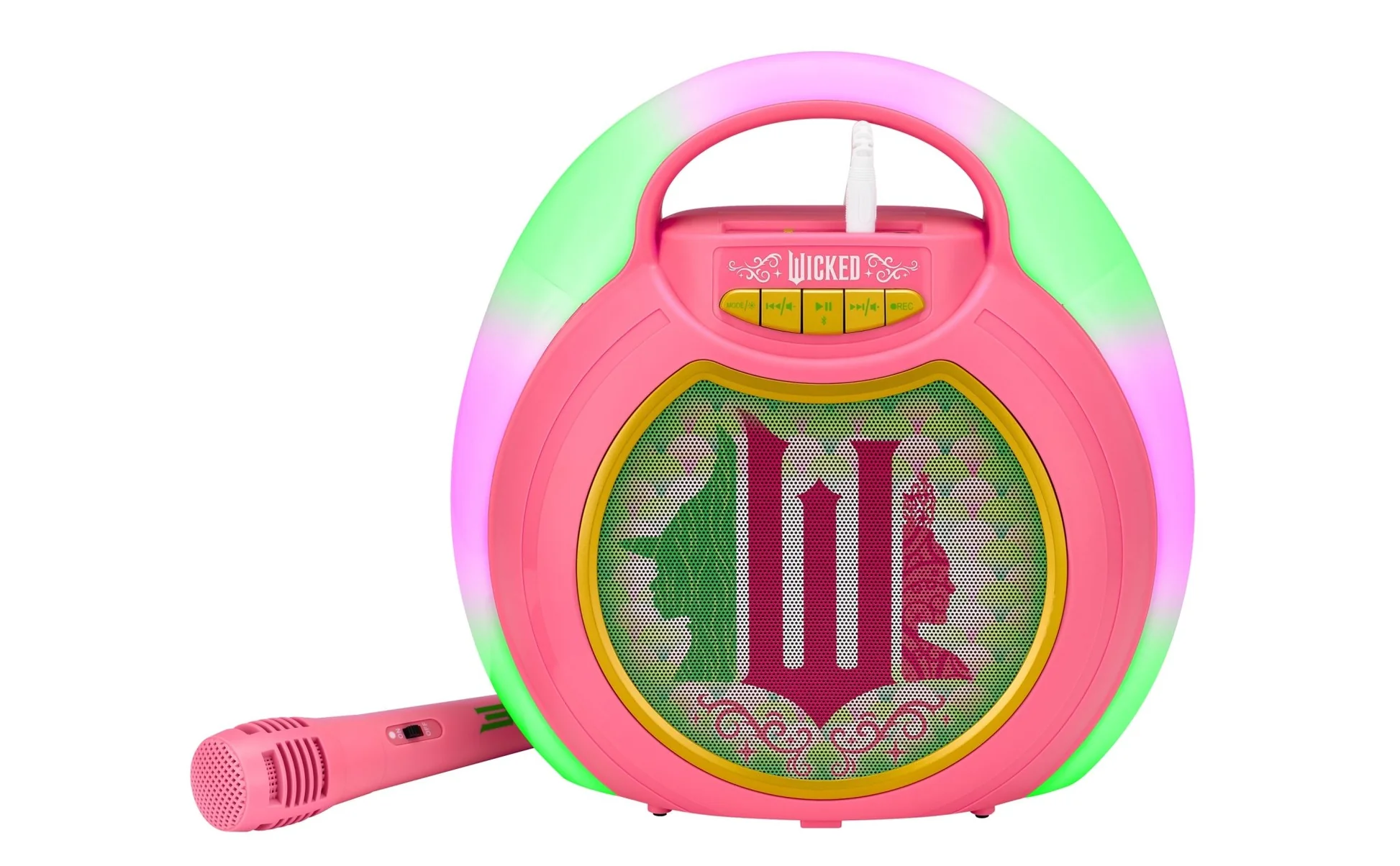
The Best best karaoke machines are separated less by decorative lights than by how they handle lyrics, microphones, speaker output, and the practical work of keeping a party running.
Lyrics and screen setup
A built-in display removes the need for a separate phone or tablet. The Ikarao Break X2 has a 10.1-inch rotating tablet, the Shell S2 includes a built-in display, and the Break X1 uses a larger 13.3-inch screen. Screen-free systems such as the PPMIC MS75 and HWWR S68 depend on a connected device or television.
A larger display helps a group follow lyrics from across the room. A separate tablet can be easier to replace or upgrade, but it adds another item to charge and position. Check HDMI or other TV support if the machine will stay in a living room.
Speaker output and driver design
Output figures are useful for understanding the intended scale, but they are not a complete measure of sound quality. The 15W CYY and Peski models are compact room speakers, while the PPMIC, HWWR, and Ikarao systems use larger drivers or higher peak figures for louder gatherings.
A dedicated woofer and tweeter can help separate bass, music, and vocals. DSP, echo controls, and microphone volume controls also affect whether singers remain understandable. For a small family room, excessive output can be unnecessary. For an outdoor party, a small speaker may disappear as soon as people start talking.
A karaoke speaker should make the singer easy to hear, not merely make the backing track loud.
Microphone latency and charging
Wireless microphones are convenient, but delay can make singing feel disconnected from the music. HWWR specifically lists 10ms latency for its 2.4G microphones, making it the clearest choice for timing-sensitive singers. Other models emphasize pairing simplicity or independent controls instead.
Self-charging slots are particularly useful because microphones are easy to misplace. The Ikarao Break X2, Shell S2, and Break X1 store their microphones inside the speaker. CYY uses AA batteries, while Peski and VERKB describe rechargeable microphones.
Battery and portability
Battery claims range from 6 to 8 hours on several Ikarao and CYY systems to up to 10 hours for Peski and more than 20 hours for VERKB. Treat those figures as playback estimates rather than guarantees for maximum volume with lights running.
Weight matters just as much as battery capacity. The CYY is around 4.24 pounds, Peski is listed around 4.42 pounds in one product field, Shell S2 weighs 7.28 pounds, and Break X1 weighs 26 pounds. A shoulder strap helps, but it cannot make a large cabinet feel small.
Inputs and party controls
Bluetooth is the basic requirement, but USB, TF card, AUX, and TV support make a system easier to use when wireless pairing becomes inconvenient. Guitar input matters for live accompaniment, while TWS lets compatible speakers work as a pair.
Echo, bass, treble, microphone volume, vocal removal, pitch correction assistance, and sound effects give singers control over the performance. These features are useful when several people with different voices share the same machine, though casual users may prefer fewer knobs and a simpler start-up.
Frequently asked questions
Do karaoke machines need a separate TV or tablet?
Not always. The Ikarao Break X2, Shell S2, and Break X1 include built-in displays, while the PPMIC MS75, HWWR S68, VOSOCO T03, CYY, Peski, and VERKB rely on a connected device for lyrics. VERKB includes a slot for a tablet up to 11 inches, but the tablet itself is not included.
Which karaoke machine is easiest to set up?
The Ikarao Break X2 is the easiest complete setup because it includes a display and self-charging microphone storage. The Shell S2 and Break X1 offer similar convenience. For a speaker-only setup, the VOSOCO T03 or CYY is straightforward once a phone or tablet is connected.
Are wireless microphone delays noticeable?
They can be, especially when the microphone system has higher latency. HWWR specifically lists 10ms latency for its 2.4G microphones, which is the clearest timing specification in this group. Connection distance, interference, and the music source can also affect how natural the performance feels.
Which models work outdoors?
The portable battery-powered options can all be used outdoors, but their useful range differs. HWWR, PPMIC, VERKB, and the larger Ikarao systems are better suited to bigger gatherings, while CYY and Peski are easier to carry for small groups. Outdoor placement still matters because voices and music disperse more quickly in open space.
Can these machines connect to a guitar?
The CYY, HWWR, and Ikarao Break X1 descriptions specifically mention guitar use or guitar connection. Other models focus on Bluetooth, AUX, USB, or TF playback. Check the listed inputs for the exact system before planning a guitar-led performance.
Can two karaoke machines be paired?
Several models support TWS pairing. CYY, PPMIC MS75, PPMIC MS75-T, HWWR S68, VOSOCO T03, VERKB, and Peski describe using two compatible speakers for a wider stereo presentation. TWS does not necessarily mean every microphone function becomes independent across both speakers, so read the individual instructions before assuming a full multi-speaker setup.
The bottom line
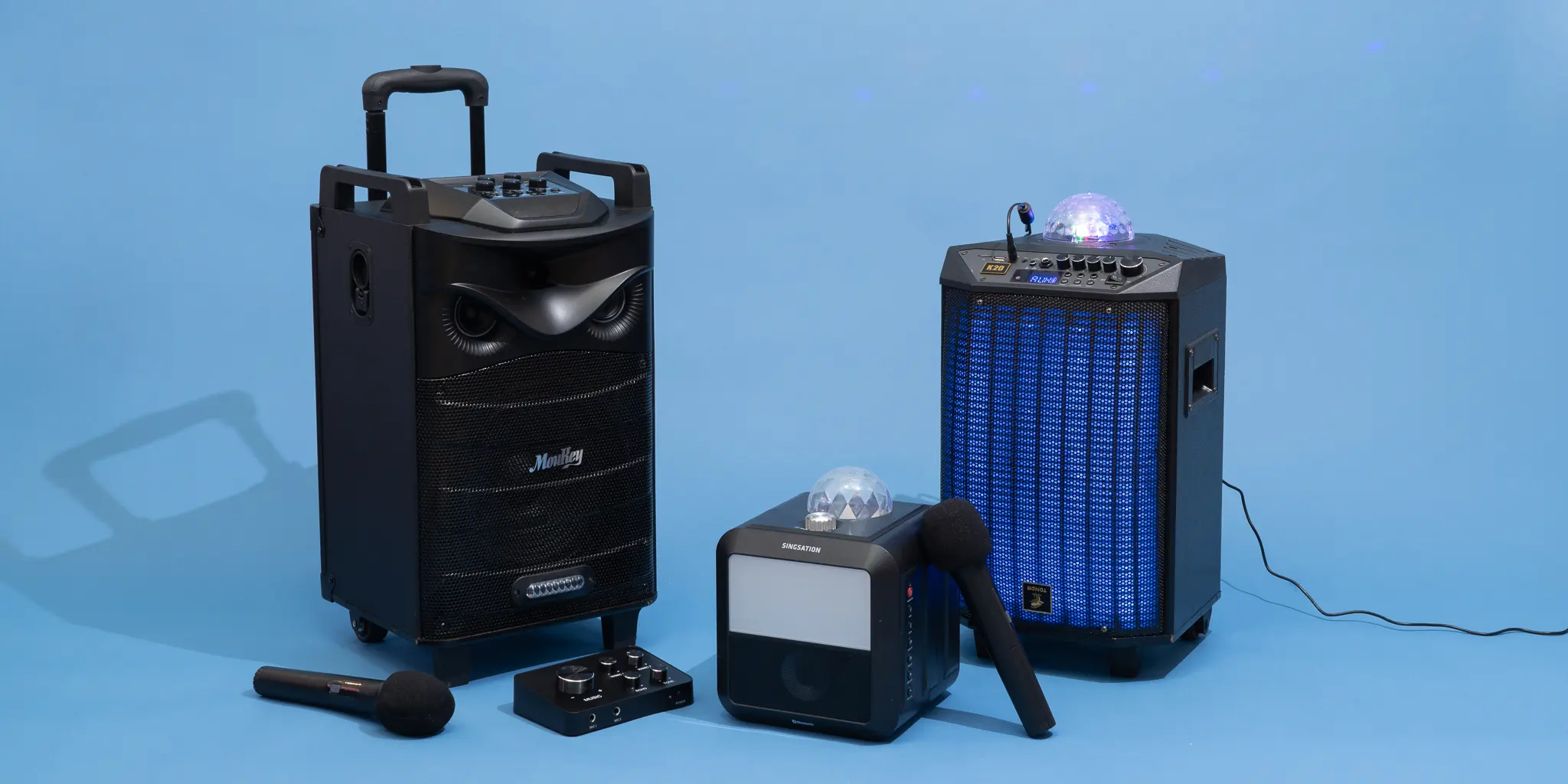
The Best best karaoke machines start with the Ikarao Break X2 because its 10.1-inch display, self-charging microphones, app access, 300W peak output, and 8-hour playtime solve the most problems in one box. The PPMIC MS75 is the better fit for anyone who already has a TV or tablet and wants a screen-free speaker with a woofer, tweeter, echo controls, and TWS.
For outdoor singing, HWWR's stated 10ms microphone latency and 6, 800mAh battery make it a strong specialist pick. Choose the Shell S2 for a more manageable smart system, VERKB for unusually long playback, or PPMIC MS75-T when three people need microphones at the same time.
If you are undecided, buy the Ikarao Break X2 unless you specifically need the Break X1's larger display or a smaller speaker-only design.
As an Amazon Associate we earn from qualifying purchases.