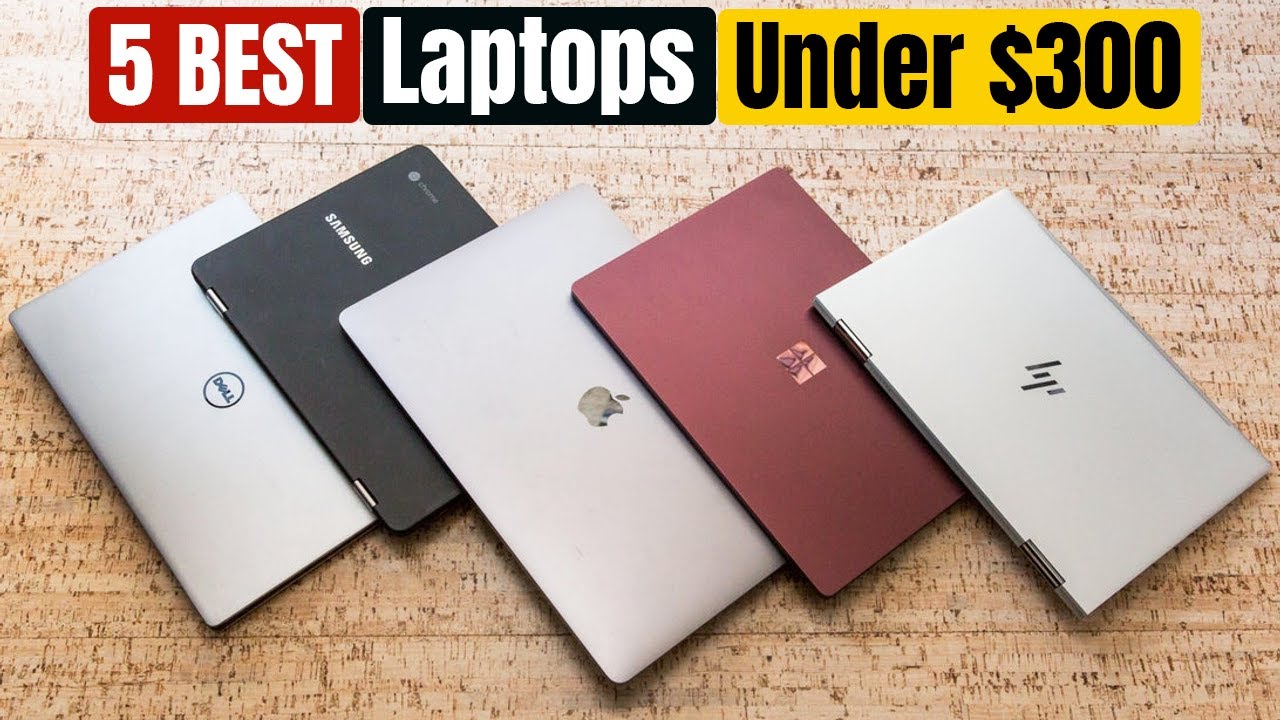

A laptop for school, remote work, or basic home use does not need to be powerful, but it does need to avoid the small frustrations that add up. A cramped display, limited storage, or an operating system that cannot run the applications you need can matter more than a headline processor speed.
Our Best best laptop under 300 picks include Windows laptops, Chromebooks, a convertible Dell, and several compact systems built around modest processors. The Dell Latitude 5420 is the strongest all-around choice, while the list also includes a large-screen Windows option, a capable Chromebook, and highly portable models for lighter workloads.
Comparison table
| # | Product | Award | Processor | Memory and storage | Display | Best for |
|---|---|---|---|---|---|---|
| 1 | Dell Latitude 5420 | Best overall | Intel Core i5-1145G7 | 16GB, 256GB SSD | 14-inch FHD | Multitasking and office work |
| 2 | SHBIV 15.6-inch Laptop | Best large-screen Windows laptop | Pentium Gold 6500Y | 8GB, 128GB SSD | 15.6-inch FHD IPS | Everyday work and streaming |
| 3 | ASUS 15-inch Chromebook | Best Chromebook display | Intel processor up to 2.80GHz | 4GB, 128GB | 15-inch FHD IPS | Web-based work and entertainment |
| 4 | Lenovo IdeaPad 1i | Best for Microsoft 365 | Intel Celeron | 4GB, 128GB SSD | 14-inch HD anti-glare | Students and mobile office work |
| 5 | QSXQSX 15.6-inch Laptop | Best for a big Windows screen | Intel 5205U | 4GB, 128GB, expandable to 512GB | 15.6-inch FHD | Office documents and media |
| 6 | HP 14-inch Chromebook | Best lightweight Chromebook | Intel Celeron N4500 | 4GB, 64GB eMMC | 14-inch HD anti-glare | Students and video calls |
| 7 | Dell Latitude 3190 2-in-1 | Best convertible | Intel Celeron N5030 | 4GB, 128GB SSD | 11.6-inch HD touch | Touchscreen portability |
| 8 | HP 14-inch Laptop, Pink | Best compact Windows laptop | Intel Celeron dual-core | 4GB, 64GB SSD | 14-inch HD glossy | Basic Windows tasks |
| 9 | HP 14-inch Laptop, Blue | Best for built-in connectivity | Intel Celeron dual-core | 4GB, 64GB SSD | 14-inch HD | Home and school basics |
1. Dell Latitude 5420: Best Overall

Pros
- 16GB of RAM is unusually useful for multitasking
- Core i5 processor gives it the clearest performance lead here
- 256GB SSD leaves practical room for documents and applications
- Compact 14-inch FHD business format
Cons
- Renewed condition calls for careful inspection on arrival
- The listing provides fewer port details than some competitors
- Not the largest display in this roundup
Best for: someone who needs a conventional Windows laptop that can handle several everyday applications at once.
The Dell Latitude 5420 is the one we would choose when the laptop needs to feel like a proper work machine rather than a basic browser terminal. Its Intel Core i5-1145G7 processor and 16GB of DDR4 RAM give it a meaningful advantage over the 4GB systems in this roundup. That extra memory matters when a document, a video call, a dozen browser tabs, and a spreadsheet are open together.
Its 256GB SSD is also a sensible fit for Windows 11 Pro. It provides more breathing room than the 64GB drives in the HP models, and it avoids the tighter cloud-first approach of the Chromebooks. The 14-inch FHD display should provide a sharper workspace than the 1366 by 768 panels used by the smaller HP and Dell convertible models. The listing also identifies a camera and HDMI, which gives it the basic equipment needed for meetings and an external screen.
The chassis is relatively easy to carry at 3 pounds, with listed dimensions of 12.76 by 8.35 by 0.76 inches. That makes it more compact than the 15.6-inch alternatives without shrinking down to the 11.6-inch format of the Dell Latitude 3190. The Dell Latitude 5420 is the better choice than the Lenovo IdeaPad 1i for heavier multitasking, while the Lenovo remains appealing to someone who specifically wants Microsoft 365 bundled with the computer.
There is a qualification. This is a renewed model, and the product information does not spell out its full port selection or battery condition. Buyers who need a new machine with a clearly documented configuration may prefer the SHBIV 15.6-inch Laptop or the ASUS 15-inch Chromebook. Anyone who mostly uses a browser and wants a simple, lightweight system may also find the Dell's extra performance unnecessary.
For remote work, office documents, online learning, and ordinary home computing, the Latitude 5420 is the most complete laptop here. It has the memory, processor, storage, and display resolution to remain useful after the novelty of a new computer wears off.
2. SHBIV 15.6-inch Laptop: Best Large-Screen Windows Laptop

Pros
- 15.6-inch FHD IPS display with an anti-glare surface
- 8GB RAM is a better starting point than 4GB for multitasking
- Broad selection of USB, HDMI, USB-C, and card connectivity
- Privacy switch for the camera
Cons
- Pentium Gold 6500Y is still a modest two-core processor
- The listing does not identify the operating system
- Larger body is less convenient for small bags and tight desks
Best for: a home or work user who wants a large Full HD display and more memory than most entry-level alternatives.
The SHBIV 15.6-inch Laptop gets the big things right for a desk-bound everyday computer. Its 15.6-inch Full HD IPS display gives documents, web pages, and streaming video more room than the 14-inch and 11.6-inch models here. The anti-glare treatment is useful near a window or overhead lighting, and the narrow bezel keeps the screen from feeling needlessly bulky.
The Pentium Gold 6500Y has two cores and four threads, with speeds up to 3.4GHz and a 4MB cache according to the listing. This is not a processor for demanding creative software, but it is a reasonable match for office tasks, web browsing, and streaming. More important for this category, the machine has 8GB of RAM and a 128GB M.2 SSD. That gives it more multitasking headroom than the 4GB HP models and a more responsive storage setup than a system built around eMMC.
Connectivity is one of its strongest points. The laptop includes HDMI 1.4, two USB 3.2 Gen 1 ports, one USB 2.0 port, USB-C with power delivery, a TF card slot, and an audio jack. The camera privacy switch is a welcome physical control, particularly for anyone who uses the laptop for remote work. The listed 38Wh battery and 5, 000mAh capacity suggest a portable design, but the data does not provide a runtime figure, so we would not treat its battery endurance as guaranteed.
At 4 pounds and 0.8 inches thick, it is portable enough for occasional trips, but the Dell Latitude 5420 is easier to carry and has a much stronger processor. The SHBIV wins on screen size, RAM, and clearly documented connectivity. It also gives you a more comfortable viewing area than the Lenovo IdeaPad 1i, though the Lenovo has a stated 11-hour battery claim and Microsoft 365 integration.
The biggest question is the operating system. The supplied product details describe the hardware and work use but do not identify Windows or Chrome OS. Buyers should confirm that point before ordering. If the operating system matches your software needs, this is the most appealing large-screen Windows-style option for documents, browsing, calls, and media.
3. ASUS 15-inch Chromebook: Best Chromebook Display

Pros
- 15-inch FHD IPS display
- 128GB of storage is generous for a Chromebook
- HDMI and USB-C add useful flexibility
- Chrome OS is straightforward for browser-first users
Cons
- 4GB RAM limits heavy multitasking
- Chrome OS cannot replace Windows for every application
- Renewed condition may matter to buyers seeking a new device
Best for: someone who wants a roomy display for Google Workspace, web browsing, and streaming without needing traditional Windows software.
The ASUS 15-inch Chromebook is a good reminder that the operating system can matter more than the processor label. Chrome OS starts quickly, handles browser-based work cleanly, and keeps maintenance simple. If your daily routine is Gmail, Google Docs, web research, video, and cloud storage, this ASUS offers a spacious workspace without the clutter of a full Windows setup.
The 15-inch FHD IPS screen is its defining feature. At 1920 by 1080, it provides noticeably more desktop space than the 1366 by 768 displays on the HP 14-inch models and the Dell Latitude 3190. IPS technology should also make the image easier to share when viewing from an angle. The 4GB of DDR4 RAM is adequate for ordinary Chromebook use, but it is not a good match for a browser session filled with demanding tabs and several web applications.
Storage is listed at 128GB, which is a comfortable amount for downloaded files and local documents in a Chromebook. The Intel processor can reach 2.80GHz, but the listing does not provide a model number, so it is difficult to judge its performance beyond basic use. Ports include USB-C, USB-A, HDMI, and a headphone and microphone combo jack. Wi-Fi, Bluetooth, and an integrated webcam round out the equipment needed for home study or video calls.
The ASUS is a better screen choice than the HP 14-inch Chromebook, while the HP is lighter and has more detailed wireless and camera information. Compared with the SHBIV 15.6-inch Laptop, the ASUS has the cleaner Chrome OS experience, but the SHBIV is the safer direction for someone who needs Windows applications. Buyers who rely on Microsoft desktop software, specialized school programs, or full Windows utilities should skip this model.
Its listed dimensions are 11.8 by 8.08 by 0.95 inches, and the listed weight is 4 pounds. That is manageable, but this is still a large-screen computer rather than an ultra-light travel companion. For a student or home user whose work lives in the browser, the ASUS combines the most satisfying display in the Chromebook group with useful physical connections.
4. Lenovo IdeaPad 1i: Best for Microsoft 365

Pros
- One-year Microsoft 365 subscription included
- 14-inch anti-glare display
- Physical privacy shutter for the 720p camera
- Wi-Fi 6 and automatic startup features
Cons
- 4GB RAM is restrictive for busy multitasking
- The supplied product data has conflicting size information
- Listed as used, so condition should be checked carefully
Best for: a student or home office user who wants Microsoft 365 and a practical 14-inch form factor.
The Lenovo IdeaPad 1i is built around the familiar Windows laptop routine. It includes a one-year Microsoft 365 subscription, so it is aimed at users who expect to work in Word, Excel, and related applications rather than relying solely on browser versions. That makes it a more natural fit than either Chromebook for a student whose assignments require Windows-compatible desktop software.
The 14-inch display is HD and anti-glare, with an active area ratio of up to 87 percent. It will not be as sharp or as spacious as the FHD IPS panel in the ASUS 15-inch Chromebook or SHBIV 15.6-inch Laptop, but the smaller screen keeps the machine reasonably manageable. Dolby Audio speakers, a 720p camera, and a physical privacy shutter give it useful equipment for classes, meetings, and casual entertainment.
The Intel Celeron processor and 4GB of RAM are designed for ordinary multitasking, not demanding workloads. The 128GB SSD should feel more responsive than eMMC storage when opening files and starting applications. Lenovo also lists Wi-Fi 6, Smart Noise Cancelling, and Flip to Start, which turns on the laptop when the lid opens. Those details make the IdeaPad feel more polished than its basic processor suggests, though the memory remains the main limit.
The product information lists a 3.5-pound weight and a claimed battery life of up to 11 hours in the title. Battery results depend heavily on brightness, applications, and wireless use, so that figure should be treated as a claim rather than a promise. The supplied dimensions also conflict with the expected orientation of the measurements, which is another reason to verify the physical details before purchase.
The Lenovo is a better fit than the QSXQSX 15.6-inch Laptop for someone who wants a smaller anti-glare screen and Microsoft 365 features. The QSXQSX counters with a larger FHD display and storage expansion. The Dell Latitude 5420 remains the clear upgrade for demanding multitasking, but the IdeaPad 1i is the more approachable choice for basic schoolwork and home productivity.
5. QSXQSX 15.6-inch Laptop: Best for a Big Windows Screen

Pros
- 15.6-inch FHD display
- Windows 11 and one-year Office 365 subscription included
- Storage can expand from 128GB to 512GB
- HDMI, USB-C, and SD card reader
Cons
- 4GB RAM is the main performance constraint
- Intel 5205U processor is intended for light workloads
- The product information gives conflicting weight figures
Best for: someone who wants a large Windows display for documents, streaming, and basic office work.
The QSXQSX 15.6-inch Laptop takes a simple approach: give the user a large screen, familiar Windows software, and the basic ports needed around a home or school desk. The 15.6-inch FHD panel is its strongest everyday feature. It gives spreadsheets and split windows more room than the 14-inch HD laptops, while the 1920 by 1080 resolution keeps text and video sharper than the smaller HD panels.
Its Intel 5205U processor runs at a 1.9GHz base frequency. The listed capabilities focus on web browsing, online learning, office work, and video streaming, which is the right expectation. With 4GB of RAM, it can manage those tasks, but users should avoid treating it as a heavy multitasking machine. A few documents and browser tabs are reasonable. Large spreadsheets, demanding web applications, and many simultaneous programs will expose its limits sooner than they would on the Dell Latitude 5420 or SHBIV.
The 128GB built-in storage is useful for basic files, and the listing identifies an expansion slot supporting up to 512GB. That upgrade path is more flexible than the fixed 64GB storage on the HP laptops and gives this model a longer runway for local documents and media. HDMI, USB-C, and an SD card reader make it easy to connect to a monitor, projector, camera card, or other accessories. It also supports dual-band Wi-Fi 5 and Bluetooth 4.2.
The laptop is described as 3.6 pounds and slim enough for a backpack, while the product information separately lists a 1.67-kilogram weight. Those figures are close when converted, but the inconsistency means buyers should not rely on the exact listed figure. The machine is also less portable in practice than the Lenovo IdeaPad 1i because of its larger 15.6-inch footprint.
Windows 11 and the included one-year Office 365 subscription make it more immediately useful than a Chromebook for traditional office work. The trade-off is the 4GB memory. Choose the QSXQSX when screen size, Windows compatibility, and future storage expansion matter more than fast multitasking. Skip it for demanding work or if you regularly keep many applications open.
6. HP 14-inch Chromebook: Best Lightweight Chromebook

Pros
- Lightweight 14-inch design
- Chrome OS includes automatic updates and built-in protection
- Wi-Fi 6 and Bluetooth 5.3
- 720p camera with dual-array microphones
- HDMI and USB-C with display support
Cons
- 64GB eMMC storage is limited
- HD resolution is less spacious than the ASUS Chromebook
- 4GB RAM is suited to light workloads
Best for: students and remote learners who want a portable Chromebook with modern wireless features.
The HP 14-inch Chromebook is the most travel-friendly Chromebook here. Its listed weight is 3.35 pounds, and the 14-inch screen gives it a useful middle ground between an 11.6-inch convertible and a 15-inch desk laptop. The anti-glare coating should make classroom lights and bright rooms less distracting, while the micro-edge bezels keep the design compact.
The Intel Celeron N4500 is a dual-core processor with burst speeds up to 2.8GHz and a 4MB L3 cache. That is enough for browsing, video playback, online learning, document editing, and video calls. Chrome OS helps keep the workload manageable by focusing on web and Android applications. The 4GB of LPDDR4x RAM is fine for a modest number of tabs, but anyone who works with many large web applications at once should look toward the Dell Latitude 5420 or the 8GB SHBIV model.
Storage is 64GB eMMC, with Google Drive integration and automatic cloud backup highlighted in the listing. That setup works well for users who keep files online, but it leaves less room for local video, large downloads, or a substantial application collection. The 1366 by 768 display is also less detailed than the 15-inch FHD IPS panel in the ASUS Chromebook. HP's advantage is portability, wireless technology, and a more complete communication setup.
The port selection is unusually useful for a compact Chromebook. It includes one USB-C port with power delivery and DisplayPort 1.4 support, two USB-A ports, HDMI 1.4b, and a headphone and microphone combo jack. Wi-Fi 6, Bluetooth 5.3, a 720p camera, and dual-array microphones make it a sensible option for online classes and meetings. Chrome OS also brings automatic updates, built-in virus protection, and integration with Google Workspace.
This HP is a better choice than the ASUS when carrying weight and video-call hardware matter more than screen resolution. The ASUS is the more comfortable long-session display machine, while the HP is easier to place in a school bag. It is not the right pick for Windows-only software or users who need generous local storage, but it is a polished fit for browser-based school and home tasks.
7. Dell Latitude 3190 2-in-1: Best Convertible

Pros
- 11.6-inch multi-touch display
- Converts between laptop and tablet-style use
- Windows 11 Pro
- 128GB SSD
- HDMI and two USB 3.1 ports
Cons
- Small 1366 by 768 display
- 4GB RAM limits multitasking
- Listed weight is 4.39 pounds, heavy for its screen size
Best for: a user who specifically wants Windows and a touchscreen convertible for notes, travel, or flexible positioning.
The Dell Latitude 3190 2-in-1 is the most distinctive design in this roundup. Its 11.6-inch HD display supports multi-touch and the hinge lets it serve as a conventional laptop or a tablet-style device. That flexibility can be useful for reading, presenting, or working in a confined space where a conventional 14-inch or 15.6-inch machine is awkward.
Its Intel Celeron N5030 is a quad-core processor listed at 1.1GHz with boost speeds up to 2.4GHz. The 4GB of DDR4 memory keeps the system firmly in the basic-use category, but the 128GB SSD is a practical amount of local storage for documents and applications. Windows 11 Pro gives it broader desktop software compatibility than either Chromebook, though it does not change the fact that this is a modest machine.
Ports include HDMI, two USB 3.1 Gen 1 ports, and a combo headphone and microphone jack. That is enough for a classroom projector, external display, wired accessories, and a headset. The 1366 by 768 resolution is acceptable on an 11.6-inch screen, but it leaves less workspace than the FHD displays on the ASUS, SHBIV, and QSXQSX models.
The portability story is complicated. Its listed dimensions are 11 by 1 by 3 inches, and the listed weight is 4.39 pounds. That weight is substantial for an 11.6-inch device and makes the HP 14-inch Chromebook more appealing for users who simply want an easy-to-carry computer. The Dell's advantage is not lightness. It is the touchscreen and convertible hinge.
Compared with the HP 14-inch Laptop models, the Dell has more useful storage and a much more flexible form factor. Compared with the Lenovo IdeaPad 1i, it offers touch input but has a smaller screen and less memory. Choose it only if the convertible design is central to how you work. For ordinary typing and browsing, the Dell Latitude 5420 is substantially more comfortable.
8. HP 14-inch Laptop, Pink: Best Compact Windows Laptop

Pros
- Compact 14-inch Windows format
- 64GB SSD is faster in feel than a hard drive
- HD webcam included
- Familiar Windows 11 interface
Cons
- 4GB RAM is restrictive
- 1366 by 768 glossy display is basic
- The listing provides limited connectivity details
- Renewed condition
Best for: basic Windows tasks where a compact 14-inch laptop and distinctive finish matter.
The HP 14-inch Laptop, Pink is a straightforward Windows machine for users who want familiar desktop software without a large chassis. Its 14-inch HD BrightView LED display uses a 1366 by 768 resolution and a glossy, non-touch surface. That gives it enough room for email, documents, and general browsing, though it will feel less spacious than the FHD screen on the QSXQSX or SHBIV.
The Intel Celeron dual-core processor can reach 2.60GHz, paired with 4GB of RAM and a 64GB SSD. Those components are suited to light browsing, writing, video playback, and simple schoolwork. The SSD should make startup and file access feel more responsive than older mechanical storage, but 64GB leaves limited room after Windows and applications are installed. Users who keep many photos or videos locally should consider a model with 128GB or an expansion path.
The pink finish is the main visual distinction from the otherwise matching HP 14-inch Laptop, Blue. The two models share the same screen class, processor description, memory, and storage capacity. The blue model supplies more detailed information about ports, Wi-Fi, Bluetooth, and its webcam, so it is easier to assess as a connected home computer. The pink model remains a reasonable choice when its finish is the deciding factor.
At a listed 4.45 pounds, this HP is not especially light for a 14-inch laptop. The dimensions are 12.9 by 8.9 by 0.9 inches, which is compact enough for a normal bag but heavier than the Dell Latitude 5420 and HP Chromebook. Because it is renewed, condition and battery health deserve attention before purchase.
The HP is more appropriate than a Chromebook for Windows-specific software, but the Dell Latitude 5420 is a much better fit for sustained multitasking. The HP 14-inch Laptop, Pink makes sense for email, school documents, streaming, and basic home use. Skip it if you need a sharper screen, extensive local storage, or many applications running together.
9. HP 14-inch Laptop, Blue: Best for Built-In Connectivity

Pros
- Three USB-A ports and an SD card reader
- Webcam with integrated digital microphone
- 14-inch HD display
- Windows 11
- Wi-Fi and Bluetooth included
Cons
- 4GB RAM limits multitasking
- 64GB SSD leaves little local space
- 1366 by 768 display is less detailed than the top picks
- Renewed condition
Best for: a home user who needs several traditional ports for accessories, cards, and wired devices.
The HP 14-inch Laptop, Blue is a basic Windows computer with one practical advantage over its pink counterpart: the connection details are clearly spelled out. Three USB Type-A ports, an SD card reader, and a headphone and microphone jack make it easy to attach older accessories, transfer photos, or use a wired headset without a collection of adapters.
The hardware is familiar for this group. An Intel Celeron dual-core processor reaches up to 2.60GHz, with 4GB of RAM and a 64GB SSD. It should handle email, simple documents, web browsing, and streaming, but the low memory means that heavy browser sessions will feel constrained. The SSD is welcome for everyday responsiveness, while the limited capacity favors users who store most files in the cloud or on removable media.
The 14-inch HD BrightView WLED-backlit display runs at 1366 by 768. That is enough for basic work, but it is not as comfortable for side-by-side windows as the FHD panel in the QSXQSX, SHBIV, or ASUS. The integrated webcam and microphone support video calls, and the listed 802.11a/b/g/n/ac 2x2 Wi-Fi and Bluetooth cover ordinary wireless use.
Its listed dimensions are 12.9 by 8.9 by 0.9 inches, with a 4-pound weight. That is a conventional 14-inch footprint, but the HP Chromebook is lighter and the Dell Latitude 5420 offers substantially stronger hardware in a similarly compact shape. The blue finish separates it from the pink HP, though the two models are otherwise close in purpose.
The HP 14-inch Laptop, Blue is the better of the two HP Celeron laptops for someone who values ports and removable storage. It is not the best fit for large files, demanding multitasking, or high-resolution media. Choose it for uncomplicated Windows use with several USB devices already on your desk.

How to choose Best best laptop under 300
The right laptop depends less on a single processor number than on the balance between operating system, memory, display, storage, and portability.
Operating system
Windows 11 is the safer choice for traditional desktop applications, Microsoft Office workflows, and software that is not available as a web app. Chrome OS is simpler and often feels fast on modest hardware, but it expects you to work mainly through the browser, Android apps, and cloud services.
Check the software you need before comparing hardware. The Dell Latitude 5420, Lenovo IdeaPad 1i, QSXQSX, HP models, and Dell Latitude 3190 are Windows-oriented choices. The ASUS and HP Chromebook use Chrome OS, while the supplied details for the SHBIV do not identify its operating system.
Memory
Memory determines how comfortably a laptop handles several open applications. The 4GB configurations in this roundup are best for light browsing, documents, email, and video calls. They can become restrictive when many browser tabs or large web applications are open.
The Dell Latitude 5420 has 16GB, and the SHBIV has 8GB. Those two models are better suited to multitasking than the 4GB alternatives. If your routine includes frequent switching between spreadsheets, meetings, research tabs, and documents, memory deserves more attention than a small difference in processor frequency.
For everyday laptop use, 8GB of memory is a more meaningful step up than a higher quoted burst speed on a basic processor.
Storage type and capacity
An SSD generally makes startup and application loading feel quicker than older mechanical storage. The Dell Latitude 5420 has a 256GB SSD, while several models provide 128GB. The HP laptops with 64GB SSD or eMMC storage require more discipline about downloads and local media.
The QSXQSX is unusual here because its storage can expand from 128GB to 512GB. Chromebooks such as the HP 14-inch Chromebook work differently, since cloud storage is central to the experience. Think about where your photos, school files, videos, and applications will live before choosing a capacity.
Display size and resolution
A larger screen is easier for spreadsheets, split windows, and long documents. The 15.6-inch QSXQSX and SHBIV models provide more working room, while the ASUS Chromebook combines a 15-inch size with FHD IPS resolution. The Dell Latitude 5420 offers a sharper 14-inch FHD workspace in a smaller body.
The 1366 by 768 displays on the HP models and Dell Latitude 3190 are usable for basic work but provide less room. Anti-glare surfaces are helpful in bright rooms, while glossy panels can produce more reflections. If you spend several hours reading or writing, screen resolution and surface treatment matter more than decorative design.
Portability and design
The listed weights range from the light HP Chromebook at 3.35 pounds to the heavier Dell Latitude 3190 at 4.39 pounds. A 15.6-inch laptop gives you a better desk workspace but takes up more room in a bag. A compact 14-inch model is usually the more balanced format for school and commuting.
The Dell Latitude 3190 earns consideration for its touchscreen and convertible hinge, not for its weight. The Lenovo IdeaPad 1i adds a privacy shutter, while the SHBIV includes a camera privacy switch. Match the design feature to a real habit rather than treating it as a substitute for processor or memory capacity.
Frequently asked questions
Is a laptop under 300 suitable for schoolwork?
Yes, a basic laptop can handle writing, research, email, online learning, and video calls. Models with 8GB or more of memory, such as the SHBIV, will be more comfortable when several tabs and applications are open. Chromebooks work well when school services are browser-based, while Windows is safer for specialized desktop software.
Should I choose Windows or Chrome OS?
Choose Windows when you need traditional desktop applications, Microsoft compatibility, or broader software support. Chrome OS is a better fit for Google Workspace, web browsing, streaming, and users who prefer automatic updates and built-in protection. The ASUS and HP Chromebook models are not direct replacements for every Windows workflow.
Is 4GB of RAM enough for basic laptop use?
It is enough for light tasks such as email, documents, a few browser tabs, and video calls. It becomes limiting during heavier multitasking, especially on Windows. The Dell Latitude 5420 with 16GB and SHBIV with 8GB are stronger choices for busy work sessions.
How much storage should a basic laptop have?
A 128GB SSD is a more comfortable starting point for Windows than 64GB. The HP models with 64GB can work for cloud-first users, but local files and updates leave less free space. The QSXQSX is useful for buyers who want the option to expand storage later.
Is a Chromebook good for Microsoft Office?
Chromebooks can use web versions of Microsoft Office and other browser-based productivity tools. They are not the same as a Windows laptop for full desktop Office features or software that requires Windows. If Microsoft 365 desktop applications are central to your work, consider the Dell Latitude 5420 or Lenovo IdeaPad 1i instead.
Does a touchscreen make a laptop better?
A touchscreen is useful for tapping, reading, presentations, and tablet-style use. It does not automatically improve typing, processing speed, or display quality. The Dell Latitude 3190 is the only model here where the touchscreen is part of a convertible design, so it makes sense for a specific flexible-use case.
Are renewed laptops safe to buy?
A renewed laptop can be a sensible way to get a business-class model or a discontinued configuration. Condition, battery health, cosmetic wear, and included accessories can vary, so inspect the listing and test the device promptly. The Dell Latitude 5420, Dell Latitude 3190, ASUS Chromebook, and HP models in this roundup are identified as renewed.
The bottom line
The Best best laptop under 300 is the Dell Latitude 5420 for most people who need Windows, practical storage, and comfortable multitasking. Its Core i5 processor and 16GB of RAM put it well ahead of the basic 4GB models, while the 14-inch FHD screen keeps it more portable than the large-screen alternatives.
For a larger display, the SHBIV 15.6-inch Laptop is the better fit, with 8GB of RAM, FHD IPS resolution, and a useful selection of ports. The ASUS 15-inch Chromebook is the cleaner choice for browser-first work, while the Dell Latitude 3190 2-in-1 is worth considering only when touchscreen flexibility matters.
If you are undecided, choose the Dell Latitude 5420 unless you specifically need Chrome OS, a 15-inch screen, or a convertible hinge.
As an Amazon Associate we earn from qualifying purchases.