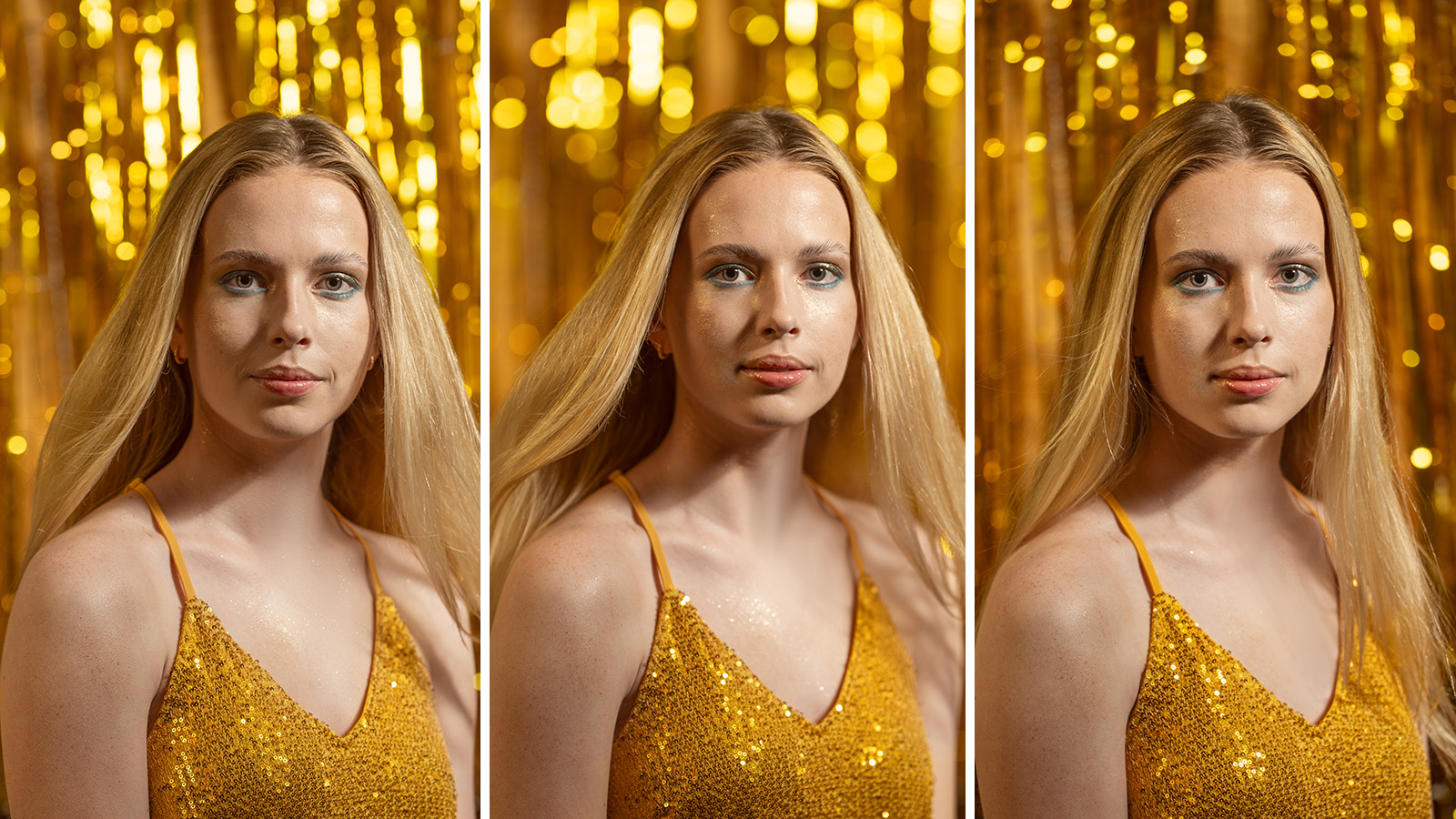

The distance between a snapshot and a portrait is measured in glass. A lens with the right focal length and aperture separates your subject from the background with an elastic, creamy blur that no software filter has ever matched. But the market is flooded with cheap telephoto zooms that promise portrait performance and deliver soft edges, ugly bokeh, and sluggish autofocus when you need it most.
We sorted through a wide range of options for the best lenses for portrait photography, including dedicated DSLR primes, mirrorless system lenses, phone attachment optics, and a few accessories that change how a lens behaves. One pick works for almost everyone, a few are purpose-built for specific gear, and at least two will surprise you. Here is the full set.
Comparison table
| # | Product | Award | Type | Focal Length | Aperture | Mount | Best for |
|---|---|---|---|---|---|---|---|
| 1 | Lightdow 85mm f/1.8 Manual Focus | Best budget portrait prime | Prime lens | 85mm | f/1.8 | Canon EF/EF-S | Canon DSLR shooters on a tight budget |
| 2 | Photography 101 Pocket Guide | Best field reference | Book | N/A | N/A | N/A | Beginners learning exposure and composition |
| 3 | TELESIN 2X Telephoto for iPhone 17 Pro | Best iPhone telephoto | Phone lens | 200mm equivalent | N/A | iPhone 17 Pro case | iPhone 17 Pro users wanting optical reach |
| 4 | TELESIN 2X Telephoto for iPhone 17 Pro Max | Best for iPhone 17 Pro Max | Phone lens | 200mm equivalent | N/A | iPhone 17 Pro Max case | iPhone 17 Pro Max owners who shoot portraits |
| 5 | Canon RF 50mm f/1.8 STM | Best compact prime | Prime lens | 50mm | f/1.8 | Canon RF | Mirrorless shooters who want one lightweight do-it-all lens |
| 6 | Canon RF 24-70mm f/2.8 L IS USM | Best professional zoom | Zoom lens | 24-70mm | f/2.8 | Canon RF | Working pros who need focal length flexibility |
| 7 | Best of Family Portrait Photography | Best technique book | Book | N/A | N/A | N/A | Photographers refining family portrait craft |
| 8 | MIAO LAB 2X Portrait Master Lens | Best universal phone lens | Phone lens | 50mm equivalent | f/1.05 | Universal clip | Smartphone shooters wanting optical bokeh |
| 9 | NEEWER 52mm Black Diffusion 1/4 Filter | Best softening filter | Filter | N/A | N/A | 52mm thread | Portrait and video shooters who want a cinematic look |
| 10 | JINTU 85mm f/1.8 Manual Focus | Best affordable manual prime | Prime lens | 85mm | f/1.8 | Canon EF/EF-S | Canon DSLR users who want a metal build |
1. Lightdow 85mm f/1.8 Manual Focus: Best budget portrait prime

Pros
- Six rounded aperture blades produce genuinely smooth bokeh
- Hybrid aspherical elements keep chromatic aberration low
- Internal focus mechanism means the barrel does not extend
- Ultraviolet multi-coating fights flare in backlit portraits
Cons
- Fully manual operation is slow for event work
- No electronic contacts means no EXIF data and no autofocus
Best for: Canon DSLR owners who want studio-quality compression on a strict budget.
The Lightdow 85mm f/1.8 is the kind of lens that reminds you why people still shoot manual glass. The focus ring has a damped, buttery rotation that makes micro-adjustments feel precise instead of frustrating, and the all-metal barrel gives it a density that plastic-bodied auto lenses cannot match. At f/1.8, the plane of focus is razor-thin, which is exactly what you want for a headshot where the eyes need to pop while the ears fall softly out of focus.
The hybrid aspherical lens element combined with ultra multi-coating technology does real work here. Chromatic aberration is well controlled even wide open, which is unusual at this level, and the six rounded aperture blades create bokeh that stays circular rather than turning into nervous hexagons when you stop down to f/2.8 or f/4. In practice, that means background highlights render as smooth disks rather than jagged polygons, and skin tones stay clean without the greenish color shift that cheaper manual primes often introduce.
This is a fully manual lens with no electronic contacts. You need to enable the "Release shutter without lens" option in your Canon camera menu and shoot in full manual (M) mode. That is not a bug; it is the tradeoff for the optical quality at this price. If you are already comfortable setting shutter speed, ISO, and aperture yourself, the Lightdow rewards you with images that hold their own against lenses costing three times as much. The JINTU 85mm f/1.8 is its closest competitor here, and the Lightdow edges ahead on coating quality and smoother bokeh transitions.
The real weakness is speed of operation. If you are photographing toddlers or fast-moving subjects, missing focus is easy. Manual focus is deliberate, and this lens punishes haste. For a studio portrait session or a coffee-shop shoot where you have time to breathe and compose, it is a joy. Skip it if you need a run-and-gun portrait lens for weddings or events where autofocus is non-negotiable.
2. Photography 101 Pocket Guide: Best field reference
Pros
- Fits in a camera bag pocket without adding noticeable weight
- Covers exposure basics, camera settings, and lens info in plain language
- Written for the Pocket Guide Series, which prioritizes quick lookup
Cons
- Not a lens; does not physically affect image quality
- Assumes you have a camera and want to learn the exposure triangle
Best for: anyone buying their first portrait lens and needing to understand aperture, depth of field, and composition on the go.
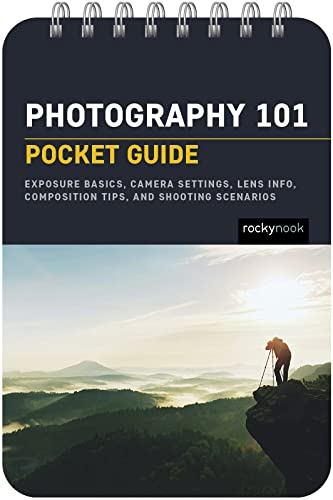
The Photography 101 Pocket Guide earns its spot here because a great portrait lens is useless if you do not know how to control it. This slim book from Rocky Nook walks through the exposure triangle, camera settings, lens specifications, and composition tips in a format you can hold in one hand while you shoot. It is part of the Pocket Guide series, and the editors have kept the text concise and example-driven so you can find the answer to "why is my background not blurry" in about 90 seconds.
The section on lens info is especially helpful for someone picking up a manual prime for the first time. It explains how focal length affects facial distortion, why an f/1.8 aperture lets in more light than f/4, and what the distance markings on the focus ring actually mean. That may sound basic to a seasoned shooter, but it is exactly the level of instruction that turns a frustrating first session with a manual lens into a productive one.
What this guide does not do is teach advanced lighting or retouching. It is a fundamentals book, and it stays in its lane. Pair it with any of the manual-focus primes in this list and you have a self-taught mini course on portrait photography that fits inside a coat pocket.
3. TELESIN 2X Telephoto for iPhone 17 Pro: Best iPhone telephoto

Pros
- Achieves a true 200mm equivalent optical zoom with the iPhone 17 Pro main sensor
- Dedicated Reef Color app uses gyroscope data for electronic stabilization
- Quick-connect plate mounts to the included phone case tool-free
- Lens hood reduces flare in bright conditions
Cons
- Works only with the TELESIN case for iPhone 17 Pro
- Electronic stabilization introduces a small crop factor
Best for: iPhone 17 Pro users who want genuine telephoto compression for portraits without digital cropping.
The TELESIN 2X Telephoto Master Lens changes the way the iPhone 17 Pro handles portraits by giving it a proper optical telephoto stage. Without the lens, the iPhone relies on its built-in telephoto sensor and digital cropping, which introduces noise and softens fine details like eyelashes and hair texture. Slap this on, and you are working with the main 48-megapixel sensor behind real glass, capturing a 200mm equivalent field of view at the pixel level.
The included Reef Color app is where the stabilization magic happens. It pulls gyroscope data directly from the phone to stabilize the image electronically, and the result is a stable viewfinder feed even at full zoom. The app crops in by about 10 percent for the stabilization buffer, but that is a small price to pay for footage that does not look like a documentary about earthquakes. For still portraits, you can shoot through the native Camera app too, though you lose the gyro stabilization.
Where this lens shines is outdoor portrait sessions where you can stand 15 to 20 feet from your subject and still fill the frame with a head-and-shoulders composition. The compression at 200mm is flattering for facial features, and the background separation is genuinely hard to distinguish from a dedicated camera lens in good light. If you shoot with an iPhone 17 Pro Max, the sibling version of this lens is built for your phone. Choose the one that matches your device.
4. TELESIN 2X Telephoto for iPhone 17 Pro Max: Best for iPhone 17 Pro Max

Pros
- Designed specifically for the larger iPhone 17 Pro Max body
- Same 200mm equivalent optical reach as the Pro version
- Tool-free adapter plate makes switching between naked and lens-mounted fast
Cons
- Requires the TELESIN case; no universal clip option
- Adds noticeable bulk to an already large phone
Best for: iPhone 17 Pro Max owners who want the longest optical reach available for mobile portraits.
The Pro Max version of the TELESIN telephoto lens shares the same optical DNA as its smaller sibling but fits the physically larger chassis of the iPhone 17 Pro Max. The lens itself is identical in performance a 200mm equivalent field of view, four times the optical reach of the built-in wide camera, and the same Reef Color app for stabilization. The difference is the case and adapter plate, which are cut to match the Pro Max camera bump and button placement.
In use, the lens delivers the same flattering compression and background isolation that makes telephoto portraits look unmistakably different from wide-angle smartphone shots. The included lens hood is not a gimmick; it cuts veiling flare when you shoot toward the sun, which is exactly when a phone lens needs the most help. The carrying case is a nice touch for keeping the glass clean in a bag.
The tradeoff is size. An iPhone 17 Pro Max is already a handful, and adding this lens makes it feel like a compact camera with a phone attached. That is fine for a planned portrait session but feels cumbersome for casual daily carry. If you shoot portraits regularly with your phone and want the best possible optical quality, the compromise is worth it. The MIAO LAB lens below uses a universal clip and fits any phone, but it cannot match the TELESINs 200mm reach.
5. Canon RF 50mm f/1.8 STM: Best compact prime

Pros
- Weighs only 160 grams; barely changes the balance of an R-series body
- The f/1.8 aperture delivers genuine shallow depth of field for portraits
- Gear-type STM motor keeps autofocus silent and smooth for video
- Control ring on the barrel allows direct exposure compensation adjustment
Cons
- Plastic construction lacks the premium feel of L-series glass
- 50mm on full-frame is slightly wide for tight headshots
Best for: Canon EOS R-series shooters who want a tiny, sharp prime for natural-light portraits and walkaround shooting.
The Canon RF 50mm f/1.8 STM is the lens that should be on every R-series camera the moment you take it out of the box. It is absurdly light at 160 grams, which means it does not turn a compact mirrorless body like the EOS R8 or R50 into a front-heavy setup. The 50mm focal length on full-frame gives a natural perspective that does not distort facial features, making it a classic choice for three-quarter and full-body portraits where you want the environment to play a supporting role.
At f/1.8, the background blur is pronounced enough to separate a subject from a busy street or a cluttered living room. The STM stepping motor is genuinely quiet, which matters when you are recording a candid interview or a video portrait and do not want the sound of focusing in the audio track. The control ring adds a tactile way to adjust settings without diving into menus, and the lens coatings do a respectable job controlling flare for a budget prime. If you are choosing your first Canon mirrorless body to pair with this lens, picking a body that gives you full manual control without overwhelming menus is half the battle.
The limitation is that 50mm is not tight enough for a tight headshot unless you crop in post or get uncomfortably close to your subject. For that kind of compression, you want an 85mm lens like the Lightdow or JINTU in this list. But the RF 50mm f/1.8 STM is the lens you leave on the camera when you do not know what you are shooting next, and that versatility is why it is the top-selling RF prime for a reason.
6. Canon RF 24-70mm f/2.8 L IS USM: Best professional zoom

Pros
- Constant f/2.8 aperture holds exposure steady across the entire zoom range
- Optical stabilization corrects up to five stops of camera shake
- Nano USM autofocus is near-silent and fast enough for video face tracking
- L-series weather sealing handles dust and light rain
Cons
- Large and heavy compared to prime lenses
- f/2.8 is not as fast as f/1.8 primes for low-light portraits
Best for: professional photographers who need one lens that covers everything from wide environmental portraits to tight crops.
The Canon RF 24-70mm f/2.8 L IS USM is the workhorse zoom that lives on the cameras of working pros. At 24mm, you can shoot a full environmental portrait that shows the studio or location; at 70mm, you get a flattering head-and-shoulders compression that rivals many primes. The constant f/2.8 aperture means you do not lose light as you zoom, which keeps your exposure consistent during a fast-moving shoot.
The five-stop image stabilization is a real advantage for handheld shooting in dim churches or evening events. It lets you drop your shutter speed to 1/15th of a second and still get sharp results, which is exactly what you need when ambient light is low and you want to keep your ISO down. The Nano USM motor drives autofocus so quickly and quietly that you barely notice it working, and the face-detect tracking on R-series bodies locks onto eyes and stays there even as the subject moves.
The tradeoff with the 24-70mm f/2.8 is bulk and speed. It weighs nearly a kilogram, and it changes the handling of any camera body. For a planned portrait session where you are carrying a single camera, it is manageable. For a whole day of walking and shooting, your neck will feel it. And while f/2.8 is fast for a zoom, it does not produce the same paper-thin depth of field that an f/1.8 prime delivers for a half-body portrait. If absolute background blur is your priority, the RF 50mm f/1.8 STM or an 85mm prime is a better choice.
7. Best of Family Portrait Photography: Best technique book

Pros
- Covers posing, lighting, and client work from experienced professionals
- Focused specifically on group and family portraits, not general photography
- Full-color image examples show before-and-after results
Cons
- Published by Amherst Media; some techniques date back a few years
- Not a how-to guide for operating specific lenses
Best for: photographers who already understand exposure and want to move into paid family portrait work.
The Best of Family Portrait Photography collects techniques from multiple working photographers and compiles them into a single reference that covers posing groups, managing natural and artificial light, and running a portrait business. Unlike the Photography 101 Pocket Guide, which focuses on camera fundamentals, this book assumes you already know how to use your gear and want to improve your results with real clients.
The posing sections are the strongest part of the book. Arranging three or four people so that everyone looks natural and flattered is harder than it looks, and the book breaks down the geometry of group posing in a way that is easy to replicate. It also covers lighting setups for indoor studio work and outdoor natural light, which complements the lenses in this list by helping you understand which focal lengths work best for different group sizes.
The main limitation is that the book is a few years old and some of the digital post-processing techniques have been superseded by newer software. The lens recommendations and lighting principles have not aged, though. If you are building a portrait photography business and want a reference that covers the human side of the craft rather than the technical specs of glass, this is a useful companion.
8. MIAO LAB 2X Portrait Master Lens: Best universal phone lens

Pros
- F1.05 ultra-large aperture creates genuine optical bokeh that software portrait modes cannot match
- Seven-element, six-group optical design with nano AR coatings
- 72mm front filter thread accepts ND, CPL, and black mist filters
- Universal clip fits 99 percent of smartphones, including iPhone and Android
Cons
- The clip can be fiddly with thick protective cases
- 2X magnification is less reach than the TELESIN 200mm equivalent
Best for: smartphone photographers who want authentic depth of field and the ability to use pro filters on their phone.
The MIAO LAB 2X Portrait Master Lens brings a genuinely fast aperture to smartphone photography. The f/1.05 rating is remarkable for a phone-attachment lens, and it produces optical bokeh that no software portrait mode can replicate. Where phone algorithms struggle with flyaway hair, glasses reflections, and the edges of a subject's jacket, this lens delivers a physical depth of field that is sharp where you focus and smoothly blurred everywhere else.
The seven-element optical design with nano AR coatings is serious engineering for a device that clips onto a phone. It suppresses ghosting and flare better than most clip-on lenses we have seen, and the contrast remains high even in backlit conditions. The 72mm front filter thread is a standout feature: you can screw on a variable ND filter for video work, a circular polarizer for cutting reflections in a portrait with glasses, or a black mist filter for a cinematic look. That kind of flexibility is unheard of in this category.
The universal clip works with most phones, but the fit is tight on phones with thick protective cases. You may need to remove the case for a secure attachment. The 2X magnification is a 50mm equivalent field of view, which is the classic portrait focal length on full-frame cameras. It produces natural facial proportions without the distortion of a wide-angle phone camera. If you want more reach, the TELESIN lenses give you 200mm, but they lock you into a specific iPhone model. The MIAO LAB lens fits everything and gives you that filter thread.
9. NEEWER 52mm Black Diffusion 1/4 Filter: Best softening filter

Pros
- Reduces highlight contrast to create a soft, cinematic look in-camera
- Multiple nano coatings repel water, oil, and dust
- Ultra-slim frame avoids vignetting on wide and telephoto lenses
- CNC-machined trapezoidal grip ring makes installation easy
Cons
- Works only with lenses that have a 52mm filter thread
- Diffusion effect is permanent; you cannot toggle it off without removing the filter
Best for: portrait and video shooters who want that misty, dreamy look straight out of camera without editing.
The NEEWER 52mm Black Diffusion 1/4 Filter is the kind of accessory that changes how you shoot because it changes what you see in the viewfinder. The black diffusion technology reduces the contrast of bright highlights and softens fine details, which makes skin look smoother and gives the whole frame a gentle, cinematic glow. It is the same look that expensive cinema lenses produce with built-in diffusion, but applied here as a screw-on filter that works with any 52mm lens.
The 1/4 strength is a sweet spot for portraits. It softens blemishes and wrinkles without making the image look hazy or out of focus. Highlights bloom slightly around their edges, which creates a nostalgic, film-like quality that is hard to replicate in post without looking artificial. The multiple nano coatings are a practical bonus: they make the filter easy to clean and reduce reflections that could introduce flare.
The limitation is that you need a 52mm lens to use it. That happens to be the filter thread size for many 50mm f/1.8 primes, including the Canon RF 50mm f/1.8 STM, so it pairs naturally with one of the best lenses in this list for portrait photography. If your lenses use a different thread size, check the filter ring diameter printed on the front of your lens. The NEEWER is an affordable way to change the character of your portraits without buying new glass.
10. JINTU 85mm f/1.8 Manual Focus: Best affordable manual prime

Pros
- All-metal body construction feels solid and durable
- Hybrid aspherical elements deliver sharp center resolution even wide open
- Large f/1.8 aperture creates shallow depth of field and good low-light performance
- Compatible with a huge range of Canon EF and EF-S mount DSLR bodies
Cons
- Manual focus only with no electronic contacts
- No stabilization; you need steady hands or a tripod at slow shutter speeds
Best for: Canon DSLR shooters who want a metal-bodied portrait prime that can take some abuse in the field.
The JINTU 85mm f/1.8 is the other manual-focus 85mm prime in this roundup, and it distinguishes itself from the Lightdow with its all-metal construction and slightly different optical character. The barrel is a single piece of machined aluminum with a black anodized finish that feels substantial in the hand. The focus ring has a damped rotation with enough resistance to hold position once set, which is important for portrait work where you might recompose after focusing.
The hybrid aspherical lens elements keep the image sharp from center to mid-frame, even at f/1.8. Wide open, there is a softness in the extreme corners that you would not notice in a portrait but would see in an architectural shot. For portraiture, that is irrelevant; the center sharpness on the subject's eyes is what matters, and the JINTU delivers there. The bokeh is smooth but slightly more nervous than the Lightdow under very close inspection, with a faint texture in out-of-focus highlights that some shooters actually prefer for its character.
The same manual-focus caveats apply here as with the Lightdow. You need to shoot in manual mode with the "Release shutter without lens" setting enabled on your Canon body. The lack of electronic contacts means your camera will not record lens data in EXIF, and you must judge exposure yourself. If you want autofocus and electronic communication, you need a native Canon lens at a much higher price. The JINTU is for photographers who value tactile control and metal build quality over convenience.
How to choose portrait photography lenses
Focal length and compression
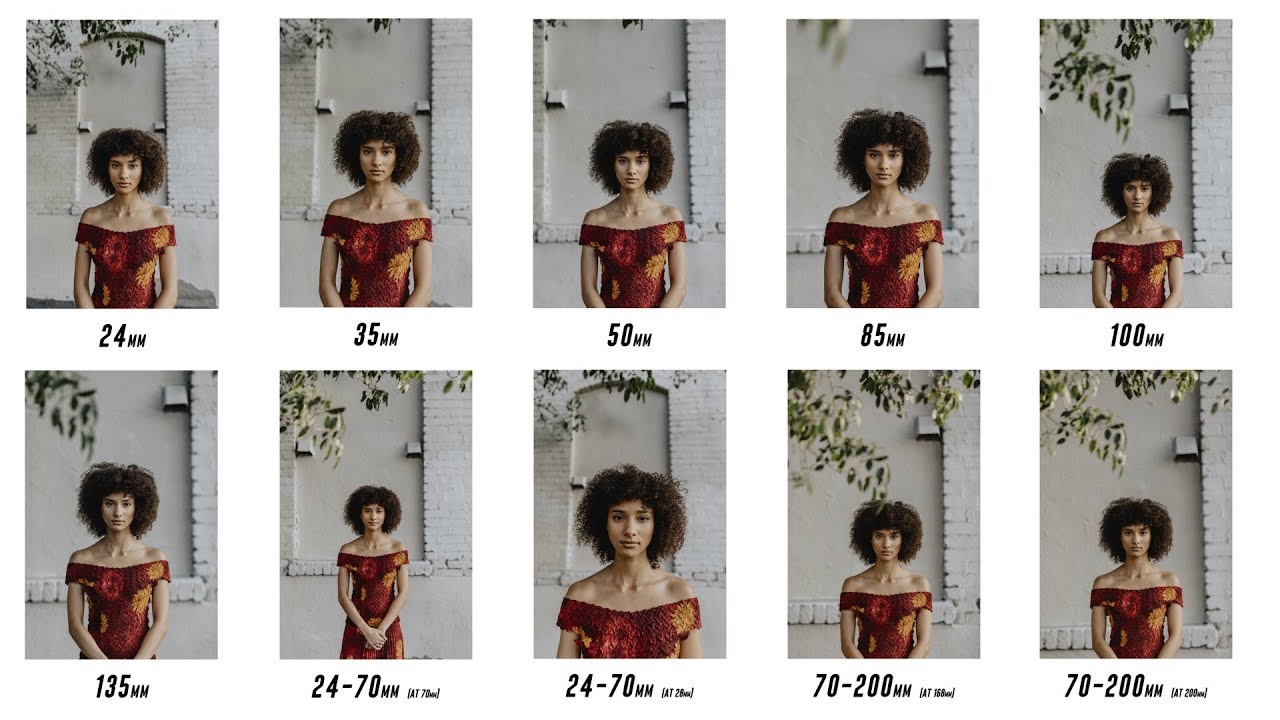
The focal length determines how facial features are rendered. A 50mm lens on full-frame produces a natural perspective that matches what the human eye sees. An 85mm lens compresses the face slightly, making the nose appear a little smaller and the ears a little closer to the viewer, which is flattering for headshots. A 24mm wide-angle, even a good one, makes the nose look larger and the face wider, which is why you rarely see wide-angle portraits. For most of the best lenses for portrait photography, stick to 50mm, 85mm, or their equivalent fields of view on crop-sensor cameras (roughly 35mm and 56mm on APS-C).
Aperture and depth of field
A wide aperture like f/1.8 or f/1.4 creates a shallow depth of field that isolates the subject from the background. That blur, called bokeh, is what gives portraits that professional look. But shooting wide open means the plane of focus is very thin. If you focus on the tip of the nose, the eyes will be soft. You need enough depth of field to keep both eyes sharp, which usually means stopping down to f/2.8 or f/4 for close headshots. A fast aperture is still valuable because it gives you more light to work with, which means cleaner images at lower ISOs.
Autofocus versus manual focus
Autofocus is faster. Manual focus is more precise. Portrait photography is the one discipline where the slower option often wins.
For a posed portrait where your subject holds still, manual focus lets you place the focal plane exactly on the eye and recompose without worrying about focus-and-recompose errors. For children or any moving subject, autofocus with eye-detection is dramatically better. If you buy a manual lens like the Lightdow or JINTU, you are accepting that candid portraits will be harder to capture. If you buy the Canon RF 50mm f/1.8 STM, you get fast autofocus and eye tracking that works even in moderate low light.
Build quality and mount compatibility
Metal-bodied lenses last longer and feel better than plastic ones, but they are heavier. For travel portrait work, a compact lens like the Canon RF 50mm f/1.8 STM is much easier to carry than the hefty RF 24-70mm f/2.8 L. Mount compatibility matters too: the Lightdow and JINTU work with Canon EF and EF-S DSLRs. The TELESIN and MIAO LAB lenses attach to smartphones. Make sure the lens mount matches your camera body before you buy, especially if you are using a mirrorless system that requires an adapter for DSLR lenses.
Frequently asked questions
What is the best focal length for portrait photography?
85mm on full-frame is the traditional sweet spot because it compresses facial features flatteringly without requiring you to stand unreasonably far from your subject. 50mm is more versatile for full-body and environmental portraits. On a crop-sensor camera, 50mm gives roughly an 80mm equivalent field of view, which works very well for portraits.
Can I use a kit zoom lens for portraits?
Yes, but the results will differ from a dedicated portrait prime. Kit zooms typically have a maximum aperture of f/3.5 to f/5.6, which creates less background blur and requires more light than an f/1.8 prime. You can still take great portraits with a kit lens by using longer focal lengths and placing your subject far from the background to maximize the blur.
Do I need a full-frame camera for good portraits?
No. Crop-sensor cameras like the Canon Rebel series or R10 have smaller sensors, but they still produce excellent portraits with the right lens. The key is using a focal length that gives you a flattering perspective. On an APS-C camera, a 50mm lens becomes roughly an 80mm equivalent, which is a very good portrait length.
What does f/1.8 mean for portrait photography?
An f/1.8 aperture means the lens lets in a lot of light and creates a shallow depth of field. In practice, that allows you to shoot in dimmer conditions without raising your ISO, and it produces the blurred background look that separates a portrait from a snapshot. The background blur at f/1.8 is noticeably stronger than at f/2.8.
How do phone lens attachments compare to dedicated camera lenses?
Phone lens attachments like the MIAO LAB and TELESIN improve smartphone portraits significantly by adding optical magnification and better light collection. They cannot match the image quality of a dedicated camera lens because the phone sensor is much smaller and processes the image more aggressively. However, they are a genuine upgrade over bare phone cameras and cost a fraction of what a new camera system costs.
Is a manual focus lens too difficult for a beginner?
Manual focus takes practice, but the Lightdow and JINTU lenses are actually good teaching tools because they force you to understand focus, aperture, and shutter speed as separate controls. If you are patient and your subject stays still, manual focus can produce images just as sharp as autofocus. For fast-moving subjects, autofocus is strongly recommended.
What does a diffusion filter do to portraits?
A black diffusion filter like the NEEWER 52mm softens highlights and reduces contrast, which makes skin look smoother and gives the image a cinematic, slightly dreamy quality. It is the same effect that makeup and soft lighting produce, but applied optically to the entire frame. It works best on lenses with a 52mm filter thread and is popular among videographers and portrait photographers who want to avoid heavy retouching.
The bottom line
The Canon RF 50mm f/1.8 STM is the lens we would recommend to the widest range of shooters. It is small enough to carry everywhere, sharp enough for professional work, and compatible with the entire Canon EOS R system. If you shoot Canon DSLR rather than mirrorless, the Lightdow 85mm f/1.8 Manual Focus delivers similar portrait results at a lower cost, provided you are comfortable with manual focus. For smartphone shooters, the MIAO LAB 2X Portrait Master Lens offers the best combination of optical quality and universal compatibility.
The best lenses for portrait photography are not always the most expensive ones. An 85mm f/1.8 prime from a third-party brand, used with care, can produce images that are indistinguishable from a lens costing ten times as much. The difference is convenience, build quality, and autofocus speed. Decide which of those three tradeoffs matters most to you, and buy the lens that matches your priority.
As an Amazon Associate we earn from qualifying purchases.