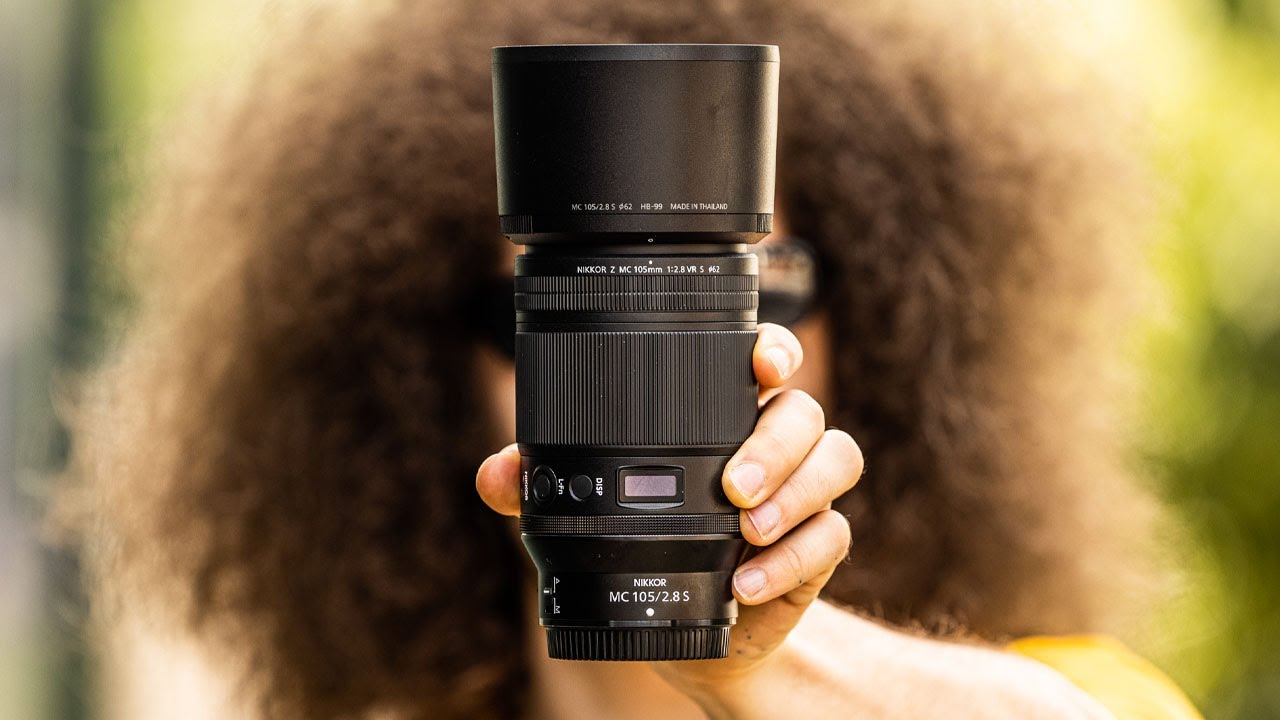

Small subjects expose a lens's weaknesses quickly. Soft corners, a short working distance, or unreliable autofocus can turn a flower, insect, or product detail into a frustrating blur. The Best Macro Lenses for Nikon range from dedicated 1:1 optics to compact close-up attachments, and they are not interchangeable in practice.
We ranked these ten lenses by their actual macro capability, mount family, working distance, handling, and usefulness beyond close-ups. The Nikon Z MC 105mm f/2.8 VR S is the strongest all-round choice, while the rest cover lighter DX kits, full-frame DSLRs, extreme 2X magnification, and casual close-up work.
Comparison of the Best Macro Lenses for Nikon
| # | Product | Award | Magnification | Focal length | Best for |
|---|---|---|---|---|---|
| 1 | Nikon Z MC 105mm | Best overall | 1:1 | 105mm | Z series macro and portraits |
| 2 | Nikon DX Micro 40mm | Best compact DSLR macro | 1:1 | 40mm | DX cameras and everyday close-ups |
| 3 | Yongnuo 50mm f/1.8N | Best general-purpose prime | Not specified | 50mm | Nikon DSLR everyday shooting |
| 4 | Altura Photo 52mm Macro | Best close-up attachment | Not specified | 52mm thread | Occasional close-ups |
| 5 | Sigma 105mm Macro | Best stabilized DSLR macro | 1:1 | 105mm | Full-frame DSLR macro |
| 6 | Nikon FX Micro 60mm | Best standard-view DSLR macro | Not specified | 60mm | FX and DX DSLR owners |
| 7 | Nikon 105mm Micro Renewed | Best renewed 105mm | 1:1 | 105mm | DSLR users wanting VR |
| 8 | TTArtisan 100mm Macro 2X | Best extreme magnification | 2:1 | 100mm | Tiny textures and insects |
| 9 | Nikon 105mm Micro | Best classic DSLR macro | 1:1 | 105mm | Established Nikon DSLR systems |
| 10 | Nikon Z MC 50mm | Best compact Z macro | 1:1 | 50mm | Walkaround Z cameras |
1. Nikon Z MC 105mm: Best Overall
Pros
- 1:1 macro magnification
- 105mm reach gives insects and flowers breathing room
- Vibration Reduction helps with handheld shooting
- Weather sealing supports outdoor work
- Useful f/2.8 aperture for portraits
Cons
- Larger and heavier than the Z MC 50mm
- Designed for Nikon Z series mirrorless cameras
- Macro depth of field remains very shallow at close range
Best for: Z series photographers who want one serious macro lens for nature, products, and portraits.
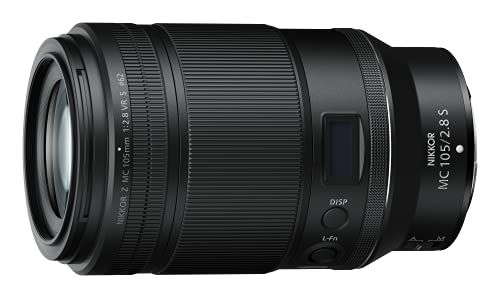
The Nikon Z MC 105mm is the lens in this group that feels easiest to recommend without a long list of qualifications. Its 105mm perspective lets you frame a small subject without pressing the front of the lens close to it, which matters with insects and anything that reacts to your shadow. It also makes the lens useful for portraits, so it does not become a specialist tool that stays in a drawer.
This is a true 1:1 macro lens, meaning a subject can be recorded life-size on the camera sensor. The f/2.8 maximum aperture gives the viewfinder a useful amount of brightness and creates background blur when the subject and background are separated. At macro distances, f/2.8 does not make the whole subject sharp by itself. Fine details can still fall outside the depth of field, so careful focusing remains part of the process.
Nikon gives the lens Vibration Reduction, a meaningful advantage for handheld nature photography and close video work. Its S-Line optical design is intended to keep sharpness, contrast, and clarity high while reducing distortion and aberrations. Weather sealing around the moving parts adds confidence outdoors, though it is not a reason to leave the camera exposed to poor weather unnecessarily.
Compared with the Nikon Z MC 50mm, this lens is less compact but offers a more comfortable working distance and a more flattering portrait perspective. The Sigma 105mm Macro is the closest DSLR alternative here, but it belongs to a different camera system. The weakness is straightforward: at 1.39 pounds, the Nikon is not the lightest lens for a small Z body, and its reach can feel excessive for tabletop work in a cramped room.
For Z series owners who photograph insects, flowers, jewelry, food, or portraits, this is the clear first choice. Photographers who mostly shoot documents or objects on a desk may prefer the smaller Z MC 50mm.
2. Nikon DX Micro 40mm: Best Compact DSLR Macro

Pros
- 1:1 reproduction ratio
- Compact 0.518-pound design
- Autofocus works from infinity to life-size
- Close-range correction system
- f/2.8 aperture
Cons
- Short working distance compared with 105mm lenses
- Designed around DX DSLR cameras
- No zoom capability
Best for: DX DSLR owners who want a small dedicated macro lens for flowers, food, and tabletop subjects.
The Nikon DX Micro 40mm is the sensible small-camera option. It weighs just over half a pound and measures about 2.7 inches in its listed height and width, so it keeps a DX DSLR relatively manageable. That makes it easier to carry for everyday photography than a long 105mm macro lens.
Its 1:1 reproduction ratio gives it legitimate macro credentials rather than merely close-focusing behavior. Nikon lists a minimum focus distance of 0.53 feet, or roughly 6.4 inches, and autofocus is specified from infinity to life-size. That range works well for flowers, food, coins, and small objects where the photographer can get close without needing much working distance.
The 40mm focal length has a practical trade-off. It shows a wider view than the Nikon FX Micro 60mm and the 105mm options, which helps in tight spaces. The flip side is that you need to move closer to fill the frame. That can cast a shadow over a subject or disturb an insect, situations where the Nikon Z MC 105mm is plainly more comfortable.
The lens uses Nikon's close-range correction system and a Silent Wave Motor. Those details support consistent close focusing, but this is not a stabilized lens in the supplied information, so shutter speed and camera support matter more when light drops. It is also a fixed focal length, with no zoom flexibility.
Choose this over the Nikon FX Micro 60mm when a DX body and low carry weight are the priority. Skip it if you regularly photograph skittish subjects or need space between the camera and the subject. For a DX owner who wants a dedicated macro lens that can stay in the camera bag, it remains one of the cleanest fits in this list.
3. Yongnuo 50mm f/1.8N: Best General-Purpose Prime

Pros
- Bright f/1.8 maximum aperture
- Autofocus and manual focus modes
- Supports full-frame and APS-C cameras
- EXIF parameter support
- Lightweight 0.45-pound body
Cons
- Not presented as a dedicated macro lens
- No specified reproduction ratio
- No stabilization listed
Best for: Nikon F-mount DSLR users who want a bright normal prime that can handle occasional close subjects.
The Yongnuo 50mm f/1.8N is the outlier in this roundup. It is a standard prime rather than a dedicated macro lens, so it belongs here only for readers who use “macro” loosely to mean close detail photography. Its appeal is broader everyday use: a familiar 50mm view, a bright f/1.8 aperture, and a body that weighs 0.45 pounds.
The f/1.8 aperture helps in dim interiors and gives photographers more control over background blur than a typical kit zoom. Yongnuo lists both autofocus and manual focus, along with support for M, Av, Tv, and P shooting modes. It also supports full-frame and APS-C Nikon cameras, making it a flexible F-mount option when the same lens needs to move between camera bodies.
There is no supplied reproduction ratio or minimum focus distance, so it cannot be compared fairly with the Nikon DX Micro 40mm or Sigma 105mm Macro as a true macro tool. The absence of a stated macro specification is the important fact here. It may be useful for details, food, and portraits, but it does not offer the dedicated close-focus certainty of a 1:1 lens.
Gold-plated metal contacts are listed to improve signal conductivity and corrosion resistance, and the lens can pass shooting parameters into EXIF information. Those are useful system features, although they do not change the lens's close-up limits. The small body is a benefit for travel, while the lack of stabilization and dedicated macro capability are clear boundaries.
The Yongnuo makes sense for a DSLR owner who wants a general-purpose prime first and occasional close detail second. If macro photography is the main reason for buying, choose the Nikon DX Micro 40mm or Nikon FX Micro 60mm instead.
4. Altura Photo 52mm Macro: Best Close-Up Attachment

Pros
- Detachable macro section
- Wide-angle and close-up functions in one attachment
- Fits compatible 52mm filter threads
- Broad list of supported Nikon DSLR models
- Lightweight accessory approach
Cons
- Requires a lens with a 52mm front thread
- Not a replacement for a dedicated macro lens
- Compatibility depends on thread size, not just camera model
Best for: DSLR owners who already have a compatible 52mm lens and want occasional close-up experimentation.
The Altura Photo 52mm Macro is an attachment, not a standalone Nikon macro lens. It screws onto the front of a compatible lens and combines a wide-angle converter with a detachable macro section. That makes it a low-commitment way to experiment with close-ups, especially for photographers who already own a lens with the required front thread.
The compatibility detail matters more than the camera brand. Altura specifies 52mm lenses and tells buyers to look for the diameter symbol and thread size on the lens barrel or beneath the cap. A compatible Nikon DSLR body does not guarantee a fit. The Nikon model list is broad, but the front thread still decides whether this accessory can be used.
The macro portion can produce close views of small objects, while the wide-angle portion expands the field of view. That dual-purpose design is more versatile than a single close-up filter, but it also introduces compromises that a dedicated lens avoids. There is no supplied 1:1 reproduction ratio, focal length, or minimum focus distance, so buyers should treat it as an accessory for creative close-ups rather than precision macro work.
It makes more sense beside the Yongnuo 50mm f/1.8N than beside the Nikon Z MC 105mm. The Yongnuo can serve as a normal prime with this kind of add-on if the thread matches, while the Z MC 105mm already provides dedicated optical design, stabilization, and 1:1 capture. The Altura's weakness is its dependence on another lens and its lack of a standardized macro specification.
Before ordering, check the thread on the lens you intend to use. If it is 52mm and close-up work is occasional, this is a practical experimenter's tool. If insects, product photography, or repeatable 1:1 framing are central to the project, a dedicated macro lens is the better route.
5. Sigma 105mm Macro: Best Stabilized DSLR Macro

Pros
- 1:1 magnification
- 105mm focal length for comfortable subject distance
- Optical Stabilizer and HSM design in the model name
- Works on full-frame DSLR cameras
- Useful 12.3-inch closest working distance
Cons
- Weighs about 1.6 pounds
- Less convenient on small DSLR bodies
- No zoom capability
Best for: Full-frame Nikon DSLR owners who want long-reach macro framing and stabilization.
The Sigma 105mm Macro has the classic macro perspective that many nature photographers prefer. Its 105mm focal length allows a small subject to fill the frame while leaving useful space between the front of the lens and the subject. That is a practical advantage with insects, and it also gives backgrounds a tighter, more isolated look than the 40mm and 50mm choices.
Sigma specifies 1:1 focusing at a closest working distance of 12.3 inches. That is the number that separates this lens from general-purpose primes in this group. It is designed for full-frame digital SLR cameras and can also be used on APS-C bodies, where the effective focal length becomes about 150mm with most cameras. That extra reach can be useful, though it can make framing less forgiving.
The model includes Optical Stabilizer and HSM in its designation, and the supplied feature list describes the lens as a full-frame macro optic. Stabilization can help with camera movement in ordinary handheld shooting, but it cannot freeze a moving insect or remove the narrow depth of field that comes with close focusing. A steady technique is still essential.
At roughly 1.6 pounds, the Sigma is heavier than the Nikon FX Micro 60mm and Nikon DX Micro 40mm. The Nikon 105mm Micro lenses are its closest rivals in this selection. The Sigma's weakness is not its focal length or stated magnification, but the weight and the fact that it is a fixed focal length with no framing flexibility.
This is the DSLR choice for photographers who want comfortable working distance and a stabilized 1:1 setup. Pick a shorter lens for tabletop work in tight rooms, or look to the Nikon Z MC 105mm if the camera system is mirrorless Z rather than F-mount DSLR.
6. Nikon FX Micro 60mm: Best Standard-View DSLR Macro

Pros
- Works with Nikon FX and DX DSLRs
- 60mm focal length on full frame
- 90mm effective focal length on APS-C
- Minimum focus distance of 8 inches
- f/2.8 maximum aperture
Cons
- Shorter working distance than 105mm lenses
- No reproduction ratio supplied in the listing
- No stabilization listed
Best for: Nikon DSLR owners who want a normal perspective on FX or a tighter view on DX.
The Nikon FX Micro 60mm sits neatly between the compact DX 40mm and the longer 105mm lenses. On an FX DSLR it offers a standard perspective that works for products, food, flowers, and general detail photography. On a DX camera, the listed effective focal length is 90mm, giving it more subject separation and a little more working room.
Nikon lists a minimum focus distance of 8 inches and identifies the lens as an AF-S 60mm f/2.8G ED model. The f/2.8 aperture is useful for general photography and lets the lens double as a normal short prime on a full-frame body. The 8-inch minimum distance is workable for objects and stationary subjects, though it offers less breathing room than the Sigma 105mm Macro's stated 12.3-inch working distance.
Compatibility is one of this lens's strongest points. The listing names both FX and DX Nikon DSLRs, including older bodies such as the D40, D60, D80, D90, and D300. That broad fit makes it a sensible choice for photographers maintaining an established DSLR system. The lens is also considerably more compact than the 105mm alternatives, with a listed weight of about 0.94 pounds.
The supplied data does not state a reproduction ratio, so we would not assume the same close-up result as a specified 1:1 lens. That is the main reason it sits below the Sigma and Nikon 105mm options for dedicated macro work. It beats those lenses when the shooting space is tight and the lens needs to remain useful for ordinary subjects.
Choose it for an FX or DX DSLR when standard-view framing matters as much as close focus. If the goal is photographing insects from a comfortable distance, the longer Nikon 105mm Micro or Sigma is a stronger match.
7. Nikon 105mm Micro Renewed: Best Renewed 105mm

Pros
- 1:1 reproduction ratio
- VR II vibration reduction
- Internal focus keeps the lens length unchanged
- Nano Crystal Coat and ED glass
- 105mm working perspective
Cons
- Heavy at about 2.01 pounds in the listing
- Renewed condition requires careful inspection
- No zoom capability
Best for: Nikon DSLR owners who want a stabilized 105mm macro lens in a renewed listing.
The Nikon 105mm Micro Renewed offers the familiar formula of long macro reach, 1:1 reproduction, and vibration reduction. Its 105mm focal length is well suited to insects and flowers because the photographer can fill the frame without crowding the subject. It is also long enough to produce a more isolated background than the Nikon FX Micro 60mm.
Nikon specifies a minimum focus distance of 1.03 feet and a maximum reproduction ratio of 1.0x. The lens uses internal focus, so focusing does not change the physical length of the lens. That is useful when working close to a subject, where a barrel extending forward could disturb the subject or alter the light.
The optical design includes Nano Crystal Coat and ED glass elements. These features are intended to reduce flare and chromatic aberration while maintaining image quality. VR II vibration reduction helps with camera movement, but as with every macro lens, it does not make a moving subject stand still. The listed lens is also fixed at 105mm, with no zoom range.
This model is closely related in use to the Nikon 105mm Micro below, but the renewed condition changes the buying decision. A renewed listing makes the condition, included accessories, and return terms especially important to verify before committing. The listing also gives an unusually high listed weight of about 2.01 pounds, so it is not a lightweight pairing for a small DSLR.
Choose it when stabilization and 1:1 capture matter more than portability and the listing's condition is acceptable to you. Skip it if you want a new, compact lens or if you prefer the lighter handling of the Nikon FX Micro 60mm.
8. TTArtisan 100mm Macro 2X: Best Extreme Magnification

Pros
- 2:1 magnification
- 100mm focal length
- Full-frame design
- 14 elements in 10 groups
- High-refraction elements for detail and color reproduction
Cons
- Extreme magnification makes focusing demanding
- Lens versions are shipped randomly
- Slight vignetting is listed in medium format at 2:1
Best for: Full-frame photographers who want to record details beyond ordinary 1:1 macro.
The TTArtisan 100mm Macro 2X is the specialist pick. Its headline feature is 2:1 magnification, allowing details to appear twice life-size on the sensor. That opens a different kind of macro photography, from insect textures to the fine structures in plants, where a conventional 1:1 lens may not fill the frame enough.
The lens uses a 100mm focal length and is designed for full-frame cameras. The supplied information describes a 14-element, 10-group optical structure with six high-refraction lenses. Those specifications point to a complex design intended to preserve detail and color reproduction across macro and landscape work, though the extreme magnification still demands careful technique.
There are compatibility caveats. The product information lists Nikon Z as the size, while the feature text describes a full-frame camera design, so buyers should confirm the mount version for their specific Nikon body. The listing also says versions ship randomly and differ only in focus throw, with the same functions. That is a detail worth understanding before ordering.
The lens is more demanding than the Nikon Z MC 105mm or Sigma 105mm Macro. At 2:1, depth of field becomes exceptionally narrow, and even small movements can shift the focus plane. The listing notes slight vignetting in medium format at a 2:1 ratio, which disappears at 1:1, another reason to keep the intended camera format in mind.
This is not the easy default for flowers and everyday close-ups. It is the right tool for a photographer who specifically wants extreme magnification and is prepared to work carefully. If 1:1 is enough, the Nikon Z MC 105mm offers a more balanced experience.
9. Nikon 105mm Micro: Best Classic DSLR Macro

Pros
- 1:1 reproduction ratio
- VR II vibration reduction
- Nano Crystal Coat and ED glass
- Internal focusing
- 105mm focal length
Cons
- Heavy at 789 grams
- Older DSLR-focused design
- No zoom capability
Best for: Nikon DSLR owners who want a classic stabilized 105mm macro lens.
The Nikon 105mm Micro is the established DSLR counterpart to the newer Z MC 105mm. It provides the same useful 105mm working perspective and a stated 1.0x reproduction ratio, so small subjects can be recorded life-size. For insects, flowers, and detail work, the focal length gives more space than the 40mm and 60mm lenses.
Nikon lists a 1.03-foot minimum focus distance and a 23 degrees 20 minutes maximum angle of view in FX format. Internal focus keeps the lens from changing length while focusing, which is helpful around delicate subjects. The lens is not zoomable, so framing is controlled by moving the camera rather than turning a zoom ring.
VR II vibration reduction is built in, and the optical design includes Nano Crystal Coat and ED glass. These features target camera shake, flare, and chromatic aberration. They make the lens versatile for ordinary photography as well as macro, but the stabilization cannot compensate for subject motion or the very shallow focus area at close distances.
The biggest practical issue is weight. Product information lists 789 grams, making it heavier than the Nikon DX Micro 40mm and Nikon FX Micro 60mm. The Nikon 105mm Micro Renewed shares the same general strengths and limitations, so the choice between them depends heavily on listing condition and the specific buying terms rather than a radically different optical concept.
This lens remains a strong fit for a Nikon DSLR owner who wants a dedicated 105mm macro with VR. Z series users should choose the Nikon Z MC 105mm instead, while photographers who carry a small kit will find the Nikon FX Micro 60mm easier to live with.
10. Nikon Z MC 50mm: Best Compact Z Macro

Pros
- 1:1 life-size magnification
- Compact 0.57-pound design
- f/2.8 maximum aperture
- Natural 50mm view
- Useful for food and everyday photography
Cons
- Shorter working distance than the Z MC 105mm
- Front-focusing design
- No stabilization listed
Best for: Nikon Z users who want a small macro lens that can stay mounted for everyday shooting.
The Nikon Z MC 50mm is the compact alternative to the Z MC 105mm. It offers 1:1 magnification but keeps the package to about 0.57 pounds, making it much easier to leave on a small Z camera. Its natural 50mm view suits food, snapshots, tabletop subjects, and everyday scenes as well as close-up photography.
The f/2.8 maximum aperture gives it the same basic light-gathering class as the other dedicated Nikon macro lenses here. At ordinary distances, it can create a softly blurred background and a natural perspective. At macro distances, the short focal length means the camera needs to get close to the subject to fill the frame, which is the main handling difference between this lens and the 105mm.
Nikon uses a front-focusing design to keep the lens compact and light. That helps portability, but the forward movement can matter around insects or in setups where the subject is very close to the front element. The supplied information does not list vibration reduction, so handheld work in dim light depends more on shutter speed and support.
The Z MC 50mm is a better walkaround lens than the Z MC 105mm when size matters. The 105mm wins for working distance, portraits, and subject isolation, while the 50mm wins for cramped interiors and a camera that needs to remain easy to carry. Neither is a zoom, so the photographer still frames by moving closer or farther away.
Pick this lens for a Z series body that spends as much time photographing meals, objects, and daily life as it does flowers. If wildlife and insects dominate the brief, the Nikon Z MC 105mm is the more capable choice.
How to choose best macro lenses for nikon
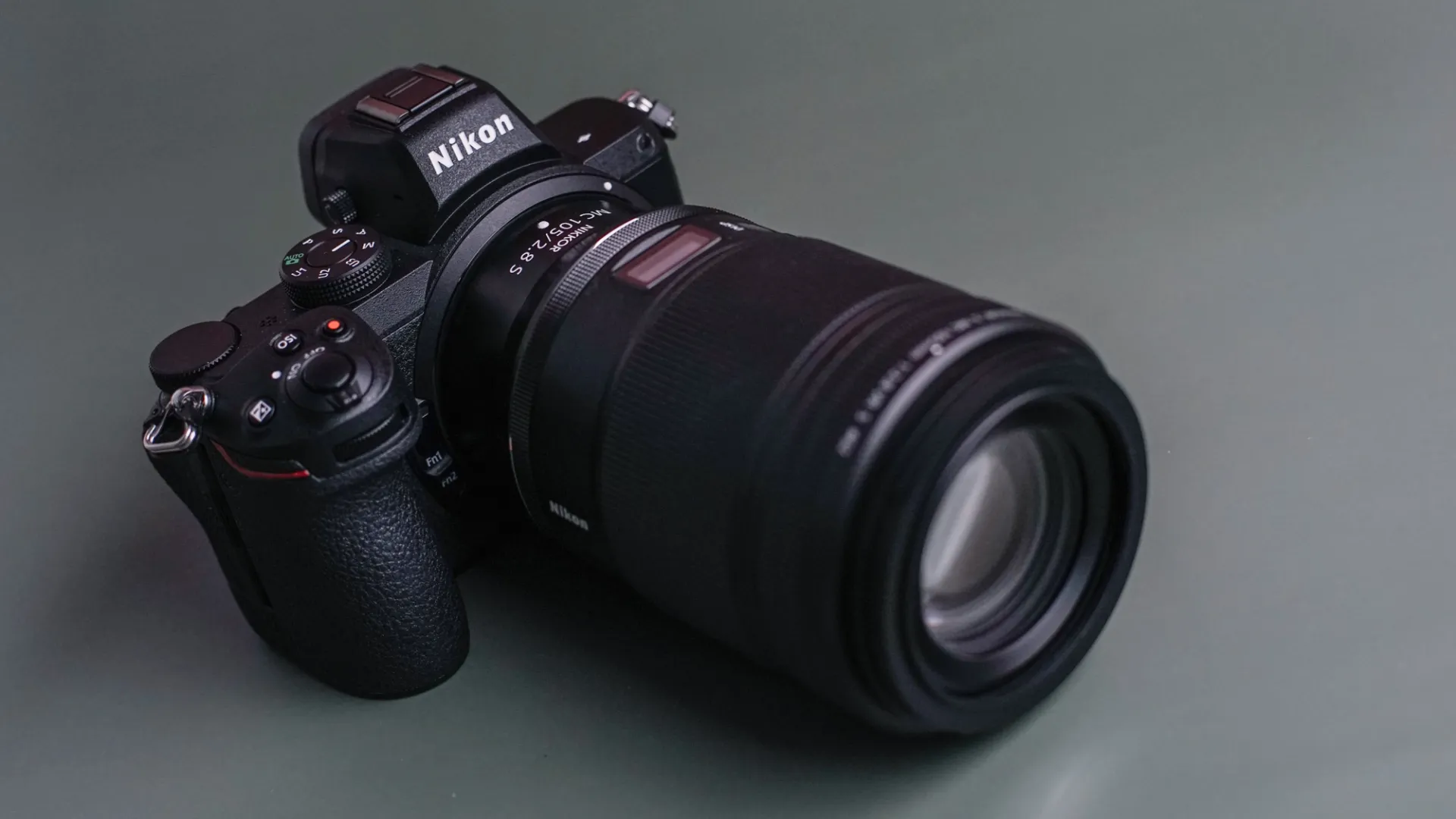
The right Nikon macro lens depends first on the camera mount, then on how close you need to work and how much weight you are willing to carry.
Camera mount
Nikon Z mirrorless cameras need a lens designed for the Z mount or a compatible adapted setup. The Nikon Z MC 105mm and Nikon Z MC 50mm are the direct choices in this group. The Nikon DX Micro 40mm, Nikon FX Micro 60mm, Nikon 105mm Micro lenses, and Sigma 105mm Macro are DSLR-oriented options.
Do not treat “for Nikon” as a complete compatibility specification. The TTArtisan listing includes Nikon Z in its product information, while the Altura attachment depends on a 52mm front thread rather than a particular camera body.
Magnification
A 1:1 reproduction ratio records the subject life-size on the sensor and is the normal benchmark for dedicated macro lenses. The Nikon Z MC 105mm, Nikon DX Micro 40mm, Sigma 105mm Macro, and both Nikon 105mm Micro listings specify 1:1 capability.
The TTArtisan goes further with 2:1 magnification. That is useful for tiny textures and insects, but it also makes focusing and camera movement more demanding. The Yongnuo and Altura listings do not provide a reproduction ratio, so they should not be treated as equivalent to the dedicated macro lenses.
A longer macro lens is not automatically sharper, but it usually gives small, nervous subjects more room to stay undisturbed.
Focal length and working distance
Shorter lenses such as the Nikon DX Micro 40mm and Nikon Z MC 50mm are easier to carry and more convenient in tight spaces. They require the camera to move closer to the subject. That works well for food, objects, and flowers, but it is less comfortable with insects.
The 100mm and 105mm lenses provide more working distance and a narrower view. The Sigma lists a 12.3-inch closest working distance, while the Nikon 105mm options list a 1.03-foot minimum focus distance. Those lenses are more comfortable when the subject is easily disturbed.
Stabilization
Vibration Reduction or Optical Stabilizer can reduce blur caused by camera movement during handheld shooting. The Nikon Z MC 105mm, Sigma 105mm Macro, and Nikon 105mm Micro models list stabilization features. The Nikon DX Micro 40mm, Nikon FX Micro 60mm, Nikon Z MC 50mm, and Yongnuo do not list stabilization in the supplied data.
Stabilization does not fix subject movement or expand macro depth of field. It is most helpful when the camera is moving slightly and the subject is still.
Camera format and weight
The Nikon DX Micro 40mm is designed around DX DSLR cameras, while the Nikon FX Micro 60mm supports both FX and DX DSLRs. The Sigma is designed for full-frame DSLRs and can also be used on APS-C cameras with an effective focal length of about 150mm with most cameras.
Weight affects how likely a lens is to leave the camera bag. The Nikon DX Micro 40mm weighs about 0.518 pounds, the Nikon Z MC 50mm about 0.57 pounds, and the Nikon Z MC 105mm 1.39 pounds. The classic Nikon 105mm Micro is listed at 789 grams, and the renewed listing gives about 2.01 pounds, so the longer options demand more support and carrying tolerance.
Frequently asked questions
Are all ten lenses true macro lenses?
No. The Yongnuo 50mm f/1.8N is a general-purpose prime with no supplied macro reproduction ratio. The Altura Photo 52mm Macro is a front-of-lens attachment, while the other dedicated options provide more explicit macro specifications.
Which lens is best for Nikon Z cameras?
The Nikon Z MC 105mm is the strongest choice for serious macro work because it combines 1:1 magnification, 105mm reach, f/2.8, stabilization, and weather sealing. The Nikon Z MC 50mm is better for photographers who prioritize a compact everyday lens.
Is a 40mm macro lens useful for insects?
It can photograph insects, but its short focal length requires getting closer to the subject. A 105mm lens such as the Nikon Z MC 105mm or Sigma 105mm Macro gives more working distance and is generally easier to use with skittish subjects.
What does 1:1 macro magnification mean?
A 1:1 ratio means the subject is projected onto the sensor at life size. It is a useful standard for dedicated macro photography, although the amount of the subject that fills the final image still depends on the sensor and framing.
Does vibration reduction help with macro photography?
It can reduce blur from small camera movements when shooting handheld. It does not stop a moving insect, and it does not make more of a close subject fall within the narrow depth of field.
Can the Altura Photo attachment fit any Nikon DSLR?
No. It requires a compatible lens with a 52mm front thread. Check the diameter marking on the lens or beneath the lens cap before ordering, because camera model compatibility alone is not enough.
Is 2:1 magnification better than 1:1?
It is better when the goal is to record extremely small details, such as insect textures or tiny plant structures. It is more demanding to focus and compose, so 1:1 is usually easier for general flowers, products, and food.
The bottom line
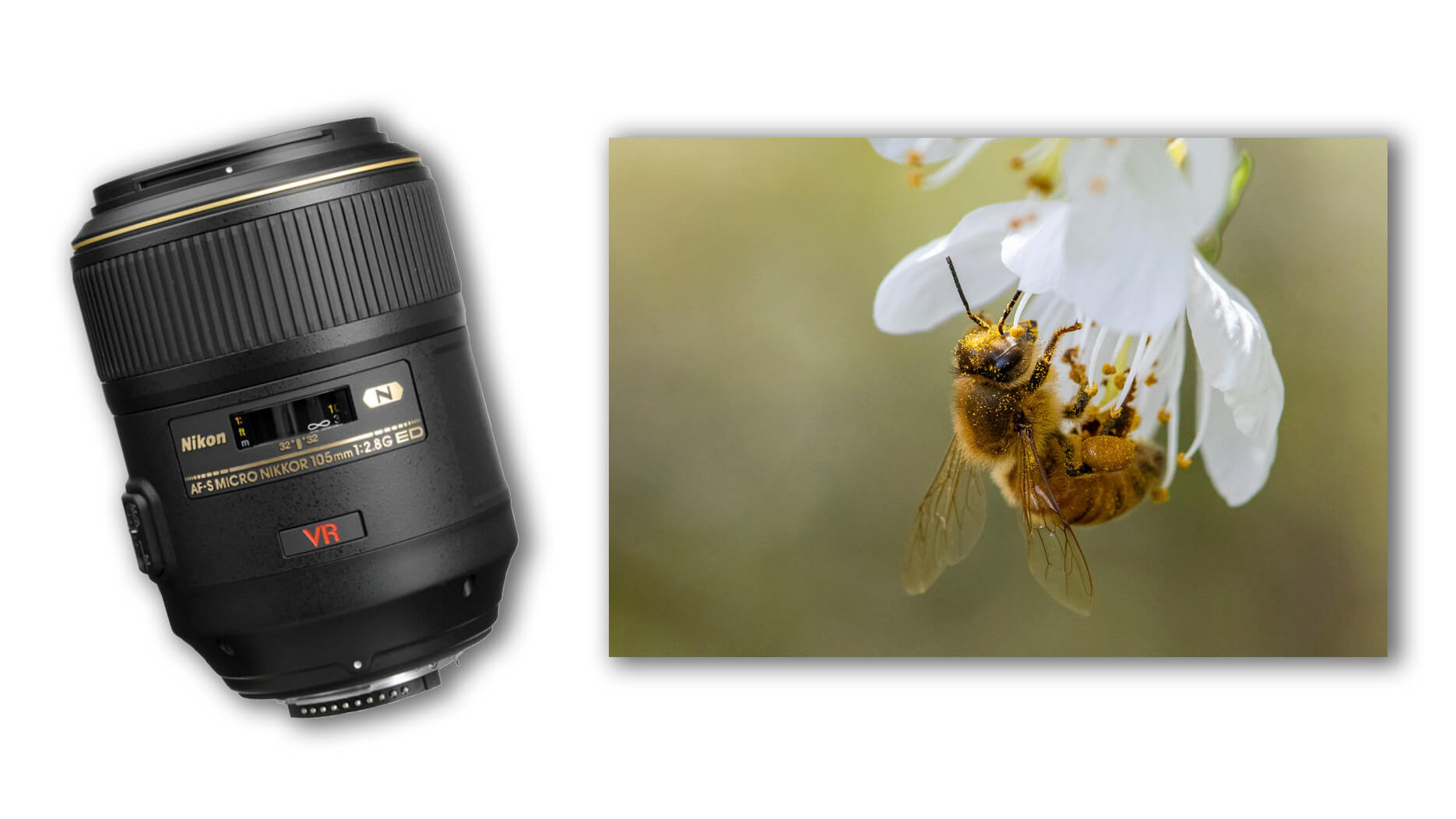
The Nikon Z MC 105mm is our top choice among the Best Macro Lenses for Nikon because it combines 1:1 capture, a comfortable 105mm perspective, stabilization, f/2.8, and weather sealing for Z series cameras. The Nikon Z MC 50mm is the better companion for a smaller kit and everyday subjects.
For Nikon DSLR owners, the Sigma 105mm Macro offers a strong stabilized 1:1 setup, while the Nikon DX Micro 40mm is the easiest compact choice for DX bodies. The TTArtisan is the specialist option when 2:1 magnification matters more than simplicity.
If you are undecided, choose the longest dedicated macro lens your camera mount supports unless portability and tight working spaces matter more.
As an Amazon Associate we earn from qualifying purchases.