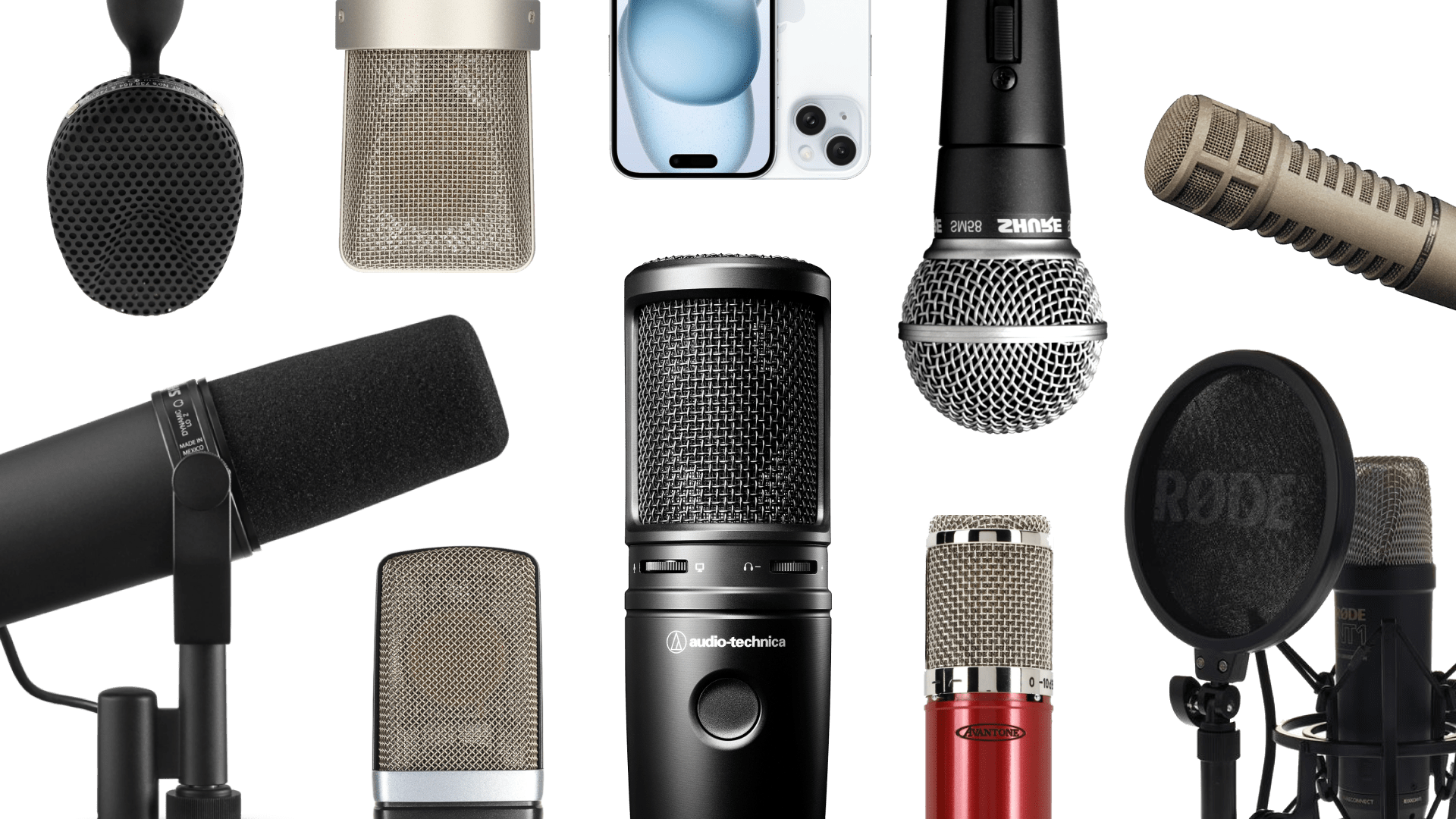

A rap vocal mic has to do more than sound clear. It needs to keep consonants sharp, handle forceful delivery without turning harsh, and reject enough room noise that the beat stays behind the voice. The wrong microphone can make a strong performance sound thin, distant, or overloaded.
The Best mic for rap vocals depends heavily on the room and recording chain. Dynamic models such as the Shure SM58 are forgiving in untreated spaces, while the RØDE NT1 Signature can reveal more detail in a controlled studio. USB and wireless models simplify setup, but XLR remains the more adaptable route for serious recording.
The Shure SM58 is our top pick, with options below covering USB recording, stage use, condenser detail, karaoke systems, boom arms, and wireless flexibility.
Comparison table
| # | Product | Award | Pickup and connection | Key detail | Best for |
|---|---|---|---|---|---|
| 1 | Shure SM58 | Best overall | Cardioid, XLR dynamic | Built-in pop protection | Versatile rap recording and live vocals |
| 2 | FIFINE AM8 | Best USB and XLR | Cardioid, USB and XLR dynamic | Mute, gain, headphone monitoring | Home creators who may upgrade later |
| 3 | Shure SM58S | Best with a switch | Cardioid, XLR dynamic | Integrated on/off switch | Vocalists who need direct muting |
| 4 | Pyle PDMICKT34 | Best complete kit | Cardioid, XLR to 1/4-inch | 26-foot cable and case | Basic recording and stage setups |
| 5 | FIFINE K669B | Best simple USB option | Cardioid, USB condenser | Volume knob and tripod | Computer-based vocal recording |
| 6 | Shure SM58 Cable Kit | Best with long cable | Cardioid, XLR dynamic | 25-foot XLR cable | Performers needing extra reach |
| 7 | RØDE NT1 Signature | Best studio condenser | Cardioid, XLR condenser | 4 dBA self-noise | Treated-room recording |
| 8 | FIFINE AM8T | Best boom-arm set | Cardioid, USB and XLR dynamic | Arm, mute, RGB, monitoring | Desk-based creators |
| 9 | FIFINE K6 | Best karaoke-style pick | Cardioid, 1/4-inch dynamic | 50 Hz to 18 kHz response | Live singing and simple vocal setups |
| 10 | MAONO PD200W | Best wireless flexibility | Cardioid, wireless, USB, XLR | 60-meter range and 60-hour battery | Mobile recording and two-person sessions |
1. Shure SM58: Best Overall

Pros
- Warm, articulate vocal response
- Uniform cardioid pickup
- Built-in pop and wind filtering
- Rugged metal construction
- Reinforced stand adapter
Cons
- XLR connection requires an interface or mixer
- Less room detail than a condenser microphone
Best for: rappers who want a dependable vocal microphone for both recording and live performance.
The Shure SM58 is the microphone we would hand to someone who wants to stop worrying about the microphone and focus on delivery. Its sound has a gentle midrange lift that helps a rap vocal stay articulate over a dense beat, while the dynamic design is relatively forgiving of an untreated bedroom or rehearsal space. It does not spotlight every reflection from the walls in the way a sensitive condenser can.
Its cardioid pickup pattern concentrates on the front of the microphone and reduces sound arriving from the sides. That is useful for rappers working close to the capsule, especially when a computer fan, monitor, or nearby room noise is part of the setup. The spherical grille and integrated filter also help control breath, wind, and plosive noise. You still need sensible mic technique, but the SM58 gives you more room for imperfect delivery than many studio condensers.
The connection is XLR, so you will need an audio interface, mixer, or compatible preamp. That extra hardware is a limitation for a first-time computer setup, but it also makes the microphone easy to carry into a larger recording chain later. Its metal construction and reinforced stand adapter suit repeated handling. At about 0.68 pounds, it is light enough for handheld use without feeling flimsy.
Compared with the FIFINE AM8, the SM58 lacks USB convenience, a mute control, and headphone monitoring. Compared with the RØDE NT1 Signature, it captures less room and low-level detail. Those are meaningful compromises, but the SM58 is easier to place in a noisy room and more comfortable on stage. It is the choice for anyone who wants one microphone that can handle a booth, rehearsal room, and live set without changing personality.
2. FIFINE AM8: Best USB and XLR

Pros
- USB and XLR connectivity
- Tap-to-mute control
- Headphone monitoring
- Gain control on the microphone
- Cardioid dynamic pickup
Cons
- XLR cable is not included
- RGB and function controls do not work through XLR
Best for: home rappers who want easy USB recording now and an XLR upgrade path later.
The FIFINE AM8 is a practical bridge between a computer microphone and a traditional studio microphone. Plug it into a computer through USB and you get a straightforward way to record, monitor, adjust gain, and mute without reaching for software controls. Move to XLR later and it can connect to an interface or mixer, which makes it a more flexible starting point than a USB-only model.
FIFINE specifies a 50 Hz to 16 kHz frequency response. That range is aimed at intelligible voice rather than exaggerated brightness, so the AM8 should suit a rapper who wants a controlled, direct vocal sound. Its cardioid dynamic design focuses on the person speaking into the front and rejects off-axis noise. The suggested recording distance is 2 to 6 inches, a useful range for getting a fuller vocal while keeping plosives under control.
The microphone has a tap-to-mute button with an LED reminder, a gain knob, a headphone jack, and headphone volume control when used through USB. RGB lighting is available in USB mode, with three modes and more than 10 colors. Those features are handy for streaming, though they do not improve the recorded vocal. The built-in 3/8-inch and 5/8-inch threads also make it compatible with common microphone stands without an external adapter.
The AM8 gives up the SM58's established stage-focused design, and it does not include the XLR cable needed for its analog connection. The AM8T adds a boom arm, but the regular AM8 is the cleaner choice if you already have a stand. Choose this model over the FIFINE K669B if you expect to move toward an interface, and choose it over the Shure SM58 if USB recording and headphone monitoring matter more than a proven live-vocal format.
3. Shure SM58S: Best With a Switch

Pros
- Familiar warm and present vocal sound
- Cardioid rejection of off-axis noise
- Integrated on/off switch
- Built-in pop and breath filtering
- Hardened grille
Cons
- XLR-only connection
- Switch can be bumped during handling
Best for: live rappers and vocalists who want direct control over muting.
The Shure SM58S is the SM58 format with one small but useful change: an integrated on/off switch. For a rapper moving between songs, rehearsing with a small setup, or sharing a microphone between performers, that switch can be more convenient than muting a mixer channel every time. The core vocal behavior remains focused, warm, and familiar.
Its tuned frequency response is designed to keep vocals clear and present. The cardioid polar pattern captures the voice from the front while helping reject monitors, instruments, and general room sound from the sides. That is particularly helpful when the microphone is used close to the mouth and the performance is energetic. The hardened grille and internal filtering also help limit handling sounds, breath noise, and plosives.
The SM58S uses XLR, so it belongs with an interface, mixer, or PA rather than a bare laptop. Its metal body is built for repeated handling, and its listed weight is about 0.66 pounds. The microphone is compact enough for handheld work, while the conventional shape remains easy to position on a stand.
The ordinary Shure SM58 is the better pick if you want to avoid any chance of accidentally switching the mic off. The FIFINE AM8 gives you USB, headphone monitoring, and gain adjustment, but the SM58S has the more established live-vocal identity. It is not the right choice for someone recording directly into a computer without an interface. For stage-focused rappers who appreciate physical controls, the switch earns its place.
4. Pyle PDMICKT34: Best Complete Kit

Pros
- Cardioid unidirectional pickup
- Rugged zinc die-cast construction
- Integrated pop filter and windscreen
- 26-foot XLR to 1/4-inch cable
- Hard travel case and storage bag
Cons
- 1/4-inch connection is less flexible than USB or standard XLR
- Kit is aimed more at basic systems than advanced interfaces
Best for: performers who need a microphone, cable, holder, and storage case in one package.
The Pyle PDMICKT34 is less about studio specialization and more about getting a usable vocal setup into your hands with fewer missing pieces. The kit includes a microphone holder, storage accessories, a hard case, and a cable that runs from XLR to 1/4-inch. That makes it suited to a rehearsal room, karaoke-style system, amplifier, or basic live rig.
The microphone uses a cardioid, unidirectional pickup pattern. It is intended to capture the vocalist at the front while reducing sound from the sides, which can help limit feedback and background spill. Pyle describes the capsule as dynamic and resistant to moisture, with a design intended for high gain before feedback. That combination favors forceful live delivery and close vocal work rather than delicate room ambience.
The included cable is more than 26 feet long, giving a performer room to move away from an amplifier or mixer. The integrated pop filter and windscreen help reduce breath and plosive noise, while the steel mesh windscreen has an anti-dent ring. The zinc die-cast case gives the microphone a more reassuring physical build than its all-in-one kit format might suggest.
The major limitation is connection flexibility. A 1/4-inch output suits compatible amplifiers and mixers, but it is not as direct a fit for a modern USB recording workflow as the FIFINE AM8 or K669B. The Shure SM58 is the stronger long-term vocal choice for many recording chains, while the Pyle makes more sense when the cable, case, and holder are essential. It is a sensible starting package for live rap vocals and simple setups where convenience matters more than fine studio control.
5. FIFINE K669B: Best Simple USB Option

Pros
- Plug-and-play USB setup
- Cardioid condenser pickup
- Volume knob on the microphone
- Stable tripod stand
- USB cable included
Cons
- USB-only design
- Not compatible with Xbox or phones
- Condenser pickup can expose room noise
Best for: computer users recording vocals without an audio interface.
The FIFINE K669B is the straightforward computer option in this group. It connects directly to a USB-A port, includes a 5.9-foot cable, and sits on a tripod stand. There is no interface setup and no XLR cable to route, so it suits a rapper who wants to record into a laptop with minimal preparation.
As a cardioid condenser, the K669B is designed to capture a clear, smooth, crisp voice from the front. That condenser approach can bring out more detail in diction and vocal texture than a basic dynamic microphone, but it also makes the room more important. A quiet, reasonably controlled space will help it sound cleaner. The cardioid pattern still helps focus on the main source, though it cannot remove reflections from nearby walls.
A volume knob sits on the microphone itself, allowing quick adjustment down to zero for privacy. The USB-powered design does not require 48-volt phantom power, and the microphone is listed as compatible with desktop computers, laptops, PS4, and PS5. FIFINE also notes compatibility with applications such as Audacity, OBS, Discord, and Teamspeak. Automatic volume adjustment in recording software may need to be disabled to prevent level changes.
The K669B is easier to start with than the Shure SM58, but it has no XLR route when your setup grows. The FIFINE AM8 is more adaptable because it offers both USB and XLR, while the RØDE NT1 Signature is a more serious studio condenser with lower specified self-noise and included studio accessories. Pick the K669B when direct computer recording and a compact desk setup are the priority.
6. Shure SM58 Cable Kit: Best With a Long Cable

Pros
- Tailored vocal response
- Uniform cardioid pattern
- Built-in pop and wind filtering
- Rugged metal body
- 25-foot XLR cable included
Cons
- XLR-only connection
- Included cable adds bulk for desk recording
Best for: performers who need the SM58 sound with extra room to move.
The Shure SM58 Cable Kit is the familiar SM58 format paired with a 25-foot XLR cable. That distinction matters more than it may first appear. A short cable can force a microphone stand into an awkward position, while a longer lead gives a performer room to move, keeps a mixer farther away, or makes a rehearsal space easier to arrange.
The microphone itself has a tailored frequency response with enhanced midrange for warm, crisp vocal presence. Its uniform cardioid pickup helps keep the voice isolated from background distractions and sound arriving from the sides. The spherical mesh grille and internal pop filter reduce wind, breath, and plosive sounds without requiring an external pop screen for ordinary close vocal use.
The rugged metal construction and break-resistant stand adapter make it suitable for repeated transport and stage work. At about 0.71 pounds, it remains manageable in the hand, though the cable is the part that determines how portable the complete package feels. The XLR format also means the kit expects an audio interface, mixer, PA, or another compatible input.
This is essentially a deployment-ready alternative to the standard Shure SM58. The SM58S is preferable if an on/off switch matters, and the FIFINE AM8 is preferable for USB recording and direct headphone monitoring. If you are building a performance setup, the included 25-foot lead removes one practical decision. For more advice on choosing a microphone for a live environment, consider how vocal mics handle noisy stage surroundings.
7. RØDE NT1 Signature: Best Studio Condenser

Pros
- One-inch HF6 true condenser capsule
- Smooth frequency response
- 4 dBA specified self-noise
- High SPL handling
- Shock mount, pop filter, and XLR cable included
Cons
- More sensitive to room sound than a dynamic microphone
- XLR connection requires an interface or preamp
Best for: studio rappers recording in a treated or quiet room.
The RØDE NT1 Signature is the specialist choice for a rapper who wants a more open, detailed studio vocal. Its large-diaphragm condenser design is less about rejecting a rough room and more about capturing the character of the performance. In a quiet recording space, that can give diction, breath, and vocal texture more room to come through.
The microphone uses RØDE's one-inch HF6 true condenser capsule and a cardioid pickup pattern. RØDE specifies a smooth frequency response, high sensitivity, and extremely high SPL handling. High SPL handling matters for aggressive delivery because the capsule is designed to accept loud sources without easily distorting. The cardioid pattern still requires careful placement, since a condenser can reveal reflections and computer noise that a dynamic microphone would largely ignore.
Its specified self-noise is 4 dBA, a very low figure that helps preserve quiet passages and fades without adding much microphone-generated hiss. The package includes a studio-grade shock mount, pop filter, and premium XLR cable, so the main missing part is a suitable interface or preamp. The microphone weighs about 0.69 pounds and has a compact body that should be easy to position in a stand or mount.
The Shure SM58 is the safer choice in an untreated bedroom, while the NT1 Signature has more to offer in a controlled studio. The FIFINE K669B also uses a condenser approach and is simpler over USB, but the RØDE is the more purpose-built recording microphone here. Skip it if your room is echoey or noisy. Choose it if your priority is a polished, detailed vocal capture and you already have the room and interface to support it.
8. FIFINE AM8T: Best Boom-Arm Set

Pros
- USB and XLR connectivity
- Boom arm included
- Mute button, gain knob, and headphone monitoring
- Adjustable RGB lighting
- External windscreen included
Cons
- XLR cable is not included
- Clamp fits desks under 2 inches thick
- Larger and heavier kit than the microphone alone
Best for: desk-based rappers who want an adjustable arm and computer controls.
The FIFINE AM8T is the most complete desk-focused setup among the two AM8 models. It pairs a dynamic USB and XLR microphone with a boom arm, C-clamp, USB to USB-C cable, and external windscreen. That makes positioning easier than balancing a handheld microphone on a small tripod, especially for a rapper who records while seated.
The cardioid pattern and specified -50 dB sensitivity are intended to keep attention on the voice and reduce background pickup. The boom arm lets you bring the microphone close to the mouth and move it away when not recording. The clamp is designed for desks less than 2 inches thick, so desk fit should be checked before choosing this kit. The arm uses a metal construction with springs and an anti-scratch pad.
USB mode brings the convenience features: mute, gain adjustment, headphone monitoring, headphone volume control, and customizable RGB lighting. XLR mode connects the microphone to a mixer or sound card for a more traditional recording path, but the XLR cable is not included. The AM8T is also a heavier complete setup at about 2.76 pounds, most of which reflects the arm and mounting hardware rather than a handheld mic body.
The regular FIFINE AM8 is easier to place if you already own a stand, while the AM8T is the better answer when the desk arm is part of the requirement. The Shure SM58 is more proven for stage work, and the RØDE NT1 Signature is more revealing in a controlled studio. Choose the AM8T for a home workstation where USB controls, close positioning, and a tidy arm-mounted setup matter most. Readers comparing computer recording setups may also want to consider the controls that matter on a desk microphone.
9. FIFINE K6: Best Karaoke-Style Pick

Pros
- Cardioid dynamic pickup
- 50 Hz to 18 kHz frequency range
- 14.8-foot cable included
- Built-in pop filter
- External on/off switch
Cons
- Only works with 1/4-inch inputs
- Not compatible with 3.5 mm connections
- No USB or standard XLR-only studio route
Best for: karaoke machines, amplifiers, and simple live vocal systems with 1/4-inch inputs.
The FIFINE K6 is a basic wired handheld microphone intended for singing, presentations, and live use. It is easy to understand: connect its cable to compatible equipment, switch it on, and perform. For a rapper working with a karaoke machine, amplifier, or mixer that has a 1/4-inch microphone input, that simplicity can be useful.
Its cardioid pickup pattern is designed to provide gain while minimizing feedback. The dynamic capsule has a stated 50 Hz to 18 kHz frequency range and is intended to handle high sound pressure levels. That makes it a better fit for direct, energetic vocal delivery than for capturing quiet room ambience. The built-in pop filter helps reduce plosives, while the metal construction is designed for handheld use.
The included cable is 14.8 feet long and uses an XLR to 1/4-inch connection. The external on/off switch lets you mute without reaching for the amplifier. The key compatibility warning is important: this microphone is for 6.35 mm or 1/4-inch ports and is not available for 3.5 mm connections, even with an adapter. It is also not a USB microphone.
The Pyle PDMICKT34 makes more sense if you need a hard case, holder, and much longer cable. The Shure SM58 is the stronger choice for a recording chain that uses standard XLR, while the K6 is more direct for karaoke equipment. Choose it when the 1/4-inch input is already part of your setup and the goal is straightforward vocal performance rather than computer recording.
10. MAONO PD200W: Best Wireless Flexibility

Pros
- Wireless, USB, and XLR modes
- 60-meter wireless range
- Up to 60 hours of battery life with RGB off
- Cardioid pickup and three-stage noise cancellation
- Four app-based preset modes
Cons
- Heavier complete setup at about 2.91 pounds
- Some camera and Lightning accessories are sold separately
- More features than a simple fixed desk recording requires
Best for: rappers who need to move between wireless, computer, and interface-based recording.
The MAONO PD200W is the outlier here because it is not tied to one recording workflow. It can operate wirelessly, connect over USB to a phone, tablet, or computer, or use XLR with an audio interface. That makes it appealing for a creator who records at a desk one day and wants a cable-free performance setup the next.
MAONO lists a 30 mm dynamic capsule, cardioid pickup, an 82 dB signal-to-noise ratio, and support for sound levels up to 128 dB SPL without distortion. The microphone also uses three-stage noise cancellation to reduce background noise and room echo. Those features point toward a focused vocal sound, though the precise result will still depend on placement, gain, and the room.
The wireless system has a stated range of 60 meters and up to 60 hours of battery life with RGB lighting off. A single receiver can connect two wireless desktop microphones for two-person podcasts or interviews, with each microphone recorded to its own track according to the product information. The included kit contains the microphone, desktop stand, USB-C to USB-A and USB-C cable, Type-C receiver, Type-C adapter cable, and manual.
The FIFINE AM8 is simpler if you only need USB and XLR, and the Shure SM58 remains the more obvious choice for a conventional stage microphone. The PD200W earns consideration when wireless mobility is central to the setup. It is heavier and more complex than necessary for a fixed desk, but it gives a mobile rapper more ways to record without replacing the microphone.

How to choose best mic for rap vocals
The right microphone depends on vocal intensity, room noise, connection type, and how much control you want during recording.
Dynamic or condenser capsule
Dynamic microphones such as the Shure SM58, FIFINE AM8, and MAONO PD200W generally suit untreated rooms because they focus on the nearby voice and are less eager to capture every reflection. They also tolerate energetic delivery well. Condenser models such as the RØDE NT1 Signature and FIFINE K669B can reveal more fine detail, but they reward a quiet, acoustically controlled room.
Pickup pattern
A cardioid pattern captures sound from the front and reduces pickup from the sides and rear. For rap vocals, that helps limit computer noise, room activity, and monitor spill. Position the rear and side rejection areas toward the loudest unwanted sounds, and keep the intended vocal source aligned with the front of the capsule.
A microphone cannot fix a reflective room, but the right pickup pattern can stop the room from competing with the verse.
Connection type
USB is the easiest route to a computer, with the FIFINE K669B, FIFINE AM8, and FIFINE AM8T offering direct computer connections. XLR is better suited to an interface, mixer, or PA and gives you a more expandable recording path. The MAONO PD200W adds wireless operation, while the FIFINE K6 and Pyle PDMICKT34 require attention to their 1/4-inch connection format.
Vocal filtering
Built-in pop filters and windscreens help soften plosives from sounds such as p and b. The Shure models, Pyle PDMICKT34, FIFINE K6, AM8T, and RØDE NT1 Signature all include some form of pop protection or windscreen. Keep a few inches of distance and angle the microphone slightly if hard consonants remain too prominent.
Mounting and accessories
A stand affects consistency as much as the microphone itself. The FIFINE AM8T includes a boom arm, the FIFINE K669B includes a tripod, and the RØDE NT1 Signature includes a shock mount. The Pyle kit includes a holder, case, and long cable, while the Shure cable kit supplies a 25-foot XLR lead. Choose the accessory package that matches where you actually record.
Frequently asked questions
Is a dynamic microphone good for rap vocals?
Yes. A dynamic microphone can handle forceful delivery and reduce the amount of untreated room sound in the recording. The Shure SM58 and FIFINE AM8 are especially practical when the recording space is not fully treated.
Should I choose USB or XLR for recording rap?
USB is simpler when you are recording directly into a computer. XLR is the more adaptable choice if you already have, or plan to add, an audio interface or mixer. Hybrid microphones such as the FIFINE AM8 and MAONO PD200W support both approaches.
Is the RØDE NT1 Signature suitable for an untreated room?
It can work, but its condenser capsule is more likely to reveal reflections, fan noise, and room ambience than a dynamic microphone. It is better suited to a quiet room with some acoustic control. The Shure SM58 is the safer option when the room is lively or noisy.
Do these microphones need phantom power?
The XLR microphones may need an interface, mixer, or preamp to provide the required connection and gain. The FIFINE K669B does not require 48-volt phantom power because it is USB powered. USB microphones draw their operating power from the connected computer or device.
Can I connect the FIFINE K6 to a laptop?
The FIFINE K6 is designed for equipment with a 1/4-inch, or 6.35 mm, microphone input. It is not available for a 3.5 mm connection, even with an adapter, and it is not a USB microphone. A laptop setup generally needs compatible audio hardware.
Is a pop filter necessary for rap vocals?
A pop filter is helpful because close, energetic delivery can create strong bursts of air on plosive consonants. Several microphones here include integrated filtering, while the RØDE NT1 Signature includes an external pop filter. Technique and microphone angle still matter.
The bottom line
The Best mic for rap vocals is the Shure SM58 for most singers and rappers because its cardioid dynamic design, built-in pop protection, rugged body, and focused vocal response work in both home and live settings. The FIFINE AM8 is the better fit for computer-first creators who want USB controls now and XLR connectivity later.
Choose the RØDE NT1 Signature when your room is quiet and controlled and you want a more detailed condenser capture. Pick the MAONO PD200W when wireless movement, USB, and XLR flexibility are more important than a simple fixed setup.
If you are undecided, choose the Shure SM58 unless your recording chain specifically calls for USB, condenser detail, or wireless operation.
As an Amazon Associate we earn from qualifying purchases.