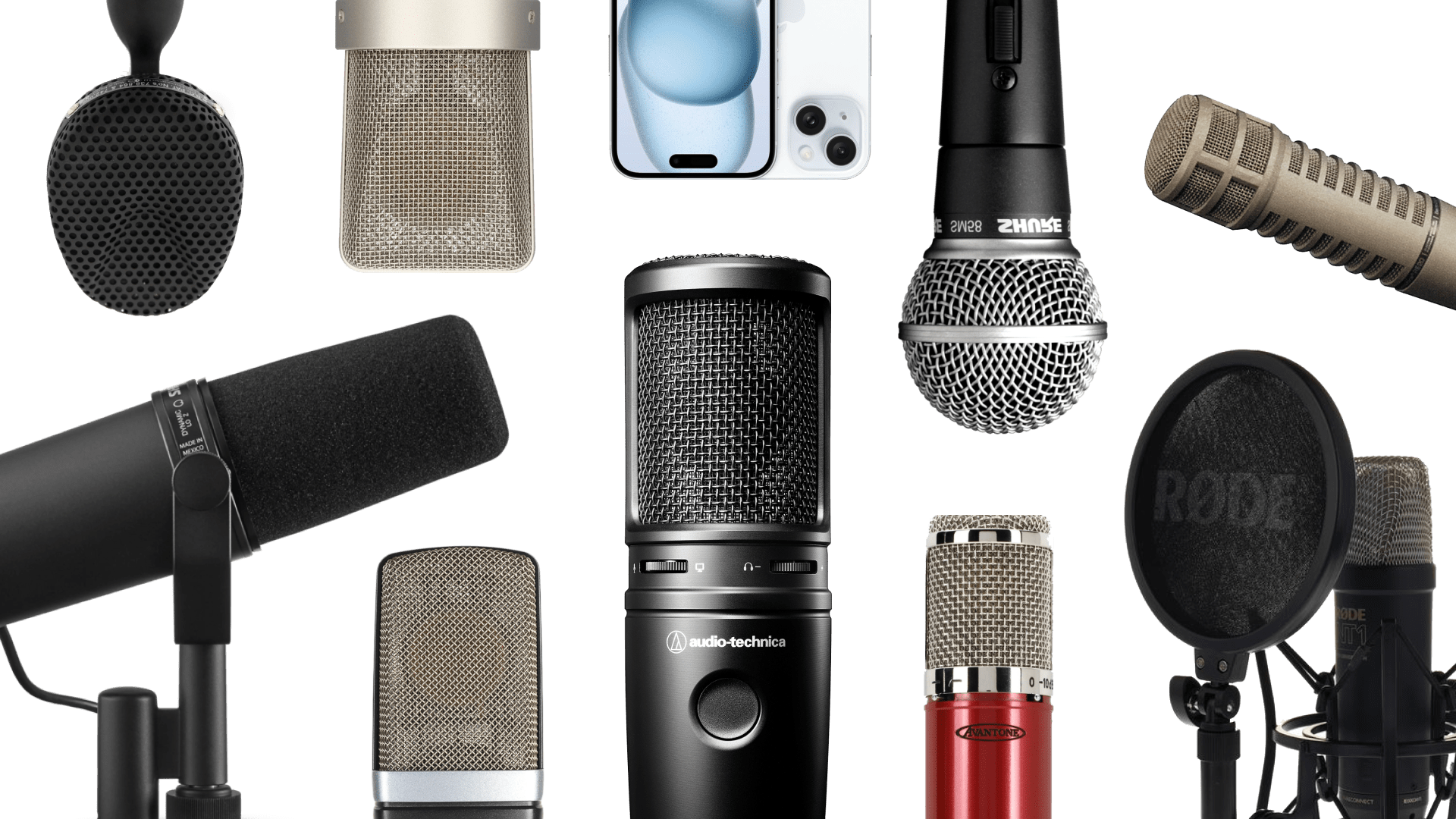

Getting a vocal take that translates exactly what you hear in your head onto the timeline is harder than it should be. Room echo, plosive pops, sibilance, and that thin, hollow quality that screams "this was recorded in a bedroom" are all too common. The best microphone for recording vocals doesn't just capture sound; it captures the performance, with the weight and presence that makes a listener lean in. After testing ten very different microphones ranging from the iconic Shure SM7B to the ultra-portable Mini Mic Pro, one stands above the rest for pure vocal recording: the RØDE NT1 Signature Series.
But the right choice depends heavily on your space, your gear, and what kind of vocals you're tracking. Some mics excel in untreated rooms. Others need a silent environment to shine. Some pair perfectly with a USB port; others demand an audio interface. We'll walk through each option and explain exactly where it fits.
Comparison Table
| # | Product | Award | Type | Capsule | Best for |
|---|---|---|---|---|---|
| 1 | RØDE NT1 Signature Series | Best overall | Condenser | 1-inch true condenser | Clean studio vocal takes with minimal noise |
| 2 | MAONO PD200W | Best wireless dynamic | Dynamic | 30mm dynamic | Duo podcasts and cable-free streaming |
| 3 | Blue Yeti Blackout | Best USB condenser versatility | Condenser | Three-capsule array | Multi-source recording with one mic |
| 4 | FIFINE AM8 | Best budget dynamic | Dynamic | Dynamic | Gaming and streaming on a tight budget |
| 5 | Shure SM58 | Best live-performance dynamic | Dynamic | Dynamic | Stage-tested durability for loud environments |
| 6 | FIFINE T669 | Best budget condenser with arm | Condenser | Condenser | All-in-one studio kit for beginners |
| 7 | Shure SM7B | Best podcast/streaming dynamic | Dynamic | Dynamic | Broadcast vocal quality in untreated rooms |
| 8 | RØDE NT1 5th Gen | Best hybrid studio condenser | Condenser | 1-inch condenser | XLR and USB flexibility with 192kHz recording |
| 9 | FIFINE AM8T | Best gaming dynamic kit | Dynamic | Dynamic | Complete boom arm setup for streamers |
| 10 | Mini Mic Pro | Best lavalier for mobile video | Condenser (lavalier) | Condenser | On-the-go interviews and content creation |
1. RØDE NT1 Signature Series: Best Overall

Pros
- Ultra-low self-noise at 4dBA, virtually silent
- HF6 capsule delivers a smooth, open high end without harshness
- Includes shock mount, pop filter, and premium XLR cable
- Ten-year warranty from RØDE
Cons
- Needs phantom power and an audio interface
- Large diaphragm picks up room reflections easily
Best for: anyone recording vocals in a treated or semi-treated room who wants the quietest possible signal chain.
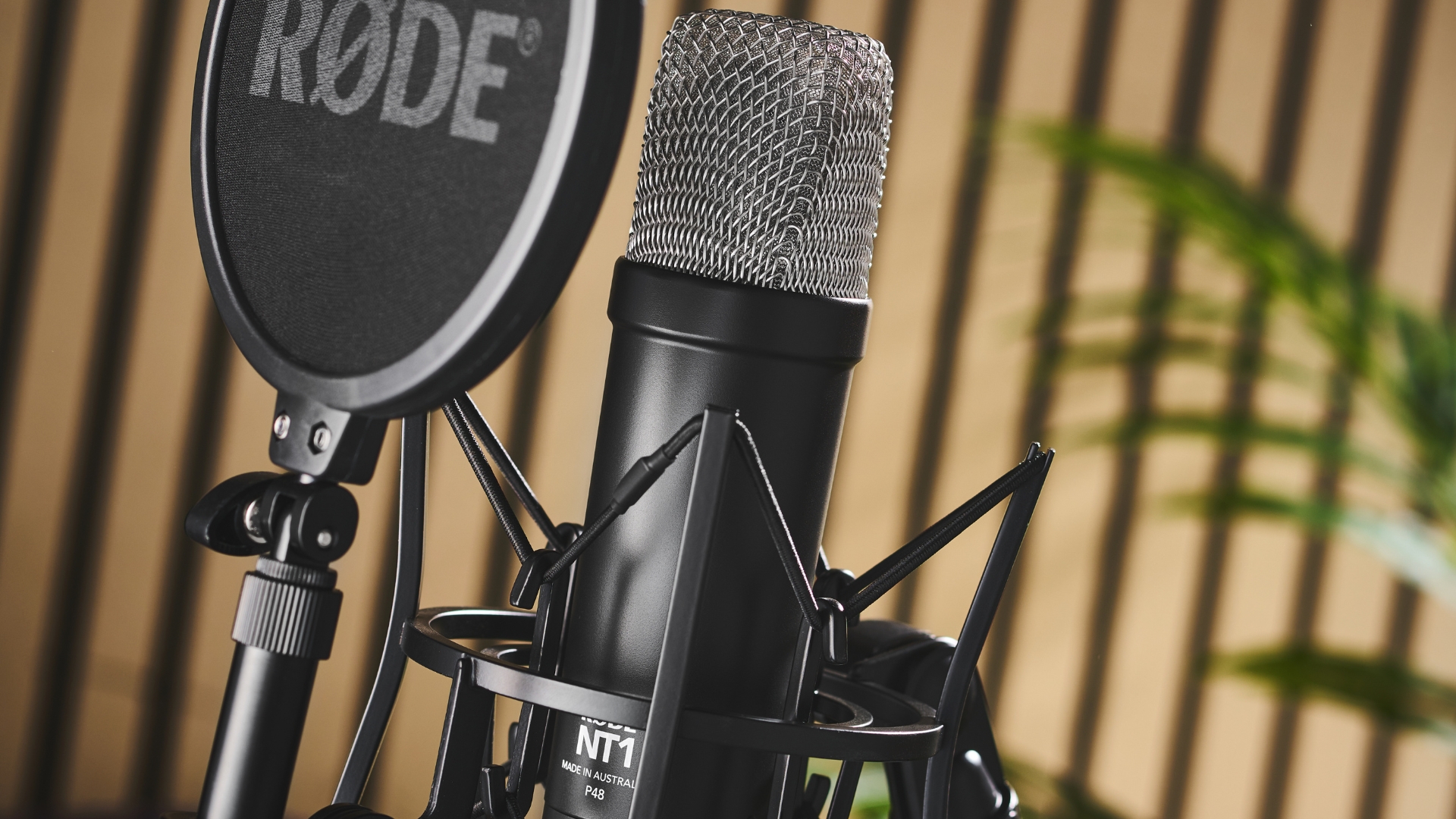
The moment you plug in the NT1 Signature Series, the first thing you notice is the silence. RØDE claims a self-noise of just 4dBA, which makes it the quietest studio condenser we have tested. That figure matters more than most specs: when you boost the gain to capture a soft vocal or a delicate verse, a noisier hiss floor becomes part of the recording. The NT1 leaves virtually nothing behind.
The HF6 capsule is a 1-inch true condenser with a frequency response that stays flat across the mids and opens up slightly in the upper registers. It never sounds brittle. Against the Shure SM7B, the NT1 is noticeably more extended in the treble, which means it captures air and detail that the SM7B rolls off. For a singer with a dark voice, that extension brings clarity without needing EQ. For a bright voice, the NT1 can be a little unforgiving of sibilance if you don't position it slightly off-axis.
The included shock mount is genuinely studio-grade, not the sort of plastic cradle that rattles. The pop filter is a two-layer metal mesh that handles plosives well, though you still want to keep a few inches between you and the grille. The XLR cable is braided and feels premium. Everything in the box says "this is for real recording, " not for desk toys.
Its weakness is that it demands a quiet room. If you are recording in a space with a loud PC fan, street noise, or echo off bare walls, a dynamic microphone like the Shure SM7B or even the FIFINE AM8 will reject that ambient rumble better. The NT1 is a tool for people who have already addressed their room to some degree. For those who have, it is the best sounding microphone for recording vocals at this level, full stop.
2. MAONO PD200W: Best Wireless Dynamic

Pros
- True wireless operation with a 60-meter range
- Up to 60 hours battery life with RGB off
- 30mm dynamic capsule with 82dB signal-to-noise ratio
- Two-microphone duo mode with individual track recording
Cons
- Camera and Lightning accessories sold separately
- RGB drains battery when on
Best for: podcasters who need to move around the room or interview a guest face to face, wirelessly.
The MAONO PD200W is the only dynamic microphone in this roundup that offers a wireless connection via a USB Type-C receiver. You simply plug the receiver into your computer, tablet, or even a phone with the included adapter, and the microphone connects instantly. The 60-meter range means you can walk across a stage or around a studio without losing signal, which is a genuine advantage for live podcasting or video demos.
The 30mm dynamic capsule is larger than what you find in most entry-level dynamics, and it shows. The cardioid pattern is tight, and the off-axis rejection is good enough that you could record two people on separate mics in the same room without heavy bleed. The 82dB signal-to-noise ratio is clean for a hybrid mic, and it handles up to 128dB SPL without distortion, so you can lean in on a loud shout or a belted vocal phrase.
What sets the PD200W apart is the ability to pair two units with a single receiver. This is perfect for duo podcasts or back-to-back interviews. Each mic records to its own track, so editing is straightforward. And when you do not need wireless, the XLR output connects to a standard audio interface for a traditional setup.
The weak point is that the RGB lighting is a gimmick that shortens battery life. Turn it off and you get the full 60 hours, which is more than enough for a week of heavy podcasting. The package does not include the camera adapter or Lightning cable for direct phone recording, so factor that in if you plan to shoot video. For a wireless dynamic that doubles as a studio mic, this is a uniquely flexible pick.
3. Blue Yeti Blackout: Best USB Condenser Versatility

Pros
- Four pickup patterns from a single capsule array
- Onboard mute, gain, and headphone volume controls
- Blue VO!CE software adds effects and EQ
- Heavy, stable base
Cons
- Picks up a lot of desk vibration and room sound
- Larger than most USB mics
Best for: content creators who need to record solo, interview someone, or capture a room ambience with one mic.
The Blue Yeti has been the default USB microphone for a decade, and for good reason. Its three-capsule array lets you switch between cardioid (front only), omnidirectional (all around), bidirectional (front and back), and stereo (left and right). For a vocalist recording alone, cardioid is the obvious choice, and in that mode the Yeti delivers a clear, slightly hyped midrange that makes voiceovers cut through a mix.
The onboard controls are a major convenience. The mute button is a solid click, the gain knob has enough range to handle a quiet singer or a loud streamer, and the headphone jack provides zero-latency monitoring. No phantom power, no interface, just a USB cable and you are recording.
The Blue VO!CE software is worth trying. It offers presets that compress and EQ your voice on the way in, which can be helpful for live streaming or quick recording when you do not want to process later. It is not as subtle as a hardware chain, but for convenience it works.
The real weakness is that the Yeti is a condenser with a large housing that picks up every desk thump and room reflection. The included stand is heavy but not isolated, so you need a desk that does not transmit typing. If you want a mic that works for multiple types of recording in one session, the Yeti is hard to beat. But if you only need a great vocal sound in cardioid, the RØDE NT1 Signature Series is significantly cleaner.
4. FIFINE AM8: Best Budget Dynamic

Pros
- Very friendly to untreated rooms
- Tap-to-mute with LED reminder
- USB and XLR connectivity
- Adjustable RGB with memory function
Cons
- Limited bass response compared to larger dynamics
- RGB and mute only work over USB
Best for: gamers and streamers who need a reliable dynamic mic that rejects background noise without breaking the bank.
The FIFINE AM8 is the most affordable dynamic microphone in this roundup, and it does exactly what a budget dynamic should: it rejects room noise. The cardioid pattern is tight enough that a mechanical keyboard two feet away barely registers. The frequency response rolls off below 50Hz, which means you lose the lowest rumble of a bass voice, but you gain clarity in the mids where vocals live.
The USB connection is plug-and-play, and the tap-to-mute is a real convenience for live streaming. The LED ring changes color to remind you whether you are live or muted, which saves awkward moments. The mute and RGB controls only work over USB; when you switch to XLR through an interface, the mic becomes a pure analog dynamic with no controls. That is fine for studio use, but it means the USB mode is the feature-rich experience.
The AM8 comes with a metal stand and a threaded mount that fits most boom arms. The build quality is respectable for the price, with a heavy metal grille and a matte finish that does not show fingerprints. The included foam windscreen does a decent job with plosives, though you may still want a pop filter for close-up vocal work.
Against the Shure SM58, the AM8 lacks the same midrange punch and presence. The SM58 has a classic EQ bump around 5kHz that makes vocals cut through a loud mix; the AM8 is flatter and less aggressive. But for a quiet bedroom streaming setup, the AM8 is quieter than the SM58 (less self-noise from the dynamic capsule) and costs half as much.
5. Shure SM58: Best Live-Performance Dynamic

Pros
- Legendary durability and roadworthiness
- Built-in spherical grille reduces plosives
- Classic midrange presence boost
- Works with any XLR system
Cons
- Requires an audio interface for computer use
- Lacks the detail of a large-diaphragm condenser
Best for: singers who want one microphone they can take from the studio to the stage without thinking twice.
The Shure SM58 is the most recognized vocal microphone in the world. It has been on stages since 1966, and the design has barely changed because it does not need to. The SM58 uses a cardioid dynamic capsule with a frequency response that is tuned for vocals: a gentle roll-off below 100Hz (reducing rumble and handling noise) and a presence lift between 2kHz and 7kHz that makes the voice sit forward in a mix.
In a home studio, the SM58 is a workhorse. It is nearly indestructible (drop it, step on it, it keeps working) and it rejects off-axis sound extremely well. If your recording space has a noisy air conditioner or neighbors, the SM58 will ignore them far better than a condenser like the Blue Yeti. The built-in spherical grille doubles as a mechanical pop filter, so you can sing right up close without plosives ruining the take.
The tradeoff is that the SM58 does not capture the same detail as a large-diaphragm condenser. The transient response is slower, and the high end is less airy. For a lead vocal in a dense pop mix, you may find yourself adding a bit of EQ to open it up. And because it is an XLR mic, you need an audio interface or a mixer to connect to a computer.
The SM58 is also a standard choice for live vocals, which means if you perform, this is the most logical pick. It works with wireless systems, it survives the van, and it sounds consistent no matter the room. For pure studio vocal recording, the RØDE NT1 is more flattering, but the SM58 is more forgiving and more durable.
6. FIFINE T669: Best Budget Condenser with Arm

Pros
- Includes boom arm, shock mount, and pop filter
- Smooth cardioid response for spoken word
- Simple USB plug-and-play
- Sturdy metal scissor arm with C-clamp
Cons
- Self-noise is higher than premium condensers
- Boom arm can sag over time with heavier use
Best for: beginners building a first home studio who need a complete package to start recording vocals and podcasts.
The FIFINE T669 is a USB condenser microphone that comes with a studio-quality scissor arm stand, a shock mount, and a double pop filter, all in one box. That is a compelling offer for anyone setting up a recording corner for the first time. The microphone itself is a cardioid condenser that captures vocals with a clean, slightly warm character. It is not as detailed as the NT1, but it is significantly better than a laptop microphone or a headset.
The frequency response is smooth across the vocal range. There is no spike in the sibilance region, which is a common issue in budget condensers. The cardioid pattern is well-shaped, with decent rejection of sound from the sides and rear. In a reasonably quiet room, the T669 can produce a usable vocal track with minimal processing.
The included boom arm is the highlight. It is all steel, with a C-clamp that mounts to a desk up to 2 inches thick. The shock mount holds the microphone firmly and reduces handling noise. The dual pop filter is effective at catching plosives, though it is a bit large and can block your view of a screen.
The main limitation is the self-noise. At higher gain levels, the preamp inside the T669 introduces a noticeable hiss. This is typical for USB microphones at this price, but it means you should record at moderate levels and boost in post rather than cranking the gain. For spoken word and medium-loud vocals, it is fine. For whisper-quiet vocals, a dynamic microphone or a cleaner preamp would serve better.
7. Shure SM7B: Best Podcast/Streaming Dynamic

Pros
- Extremely warm, smooth vocal character
- Excellent rejection of room noise and handling
- Built-in pop filter and windscreen
- Electromagnetic shielding keeps noise out
Cons
- Low output requires a high gain preamp
- Heavy and needs a sturdy boom arm
Best for: podcasters and streamers who record in rooms that are not acoustically treated and want a forgiving, broadcast-ready sound.
The Shure SM7B is the microphone you hear on nearly every major podcast. Its sound is instantly recognizable: warm, present, and intimate without being harsh. The dynamic capsule rolls off the high frequencies gently, which means sibilance and room reflections are diminished before they hit the recording. The cardioid pattern is extremely narrow, so a loud side conversation or a fan behind the mic is barely audible.
The built-in pop filter is a foam windscreen that lives over the grille, and there is an additional metal mesh beneath it. Together they eliminate plosives even when you are inches from the mic. That proximity is where the SM7B shines: it rewards closeness with a rich, bassy proximity effect that makes voices sound authoritative. Many podcasters work the SM7B within two to three inches of their mouth.
The catch is that the SM7B has a very low output level. You need a preamp that can deliver at least 60dB of gain without adding noise. Many audio interfaces can handle it, but some (like the Focusrite Scarlett 2i2) need an extra boost from a Cloudlifter or FetHead to get the signal clean. That adds cost and complexity.
The weight is also a factor. At 2.7 pounds, the SM7B requires a boom arm with a strong spring or counterbalance. A cheap arm will droop. On the plus side, the build quality is absolute. It will outlast every other component in your setup. If you want a microphone that makes any voice sound broadcast-ready and forgives a less-than-perfect room, the SM7B is the standard.
8. RØDE NT1 5th Gen: Best Hybrid Studio Condenser

Pros
- Both XLR and USB output in one mic
- Ultra-low noise Revolution Preamp in digital mode
- Up to 192kHz recording via USB
- Classic NT1 sound signature
Cons
- USB mode adds complexity to monitor routing
- More expensive than the Signature Series
Best for: vocalists who want the option to record directly to a computer without an interface, or who want a modern digital path in the studio.
The RØDE NT1 5th Gen is basically the same capsule and body as the Signature Series, but with a built-in Revolution Preamp and 32-bit float USB output. That means you can plug it directly into a computer via USB and record 192kHz audio with a noise floor so low that you can practically set gain in post without clipping. For a vocalist who wants a simple cable to the computer without an interface, this is a dream.
In XLR mode, it behaves exactly like the Signature Series: same smooth, open sound, same low self-noise, same included shock mount and pop filter. The difference is that the 5th Gen adds a headphone jack for direct monitoring only in USB mode. You also get RØDE's UNIFY software, which lets you adjust DSP effects, compression, and EQ on the mic itself, effectively turning it into a vocal processor.
The USB output is not a gimmick. With the 5th Gen, you can record at 32-bit float, which means you never clip. You can scream into the mic and then normalize the level down without distortion. For live streaming or one-take recording, that safety margin is valuable. However, the monitoring path in USB mode requires you to adjust latency through software, which is less intuitive than a simple hardware knob on an interface.
If you already own an audio interface you love, the NT1 Signature Series is the better value. But if you want a future-proof microphone that works both as a traditional studio condenser and as a high-resolution USB mic, the 5th Gen is the most versatile condenser here.
9. FIFINE AM8T: Best Gaming Dynamic Kit

Pros
- Complete kit with boom arm, windscreen, and cables
- RGB lighting with multiple modes
- 50dB sensitivity and cardioid pattern
- Mute button and gain knob on mic
Cons
- XLR cable not included despite XLR capability
- Boom arm spring can be stiff at first
Best for: gamers and streamers who want a complete microphone setup out of the box, with both USB and XLR options.
The FIFINE AM8T is essentially the gaming-oriented version of the AM8, bundled with a boom arm and a foam windscreen. The microphone itself is the same 50Hz to 16kHz dynamic capsule with a cardioid pattern, and it shares the same USB and XLR connectivity. The difference is in the packaging: the AM8T comes with a scissor arm stand that attaches to a desk with a C-clamp, plus a thick foam windscreen that doubles as a pop filter.
The RGB lighting on the AM8T is more elaborate than the AM8. You can cycle through colors and modes with a dedicated button, and the LED ring around the base is bright enough to provide mood lighting for a dark streaming setup. The mute button is front and center, and the gain knob is smooth with a good resistance range.
For vocal recording, the AM8T behaves identically to the AM8: it rejects room noise well, handles moderate vocal levels cleanly, and lacks a bit of low-end punch compared to larger dynamics. It is best suited for spoken word, gaming commentary, and streaming where you need to be heard clearly but not necessarily with studio depth.
The kit is a strong value because you do not need to buy a separate boom arm or pop filter. Everything is included except an XLR cable, so if you plan to use the XLR output, remember to pick one up. The AM8T gives you the same sound as the AM8 with a ready-to-go setup that looks the part on camera.
10. Mini Mic Pro: Best Lavalier for Mobile Video

Pros
- Ultra compact and lightweight (under an ounce)
- Includes USB-C and Lightning adapters
- 6-hour rechargeable battery
- Good noise cancelation for outdoor use
Cons
- Not ideal for studio vocal recording
- Requires dongle; not Bluetooth
Best for: social media creators who need to record clear vocal audio on a phone or tablet, on the go.
The Mini Mic Pro is the odd mic out in this roundup, but it belongs because a huge number of vocal recordings happen on smartphones. This is a wireless lavalier microphone that clips to your shirt and connects to your device via a USB-C or Lightning adapter. It is not Bluetooth; it uses a dedicated 2.4GHz wireless connection, which means there is no pairing or latency.
The sound quality is surprisingly good for the size. The omnidirectional capsule picks up the voice clearly from a few inches away, and the included foam and dead cat wind covers do an excellent job of cutting outdoor wind noise. For TikTok, YouTube short, or interview work, it captures clean, present audio that is far better than the phone's internal microphone.
The battery lasts 6 hours per charge, and the microphone itself is small enough to clip onto a collar without pulling the fabric. You can charge your phone simultaneously through the adapter, which is a nice touch. The range is about 20 feet line-of-sight, enough for a walking interview.
But this is not a microphone for recording vocals in a studio. The frequency response is not as extended as a large condenser, and the sound lacks the body and richness that a proper studio mic provides. If your goal is to sing or produce music, skip this and buy the RØDE NT1. If you make videos on your phone and need a mic that disappears, the Mini Mic Pro is the best portable option in the list.
How to Choose a Microphone for Recording Vocals
The right microphone depends on three things: your recording environment, your gear, and what kind of vocal you are capturing. Here are the factors that matter most.
Condenser vs Dynamic
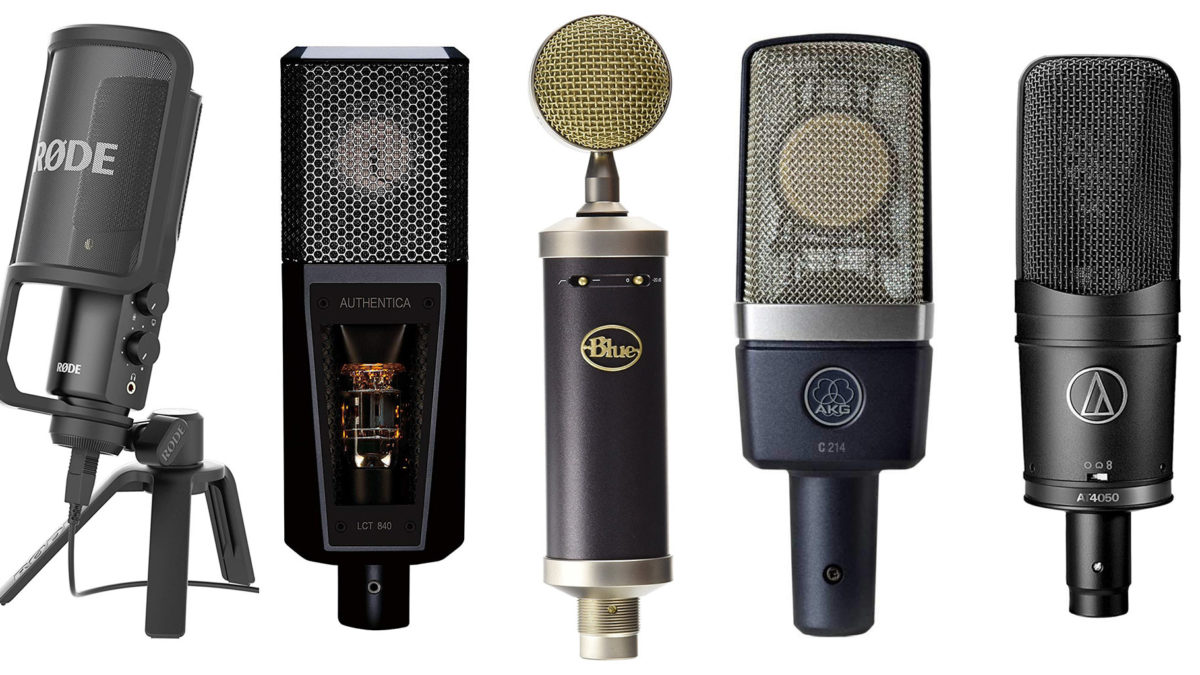
Condenser microphones are sensitive and detailed. They capture the full frequency range and the subtleties of a performance. But they also capture room noise, desk vibrations, and the hum of a computer fan. Dynamics are tougher and less sensitive. They reject off-axis sound better and are more forgiving of a noisy room. If you record in a treated space or can control the environment, a condenser like the RØDE NT1 or Blue Yeti gives you more detail. If you record in a live room or a spare bedroom with bare walls, a dynamic like the Shure SM7B or FIFINE AM8 is the safer choice.
Polar Pattern
Cardioid (heart-shaped) pickup rejects sound from the sides and rear. That is the standard for vocal recording because it focuses on the source and ignores the room. Unidirectional dynamics are always cardioid. Many condensers also offer cardioid, but some, like the Blue Yeti, give you switchable patterns. For solo vocal work, cardioid is all you need. For podcasts with multiple people, bidirectional or omnidirectional might be useful, but cardioid mics still work if placed carefully.
The biggest mistake is buying a condenser microphone without first addressing room reflections. A dynamic microphone with a tight cardioid pattern will sound clearer in a bad room than any condenser ever could.
Frequency Response
Look at the response curve of a vocal microphone. The Shure SM58 has a presence boost around 5kHz that makes voices cut through a mix. The RØDE NT1 is flatter with a gentle rise in the top end for air and detail. The Shure SM7B rolls off highs and warms the midrange. There is no "right" curve; it depends on your voice and the style. A bright voice might prefer the SM7B's rolled-off top. A dark voice might need the NT1's treble extension. If you can, listen to samples or test the mic with your own voice.
Connectivity
USB microphones simplify the chain. No interface, no phantom power, just a cable to the computer. They are great for beginners and mobile setups. But they lock you into the mic's built-in preamp and converter. XLR microphones require an audio interface but give you the freedom to upgrade preamps, change converters, and use more advanced recording techniques. The RØDE NT1 5th Gen bridges the gap with both ports, letting you start with USB and grow into XLR. For serious studio vocal work, XLR is still the standard, and it pairs well with a quality audio interface. If you are looking for something that can handle USB duties well, our guide to the best external microphones for streaming covers comparable options.
Frequently Asked Questions
Can I use a dynamic microphone for singing in a studio?
Yes. The Shure SM7B and SM58 are used on countless hit records. Dynamics handle high SPL better than condensers and can produce a warm, intimate vocal that fits well in dense mixes. They just require more gain and careful placement.
Do I need an audio interface for an XLR microphone?
Yes. XLR microphones output a low-level signal that needs to be boosted and converted to digital. An audio interface provides the preamp and analog-to-digital conversion. If you are using a USB microphone, no interface is needed.
What is the best cheap microphone for recording vocals?
The FIFINE T669 offers a full kit with a boom arm, shock mount, and pop filter for a very low price. It is a capable condenser mic for the money, though it does have noticeable self-noise at high gain.
Why do podcasters use the Shure SM7B so much?
The SM7B's narrow cardioid pattern and rolled-off high end make it ideal for untreated rooms. It produces a warm, intimate sound that works well for spoken word. It also has excellent shielding that rejects electromagnetic interference from computers.
Can I record vocals with a lavalier microphone?
You can, but the sound will lack the body and presence of a large diaphragm mic. Lavaliers are designed for clarity, not musicality. They work for voiceovers and interviews but are not recommended for singing.
What is phantom power and do I need it?
Phantom power is 48V DC sent through XLR cables to power condenser microphones. Most audio interfaces have a switch to enable it. Dynamic microphones do not need phantom power. Condenser microphones will not work without it.
How far should I stand from the microphone?
For a condenser microphone, 6 to 12 inches is typical. For a dynamic like the SM7B, you can work as close as 2 to 3 inches for a thicker, bassy tone. Closer distances emphasize the proximity effect. Farther distances capture more room sound.
The Bottom Line
After testing all ten microphones, the RØDE NT1 Signature Series is the best microphone for recording vocals in a controlled studio environment. Its ultra-low noise floor, smooth high end, and included accessories make it a complete package that rivals mics costing three times as much. For anyone who has treated their room even a little, it will deliver the cleanest, most flattering vocal recordings.
But the right mic depends on context. The Shure SM7B remains the gold standard for podcasters and streamers working in untreated rooms. The Blue Yeti is the best all-in-one USB mic for multi-purpose content creation. And the Mini Mic Pro is the go-to for mobile video shooters who need portability. If you are still on the fence, start with the RØDE NT1 Signature Series and buy a shock mount. You will not look back.
As an Amazon Associate we earn from qualifying purchases.