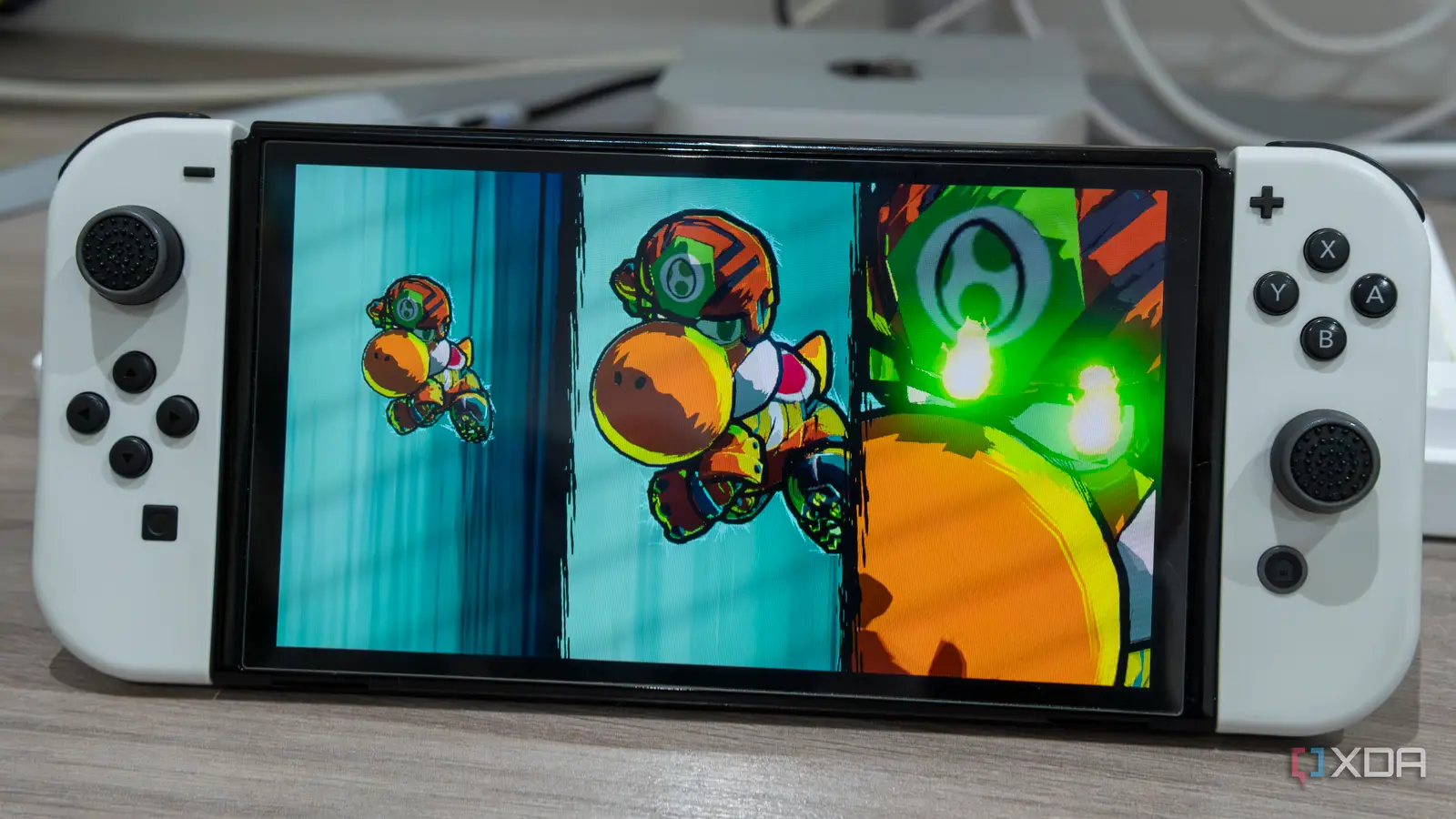

A Nintendo emulator setup can mean very different things. One device may manage NFC game data for a Switch, another may boot a Raspberry Pi into a retro library, and a third may be an N64 cartridge for homebrew and ROM support. Choosing the wrong type is easy if you only scan the word “emulator” in a product title.
We compared the nine options here by what they actually support, how much setup they require, and which console or computer each one suits. The Best nintendo emulator pick for most Switch users is the dyseer NFC Emulator, while the Sonicon cards and N64 cartridges make more sense for dedicated retro setups.
Comparison table
| # | Product | Award | Display or connection | Storage or game support | Best for |
|---|---|---|---|---|---|
| 1 | dyseer NFC Emulator | Best overall | 1.4-inch backlit LCD, Bluetooth | 3000+ data entries, 50+ games | Switch NFC data management |
| 2 | PEGLY Smart NFC Emulator | Best cross-console NFC pick | 1.2-inch OLED, rechargeable | Up to 3000 NFC files, 50+ games | Switch, 3DS, and Wii U users |
| 3 | Deyathy Allmiibo Emulator | Best compact NFC option | 1.2-inch OLED, USB-C | 3000+ profiles, 60+ games | Offline browsing and travel |
| 4 | Sonicon RetroPie 64GB | Best for Raspberry Pi 3 | MicroSD card | 10 systems, including NES, SNES, Genesis, and Game Boy | Raspberry Pi 3 and 3B+ |
| 5 | Nintendo Switch Online | Best official library access | Digital code | NES, Super NES, and Game Boy libraries | Official Switch play and cloud saves |
| 6 | Sonicon Batocera 128GB | Best Raspberry Pi 4 setup | MicroSD card | 28 systems, including N64 | Raspberry Pi 4, 4B+, and 400 |
| 7 | Keenso Super64 Cartridge | Best N64 developer tool | N64 cartridge | Up to 64MB, 64DD support | N64 homebrew and flash use |
| 8 | Bewinner N64 Cartridge | Best N64 save protection | N64 cartridge, USB-C | 16GB memory, up to 64MB games | N64 ROM support and backups |
| 9 | KIWITATA N64 USB Controller | Best wired N64 controller | USB 2.0, 1.7-meter cable | Works with PC, Mac, Linux, and Raspberry Pi | Desktop N64 emulation |
1. dyseer NFC Emulator: Best Overall

Pros
- Large 1.4-inch backlit LCD
- Stores more than 3000 data entries
- Bluetooth updates from Android, iOS, and PC
- Supports Switch, Switch 2, Wii U, and 3DS
Cons
- Requires reading the included manual for setup
- Compatibility depends on supported NFC games
- The listing does not specify battery capacity
Best for: Switch owners who want a central device for browsing and managing NFC game data.
The dyseer NFC Emulator is the easiest recommendation here because it solves the annoying part of NFC accessories: keeping a large collection organized. Its 1.4-inch backlit LCD is larger than the displays on the PEGLY and Deyathy devices, and it shows categories, selections, database content, and device status without requiring a phone for every interaction.
Its storage claim is substantial, with more than 3000 data entries across more than 50 supported games. Those entries cover character, fashion, weapon, currency, and material data. That range matters more than the headline number because it suggests the device is intended for switching among different types of game content, not simply holding a small group of character files.
Bluetooth is built in for updates from Android, iOS, and PC. The device can also generate UIDs automatically, read data, and support repeated rewrites. The listing says new data and firmware can be downloaded through the included card and the manufacturer's website. That creates a more flexible workflow than the official Nintendo Switch Online service, which provides access to classic games and cloud features but does not replace an NFC data manager.
The weakness is that this is not a plug and play emulator for Nintendo games. It is an NFC tag emulator, and its usefulness depends on the games and data it supports. First time buyers also need to follow the manual, especially if they plan to add data themselves. If you want the clearest screen and the most straightforward way to browse a large NFC collection, the dyseer is the one we'd choose. Readers assembling a broader Nintendo setup may also want to consider which hardware works best for different Switch play styles.
2. PEGLY Smart NFC Emulator: Best Cross-Console NFC Pick

Pros
- Works with Switch, Switch OLED, Switch Lite, 3DS, and Wii U
- Stores up to 3000 NFC files
- Rechargeable pocket-sized design
- OLED screen shows selections and battery status
Cons
- Smaller display than the dyseer
- Battery capacity is not listed
- NFC compatibility remains game dependent
Best for: players who use more than one Nintendo generation and want one rechargeable NFC device.
PEGLY's main advantage is its broad console coverage. It is designed for Nintendo Switch, Switch OLED, Switch Lite, New 3DS and 2DS XL, and Wii U, with support for more than 50 NFC-enabled games. That makes it a better fit than the dyseer for a household that still uses Nintendo's older hardware.
The 1.2-inch OLED display is smaller than dyseer's 1.4-inch LCD, but OLED should make the interface easy to read in dim rooms. It shows character selection and battery status, so the device can be used without depending entirely on a companion phone. Its interface is described as plug and play, with quick NFC switching and simple file organization.
PEGLY also has a rechargeable battery and a compact body measuring 3 inches long, 2 inches wide, and 0.5 inches high. At 0.1875 pounds, it is light enough to carry with a handheld system. The 3000-file capacity puts it in the same class as the dyseer and Deyathy, though PEGLY emphasizes cross-console compatibility more than offline library management.
The compromise is the smaller screen and the lack of a stated battery capacity. The listing also advises keeping files organized by game, which is sensible when the library can reach thousands of entries. Choose PEGLY over the dyseer if 3DS and Wii U support are central to your setup. Choose Deyathy if a lighter device and USB-C charging matter more.
3. Deyathy Allmiibo Emulator: Best Compact NFC Option

Pros
- Stores more than 3000 NFC profiles
- Supports 60+ popular games
- Very light 0.055-pound body
- USB-C charging and offline use
- Bluetooth app support for updates
Cons
- The OLED display is only 1.2 inches
- Some 64DD and iQUE details do not apply to this device
- The listing does not state a battery capacity
Best for: travelers who want a light NFC library with offline browsing.
Deyathy takes a more travel-focused approach than the other NFC devices. The body weighs 0.055 pounds, considerably less than PEGLY's listed 0.1875 pounds, and it has a 1.2-inch OLED display for file names and icons. This is the NFC emulator to consider when the device will live in a case or travel bag rather than beside a home console.
The internal library holds more than 3000 NFC data profiles and supports more than 60 popular games. The key difference is offline operation. Deyathy says users do not need constant phone app syncing or Bluetooth pairing during play, so the device is intended to handle selection directly from its own interface.
Updates are handled through a Bluetooth-connected companion app on iOS or Android, with manual profile additions also supported. USB-C charging is a useful modern touch, and the listing claims extended standby measured in weeks, though it does not provide a battery capacity or a precise operating time. The advertised response time is 0.1 seconds, which suggests quick selection, but it is not a substitute for knowing exactly which games are compatible.
Deyathy gives up some screen size compared with the dyseer and some cross-console detail compared with PEGLY. Its product information also does not provide the same dimensions as PEGLY. Pick it for low carry weight, offline browsing, and USB-C charging. For a home setup where screen readability matters more, dyseer remains the stronger choice.
4. Sonicon RetroPie 64GB: Best for Raspberry Pi 3

Pros
- Configured for Raspberry Pi 3 and 3B+
- Includes 10 systems
- RetroPie interface needs no command line setup
- Supports SNES, Xbox, and PlayStation controllers
- Includes save states and media-rich game browsing
Cons
- Not intended for Raspberry Pi 4 or newer models
- Requires a Raspberry Pi system
- The listing does not identify the individual game count
Best for: Raspberry Pi 3 or 3B+ owners who want a ready-configured retro interface.
The Sonicon RetroPie 64GB card is a different kind of pick from the NFC devices above. It is not a handheld tag manager. It is a MicroSD card configured for Raspberry Pi 3 and Raspberry Pi 3B+, with RetroPie intended to turn the computer into a retro gaming system.
The included systems cover NES, SNES, Genesis, Game Boy, Atari, arcade, and MAME among others. Sonicon describes the package as a collection of 10 systems, with box art, screenshots, video, ratings, fan art, maps, and manuals. That media layer is important because it makes a large library easier to browse from the couch than a folder full of unexplained filenames.
Setup is aimed at people who do not want to start at the command line. The card includes automatic save and load with snapshots, filtering and searching, game manuals, screenshots, recording, and AI translation for foreign games. It also supports SNES-style, Xbox, and PlayStation controllers out of the box. The result is much closer to a prepared living-room interface than a bare emulator installation.
The limiting factor is hardware compatibility. This card is configured specifically for Raspberry Pi 3 and 3B+, while Sonicon's Batocera card is made for Raspberry Pi 4, 4B+, and 400. Do not choose this one for a Pi 4 build. It is a sensible route for an existing Pi 3 owner, especially if you want to explore the differences between classic Nintendo libraries without assembling every emulator component yourself.
5. Nintendo Switch Online: Best Official Library Access

Pros
- Official Nintendo service
- Online play for compatible Switch games
- NES, Super NES, and Game Boy libraries
- Save Data Cloud support
- Smartphone app with game-specific features
Cons
- It is a digital membership, not local emulator hardware
- Features vary by compatible game
- The classic library is curated rather than user expandable
Best for: Switch owners who want official classic games, online play, and cloud backup.
Nintendo Switch Online is the outlier in this roundup, but it is also the cleanest choice for readers who mean official classic-game access when they search for a Nintendo emulator. This is a digital code for an individual three-month membership, not a cartridge, MicroSD card, or NFC accessory.
The service includes curated NES and Super NES libraries, plus Game Boy games. Nintendo lists titles such as Super Mario Land 2 and Metroid II among the Game Boy selection. Depending on the game, players can compete or cooperate online, share a screen, or virtually pass the controller. Those features make it more than a simple collection of old ROMs.
Online play covers compatible games including Pokémon Sword and Pokémon Shield, Mario Kart 8 Deluxe, Super Smash Bros. Ultimate, and Animal Crossing: New Horizons. Save Data Cloud can help recover game data after losing a system or moving to a new one. The smartphone app adds voice chat and game-specific functions for selected titles.
The trade-off is control. Unlike a Raspberry Pi card or N64 flash cartridge, you cannot install your own library or configure the emulator layer. It also does not provide the NFC functions offered by dyseer, PEGLY, and Deyathy. Pick Nintendo Switch Online when legality, convenience, online play, and cloud saves matter more than customization. For a wider list of games to play on Nintendo's current console, the difference between local and online multiplayer is a useful place to begin.
6. Sonicon Batocera 128GB: Best Raspberry Pi 4 Setup
Pros
- Configured for Raspberry Pi 4, 4B+, and 400
- Includes 28 systems
- Adds N64 support
- Batocera interface includes search, filtering, and save states
- One-year warranty and listed support
Cons
- Only for specified Raspberry Pi 4 models
- Requires a Raspberry Pi computer
- Included game details are not itemized in the listing
Best for: Raspberry Pi 4 owners building a broad living-room retro station.
Sonicon's Batocera card is the more capable Raspberry Pi package here. It is configured for Raspberry Pi 4, Raspberry Pi 4B+, and Raspberry Pi 400, and it includes 28 systems. The list names NES, SNES, Sega, Game Boy, Atari, arcade, MAME, Genesis, and N64, giving it a wider platform spread than the RetroPie card for Pi 3 hardware.
Batocera is built around a visual interface, so the card is aimed at people who want to browse rather than configure emulators manually. Sonicon includes auto save and load with snapshots, filtering, searching, screenshots, recording, game manuals, and media such as box art, video, maps, and fan art. It also supports SFC-style, Xbox, and PlayStation controllers.
N64 support is the biggest practical distinction. The 64GB RetroPie card is a better match for older Pi 3 hardware, but this 128GB Batocera option is the one to consider when an N64 layer is part of the plan. It also comes with a listed one-year warranty, upgrade support, game pack add-ons, and customer assistance through email, text messaging, and live chat.
That hardware restriction needs to be taken seriously. Sonicon says the card is for specific Raspberry Pi versions only, so it is not a universal MicroSD emulator. It also requires the Pi itself and does not offer the same official software path as Nintendo Switch Online. Choose this card for a Pi 4-based retro console with a broad interface. For a smaller, dedicated N64 setup, the Keenso and Bewinner cartridges are more focused.
7. Keenso Super64 Cartridge: Best N64 Developer Tool

Pros
- Supports N64 games up to 64MB
- Supports 64DD hardware emulation
- Handles direct disk dump loading
- 23.8 MiB/s peak transfer rate
- Automatic save backup
Cons
- Geared toward enthusiasts and developers
- Requires an N64 console
- The listing does not specify included storage capacity
Best for: N64 enthusiasts who want homebrew flexibility and 64DD support.
Keenso's Super64 is for a reader who wants to work with original N64 hardware, not for someone looking for a simple PC emulator download. It is an open source flash cartridge designed to play N64 games and support homebrew development. That gives it a much narrower audience than the Sonicon cards, but a more direct relationship with the original console.
The cartridge supports games up to 64MB and lists a peak transfer rate of 23.8 MiB/s. Transfer speed matters during loading and file management, although it does not turn every N64 title into a modern instant-load experience. The hardware also emulates 64DD and can load disk dumps directly, including combination games and multi-disk 64DD titles.
Keenso lists support for additional systems and formats including GB, GBC, SMS, GG, and CHF. The wording is not detailed enough to explain the setup for each format, so buyers should treat those as compatibility claims that may require extra preparation. There is no stated storage capacity in the supplied product information, which makes it harder to compare directly with Bewinner's listed 16GB memory.
Automatic save backup is the feature that makes this cartridge more practical for long-term use. It protects progress without requiring the player to manage every save manually. Compared with Bewinner, Keenso is the more natural choice for open source experimentation and developers. Skip it if you want a controller or a ready-made Raspberry Pi interface. Choose it if 64DD handling and homebrew are the reason you are shopping.
8. Bewinner N64 Cartridge: Best N64 Save Protection

Pros
- 16GB memory
- Supports N64 games up to 64MB
- USB-C connection
- 64DD and multi-disk support
- Automatic save backup
Cons
- 64DD and iQue files require separate downloads
- Requires an N64 console
- Setup is better suited to experienced users
Best for: N64 owners who want defined internal memory and automatic save backups.
Bewinner is closely related to Keenso, but its specifications are clearer in one important area. It lists 16GB of memory, while Keenso's supplied information does not state a storage figure. That makes Bewinner easier to evaluate for someone planning a permanent N64 library rather than occasional experimentation.
The cartridge supports N64 games up to 64MB and lists a peak I/O speed of 23.8 MiB/s, matching Keenso's stated transfer rate. USB-C is used for connection, and automatic save backup is built in. Those features create a sensible workflow for moving files and protecting progress, provided the buyer is comfortable handling ROM files and the required setup.
Bewinner also supports direct disk dumps, combination games, and multi-disk 64DD games. The listing specifically warns that 64DD and iQue files need to be downloaded separately, so those capabilities are not the same as receiving every required file ready to use. It also mentions support for SMS, GG, and CHF formats, though it does not explain the process in depth.
Keenso remains the more appealing pick for a development-oriented buyer because its description emphasizes open source use and homebrew titles. Bewinner is easier to recommend when storage clarity and USB-C matter more. Neither cartridge is a fit for a Switch owner searching for NFC functionality, and neither replaces the plug and play interface of a prepared Raspberry Pi card.
9. KIWITATA N64 USB Controller: Best Wired N64 Controller

Pros
- Works with Windows, Mac, Linux, and Raspberry Pi
- 10 function buttons
- 1.7-meter cable
- Standard USB 2.0 connection
- Familiar N64 layout for classic games
Cons
- Does not work with Switch games
- Requires a separate emulator
- No rumble pack connector
Best for: desktop N64 emulation on a PC, Mac, Linux computer, or Raspberry Pi.
KIWITATA is the only controller in this group, and its purpose is refreshingly specific. It is a wired USB N64-style controller for Windows, Mac, Linux, and Raspberry Pi. The product is not an emulator by itself, and it does not work with Switch games, but it can make desktop N64 software feel much closer to the original console.
The controller has 10 function buttons, including left and right shoulder buttons and the Z trigger. Its cable is approximately 1.7 meters long and uses a standard USB 2.0 plug. That is enough reach for a desk or a nearby television setup, though it offers less freedom than a wireless controller.
KIWITATA says it works with Raspberry Pi 3+ and RetroPie, but the Pi still needs to be built into a retro gaming system. On PC, the listing points users toward Project64, while Mac users are directed to OpenEmu. That distinction matters: the controller supplies input, while the emulator software and game files remain separate.
The missing rumble pack connector is the major compromise, and buyers should not expect native Switch compatibility. Still, the controller makes more sense than a generic gamepad for N64 titles such as The Legend of Zelda: Ocarina of Time, Super Mario 64, Mario Kart, and Super Smash Bros. If your goal is a computer-based setup, how controller layout affects classic PC emulation is worth considering before choosing your software and accessories.

How to choose best nintendo emulator
Start with the console you actually want to use. These products cover NFC accessories, Raspberry Pi software cards, official Switch access, N64 cartridges, and a USB controller, so compatibility matters more than any single headline feature.
Console compatibility
NFC devices are designed for supported NFC-enabled games on Switch, Switch 2, 3DS, or Wii U. Raspberry Pi cards are tied to particular Pi generations, while flash cartridges require original N64 hardware. A controller such as KIWITATA works with computers and Raspberry Pi but not Switch.
Storage and library size
Storage has different meanings across this category. NFC devices describe capacity in data profiles, with dyseer, PEGLY, and Deyathy each listing more than 3000 entries. Sonicon's cards use 64GB or 128GB MicroSD capacity, while Bewinner lists 16GB memory and Keenso does not state a capacity.
Display and navigation
A built-in display makes NFC selection easier. dyseer's 1.4-inch backlit LCD gives it the clearest stated screen, while PEGLY and Deyathy use 1.2-inch OLED displays. Raspberry Pi cards rely on the connected screen and interface, and N64 cartridges generally require a separate setup for file management.
Setup requirements
Nintendo Switch Online is the simplest official route, but it provides a curated library rather than user-managed files. NFC devices require some learning and may need Bluetooth updates. Sonicon cards still require the correct Raspberry Pi, while N64 cartridges and KIWITATA's controller require a console or computer plus emulator software.
The right emulator is the one that matches your hardware before it matches your game list.
Save and update features
Automatic save backup is a major advantage on the Keenso and Bewinner cartridges. Sonicon cards include save states and snapshots, while NFC devices focus on rewriting, browsing, and updating data. Check whether a feature is built into the device or requires separate downloads, apps, or companion hardware.

Frequently asked questions
What is the best nintendo emulator for Switch?
For NFC data management, dyseer's NFC Emulator is the strongest all-around pick because it combines a 1.4-inch backlit display, Bluetooth updates, and more than 3000 data entries. For official classic games and online functions, Nintendo Switch Online is the safer choice.
Do these products emulate complete Nintendo games?
No. The dyseer, PEGLY, and Deyathy devices are NFC data emulators. The Sonicon products are MicroSD cards prepared for Raspberry Pi retro systems, while Keenso and Bewinner are N64 flash cartridges.
Which NFC emulator supports the most Nintendo systems?
PEGLY lists compatibility with Switch, Switch OLED, Switch Lite, New 3DS and 2DS XL, and Wii U. Dyseer also lists Switch 2, Switch, Wii U, and 3DS. Actual operation still depends on the specific NFC-enabled game.
Which Sonicon card should Raspberry Pi owners choose?
The RetroPie 64GB card is configured for Raspberry Pi 3 and 3B+. The Batocera 128GB card is configured for Raspberry Pi 4, 4B+, and 400, and it adds N64 to its named system support.
Can the KIWITATA controller work with Nintendo Switch?
No. Its listing specifically says it is not for Switch games. It is a wired USB controller for Windows, Mac, Linux, and Raspberry Pi.
Do the N64 cartridges support 64DD games?
Keenso and Bewinner both list 64DD support. Bewinner says 64DD and iQue files must be downloaded separately, so buyers should expect some preparation rather than a complete ready-to-play collection.
Do these products include emulator software?
Nintendo Switch Online provides access through Nintendo's service. The Sonicon cards include configured RetroPie or Batocera software, but KIWITATA only provides a controller and points users to separate emulator software such as Project64 or OpenEmu.

The bottom line
The Best nintendo emulator depends on the hardware behind the question. For Switch NFC data, the dyseer NFC Emulator is the best starting point because its 1.4-inch backlit screen and broad data capacity make a large collection easier to manage. PEGLY is the better cross-generation alternative, and Deyathy is the lightest travel-focused option.
For a Raspberry Pi build, choose Sonicon Batocera 128GB if you have a Pi 4, 4B+, or 400 and want N64 support alongside a broad retro interface. N64 owners who want flash cartridge features should look at Bewinner N64 Cartridge for its stated 16GB memory or Keenso Super64 Cartridge for its stronger homebrew emphasis.
If you are undecided, identify your console first, then choose the product designed for that hardware rather than the one with the biggest emulator claim.
As an Amazon Associate we earn from qualifying purchases.