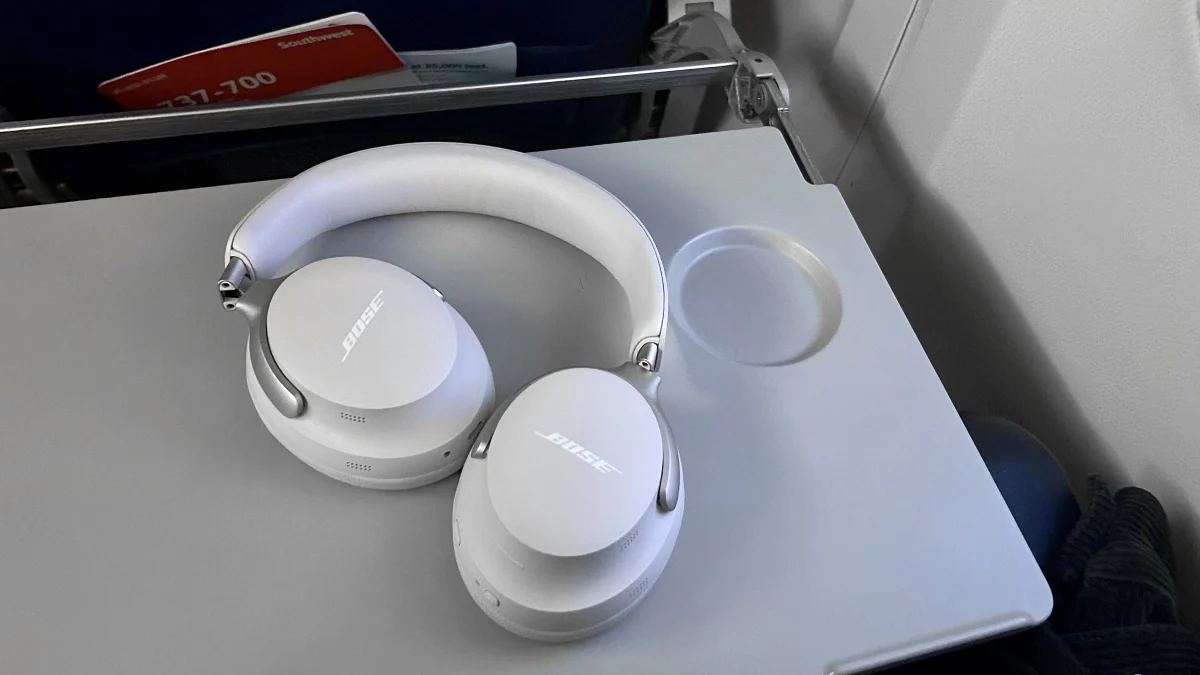

Long meetings, train announcements, keyboard clatter, and nearby conversations all expose the same weakness: a headset can sound good yet still leave you fighting the room. The Best Noise Cancelling Headset picks below separate music-focused over-ear headphones from call-first office headsets and simple wired models.
The list ranges from lightweight wireless headphones to a single-ear Bluetooth earpiece and USB headsets built for computers. Battery life, microphone design, connection options, and the kind of noise cancellation each model uses matter more than a long feature list.
Soundcore Q20i is our top pick, with Sony, Bose, TOZO, and several work-focused headsets covering the main alternatives.
Comparison table
| # | Product | Award | Noise cancellation | Battery or connection | Best for |
|---|---|---|---|---|---|
| 1 | Soundcore Q20i | Best overall | Hybrid ANC | 40 hours with ANC | Everyday listening and travel |
| 2 | Sony WH-CH720N | Best lightweight | Noise cancelling with ambient modes | 35 hours | Long listening sessions |
| 3 | Bose QuietComfort | Best for comfort | Active noise cancellation | 24 hours | Quiet, comfortable travel |
| 4 | bmani 120H ANC Headphones | Best battery life | 45dB hybrid ANC | 120 hours | Frequent travelers |
| 5 | Soothielec Work Headset | Best for office calls | ENC microphone noise cancellation | 40 hours talk time | Remote and hybrid work |
| 6 | COTOE G7 Earpiece | Best single-ear design | Noise cancelling microphone | 72 hours with case | Drivers and hands-free calls |
| 7 | Angteela Work Headset | Best mute controls | Hybrid ANC and ENC | 35 hours talk time | Meetings and customer calls |
| 8 | Logitech H390 | Best wired option | Noise cancelling microphone | USB-A wired | Straightforward computer calls |
| 9 | JIAMQISHI USB Headset | Best connection flexibility | Noise cancelling microphone | USB and 3.5mm | Home office and online classes |
| 10 | TOZO HT3 | Best feature set | 45dB hybrid ANC | 90 hours | Wireless music and multitasking |
1. Soundcore Q20i: Best Overall

Pros
- Hybrid ANC uses four microphones
- Long battery life in ANC and normal modes
- Dual-device Bluetooth connection
- Adjustable sound through the Soundcore app
Cons
- No dedicated boom microphone
- The larger bass-forward presentation will not suit every listener
- Wired Hi-Res listening requires the AUX cable
Best for: someone who wants one wireless over-ear headset for commuting, work, and relaxed listening.
The Soundcore Q20i gets the important everyday decisions right. It is a conventional over-ear pair that can move from a laptop to a phone without making you rebuild the connection each time. Its dual-device feature lets it stay connected to two sources, so a call on one device can interrupt audio from the other. That is the sort of small convenience that becomes central to daily use.
Its hybrid active noise cancellation combines two internal and two external microphones, with Soundcore claiming a reduction of up to 90 percent of outside noise. The number alone does not tell the whole story, but the approach is sensible for steady sounds such as engine rumble, office HVAC noise, and train movement. Transparency mode is just as useful when you need announcements or nearby conversation. There is also a normal mode for listening without either processing option.
Sound comes from oversized 40mm dynamic drivers, and BassUp is available when you want a heavier low end. The Soundcore app adds 22 EQ presets plus manual adjustment, so the Q20i is easier to tailor than a headset with one fixed tuning. It also supports Hi-Res audio through the AUX cable. That wired option matters on a flight or with equipment where Bluetooth is inconvenient, though the headset becomes less versatile when used as a call device without a proper boom mic.
Battery endurance is one of its strongest practical traits. Soundcore lists 40 hours with ANC enabled and 60 hours in normal mode, while a five-minute charge can add four hours of listening. At 0.57 pounds, it is not the lightest here, but it remains a manageable travel companion. Sony's WH-CH720N is lighter, while Bose's QuietComfort has a more comfort-first design. The Q20i wins by balancing the two.
The weakness is its broad, energetic sound and ordinary built-in call microphone. Listeners who want neutral presentation or consistently polished voice pickup should look toward Sony or one of the work headsets. For everyone else, the Q20i is the most complete starting point in this group and the one we would keep for mixed use.
2. Sony WH-CH720N: Best Lightweight
Pros
- Weighs 192g
- Ambient Sound and Adaptive Sound Control modes
- Multipoint connection for two devices
- Quick charging and long playback
Cons
- Shorter battery life than Soundcore Q20i
- No wired listening feature is listed
- Built-in controls and app features may take setup time
Best for: listeners who dislike heavy over-ear headphones and want strong wireless convenience.
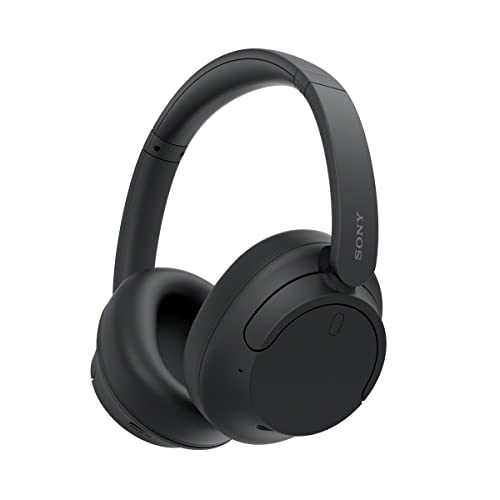
The Sony WH-CH720N's defining advantage is immediately clear when you pick it up: Sony lists a weight of 192g, making it the lightest overhead wireless model in this comparison. That lower weight helps during long stretches at a desk or on a flight. It does not have the plush, substantial feel of Bose QuietComfort, but the Sony is less likely to become noticeable on your head.
Noise control comes from Sony's Integrated Processor V1 and dual noise sensor technology. The headset also includes Adjustable Ambient Sound and Adaptive Sound Control, which gives it more environmental awareness than a simple ANC-on, ANC-off design. Adaptive Sound Control can tailor the listening behavior to the environment, while ambient mode lets outside sound back in when you need it.
The WH-CH720N is tuned around natural vocals and balanced sound, with Sony's DSEE processing intended to improve compressed music. That makes it a better fit for podcasts, vocal-heavy music, and general streaming than a headset that pushes bass at every opportunity. Its beamforming microphones and Precise Voice Pickup Technology are aimed at clearer hands-free calls, although this remains a music headset rather than a full office headset with a boom.
Sony lists 35 hours of battery life, and a three-minute charge can provide up to an hour of playback. Multipoint Bluetooth lets it connect to two devices at once, which puts it close to the Q20i for laptop and phone multitasking. The main difference is physical: Sony is lighter, while Soundcore lasts longer and offers AUX listening plus more prominent EQ customization.
The omissions are meaningful. There is no wired listening feature in the supplied details, and its lighter construction may feel less substantial than Bose's. People who want the deepest isolation or a more cushioned fit should consider Bose. Those who want a light headset for everyday commuting should choose Sony, particularly if long-wearing comfort matters more than maximum battery life.
3. Bose QuietComfort: Best for Comfort

Pros
- Plush over-ear cushions and padded headband
- Quiet and Aware listening modes
- Adjustable EQ in the Bose app
- Can operate with the included audio cable
Cons
- 24-hour battery is the shortest among the main over-ear wireless picks
- Fewer listening modes than some competitors
- Heavier than Sony WH-CH720N
Best for: travelers and home listeners who put physical comfort and dependable isolation first.
The Bose QuietComfort is the easiest model here to recommend to someone who regularly wears headphones for hours at a time. Its plush over-ear cushions hug the ears, and the padded headband spreads pressure rather than concentrating it at one point. The listed weight is about 0.52 pounds, so it is not featherlight like Sony's WH-CH720N, but the cushioning changes how that weight feels.
Bose keeps the controls straightforward with Quiet and Aware modes. Quiet is the full noise cancelling setting, while Aware brings the surroundings back into the mix. That simplicity is useful on a journey: press the control when you board, switch to Aware when you need to hear an announcement, and avoid digging through a complicated menu. The passive seal of the over-ear cushions also contributes to keeping outside sound away.
Audio can be adjusted through the Bose app, with control over bass, midrange, and treble. The headset is described as offering high-fidelity audio and deep bass, but the EQ is the more useful detail because it lets you temper that presentation. Multipoint Bluetooth allows switching between devices without disconnecting and reconnecting. An included audio cable with an in-line microphone also enables wired use when Bluetooth is unavailable or the battery has run down.
Bose lists 24 hours of battery life, and a 15-minute USB-C charge adds up to 2.5 hours of playtime. That is enough for most daily use, but it trails the 35 hours from Sony and the 40 hours with ANC from Soundcore. Bose is the better physical experience, not the endurance leader. If you spend long days moving between devices, the Q20i is more flexible.
The Bose QuietComfort also offers fewer modes than TOZO HT3 or the bmani headphones, both of which advertise extra processing and spatial audio features. That is not necessarily a flaw. Buyers who want calm, comfortable listening should not be distracted by features they rarely use. Choose Bose for a relaxed fit and simple noise control, and skip it if battery endurance is your main concern.
For a wider look at how over-ear isolation differs from other designs, the way active cancellation handles steady background noise is a useful distinction to understand before buying.
4. bmani 120H ANC Headphones: Best Battery Life

Pros
- Claimed 120-hour playback
- Digital battery display
- Hybrid ANC with a claimed 45dB reduction
- Wired AUX mode and foldable earcups
- Six microphones for calls
Cons
- More feature claims than established app support
- Spatial audio may not suit every recording
- Heavier than Sony
Best for: travelers who want very long playback and a visible battery readout.
The bmani 120H ANC Headphones are built around one unusually clear promise: recharge infrequently. The listed playback figure is 120 hours, and the digital battery display shows the remaining power instead of leaving you to guess from a small status light. A 10-minute charge is claimed to add two hours of listening. For travel, shared offices, or a spare headset that sits in a bag, that endurance is the headline feature.
Its hybrid ANC system uses four layers and is claimed to reduce ambient noise by up to 45dB. The headset has a dedicated Transparency mode, so it is not limited to shutting the world out. Those figures are manufacturer claims rather than a guarantee of identical results across every noise type. Steady low-frequency sound is the kind of environment where ANC is most useful, while voices and sudden sounds still depend heavily on the physical earcup seal.
The bmani uses 40mm dynamic drivers and adds claimed 360-degree spatial audio. Bluetooth 6.0 is specified, along with latency as low as 35ms, and an included 3.5mm AUX cable provides a wired mode. That combination makes it more ambitious than the Bose QuietComfort, which keeps its modes simpler. It also includes six adaptive ENC microphones for calls, an appealing setup for noisy streets or an open office.
The design folds at the earcups and uses memory foam with a velvet-like protein leather covering. At about 0.6 pounds, it sits close to Soundcore Q20i in weight. The extra battery capacity does not come free in physical terms, and the long list of features means there is more to configure than on Sony or Bose. TOZO HT3 is a simpler alternative with 90-hour playback and app EQ modes, while bmani offers the more useful battery display.
The main reason to pass on it is that its appeal depends on several feature claims working together. If you want a proven, restrained listening experience, Bose or Sony is easier to understand. If a headset that can remain packed for weeks and still show its remaining charge sounds more useful, bmani is the clear endurance pick.
5. Soothielec Work Headset: Best for Office Calls

Pros
- Environmental noise cancelling for calls
- USB-A dongle for computers without Bluetooth
- Simultaneous laptop and phone pairing
- Charging stand included
- Flexible boom microphone
Cons
- USB dongle is not compatible with desk phones
- Mute works only during calls
- MFB computer controls are limited
Best for: remote workers who need a boom microphone and easy computer connectivity.
The Soothielec Work Headset is not trying to replace a music-focused pair such as Soundcore Q20i. Its priority is voice communication, and the flexible boom microphone makes that obvious. Environmental noise cancellation is designed to reduce background distractions such as pets and children on the other end of a call. That is a different job from cancelling the sound reaching your own ears.
Connection flexibility is its best office feature. Bluetooth 5.3 handles wireless use, while the included USB-A adapter gives a Windows PC a dedicated connection even when the computer has no built-in Bluetooth. It can pair with a laptop and smartphone simultaneously, and the listed range is 33 feet. The dongle is not compatible with desk phones or landlines, so it suits computer-based work rather than every office phone system.
The headset includes a one-touch mute button, but the supplied details specify that mute activates only during calls. The multifunction button supports smartphone functions and voice assistants, not computer apps. Those limitations are easy to miss, yet they matter for someone expecting every control to work inside Teams or other desktop software. Logitech H390 is more basic, but its in-line controls are deliberately simple.
A 600mAh battery provides up to 40 hours of talk time, and a full charge takes about two hours using the charging stand. The headset can be used while charging, although the product information recommends powering it off for safety and battery longevity. Adjustable headband, memory foam earcups, breathable protein leather, and the boom microphone all point toward long work sessions.
Its weakness is that it is less useful for music and travel than the over-ear wireless models above it. There is no listed wired music mode, and the one-pound weight is higher than Sony's. Pick Soothielec when calls are the center of the day, especially if the USB dongle and charging stand will stay at a desk. Skip it if you mainly want passive music listening or a compact travel headset.
6. COTOE G7 Earpiece: Best Single-Ear Design

Pros
- Single-ear design keeps the other ear open
- Charging case with LED display
- Claimed 72-hour playback and talk time with case
- Rotating ear and microphone components
- Dual-device support
Cons
- Not suitable for immersive music listening
- Microphone mute works only during phone calls
- Ear-hook design is less discreet than small earbuds
Best for: drivers, mobile workers, and callers who need one ear free.
The COTOE G7 Earpiece solves a different problem from every over-ear model in this list. It leaves one ear open, which is useful when you need awareness of traffic, coworkers, or a delivery environment. The rotating in-ear section, 360-degree ear hook, and 180-degree microphone arm let you adjust the fit and orientation instead of committing to a fixed side.
Its noise cancellation belongs primarily to the microphone. COTOE claims that the microphone can eliminate up to 99.98 percent of ambient noise, but that should be read as a manufacturer figure rather than a promise that every caller will hear a silent background. The real advantage is the boom position near your mouth and the physical separation from the room. It is built for calls, not for sealing the listener inside a private soundscape.
The G7 includes a mute button, although the product details specify that it works only during phone calls. Siri support, multifunction buttons, and dual connectivity make it practical for mobile use. Compatibility is listed across iOS, Android, computers, PCs, and Bluetooth-enabled devices. Three ear tip sizes are included, and the ear section can rotate 45 degrees to help with fit.
The charging case has an LED display and supports a claimed 72 hours of music playback or talking time. Standby time is listed at 120 hours. That is a very different battery story from Bose's 24 hours on a single charge, because the COTOE depends on its case and is intended for repeated short calls rather than a day of uninterrupted stereo listening.
The compromise is obvious: a single-ear earpiece cannot provide the broad, balanced sound or isolation of the Soundcore Q20i. It can also feel less secure or comfortable for people who dislike ear hooks. Choose it when keeping an ear open is part of the job. For music, flights, and focused work, choose a full over-ear headset instead.
7. Angteela Work Headset: Best Mute Controls

Pros
- Flip-to-mute boom microphone
- Hybrid ANC and microphone ENC
- Qualcomm USB-A dongle
- Bluetooth 5.4 and dual connectivity
- Long talk and music battery life
Cons
- Dongle does not work with desk or VoIP phones
- Heavier than the lightweight music headsets
- MFB controls are limited to cell calls
Best for: people who need a physical mute action during frequent computer meetings.
The Angteela Work Headset earns its place through one excellent office habit: lifting the boom mutes the microphone. Flip-to-mute is faster and more certain than hunting for a software button while a meeting is moving. The product also has a separate ANC control with three modes, so the listener can manage room noise while the microphone's ENC works on the outgoing voice.
A Qualcomm USB-A dongle gives PCs and Macs a dedicated wireless path, which can be more predictable than relying on a computer's Bluetooth settings. Bluetooth 5.4 is also supported, with a listed operating range of 33 feet and dual connectivity through the adapter and Bluetooth. Like the Soothielec model, this dongle is not compatible with landlines, desk phones, or VoIP phones.
The 270-degree rotating microphone can be positioned for different users, while breathable leather ear cushions and an adjustable headband target long sessions. Angteela lists up to 35 hours of talk time and 50 hours of music after a two-hour charge. That is plenty for a workweek pattern, but it is not the marathon battery of bmani or TOZO. The headset weighs about 1.21 pounds, making it substantially heavier than Sony WH-CH720N.
This is a more deliberate work tool than Bose QuietComfort. Bose is the calmer music and travel headset, while Angteela's boom and flip action make it the better meeting device. The trade-off is that the physical design is less elegant, and the MFB button answers or ends cell calls rather than controlling computer apps.
People who spend most of the day in video meetings should choose Angteela over a standard headphone with built-in microphones. People who rarely make calls should avoid carrying the extra boom and choose a lighter music headset.
8. Logitech H390: Best Wired Option

Pros
- Plug-and-play USB-A connection
- Rotating noise cancelling microphone
- In-line volume and mute controls
- 6.23-foot cable
- Works with Chromebook
Cons
- No Bluetooth or wireless mode
- USB-A connection limits device flexibility
- Cable can be awkward away from a desk
Best for: computer users who want a simple headset that works without pairing or charging.
The Logitech H390 is the antidote to wireless setup. Plug its USB-A connector into a computer and it is ready to handle calls and stereo audio without pairing, charging, or installing software. That makes it particularly sensible for a shared workstation, a classroom computer, or anyone who does not want to troubleshoot Bluetooth before a meeting.
Its noise cancelling microphone is the main call feature. The boom rotates out of the way when you are not speaking, and the in-line controls provide volume adjustment and mute without reaching for the computer. The 6.23-foot cable gives enough room to stand and stretch during a call, though that same cable becomes a nuisance if you move around frequently.
The H390 uses fine-tuned drivers for digital stereo sound and has swivel-mounted leatherette ear cushions with an adjustable headband. Its listed weight is 0.44 pounds, lighter than the wireless work headsets here. It is not designed as a travel music headset, but it can handle music, calls, meetings, and other computer audio without fuss.
Soundcore Q20i is the much better choice for commuting because it offers wireless use, ANC modes, and a large battery. Logitech wins only when the computer is the center of the setup and a cable is acceptable. JIAMQISHI USB Headset is more flexible because it adds a 3.5mm connection, but Logitech has the cleaner plug-and-play story.
The weakness is not hidden: this is a wired USB-A headset. It cannot connect to a phone over Bluetooth, and modern devices without USB-A may require an adapter that is not listed here. Choose it for a fixed computer desk where reliability matters more than portability.
9. JIAMQISHI USB Headset: Best Connection Flexibility

Pros
- USB and 3.5mm connections
- 40mm driver
- 270-degree unidirectional boom microphone
- Left or right ear microphone placement
- In-line mute and volume controls
Cons
- Wired design only
- Large cable arrangement
- On-ear construction offers less isolation than over-ear models
Best for: home offices, online classes, and users who need both USB and analog connections.
The JIAMQISHI USB Headset is a practical bridge between older and newer computer setups. It provides a USB connection with in-line audio controls and also includes a 3.5mm connection. That gives it a wider range of possible devices than Logitech H390, though the cable arrangement is less tidy and there is no wireless mode.
Its 270-degree unidirectional boom microphone is intended to focus on the speaker's voice and reject unwanted background sound. The boom can be worn on the left or right, which is a useful fit detail for people who dislike having the microphone fixed to one side. There are separate microphone and speaker mute controls with indicators, so the physical status is easier to see than on a headset with one hidden button.
A 40mm audio driver handles conversation, music, movies, and games. The headset uses soft protein memory foam earpads and an adjustable headband, with the product describing breathable materials intended to reduce heat and sweat. Those details make it more suitable for classes and long calls than a bare office earpiece, though its on-ear design will not block surrounding noise as effectively as the sealed over-ear headphones above.
The compatibility list includes PC, tablet, Mac, iOS, laptop, Android phone, and other devices. The USB cable includes a 5-foot and 4-foot section, giving plenty of reach around a desk. That flexibility is the reason to choose it over Logitech. If you only need USB-A, the H390 is simpler. If you need a phone or tablet connection as well, JIAMQISHI has the more useful layout.
It cannot compete with Sony or Soundcore for travel because it has no wireless battery and no active noise cancellation for the listener. The microphone noise cancellation is for outgoing calls. Choose it for a stationary desk, online classes, or mixed computer and analog equipment, and skip it if you want a cable-free commute.
10. TOZO HT3: Best Feature Set

Pros
- Claimed 45dB hybrid ANC
- 90-hour playback
- Bluetooth, AUX, and USB-C modes
- Replaceable ear pads
- App with 32 EQ modes
Cons
- Many features require sorting through app settings
- Manufacturer claims cover several performance areas
- No dedicated boom microphone
Best for: listeners who want a long-lasting wireless headset with many tuning and connection options.
The TOZO HT3 is the most feature-packed model near the bottom of this ranking. It combines hybrid ANC, multiple connection modes, app control, and a foldable over-ear design. The result is flexible, but it also asks the buyer to decide which features actually matter. If you prefer a simple Quiet or Aware switch, Bose is easier. If you like adjusting sound and connectivity, TOZO has more to explore.
TOZO claims 45dB of adaptive hybrid noise cancellation using four high-sensitivity microphones. It also includes a dedicated call microphone and AI noise reduction for voice calls. As with the similar claims from bmani, the number should not be treated as a universal result for every environment. The physical over-ear seal and the type of background noise will affect the experience.
The 40mm dynamic drivers are paired with TOZO's OrigX acoustic tuning, Hi-Res audio, spatial audio, and 32 EQ modes in the TOZO app. Dual-device connection lets it stay paired with a computer and phone. The headset supports Bluetooth, AUX 3.5mm, and USB-C modes, so it can handle wireless listening, wired audio, and charging from the same general design.
Battery life is listed at 90 hours, and a 10-minute charge adds nine hours. That puts it well ahead of Bose and Sony for endurance, though bmani's claimed 120 hours remains higher. The HT3 folds for storage and uses breathable ear cushions with removable, replaceable ear pads. That last detail is especially useful for a headset intended for frequent travel or daily wear.
The drawback is complexity. Spatial audio, AI voice assistance, 32 EQ modes, dual-device connection, and three connection methods can feel like too much if you simply want to press play. Soundcore Q20i offers a more disciplined set of app controls and a clearer overall balance. Choose TOZO when customization and battery life are the priority, and avoid it if you want the least complicated headset in the group.
How to choose the best noise cancelling headset
The right headset depends on where the noise comes from and whether your priority is listening, speaking, or both.
Listener noise cancellation
Active noise cancellation uses microphones and processing to reduce outside sound before it reaches your ears. It works best with consistent low-frequency noise such as engines, fans, and train rumble. It is less complete against nearby speech, sudden impacts, and sounds that leak around a poor earcup seal.
Look for a dedicated ANC mode, a transparency or aware mode, and a comfortable over-ear seal. The Soundcore Q20i, Bose QuietComfort, Sony WH-CH720N, bmani, and TOZO HT3 are the main listening-focused choices here. The Soothielec, Angteela, Logitech, and JIAMQISHI models concentrate more on microphone noise cancellation.
Do not confuse a microphone that rejects room noise with headphones that make the room quieter for you.
Microphone design
A boom microphone usually gives a work headset a clearer starting position than microphones built into music headphones. The Angteela and Soothielec models use flexible boom designs, while the COTOE G7 places its microphone close to the mouth on a single-ear earpiece. Logitech and JIAMQISHI use rotating booms.
Built-in microphones can still suit occasional calls, particularly on Sony and TOZO, but they are not the same as a dedicated work headset. For customer support, teaching, or frequent meetings, prioritize boom placement, mute access, and whether the microphone's noise cancellation works during the calls you actually make.
Battery endurance
Battery figures vary by mode. Soundcore lists 40 hours with ANC and 60 hours in normal mode, Bose lists 24 hours, Sony lists 35 hours, TOZO lists 90 hours, and bmani lists 120 hours. Those figures are not directly interchangeable because listening volume, ANC use, connection type, and call activity affect runtime.
Fast charging can matter more than an extreme maximum. Soundcore adds four hours after five minutes, Sony adds an hour after three minutes, and TOZO adds nine hours after 10 minutes. A visible battery display, as found on bmani and COTOE's case, is useful for avoiding surprises.
Wireless and wired connections
Bluetooth is convenient for phones and laptops, but a USB dongle can provide a more predictable computer connection. Soothielec and Angteela include USB-A adapters, while Logitech uses a permanently wired USB-A connection. JIAMQISHI adds both USB and 3.5mm connections.
AUX is useful on aircraft, older devices, and situations where battery use is undesirable. Soundcore, Bose, bmani, and TOZO include or support wired listening in the supplied details. Check the ports on your computer before choosing a USB-A-only headset.
Fit and weight
Weight is only one part of comfort. Sony lists 192g, Logitech lists 0.44 pounds, Soundcore lists 0.57 pounds, and bmani lists about 0.6 pounds. Bose focuses on plush cushions and a padded headband, while the work headsets add adjustable bands and memory foam earcups.
For long sessions, consider whether the earcups fully surround your ears, whether the headband can be adjusted, and whether the microphone or ear hook creates pressure. The COTOE G7 is the better choice when one ear must stay open, but full over-ear models are better for immersion and passive isolation.
For listeners comparing different form factors, what changes when you move from full headphones to smaller in-ear designs can help clarify whether an over-ear model is the right fit.
Frequently asked questions
What is the best noise cancelling headset for travel?
Soundcore Q20i is the strongest all-purpose travel choice in this group. It combines hybrid ANC, 40 hours of battery with ANC enabled, transparency mode, dual-device Bluetooth, and AUX support. Bose QuietComfort is a better fit for someone who values plush comfort above battery endurance.
Which headset is best for work calls?
Angteela Work Headset and Soothielec Work Headset are the most suitable for frequent computer calls because they use boom microphones, microphone noise cancellation, and USB dongles. Angteela has the more convenient flip-to-mute action, while Soothielec includes a charging stand and lists 40 hours of talk time.
Do all of these headsets cancel noise for the listener?
No. Soundcore, Sony, Bose, bmani, and TOZO include active noise cancellation for the listener. Logitech and JIAMQISHI focus on noise cancelling microphones, so they help your voice sound clearer to other people but do not create the same quiet listening environment.
Which headset has the longest battery life?
bmani lists up to 120 hours of playback, the longest figure in this comparison. TOZO HT3 lists 90 hours, while COTOE's single-ear G7 lists 72 hours of music playback or talking time with its charging case. Actual battery life varies with volume, ANC, calls, and connection mode.
Is a wired headset better for computer calls?
A wired headset avoids pairing and charging, which makes Logitech H390 particularly straightforward at a fixed desk. Wireless work headsets such as Soothielec and Angteela are better for moving around, but their USB dongles may not work with desk phones or every office system.
Can a noise cancelling headset work with two devices?
Several models support simultaneous connections. Soundcore Q20i, Sony WH-CH720N, Bose QuietComfort, TOZO HT3, Soothielec, COTOE, and Angteela list dual-device or multipoint functionality. The exact switching behavior depends on the source devices and the connection method.
Does a boom microphone matter?
It matters most when the headset is used for frequent calls in a noisy room. A boom places the microphone closer to your mouth and gives the headset's noise reduction a cleaner voice signal. For occasional calls, a built-in microphone on a music headset may be sufficient, but it is not the same as the call-first designs here.

The bottom line
The Best Noise Cancelling Headset in this group is Soundcore Q20i because it combines useful hybrid ANC, long battery life, dual-device Bluetooth, app EQ, transparency mode, and wired listening without becoming a specialist product. Sony WH-CH720N is the better pick for anyone who strongly prefers a lightweight design, while Bose QuietComfort is the more comfortable choice for extended listening.
For work calls, choose Angteela Work Headset when flip-to-mute is important, or Soothielec Work Headset when a charging stand and long talk time fit your desk better. Logitech H390 remains the uncomplicated wired option, and COTOE G7 Earpiece is the right answer when leaving one ear open matters more than stereo sound.
If you are undecided, choose Soundcore Q20i for mixed listening and calls, Sony for the lightest full-size design, or Angteela for a headset built around meetings.
As an Amazon Associate we earn from qualifying purchases.