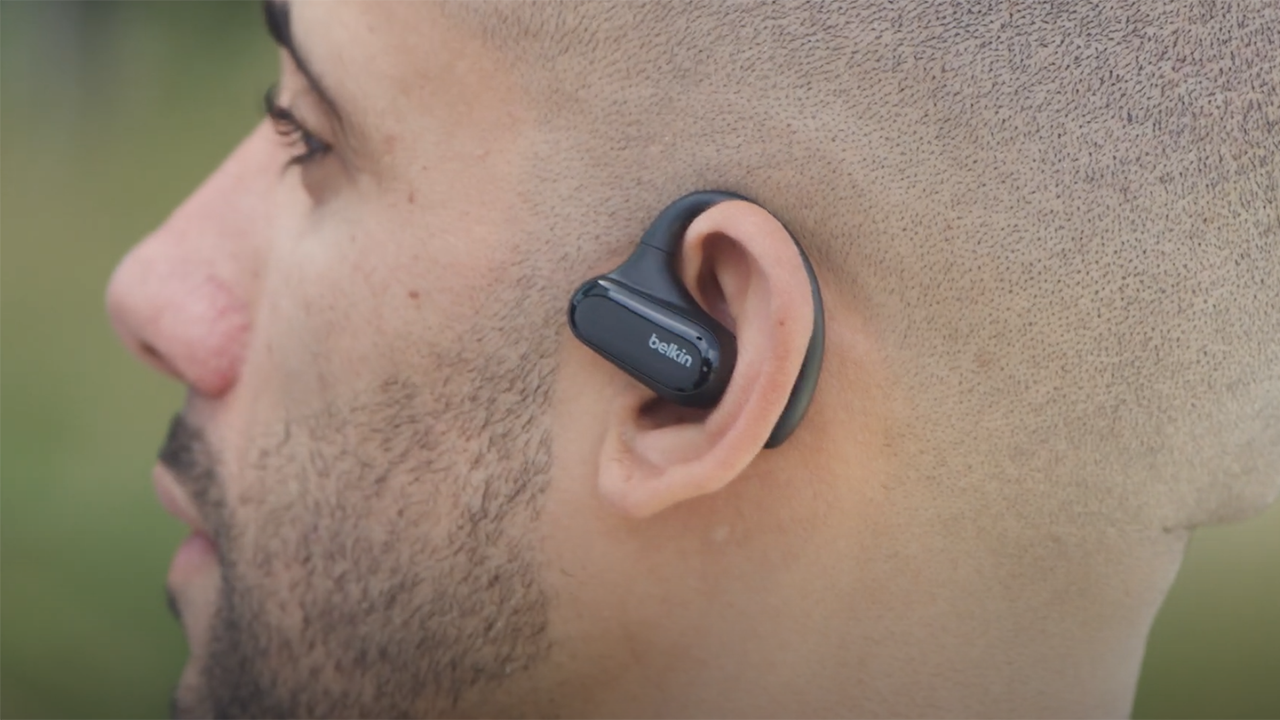

Open ear earbuds have to solve a tricky problem: they need to sound engaging while leaving enough of your ears uncovered to hear traffic, coworkers, or a doorbell. Fit matters just as much. A pair that shifts during a run or presses against glasses quickly becomes more annoying than useful.
The Best open ear earbuds in this group range from adjustable ear-hook designs to lightweight clip-ons. Some emphasize bass and calls, while others prioritize battery life, water resistance, or a barely-there fit. The right choice depends on how securely you need them to stay put and how much outside sound you want to preserve.
Soundcore V20i Black is our top pick, with the TOZO OpenEarRing close behind for lightweight comfort and the Baseus Inspire XC1 standing out for more ambitious sound hardware.
Comparison table
| # | Product | Award | Driver | Battery | Water resistance | Best for |
|---|---|---|---|---|---|---|
| 1 | Soundcore V20i Black | Best overall | 16mm | Not specified | Not specified | Adjustable all-day listening |
| 2 | TRAUSI Open Ear | Best battery life | Not specified | Up to 80 hours | IPX7 | Long workouts and travel |
| 3 | TOZO OpenEarRing | Best lightweight fit | Not specified | Up to 40 hours | IPX5 | Glasses wearers |
| 4 | Soundcore V20i White | Best colorful option | 16mm | Not specified | Not specified | Adjustable open ear listening |
| 5 | OHAYO T10 | Best workout earhooks | 15mm | Up to 40 hours | IPX6 | Running and intense training |
| 6 | Soundcore V20i Blue | Best adjustable fit | 16mm | Not specified | Not specified | A secure custom fit |
| 7 | Baseus Inspire XC1 | Best sound hardware | Hybrid two-way driver | Up to 40 hours | IP66 | Detailed music and calls |
| 8 | Soundcore C50i | Best compact clip-on | 12mm | Up to 28 hours | IP55 | Gym and everyday movement |
1. Soundcore V20i Black: Best Overall

Pros
- Four adjustable positions help fine-tune the fit
- Large 16mm drivers with BassUp processing
- Four microphones with AI call enhancement
- Open design preserves awareness of surroundings
Cons
- Water resistance is not specified
- The light feature will not appeal to everyone
- Fit still depends on finding the right rotation
Best for: listeners who want an adjustable open ear design for daily use.
The Soundcore V20i Black is the most balanced design here. It does not simply hang from the ear and hope for a good fit. Each earbud can rotate through four positions, giving you a practical way to move the speaker closer to or farther from the ear until the pressure and sound feel right. That adjustability is useful when one ear sits differently from the other, which is common with open ear products.
Its 16mm drivers are among the largest listed in this group, and the titanium-coated domes are paired with Soundcore's BassUp processing. Open ear earbuds generally lose some low-end impact because they do not seal the canal, so a larger driver and bass processing address a real limitation rather than adding a meaningless number. The result should suit podcasts, pop, and video better than a thin-sounding open design, although surrounding noise will still affect what you hear.
Calls get more attention than they do on several rivals. Four microphones and an AI enhancement algorithm are intended to keep speech clear when you are walking through a busier environment. The V20i also has customizable lights that sync with music. They are decorative rather than functional, but they give the otherwise understated black model some personality.
Compared with the TOZO OpenEarRing, the V20i offers more physical adjustment and a larger stated driver. The Baseus Inspire XC1 has more elaborate audio hardware and stronger published protection, but it is a more specialized choice. The V20i's main weakness is the missing water-resistance specification, so it is not the pair we'd choose for regular heavy rain or sweaty outdoor training. It is the one we'd keep for commuting, desk work, walking, and long casual listening.
2. TRAUSI Open Ear: Best Battery Life

Pros
- Up to 80 hours with the charging case
- IPX7 waterproof rating
- Earhook design is suited to running
- Bluetooth 5.4 connection
- Touch controls cover music and calls
Cons
- Driver size is not specified
- The generic earhook shape may not suit every ear
- No exact per-charge runtime is provided
Best for: runners and travelers who want long battery endurance and strong water protection.
The TRAUSI Open Ear is built around endurance. Its earbuds and case are rated for up to 80 hours of total playtime, which is the longest claim in this roundup. That makes it particularly appealing for someone who listens during several workouts each week, takes long trips, or dislikes charging accessories every few days.
The earhook keeps the buds outside the canal while adding a physical anchor behind the ear. That is a sensible arrangement for running and cycling because the hook carries some of the movement instead of relying entirely on friction. The open design also leaves traffic and nearby conversation audible. Bluetooth 5.4 is listed for a stable wireless connection, and the product supports one-step pairing.
The sound is described as having punchy low-end and crisp treble, but the listing does not provide a driver size. That makes direct hardware comparison with the Soundcore V20i Black or Soundcore C50i difficult. The TRAUSI does include ENC noise reduction for calls, touch controls, and voice assistant access, so it is better equipped for practical daily use than its long-battery headline alone suggests.
Its IPX7 rating is the strongest water protection claim among the conventional earhook designs here. That is reassuring for sweat and downpours, though an open ear product should not be treated as indestructible simply because of a water rating. The missing per-charge figure is a drawback, and the larger hook may be less discreet than the TOZO OpenEarRing. Choose the TRAUSI when battery life and workout security matter more than a compact silhouette.
3. TOZO OpenEarRing: Best Lightweight Fit

Pros
- Each earbud weighs 5.1 grams
- Designed with glasses wearers in mind
- Up to 40 hours with the case
- 32 EQ modes in the TOZO app
- Digital display on the charging case
Cons
- IPX5 protection is below the TRAUSI rating
- Clip-on fit may feel less secure for vigorous movement
- Driver details are not specified
Best for: glasses wearers and listeners who prioritize a light, pressure-free clip-on fit.
The TOZO OpenEarRing takes a different approach from the hook-heavy models. Each earbud weighs 5.1 grams, and the clip-on shape is designed to rest around the ear without pushing into the canal. That low weight is the first thing to consider if conventional open ear hooks make your ears tired or compete with eyeglass frames.
TOZO specifically positions the OpenEarRing for glasses wearers. Its skin-friendly silicone is meant to sit alongside frames rather than fighting for the same space, and the light construction should reduce pressure during long listening sessions. Fit is still personal, but the design makes sense for office use, walking, and other activities where comfort matters more than maximum retention.
Battery life reaches up to 10 hours from the earbuds, with another 30 hours supplied by the case. The case has a digital display and uses Type-C charging, so checking the remaining battery is easier than guessing from a blinking indicator. Bluetooth 5.4 and a stated 15-meter connection range add useful flexibility around a home or office.
The TOZO app provides 32 EQ modes, which is unusually much control for this group. That helps compensate for the way open ear placement changes the perceived balance from one listener to another. Compared with the Soundcore V20i Black, the OpenEarRing is lighter and more explicitly glasses-friendly, while the V20i offers a more adjustable speaker position and larger stated drivers. IPX5 protection is adequate for sweat and light rain, but the TRAUSI Open Ear and Baseus Inspire XC1 are better fits for harsher weather. If your main complaint with earbuds is ear fatigue, this is the model to try first.
4. Soundcore V20i White: Best Colorful Option

Pros
- Four adjustable positions
- 16mm drivers with BassUp
- Four microphones with AI enhancement
- Open design helps maintain awareness
Cons
- Water resistance is not specified
- White finish may show dirt more readily
- Decorative lights are not useful to every listener
Best for: people who want the V20i design in a lighter finish.
The Soundcore V20i White is the same V20i platform as the black version, with the white finish as its distinguishing detail in this list. That means its appeal is less about a different sound signature and more about getting the same open ear layout in a more visible color. For some listeners, that is a welcome change from the usual black plastic.
The core design remains strong. Four adjustment positions let you alter the angle and placement around each ear, which can improve both stability and clarity. Open ear audio is sensitive to small changes in distance, so this kind of adjustment is more meaningful than a fixed shell. The design also avoids sealing the canal, preserving a connection to the surrounding environment.
Soundcore lists 16mm drivers with titanium-coated domes and BassUp processing. That combination is intended to add body to bass without relying on an in-ear seal. Four microphones and AI enhancement support calls, while customizable lights provide a visual effect when music is playing. The feature set is more complete than the stripped-down appearance suggests.
The comparison with the TOZO OpenEarRing is straightforward. The TOZO is lighter at 5.1 grams per earbud and has a stronger comfort case for glasses, while the V20i offers four fit positions and the more explicit 16mm driver specification. Like the black and blue V20i entries, this white model has no stated water-resistance rating. Pick it if you like the V20i's fit and sound profile but prefer a finish that stands out.
5. OHAYO T10: Best Workout Earhooks

Pros
- 15mm dynamic drivers
- Earhooks are designed for active use
- IPX6 water protection
- Up to 40 hours of total playtime
- Bluetooth 5.4 and touch controls
Cons
- Heavier than the TOZO OpenEarRing
- The claimed 10-hour earbud runtime may vary by use
- No microphone count is specified
Best for: runners and gym users who want a secure earhook and splash protection.
The OHAYO T10 is the clearest sports-oriented design among the middle-ranked picks. Its ergonomic earhooks are intended to keep the earbuds in position during running and high-intensity exercise, while the open construction allows the wearer to hear what is happening around them. The product lists a weight of 8 grams per earbud, which is still light, though not as featherweight as the TOZO OpenEarRing.
Audio comes from 15mm large-diaphragm dynamic drivers, with dual drivers per earbud and a dedicated amplifier chip described in the feature list. The primary drivers are aligned toward the ear canal to improve clarity and immersion without closing it off. That approach should make spoken content and rhythmic music more intelligible in a noisy gym, though no open ear model can isolate outside noise like a sealed earbud.
The battery claim is up to 10 hours from the earbuds and 30 more from the charging case, for 40 hours total. A smart digital display shows the case status, and Bluetooth 5.4 is listed for connection stability. Touch controls handle calls and playback without requiring a phone, which is useful when your hands are occupied or you are wearing gloves that make screen controls inconvenient.
IPX6 protection gives the T10 a meaningful advantage over products with no stated rating. It is designed to repel sweat, rain, and splashes, but the claim does not make it suitable for submersion. Compared with the TRAUSI Open Ear, the OHAYO has a more detailed driver specification but a shorter total battery claim. Compared with the Baseus Inspire XC1, its audio system is less elaborate. Choose the OHAYO when a secure workout fit and weather protection are more important than the lightest possible design.
6. Soundcore V20i Blue: Best Adjustable Fit

Pros
- Four rotating fit positions
- 16mm drivers with BassUp
- Four microphones for calls
- Open design supports situational awareness
- Customizable music-synced lights
Cons
- Water resistance is not specified
- The fit requires some adjustment to get right
- No battery figure is provided
Best for: listeners who want to fine-tune the position of each open ear speaker.
The Soundcore V20i Blue brings the same useful hardware as the other V20i entries, but the blue finish gives it a more noticeable look. The key feature is not the color. It is the four-position adjustment system, which lets you rotate each earbud until it sits securely and directs sound toward the ear.
That flexibility matters because open ear products do not benefit from the consistent seal of an in-ear tip. A fixed speaker can sound quiet or unbalanced if it sits slightly too far away. The V20i gives the wearer a way to correct that placement. The standard size and stated weight of about 0.168 pounds apply to the pair, while the 16mm drivers supply the largest stated driver diameter in this group.
BassUp processing and titanium-coated domes are intended to add resonance and detail. Four microphones with AI enhancement support calls, and customizable lights can sync with music. These are sensible additions for someone who uses one pair for listening and calls rather than keeping separate sports and office earbuds.
The blue V20i is not functionally different from the black and white versions in the supplied product details, so the choice comes down to finish and the exact listing you prefer. The TOZO OpenEarRing is lighter and has a digital battery display, while the OHAYO T10 has a stated IPX6 rating for wetter workouts. The V20i's lack of a published water rating is its main limitation. It is best suited to everyday listening, commuting, and desk work where adjustable placement is the feature you will notice most.
7. Baseus Inspire XC1: Best Sound Hardware

Pros
- Sound tuning by Bose
- Hybrid two-way driver system
- Dolby spatial audio and LDAC
- Four-microphone call system
- IP66 protection
Cons
- The most feature-heavy design in the group
- Requires a firmware update for complete performance
- Battery is shorter per charge than the total case figure suggests
Best for: listeners who want the most ambitious audio and call hardware in an open clip-on design.
The Baseus Inspire XC1 is the outlier in this roundup because it treats open ear audio as a serious sound-engineering problem. Its system combines a dynamic woofer with a Knowles balanced armature tweeter, using a hybrid two-way arrangement to separate low and high frequencies. That is more sophisticated than the single driver descriptions on the other products.
The listing also names Sound by Bose tuning, Dolby spatial audio, Hi-Res Wireless, and LDAC. Those features target listeners who care about detail, separation, and a wider presentation. They cannot recreate the isolation of sealed headphones, but they give the XC1 a stronger technical argument for music than simpler clip-on models. Adaptive sound processing and Baseus SuperBass and SuperBalance technologies are intended to keep the presentation coherent at different listening levels.
The physical design uses flexible ring joints tested to 10, 000 bends, soft liquid silicone, and what Baseus calls Zero-Sense Air Cushions. Those details point toward a lightweight, breathable fit rather than a rigid clamp. The four-microphone array adds AI voice pickup and wind-noise reduction, with the feature list specifically mentioning cycling speeds up to 5 meters per second.
Battery life reaches up to eight hours per charge and 40 hours with the case. A 10-minute quick charge is said to provide 2.5 hours of playback. IP66 protection covers dust and water spray, making this a stronger outdoor option than the V20i models, though it is still not a submersion rating. The product requires a firmware update to version V1.1.04 or above for complete performance, which is an extra setup step many buyers will not expect.
Compared with the Soundcore C50i, the XC1 has a more advanced driver system, more detailed call hardware, and stronger protection. The C50i is lighter and simpler for gym use. The Baseus is the pick for music-focused listeners who want open ear comfort without giving up as much audio ambition, but it is not the most straightforward choice for someone who wants to pair it and forget it.
8. Soundcore C50i: Best Compact Clip-On

Pros
- Flexible titanium FlexiClip design
- 12mm drivers
- AI call clarity
- IP55 protection
- Bluetooth 6.0 connection
Cons
- Shorter total battery claim than the TRAUSI
- IP55 is less protective than IPX6 or IPX7
- No advanced spatial or high-resolution audio features are listed
Best for: gym users who want a light clip-on design with straightforward controls.
The Soundcore C50i is the simplest Soundcore design in this selection. Its FlexiClip uses memory titanium to adapt to the shape of the ear, while the clip-on structure keeps the speaker outside the canal. The supplied product details list a weight of about 0.098 pounds, making it the lightest of the three Soundcore entries here by the listed pair weight.
A 12mm driver provides the sound, with a stated maximum output of 86dB and an emphasis on bass. That is a smaller driver than the 16mm unit in the V20i, but the C50i is also aimed more directly at movement. During a workout, secure placement and clear playback can matter more than the broadest soundstage. The open layout keeps the ears unblocked for awareness of nearby surroundings.
The C50i provides up to eight hours on one charge and 28 hours with the case. Bluetooth 6.0 is listed for a stable connection, and AI processing is intended to filter background noise during calls. IP55 protection covers sweat and rain exposure, giving it practical workout protection, though the rating is less robust than the OHAYO T10's IPX6 or the TRAUSI Open Ear's IPX7.
The Baseus Inspire XC1 is the more compelling pick for detailed music, while the TOZO OpenEarRing is the stronger comfort option for glasses wearers. The C50i makes more sense when you want a compact, lightweight clip that is easy to use at the gym. Its shorter case endurance and less extensive audio feature set are real compromises, but its design is focused rather than cluttered.
How to choose best open ear earbuds
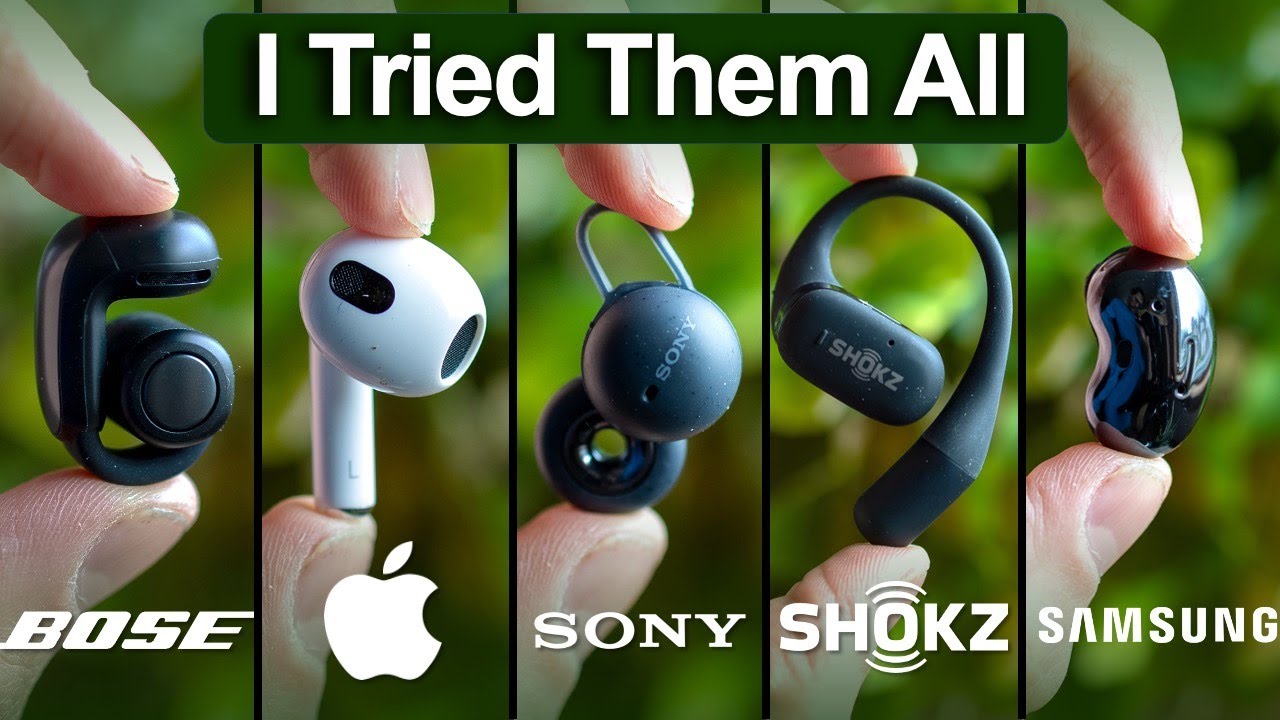
The right pair should balance acoustic placement, retention, outdoor protection, and battery behavior. These are the factors that separate a comfortable daily listener from a pair that spends most of its time in a drawer.
Fit and retention
Open ear earbuds do not seal inside the canal, so the outer-ear shape has to do the work. Adjustable designs such as the Soundcore V20i let you rotate the speaker, while earhooks on the TRAUSI and OHAYO add a more obvious anchor. Clip-ons such as the TOZO OpenEarRing and Soundcore C50i can feel lighter, but they may not hold as firmly during sharp movement.
Glasses wearers should pay close attention to where the frame and earbud contact the ear. A flexible clip or low-pressure silicone design may be more comfortable than a thick hook.
The best open ear fit is the one that keeps the speaker aimed at your ear without making you think about the hardware.
Driver design and sound direction
Driver size is not a complete measure of sound quality, but it is useful context. The V20i lists 16mm drivers, the OHAYO T10 lists 15mm dynamic drivers, and the C50i lists 12mm drivers. Larger drivers may help create fuller bass in an open design, where sound escapes instead of building inside a sealed canal.
The Baseus Inspire XC1 goes further with a hybrid two-way system, while TOZO offers app-based EQ customization. If music is the priority, look for a speaker that can aim sound toward the ear and provide some control over tonal balance.
Battery and charging
Separate earbud runtime from total case runtime. The TRAUSI claims up to 80 hours in total, while the TOZO OpenEarRing, OHAYO T10, and Baseus Inspire XC1 list up to 40 hours. The Soundcore C50i lists up to 28 hours. Those totals matter for travel, but per-charge endurance matters more if you regularly leave the case behind.
A digital case display, found on the TOZO and OHAYO models, makes the remaining charge easier to check. Quick charging is also useful when a short break has to cover an entire workout.
Water and dust protection
IP ratings describe resistance to specific exposure, not universal ruggedness. IPX5 and IP55 are suited to sweat and light rain, while IPX6 offers stronger protection against water jets. IPX7 adds protection against temporary immersion, and IP66 combines dust protection with resistance to powerful water jets.
For routine gym sessions, IPX5 may be enough. Runners who train in unpredictable weather should look more closely at the OHAYO T10, TRAUSI Open Ear, or Baseus Inspire XC1.
Calls and controls
Open earbuds are useful for calls because they preserve awareness, but microphone processing determines how well your voice competes with traffic and wind. The V20i has four microphones with AI enhancement, the Baseus has a four-microphone adaptive system, and the TRAUSI and C50i list noise-reduction processing.
Touch or button controls are valuable when you are moving. Check whether the controls cover volume, calls, playback, and voice assistants, rather than assuming every model offers the same commands. If you need stronger isolation for calls or music, how much sealing changes everyday listening comfort can help clarify whether open ear is the right format.
Frequently asked questions
Do open ear earbuds block outside sound?
No. Their speakers sit outside the ear canal, so they allow more environmental sound through than sealed in-ear earbuds. That is useful for walking, commuting, and conversations, but it also means traffic or loud machinery can compete with your music.
Are open ear earbuds good for running?
They can be, particularly when they use an earhook or flexible clip that stays in place. The TRAUSI Open Ear, OHAYO T10, Soundcore C50i, and Baseus Inspire XC1 all include features aimed at active use. Fit and water protection matter more for running than a large list of audio features.
Can I wear open ear earbuds with glasses?
Yes, but the frame and earbud can compete for the same space. The TOZO OpenEarRing is specifically designed with glasses wearers in mind and uses a lightweight clip-on shape. A rotating design such as the Soundcore V20i may also work well if you can position it around the frame.
Do open ear earbuds have good bass?
They can have enjoyable bass, but they usually cannot create the same sealed low-end effect as in-ear earbuds. Larger drivers and bass processing can help, as seen with the Soundcore V20i's 16mm drivers and the Soundcore C50i's 12mm drivers with BassUp-style tuning. Fit and speaker distance also have a major effect.
Which open ear earbuds have the longest battery life?
The TRAUSI Open Ear claims up to 80 hours with its charging case, the longest total figure in this group. The TOZO OpenEarRing, OHAYO T10, and Baseus Inspire XC1 each list up to 40 hours. Actual runtime depends on volume, call use, and other operating conditions.
Are open ear earbuds waterproof?
Some have published water-resistance ratings, but they are not all equally protected. The TRAUSI lists IPX7, the Baseus Inspire XC1 lists IP66, the OHAYO T10 lists IPX6, and the Soundcore C50i lists IP55. Models without a stated rating should not be assumed to tolerate heavy rain or sweat.
Should I choose open ear earbuds for phone calls?
They are a sensible choice when you need to hear your surroundings while talking. Look for microphone arrays and background-noise processing, such as the four-microphone AI system in the Soundcore V20i or the adaptive call system in the Baseus Inspire XC1. In a very loud environment, a sealed design may still produce clearer calls.
The bottom line
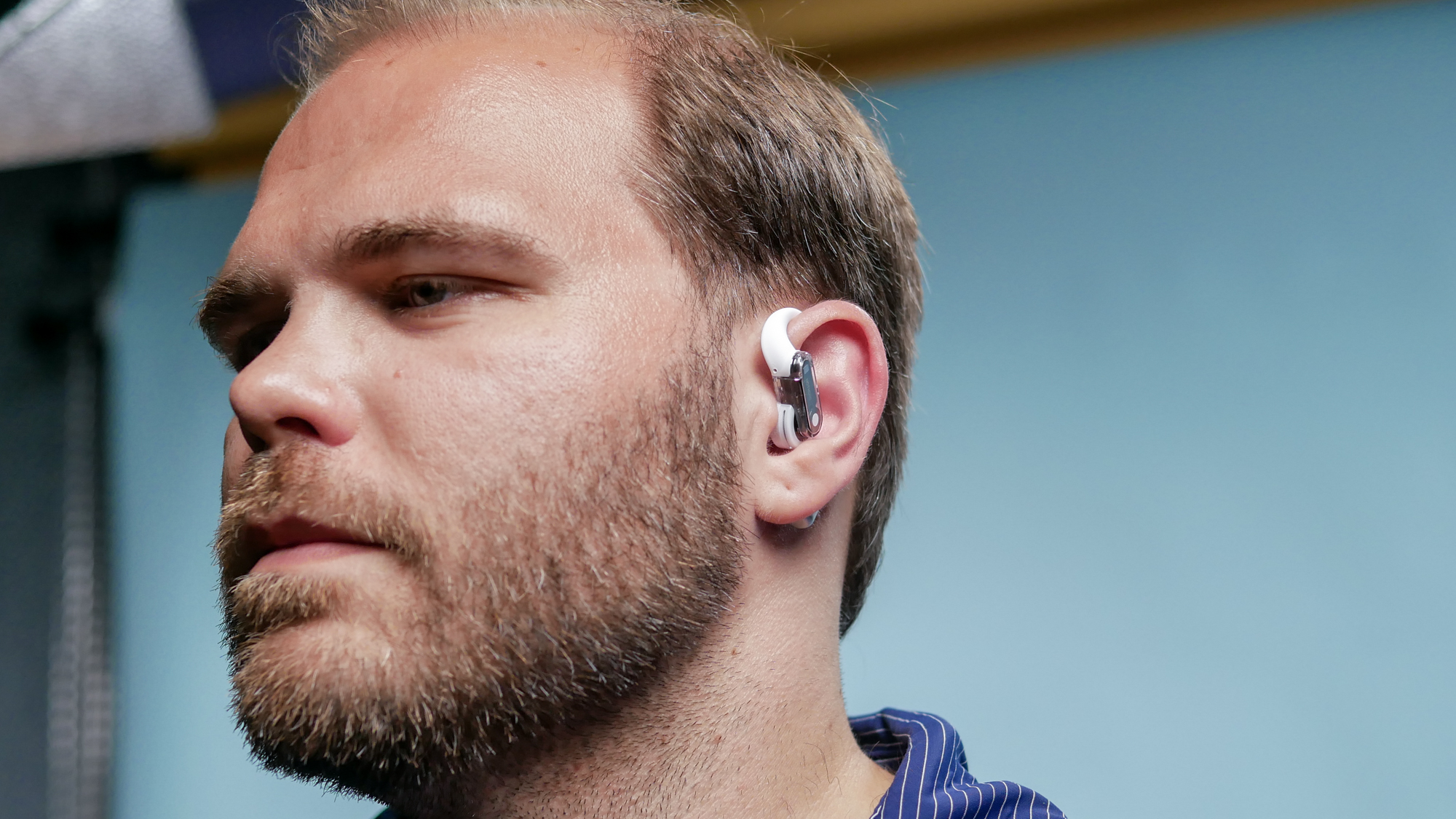
The Best open ear earbuds here are the Soundcore V20i Black for most people. Its four-position adjustment, 16mm drivers, open awareness, and four-microphone call system give it the broadest mix of useful features. The TOZO OpenEarRing is the better fit for glasses wearers and anyone who wants a particularly light clip-on design.
For serious outdoor training, choose the TRAUSI Open Ear for its 80-hour total battery claim and IPX7 rating, or the OHAYO T10 for its earhooks and IPX6 protection. Music-focused listeners should consider the Baseus Inspire XC1, whose hybrid two-way driver system and Bose tuning make it the most ambitious audio option.
If you are undecided, start with the Soundcore V20i unless lightweight glasses-friendly comfort or maximum workout protection is your first priority.
As an Amazon Associate we earn from qualifying purchases.