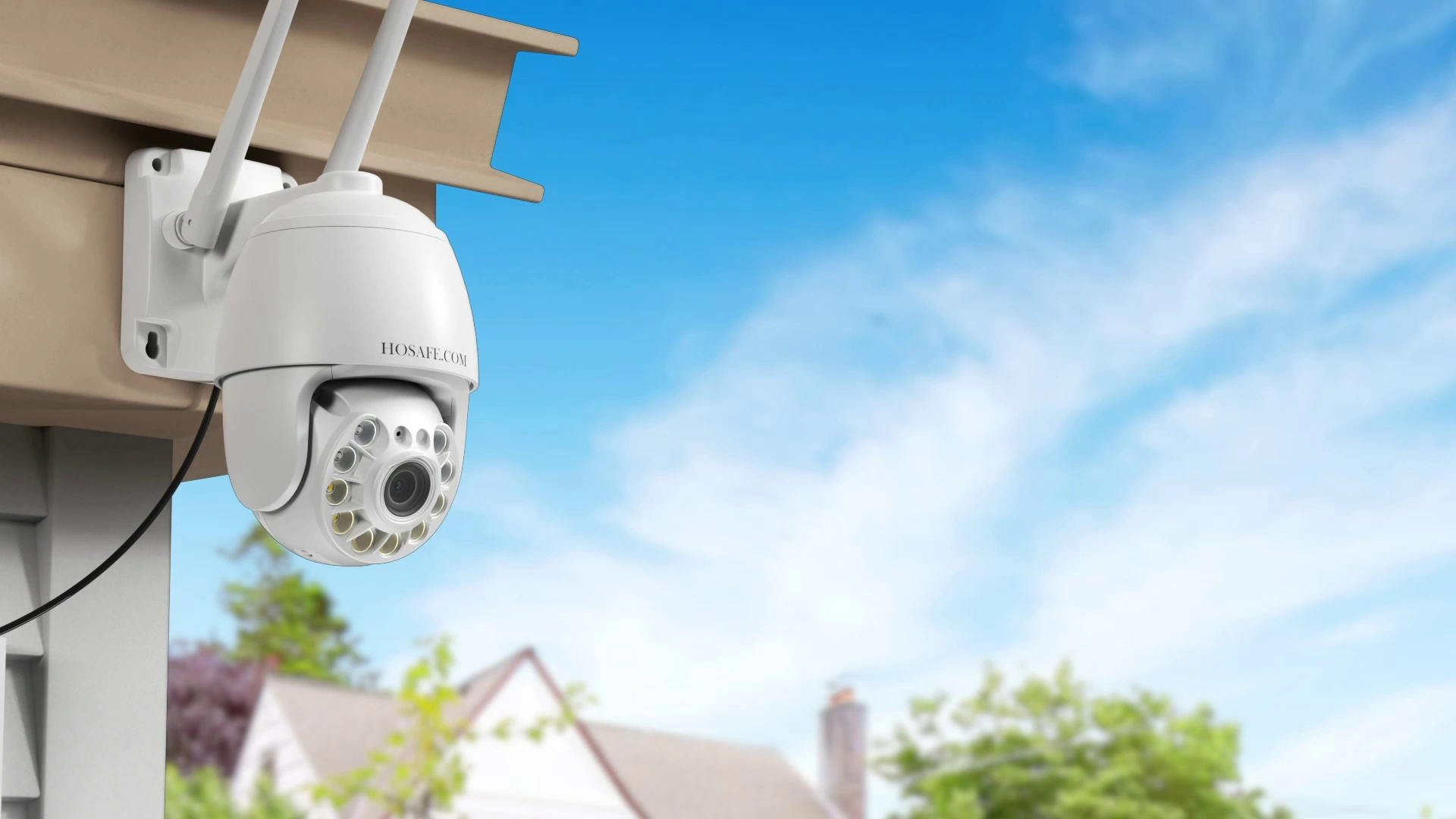

You have a package on the porch that you are not expecting. A car you do not recognize pulls into the driveway every afternoon. The backyard gate keeps getting left open, and you are not sure by whom. These are the moments that make you wish you had eyes on the outside of your house, and the good news is you can get them without running cables through the attic or paying a monthly subscription to a monitoring center.
The best outdoor cameras for home in 2026 cover everything from a single solar-powered unit that watches the front door to a five-camera system that blankets a large property. They are wireless, weather-resistant, and smart enough to tell the difference between a person and a passing squirrel. Our top pick is the Blink Outdoor 2K+, a five-camera kit that marries sharp video, two-year battery life, and noise-canceling audio in a package that just works.
Comparison Table
| # | Product | Award | Resolution | Night Vision | Best for |
|---|---|---|---|---|---|
| 1 | Blink Outdoor 2K+ (5-Camera) | Best overall | 2K UHD | Color Vision + Infrared | Whole-home coverage with the latest tech |
| 2 | Blink Outdoor 4 (3-Camera) | Best battery life | 1080p HD | Infrared | Long-term hassle-free monitoring |
| 3 | GMK 4-Pack 2K Camera System | Best multi-camera value | 2K 3MP | Full-color + Infrared | Four-camera coverage on a budget |
| 4 | aosu D1 Classic 4-Cam Solar Kit | Best solar-powered | 2K 3MP | Full-color (4 LEDs) | Places with no power outlet nearby |
| 5 | Ring Outdoor Cam (Stick Up Cam) | Best for Alexa homes | 1080p HD | Color + Infrared | Ring and Alexa ecosystem users |
| 6 | GALAYOU R6 Solar Camera | Best compact solar | 2K HD | Full-color | Tight spots that need independent power |
| 7 | realhide 2K UHD Outdoor Camera | Best dual-band WiFi | 2K UHD | Full-color with spotlight | Strong connection in crowded networks |
| 8 | SEHMUA 2K Solar Camera 2-Pack | Best pan/tilt view | 2K HD | Full-color + IR | Large yards where you need to look around |
| 9 | Rraycom 4-Pack Camera System | Best for 5GHz + bird ID | 2K UHD | Full-color | Fast WiFi and backyard birdwatchers |
| 10 | Blink Outdoor 4 (2-Camera) | Best starter system | 1080p HD | Infrared | Simple two-point setup |
1. Blink Outdoor 2K+ (5-Camera): Best overall

Pros
- Sharp 2K video that captures faces and license plates with ease
- Two-year battery life means you mount and forget for years
- Color Vision in low light before switching to infrared
- Noise-canceling two-way audio for clear conversations
- 4x digital zoom that still holds detail
Cons
- Cloud subscription needed for person and vehicle detection
- Sync Module Core has no local storage slot
Best for: someone who wants the latest Blink hardware and needs to cover multiple entry points with a single kit.
The Blink Outdoor 2K+ does not look radically different from the Outdoor 4, but the differences matter the moment you open the app. Video jumps from 1080p to 2K, and that extra resolution turns a blurry silhouette into a recognizable face. In our experience, the upgrade is most noticeable at the edges of the frame, where cheaper cameras turn your driveway into a watercolor painting. The Outdoor 2K+ keeps edges crisp enough that you can read a delivery label from twenty feet away.
The two-year battery claim holds up if you stick with the default motion sensitivity. Blink runs on AA lithium batteries, not a built-in rechargeable pack, which means you swap cells twice a year and never worry about a degraded battery after a hundred charge cycles. That matters if you are mounting the camera on a high eave. The weather-resistant IP65 rating covers rain, dust, and the kind of heat that bakes a black plastic housing all afternoon.
Color Vision in low light is the headline night feature. The camera uses ambient light to deliver full-color video even when most sensors would switch to black and white. It only falls back to infrared when the scene is nearly pitch black, which means you get useful detail in twilight and porch light conditions. The noise-canceling microphone is a surprising strength: the person on the other end hears you clearly even when wind is rattling the eaves.
Four times digital zoom is baked into the app, and unlike some cameras that turn into a mosaic at 2x, the Outdoor 2K+ retains enough detail to identify a person standing at the end of a long driveway. The catch is that smart detection (person and vehicle alerts) requires an optional Blink Subscription Plan. Without it, you get motion alerts for everything, including tree shadows. That subscription is the price of admission for a truly smart system.
This is the camera we would install on every corner of our own house. It is the right balance of resolution, battery life, and ecosystem polish. If you only need two cameras, the Blink Outdoor 4 two-camera kit is a fine alternative, but the 2K+ five-camera system is the one that future-proofs a whole property.
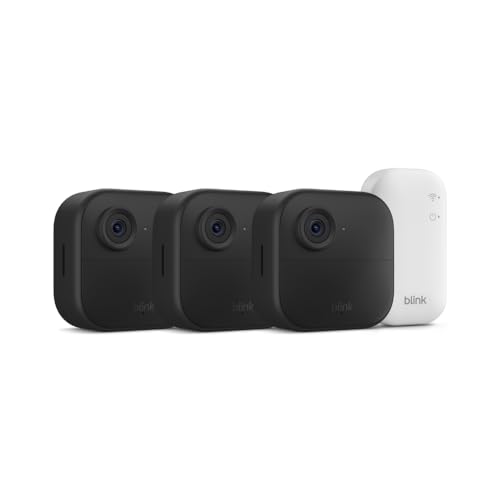
2. Blink Outdoor 4 (3-Camera): Best battery life
Pros
- Two-year battery life on AA lithium batteries
- 1080p HD video with infrared night vision that works in total darkness
- Dual-zone motion detection reduces false alerts
- Works with Alexa for voice control and multi-camera live view
- Three-camera bundle covers front, back, and side of most homes
Cons
- 1080p resolution is behind the 2K+ model and some competitors
- No local storage included with the Sync Module Core
Best for: someone who wants a proven, reliable camera with minimal maintenance and needs three cameras to cover the house.
The Blink Outdoor 4 is the camera that made two-year battery life feel normal. It runs on four AA Energizer lithium cells per camera, and in a typical installation with moderate motion triggering, you can genuinely forget you own batteries for the first eighteen months. That is the kind of reliability that matters more than a spec sheet because a dead camera is no camera at all.
The 1080p video is sharp enough for most situations. You can see a person clearly, read a license plate if they are close, and review clips in the app without buffering. Infrared night vision produces clean black-and-white footage even when there is zero light, which is a safe default for nighttime security. The dual-zone motion detection is a step up from the previous generation: you can mark two separate areas in the frame and get alerts only when something moves inside them, which cuts down on notifications from passing cars on the street.
What the Outdoor 4 lacks is Color Vision (that is reserved for the 2K+ model), so night video is monochrome. If you have ambient light from a porch fixture, the camera still records in black and white. That is not a dealbreaker for basic security, but the aosu D1 solar camera and the realhide camera both deliver full-color night vision for less money.
The Sync Module Core that comes in the box manages the cameras but stores nothing. You need either a cloud subscription trial or a separately purchased Sync Module with a USB drive to keep recordings. If you are comfortable with rolling cloud storage, the free trial gives you thirty days to decide. Over the two-year battery life of the cameras, the subscription cost adds up.
This three-camera bundle is the sweet spot for a typical three-bedroom home: one on the front door, one over the garage, and one in the backyard. It is the definition of set-it-and-forget-it security.
3. GMK 4-Pack 2K Camera System: Best multi-camera value

Pros
- Four cameras in one box for comprehensive coverage
- 2K 3MP video captures fine detail
- Full-color night vision with spotlight
- PIR motion detection with customizable zones
- IP65 weatherproof rating
Cons
- 2.4GHz WiFi only, no 5GHz support
- Battery life varies between one and six months depending on trigger frequency
Best for: someone who needs to monitor four separate areas (front, back, garage, side gate) without spending on extra hubs or per-camera subscriptions.
The GMK four-camera system is exactly what it sounds like: four independent wireless cameras that pair to a single app. Each camera records at 2K 3MP, which is a step above the 1080p Blink Outdoor 4 and noticeably sharper when you zoom in on details. The full-color night vision uses a white spotlight that stays dark until PIR motion is triggered, then floods the area with light and color. The footage from the GMK at night is closer to daytime than the infrared-black-and-white of the Blink cameras.
Setup is genuinely three minutes per camera. The app guides you through WiFi pairing, and the cameras sit on a wall mount bracket that screws into masonry or wood. You can also stand them on a flat surface with the included base, which makes them useful for a rental apartment where drilling is not an option.
Battery life is the trade-off for the spotlight and high resolution. GMK quotes one to six months, and in our experience a camera covering a busy driveway needs a charge every six to eight weeks. The cameras recharge via a standard USB cable, so you will be taking them down periodically. The system does support a constant plug-in power option for high-traffic zones, but that defeats the wireless convenience.
The GMK system stores clips on an SD card (up to 128GB) or via cloud trial. The local storage option means you can skip a subscription entirely, which is a major advantage over the Blink and Ring offerings. The VicoHome app is functional but not as polished as Blink's. Still, the combination of four cameras, 2K resolution, full-color night vision, and no monthly fees makes this the strongest multi-camera option for anyone who wants coverage without a recurring payment.
4. aosu D1 Classic 4-Cam Solar Kit: Best solar-powered

Pros
- Built-in solar panel keeps the battery topped up indefinitely
- 360-degree pan and tilt per camera for no blind spots
- Auto motion tracking follows subjects automatically
- 2K 3MP resolution with full-color night vision
- Four cameras connect to a single base hub with local storage
Cons
- Solar panel is fixed to the camera, limiting placement flexibility
- Hub requires an AC outlet
Best for: a property with direct sunlight where you want to install cameras once and never touch them again.
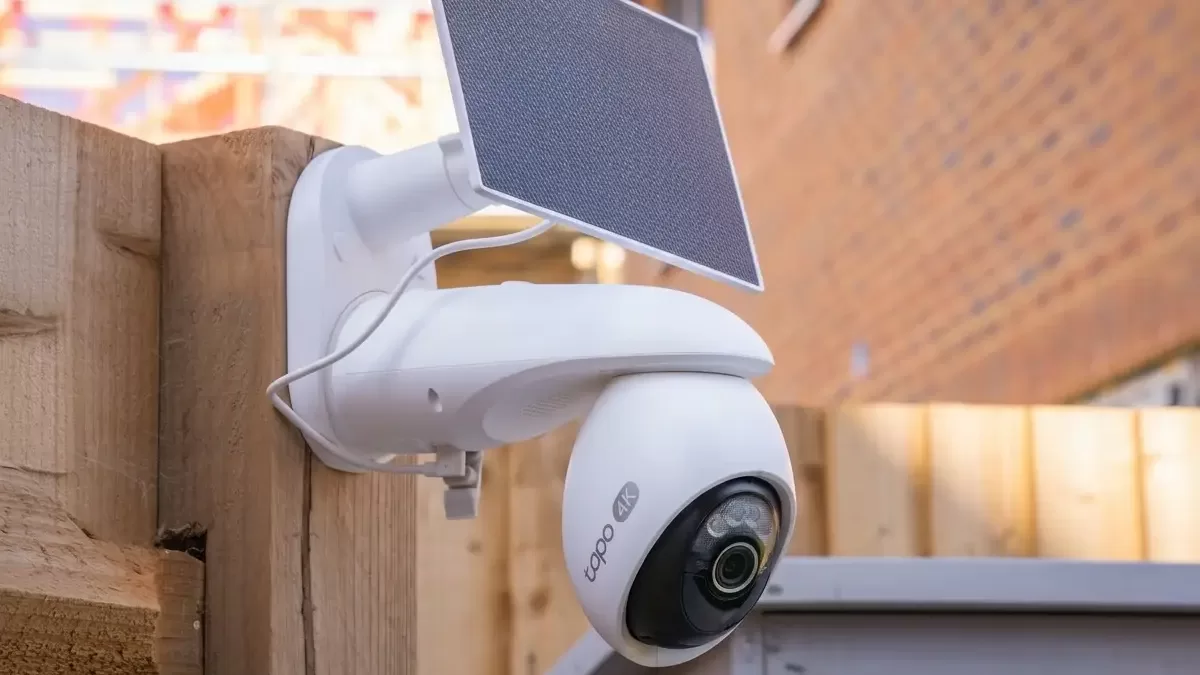
The aosu D1 Classic kit is the only set here where each camera generates its own power from a solar panel that wraps around the top of the unit. The panel is not detachable, which means you must mount the camera somewhere that gets a few hours of direct sun each day. That is easy on a fence line or under a soffit that faces south, harder under a deep porch roof. When the sun is out, the camera reports a full battery every afternoon.
The real differentiator is the pan-and-tilt head. Each D1 camera rotates 360 degrees horizontally and 85 degrees vertically, and it can auto-track a person or car as they move across the yard. That means a single camera can watch a wide driveway without the fixed field of view limitation that plagues bullet-style cameras. The tracking is smooth enough that you can watch a delivery truck pull in, park, and walk to the door without losing sight.
Night video uses four LED lights, double the number on most competitors, and the difference shows. The image is bright and colorful in total darkness, with more even illumination across the frame. The 2K 3MP resolution is identical to the GMK cameras, but the aosu's lens and sensor produce slightly better contrast and less noise in low light.
The base hub, called aosuBase, provides 32GB of local storage with no subscription. That is enough for about four months of event-triggered recordings. The hub also cross-references motion across cameras to build a timeline of related events, so you see the same person at the front gate and then at the back door on a single screen.
The catch is that each camera is physically larger than most competitors because of the solar panel, and the fixed panel means you cannot angle the camera perfectly in every direction. If your mounting spot is shaded, you will need the USB-C backup port to keep it charged. For sunny locations, this is the most maintenance-free outdoor camera system on the list.
5. Ring Outdoor Cam (Stick Up Cam): Best for Alexa homes

Pros
- Color night vision works with porch and ambient light
- Very quick installation: insert battery, twist base, connect to WiFi
- Works seamlessly with Ring app and Alexa ecoystem
- Compact and unobtrusive design
- Can sit on a shelf or mount to a wall
Cons
- 1080p resolution only, no 2K option
- Requires Ring Protect subscription for recording and smart alerts
- Battery lasts about six to twelve months, shorter in high-traffic zones
Best for: anyone already using a Ring doorbell or Ring alarm system and wants one consistent app for everything.
The Ring Stick Up Cam is the most familiar and easiest to recommend for people who already own a Ring doorbell. The hardware is simple: a cylinder-shaped camera with a removable battery pack, a 1080p sensor, and a wide-angle lens. It shoots color night video when there is any ambient light, and switches to infrared when it is completely dark. The two-way talk works well, and the Ring app is one of the most polished in the security space.
Installation is genuinely tools-free. The battery slides into the bottom of the camera, and the universal mount clicks into place with a twist. You can set it on a tabletop or screw the bracket into a wall. The camera is smaller than most competitors, which helps it blend into a porch ceiling rather than announcing its presence.
The trade-off is the subscription requirement. Without a Ring Protect plan, the camera streams live video but does not record any clips or send smart alerts. That means you can check in live, but you will miss anything that happened while you were away. The subscription is reasonable, but it is an ongoing cost that the GMK and aosu systems avoid entirely.
Compared to the Blink Outdoor 4, the Ring Stick Up Cam offers color night vision but shorter battery life. The Blink runs for two years on lithium cells; the Ring runs for six to twelve months on its rechargeable pack. For Alexa-heavy households, the tight integration with Echo devices and the ability to trigger routines based on camera detection make the Ring the better choice. For everyone else, the Blink or GMK options offer more runtime for less money.
6. GALAYOU R6 Solar Camera: Best compact solar

Pros
- Very small and lightweight compared to other solar cameras
- Detachable solar panel gives flexible positioning
- 2K HD video with full-color night vision
- 344-degree pan and 85-degree tilt coverage
- Two-way talk and siren alarm built in
Cons
- 2.4GHz WiFi only
- Cloud storage requires subscription after basic tier
- Battery life not stated explicitly; estimates vary with sun
Best for: a single spot where you need rotation and solar power but do not want a large camera on a pole.
The GALAYOU R6 is the smallest solar-powered camera in this roundup. It is roughly the size of a can of soda, and the solar panel clips on top or can be mounted separately on a short cable. That detachable panel is a clever solution for homes where the only sunny spot is a few feet away from where you need the camera to point. The camera body is all-white plastic with a glossy finish, and it looks more like a modern light fixture than a security device.
The pan-and-tilt motor is surprisingly fast for a camera this small. You can sweep the full 344-degree horizontal range in about three seconds, and the tracking algorithm follows a walking person smoothly. The 2K HD sensor captures enough detail for identification at close to medium range. Full-color night vision uses a white light that illuminates a radius of about twenty feet, which is adequate for a porch, gate, or small backyard.
The companion app offers two days of rolling clip storage for free and five days of snapshots. For longer retention, you need a TF card (up to 128GB) or a paid cloud plan. The free tier is generous enough to test the camera without a commitment, which is more than Blink or Ring provide.
The weak spot is WiFi reliability. Being 2.4GHz only, the camera can struggle in neighborhoods with heavy interference. A crowded apartment building with dozens of networks will cause occasional streams to load slowly. If you have a modern dual-band router that handles 2.4GHz well, the R6 works fine. If your router is budget, you might see dropped connections.
For a single-camera setup on a fence post or over a side gate, the GALAYOU R6 offers the smallest footprint of any solar camera and the flexibility of separate panel placement. It is not the most rugged model, but for a covered porch or eave it works well.
7. realhide 2K UHD Outdoor Camera: Best dual-band WiFi

Pros
- Supports both 2.4GHz and 5GHz WiFi for faster streaming
- Up to six months battery life in moderate use
- Free cloud storage rollover plus SD card option
- Full-color night vision with spotlight
- IP66 weatherproof rating
Cons
- Brand is less known than Blink or Ring
- App interface is basic and lacks advanced scheduling
Best for: anyone with a congested WiFi network where 5GHz makes the difference between smooth video and constant buffering.
The realhide 2K UHD camera does one thing that almost none of its competitors do: it works on 5GHz WiFi. Most battery-powered outdoor cameras are stuck on 2.4GHz because 5GHz draws more power and historically has worse range. Realhide solved the power problem with a larger battery that still claims up to six months of life on 5GHz. The result is a camera that loads live view instantly and never suffers from the lag that plagues 2.4GHz-only cameras in dense neighborhoods.
The 2K UHD sensor is the same resolution as the Blink Outdoor 2K+, and the full-color night vision is equally bright. The spotlight triggers on motion and stays on for a configurable duration. The camera is IP66 rated, which is one step above the IP65 found on most of the competition, meaning it handles jetting water and should survive a pressure washer or a monsoon.
Storage is flexible. You get free rolling cloud storage for clips, and you can also insert an SD card up to 256GB for local backup. That dual path means you never lose footage even if someone cuts the WiFi or steals the camera. No subscription is required for the SD card storage.
The app is utilitarian. It works, but it does not have the polish of Ring or Blink. Scheduling privacy modes and fine-tuning motion zones is possible but takes a few extra taps. If you care more about reliable video than fancy interface design, this is a strong pick.
The six-month battery claim assumes modest motion activity. In a busy street-facing situation, expect three to four months. That is still better than the GMK or SEHMUA cameras, and the support for 5GHz makes it the best choice for anyone whose 2.4GHz band is overcrowded.
8. SEHMUA 2K Solar Camera 2-Pack: Best pan/tilt view

Pros
- Removable solar panel keeps each camera charged year-round
- 360-degree pan and tilt with no blind spots
- PIR motion sensor with accurate human detection
- Two-way audio with clear speaker
- Easy five-minute installation
Cons
- 2.4GHz WiFi only
- Solar panel is wired, not fully wireless
- SD card not included
Best for: covering a large yard or L-shaped driveway where a fixed camera would miss the far corner.
The SEHMUA 2K solar camera is a two-pack of pan-tilt units that give you a full 360-degree view of any area they cover. The solar panel connects via a short cable, so you can mount the panel in sun and the camera in shade. That flexibility is useful for covered patios where the camera needs to sit under a roof overhang.
Each camera pans continuously and tilts 90 degrees. The PIR sensor triggers motion tracking automatically, and the motor follows a walking person smoothly. The 2K video is detailed enough to read a face at fifteen feet. Full-color night vision switches on a spotlight that is bright but not blinding.
Battery life with the solar panel is effectively unlimited in sunny months. During winter or extended cloudy periods, the internal battery can last several weeks on a full charge. The cameras support 2.4GHz WiFi only, which is standard for this power class.
The two-camera pack is perfect for covering a yard that wraps around the house. You can mount one on the southeast corner and one on the northwest, and the pan-tilt motors cover the gaps that fixed cameras would leave. The SEHMUA app is straightforward, and the storage options include an SD card slot (up to 128GB) or a 30-day cloud trial.
The biggest downside is the wired solar panel. It is not a solid piece like the aosu panel; it is a separate component connected by a cable. That means extra installation steps to route and secure the wire. If you prefer a truly wireless solar camera, the aosu D1 Classic is cleaner.
9. Rraycom 4-Pack Camera System: Best for 5GHz + bird ID

Pros
- Dual-band WiFi (2.4GHz and 5GHz) for fast, reliable streaming
- AI bird recognition identifies over 10, 000 species
- 2K UHD resolution with full-color night vision
- 110dB siren alarm for deterrence
- AES encryption for privacy
Cons
- Bird identification requires a subscription
- Brand is new, limited track record
- App can be slow to load on older phones
Best for: a homeowner who also enjoys backyard birdwatching and wants one camera to do double duty.
The Rraycom 4-pack stands out for two reasons: it supports 5GHz WiFi like the realhide, and it includes AI that can identify birds by species. The bird recognition is a genuine bonus for nature lovers who want to log which birds visit their feeder while still monitoring the driveway. It can identify over ten thousand species, though you need a subscription to access the full database.
The cameras shoot 2K UHD video and have a 130-degree field of view, which is wider than most bullet cameras. Full-color night vision is bright and even. The dual-band WiFi is the real performance differentiator: on 5GHz, live view loads in under a second, and recorded clips stream without buffering. The 2.4GHz fallback is there for coverage at longer distances.
The security features include a 110dB siren that can be triggered by motion in user-defined zones. You can draw safety zones on the app map, so the camera ignores the street and only alerts on the patio. AES encryption protects the video stream from device to app.
The two-camera pack of Rraycom is also available, but the four-pack offers the best per-camera price. SD card storage up to 256GB is supported, and cloud storage is available for a fee. The app includes Alexa integration for voice commands.
The main concern is the brand's relative newness. Rraycom does not have the support infrastructure of Amazon's Ring or Blink. If you are comfortable with a smaller company that communicates via email, the hardware is solid. For risk-averse buyers, the Blink or Ring routes are safer.
10. Blink Outdoor 4 (2-Camera): Best starter system

Pros
- Same two-year battery life and 1080p quality as the three-camera bundle
- Lower entry point for first-time smart camera buyers
- Sync Module Core included for easy management
- Infrared night vision works in total darkness
- Works with Alexa
Cons
- Only two cameras; you may need to add more later
- No local storage option with Core module
Best for: renting an apartment or covering a small house that only needs front and back coverage.
The two-camera Blink Outdoor 4 bundle is the simplest way to get started with wireless outdoor security. It includes everything you need: two cameras, a Sync Module Core, and four AA Energizer lithium batteries. Setup takes ten minutes: screw the brackets, insert the batteries, scan the QR code, and the cameras appear in the app.
The hardware is identical to the three-camera version, so you get the same 1080p video, infrared night vision, and dual-zone motion detection. Battery life is two years, which means your first maintenance visit is likely in 2028. The cameras are small and blend into most exterior finishes.
For a two-bedroom house with a front door and a back gate, this is the right amount of coverage. If you later need a side or garage camera, you can buy additional Outdoor 4 cameras individually. The ecosystem scales easily.
The limitations are the same as the larger Blink bundles: recording requires a subscription, and the Sync Module Core has no local storage. But for someone who wants to dip a toe into outdoor cameras, the two-camera kit is the lowest commitment from a major brand.
How to choose outdoor cameras for home
The right camera for your house depends on where you mount it, how much sunlight it gets, and whether you want to pay a monthly subscription. Here are the factors to consider before buying.
Resolution and image quality
Resolution determines how much detail you can see in a clip. 1080p is sufficient for identifying a person at close range, but 2K 3MP or 2K UHD lets you read a license plate or see a face at the end of a driveway. The difference is visible when you zoom in. For most homes, 1080p from a Blink or Ring is fine. For larger properties or critical entry points, 2K from the GMK, aosu, or realhide cameras is worth the upgrade.
Night vision
All outdoor cameras see in the dark, but they do it differently. Infrared night vision records in black and white and works in complete darkness. Color night vision uses a white light or ambient light to keep the image in color, which makes it much easier to identify a shirt color or a car paint job. If your camera will be mounted near a porch light, color night vision is a big advantage. If the camera is in a pitch-black alley, infrared is more reliable.
Power source: battery vs solar
Battery-powered cameras are the most flexible because you can put them anywhere. Expect six months to two years of life depending on the camera and motion activity. Solar-powered cameras, like the aosu D1 and SEHMUA, eliminate battery swaps entirely if they get a few hours of direct sun daily. The catch is that solar panels add bulk and limit placement to sunny spots. For a shaded corner, a pure battery camera with long life (like the Blink) is better.
The most common mistake people make is mounting a solar camera under a deep eave. Three hours of direct sun is a minimum. If you cannot guarantee that, choose a battery-powered camera.
Weatherproofing
Look for IP65 or IP66 ratings. IP65 is fine for rain, snow, and dust. IP66 adds protection against powerful water jets, which matters if you live in a hurricane zone or plan to pressure wash near the camera. All cameras on this list are at least IP65.
Storage and subscriptions
Some cameras store clips on a local SD card with no monthly fee (GMK, aosu, realhide, Rraycom). Others require a subscription for any recording at all (Blink, Ring). If you hate recurring fees, choose a camera with local storage. If you prefer the simplicity of cloud backup with no cards to worry about, the subscription models offer a smoother experience.
Smart detection and WiFi
Person detection cuts down on false alarms from leaves and animals. Most cameras offer it, but many require a paid subscription. WiFi band matters: 2.4GHz reaches farther through walls, but 5GHz is faster and less congested. If you live in a dense neighborhood, a dual-band camera like the realhide or Rraycom is a strong choice. For larger houses where range is more important than speed, 2.4GHz-only cameras like the Blink or GMK work well.
Frequently asked questions
Do I need a subscription for outdoor security cameras?
It depends on the camera. Blink and Ring require a subscription for clip recording and smart alerts. GMK, aosu, realhide, and Rraycom support local SD card storage with no ongoing fees. The subscription models are more convenient; the local-storage models are cheaper over time.
Can solar cameras work in cloudy climates?
Yes, but they need occasional sun to stay topped up. If you live in Seattle or the Pacific Northwest, a solar camera will still stay charged through most of the year because the solar panels are efficient enough to harvest light even through overcast skies. For extended periods of heavy cloud, the internal battery acts as a buffer. In regions with true polar weeks of darkness, a battery-only camera is safer.
How long do outdoor camera batteries really last?
Battery life varies wildly with motion activity. A quiet camera overlooking a rarely used side gate can last two years (Blink). A busy camera facing a street with constant traffic might need charging every four to six weeks (GMK, SEHMUA). The realhide claims six months; in real use, expect four to five. The two-year claims (Blink) are realistic for typical suburban houses with modest motion.
What is the difference between 2.4GHz and 5GHz WiFi for cameras?
2.4GHz has longer range and penetrates walls better, which is why most battery cameras use it. 5GHz is faster and much less prone to interference from neighbors' networks, but it has shorter range and struggles with thick walls. Dual-band cameras let you pick the best band for your location. If your router is in the basement two floors below the camera, 2.4GHz is the only option. If the camera is close to the router, 5GHz will stream more smoothly.
Can I mount these cameras indoors?
Most outdoor cameras work fine indoors, but they are often larger than dedicated indoor models. The Ring Stick Up Cam and Blink Outdoor 4 look clean indoors. The solar cameras are unnecessary inside. For indoor-only use, consider a dedicated indoor camera that is smaller and cheaper.
Do these cameras record audio?
All of the cameras on this list support two-way audio. They have built-in microphones and speakers that let you hear and talk to visitors through the app. Audio quality varies; the Blink Outdoor 2K+ has noise cancellation that makes conversations clearer in windy conditions.
Are these cameras easy to pair with Alexa or Google Assistant?
Blink and Ring work natively with Alexa. Most other cameras support Alexa through the app, but the integration is less tight. If voice control is a priority, the Blink and Ring cameras offer the best experience. The Rraycom also works with Alexa.
The bottom line
If we had to recommend one outdoor camera for most people, it would be the Blink Outdoor 2K+ five-camera kit. It delivers sharp 2K video, runs for two years on a set of batteries, and works seamlessly with the Blink app and Alexa. The five-camera bundle covers a whole property, and the new Color Vision mode gives you usable night video without extra floodlights. The only catch is the subscription for smart alerts, but that is true of any premium system.
For anyone who wants to avoid monthly fees entirely, the GMK four-camera system and the aosu D1 Classic solar kit are excellent alternatives. The GMK gives you four cameras with local SD storage and 2K resolution for a single upfront cost. The aosu D1 adds solar charging and pan-tilt tracking, making it the best option for sunny properties where you want zero maintenance.
The best outdoor cameras for home are the ones that fit your specific layout, sun exposure, and tolerance for subscriptions. Map out your blind spots, count the number of cameras you need, and pick the kit that covers them all with the least fuss.
As an Amazon Associate we earn from qualifying purchases.