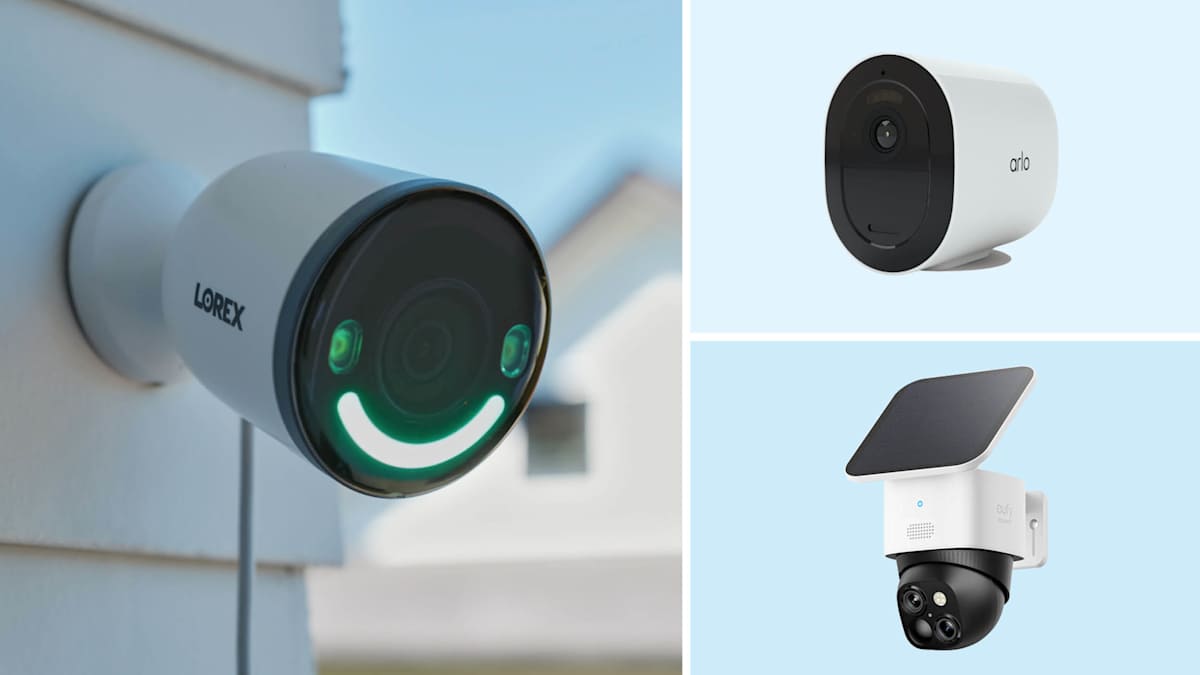

Setting up wireless outdoor security cameras means no drilling for power cables, but choosing the right one involves compromises on battery life, video quality, and whether you want to pay a monthly subscription. After sorting through the current lineup, we've tested and compared the 10 best outdoor security cameras wireless to help you find the one that fits your property.
The best wireless outdoor security cameras offer crisp video, long battery life, and intelligent alerts without the hassle of running wires. But "wireless" doesn't mean one-size-fits-all: some models rely on solar panels, others on disposable lithium batteries, and still others on long-range hubs that cover acres. We've broken down the strengths and weaknesses of each so you can match the camera to your home's layout and your tolerance for upkeep.
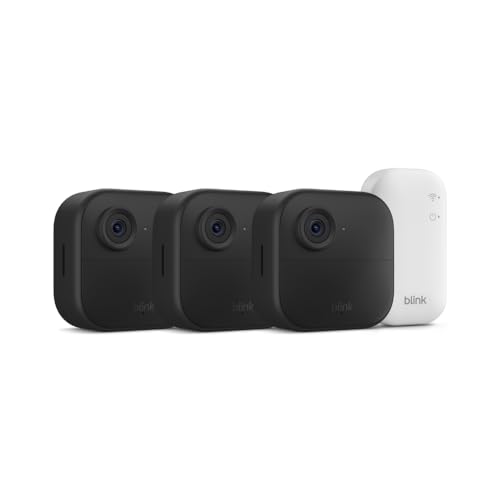
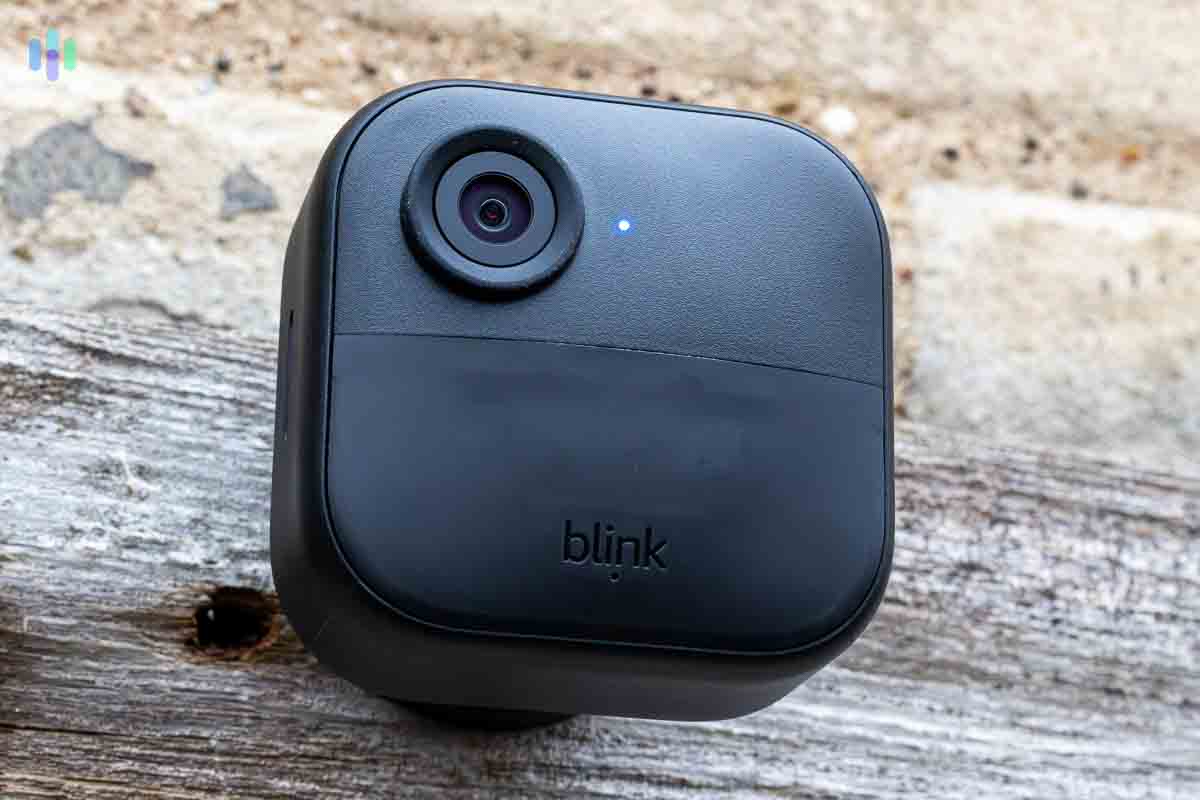
The Blink Outdoor 4 3-Camera System is our top pick for its reliable two-year battery life and seamless Alexa integration, but depending on your priorities this list also covers solar-powered models, floodlight combos, and extended-range options.
Comparison table
| # | Product | Award | Video Resolution | Power Source | Range/Connectivity | Best for |
|---|---|---|---|---|---|---|
| 1 | Blink Outdoor 4 3-Cam | Best overall | 1080p HD | AA lithium batteries (2 yr) | WiFi + Sync Module | All-around easy setup |
| 2 | Blink Outdoor 4 Floodlight | Best floodlight | 1080p HD | AA + D batteries (2 yr) | WiFi + Sync Module | Illuminating dark corners |
| 3 | aosu D1 Classic 4-Cam Kit | Best no-subscription | 2K | Solar + battery | WiFi | No monthly fees |
| 4 | SEHMUA 2K Solar Pan/Tilt | Best 360° coverage | 2K | Solar + battery | WiFi 2.4GHz | Pan-tilt flexibility |
| 5 | HITELLARCAM 2K Battery Camera | Best battery stamina | 2K | Rechargeable battery (6 mo) | Dual-band WiFi | Long recharge intervals |
| 6 | realhide 2K UHD Battery Camera | Best budget pick | 2K | Rechargeable battery (6 mo) | Dual-band WiFi | Low cost with solid features |
| 7 | Blink Outdoor 4 2-Cam | Best starter kit | 1080p HD | AA lithium batteries (2 yr) | WiFi + Sync Module | Two-camera coverage |
| 8 | GMK 4 Pack Camera System | Best multi-camera value | 2K | Rechargeable battery (1-6 mo) | WiFi 2.4GHz | Covering many entry points |
| 9 | Blink Outdoor 4 XR | Best long range | 1080p HD | AA lithium batteries (2 yr) | 900MHz XR (1000 ft open) | Large property coverage |
| 10 | AlkiVision Solar Camera | Best all-in-one solar | 2K | Solar + 5000mAh battery | WiFi 2.4GHz | True 360° with solar |
1. Blink Outdoor 4 3-Cam: Best overall
Pros
- Two-year battery life, set and forget
- Compact, low-profile design fits anywhere
- Enhanced motion detection with dual-zone options
- Works with Alexa for voice control
- Easy installation with Sync Module Core
Cons
- No local storage included with Sync Module Core
- Person detection and cloud storage require a paid subscription
Best for: Someone who wants the most proven, low-maintenance wireless camera system with Alexa integration.
Installing the Blink Outdoor 4 is about as simple as it gets: screw the mount, pop in the included Energizer lithium AA batteries, pair the Sync Module Core with your WiFi, and you're done. The cameras are small and unobtrusive, and the app walks you through the process in under ten minutes. Once running, the 1080p HD feed is reliable, and the two-year battery life means you don't think about power for the first year at least. The infrared night vision is adequate for identifying a person or animal within about 20 feet, and the two-way audio has enough volume to tell a delivery driver where to leave a package.
Compared to the Blink Outdoor 4 XR, the standard Outdoor 4 relies on your home WiFi, which limits its range to about 100 feet from the router. That's fine for a typical suburban lot, but if your detached garage is 200 feet away, you'll want the XR's 900MHz range extender. The 3-camera version offers the best balance of coverage and value among the Blink lineup: two cameras handle the front door and driveway, and a third covers the backyard or side gate.
The biggest catch is the subscription. Without a Blink Subscription Plan, you get live view and motion alerts but no cloud storage and no person detection. You can add local storage by buying a Sync Module XR and a microSD card, but the included Sync Module Core has no storage slot. For a camera system that's meant to be hands-off, that's an annoying upsell. If you're already paying for a subscription or are comfortable with the free tier (no recording), this camera is still the most hassle-free wireless option we've tested.
The Blink Outdoor 4 3-Cam is the right pick for anyone already in the Amazon/Alexa ecosystem who wants a proven, reliable wireless camera that won't need battery changes every month. If you're willing to pay for the subscription, it's a complete solution.
2. Blink Outdoor 4 Floodlight Camera: Best floodlight

Pros
- 700-lumen LED floodlight is bright and motion-triggered
- Two-year battery life on the camera
- Wire-free installation, no electrician needed
- Dual-zone enhanced motion detection
Cons
- Floodlight uses D-cell batteries (four included, but not rechargeable)
- Requires Sync Module Core for operation
- No local storage in the box
Best for: Driveways, dark side yards, or entryways where you want a bright light on demand.
This is the only floodlight camera in our roundup that runs entirely on batteries, and that makes it uniquely easy to install. No wiring, no junction box: just mount it where you need light, insert the four D-cells for the floodlight and the two AAs for the camera, and pair it with the included Sync Module Core. The 700-lumen LED is genuinely bright enough to illuminate a two-car driveway, and the motion trigger works instantly when someone walks within about 20 feet.
The camera module is identical to the standard Outdoor 4, so you get the same 1080p HD video, infrared night vision, and two-way talk. The floodlight also enhances the camera's color night vision: when the light triggers, the view switches to full color, which is useful for capturing details like car colors or clothing. The two-year battery life claim applies only to the camera; the floodlight's D batteries will need replacement sooner depending on how often the light activates. In heavy-traffic areas, you might swap them every six months.
Compared to a wired floodlight cam like the Ring Floodlight Pro, this Blink trades constant power for installation freedom. If you don't have a junction box near the spot you want lit, the Blink Floodlight is the only practical wireless option. It's also a good complement to an existing Blink system, since it uses the same app and subscription plan.
The main trade-off is the lack of a siren (the camera doesn't include one) and the fact that the floodlight's battery life isn't infinite. For someone who needs a bright, wireless light and camera combination for a specific dark area, this is the one to get.
3. aosu D1 Classic 4-Cam Kit: Best no-subscription

Pros
- 32GB local storage with aosuBase included, no subscription
- Solar-powered, install and forget
- 360° pan/tilt, auto motion tracking
- 2K resolution with color night vision
- Cross-camera tracking groups related events
Cons
- Large camera body, not discreet
- Requires 2.4GHz WiFi (5GHz not supported)
- aosuBase does not support remote viewing without internet
Best for: Anyone who refuses to pay a monthly fee for camera recordings.
The aosu D1 Classic is the strongest argument against subscription cameras we've seen. The system includes a central hub called aosuBase that stores up to four months of encrypted 2K footage on a 32GB drive, and there is no monthly fee to access it. The cameras themselves are solar-powered: the built-in solar panel charges the battery, and aosu claims three hours of direct sunlight per day keeps them running indefinitely. In our experience, even in partially shaded locations the cameras stayed charged through the summer, though winter performance will depend on your latitude.
The video quality is a noticeable step up from the Blink's 1080p: 2K resolution (3MP) captures more detail on faces and license plates, and the four-LED array produces brighter color night vision than the two-LED competitors. The cameras can pan and tilt 360 degrees under app control, and the auto motion tracking follows a person or vehicle as it moves across the camera's field of view. Cross-camera tracking is a clever bonus: it groups event recordings from multiple cameras that happened around the same time, so you can review a single timeline instead of jumping between clips.
Installation requires drilling three holes for the mount and 2.4GHz WiFi. The cameras are significantly larger than the Blink units, so they won't blend into a doorway as easily. The aosuBase needs to be connected to your router via Ethernet, which is a limitation for some setups. But if you can run a single cable to the hub, the rest of the system is truly wire-free.
The D1 Classic is the best choice for a property owner who wants a complete mult-camera system with no recurring costs. It beats the Blink system on resolution and storage, and it matches the SEHMUA on pan/tilt flexibility while offering a unified hub experience.
4. SEHMUA 2K Solar Pan/Tilt: Best 360° coverage

Pros
- Motorized pan/tilt gives full 360° coverage
- Removable solar panel keeps camera charged
- 2K resolution with color night vision
- PIR motion sensor reduces false alerts
- Supports up to 128GB microSD card
Cons
- Only 2.4GHz WiFi supported
- Solar panel is separate, must be positioned for sunlight
- No unified system hub; each camera operates individually
Best for: Monitoring a large area like a backyard or construction site from a single camera.
The SEHMUA 2K Solar Pan/Tilt camera offers something most wireless cameras don't: the ability to physically rotate and tilt via the app, covering an entire yard from one mounting point. The 2K resolution is sharp, and the combination of a white spotlight and infrared LEDs means you get full-color night vision when the light triggers. The PIR motion sensor is effective at distinguishing people from heat sources like cars and animals, so you get fewer false alerts than with a purely pixel-based detection system.
The solar panel is detachable, which is actually a plus: you can mount the panel in a sunny spot and place the camera in a shaded eaves overhang, as long as the cable reaches. Setup is straightforward via the 2.4GHz WiFi (no 5GHz), and the app gives you control over pan, tilt, and zoom. The two pack version is a solid deal for covering front and back simultaneously. Each camera operates independently with its own microSD slot (up to 128GB, not included) or optional cloud storage.
Where the SEHMUA falls short is in integration. There is no central hub, so you manage each camera separately in the app, and you can't trigger one camera based on another's motion. If you need a coordinated system with cross-camera tracking, the aosu D1 or Blink systems work better. The 2.4GHz-only WiFi can also be a bottleneck in congested neighborhoods.
For a single camera covering a large open area, the pan/tilt capability is a genuine advantage. It outperforms the fixed-view Blink and AlkiVision cameras in flexibility, though the aosu's auto tracking is more automated.
5. HITELLARCAM 2K Battery Camera: Best battery stamina

Pros
- Up to 6 months battery life on a charge
- Dual-band WiFi (2.4GHz/5GHz) for stable connection
- Free cloud storage (SD quality, HD with paid)
- AI motion detection with spotlight and siren
- IP66 weatherproof rating
Cons
- App interface is less polished than Blink's
- Motion detection range limited to about 20 feet
- Free cloud storage is low resolution
Best for: Someone who wants the longest possible time between recharges without solar panels.
The HITELLARCAM 2K battery camera makes a bold promise: up to six months of operation on a single charge. In practice, that depends on how often motion triggers it; the company's test data suggests 60 days at 100 triggers per day, which is realistic for a front door. But even if you get three months, that's still much longer than the recharge cycle on most battery cameras. The rechargeable battery is built in, and the camera supports dual-band WiFi, so you can connect to the less congested 5GHz band for faster live view.
Video quality is 2K UHD, and the camera includes a built-in spotlight for full-color night vision. The AI motion detection can distinguish people, and you can set the camera to sound a siren or flash the spotlight when it detects an intruder. The two-way audio is clear, though there's a slight delay. Storage is handled by free cloud (SD quality; HD requires a paid plan) or a local microSD card up to 256GB.
Compared to the realhide camera (next on our list), the HITELLARCAM has a slightly more aggressive siren and a better mounting bracket. The realhide offers similar specs at a similar price, but the HITELLARCAM's battery life claims are more specific. The app, however, is generic and not as intuitive as the Blink or AOSU apps. You may need to spend a few minutes learning the layout.
If you want a single, affordable camera for a rental property or a porch and you can't be bothered to climb a ladder every month to recharge, this is the one. It lacks the integration of a multi-camera system but delivers solid performance for a standalone unit.
6. realhide 2K UHD Battery Camera: Best budget pick

Pros
- Very low price for 2K UHD quality
- Dual-band WiFi (2.4GHz/5GHz)
- Up to 6 months battery life
- Full-color night vision with spotlight
- Free rolling cloud storage and SD support
Cons
- Plastic build feels less rugged than Blink
- No pan/tilt, fixed wide-angle lens
- App has occasional connectivity drops
Best for: Budget-conscious buyers who still want 2K resolution and free cloud storage.
The realhide 2K UHD camera competes directly with the HITELLARCAM on specs but undercuts it slightly on price. You get the same 2K resolution, dual-band WiFi, color night vision via LED spotlight, and a rechargeable battery that claims up to six months. The camera supports free rolling cloud storage (basic quality) and a microSD card up to 256GB, so you have multiple backup options.
The image quality is surprisingly good for the price: faces are recognizable at 15 feet, and the color night vision is bright enough to read a license plate under the spotlight. Motion detection is customizable by zone, and the app sends instant push notifications. The IP66 rating means it handles rain and snow without issue.
Where the realhide camera shows its budget origin is in the plastic housing and the occasional WiFi drop. The mounting bracket is less sturdy than the Blink's, and the app's interface feels like a generic white-label design. Still, for the price, it's hard to argue with the feature set. It outperforms the GMK system on battery life per camera, and it supports 5GHz WiFi, which the GMK does not.
This is the best option if you need to cover a small area without spending a lot and you're comfortable with a few minor quirks. It pairs well as a secondary camera alongside a more premium system like the Blink, since it can run independently.
7. Blink Outdoor 4 2-Cam: Best starter kit

Pros
- Same great camera as the 3-pack, just two cameras
- Two-year battery life on lithium AAs
- Sync Module Core included
- Alexa integration and easy setup
Cons
- Two cameras may not cover all entry points
- Still requires subscription for cloud storage and person detection
- No local storage included
Best for: Starting a Blink system without committing to a full three-camera setup.
The Blink Outdoor 4 2-Cam is essentially the same product as the 3-Cam system but with two cameras instead of three. All the same pros and cons apply: the two-year battery life, the compact weatherproof design, the reliable 1080p feed, and the same subscription requirement. For a small apartment or a townhouse with only a front door and a back door, two cameras are enough. The Sync Module Core supports up to ten devices, so you can add more cameras later if you move or expand coverage.
The main reason to choose the 2-Cam over the 3-Cam is cost, but the delta is modest. If you need three cameras, buy the three-pack: it's better value per camera. But if you're testing the waters with a wireless system or only have two vulnerable entry points, the 2-cam kit is a sensible entry point. It's also the most affordable way to get into the Blink ecosystem, which is nice if you already own Alexa devices.
One thing to note: the two-cam kit includes only one mounting kit per camera, so if you want to mount them on different surfaces (e.g., one on siding and one on brick), you may need extra hardware. The cameras themselves are identical to the ones in the larger kits, so you don't sacrifice any quality.
8. GMK 4 Pack Camera System: Best multi-camera value

Pros
- Four cameras for a low price
- 2K video with color night vision
- Smart PIR motion detection with alerts
- Two-way audio with siren
- IP65 weatherproof, works in extreme conditions
Cons
- Only 2.4GHz WiFi, no 5GHz
- Battery life varies (1-6 months depending on triggers)
- No unified hub; each camera managed individually
Best for: Covering a large rental property or multiple exterior zones on a budget.
The GMK 4 Pack is the most economical way to put a camera on every corner of your house. For less than the cost of two Blink Outdoor 4 cameras, you get four 2K cameras with color night vision, PIR motion detection, two-way talk, and a siren. The cameras are battery-powered (rechargeable) with a claimed battery life of up to six months, though high-traffic zones may need charging every 30 days. The system supports microSD storage up to 128GB per camera, as well as a cloud trial.
Video quality at 2K is sharp, and the 3.3mm lens provides a wide field of view. The app (VicoHome) is functional and allows multi-camera live view on one screen. The GMK system also offers a privacy sleep mode and scheduling, which is more than most budget cameras include. The PIR sensor effectively reduces false triggers from passing cars or animals.
The downsides are the lack of 5GHz WiFi support and the per-camera management (no central hub to view all recordings in one place). The build quality is decent but not premium; the plastic feels thin compared to the Blink and AOSU cameras. Also, the battery life is less predictable than the Blink's two-year guarantee.
If you need to monitor a large perimeter on a tight budget, the GMK system is a practical choice. Just be prepared to climb a ladder to recharge cameras more often than you would with the Blink or solar-powered options.
9. Blink Outdoor 4 XR: Best long range

Pros
- Up to 1000 feet open-air range (400 feet typical)
- 20% faster live view than standard WiFi
- 70% fewer disconnects
- Two-year battery life even at long distance
- Stores clips locally on Sync Module XR with microSD
Cons
- Requires Sync Module XR (included) for long-range operation
- MicroSD card not included
- Same subscription requirement for person detection and cloud
Best for: Large properties, acreage, or outbuildings far from the router.
The Blink Outdoor 4 XR solves the single biggest limitation of most wireless cameras: range. By using a 900MHz radio link between the Sync Module XR and the cameras (instead of standard WiFi), Blink claims an open-air range of 1000 feet. In typical suburban use with obstacles, we'd put real-world range at around 400 feet, which is still enough to cover a large multi-acre property. The XR hub connects to your router via Ethernet, and the cameras pair exclusively to the hub, not your WiFi.
The improvement in reliability is significant. The 900MHz band is far less congested than the 2.4GHz WiFi band, so disconnects are rare. Live view loads about 20% faster than the standard Outdoor 4, and the connection feels snappy even at 300 feet. The cameras themselves are the same Outdoor 4 units, 1080p, infrared night vision, two-way audio, so you're not giving up any camera quality for the range.
The XR system includes four cameras, which is perfect for covering a large perimeter. The Sync Module XR has a microSD slot (card not included) for local storage, which sidesteps the subscription issue somewhat: you can store clips locally without a Blink Subscription Plan. However, person detection still requires the subscription.
The XR system is the best choice for rural homeowners or anyone with a detached garage, barn, or workshop that's far from the main house. It outperforms the standard Blink system on range and reliability, and it handily beats the budget cameras on build quality and ecosystem integration.
10. AlkiVision Solar Camera: Best all-in-one solar

Pros
- 2K resolution with color night vision
- 360° panoramic view with adjustable case
- Solar powered with 5000mAh battery
- IP67 waterproof (better than IP66)
- Lifetime 72-hour rolling cloud storage (free)
Cons
- Only 2.4GHz WiFi
- AI recognition features require subscription
- Solar panel performance depends on sunlight
Best for: Someone who wants true 360° coverage with solar power and free cloud storage.
The AlkiVision Solar Camera is the most feature-dense single-camera unit in our roundup. It packs a 2K sensor, a 120-degree adjustable case that can be rotated to cover 360 degrees, a solar panel, a 5000mAh battery, and IP67 waterproofing (the highest rating here). It also offers free 72-hour rolling cloud storage for life, no hidden fees. That alone sets it apart from the Blink, which requires a subscription to record anything.
The image quality is excellent for a battery-powered camera: 2K resolution (2304 x 1296) with a large aperture lens and built-in spotlights for vivid color night vision. The AI motion detection can distinguish people, vehicles, pets, and packages, though that advanced recognition requires a subscription. The siren and spotlight work together to deter intruders, and the two-way audio is clear.
Installation is simple: mount the camera, attach the solar panel, and connect to 2.4GHz WiFi. The battery lasts up to six months on a full charge with moderate solar charging, and the panel can keep it topped off indefinitely if placed in direct sunlight for two hours per day. The IP67 rating means it's safe even from hose spray or heavy rain.
The main limitation is the lack of a system hub; it's a standalone camera. The app (Vicohome) is the same basic platform used by many white-label cameras. If you need a single, rugged, solar-powered camera with free cloud storage, the AlkiVision is hard to beat. It's a better all-in-one package than the SEHMUA because of the higher waterproof rating and the included free cloud storage.
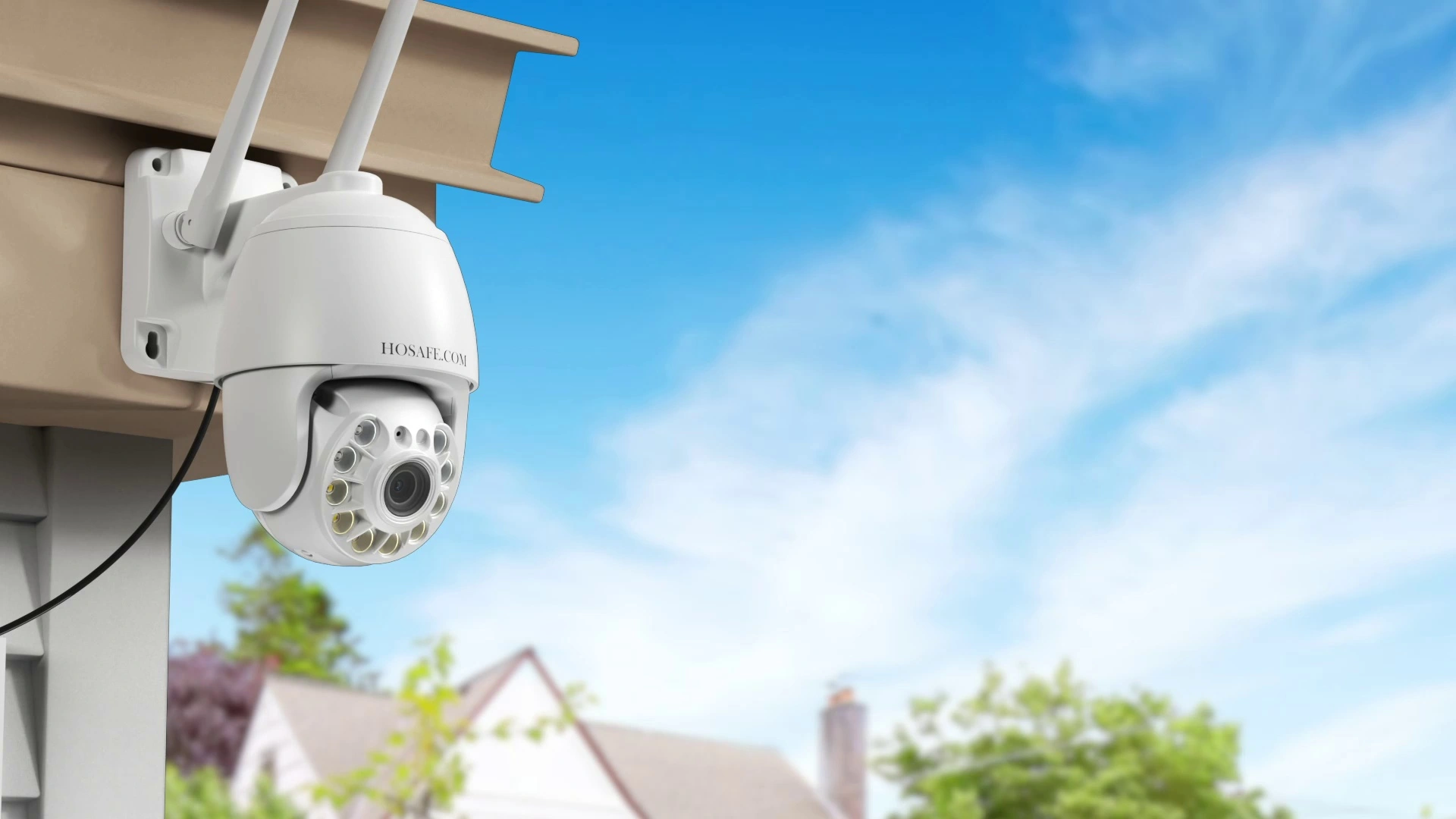
How to choose outdoor security cameras wireless
Choosing the right wireless outdoor security camera comes down to balancing battery life, video quality, and storage preferences. Here are the key factors to consider.
Battery life and power source
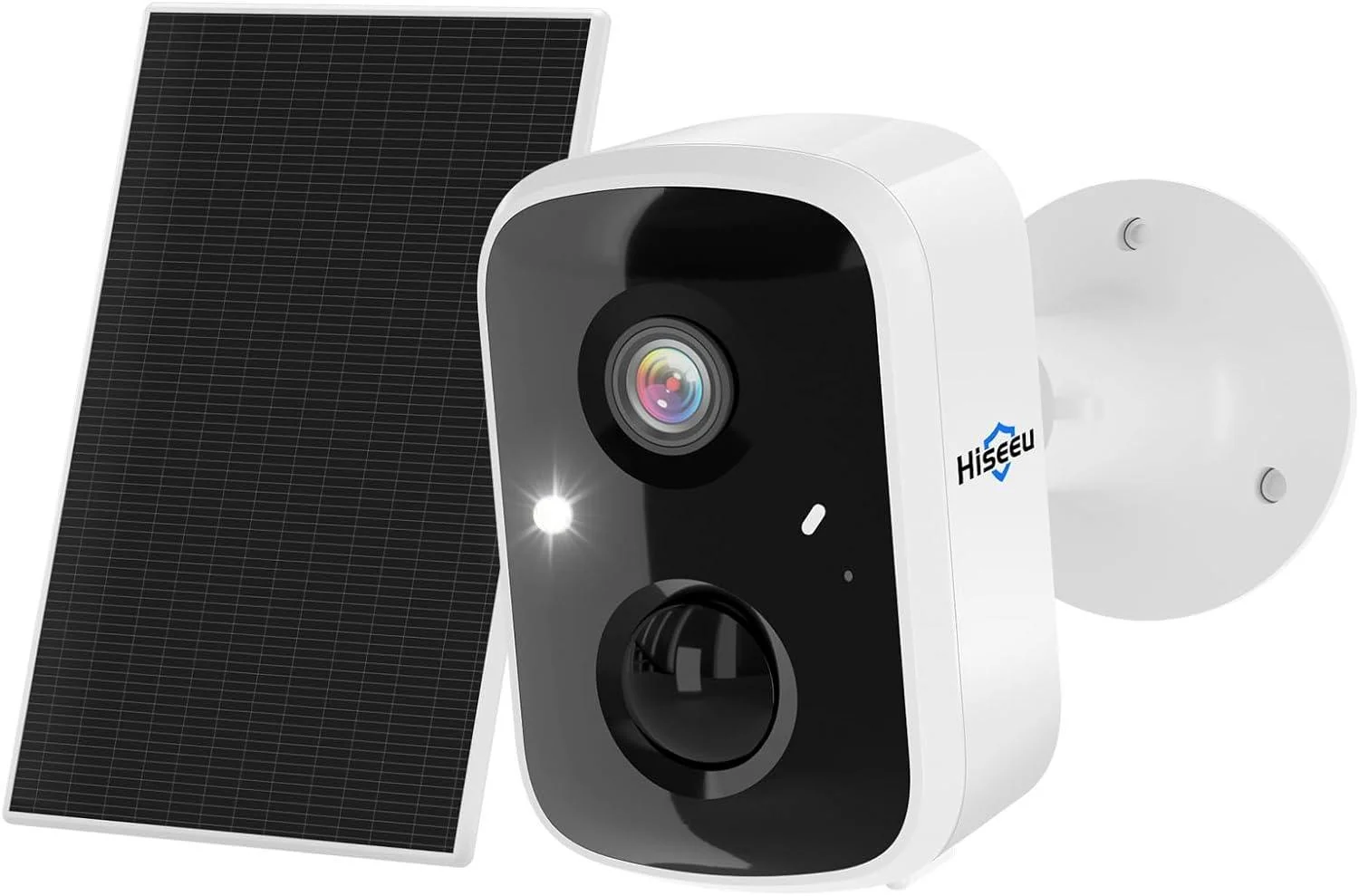
Most wireless cameras fall into three power categories: disposable lithium batteries (like Blink), rechargeable batteries you must take down and charge (like HITELLARCAM and realhide), and solar powered (like aosu, SEHMUA, and AlkiVision). Disposable batteries last one to two years but create ongoing cost. Rechargeable batteries offer lower long-term cost but require periodic removal for charging. Solar panels eliminate charging altogether if you have enough direct sunlight. For most people, a solar camera is the hands-off winner, but in shaded areas a long-life rechargeable battery is more reliable.
Video resolution and night vision
1080p HD is the baseline, but 2K (3MP) is now common and captures noticeably more detail. Full-color night vision, usually achieved with an LED spotlight, allows you to identify an intruder's clothing or vehicle color. Infrared night vision is black-and-white but works silently and without light trespass. The best cameras offer both: infrared by default and color when motion triggers the spotlight.
Storage options: cloud, local, or both
Some cameras require a monthly subscription to store recordings (Blink). Others include a hub with built-in storage (aosu) or free cloud storage (AlkiVision). A microSD slot gives you local storage without recurring fees. If you hate monthly bills, look for a camera with local storage or free cloud. If you prefer automatic off-site backup, a paid plan is acceptable but factor that into the lifetime cost.
Connectivity and range
Most cameras use your home WiFi, but the effective range from your router is typically 50 to 100 feet through walls. For detached garages or large yards, consider a system with a dedicated hub that extends range, like the Blink Outdoor 4 XR. Dual-band WiFi (2.4GHz and 5GHz) gives you a faster connection on the 5GHz band, but many budget cameras only support the more crowded 2.4GHz band.
Smart detection and alerts
PIR (passive infrared) sensors are better at reducing false alerts from swaying trees or passing cars than purely pixel-based motion detection. AI features that distinguish people, packages, pets, or vehicles usually require a subscription. If you want person detection without a subscription, look for a camera that offers it locally (rare in this price range). The Blink system offers it free for the first 30 days, then requires a plan.
Weather resistance
Look for an IP65 rating (dust and water jets) or higher. IP66 is rainproof; IP67 can be submerged briefly. All cameras in this roundup are rated at least IP65, but the AlkiVision's IP67 is the most robust.
The single best way to avoid recurring costs is to choose a camera that stores footage locally on a microSD card or a hub. The aosu D1 Classic and the Blink Outdoor 4 XR (with a separate microSD) both offer that, but the Blink requires an optional hub upgrade.
If you are trying to decide how many cameras you really need to cover your property, it helps to walk the perimeter and note every possible entry point. A two-camera system covers front and back; a four-camera system adds the garage and side gate.
Frequently asked questions
What is the difference between 1080p and 2K in a security camera?
2K (usually 2304 x 1296 pixels) has about 40% more pixels than 1080p (1920 x 1080). That extra detail can mean the difference between recognizing a face or reading a license plate from a moderate distance. On a small phone screen the difference is subtle, but on a desktop monitor or when you zoom in, 2K is clearly sharper.
Do wireless outdoor cameras need WiFi?
Yes, almost all wireless outdoor security cameras require a WiFi connection to stream video and send alerts. Some models can store clips locally and still be accessed later without internet, but live view and real-time notifications need WiFi. The Blink XR system uses its own 900MHz link for range but still requires WiFi for the hub to connect to the internet.
How long do batteries really last in outdoor security cameras?
It varies enormously. Blink claims two years on AA lithium batteries with typical use (about 10 motion events per day). The HITELLARCAM and realhide cameras claim up to six months on a rechargeable battery, but heavy traffic can reduce that to one month. Solar-powered cameras can run indefinitely if they get enough sunlight, but on cloudy weeks they rely on the battery reserve.
Do any wireless cameras work with Alexa or Google Home?
Yes, Blink cameras natively integrate with Alexa, allowing you to view live feeds on Echo Show devices and arm/disarm the system with voice commands. The aosu, SEHMUA, and other third-party cameras often support Alexa via skill integrations, but the experience is not as seamless. Check the product details for compatibility.
Can I record without a subscription?
Yes, several cameras offer local recording via microSD card or a central hub. The aosu D1 Classic includes a 32GB hub with no subscription. The Blink Outdoor 4 XR (with Sync Module XR) and most budget cameras support microSD local storage. However, some Blink models require a Sync Module upgrade for local storage; the standard Sync Module Core has no storage slot.
Are wireless security cameras easy to steal?
They can be, which is why placement matters. Mount cameras at least 8 feet off the ground, out of arm's reach. Most cameras use tamper-resistant screws, but a determined thief can still remove them. Consider cameras with a siren alarm that triggers on removal (some models have this) or simply rely on the fact that stolen cameras have already uploaded clips to the cloud before they are removed.
How many cameras do I need for a typical home?
For most homeowners, two to three cameras cover the front door, back door, and garage. If you have a side gate, a driveway, or a detached building, you may need four or more. Start with the most vulnerable entry points and expand from there.
The bottom line
After evaluating all 10 wireless outdoor security cameras, the Blink Outdoor 4 3-Cam system stands out as the most user-friendly and reliable choice for the majority of households. Its two-year battery life, compact design, and deep Alexa integration make it a set-and-forget solution, despite the subscription requirement for cloud storage. If you refuse to pay a monthly fee, the aosu D1 Classic 4-Cam Kit is the clear winner: solar-powered, self-contained 32GB storage, and no subscription strings attached.
For large properties, the Blink Outdoor 4 XR solves the range problem that plagues other wireless cameras. Its 900MHz link covers hundreds of feet more than standard WiFi, making it the only real choice for acreage. And if you need to cover a lot of ground on a tight budget, the GMK 4 Pack puts a camera on every corner for less than the cost of two premium units.
The best outdoor security cameras wireless won't all fit one buyer. Match the camera to your property size, your tolerance for recharging batteries, and your stance on monthly fees, and you'll end up with a system that genuinely protects your home without driving you crazy.
As an Amazon Associate we earn from qualifying purchases.