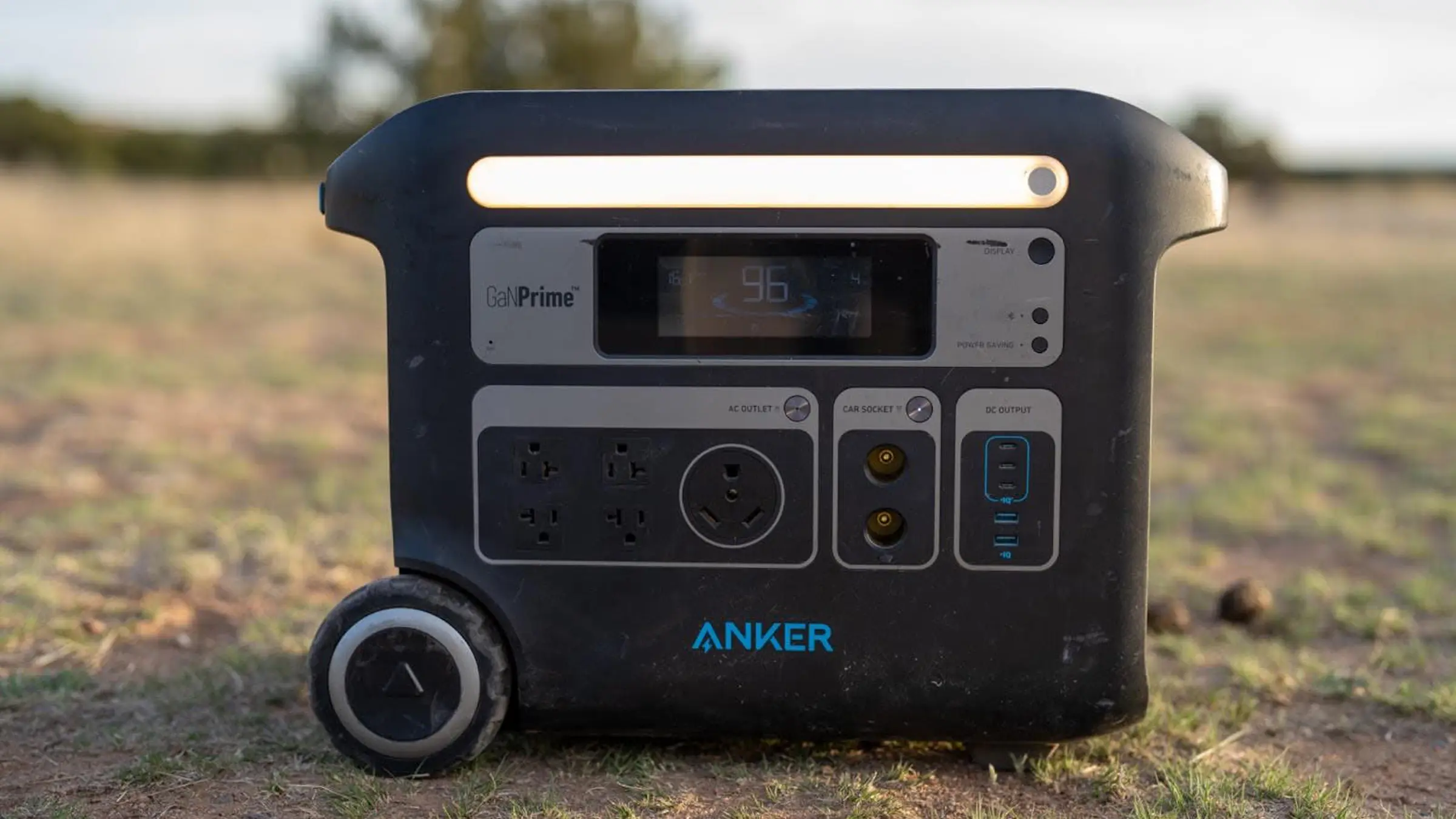

A power station has to do more than show a large watt-hour number on its display. The useful one starts quickly when the lights go out, runs the appliances you actually own, and is still manageable when you need to move it from a closet to the car. The wrong model can be too weak for a refrigerator or unnecessarily heavy for a weekend outdoors.
Our Best portable power station picks range from the tiny HOWEASY for phones and lights to the 2, 010Wh Anker SOLIX S2000 for extended home backup. Jackery Explorer 1000 v2 is the one we'd keep for most people because it combines useful capacity, strong output, a manageable weight, and unusually flexible charging controls.
Comparison table
| # | Product | Award | Capacity | AC output | Weight | Best for |
|---|---|---|---|---|---|---|
| 1 | Jackery Explorer 1000 v2 | Best overall | 1, 070Wh | 1, 500W | 23.8 lb | General backup and camping |
| 2 | EcoFlow DELTA 3 Classic | Best for UPS backup | 1, 024Wh | 1, 800W | 26.7 lb | Sensitive electronics and outages |
| 3 | Anker SOLIX C1000 Gen 2 | Best fast charging | 1, 024Wh | 2, 000W | 24.9 lb | Fast home and campsite recharging |
| 4 | BLUETTI AC180 | Best high-output backup | 1, 152Wh | 1, 800W | 37.4 lb | Larger appliances |
| 5 | Anker SOLIX C1000 | Best for versatile ports | 1, 056Wh | 1, 800W | 27.6 lb | RVs and mixed devices |
| 6 | Anker SOLIX S2000 | Best long-duration backup | 2, 010Wh | 1, 500W | 35.7 lb | Refrigerators and home essentials |
| 7 | BLUETTI Elite 30 V2 | Best compact high-output model | 288Wh | 600W | 9.5 lb | CPAP and short trips |
| 8 | DaranEner 192Wh | Best small LiFePO4 station | 192Wh | 300W | 5.73 lb | Lightweight device backup |
| 9 | EnginStar 296Wh | Best small pure sine wave model | 296Wh | 300W | 6.5 lb | Camping and CPAP use |
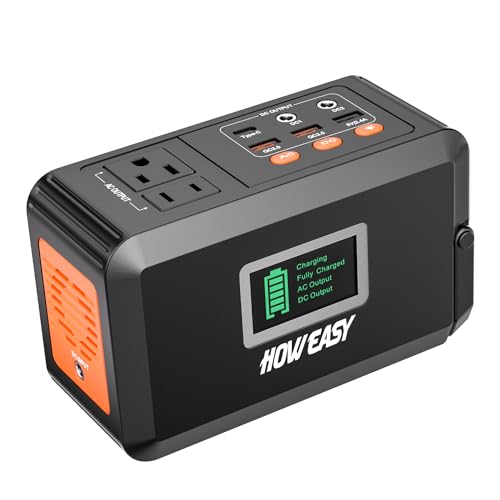
| 10 | HOWEASY 88Wh | Best ultra-light option | 88Wh | 120W | 2.3 lb | Phones, lights, and small fans |
1. Jackery Explorer 1000 v2: Best Overall

Pros
- Strong 1, 500W output with a 3, 000W surge peak
- 1, 070Wh capacity in a 23.8-pound body
- Very fast charging option through the app
- Three pure sine wave AC outlets and useful USB ports
- Quiet overnight charging mode
Cons
- Solar panel is not included
- One-hour charging requires an app setting
- Compatible only with Jackery solar panels for solar charging
Best for: someone who wants one capable station for ordinary backup, road trips, and camping.
The Jackery Explorer 1000 v2 gets the balance right. It has enough capacity to feel like a real backup battery without becoming the sort of object you avoid moving. At 23.8 pounds, its foldable handle and compact 12.87 by 8.82 by 9.72 inch body make it easier to carry than the heavier BLUETTI AC180, while its 1, 500W AC output gives it a much wider range of uses than the smaller EnginStar or DaranEner.
Its 1, 070Wh battery is built around LFP cells, with Jackery rating it to retain more than 70 percent of its original capacity after 4, 000 cycles. That matters for a station intended to sit ready for outages and then be used repeatedly over the years. The three pure sine wave AC ports are suitable for sensitive electronics, while two USB C ports, one USB A port, and a 12V car port cover the smaller devices that tend to crowd a campsite or emergency kit.
Charging behavior is one of its strongest features. The standard mode fills the battery in about 1.7 hours, while emergency charging can take it from empty to full in one hour. That setting must be enabled in the Jackery app, and the station defaults to the slower mode to help battery health. The app also provides a 30 dB quiet overnight charging mode and an energy efficiency mode. Those are practical controls, not merely remote monitoring.
The weakness is the ecosystem. The solar panel is not included, and the listing says this model is compatible only with Jackery solar panels for solar charging. Buyers who already own another brand's panels should pay attention to that limitation. The Explorer 1000 v2 also lacks the 1, 800W or 2, 000W output of the EcoFlow DELTA 3 Classic and Anker SOLIX C1000 Gen 2.
For most people, that trade-off is sensible. The Explorer 1000 v2 has the capacity for refrigerator support and the output for many demanding appliances, but it remains more portable than the largest stations here. It is the Best portable power station for readers who want a dependable general-purpose unit rather than a specialist model.
2. EcoFlow DELTA 3 Classic: Best for UPS Backup

Pros
- 1, 800W output with a 3, 600W surge rating
- Under 10 ms UPS switching
- Charges to 80 percent in 45 minutes
- LiFePO4 cells rated for more than 10 years of daily use
- App supports schedules and backup modes
Cons
- Taller and heavier than the Jackery
- Extra battery compatibility is limited
- Solar panel is optional
Best for: home-office users and anyone who needs fast automatic backup for sensitive equipment.
The EcoFlow DELTA 3 Classic feels more like a compact home backup system than a simple camping battery. Its 1, 800W AC output is enough for refrigerators, microwaves, laptops, and other demanding loads, while the 3, 600W surge rating gives motors and compressors more room to start. That puts it ahead of the Jackery Explorer 1000 v2 when the priority is output headroom rather than minimum carrying weight.
The 1, 024Wh capacity is close to the Jackery's 1, 070Wh, so runtime differences between the two will usually come from the connected appliance and its power draw. The DELTA 3 Classic's 26.7-pound weight is still reasonable for a station of this class, although its 15.7 inch height makes it less convenient to tuck under a desk or carry over a long distance.
Its headline feature is the under 10 ms UPS response. The station can switch to battery quickly enough to protect PCs, servers, medical devices, and other electronics from a sudden interruption. That is more compelling for a home office than a generic claim about running many appliances. EcoFlow's app adds charging schedules, Storm Alert, and Self-Powered Mode, giving the station a more deliberate role in a backup setup.
AC charging reaches 80 percent in 45 minutes, and the listing says a compatible 500W solar panel can recharge it in about 2.5 hours. The battery uses LiFePO4 cells and an EV-grade cell-to-cell design, with the product described as suitable for more than 10 years of daily use. Buyers should note that the DELTA 3 Classic is not compatible with the DELTA 2 Smart Extra Battery or Delta 3 Series Smart Extra Battery.
The main reason to skip it is portability. The Jackery is lighter, and the smaller BLUETTI Elite 30 V2 is far easier to carry for short trips. The EcoFlow makes more sense beside a desk, refrigerator, or networking setup than in a backpack. For outage protection and automatic switching, it is one of the clearest picks in this group.
3. Anker SOLIX C1000 Gen 2: Best Fast Charging
Pros
- 2, 000W output and 3, 000W peak output
- Full recharge in 49 minutes with HyperFlash
- 1, 024Wh capacity and 10 output ports
- Under 10 ms UPS backup
- Strong solar input capability
Cons
- HyperFlash requires the Anker app
- Still weighs nearly 25 pounds
- No solar panel is listed as included
Best for: people who want a 1kWh station that can be refilled very quickly between uses.
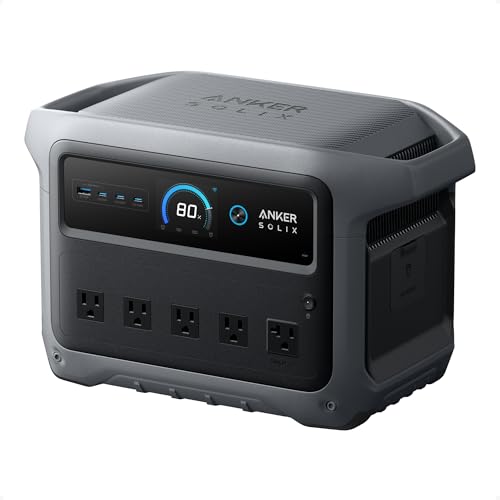
The Anker SOLIX C1000 Gen 2 is the performance-focused alternative to the Jackery. Its 2, 000W output gives it more room for demanding appliances, and the 3, 000W peak rating helps with short startup surges. It is only slightly heavier than the Explorer 1000 v2 at 24.9 pounds, so the extra output does not turn it into a stationary battery.
The 1, 024Wh capacity is nearly identical to the EcoFlow DELTA 3 Classic and a little below the Jackery's 1, 070Wh. That means this is not a long-runtime specialist. Its appeal is what happens around the battery: ten ports, a 2, 000W inverter, and a recharge system designed to get the station ready again quickly.
Anker says HyperFlash can fully recharge the C1000 Gen 2 at 1, 600W in 49 minutes. The feature must be enabled in the Anker app, so the fastest result is not simply a matter of plugging it into the wall. Solar charging is also unusually capable, with support for up to 600W and a listed full solar recharge time of 1.8 hours. The under 10 ms UPS function makes it suitable for laptops and CPAP machines during a power interruption.
The battery is rated to retain at least 80 percent capacity after 4, 000 cycles. That is a stronger stated retention figure than the Jackery, although real runtime depends on conversion losses and the connected load. The app handles charging control and power monitoring, and its time-of-use mode can help manage a station that spends much of its life connected at home.
The C1000 Gen 2 is not the most obvious camping choice if you need the lightest possible kit. The BLUETTI Elite 30 V2 is far easier to move, and the Anker SOLIX S2000 has nearly twice the capacity for extended home backup. Pick this model when fast turnaround and high output matter more than shaving off a few pounds.
4. BLUETTI AC180: Best High-Output Backup

Pros
- 1, 152Wh LiFePO4 battery
- 1, 800W output with a 2, 700W boost mode
- Full AC recharge in one hour
- 500W solar input
- Eight outlets and 20 ms UPS switching
Cons
- Heaviest station in the 1kWh class here
- Larger than the Jackery and Anker C1000
- UPS response is slower than the fastest models
Best for: households that need strong appliance support and do not expect to carry the station far.
The BLUETTI AC180 is built around straightforward electrical muscle. Its 1, 800W output and 1, 152Wh battery give it the highest capacity among the roughly 1kWh stations here, and the app can enable a 2, 700W power-lifting mode for compatible higher-demand loads. It is a good fit for a refrigerator, kitchen appliance, or workshop tool that would push a smaller station too hard.
The cost of that capability is obvious when you lift it. At 37.4 pounds, the AC180 is much heavier than the Jackery Explorer 1000 v2, EcoFlow DELTA 3 Classic, and both Anker C1000 models. Its 13.39 by 9.72 by 12.48 inch body is manageable in a vehicle or storage area, but this is not the station we'd choose for a campsite where it must be carried repeatedly.
BLUETTI gives it a fast 1, 440W AC input, with a full recharge in one hour. Solar input reaches 500W, with a stated solar recharge time of 2.8 to 3.3 hours. The included charging package includes AC, car, and solar charging cables, which makes the station easier to deploy without immediately sorting out additional cables.
There are eight outlets, and the AC180 can function as a UPS with a 20 ms switch. That is useful for many household essentials, though the EcoFlow DELTA 3 Classic and Anker SOLIX C1000 Gen 2 claim under 10 ms switching. The station's LiFePO4 battery is a sensible choice for a device expected to spend years cycling through outages and recharge sessions.
The AC180 is too much station for a phone-and-laptop kit, and its weight makes the smaller Jackery more appealing for mixed use. But if output and capacity outrank portability, it has a convincing case. It is the heavy-duty pick for a user who wants one battery to cover larger appliances without moving into the 2, 010Wh class.
5. Anker SOLIX C1000: Best for Versatile Ports

Pros
- 1, 800W output with 2, 400W surge capability
- 1, 056Wh LiFePO4 battery
- Eleven ports for mixed devices
- Full recharge in under an hour
- Up to 600W solar input
Cons
- App is needed for the fastest charging mode
- Heavier than the newer Gen 2 model
- Solar panel is optional
Best for: RV users and households that need many different device connections at once.
The Anker SOLIX C1000 remains a capable all-purpose station, especially when the number of connections matters. Its 11 ports give it an edge over the Gen 2 model's ten ports, and the 1, 800W output can handle most common appliances. The 1, 056Wh battery is also slightly larger than the Gen 2's 1, 024Wh capacity, though the difference will not transform runtime.
Anker's SurgePad technology raises the peak output to 2, 400W, helping the station cope with appliances that briefly demand more power during startup. It is not a license to run every high-wattage device indefinitely. The continuous 1, 800W rating remains the important number when judging whether a heater, kettle, or appliance belongs on this station.
Charging is a major attraction. The C1000 reaches 80 percent in 43 minutes and can fully charge in under an hour when UltraFast mode is enabled through the app. Solar input reaches 600W, with a stated full recharge time of 1.8 hours. That combination is useful for a station that moves between home backup, an RV, and outdoor use.
The LiFePO4 battery is rated for 3, 000 cycles over a 10-year lifespan. Anker's app provides charging controls and real-time power statistics, while the 15 percent smaller design claim compared with similar 1kWh units points to a body that is easier to store than many large backup batteries. At 27.59 pounds, though, it is heavier than the C1000 Gen 2.
The newer Anker SOLIX C1000 Gen 2 is the better choice if its lower weight and 2, 000W output matter more than the extra port. The Jackery is also simpler for buyers who prefer quieter app involvement. Choose the original C1000 when its 11-port layout and broad connection options fit the equipment you already use.
6. Anker SOLIX S2000: Best Long-Duration Backup
Pros
- Large 2, 010Wh capacity
- 1, 500W continuous and 3, 000W peak output
- 10, 000-cycle LFP battery rating
- Supports up to 400W solar input
- Under 10 ms UPS switching
Cons
- No 12V DC port
- Heavier than the 1kWh stations
- Lower continuous output than several smaller models
Best for: home backup users who need longer refrigerator and essential-appliance runtime.
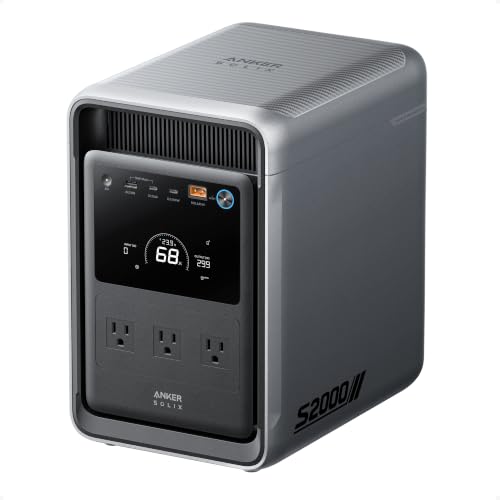
The Anker SOLIX S2000 solves a different problem from the smaller stations. Its 2, 010Wh battery is almost twice the capacity of the Jackery Explorer 1000 v2, so it is designed to keep essential appliances going for longer rather than make a light camping load easy to carry. Anker says it can provide up to 35 hours of refrigerator backup, though actual runtime depends on the refrigerator, temperature, and usage.
The continuous output is 1, 500W, with a 3, 000W peak. That is enough for many household essentials, but it is lower than the 1, 800W EcoFlow and BLUETTI AC180 or the 2, 000W C1000 Gen 2. Capacity and output are separate decisions here. The S2000 can run a moderate load for longer, but it is not the strongest option for several demanding appliances at once.
Anker rates its 314Ah LFP cells for 10, 000 cycles and a 15-year lifespan. Its idle draw is listed at 6W, and the company says the system is 10 percent more efficient than comparable designs. Those details matter more in a home backup station because wasted energy accumulates while the unit is waiting or supporting a low-power appliance.
The body measures 8.2 by 11.1 by 12.7 inches and weighs 35.7 pounds. That makes it smaller and lighter than the industry average claimed for 2kWh stations, but it is still a two-handed lift for many people. The design provides eight outlets across the front and rear, with rear outlets useful for appliances that stay connected. There is no 12V DC port, a meaningful limitation for some camping and RV setups.
The S2000 is the one to choose when runtime is the priority. The BLUETTI AC180 is a better fit for higher continuous output, and the Jackery is easier to carry. For a refrigerator, router, lights, and other essentials during a prolonged outage, the S2000's larger battery is the reason to accept its extra weight.
7. BLUETTI Elite 30 V2: Best Compact High-Output Model

Pros
- 600W continuous output with 1, 500W surge
- 288Wh capacity in a 9.5-pound body
- 380W wall charging
- 10 ms UPS switching
- Power-lifting mode for selected appliances
Cons
- Much less capacity than the 1kWh stations
- Power-lifting mode does not change the battery capacity
- Not intended for extended refrigerator backup
Best for: campers and backup users who need more output than a power bank but less bulk than a full-size station.
The BLUETTI Elite 30 V2 is a useful middle ground. At 9.5 pounds, it is portable in a way the AC180 and Anker SOLIX S2000 are not, yet its 600W continuous output is twice that of the EnginStar and five times the HOWEASY's continuous rating. That makes it suitable for laptops, lights, CPAP machines, car refrigerators, and selected small kitchen appliances.
Its 288Wh capacity sets the limit. This is a short-duration station, not a whole-home battery. A 600W load would use its stored energy quickly, while a laptop, lamp, or communications setup can run much longer. BLUETTI's Power Lifting Mode can raise output to 1, 500W for certain resistive loads such as a small kettle or toaster, but that mode does not make the battery last longer.
Charging is unusually quick for this size. The Elite 30 V2 supports up to 380W wall charging, reaching 80 percent in 45 minutes and full charge in 70 minutes according to the listing. It also supports solar and car charging, with eight charging modes described by BLUETTI. A 10 ms UPS switch adds protection for routers, laptops, and CPAP equipment during an interruption.
The station's efficiency features are aimed at low-power use. BLUETTI lists standby consumption at 4.5W, DC consumption at 5W, and AC consumption at 8W, while its smart cooling system is designed to reduce power use. The compact body is useful for a vehicle or small emergency kit, though the listed dimensions vary somewhat between the feature copy and product information.
The DaranEner 192Wh is lighter and has a 60W USB C port, but the Elite 30 V2 gives you considerably more AC output. The Jackery is a better choice for a full weekend or broad home backup. Choose this BLUETTI when moving the station easily matters and your loads are moderate.
8. DaranEner 192Wh: Best Small LiFePO4 Station

Pros
- LiFePO4 battery rated for more than 3, 500 cycles
- 300W pure sine wave output
- 60W USB C PD charging
- Six-device charging
- Built-in light with four brightness modes
Cons
- 192Wh capacity limits long runtimes
- Not suitable for high-power appliances
- Solar input is limited to 60W
Best for: lightweight camping and emergency device charging with a durable battery chemistry.
The DaranEner 192Wh is small enough to become part of the regular kit instead of remaining in a closet. At 5.73 pounds and 8.66 by 7.09 by 5.12 inches, it is easy to move between a car, tent, and bedside table. Its 300W pure sine wave AC output covers phones, tablets, laptops, fans, lights, cameras, and CPAP machines that stay below the station's limit.
The LFP battery is the standout feature at this size. DaranEner rates it for more than 3, 500 cycles, with a battery management system intended to protect against overcharging, overheating, and short circuits. Capacity is still the constraint. This is not appropriate for a rice cooker, hair dryer, or mini-fridge that exceeds 300W or has a high startup surge, and the manufacturer specifically calls out those limitations.
The port selection is good for a compact station. There are two 300W AC outlets, a 60W USB C PD port, two 18W QC 3.0 USB A ports, and one 12V DC output. Six devices can charge at once, which is more useful than a single large outlet when several people need phones and cameras topped up at a campsite.
AC input reaches 100W, while solar input supports up to 60W through its MPPT controller. Car charging is also supported, although the product notes that solar panels and car charging cables are not included. The integrated LED light has four brightness modes, including SOS, which gives the DaranEner a practical emergency role beyond charging electronics.
The EnginStar 296Wh offers more capacity and two pure sine wave outlets, while the BLUETTI Elite 30 V2 offers much more output. DaranEner's advantage is its combination of low weight, LFP cells, and a useful 60W USB C port. It is a good fit for someone who wants a small, durable station and already understands that 192Wh is for essentials, not appliances.
9. EnginStar 296Wh: Best Small Pure Sine Wave Model
Pros
- 296Wh capacity in a 6.5-pound body
- Two 110V pure sine wave AC outlets
- Regulated 12V and 24V DC outputs
- Three charging methods
- Eight output ports
Cons
- USB C output is limited to 18W
- Lithium ion battery has a lower stated cycle count than the LFP models
- Solar panel is not included
Best for: small-device camping kits that need pure sine wave AC and regulated DC power.
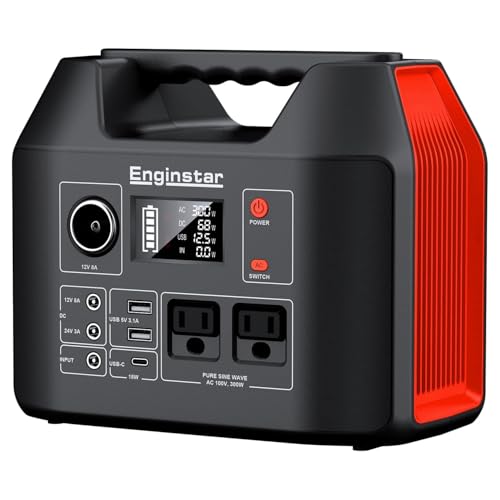
The EnginStar 296Wh makes a strong case for keeping a compact station in the car. It weighs 6.5 pounds and measures about 9 by 5.5 by 7.5 inches in the feature description, so it is substantially easier to carry than the larger 1kWh units. Its 300W AC output is aimed at phones, laptops, cameras, drones, CPAP machines, and other modest loads.
Two 110V pure sine wave AC outlets are the key advantage. Pure sine wave output is a sensible choice for sensitive electronics, and EnginStar pairs those outlets with two regulated DC outputs supporting 12V and 24V. That makes the station more flexible for DC equipment such as a mini-fridge or car vacuum than a compact model with only USB ports.
The station has eight output ports in total, including a USB A fast charger rated at 5V and 3.1A maximum and an 18W USB C port. The USB C figure is adequate for smaller devices, but it is not as fast as the DaranEner's 60W PD connection. If a modern laptop is a regular part of the kit, check whether its charging requirement fits the EnginStar's output.
It supports wall, car, and compatible solar charging. Maximum charging speed is 65W, and the listing says it can reach 80 percent in two hours. The built-in battery management system provides voltage and temperature control, while the lithium ion cells are described as supporting more than 1, 000 charge cycles. EnginStar recommends fully charging the unit every two to three months when stored.
The 296Wh capacity gives it a little more breathing room than the DaranEner, but the DaranEner has newer LFP chemistry and a faster USB C port. The BLUETTI Elite 30 V2 is the better pick for heavier AC loads. Choose EnginStar for a small, straightforward station where pure sine wave AC and regulated DC are more important than maximum charging speed.
10. HOWEASY 88Wh: Best Ultra-Light Option
Pros
- Only 2.3 pounds
- Eight output ports
- 120W continuous output with 240W peak
- Three recharge methods
- Built-in light with steady, flash, and SOS modes
Cons
- 88Wh capacity is the smallest here
- AC output is not suitable for demanding appliances
- USB C output is limited to 18W
Best for: day trips and emergency kits built around phones, lights, cameras, and small fans.
The HOWEASY 88Wh is closer to a highly equipped power bank than a full home backup station, and that is exactly why it is useful. At 2.3 pounds and 6.6 by 4 by 3 inches, it can fit in a small vehicle compartment or day bag. The hidden handle keeps the design easy to carry without making it bulky.
Its 120W AC output, with a 240W peak, is meant for night lights, mini fans, cameras, headphones, phones, tablets, and other low-power equipment. There are two AC sockets, one 18W USB C port, two QC 3.0 USB ports, one 5V 2.4A USB port, and two 12V/10A DC ports. The eight-port layout is generous for such a small body, but the 88Wh capacity means several devices should not be left running for long.
The station supports AC, compatible 15V to 24V solar, and 12V or 24V car charging. Solar panels are not included. It also supports simultaneous charging, so it can replenish the battery while powering devices, a useful arrangement for a small outdoor setup. HOWEASY states a cycle life of more than 1, 500 cycles.
The LED light adds genuine utility during a blackout or at a campsite. It has steady, flashing, and SOS modes, and separate AC and DC buttons make it easier to avoid leaving unwanted outputs active. The display shows operating status and remaining power, which is important because a small station can run down quickly under even a moderate load.
The DaranEner is the better compact station for laptop charging and longer use, while the EnginStar is better for pure sine wave AC and a larger battery. The HOWEASY wins on portability. It is the right answer when carrying weight matters more than appliance support, and it should be skipped by anyone expecting to run a refrigerator, kettle, or CPAP machine for an extended period.

How to choose best portable power station
Start with the equipment you need to run, then match both its continuous wattage and startup demand to the station. Capacity, output, battery chemistry, charging, and portability are the factors that separate a useful backup battery from an oversized accessory.
Battery capacity
Capacity is measured in watt-hours, and it gives a rough idea of how long a station can provide power. A 1, 000Wh station is better suited to refrigerators, routers, lights, and laptops over a longer outage than an 88Wh model, but runtime is always reduced by inverter and charging losses.
For phones and lights, a compact station under 300Wh can be enough. For a refrigerator or several household essentials, look at 1, 000Wh and above. The 2, 010Wh Anker SOLIX S2000 is the clear long-runtime option here.
Capacity determines how long the station can help. Output determines what it can start.
Continuous and surge output
Continuous output is the wattage a station can supply while an appliance is running. Surge output covers brief startup demands from motors and compressors. A refrigerator may draw modest power after startup but need a larger initial surge, so both numbers matter.
The HOWEASY reaches 120W continuously, while the EnginStar and DaranEner reach 300W. Larger stations such as the EcoFlow DELTA 3 Classic and Anker SOLIX C1000 Gen 2 provide 1, 800W and 2, 000W respectively. Do not treat a peak figure as a continuous operating rating.
Battery chemistry and cycle life
LFP, also called LiFePO4, batteries appear across the stronger long-term choices in this roundup. They are generally favored for repeated cycling and are used in the Jackery Explorer 1000 v2, DaranEner, Anker SOLIX models, BLUETTI stations, and EcoFlow DELTA 3 Classic.
Cycle claims are not identical. Jackery lists more than 4, 000 cycles while retaining over 70 percent capacity, Anker lists at least 80 percent after 4, 000 cycles for the C1000 Gen 2, and the SOLIX S2000 lists 10, 000 cycles. Those figures are useful comparisons, but actual results depend on temperature, storage, load, and charging habits.
Charging methods and speed
Wall charging is the fastest and most predictable option for most stations. Solar charging is useful when the grid is unavailable, but the panel input limit and panel compatibility determine how quickly it works. Some models require a compatible panel or an app setting to reach their fastest charging mode.
The Jackery offers a one-hour emergency charge through its app, while the BLUETTI AC180 can fully recharge from AC in one hour. The Anker C1000 Gen 2 supports up to 600W solar input, and the HOWEASY supports solar, wall, and car charging but at a much smaller scale.
For a separate phone battery, a small backup battery for everyday devices may be more convenient than carrying a power station. A station becomes worthwhile when you need AC output, a flashlight, regulated DC, or backup for several devices at once.
Portability and controls
Weight matters more than most product pages suggest. The 2.3-pound HOWEASY can move anywhere, while the 37.4-pound BLUETTI AC180 is better treated as a movable home battery. Handles, dimensions, outlet placement, and whether the station needs an app all affect daily use.
An app can unlock fast charging, monitor power, schedule charging, and activate special modes. It can also add friction when you need power immediately. The Jackery and Anker models make app control important for their fastest charging features, so consider whether that fits your habits.
If your main use is a campsite rather than home backup, how much power a camping setup really needs is a useful distinction before choosing a large station. Those loads are often smaller than outage loads, but refrigerator startup and cooking appliances can change the calculation quickly.
Frequently asked questions
What size portable power station do I need?
For phones, lights, cameras, and small fans, a station under 300Wh can be sufficient. Laptops, CPAP machines, and small refrigerators need more careful planning, while a 1, 000Wh or larger station is more suitable for several household essentials. Add the wattage of the devices you may run at the same time and estimate how many hours you need them operating.
Can a portable power station run a refrigerator?
Yes, if its continuous and surge output can handle the refrigerator's requirements. Capacity determines how long it runs, while startup surge is important because compressor motors can briefly demand more power. The Anker SOLIX S2000 is the strongest choice here for extended refrigerator backup.
Are LiFePO4 batteries better for a power station?
LiFePO4 batteries are attractive for stations that will be cycled repeatedly because manufacturers commonly give them long cycle-life ratings. They are used in many of the larger models here, including the Jackery Explorer 1000 v2, EcoFlow DELTA 3 Classic, and BLUETTI AC180. Battery chemistry is only one factor, so also check output, capacity, charging, and warranty details.
Can I use solar panels with these stations?
Most of these models support compatible solar charging, but the input limits and compatibility rules differ. Jackery says the Explorer 1000 v2 is compatible only with Jackery solar panels, while other models specify maximum solar input such as 500W or 600W. Panels are not included with several stations, so verify the required cables and input range.
Can a power station replace a generator?
A battery power station is quieter and produces no exhaust while operating, but it has a finite capacity and must be recharged. A fuel generator can continue running as long as fuel is available, but it must be used safely outdoors. For indoor electronics, overnight backup, and quiet campsite use, a power station is often more convenient.
Is a UPS feature important?
A UPS feature matters when a brief interruption could shut down a computer, router, CPAP machine, or other sensitive equipment. Switching times vary, with the EcoFlow DELTA 3 Classic and Anker SOLIX C1000 Gen 2 listing under 10 ms and the BLUETTI AC180 listing 20 ms. Check the equipment requirements before relying on any UPS mode.

The bottom line
The Jackery Explorer 1000 v2 is the Best portable power station for most buyers because it combines a 1, 070Wh battery, 1, 500W output, manageable 23.8-pound weight, fast charging, and useful app controls. The EcoFlow DELTA 3 Classic is the stronger alternative for home-office backup, thanks to its 1, 800W output and under 10 ms UPS switching.
Choose the Anker SOLIX S2000 when a longer outage matters more than carrying convenience, or the BLUETTI Elite 30 V2 when you need a lighter station with more output than a compact power bank. The smaller DaranEner, EnginStar, and HOWEASY models are better matched to low-power trips and emergency device charging.
If you are undecided, choose the Jackery unless you specifically need the EcoFlow's UPS behavior or the Anker S2000's larger battery.
As an Amazon Associate we earn from qualifying purchases.