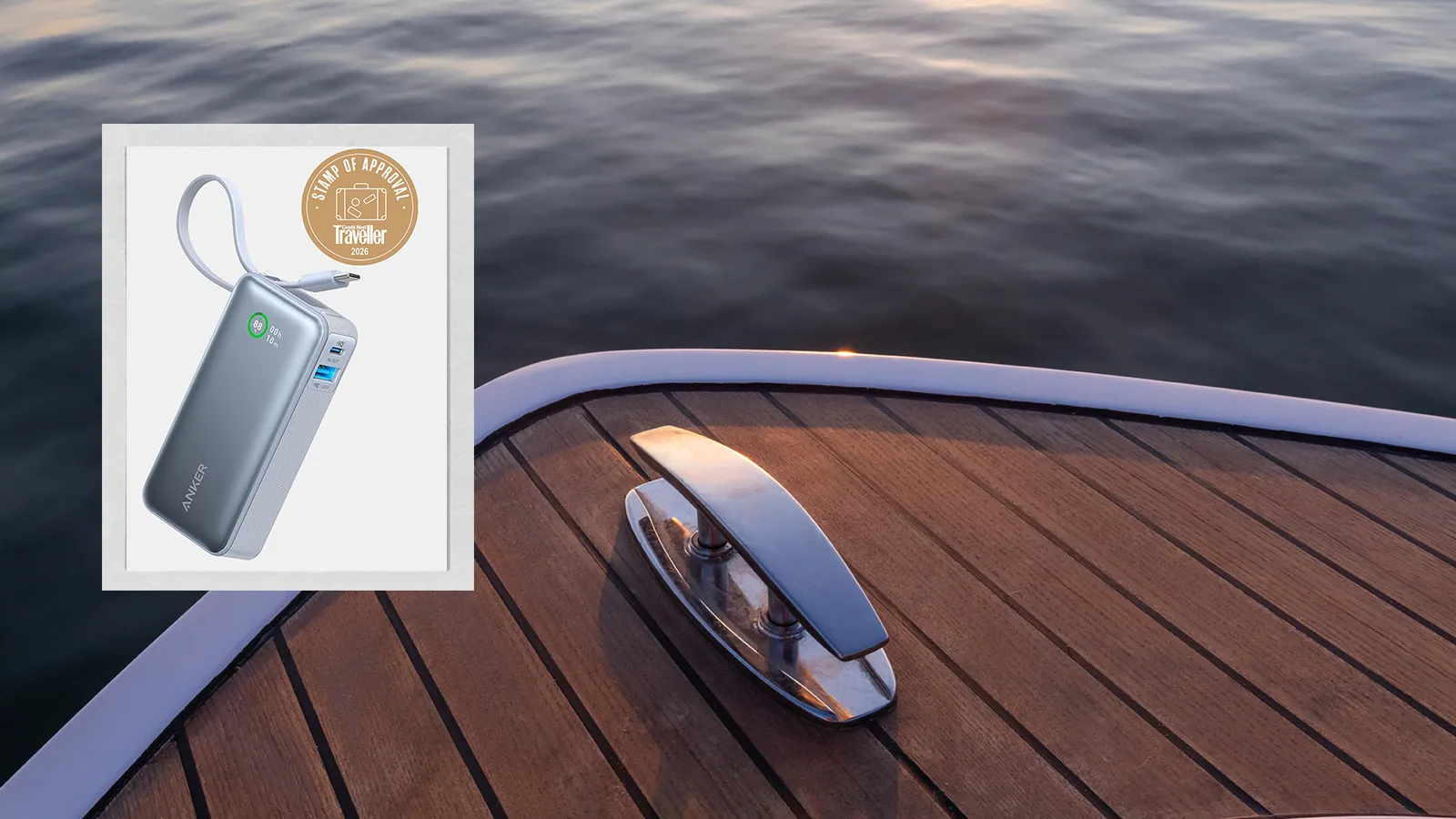

A dead phone is rarely just an inconvenience. It can mean losing navigation on a hike, missing a boarding pass, or being unable to call for help during an outage. The right battery pack should fit the way you actually travel, charge quickly enough to matter, and avoid becoming another heavy item you leave at home.
Our Best power bank picks range from pocket-sized 10, 000mAh models to laptop-capable packs and large emergency batteries. Some have built-in cables, one attaches magnetically to compatible phones, and several are suitable for carry-on travel while the largest models are not allowed on airplanes.
The INIU 45W Mini is our top pick for most people, with a compact design, fast output, and a detachable cable that is easier to replace than a permanently fixed lead.
Comparison table
| # | Product | Award | Capacity | Output | Best for |
|---|---|---|---|---|---|
| 1 | INIU 45W Mini | Best overall | 10, 000mAh | 45W | Everyday carry and travel |
| 2 | YBYP 50K Cable Pack | Best built-in cable kit | 50, 000mAh | 22.5W | Multi-device backup |
| 3 | ZZI 60K Charger | Best maximum capacity | 60, 000mAh | 22.5W | Extended off-grid use |
| 4 | Anker 25K Laptop Bank | Best for laptop users | 25, 000mAh | 165W total | Remote work and USB-C laptops |
| 5 | MaiVoz 56.8K Bank | Best outage backup | 56, 800mAh | 22.5W | Camping and emergencies |
| 6 | Anker Prime 26K | Best high-output model | 26, 250mAh | 300W total | Multiple demanding devices |
| 7 | Anker Zolo 20K | Best built-in USB-C | 20, 000mAh | 30W | Cable-free daily carry |
| 8 | Anker 10K 30W | Best compact wired pick | 10, 000mAh | 30W | Phones and small bags |
| 9 | Anker MagGo 10K | Best magnetic option | 10, 000mAh | 30W wired, 15W wireless | MagSafe and Qi2 phones |
| 10 | INIU 20K Mini | Best compact high capacity | 20, 000mAh | 22.5W | Phones, travel, and outages |
1. INIU 45W Mini: Best Overall

Pros
- Compact 10, 000mAh design
- Fast 45W output
- Detachable braided USB-C cable
- TSA-compliant capacity
- Built-in cable storage
Cons
- Less capacity than the larger picks
- Only one cable is included
- Its small size limits how many devices it can recharge
Best for: someone who wants a fast, travel-friendly battery for everyday phone and tablet charging.
The first thing that makes the INIU 45W Mini easy to live with is its shape. At 5.26 by 2.7 by 0.5 inches and about 0.4 pounds, it is unusually slim for a 10, 000mAh battery. It slips into a small pocket or purse without the dense, block-like feel of many portable chargers. The capacity is enough for nearly two full smartphone charges according to the product details, which covers a commute, a long day away from an outlet, or a missed connection without turning the pack into luggage.
Its standout feature is 45W output. That gives compatible phones a much more substantial burst than the 10W to 20W charging common on basic battery packs, and it also makes the INIU useful with an iPad Pro, Nintendo Switch, or Steam Deck. The listed charging examples are specific: from a 20 percent starting point, it can bring an iPhone 17 Pro Max to 76 percent, a Galaxy S25 Ultra to 84 percent, or an iPad Pro to 60 percent in 30 minutes. Actual results depend on the device and cable, but the point is clear. This is a small pack that prioritizes a quick top-up rather than trying to power a whole group for days.
The attached 0.4-foot USB-C cable is braided and detachable, a smarter arrangement than the permanently fixed leads on the Anker Zolo 20K and Anker 10K 30W. If the cable eventually wears out, the battery does not become useless. You can also use another USB-C cable when the short attached lead is awkward. The limitation is that the included lead is USB-C only, so older Lightning devices need their own cable.
This is also one of the easiest picks here to take on a flight. Its capacity is described as TSA compliant and flight safe, unlike the YBYP 50K Cable Pack, ZZI 60K Charger, and MaiVoz 56.8K Bank. INIU includes a three-year care policy and lifetime technical support, while the built-in safety claims cover everyday backup and emergency use. There is no room for a percentage display or a flashlight on this thin design, so the remaining charge is less visible than on the YBYP and ZZI.
The INIU 45W Mini is the Best power bank for readers who want one small battery that charges quickly and does not create cable clutter. Choose the INIU 20K Mini instead if two or more phone recharges matter more than pocketability, but skip this model if your main job is running a laptop.
2. YBYP 50K Cable Pack: Best Built-In Cable Kit

Pros
- 50, 000mAh capacity
- Four integrated cable types
- Three extra ports
- Can charge up to five devices
- Percentage display and active cooling
Cons
- Not permitted on airplanes
- Much thicker than compact daily-carry models
- Built-in cables cannot be swapped out
Best for: families, groups, and emergency kits that need several connector types in one battery.
The YBYP 50K Cable Pack solves a particular nuisance: several people arrive with several phones and nobody has the right cord. It includes integrated Micro-B, USB-A, USB-C, and iOS cables, along with three additional ports. The result is a battery that can charge up to five devices simultaneously. That is more useful at a family airport hotel or during a blackout than on a solo commute.
Capacity is the reason to choose it. The 50, 000mAh battery is intended to provide up to 9.1 charges for an iPhone 17, 8.1 for a Galaxy S25, or six for an iPad Pro, according to its product information. The pack measures 4.8 by 3.1 by 1.1 inches and weighs 0.75 pounds, which is relatively compact for that capacity but still noticeably heavier and thicker than the INIU 45W Mini. It belongs in a backpack, drawer, or emergency kit rather than a trouser pocket.
Charging output is capped at 22.5W, enough for quick phone charging but not the laptop-focused performance of the Anker 25K Laptop Bank or Anker Prime 26K. The manufacturer lists an iPhone 17 reaching 55 percent in 30 minutes and a Galaxy S25 reaching 60 percent in the same period. The integrated cables also carry a practical advantage over carrying four separate leads, though they are a permanent part of the pack. A failed cable would be more consequential than a failed detachable lead on the INIU 45W Mini.
The LED gauge is one of the better details here. It shows remaining capacity down to one percent, so you can tell whether the battery is ready for a weekend trip rather than guessing from four broad indicator lights. Eight-layer protection and active cooling are listed for overcurrent, overvoltage, short circuit, and temperature control. YBYP includes a three-year warranty, but the major travel drawback remains absolute: this battery cannot be carried on an airplane.
For a group or a storm-preparedness drawer, the YBYP makes more sense than a collection of smaller packs. For air travel, choose a carry-on-approved model such as the Anker 25K Laptop Bank or INIU 20K Mini instead.
3. ZZI 60K Charger: Best Maximum Capacity

Pros
- Largest capacity in the roundup
- 22.5W fast charging
- Three-in-one braided cable included
- Charges up to five devices
- Real-time LED display
Cons
- Not allowed on airplanes
- Nearly one pound
- Large capacity adds bulk for ordinary daily use
Best for: extended camping, long road trips, and keeping several devices alive away from mains power.
The ZZI 60K Charger is for the reader who regards an outlet as an uncertain luxury. Its 60, 000mAh capacity is the largest here, and the product information says it can charge an iPhone 15 up to 10 times. That makes it a credible base-camp battery for a long weekend, an emergency supply for several phones, or a shared pack on a road trip. It is not a casual pocket companion.
ZZI gives it dimensions of 5.8 by 2.9 by 1.1 inches and a weight of 0.96 pounds. The proportions are manageable in a gear bag, and its flat shape is easier to pack than a very thick brick, but the weight is unavoidable. The 22.5W output is shared across the pack's charging options, with support for up to five devices at once. A three-in-one nylon braided cable handles Type-C, iOS, and Micro USB connections, and it has been tested through more than 10, 000 folds and plug-in cycles according to the listing.
For one phone, the 22.5W output is sufficient for a meaningful top-up. ZZI says an iPhone 15 can reach 60 percent in 30 minutes. That is not as rapid as the INIU 45W Mini or the Anker models with 30W or more, but capacity is the point here. The automatic recognition chip adjusts output for connected devices, and five layers of protection cover overcharge, overcurrent, overdischarge, overvoltage, and short circuit.
A percentage display makes the large reserve easier to manage. It shows remaining capacity in real time, a better fit for an emergency battery than a row of vague LEDs. There is no claim that it can power a USB-C laptop, so the Anker 25K Laptop Bank is the more sensible choice for remote work. ZZI also cannot go on an airplane, the same restriction that applies to the YBYP 50K Cable Pack and MaiVoz 56.8K Bank.
The ZZI 60K Charger earns its place by going further than the rest on reserve capacity. Buy it for off-grid duration and several simultaneous phones, not for a daily commute or any itinerary involving airport security.
4. Anker 25K Laptop Bank: Best for Laptop Users

Pros
- Three 100W USB-C ports
- 165W total output
- Two built-in USB-C cables
- Airline carry-on friendly capacity
- Includes a protective pouch
Cons
- Weighs more than a pound
- Laptop charging needs the right USB-C cable
- Wall charger is not included
Best for: remote workers and travelers who need to charge a USB-C laptop and several smaller devices.
The Anker 25K Laptop Bank is the first pick in this list that feels designed around a laptop rather than a phone. It has three USB-C ports rated at up to 100W and 165W total output, allowing several substantial devices to charge together. A USB-A port adds compatibility for older accessories. If your travel kit includes a laptop, tablet, phone, and earbuds, this layout is far more capable than the single USB-C port on the Anker MagGo 10K.
Anker lists 25, 000mAh capacity and airline carry-on compatibility under the 100Wh limit. The 6.18 by 2.13 by 1.93-inch body weighs 1.31 pounds, so it is not light, but the weight buys a much broader range of use. Two integrated USB-C cables reduce the need to pack extra leads. One extends to 2.3 feet and is designed for 20, 000 retractions, while the shorter 0.98-foot cable also works as a carrying strap and is rated for more than 20, 000 bends.
The cable arrangement is especially useful on a cramped airplane tray or cafe table. You can connect a laptop without first rummaging through a pouch, then use the remaining ports for a phone or tablet. The listing says the unit can charge four devices at once. Remember that a power bank's total output is divided when multiple devices are connected, so the 165W headline does not mean every port operates at full output simultaneously.
Recharge speed matters with a pack this large. Anker says the battery recharges quickly when paired with a 100W or higher charger, but that charger is not included. This is a meaningful omission for anyone buying their first high-output setup. The protective pouch, 18-month warranty, and built-in cables help, but the required wall charger and the weight raise the total travel burden.
Compared with the Anker Prime 26K, this model gives up peak output and app control but is more straightforward and less specialized. Compared with the INIU 20K Mini, it is much better for a laptop but far less comfortable as a phone-only carry. Pick it when USB-C computer charging is a requirement, not a bonus.
5. MaiVoz 56.8K Bank: Best Outage Backup

Pros
- 56, 800mAh capacity
- Three-device charging
- Two USB-A ports and bidirectional USB-C
- Percentage display
- Three-year care coverage
Cons
- Not allowed on airplanes
- Large and relatively heavy
- No built-in cables
Best for: home emergency kits, outdoor work, and multi-day trips where capacity matters more than portability.
The MaiVoz 56.8K Bank is built for the drawer you open when the power goes out. Its 56, 800mAh battery is intended to charge an iPhone 17 or Galaxy S25 more than 10 times, making it a useful shared reserve during an outage. It also suits camping and road trips, where the goal is to keep multiple small devices running for several days rather than to make one phone charge as fast as possible.
Its 7 by 1.3 by 3.4-inch dimensions make it long and substantial. The product data does not list a weight, so we will not guess at it, but the capacity and dimensions clearly put it in the gear-bag category. Two USB-A outputs and a two-way USB-C port allow up to three devices at once. That is a sensible mix for older cables, current USB-C phones, tablets, earbuds, and other USB-powered equipment.
The USB-C port supports 22.5W PD fast charging. MaiVoz says it can bring an iPhone 17 to about 60 percent in around 40 minutes. That is slower than the 45W INIU 45W Mini and 30W Anker Zolo 20K, but it is adequate for a phone while the remaining capacity is preserved for later. Automatic current adjustment is intended to keep output stable across different devices.
The front LED display shows the remaining percentage directly. It is more useful than a four-light gauge when the pack may sit untouched in an emergency kit for months. The safety feature list includes overvoltage, overheating, short circuit, and overcurrent protection. Unlike the YBYP 50K Cable Pack, there are no integrated cables, so you need to store suitable USB leads with it.
MaiVoz is a better household backup than a travel battery. It cannot go on an airplane, and its dimensions are excessive for someone who only wants a second phone charge. For flights or everyday carry, the INIU 45W Mini is the more practical Best power bank; for an outage kit serving several people, this pack's reserve is the reason to choose it.
6. Anker Prime 26K: Best High-Output Model

Pros
- 300W total output
- Up to 140W single-device output
- 250W dual-port input
- Smart display and app control
- Airline-approved capacity
Cons
- Heavier than compact phone banks
- Advanced features are unnecessary for basic phone charging
- High output requires a suitable 5A cable
Best for: demanding USB-C setups with laptops, tablets, and phones charging together.
The Anker Prime 26K is the power bank for someone who looks at a 30W output rating and immediately asks for more. It provides 300W total across two USB-C ports and one USB-A port, with up to 140W available to a single device when paired with a 5A cable. That is enough headroom for demanding USB-C laptops and for charging two computers at once, a job the Anker 25K Laptop Bank approaches from a simpler direction.
The capacity is 26, 250mAh, or 99.75Wh, which keeps it within the listed TSA-approved limit. It measures 6.3 by 2.5 by 1.5 inches and weighs about 1.32 pounds. This is a substantial piece of kit, but its dimensions are still manageable beside a laptop in a work bag. Anker says it can charge a MacBook Pro M4 Pro to 50 percent in 27 minutes and an iPhone 16 Pro to 50 percent in 26 minutes. Those figures are based on the product's internal lab testing, so connected-device conditions will affect the result.
The recharge performance is just as unusual. Dual USB-C input reaches 250W, with Anker claiming a 50 percent recharge in 13 minutes and 40 percent in 10 minutes. That feature only pays off if you have a compatible high-output charger and cable, but it changes the experience for airport layovers and short breaks. The included 3.3-foot USB-C to USB-C cable supports 240W, which removes one major cable limitation from the box.
A detailed smart display shows charging information, and app control allows manual adjustment of output. Enthusiasts who want to see exactly where power is going will appreciate that control. Someone charging only a phone may find the extra information unnecessary, and the single USB-A port is less flexible than the three USB-C ports on the Anker 25K Laptop Bank.
The Prime is the more capable pick, while the Anker 25K Laptop Bank is easier to justify for ordinary laptop travel. Choose the Prime when fast recharge and high simultaneous output are central to your setup. Skip it if your largest device is a phone, since the INIU 45W Mini or Anker 10K 30W is smaller and easier to carry.
7. Anker Zolo 20K: Best Built-In USB-C

Pros
- 20, 000mAh capacity
- Built-in USB-C cable
- 30W output and 20W input
- Cable rated for more than 10, 000 bends
- Active temperature monitoring
Cons
- Built-in cable serves USB-C devices only
- Heavier than 10, 000mAh options
- No percentage display
Best for: Android and USB-C phone users who want extra capacity without carrying a separate charging cable.
The Anker Zolo 20K gets the everyday cable question right. Its 5.98-inch USB-C lead is built into the battery, so a compatible phone can be charged as soon as you pick it up. There is no loose cord to forget, and the cable is designed to survive more than 10, 000 bends. The trade-off is equally clear: the fixed lead is useful for USB-C equipment, but Apple devices that need Lightning require another cable.
At 20, 000mAh, this is a meaningful step up from the Anker 10K 30W and Anker MagGo 10K. Anker says it can charge an iPhone 15 up to four times and a Samsung S24 about 3.79 times. The 4.72 by 2.89 by 1.23-inch body weighs 12.45 ounces, making it easy enough for a backpack or larger coat pocket but noticeably denser than a slim 10, 000mAh bank.
The 30W output is well matched to modern phones and smaller USB-C devices. Anker says an iPhone 15 can move from zero to 57 percent in 30 minutes. The battery itself accepts up to 20W input, so it can recharge more quickly than basic banks when paired with a suitable wall charger. It also supports devices such as iPad, Galaxy, Nintendo Switch, Steam Deck, and MacBook, though the output is aimed at portable electronics rather than full-speed laptop operation.
Anker's ActiveShield 2.0 monitors temperature three million times per day and adjusts output. That is a more specific thermal-management claim than the general safety language on many large-capacity models. The missing percentage display is the annoyance. You get less precise information about the remaining reserve than with the YBYP 50K Cable Pack, though the simpler exterior is less distracting.
The Zolo is the better choice than the INIU 20K Mini if you want a permanently available USB-C lead and a 30W output. The INIU counters with a flashlight and a detachable lanyard cable, making it more flexible for mixed travel kits. Choose the Anker Zolo 20K when your devices are predominantly USB-C and cable convenience matters most.
8. Anker 10K 30W: Best Compact Wired Pick

Pros
- Compact 10, 000mAh body
- 30W output
- Built-in USB-C cable
- 20W input for faster recharging
- Cable tested for more than 10, 000 bends
Cons
- Cable is USB-C only
- No wireless charging
- Less reserve than 20, 000mAh models
Best for: commuters who want a small phone battery with a built-in modern charging cable.
The Anker 10K 30W is the uncomplicated daily-carry option. At 4.32 by 2.58 by 0.98 inches and about 0.49 pounds, it is small enough for a compact bag and slim enough to avoid dominating a pocket. Its 10, 000mAh capacity is listed as enough for up to two iPhone 15 charges, nearly two Galaxy S24 charges, or 10 AirPods Pro 2 charges.
Its built-in 5.4-inch USB-C cable is the main reason to pick it over the INIU 45W Mini. The cable is always available and rated for more than 10, 000 bends, while 30W output is still ample for phones, tablets, Nintendo Switch, and Steam Deck. Anker says an iPhone 16 Pro Max can reach 50 percent in 27 minutes. That is a strong result for a battery this compact, although the INIU's 45W rating gives it more headroom with compatible devices.
The two-way charging design means the pack accepts up to 20W input as well as sending up to 30W out. That distinction matters because a battery that can charge devices quickly but takes most of a day to refill is frustrating. The port selection remains modest, and the attached cable is only USB-C. For an iPhone 14 or earlier, Anker says you need your own Lightning cable connected through the USB-A or USB-C port.
There is no display, flashlight, wireless pad, or large reserve. That is not a flaw if the goal is a phone top-up during a workday, but it makes this less suited to an outage kit than the INIU 20K Mini. The Anker Zolo 20K lasts longer and offers the same output, though it is larger and heavier. The MagGo adds wireless charging but gives up the convenience of a built-in cable.
The Anker 10K 30W is the one we would keep in a small everyday bag when a single phone is the main concern. Choose it for low bulk and cable convenience. Choose the INIU 45W Mini if you want faster output and a replaceable cable instead.
9. Anker MagGo 10K: Best Magnetic Option

Pros
- Qi2-certified 15W wireless charging
- 30W USB-C wired output
- Slim 0.58-inch profile
- Metal frame and matte finish
- Compatible with MagSafe-style alignment
Cons
- Wireless charging is aimed at compatible phones
- Wireless output is slower than wired output
- No built-in charging cable
Best for: iPhone users who want to charge without connecting a cable.
The Anker MagGo 10K changes the way a power bank is carried. Rather than hanging from a phone on a cable, it uses Qi2 magnetic alignment to sit against compatible devices while charging. That is especially convenient when navigating, taking photos, or walking through an airport with one hand occupied. The 10, 000mAh capacity is listed as enough for up to 1.8 iPhone 15 Pro charges.
Its 0.58-inch thickness is the key physical detail. The 4.09 by 2.78-inch body weighs about 0.48 pounds, so it remains slim enough to carry with a phone. A metal frame and matte finish give it a more deliberate feel than the plain plastic designs in this group, while aerogel thermal insulation is intended to help it operate coolly.
Wireless output reaches 15W through Qi2, while the USB-C port goes up to 30W. Wired charging is the faster route when time matters, and it also makes this bank useful with devices that do not support magnetic charging. The product is designed for iPhone 12 through iPhone 16 series phones and works with the Samsung S25 series when used with a magnetic Qi2 or MagSafe-compatible case.
Compatibility is the deciding factor. Some Android phones can charge from it, but they will not necessarily align magnetically or reach 15W wireless speeds. The INIU 45W Mini is faster for wired charging and has a detachable cable, while the Anker 10K 30W is smaller in capacity terms of simplicity but includes its own USB-C lead. The MagGo's advantage is not raw output. It is the absence of cable handling.
Anker includes a 23.62-inch USB-C cable, a 24-month warranty, and lifetime support. There is no percentage display, and a wireless pad wastes more energy than a direct cable connection, so this is not the right choice for maximum endurance. Pick the MagGo when magnetic convenience is central, especially for an iPhone user who wants the Best power bank experience without a dangling cord.
10. INIU 20K Mini: Best Compact High Capacity

Pros
- 20, 000mAh capacity
- Compact 4.1 by 2.8 by 1.2-inch body
- 22.5W output
- Built-in USB-C lanyard cable
- Flashlight and airline-approved capacity
Cons
- Output is lower than the INIU 45W Mini
- Built-in cable is USB-C only
- No percentage display
Best for: travelers who want several phone charges in a compact, flight-approved battery.
The INIU 20K Mini makes a persuasive middle ground. It has twice the nominal capacity of the INIU 45W Mini while keeping its body to 4.1 by 2.8 by 1.2 inches. INIU says the dense cells provide four full phone charges and keep the unit around 11 ounces. That is not pocket-light, but it is a comfortable backpack companion for a weekend away.
The output is 22.5W, and the product information says it can bring a Samsung S25 to 70 percent or an iPhone 16 to 60 percent in 25 minutes. Those figures put it ahead of the slower high-capacity emergency banks for phone top-ups, though the INIU 45W Mini remains the better choice for compatible tablets and handheld consoles that benefit from more power.
A built-in USB-C cable doubles as a lanyard and uses woven nylon. INIU says it lasts three times longer than standard plastic cable construction. It is convenient for USB-C phones, but Apple users need their own cable and must use one of the additional ports. That makes the design less universal than the YBYP 50K Cable Pack, which includes four connector types, though the YBYP cannot travel on an airplane.
The flight-approved capacity is a major practical advantage. This is one of the larger reserves in the roundup that can still accompany you through airport security, alongside the Anker 25K Laptop Bank and Anker Prime 26K. The built-in flashlight adds a useful emergency function for finding a cable in a dark room or handling a brief outage. There is no precise percentage display, so you will not know the remaining charge as exactly as you would with the ZZI 60K Charger or MaiVoz 56.8K Bank.
For readers comparing how much capacity makes sense on a trip without adding too much bulk, this is a particularly sensible size. It is less powerful than the Anker Zolo 20K and less refined than the Anker MagGo 10K, but its combination of capacity, flashlight, compact dimensions, and flight approval is unusually well balanced.
Choose the INIU 20K Mini when two or more phone charges matter and you still need to fly. If you mostly carry one phone through a workday, the Anker 10K 30W is smaller and quicker to grab.

How to choose best power bank
The right battery is determined by the devices you carry, the number of days you need to stay away from an outlet, and how much weight you will tolerate.
Capacity
Capacity is listed in milliamp-hours, or mAh. A 10, 000mAh model such as the INIU 45W Mini or Anker MagGo 10K is suited to daily phone backup, while 20, 000mAh models provide several phone charges for longer trips. Packs above 50, 000mAh are better treated as stationary or vehicle-trip equipment because they are larger and generally cannot be carried on an airplane.
A larger number does not automatically mean faster charging. Capacity tells you how much stored energy is available, not how quickly that energy reaches a device.
Output wattage
Output wattage controls charging speed and device compatibility. Around 20W to 30W is a strong range for most phones, while 45W offers more headroom for tablets and handheld consoles. USB-C laptop users should look for a model with a clearly stated 100W or higher output, such as the Anker 25K Laptop Bank or Anker Prime 26K.
When several devices are connected, total output is divided. A pack advertised with a high maximum should also have enough ports and a clear total-output specification.
Pick capacity for the longest day you expect, but pick wattage for the hungriest device you own.
Ports and built-in cables
Built-in cables reduce what you need to pack, but they also limit flexibility if the connector does not match every device. The Anker Zolo 20K and Anker 10K 30W include USB-C cables, while the YBYP 50K Cable Pack includes Micro-B, USB-A, USB-C, and iOS leads. A detachable cable, as used by the INIU 45W Mini, offers a useful compromise because it can be replaced.
Count the ports as well as the cables. Charging five devices at once is useful for a group, but it does not mean every device receives the pack's maximum output.
Airline rules and physical size
Capacity around 100Wh is the practical ceiling for carry-on travel, and the Anker Prime 26K is listed at 99.75Wh. The INIU 45W Mini and INIU 20K Mini are also described as flight safe. The YBYP, ZZI, and MaiVoz large-capacity packs are explicitly not allowed on airplanes.
Dimensions and weight matter even when a pack is technically portable. A slim 10, 000mAh battery disappears into a small bag, while a 56, 800mAh model belongs in an emergency kit or camping pack.
Wireless charging
Wireless charging is convenient when the phone supports the right standard, but it is not the fastest or most universally compatible method. The Anker MagGo 10K supports Qi2 at up to 15W and is designed around magnetic alignment for compatible iPhones and cases. Android users should confirm both alignment and charging speed before choosing it.
For maximum speed, connect a USB-C cable directly. For a phone that must remain easy to use while charging, magnetic wireless mounting can be worth the lower efficiency.

Frequently asked questions
How much capacity do I need in a power bank?
A 10, 000mAh model is usually suitable for a day away from an outlet and around two phone charges, depending on the phone and charging losses. Choose 20, 000mAh for several days or multiple devices. Capacities above 50, 000mAh are intended for extended off-grid use and are not suitable for air travel in this group.
Can these power banks charge a laptop?
The Anker 25K Laptop Bank and Anker Prime 26K are the clearest laptop-focused options because they specify high USB-C output. Smaller banks may work with some low-power USB-C laptops or handheld devices, but their output may not maintain a laptop under heavy use. Check the laptop's required wattage before buying.
Which power bank is allowed on an airplane?
The INIU 45W Mini, INIU 20K Mini, Anker 25K Laptop Bank, and Anker Prime 26K are described as airline friendly or approved in their product information. The YBYP 50K Cable Pack, ZZI 60K Charger, and MaiVoz 56.8K Bank are explicitly not allowed on airplanes. Airline policies can vary, so verify the current rules before flying.
Are built-in cables reliable?
Built-in cables remove cable clutter and can be durable when reinforced. The Anker Zolo 20K and Anker 10K 30W cables are each rated for more than 10, 000 bends, while the INIU 45W Mini uses a detachable cable that can be replaced. The drawback is connector limitation or, with a fixed cable, more difficult repair.
Is wireless charging slower than wired charging?
Usually, yes. The Anker MagGo 10K supports up to 15W wireless Qi2 charging and up to 30W through USB-C. Wireless charging is convenient and keeps the phone cable-free, while wired charging is generally the better choice when you need the fastest top-up.
Can I charge several devices at the same time?
Yes, several models support simultaneous charging. The YBYP 50K Cable Pack can charge up to five devices, the ZZI 60K Charger supports up to five, and the MaiVoz 56.8K Bank supports up to three. The available output is shared, so connecting more devices can reduce the speed available to each one.
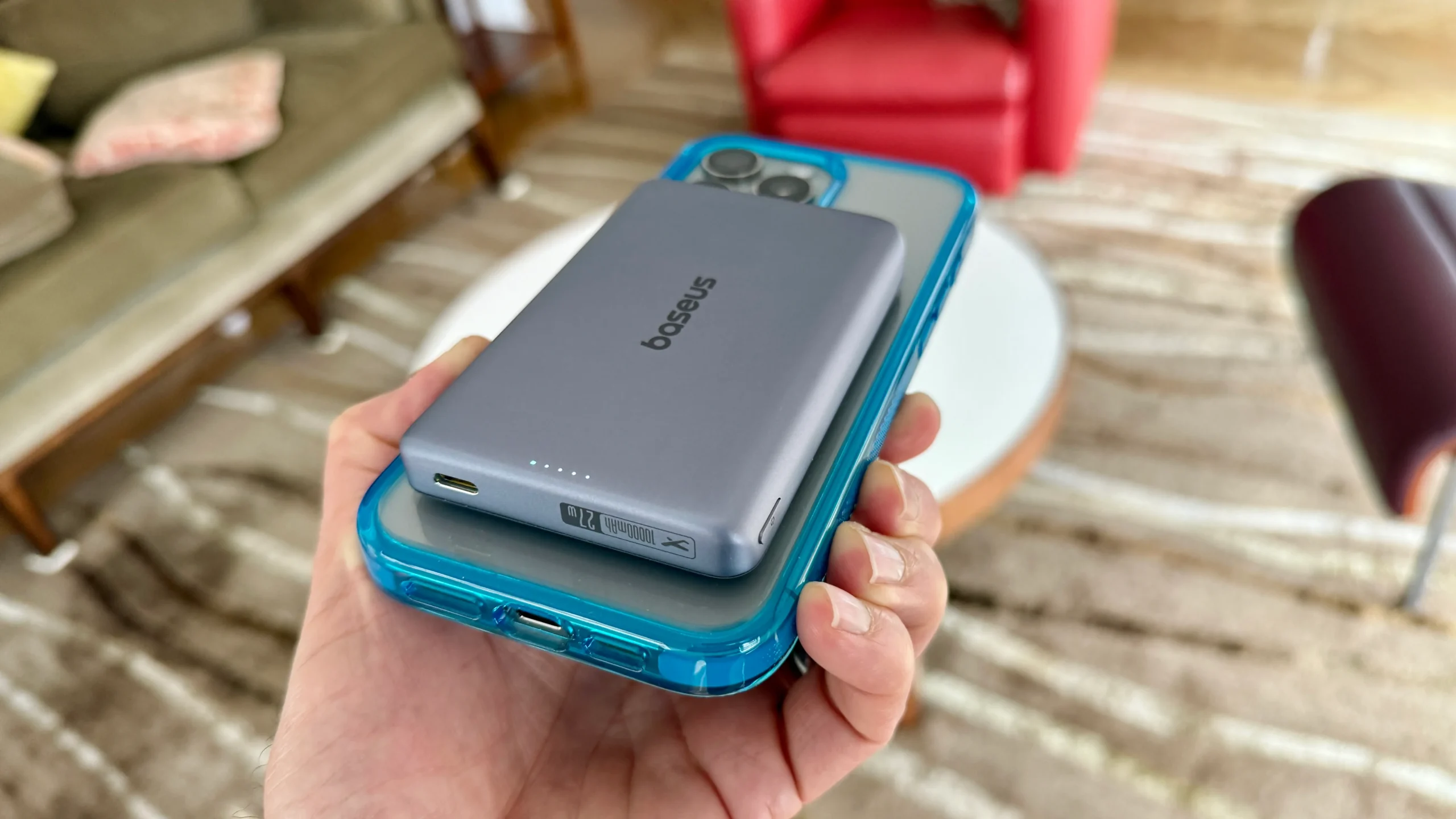
The bottom line
The INIU 45W Mini is the Best power bank for most people because it combines a genuinely small body with 45W output, a detachable USB-C cable, and flight-safe capacity. It is the one we'd keep for commuting, ordinary travel, and unexpected phone emergencies. The INIU 20K Mini is the better choice when you need several charges but still want to take the battery on a plane.
For laptops and demanding multi-device setups, the Anker 25K Laptop Bank is the practical pick, while the Anker Prime 26K is the specialist option for very high output and rapid recharging. If your priority is several days without an outlet rather than flying, the ZZI 60K Charger and MaiVoz 56.8K Bank provide the largest reserves.
If you are undecided, choose the INIU 45W Mini for everyday carry, or the INIU 20K Mini when endurance matters more than the smallest possible size.
As an Amazon Associate we earn from qualifying purchases.