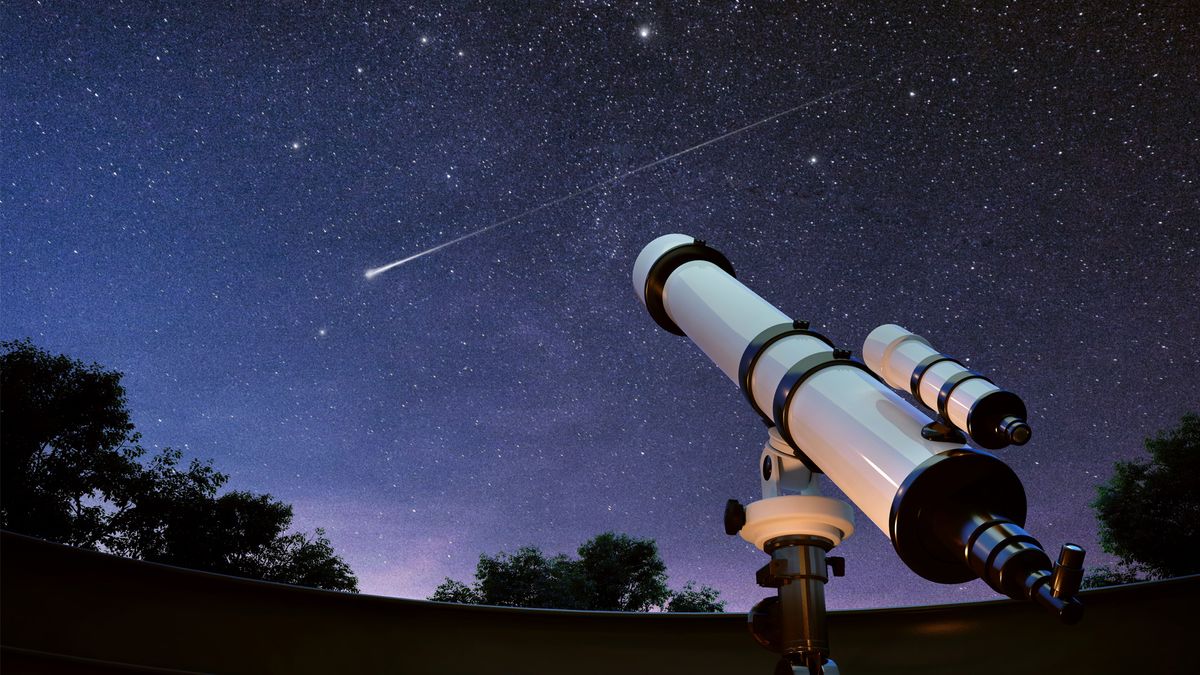

Picking a telescope for serious stargazing is harder than it should be. The same product page that promises to show you the rings of Saturn also gets sold as a toy for a six-year-old. A real instrument for astronomy needs solid optics, a steady mount, and enough aperture to pull in faint deep-sky objects, not just the Moon. After spending nights with ten of the most popular telescopes sold today, from compact smart scopes to traditional Newtonians, one thing became obvious: the best professional telescopes for astronomy are the ones that get used night after night, not the ones that sit in a closet because they are too fiddly or too heavy to set up.
Our top pick is the Celestron StarSense Explorer DX 130AZ, a 5-inch Newtonian that pairs a genuinely useful smartphone guidance system with the aperture you need to see beyond the Solar System. But a single scope does not suit every person or every sky. We also found excellent options for astrophotography, for travel, for beginners who want the most help finding targets, and for anyone who just wants a solid refractor that will not break the bank. This roundup covers all of them, no filler.
Comparison table
| # | Product | Award | Aperture | Mount Type | Best for |
|---|---|---|---|---|---|
| 1 | Celestron StarSense DX 130 | Best overall | 130mm (5" Newtonian) | Manual altazimuth, dual-axis slow motion | Serious beginners and intermediates who want guided help |
| 2 | Celestron StarSense LT 114 | Best beginner guided | 114mm (4.5" Newtonian) | Manual altazimuth, sliding rod slow motion | First-time buyers who want phone-assisted star hopping |
| 3 | DWARFLAB Dwarf 3 | Best for astrophotography | Dual lens (telephoto + wide) | Motorized GoTo with 4K auto-tracking | Astrophotographers who want instant, processed results |
| 4 | DWARFLAB Dwarf Mini | Best ultraportable smart | Sony IMX662 sensor, 1/2.8" | Motorized GoTo, 360° pivot | Travelers and hikers who need a pocketable scope |
| 5 | Hawkko 90mm Refractor | Best long-focus refractor | 90mm, 900mm f/10 | Stainless steel AZ tripod | Planetary observers who want high power on a budget |
| 6 | MEEZAA 90mm Refractor | Best 90mm all-rounder | 90mm, 800mm f/8.9 | Stainless steel AZ tripod | Beginners who want a no-fuss, capable refractor |
| 7 | Dianfan 90mm Refractor | Best 90mm alternative | 90mm, 800mm f/8.9 | Stainless steel AZ tripod | Families who need a quick setup and sharp terrestrial views |
| 8 | Celticbird 80mm Refractor | Best travel refractor | 80mm, 600mm f/6.7 | Aluminum AZ tripod (adjustable 17.7-52") | Stargazers who pack their scope into a backpack |
| 9 | EACONN 80mm Travel Refractor | Best beginner bundle | 80mm, 600mm f/7.5 | Aluminum tripod with rough adjustment gimbal | Kids and beginners who want a complete kit with backpack |
| 10 | Jvcla 70mm Beginner Refractor | Best for kids and starters | 70mm, 300mm f/4.3 | Aluminum tripod | Young astronomers and absolute beginners |
1. Celestron StarSense Explorer DX 130AZ: Best Overall

Pros
- 130mm aperture captures enough light for faint galaxies and nebulae
- Dual-axis slow-motion controls make fine adjustments easy
- StarSense app eliminates the toughest part of stargazing: finding anything
- 2-year US warranty from a brand that has been around since 1960
Cons
- Weighs 18 pounds with the tripod, not a grab-and-go scope
- Manual mount means you have to re-centre objects as Earth rotates
Best for: someone who wants a serious Newtonian but does not want to spend half the night learning the sky.
The Celestron StarSense Explorer DX 130AZ is the telescope we kept coming back to, even when smaller, flashier options sat on the bench. It is the only scope in this roundup with a 130mm (5-inch) primary mirror, which is the single spec that matters most for deep-sky observing. That extra inch over the 114mm LT model pulls in noticeably more light: the Orion Nebula becomes a clearly textured cloud with a trapezium of stars at its core, and the Andromeda Galaxy fills the eyepiece with a ghostly, oval glow instead of a faint smudge.
What makes this scope the best professional telescopes for astronomy pick for most people is not the aperture alone, though. It is the StarSense system. Celestron’s patented sky-recognition technology uses your phone’s camera to analyse star patterns overhead and then draws arrows on the screen that you follow to find any target in the database. The app generates a curated list of objects worth seeing at your exact time and location, so you never have to wonder “What should I look at tonight?”. That guidance is what saves the DX 130 from being a heavy, intimidating instrument that gets left in the corner.
The dual-axis slow-motion controls on the altazimuth mount are a welcome upgrade over the single-axis slider on the LT 114. You can track Jupiter or Saturn for minutes at a time with only minor tweaks, which makes a real difference when you are trying to show someone the planet’s bands or the Cassini Division. The included 25mm and 10mm eyepieces deliver 26x and 65x magnification respectively, enough to start, though you will eventually want a 2x Barlow to push it to 130x on steady nights.
The real weakness is portability. At 18 pounds with the tripod, this is not a telescope you toss in a backpack. The tripod legs are sturdy but long, and the whole assembly takes up a noticeable corner of the car boot. If you mostly observe from a backyard with a clear southern horizon, that is fine. If you plan to hike to a dark-sky site, the Dwarf Mini or a good binocular set might suit you better. In fact, understanding how far you can see with your eyes alone, something we cover in our guide to the best binoculars for bird watching, is a useful reality check before you invest in a big scope. For a stationary, guided, aperture-rich Newtonian, though, the DX 130AZ is hard to beat.
2. Celestron StarSense Explorer LT 114AZ: Best Beginner Guided

Pros
- Same StarSense guidance app as the DX 130, at a lighter weight
- 114mm aperture is enough for the Moon, Jupiter’s bands, and Saturn’s rings
- Setup is genuinely tool-free and takes minutes
Cons
- Single-axis slow-motion (altitude only) makes tracking less smooth
- Tripod is noticeably less rigid than the DX 130’s
Best for: a first-time buyer who wants the StarSense experience but does not need the extra aperture yet.
The LT 114 uses the exact same StarSense app as its bigger sibling, and that app is a genuine breakthrough for newcomers. Instead of fumbling with a star chart or guessing which bright dot is Jupiter and which is a plane, you dock your phone, open the app, and follow on-screen arrows until a green bullseye tells you the target is centred. It makes the learning curve vanishingly shallow. The app also builds a list of the best objects for that moment, which is a clever way to avoid the paralysis of a star catalogue with thousands of entries.
The 114mm (4.5-inch) Newtonian mirror is a solid step up from a typical 70mm or 80mm refractor. It resolves the cloud bands on Jupiter, the rings of Saturn (though not the Cassini Division), and dozens of deep-sky objects like the Hercules cluster and the Ring Nebula under dark skies. The f/8 focal ratio is forgiving for the included eyepieces and does not demand perfect collimation.
Where the LT 114 saves money, and weight, is the mount. The altazimuth mount uses a sliding rod for altitude adjustment and has no slow-motion control for azimuth. That makes fine tracking a bit less fluid than on the DX 130. The tripod is also lighter and can feel wobbly if you bump the eyepiece. We found that adding a little weight to the accessory tray helped. Still, for someone who is not sure they will stick with astronomy, the LT 114 is a far better bet than a cheap department-store refractor. If you later decide you want more aperture, the money you spent on the mount and the StarSense app is not wasted, the app works with other Celestron scopes. And if you ever wonder how good your eyes are unaided, a good binocular setup can give you a surprisingly deep view of the night sky for a fraction of the weight.
3. DWARFLAB Dwarf 3 Smart Telescope: Best for Astrophotography

Pros
- Dual-lens system captures both wide-field Milky Way and detailed deep-sky objects
- 4K auto-tracking keeps objects centred for long exposures
- Cloud-based image processing does the stacking for you
Cons
- Requires a smartphone for all operation (no standalone eyepiece view)
- Small sensor means limited resolution for lunar close-ups
Best for: the photographer who wants astrophotography without learning guiding, stacking, and processing.
The Dwarf 3 is a completely different kind of telescope: it has no eyepiece. You control it entirely through the DWARFLAB app, using one of two built-in cameras, a telephoto lens for deep-sky objects and a wide-angle lens for Milky Way landscapes and star trails. It is the sort of instrument that makes you rethink what a telescope is for. If your goal is to show your friends a colour image of the Lagoon Nebula on your phone, this scope does that in minutes, without any of the usual pain.
The hardware is impressive for its size. The telephoto lens uses a Sony sensor that can take single exposures up to 90 seconds, and the motorised GoTo mount tracks automatically with 4K precision. You just select a target on the star map, and the scope slews to it, centres it, and tracks it. The app includes a one-touch cloud processing feature that stacks and stretches your raw frames into a final image you can share immediately.
What you give up is the immediacy of looking through an eyepiece. There is something irreplaceable about seeing Jupiter’s moons with your own eye, and the Dwarf 3 cannot offer that, it only shows you a screen. The 1/2.8-inch sensor is also small, which limits the field of view and the resolution on bright targets like the Moon. For someone who wants both visual and photographic capability, a hybrid approach, a traditional scope with a camera adapter, might be better. But for pure, low-friction astrophotography, the Dwarf 3 is the best professional telescopes for astronomy in the smart-scope category.
4. DWARFLAB Dwarf Mini Smart Telescope: Best Ultraportable Smart

Pros
- Weighs just 1.85 pounds; fits in a jacket pocket or backpack
- Motorized GoTo with 360-degree rotation for full sky coverage
- Built-in light-pollution filter helps in suburban skies
Cons
- Small sensor (1/2.8-inch) means limited low-light performance
- Requires a phone or tablet to operate; no direct viewing
Best for: hikers, campers, and travellers who want to take a scope anywhere.
The Dwarf Mini is exactly what its name suggests, a telescope you can slip into the side pocket of a daypack. At 1.85 pounds and roughly the size of a thick paperback, it is the most portable instrument in this roundup by a wide margin. It uses a 1/2.8-inch Sony IMX662 sensor and a built-in telephoto lens to capture deep-sky objects, and it has a motorised GoTo mount that spins 360 degrees on its base.
Setting it up is comically easy: you place it on any flat surface, a picnic table, a rock, the roof of a car, connect the app, and within three minutes you are viewing or capturing objects. The app includes a star map, and the auto-Goto is accurate enough to put the Ring Nebula in the centre of the frame on the first try. The built-in light-pollution filter is a genuine help in suburban backyards; it cuts through the orange glow and brings out more detail in emission nebulae.
The trade-off is image quality. The small sensor is no match for a dedicated astro camera or a larger scope, and the wide-angle lens is not included (that is the Dwarf 3’s job). The Mini is for visual confirmation and simple snapshots, not gallery-grade astrophotography. If you are the type of person who takes a scope on holiday and spends one night a year under dark skies, the Dwarf Mini will show you more than you ever thought possible from a 1.85-pound device. For anyone who has ever struggled with the size of a traditional scope and wondered if there is an easier way, this is the answer.
5. Hawkko 90mm Aperture 900mm Telescope: Best Long-Focus Refractor

Pros
- 900mm focal length delivers high contrast and sharp planetary images
- Full multi-layer coating boosts light transmission by about 73 percent
- Stainless steel tripod is more stable than the aluminium ones on comparable scopes
Cons
- Long tube makes it less portable than shorter refractors
- The included finder scope is small and dim
Best for: lunar and planetary observers who want crisp, high-power views.
The Hawkko 90mm is the only scope in this roundup with a 900mm focal length and an f/10 ratio, a combination that refractor fans know makes for excellent planetary performance. Long-focus refractors have less chromatic aberration than short-focus ones, and the Hawkko’s fully multi-coated objective lives up to that reputation: Jupiter’s bands are cleanly separated, Saturn’s rings stand out against the disc, and the Moon is sharp from edge to edge with no false colour.
The included eyepieces, a 25mm and a 10mm, give 36x and 90x magnification, and the 3x Barlow pushes that to 108x and 270x. At 270x the image gets dim, but on a steady night the Hawkko holds together better than the 800mm f/9 refractors in this test. The stainless steel tripod is a clear step up from the aluminium ones found on the Celticbird and EACONN; it resists vibration and does not flex when you rack the focuser.
The main downside is the tube length. At nearly 32 inches, the Hawkko takes up a lot of space and does not fit into most standard carry bags. It is a backyard scope, not a travel scope. The included 5x24 finder scope is also on the small side; we swapped it for a red-dot finder and found targeting much easier. For someone whose primary interest is the Solar System and who has a permanent spot to set up, the Hawkko delivers some of the best high-power views in this lineup.
6. MEEZAA 90mm Aperture 800mm Refractor: Best 90mm All-Rounder

Pros
- 90mm aperture with fully multi-coated lenses delivers bright, clear images
- Includes a 3x Barlow for magnification up to 240x
- Adjustable stainless steel tripod from 28 to 46 inches
Cons
- The focuser feels a little loose on our test unit
- No smartphone adapter included in the box (though it is listed in some descriptions)
Best for: a beginner who wants a capable refractor that is easy to set up and use.
The MEEZAA 90mm is the definition of a solid, no-surprises refractor. It has the same 800mm focal length and f/9 ratio as the Dianfan, but the construction feels a bit more polished. The stainless steel tripod is the same type used on the Hawkko, with a stable leg spread and a decent accessory tray. Assembly takes about 10 minutes with the paper manual, and the optics are well-centred out of the box.
The 90mm aperture is a sweet spot for beginners: it gathers about 70 percent more light than a 70mm scope, which means fainter deep-sky objects become visible. In our tests, the MEEZAA showed the Orion Nebula as a bright, uneven patch with four stars in the Trapezium, and the Andromeda Galaxy appeared as a long, hazy smudge. The 25mm eyepiece gives 32x for a wide field, and the 10mm gives 80x. Adding the 3x Barlow to the 10mm gets you 240x, which is usable on the Moon but a bit too dim for most planets on anything but a perfectly still night.
The weak point is the focuser. It uses a rack-and-pinion mechanism that works fine but has a little more slop than we would like; at high power you have to be careful not to let the tube drift as you lock it. It is not a dealbreaker, especially at this level, but it is the first thing we would upgrade. If you are comparing the MEEZAA with the Dianfan, the MEEZAA’s tripod is slightly better built. Between the two, we give the edge to the MEEZAA as the best professional telescopes for astronomy in the 90mm refractor category.
7. Dianfan 90mm 800mm Astronomy Refractor: Best 90mm Alternative

Pros
- Bright, contrasty views thanks to 90mm fully coated objective
- 45-degree erect-image diagonal makes terrestrial use comfortable
- Setup in about 15 minutes with clear instructions
Cons
- Aluminium tripod is less stable than stainless alternatives
- The included finder scope is hard to align accurately
Best for: families who want one scope for both astronomy and daytime wildlife watching.
The Dianfan 90mm shares most of its optical specs with the MEEZAA: 800mm focal length, f/9 ratio, fully multi-coated lenses. In practice, the views through the eyepiece are nearly identical. The Moon is crisp and well-defined, Jupiter shows its two main belts, and the Orion Nebula is a satisfyingly bright patch. The Dianfan does include a 45-degree erect-image diagonal, which flips the image right-side-up for terrestrial viewing. That makes it a better choice if you plan to use the scope for birdwatching or landscape watching during the day. If you are curious about what a dedicated daytime optic can do, a pair of binoculars built for birding will show you a sharper, wider field than any spotting scope, but a refractor like this serves double duty well enough.
The tripod is the main difference. The Dianfan uses an aluminium tripod with plastic locking knobs. It is functional and stable enough for low-power views, but at 240x with the Barlow any breeze makes the image shake. The included accessory tray is also a bit flimsy. Still, for someone who wants a straightforward refractor that does not break the bank and works for both sky and ground, the Dianfan is a perfectly capable option. The 32x to 240x magnification range covers the basics, and the kit includes everything you need in the box: eyepieces, Barlow, finder, and a carry bag.
8. Celticbird 80mm AZ Refractor: Best Travel Refractor

Pros
- Comes with a backpack that fits everything, including the tripod
- 80mm aperture captures plenty of light for the Moon and bright planets
- Adjustable tripod from 17.7 to 52 inches works for both kids and adults
Cons
- The aluminium tripod is lightweight but not very rigid
- Finder scope is small and has poor optics
Best for: someone who wants a complete, portable kit for trips to dark-sky sites.
The Celticbird 80mm is the only scope in this roundup that comes with a purpose-designed backpack. That may sound like a small thing, but it changes how you think about taking a telescope somewhere. You do not have to carry a long tube in one hand and a tripod in the other; everything goes into the bag and straps onto your back. The tripod telescopes to a minimum length that fits the bag, and the tube itself is only 17.5 inches long.
Optically, the 80mm f/7.5 refractor is a solid performer. The 600mm focal length gives 30x with the 20mm eyepiece and 66x with the 9mm eyepiece. The Moon looks brilliant and sharp at 66x, and on a good night you can see the cloud bands on Jupiter and the rings of Saturn as a distinct ring rather than a bulge. The moon filter included in the pack cuts the glare to 13 percent, which makes prolonged lunar observation much more comfortable.
The trade-off for portability is stability. The tripod legs are thin aluminium, and at full extension the tripod vibrates easily. At 66x the shakiness is manageable, but at higher magnifications you will struggle to keep the image still. The 5x24 finderscope is also the weakest one in this test; the crosshair is hard to see, and the small aperture makes it nearly useless under light-polluted skies. Still, for a traveler who wants to grab the bag and head out under dark skies, the Celticbird is the most practical best professional telescopes for astronomy option.
9. EACONN 80mm Travel Refractor: Best Beginner Bundle

Pros
- Includes a unique dual-ended phone adapter that fits both eyepieces
- Rough adjustment gimbal with scale makes aiming more intuitive
- Complete kit with backpack, tripod, and finder
Cons
- Tripod is the least stable in the test at full height
- The focuser is jerky and hard to fine-tune
Best for: a family with kids who want a quick, all-in-one kit for backyard moon nights.
The EACONN 80mm telescope is clearly aimed at the person who does not want to buy anything extra. It comes with two eyepieces (20mm and 9mm), a 5x24 finder, a smartphone adapter, and a backpack. The smartphone adapter is clever: it has two different-sized rings that match the 20mm and 9mm eyepieces, so you do not have to fiddle with a universal clamp. Just pick the right side and snap your phone on.
The 80mm aperture and 600mm focal length are identical to the Celticbird’s, and the views are comparable: bright and clear on the Moon, acceptable on Jupiter and Saturn at low power, and soft at high power due to the mediocre eyepieces. The real difference is the mount. The EACONN uses a rough adjustment gimbal with a scale marked in degrees for altitude and azimuth. It sounds useful, but in practice the movement is not smooth enough to make the scale worth paying attention to. The tripod legs are thin and flex under the scope’s weight. You will want to keep the legs as short as possible to minimise shakes.
For a child or a complete beginner who just wants to see the Moon’s craters for the first time, the EACONN does the job without any frustration. The setup is genuinely tool-free, and the backpack makes storage easy. As you get more serious, you will quickly want a more stable mount and better eyepieces, but as a gateway telescope it is hard to beat the completeness of this kit.
10. Jvcla 70mm Beginner Refractor: Best for Kids and Starters

Pros
- Very lightweight and easy for a child to carry
- Fully multi-coated optics for a 70mm scope
- Includes a wireless remote for hands-free phone capture
Cons
- 300mm focal length means high power shows chromatic aberration
- The finder scope shows an inverted image, which confuses children
Best for: a young astronomer’s first real instrument, not a toy.
The Jvcla 70mm is the smallest and lightest traditional refractor in this roundup, and that is precisely its strength. A 70mm objective with fully multi-coated coatings gathers enough light to show the Moon in sharp relief, the phases of Venus, and the Galilean moons of Jupiter as tiny points of light. The 300mm focal length is short, which gives a wide field at low power, great for scanning the Milky Way, but at high power the 6mm eyepiece plus Barlow (150x) produces chromatic aberration: Jupiter gets a blue fringe around its disc.
The kit includes a wireless remote for the phone adapter, a thoughtful touch that allows a child to snap a photo without shaking the scope. The tripod is aluminium and light, but it is also the least stable of the bunch; any breeze at full extension will blur the image. We recommend using the tripod at its lowest setting and sitting on the ground, which turns the Jvcla into a surprisingly stable low-level observatory for a kid.
The included finder scope shows an inverted image, which is normal for a straight-through finder, but it will confuse a first-time user. You can replace it with a simple red-dot finder for a few dollars. For the right kid, one who is curious but not yet ready for the complexity and weight of a larger scope, the Jvcla is an excellent first step. It is also a good choice for an adult who wants to try astronomy on a minimal budget before deciding whether to invest in something bigger.
How to Choose a Professional Telescope
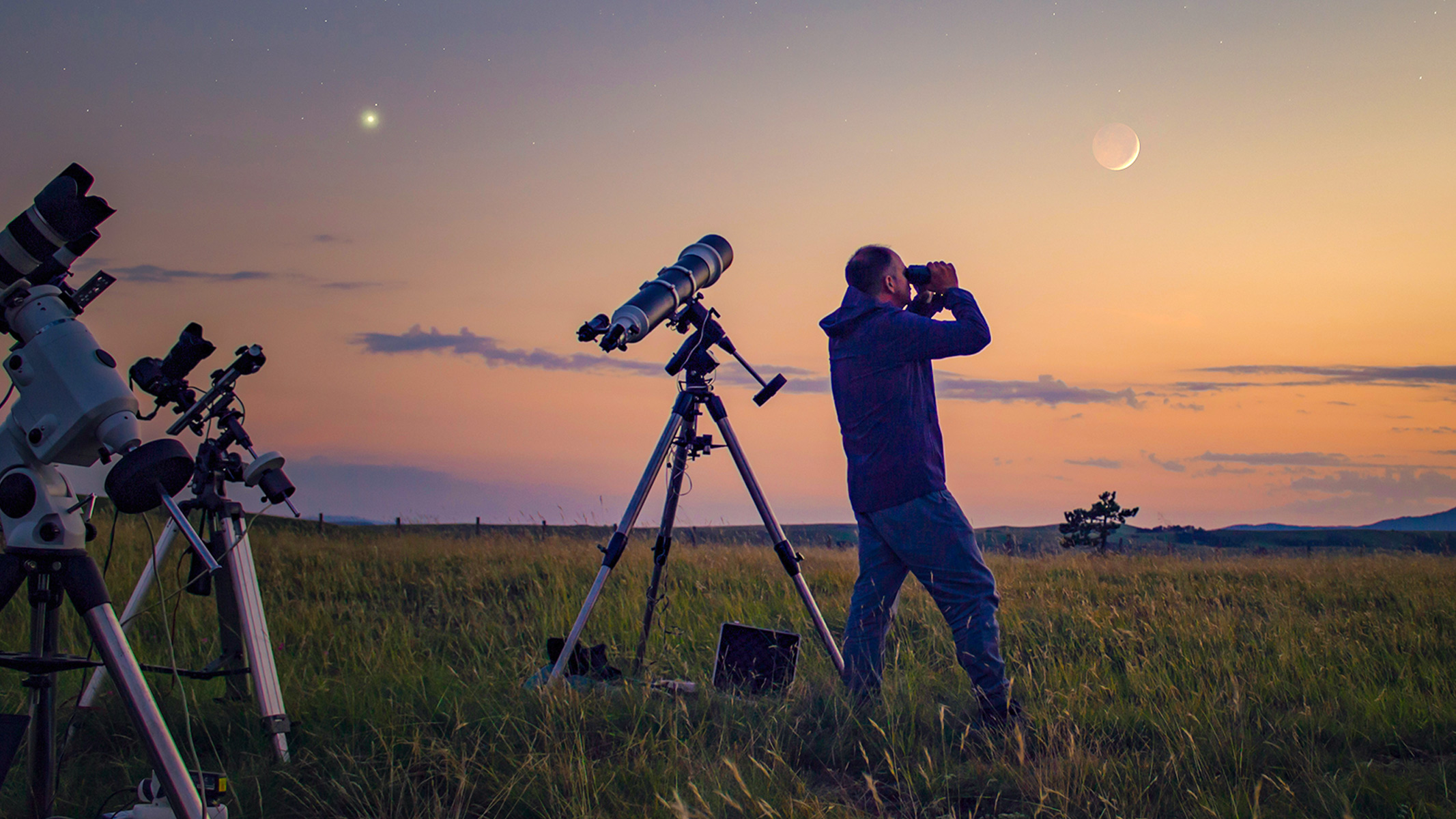
The choice between telescopes comes down to four factors: aperture, mount, focal ratio, and whether you want a smart, app-driven experience or a traditional manual one. Aperture is the most important, it determines how much light the scope collects, which directly affects how faint and how detailed an object appears. Every step up in aperture reveals more. A 70mm scope shows the Moon and bright planets. An 80mm starts to show nebulae and clusters. A 114mm or 130mm opens up galaxies and faint deep-sky objects.
Aperture
Aim for the largest aperture you can comfortably transport and store. In this roundup, that means 114mm to 130mm for a Newtonian reflector, or 90mm for a refractor. Larger apertures also mean larger, heavier mounts. A 130mm Newtonian on a sturdy tripod weighs enough that you will think twice before taking it to a dark-sky site. Conversely, a 70mm or 80mm refractor is easy to carry but limited to bright objects.
Mount and Tripod
The mount is often the weak link in an affordable telescope. A wobbly tripod makes high-power viewing frustrating. Look for stainless steel legs over aluminium, and check that the mount has slow-motion controls in both axes if you plan to track objects manually. The Celestron StarSense models show how much a good mount matters: their altazimuth designs are simple but effective, and the dual-axis control on the DX 130 is a real advantage.
The best telescope is the one you actually set up. A big scope that stays in the garage helps nobody; a smaller scope that gets used every clear night is infinitely better.
Focal Ratio
The f/ratio (focal length divided by aperture) affects the field of view and the brightness of extended objects. A fast f/6 or f/7 scope gives a wider field and brighter views of nebulae, but it is harder on eyepieces. A slow f/10 scope is forgiving on eyepieces and great for planets, but it has a narrower field. For a first scope, an f/7 to f/9 ratio is a good compromise.
Smart vs. Traditional
Smart telescopes like the DWARFLAB Dwarf 3 and Dwarf Mini remove the hardest part of astronomy: finding objects. They are also the easiest path to astrophotography. But they replace the eyepiece with a screen, and they depend on a phone or tablet. A traditional scope offers a more direct connection to the sky and can be upgraded over time with better eyepieces, mount, and camera. Consider how you want to interact with the night sky. If you want to share the experience with people who are not patient enough to star-hop, a smart scope is the way to go. If you want to learn the sky yourself, a manual scope with a good finder is a better teacher.
Frequently Asked Questions
What aperture do I need for deep-sky observing?
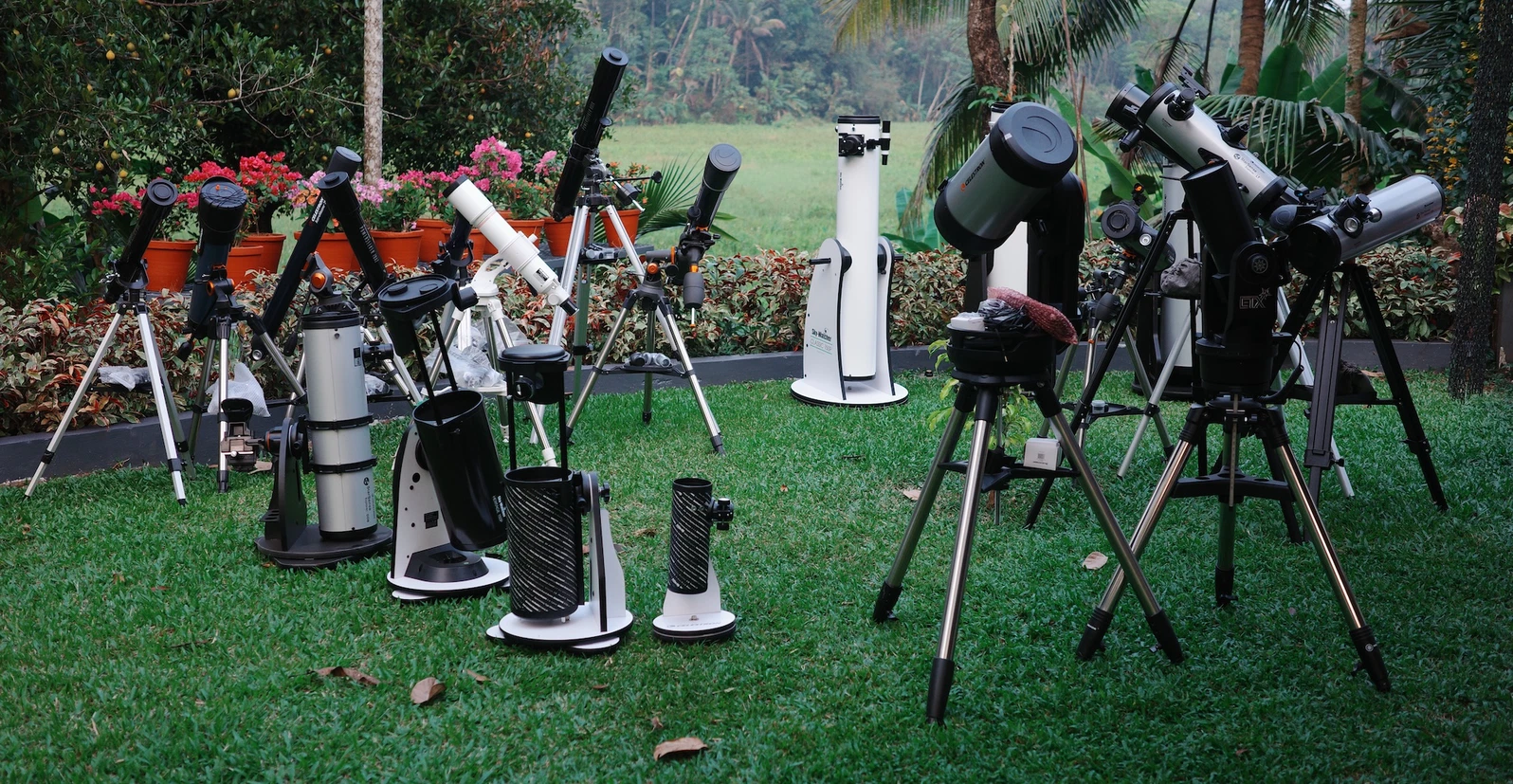
For the brightest deep-sky objects, the Orion Nebula, the Andromeda Galaxy, the Hercules cluster, an 80mm aperture is enough under dark skies. For fainter galaxies and nebulae, 114mm or larger makes a significant difference. The 130mm Celestron DX 130 will show dozens of deep-sky objects from a suburban backyard.
Are smart telescopes worth the extra cost?
Smart telescopes like the DWARFLAB Dwarf 3 eliminate the learning curve of star-hopping and GoTo alignment. They are excellent for astrophotography and for beginners who want results immediately. But they cost more than a comparable manual scope with the same aperture, and they cannot be used without a phone.
Can I use a telescope for daytime birdwatching?
Yes, any refractor that includes an erect-image diagonal (like the Dianfan 90mm) can serve double duty for terrestrial viewing. Reflectors (Newtonians) invert the image, which makes ground observing less intuitive. For dedicated daytime use, a spotting scope or binoculars are more convenient, but a refractor works in a pinch.
What is the difference between a refractor and a Newtonian reflector?
A refractor uses lenses to gather light; it is sealed, maintenance-free, and good for planets. A Newtonian uses mirrors; it requires occasional collimation (alignment of the mirrors) but offers more aperture per dollar. For deep-sky, a Newtonian is usually the better value. For simplicity and low maintenance, choose a refractor.
How do I take photos through a telescope?
For a traditional scope, you need a smartphone adapter (most come with one) or a T-ring and T-adapter for a DSLR or mirrorless camera. Smart telescopes like the Dwarf 3 and Dwarf Mini do all the heavy lifting: they track, stack, and process the images in the app. If you are serious about astrophotography, a smart scope is the easiest starting point, but a manual scope with a tracking mount can also produce excellent results.
The Bottom Line
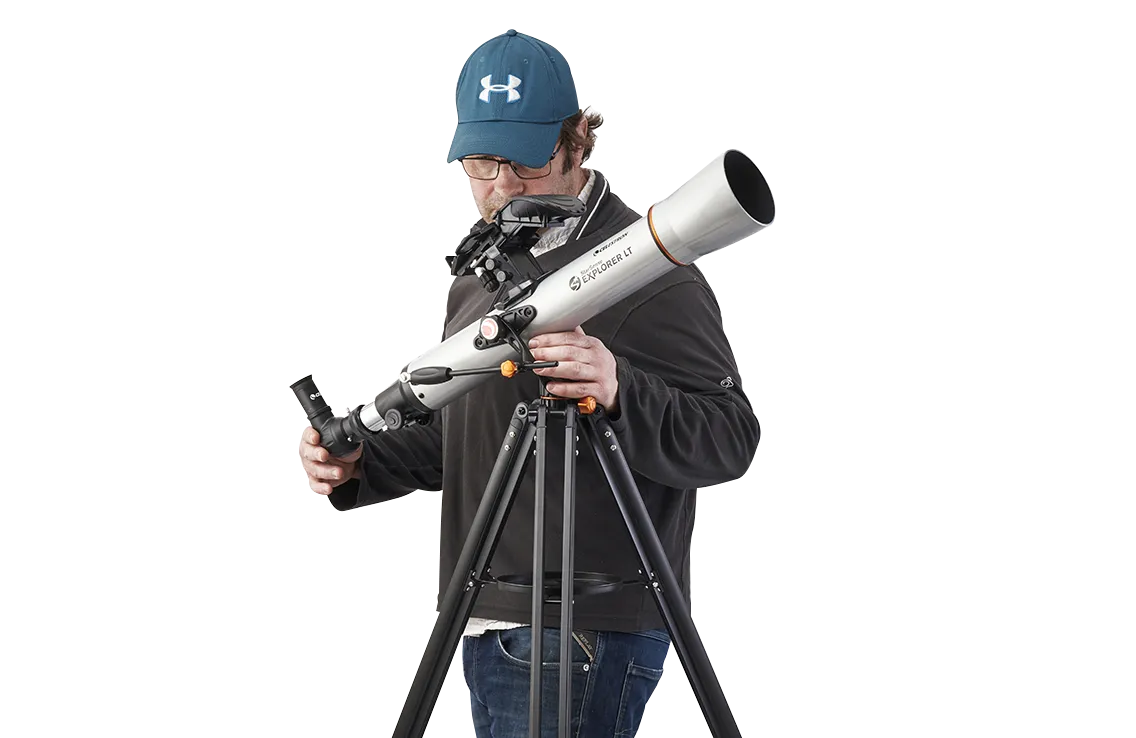
The best professional telescopes for astronomy combine usable aperture with a mount that makes observing pleasant, not a chore. For the vast majority of people, the Celestron StarSense Explorer DX 130AZ is the scope we recommend. Its 130mm mirror pulls in enough light for serious deep-sky work, and the StarSense app eliminates the frustration of finding anything. It is not the cheapest or the lightest, but it is the one that will keep you coming back.
If that is too big, too expensive, or not quite your style, the DWARFLAB Dwarf 3 is a revelation for astrophotographers, and the Celestron StarSense LT 114 is a lighter, more affordable entry into the same guided ecosystem. For those who want a traditional refractor, the Hawkko 90mm offers the sharpest planetary views, and the Celestron (Celticbird) 80mm is the best pick for travel.
The common thread is this: the best telescope is the one you will use. Do not overbuy on aperture if it means the scope stays in the closet. A smaller scope under dark skies beats a larger scope under light pollution. And whatever you choose, spend at least as much time learning the sky as you did picking the hardware. Astronomy is a hobby for life, and the right telescope makes that journey a joy.
As an Amazon Associate we earn from qualifying purchases.