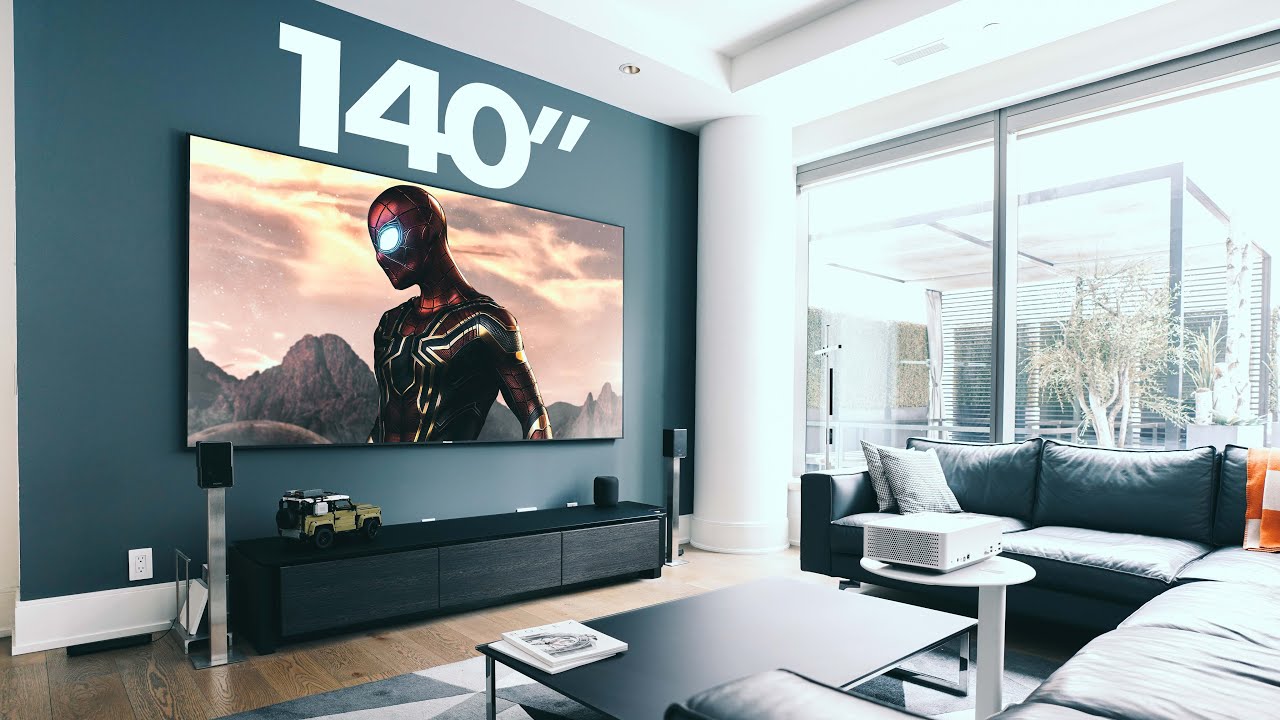

A projector can turn a blank wall into a movie screen, but the wrong one can leave you fighting blurry corners, weak sound, awkward streaming apps, and a picture that disappears as soon as a lamp is switched on. The right choice depends on where you watch, how much setup you can tolerate, and whether the projector needs to replace a TV and sound system.
Our Best projectors for home theater picks range from the exceptionally bright Epson Home Cinema 980 to compact models such as the XuanPad Mini and smart all-in-one designs from TOPTRO, ONOAYO, Aurzen, WiMiUS, VISSPL, and HAPPRUN. We ranked them by the capabilities that matter most for movies, television, sports, and casual gaming.
The Epson Home Cinema 980 is the strongest overall pick, while the rest of the lineup covers portable viewing, built-in streaming, short-throw placement, powerful audio, and small-room use.
Comparison table
| # | Product | Award | Resolution | Brightness | Audio | Best for |
|---|---|---|---|---|---|---|
| 1 | Epson Home Cinema 980 | Best overall | Native 1080p | 4, 000 color and white lumens | Built-in speaker | Living rooms and sports |
| 2 | TOPTRO X9 Pro | Best smart home theater | Native 1080p, 4K decoding | 920 ISO lumens | Dual 20W Dolby | Bright rooms and streaming |
| 3 | TOPTRO A2 | Best short throw | Native 1080p, 4K decoding | 650 ISO lumens | Dual 18W Dolby | Small rooms |
| 4 | ONOAYO ONO5Pro 2.0 | Best built-in sound | 4K support | Not specified | Dual 60W Dolby | Large rooms and outdoor movies |
| 5 | TOPTRO X9 Smart Projector | Best all-in-one audio | Native 1080p, 4K decoding | 700 ISO lumens | 36W Dolby | Movie nights without a soundbar |
| 6 | WiMiUS P62 Pro | Best connectivity | Native 1080p, 4K support | 600 ANSI | Dual 10W Dolby | Consoles and multiple sources |
| 7 | Aurzen Roku TV D1R | Best Roku interface | 1080p | Not specified | Dual 5W Dolby | Simple streaming |
| 8 | VISSPL A5 | Best ceiling viewing | Native 1080p, 4K support | 3, 000 ANSI claimed | Dolby 3D | Bedrooms and ceiling projection |
| 9 | XuanPad Mini Projector | Best lightweight option | Native 1080p, 4K support | Not specified | Built-in audio | Travel and compact spaces |
| 10 | HAPPRUN H1 | Best simple starter | Native 1080p | Not specified | Hi-Fi stereo | Bedrooms and occasional use |
1. Epson Home Cinema 980: Best Overall

Pros
- Bright 1080p picture for rooms with ambient light
- Accurate color from three-chip 3LCD technology
- Two HDMI ports and USB power for streaming devices
- Fast processing for sports and casual gaming
Cons
- Built-in speaker is basic for serious movie nights
- Streaming apps require an external device
- Larger and less travel-friendly than mini models
Best for: living-room viewers who want a dependable, bright picture from a mainstream projector.
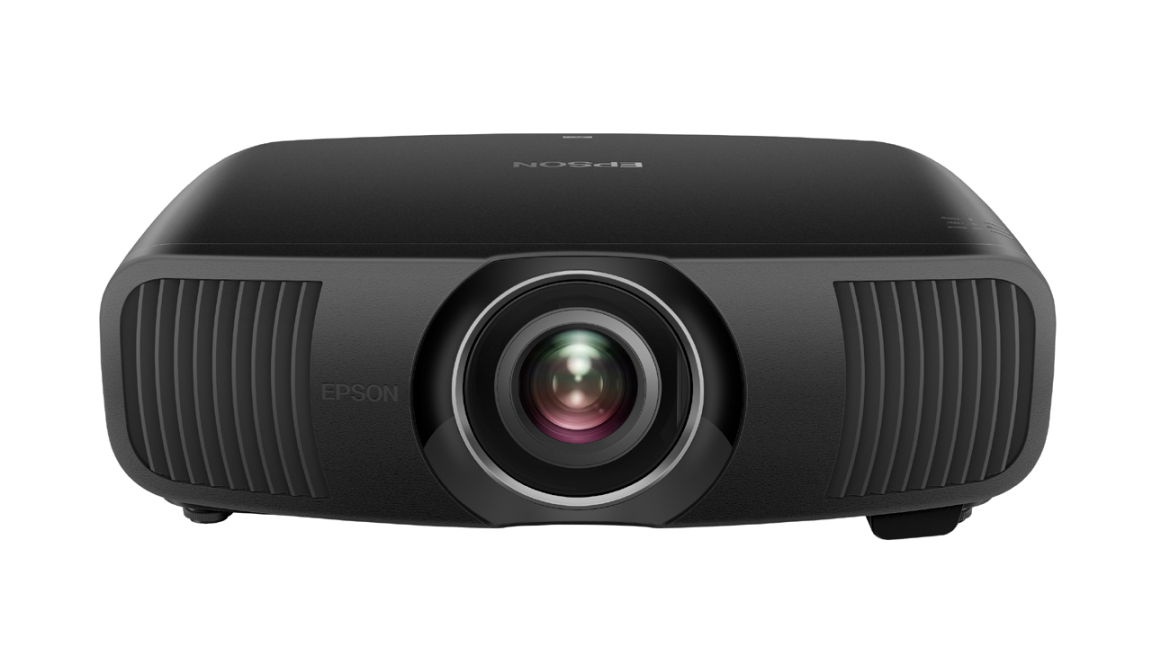
The Epson Home Cinema 980 is the projector we would choose when picture consistency matters more than having every smart feature built in. It feels like a proper home theater component rather than a small streaming gadget. The white chassis measures 12.2 by 11.1 by 4.2 inches and weighs 6.8 pounds, so it is portable enough to reposition but clearly intended for a shelf, table, or ceiling mount.
Its native 1080p resolution keeps movie detail clean at a sensible home theater size, while the three-chip 3LCD design displays the full RGB color signal in every frame. That matters for natural skin tones, colorful animation, and sports uniforms. Epson specifies 4, 000 lumens for both color and white brightness, which gives this model a major advantage over the smaller projectors here when curtains are open or the room is not fully dark.
The trade-off is the old-fashioned setup. There is no built-in Roku or VIDAA interface, but the two HDMI inputs make it easy to connect a streaming player, laptop, game console, or other source. One USB port can power a streaming device, reducing cable clutter. The built-in speaker gets you started, though a dedicated system will make explosions and dialogue feel more convincing. For help planning that upgrade, the right balance between bass and room-filling dialogue is a useful place to start.
The Epson beats the Aurzen D1R and HAPPRUN H1 for brightness and color confidence, while the TOPTRO X9 Pro offers a more complete smart-TV experience. Skip the Epson if you need Netflix without an extra device or want a projector that fits in a small bag. Choose it if you want the most credible living-room image in this group and are comfortable supplying the streaming source and better audio.
2. TOPTRO X9 Pro: Best Smart Home Theater

Pros
- High claimed brightness with HDR10 and wide color
- VIDAA interface with built-in streaming apps
- Strong dual 20W Dolby speakers
- Auto focus, screen fit, and obstacle avoidance
Cons
- Heavy for a portable projector
- Native image resolution is 1080p
- Smart features depend on an internet connection
Best for: families wanting a TV-like projector with powerful built-in audio and flexible placement.
The TOPTRO X9 Pro is the most complete replacement for a television in this roundup. Its VIDAA operating system is designed to feel like a smart TV, with Netflix, YouTube, Prime Video, regional apps, and live channels available from the projector itself. That makes it much easier to start a movie than with the Epson Home Cinema 980, which needs an external streamer.
The important distinction is between 4K decoding and native 4K projection. The X9 Pro accepts 4K content but displays it at native 1080p. Its claimed 920 ISO lumens and HDR10 support should help preserve contrast and highlight detail, while the stated 130% NTSC color gamut points to vivid color. The brightness claim is more useful than inflated marketing figures because it uses an ISO-based measurement, though a dark or controlled room will still produce the most cinematic result.
Audio is where this projector separates itself. Two 20W speakers with Dolby Audio should provide much fuller sound than the Epson's built-in speaker or Aurzen's dual 5W system. Bluetooth 5.4 works in two directions, so the projector can send sound to headphones or a soundbar and can also act as a standalone speaker. HDMI ARC and CEC simplify connection to a larger audio system.
The automatic setup is unusually ambitious. Auto focus, six-dimensional keystone, obstacle avoidance, screen fit, and a 100% to 50% zoom range reduce the need to place the projector perfectly. At 6.61 pounds and roughly 11 inches square, it is not a casual backpack projector. The TOPTRO A2 is easier to fit into a small room, but the X9 Pro is the better pick when brightness, sound, and built-in television functions all matter.
3. TOPTRO A2: Best Short Throw

Pros
- 1.0:1 throw ratio suits compact rooms
- Native 1080p with 4K decoding and HDR10
- Rotating stand supports unusual viewing angles
- 36W Dolby audio and two-way Bluetooth
Cons
- Not native 4K
- Audio-focused design is larger than a pocket model
- Brightness is below the X9 Pro's claimed figure
Best for: renters, bedrooms, and apartments where a full-size screen must fit without a long throw distance.
The TOPTRO A2 solves a common projector problem: there is not enough room between the lens and the wall. Its 1.0:1 throw ratio can create a 100-inch image from about 2.2 meters away, according to the product details. That makes it a more sensible fit for a bedroom or apartment than a conventional projector that needs several more feet of clear space.
The picture is native 1080p, with 4K decoding and HDR10 for compatible content. TOPTRO also lists 650 ISO lumens and a 100% DCI-P3 color gamut. Those specifications suggest a colorful, detailed image in a dark room, but the Epson Home Cinema 980 remains the safer choice when the room has substantial ambient light.
The A2 has an unusually flexible physical design. Its 200-degree rotating stand can aim the image toward a wall, ceiling, or screen, and it doubles as a carrying handle. Auto focus, auto keystone, obstacle avoidance, screen alignment, and a 50% to 100% zoom range make repositioning painless. WiFi 6, AirPlay 2, Miracast, HDMI, USB, and a 3.5mm audio port cover most household sources.
Two 18W speakers provide 36W of Dolby audio, with two-way Bluetooth for headphones, speakers, or music playback. That is more useful than a tiny built-in speaker, though it also contributes to the A2's 4.16-pound, almost soccer-ball-sized design. The XuanPad Mini is much easier to carry, but it cannot match the A2's short-throw flexibility or larger audio hardware. Pick the A2 when room geometry is the deciding factor.
4. ONOAYO ONO5Pro 2.0: Best Built-in Sound

Pros
- Dual 60W Dolby audio system
- Built-in apps and live television channels
- Auto focus, keystone, screen fit, and obstacle avoidance
- Sealed optical engine and intelligent cooling
Cons
- Large footprint
- Picture brightness is not quantified in the listing
- Native resolution is not specified
Best for: viewers who want powerful sound without immediately adding external speakers.
The ONOAYO ONO5Pro 2.0 is built around an answer to the weakest part of most projectors: sound. Its dual 60W Dolby system is designed to fill rooms up to 540 square feet, with AI processing intended to reduce echo and strengthen bass. That makes it the obvious candidate for a backyard movie night or a living room where adding a soundbar is inconvenient.
The listing does not provide a native resolution or a measured brightness figure, so we would not buy this model purely on picture claims. It does support 4K content and uses a high-transmittance glass lens, AI image processing, a stated 98% NTSC color gamut, and an ambient light sensor for automatic brightness and contrast adjustments. Those features sound promising, but the Epson 980 is easier to recommend for buyers who want clearly documented image performance.
Smart functions are extensive. Smart TV Pro OS 2.0 includes YouTube, Prime Video, Disney+, built-in Chromecast, and more than 1, 500 live channels according to the listing. WiFi 6, HDMI 2.1, game mode, and a claimed 18ms input latency also give it broader appeal for console gaming than many basic home theater projectors.
Auto focus, keystone correction, obstacle avoidance, screen fit, orientation detection, and 50% to 100% zoom make setup straightforward. The 12 by 10 by 7 inch body is not small, and its best feature is also its limitation: the large audio system makes it less convenient to move. Choose ONOAYO over the TOPTRO X9 Pro when sound is the priority. Choose Epson instead when verified picture brightness and color accuracy come first.
5. TOPTRO X9 Smart Projector: Best All-in-One Audio

Pros
- 700 ISO lumens and native 1080p
- 36W Dolby speakers
- Two-way Bluetooth and HDMI ARC
- Built-in apps and automatic image adjustment
Cons
- Weighs more than compact alternatives
- Some 4K files may not play through USB or HDMI
- Native resolution is 1080p
Best for: movie watchers who want integrated streaming, strong audio, and easy repositioning.
The TOPTRO X9 is the practical middle ground between the compact A2 and the larger X9 Pro. It weighs 6.61 pounds and measures 11.22 by 11.02 by 4.69 inches, with enough internal space for a 36W speaker system. It is not a miniature travel unit, but it can serve as a movable living-room theater without requiring a separate soundbar.
The image is native 1080p, with 4K decoding, HDR10, a stated 25, 000:1 contrast ratio, and a 120% NTSC color gamut. TOPTRO lists 700 ISO lumens, giving the X9 a clearer brightness position than the ONOAYO. As with the other 4K-labeled models here, decoded 4K content is displayed at 1080p rather than at a native 4K resolution.
The built-in app store, browser, Prime Video, YouTube, and Hulu reduce the need for another box. WiFi 6 supports streaming, while two-way Bluetooth can connect headphones or external speakers or let the projector play music as a Bluetooth speaker. There are two HDMI ports, one USB port, a 3.5mm jack, and HDMI ARC on HDMI 1.
AI auto focus, keystone correction, obstacle avoidance, screen alignment, and 50% to 100% zoom make the X9 easy to move between rooms. The product notes that some 4K files may not work through USB or HDMI because of format compatibility, so built-in apps are the safer route for streaming. The X9 Pro is brighter and has larger speakers, while the WiMiUS P62 Pro offers more USB connectivity. The X9 is the balanced pick for a straightforward all-in-one setup.
6. WiMiUS P62 Pro: Best Connectivity

Pros
- Two HDMI and two USB ports
- Native 1080p with 4K support and HDR10
- WiFi 6 and two-way Bluetooth
- Auto focus, keystone, screen alignment, and zoom
Cons
- No carrying case included
- Built-in audio is less powerful than TOPTRO's larger models
- Streaming app support is less clearly defined than Roku
Best for: households connecting consoles, laptops, storage drives, and several streaming devices.
The WiMiUS P62 Pro is the projector to choose when the back panel matters as much as the lens. It has two HDMI ports, two USB ports, a 3.5mm audio output, and WiFi 6. One HDMI port supports CEC, while the other supports ARC and CEC, making it easier to keep a console, laptop, streaming stick, and audio equipment connected at once.
Its native resolution is 1080p, with 4K support, HDR10, and a listed 600 ANSI brightness. WiMiUS provides High and Standard modes, allowing the projector to prioritize a brighter picture or lower power use. The dual 10W Dolby speakers should be adequate for a bedroom or small gathering, and two-way Bluetooth can send audio outward or turn the unit into a wireless speaker.
The smart system includes an app store, browser, YouTube, Prime Video, and other apps, with OTA updates intended to keep the software current. AirPlay and Miracast support cover iOS, Android, and Windows screen sharing. That flexibility is more useful for a mixed-device household than the simpler HAPPRUN setup, although Roku on the Aurzen D1R remains easier for viewers who want a familiar interface.
Auto focus, auto keystone, obstacle avoidance, screen alignment, and 50% to 100% zoom reduce setup work. The P62 Pro can be mounted on a ceiling, table, tripod, or wall, but the listing specifically says it does not include a carrying case. Its 5.42-pound body is portable enough for occasional moves, though the XuanPad Mini is far easier to pack. Pick WiMiUS when physical connections and source flexibility are your main concerns.
7. Aurzen Roku TV D1R: Best Roku Interface

Pros
- Familiar Roku interface
- Native 1080p picture
- Auto focus and auto keystone
- AirPlay, Apple HomeKit, and Bluetooth 5.2
Cons
- Dual 5W speakers are modest
- Roku account and internet connection are required
- Brightness is not specified
Best for: viewers who want simple streaming and a familiar remote without adding a streaming stick.
The Aurzen Roku TV D1R gets the basic experience right. Roku is one of the easiest projector interfaces for navigating Netflix, Prime Video, Hulu, YouTube, live channels, and recommendations. There is no need to learn an unfamiliar app store, and the Roku mobile app can act as a remote, keyboard, or voice-control interface.
The projector uses native 1080p resolution and is intended for image sizes from 60 to 150 inches. Auto focus and auto keystone correction make the first setup less frustrating, especially for occasional outdoor use. Dual-band WiFi on both 2.4GHz and 5GHz supports streaming, while Bluetooth 5.2 can connect headphones or a larger speaker.
Aurzen lists dual 5W speakers with Dolby Audio and 3D stereo sound. That is enough for casual viewing, but the audio cannot compete with the TOPTRO X9's 36W system or ONOAYO's dual 60W design. The D1R weighs 4.63 pounds, so it is easier to reposition than those larger models.
The weakness is missing performance information. Brightness is not specified, so this projector is best treated as a dark-room or evening model rather than a living-room replacement for the Epson 980. It also requires a Roku account and internet connection for activation. Choose it over the VISSPL A5 if interface simplicity matters more than ceiling projection and extra image claims.
8. VISSPL A5: Best Ceiling Viewing

Pros
- Netflix, YouTube, and Prime Video support
- Native 1080p with 4K support and HDR10
- 360-degree rotating stand
- Auto focus, six-dimensional keystone, and screen fit
Cons
- Brightness claim needs cautious interpretation
- Streaming and mirroring restrictions may vary by service
- Bulb replacement language in the listing is confusing
Best for: bedroom viewers who want to watch movies on a wall or ceiling.
The VISSPL A5 has one feature that changes how a bedroom projector is used: its 360-degree rotating stand can aim the picture at a wall, ceiling, or tent. That makes it a natural choice for watching from bed. It is still portable, but the stand gives it a more deliberate place in a room than a projector balanced on a stack of books.
VISSPL lists native 1080p resolution, 4K decoding, HDR10, and a claimed 3, 000 ANSI lumens. The listing also mentions a 99.8% wide color gamut. Because the brightness figure is unusually high for this type of compact projector and the native resolution remains 1080p, we would judge the image in a dark room rather than assume it will behave like the Epson Home Cinema 980.
The smart platform includes Netflix, YouTube, Prime Video, and other popular services, while WiFi 6 supports wireless mirroring. Dolby 3D audio, ARC, and Bluetooth 5.2 offer several ways to improve sound. A 30dB cooling claim suggests it should be unobtrusive during quiet scenes, though fan noise is always best judged in the intended room.
Auto focus, six-dimensional keystone, obstacle avoidance, screen adaptation, and 50% to 100% digital zoom make setup quick. VISSPL also lists a two-year protection period and lifetime customer support. The Aurzen D1R has the cleaner streaming story through Roku, while VISSPL is more flexible for ceiling viewing. Choose the A5 when lying-down viewing is the feature you will use most.
9. XuanPad Mini Projector: Best Lightweight Option

Pros
- Very light and compact
- Native 1080p with 4K support
- 360-degree detachable stand
- Licensed streaming apps and auto focus
Cons
- Brightness is not specified
- Small body limits built-in audio potential
- Phone mirroring may require the right adapter or method
Best for: travelers, dorm rooms, and anyone who needs a projector that can move easily.
The XuanPad Mini is the easiest model here to carry. The product information lists a weight of 1.96 pounds and a body about 6.93 inches square with a narrow 1.18-inch dimension. Its detachable 360-degree stand packs away quickly and can aim the image toward a wall, ceiling, or outdoor screen.
Despite the small form, XuanPad lists native 1080p resolution and 4K support. It also mentions a three-piece double-sided lens, color gamut reconstruction, and an intelligent light sensing system. Brightness is not specified, so the sensible use case is a dark bedroom, tent, or evening outdoor setup rather than a bright living room.
Auto focus takes about three seconds according to the product details, and six-dimensional keystone correction adjusts a skewed image. The projector supports image sizes from 40 to 200 inches, although larger images demand more darkness and a suitable viewing surface. Dual-band WiFi and Bluetooth 5.2 handle wireless connections, and built-in apps include Netflix, YouTube, and Prime Video.
The small chassis is the reason to buy this model and also its limitation. It cannot produce the room-filling sound of the ONOAYO or TOPTRO models, and phone mirroring may require a compatible adapter or casting method. If you are choosing equipment for travel, the practical difference between compact wireless audio options can help complete the setup. Pick XuanPad when portability matters more than brightness and speaker output.
10. HAPPRUN H1: Best Simple Starter

Pros
- Native 1080p resolution
- Compact body for bedrooms and backyards
- Bluetooth 5.1 audio support
- Ceiling, desktop, and tripod installation
Cons
- Streaming requires a compatible TV stick or other source
- Phone mirroring may need an adapter
- Brightness is not specified
Best for: occasional movie nights where a straightforward 1080p projector is enough.
The HAPPRUN H1 is a deliberately simple projector. It focuses on native 1080p playback, a compact body, and compatibility with common streaming sticks rather than trying to replicate a smart-TV operating system. That makes it easy to understand, provided you already have a source device.
The product lists a 1920 by 1080 native resolution and support for an image up to 200 inches. There is no brightness figure, so this is best suited to a dim bedroom, a dark living room, or an outdoor screening after sunset. The 9.3 by 8.1 by 3.5 inch body weighs 4.5 pounds, which is portable without reaching the travel-friendly size of the XuanPad Mini.
Built-in Hi-Fi stereo speakers provide basic audio, while Bluetooth 5.1 can connect headphones or external speakers. Fire TV Stick, Chromecast, and similar devices are supported, but they are not included. Phone and tablet connections can require an HDMI adapter, and the correct adapter depends on the device.
The HAPPRUN supports ceiling, desktop, and tripod installation, giving it more placement flexibility than its simple interface suggests. It lacks the automatic focus and built-in app polish of the Aurzen D1R, and the Epson 980 is a much stronger choice for a bright living room. Choose HAPPRUN for occasional viewing when native 1080p and a familiar external streaming device are all you need.

How to choose best projectors for home theater
The best projectors for home theater are not defined by one headline specification. Start with the room, then consider brightness, native resolution, placement, sound, and the way you plan to stream.
Brightness
Brightness determines how well the picture survives lamps, windows, and outdoor surroundings. The Epson Home Cinema 980 lists 4, 000 lumens for both color and white brightness, making it the strongest fit for a room that cannot be completely dark. Models with ISO or ANSI measurements, such as the TOPTRO X9 Pro, TOPTRO X9, TOPTRO A2, and WiMiUS P62 Pro, are easier to compare than products that provide only vague brightness language.
A dark room improves every projector, including the brightest models. Do not make a very large image if the room has ambient light, because spreading the same light over more screen area reduces perceived impact.
A projector that looks excellent at 100 inches in a dark room may look washed out at the same size beside an uncovered window.
Native resolution
Native 1080p is the practical baseline for clear movies, subtitles, sports graphics, and console menus. Several products advertise 4K support or 4K decoding, but that means they can accept higher-resolution content and process it for a native 1080p display. It does not make them native 4K projectors.
The Epson 980, Aurzen D1R, HAPPRUN H1, and the TOPTRO models all make their 1080p position clear. For a projector in a bedroom or occasional outdoor setup, native 1080p is usually more useful than a vague 4K label.
Throw distance and placement
Throw distance controls how far the projector must sit from the screen. The TOPTRO A2's 1.0:1 short-throw design is the standout for smaller rooms, creating a 100-inch image from about 2.2 meters. A standard projector may need more space, while a rotating stand lets models such as the A2, VISSPL A5, and XuanPad Mini aim at a ceiling.
Auto focus, keystone correction, screen fit, and obstacle avoidance make temporary setups much easier. Digital keystone can reduce some image quality when used heavily, so physical placement remains preferable for a permanent theater.
Built-in streaming
A projector with Netflix, Prime Video, YouTube, Roku, or VIDAA built in can replace an external streamer. The Aurzen D1R has the clearest interface for most households, while TOPTRO's VIDAA models provide a broader smart-TV-style system. The Epson 980 has two HDMI inputs and USB power for a streaming device, which is a reliable alternative.
Check the exact service support before buying. Wireless mirroring is not the same as native app support, and DRM restrictions can prevent some services from mirroring from a phone.
Audio and connections
Small projector speakers are convenient but rarely match a dedicated sound system. The ONOAYO ONO5Pro 2.0 has the largest stated audio system, while the TOPTRO X9 Pro and TOPTRO X9 provide substantial built-in Dolby audio. HDMI ARC is more useful than a generic Bluetooth connection when you want synchronized sound from a soundbar or receiver.
Count the ports if you use several sources. WiMiUS has two HDMI and two USB ports, and the Epson has two HDMI inputs plus USB power. Bluetooth is helpful for headphones and speakers, but wired HDMI ARC is often the cleaner choice for a fixed theater.
Frequently asked questions
Is 1080p enough for a home theater projector?
Yes. Native 1080p provides sharp movie detail and clean subtitles at common home theater sizes. A projector described as supporting 4K may still display that content at native 1080p, so check the native resolution rather than relying on the 4K label.
Do these projectors work in daylight?
The Epson Home Cinema 980 is the strongest daylight candidate because it lists 4, 000 lumens for color and white brightness. The other models will look better with curtains closed or after sunset, especially when projecting a large image.
Do I need a streaming stick?
Not always. Aurzen includes Roku functionality, TOPTRO and other models list built-in apps, and VISSPL includes Netflix compatibility. The Epson Home Cinema 980 and HAPPRUN H1 are better paired with an external streaming device.
Can these projectors display movies on the ceiling?
Yes, several support ceiling viewing through a rotating stand or flexible mounting. The VISSPL A5 and XuanPad Mini have 360-degree stands, while the TOPTRO A2 has a 200-degree rotating stand. Ceiling projection works best when the projector is securely positioned and the image is kept at a comfortable size.
Are 4K support and native 4K the same?
No. 4K support or decoding means the projector can process a 4K input. Native 4K means the imaging hardware displays 4K resolution, and the models in this roundup are primarily native 1080p designs.
Can I connect a soundbar?
Look for HDMI ARC, which is included on the Epson through its HDMI connectivity and specifically listed on several TOPTRO, WiMiUS, VISSPL, and ONOAYO models. Bluetooth can also connect compatible speakers, but ARC is usually better for a permanent setup.
The bottom line
The Best projectors for home theater start with the Epson Home Cinema 980 for its clearly specified brightness, native 1080p image, accurate three-chip 3LCD color, and useful HDMI connectivity. It is the safest choice for a living room, sports, and anyone willing to add a streaming device and better audio.
The TOPTRO X9 Pro is the more convenient all-in-one alternative, with VIDAA streaming, 920 ISO lumens, auto setup, and dual 20W Dolby speakers. Choose the TOPTRO A2 instead when a short throw and rotating stand matter more than maximum brightness.
If you are undecided, buy the Epson for picture confidence, TOPTRO X9 Pro for built-in convenience, or XuanPad Mini when the projector must travel.
As an Amazon Associate we earn from qualifying purchases.