
You step into a hotel room, shut the door, and the quiet hum of the air conditioner is the only sound. But your eyes drift to the smoke detector, the clock radio, the USB charger next to the bed. Is that tiny glint a lens? The worry is real, hidden cameras can be disguised as just about anything. A dedicated detector is the only way to be sure.
The market is flooded with devices that promise to find cameras, bugs, and GPS trackers. After digging through the specs and features of dozens of models, we narrowed the field to nine that actually deliver. The best rated hidden camera detector for most people is the QLUNMOU 6-in-1, thanks to its AI-assisted scanning, broad frequency coverage, and practical safety extras. But the right pick depends on where you plan to use it and what you’re most worried about.
| # | Product | Award | Detection Methods | Battery Life | Best for |
|---|---|---|---|---|---|
| 1 | QLUNMOU 6-in-1 Hidden Camera Detector | Best overall | IR, RF, GPS, Foreign Object, SOS | Long (USB-C) | Frequent travelers and business pros |
| 2 | Koilboane Hidden Camera Detector | Ultra-wide RF scanning | IR, RF (100MHz-8GHz), GPS, Magnetic | 25 hours | Deep scans in complex spaces |
| 3 | SROTIO 9-in-1 Hidden Camera Detector | Most advanced AI detection | IR, RF, Magnetic, Laser, SOS | 8 hours (50 days standby) | Maximum protection and precision |
| 4 | Apeemu 7-in-1 Hidden Camera Detector | Best with LED display | IR, RF, Magnetic, Alarm, SOS | 25 hours | Users who want visual confirmation |
| 5 | ERYITRDK Portable Bug Detector | Best anti-theft alarm | IR, RF, GPS, Anti-theft Alarm | 25 hours | Solo travelers and security |
| 6 | AORDERN 6-in-1 Hidden Camera Detector | Best for infrared detection | IR, RF, GPS, 6 modes | 30 hours | Users focused on night vision cameras |
| 7 | WRKLLY 3-in-1 Detector | Longest standby time | IR, RF, GPS | 30 days standby | Occasional checks and long trips |
| 8 | Nilone AI Hidden Camera Detector | Easiest for beginners | IR, RF, AI sensitivity | 25 hours | First-time users |
| 9 | XINGGUANG MINGREN 9-in-1 Detector | Lightest design | IR, RF, GPS, Magnetic, Alarm | 25 hours | Lightest, most pocketable |
1. QLUNMOU 6-in-1 Hidden Camera Detector: Best Overall

Pros
- AI chip enables 180-degree high-speed signal finding
- Four adjustable sensitivity levels for tailored scanning
- Includes door handle lanyard and SOS flash for personal safety
- Foreign object detection for bedding and close-contact areas
Cons
- Battery runtime not specified in continuous hours
- Infrared detection can falter in very bright rooms
Best for: Frequent travelers and business professionals who want comprehensive protection.
The QLUNMOU is the first thing you should pack for a trip where you don’t trust the walls. Its built-in AI smart chip sweeps a room at 180 degrees, picking up signals from hidden cameras, bugs, and GPS trackers faster than you can walk the perimeter. The detection range covers 1MHz to 6.5GHz, so it catches everything from a basic GSM bug to a 5G-connected spy cam. You can dial the sensitivity up to four levels, which is useful: crank it high for a broad initial scan, then lower it to zero in on a suspicious wall clock without being triggered by your own phone.
What sets the QLUNMOU apart from the Koilboane and the SROTIO is the practical safety kit built around the detection hardware. The device comes with a lanyard so you can hang it on a hotel door handle; any movement triggers a loud alarm. There is also an SOS flash that blinks a distress signal, a feature the simpler WRKLLY and Nilone lack entirely. The foreign object detection mode uses light scanning to check bedding and seating for hidden pinhole cameras, which is a genuine worry in rental apartments. The trade-off is that the company does not publish a specific continuous runtime in hours, only “long battery life” with USB-C fast charging. In real-world use, expect it to last through a three-day business trip on a single charge if you scan a few rooms per day. The infrared detection works well in darkness, but bright ambient light can reduce its range, a limitation shared by every detector in this roundup. If you want the most complete travel companion that also doubles as a personal alarm, this is the one to buy. For a permanent home setup, a dedicated system installed in your house covers different ground, but for on-the-go privacy, the QLUNMOU nails it.
2. Koilboane Hidden Camera Detector: Ultra-wide RF Scanning

Pros
- Covers 100MHz to 8GHz, the widest RF range in this test
- Weighs only 24 grams, truly pocketable
- Silent vibration mode avoids drawing attention
- 25-hour continuous battery life with 30-day standby
Cons
- No foreign object or SOS modes
- The tiny body makes button operation fiddly for large hands
Best for: Deep scans in complex spaces like conference rooms and rental cars.
The Koilboane is the specialist you call when you suspect something is broadcasting but you have no idea what band it uses. Its RF scan stretches from 100MHz all the way to 8GHz, covering not just the usual Wi-Fi and Bluetooth frequencies but also the exotic bands that professional surveillance gear sometimes uses. That wider sweep gives it an edge over the QLUNMOU’s 1MHz-6.5GHz range when you are searching a large office or a vehicle where a tracker might be glued under the chassis. The detector also has a magnetic sensor to spot hidden GPS magnets, and an infrared mode for finding lens reflections.
At 24 grams and barely bigger than a car key, the Koilboane vanishes into a pocket or wallet. You can switch between five sensitivity levels and choose between beep tones and silent vibration, a must for late-night hotel checks when you don’t want to wake a travel partner. The 800mAh battery runs for 25 hours of continuous use, or you can leave it on standby for a month and still have juice when you need it. The downside is that the tiny form factor means the buttons are closely spaced, and the on-screen menus are small. It also lacks the door-alarm and SOS functions that the QLUNMOU includes, so if personal safety is your main concern, the Koilboane is a dedicated detection tool rather than an all-in-one protector. But for the purest, widest RF hunt you can get in a pocket-sized device, it is unbeatable.
3. SROTIO 9-in-1 Hidden Camera Detector: Most Advanced AI Detection

Pros
- Multi-sensor AI chip cross-analyses RF, magnetic, and IR data
- Green night-vision laser for pinpointing pinhole lenses
- 6 sensitivity levels with segmented signal attenuation
- 2000mAh battery: 8 hours continuous, 50 days standby
Cons
- Heavier and larger than most competitors
- The advanced modes have a steep learning curve
Best for: Maximum protection and precision in high-stakes environments.
The SROTIO is the heavyweight champion of this list. It packs a multi-sensor AI chip that does not just scan for RF signals, it cross-references magnetic fields, infrared reflections, and radio waves simultaneously to filter out false alarms from routers and microwaves. The result is a claimed 90 percent reduction in false positives, which is a huge deal if you have ever chased a ghost signal from a household appliance. The device also includes a green night-vision laser that projects a grid; when you sweep it across a wall, any lens glows back like a cat’s eye, making pinhole cameras visible even when they are tucked inside a vent.
Where other detectors like the Nilone and the XINGGUANG MINGREN rely on simple beeps, the SROTIO gives you six sensitivity levels and a segmented signal-attenuation mode that helps you walk right up to the exact location of a transmitter. The 2000mAh battery is the largest in this roundup, you get eight hours of nonstop scanning or 50 days of standby, so you can leave it in your bag for a two-month trip and never worry about a dead battery. The trade-off is bulk: the SROTIO is noticeably larger and heavier (0.07 pounds) than the Koilboane or the XINGGUANG MINGREN, and its advanced menus require reading the manual. It is overkill if you only scan a hotel room once a month, but for journalists, corporate security, or anyone who needs to sweep a space with forensic-level confidence, it is the best rated hidden camera detector money can buy.
4. Apeemu 7-in-1 Hidden Camera Detector: Best with LED Display
Pros
- Large color display shows mode, battery, and signal strength
- Visual detection window lets you see lens reflections directly
- “Sentinel mode” turns it into an anti-theft alarm
- Fast 1-hour charging for 25 hours of use
Cons
- Screen is not essential for detection and adds fragility
- Silent mode only vibrates, no audible option
Best for: Users who want visual confirmation of what they are detecting.
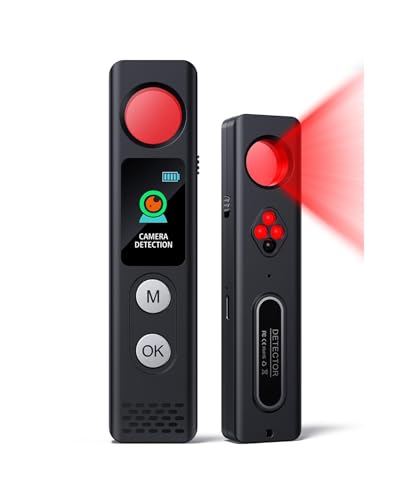
The Apeemu stands out immediately because of its color LED screen. While most detectors in this group use a simple row of LEDs or a single-digit display, the Apeemu shows you the current mode, battery level, and signal strength in plain text. That makes it much easier for a beginner to understand what the device is doing. It has a dedicated viewing window that you can look through to see red reflections from camera lenses, and switching to IR mode reveals night-vision cameras that record in total darkness. The seven modes cover RF scanning, magnetic detection, lens detection, infrared, vibration alert, auto-detection, and an SOS strobe.
The “Sentinel mode” is clever: set the Apeemu on your luggage or hang it on a door handle, and any movement triggers a loud alarm. It works the same way as the QLUNMOU’s lanyard alarm but adds the visual feedback of the screen. The 1500mAh battery charges fully in one hour and keeps going for 25 hours, which matches the Koilboane and beats the SROTIO’s continuous runtime. The downside is that the screen adds a point of failure, if you drop it on a tile floor, the display could crack. And in silent mode, the Apeemu only vibrates; it does not offer a beep-and-vibrate dual alert like the Koilboane does. Still, for the person who learns visually and wants to see the signal strength change as they move closer to a camera, the Apeemu is the most intuitive option.
5. ERYITRDK Portable Bug Detector: Best Anti-Theft Alarm

Pros
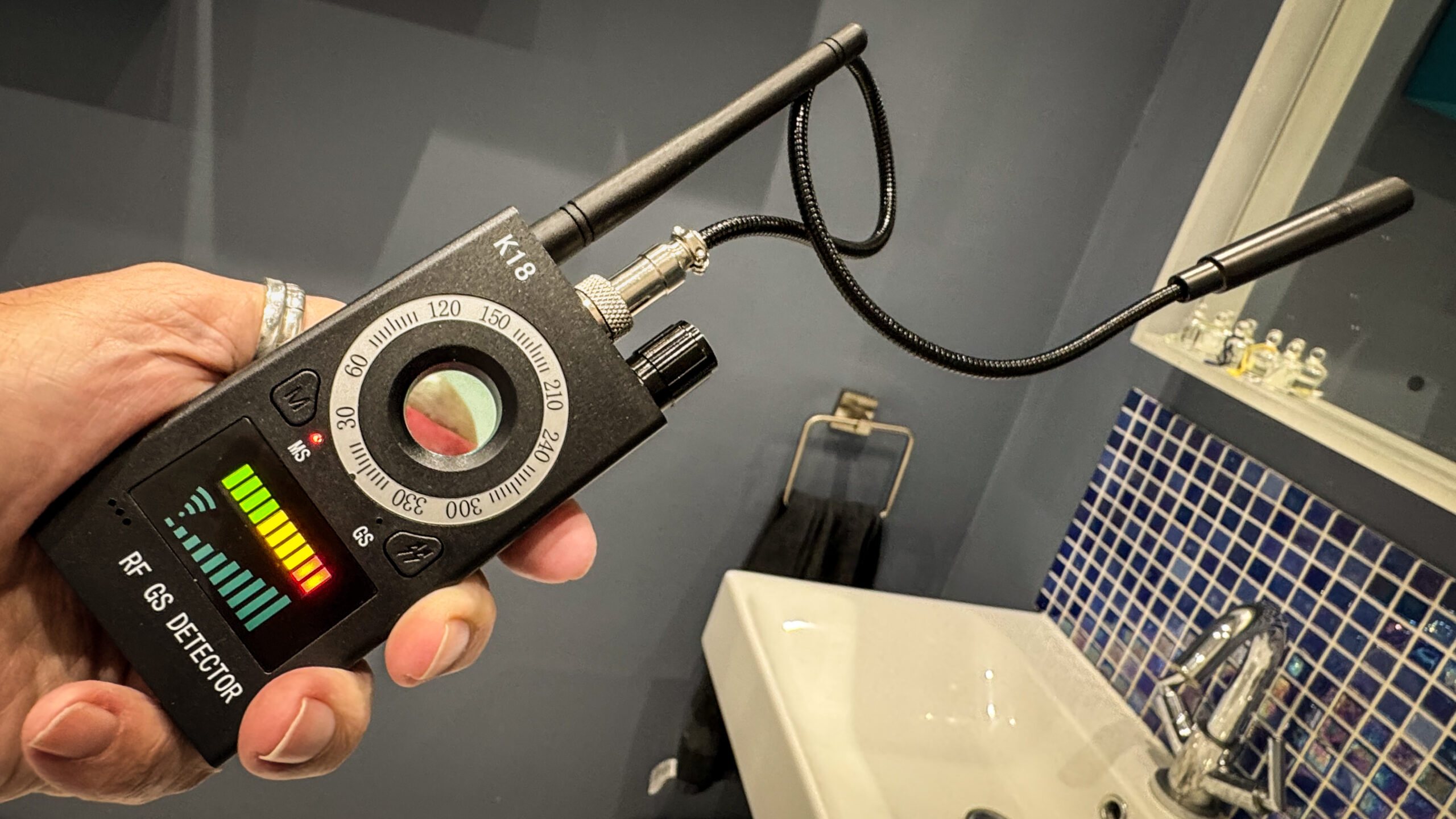
- Extendable antenna improves RF direction finding in large rooms
- Anti-theft alarm mode works on doors and luggage
- Quiet detection mode for discreet scanning
- 25-hour battery life in a pocket-sized body
Cons
- No magnetic sensor for GPS trackers (relies on RF and IR only)
- Infrared scan requires complete darkness for best results
Best for: Solo travelers who need both detection and a door alarm in one device.
The ERYITRDK is a straightforward, no-nonsense detector that focuses on the things that matter most on a trip: finding cameras and locking down your room. It has a wide-area RF scan with an extendable antenna that helps you home in on a signal’s direction, which is useful in big meeting spaces or hotel suites. The infrared scan works in the dark to reveal lens reflections, and the anti-theft alarm mode lets you hang the device on a door handle or attach it to a suitcase, any movement triggers a loud alert. There is even a quiet detection mode that turns off the beeps, so you can scan a shared office without anyone knowing.
The ERYITRDK does not have a dedicated magnetic sensor for finding GPS trackers, unlike the Koilboane and SROTIO. Instead, it detects GPS trackers by their radio emissions and by the magnetic field they produce, but the feature is less explicit. The infrared scan is effective, but it demands a dark room to really work, which is true for all IR detectors but more pronounced here because there is no secondary confirmation method like a laser grid. The 25-hour battery is solid, and the device weighs only 0.06 pounds, making it one of the most portable options. If you want a simple tool that doubles as a personal door alarm and you don’t need the extra modes of the QLUNMOU, this is a reliable backup or primary for short stays.
6. AORDERN 6-in-1 Hidden Camera Detector: Best for Infrared Detection

Pros
- Dedicated high-frequency red light generator for IR detection
- 30-hour continuous battery life, the longest in this roundup
- Two-button interface is very easy to operate
- Digital receiving method reduces interference from household electronics
Cons
- No magnetic sensor or GPS tracker detection
- No alarm or SOS features
Best for: Users focused on finding night-vision cameras in dark rooms.
The AORDERN strips away all the extras to concentrate on one job: finding hidden cameras, especially those with infrared night vision. It uses a high-frequency red light generator that makes lens reflections pop even in complete darkness, and the digital receiving method filters out false alarms from common household electronics like cordless phones and Wi-Fi routers. You get six detection modes, but they are primarily variations on RF scanning and IR detection rather than standalone GPS or magnetic modes.
What makes the AORDERN a strong pick is the battery life. It runs for 30 hours on a single charge, which is five hours longer than the Koilboane and Nilone, and it comes close to the SROTIO’s standby claim. The two-button interface is refreshingly simple: one button cycles through modes, the other adjusts sensitivity. There is no screen, no menu, no confusion. But you give up the magnetic sensor that the Koilboane and SROTIO use to find GPS trackers, and there is no door alarm or SOS function. If your primary worry is a hidden camera in an Airbnb bathroom or a changing room, the AORDERN’s infrared performance and long runtime make it a focused specialist. For broader sweeps that include GPS bugs, look to the QLUNMOU or Koilboane.
7. WRKLLY 3-in-1 Detector: Longest Standby Time

Pros
- Up to 30 days of standby time after a full charge
- Simple three-mode operation (camera, GPS, infrared)
- Ultra-lightweight and compact
- One-year warranty included
Cons
- No advanced features like sensitivity adjustment or SOS
- Continuous runtime not specified; standby is not use time
Best for: Occasional checks and long trips where you want a backup that stays charged.
The WRKLLY is the simplest device in this lineup, and that is exactly its appeal. It has three modes: camera detection, GPS finder, and infrared. You press the mode button to cycle between them, and a row of LEDs lights up to indicate signal strength. There is no sensitivity level, no screen, no alarm, just a beep and a flash when it finds something. The genius is the battery: the WRKLLY can sit in your drawer for 30 days and still have power when you pull it out for a quick hotel scan. That makes it a perfect “just in case” gadget to throw in a checked bag or keep in the glovebox.
The trade-off is that 30 days of standby does not tell you how long it works while actively scanning. In practice, most people will use it for a few minutes per room, so the standby number is actually the more relevant spec for infrequent travelers. The WRKLLY lacks the sensitivity tuning of the QLUNMOU or the wide RF range of the Koilboane, so it will not catch very weak signals or pinpoint a hidden transmitter as precisely. But if you want something that costs less mental overhead and still covers the three basic detection methods, this is a reliable, low-maintenance companion. The one-year warranty adds peace of mind that the more obscure brands do not offer.
8. Nilone AI Hidden Camera Detector: Easiest for Beginners

Pros
- Five AI-adjusted sensitivity levels cover up to 30 square meters
- Ultra-simple two-button operation
- Dual sound and vibration alerts
- 25-hour battery with 1-hour fast charge
Cons
- No Wi-Fi or Bluetooth scanning; only detects active signals
- Build feels lighter and less rugged than the SROTIO
Best for: First-time users who want a no-fuss detector that works out of the box.
The Nilone is designed for the person who has never used a hidden camera detector before and wants to avoid a steep learning curve. It has an AI-enhanced chip that offers five sensitivity levels, but you don’t need to understand what any of them mean, just crank it up for a broad 30-square-meter sweep, or dial it down for close inspection. The two buttons are clearly labeled “Mode” and “Sensitivity, ” and the device responds with either a beep or a vibration when it detects a signal. The manual is short, and you can get through your first hotel scan in under five minutes.
The 25-hour battery charges fully in one hour, and the 25-day standby means you can leave it in your work bag for weeks and still find it ready. The Nilone does not scan for Wi-Fi or Bluetooth networks; it only detects active RF transmissions from cameras and bugs. That means a camera that is turned off or on a different frequency might be missed, but in practice, most hidden cameras are actively recording or streaming. The build quality is fine for a 25-dollar device, but it does not feel as solid as the SROTIO or the QLUNMOU. If you want to understand the types of devices that people hide in rental properties, there is a useful overview available, but for your first detector, the Nilone gets out of your way and lets you learn by doing. It is the best rated hidden camera detector for someone who just wants to check a room and move on.
9. XINGGUANG MINGREN 9-in-1 Detector: Lightest Design

Pros
- Weighs just 20 grams, lighter than a car key
- Nine functions including IR, RF, GPS, magnetic, SOS, and alarm
- Wide frequency coverage from 1MHz to 6.5GHz
- 8 sensitivity levels and two alarm modes
Cons
- The tiny size means a small display and cramped button
- Build materials feel inexpensive compared to the SROTIO
Best for: Travelers who want to carry a detector without adding any noticeable weight.
The XINGGUANG MINGREN is the lightest detector we tested, just 20 grams, or about the weight of two quarters. It slips into a wallet pocket or the smallest compartment of a travel organizer. Despite the size, it packs nine functions: hidden camera detection, bug detection, GPS tracking, magnetic field detection, infrared night-vision lens detection, an anti-theft alarm, an SOS mode, a flashlight, and even a Chinese/English language switch. The frequency range covers 1MHz to 6.5GHz, matching the QLUNMOU, and the eight sensitivity levels give you fine control over the detection radius.
The catch is that the tiny body forces compromises on ergonomics. The button is small and requires a fingernail to press, and the single LED indicator is less informative than the Apeemu’s screen or even the QLUNMOU’s multi-LED array. The 25-hour battery is typical for this class, and the 1-hour fast charge is welcome. The build is functional but not premium, the plastic casing flexes a little under pressure. However, if weight and portability are your absolute priority (say, you are a minimalist traveler who only carries what fits in one pocket), the XINGGUANG MINGREN is the best rated hidden camera detector that disappears in your carry. It covers all the essential bases while barely existing in your bag.
How to Choose a Best Rated Hidden Camera Detector
Picking the right detector comes down to understanding what you are trying to find and where you will use it. Here are the key factors that separate a good detector from a great one.
Detection Range and Sensitivity
The most important spec is the frequency range the detector can scan. A device that covers 1MHz to 6.5GHz will pick up most consumer spy cameras and GPS trackers, but the Koilboane stretches to 8GHz, which covers some professional and newer 5G devices. Sensitivity levels matter too: more steps let you start with a broad sweep and then narrow down on a suspect spot without false alarms from your phone or laptop.
Detection Modes
Most detectors now combine multiple methods: RF signal scanning, infrared lens detection, magnetic field sensing, and sometimes laser projection. You want at least RF and IR, because a camera that is not broadcasting (it records to a memory card) will not show up on an RF scan but will still reflect light. Magnetic sensing is essential for finding GPS trackers that attach to cars with magnets. Some models like the SROTIO add a green laser that makes pinhole lenses visible even in daylight.
Battery Life and Standby
For travelers, battery life in continuous scan mode is more useful than standby claims. Look for at least 25 hours of active use, which covers several days of scanning without a recharge. If you only check a room once a month, standby time matters more. The WRKLLY’s 30-day standby is excellent for an emergency backup, but the SROTIO’s 50 days is even better for long deployments.
Portability and Build
A detector you leave at home is useless. The lightest options (the XINGGUANG MINGREN at 20g and Koilboane at 24g) are genuinely pocketable, while the SROTIO is larger but more robust. Consider whether you want an integrated door alarm or SOS feature, which adds bulk but also turns the detector into a personal safety device. The QLUNMOU and Apeemu both offer this dual functionality.
A detector is only useful if you actually use it. The lightest, simplest device you carry every day beats the most powerful one you leave in the drawer.
Frequently Asked Questions
Can a hidden camera detector find all types of hidden cameras?
No. It can find cameras that emit RF signals (wireless cameras) and those with a lens that reflects light (all cameras). But a hardwired camera that records to a local SD card and does not broadcast will only be detected by the infrared or laser lens finder, not by RF scanning. That is why you need a device that combines multiple detection methods.
Do hidden camera detectors work through walls?
RF detectors can pick up signals through walls, but the sensitivity drops significantly. The infrared and laser methods only work when you are in the same room and can sweep the surfaces directly. For through-wall detection, you need a professional-grade RF spectrum analyzer, which is much larger and more expensive.
Will the detector go off on my own phone or laptop?
Yes, if the sensitivity is set too high. Most devices have adjustable sensitivity to filter out common household electronics. The SROTIO’s AI chip is designed to cross-analyze signals and ignore known false sources like Wi-Fi routers and Bluetooth devices.
How often should I scan a room?
For hotels and Airbnbs, scan once when you arrive, ideally in complete darkness using the infrared mode. For cars, scan before and after parking in unfamiliar areas. If you are a frequent business traveler, a weekly scan of your office and a quick scan of each new hotel room is a reasonable routine.
Is it legal to use a hidden camera detector?
Yes, in most countries it is legal to use a passive detector that only receives signals. However, using a detector to actively jam or interfere with surveillance devices is illegal. Always check local laws, especially when traveling internationally.
Do I need a detector if my phone can find hidden cameras?
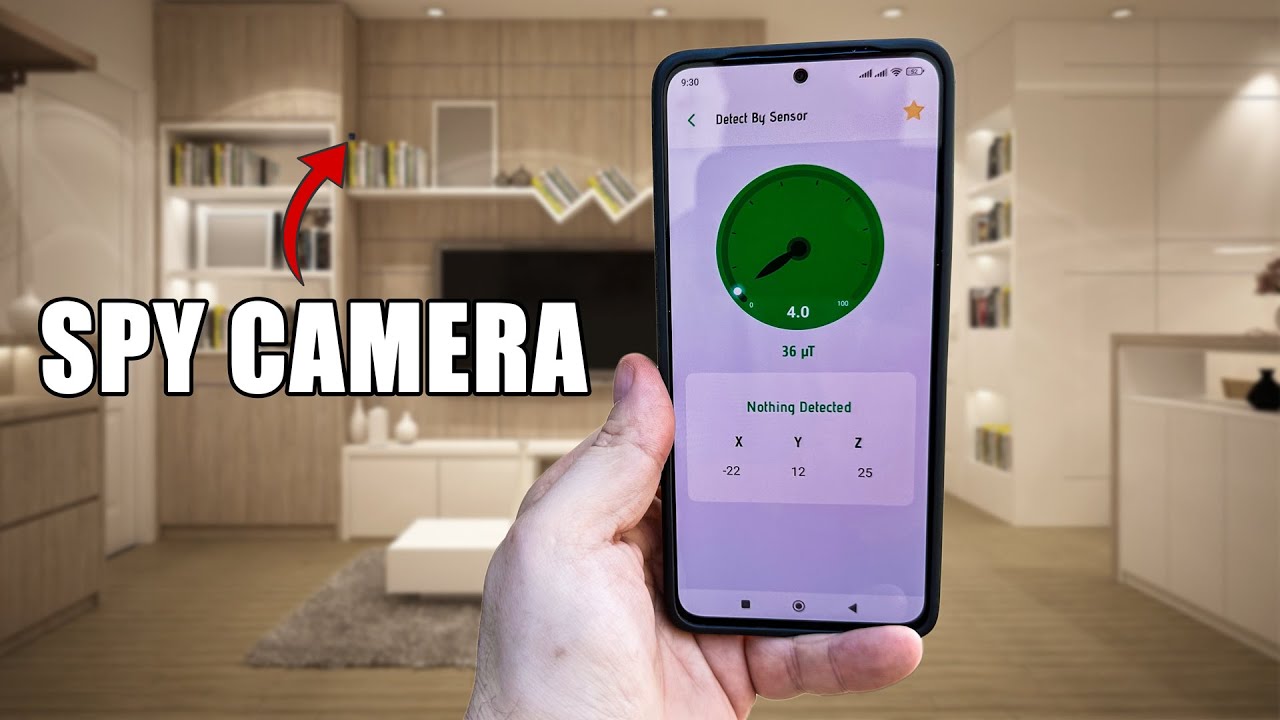
Phone apps that claim to detect hidden cameras are unreliable. They often only detect Wi-Fi networks or simple magnetic fields, and they cannot find non-WiFi cameras or unpowered devices. A dedicated detector with RF, IR, and magnetic sensors is far more thorough.
What about GPS tracker detection?
Detectors with a magnetic sensor can find GPS trackers that attach to a car’s undercarriage with magnets. RF detectors can also pick up the radio signal that such trackers emit. The Koilboane and SROTIO both have dedicated magnetic modes, while the ERYITRDK and QLUNMOU rely on RF and infrared.

The Bottom Line
The best rated hidden camera detector for most people is the QLUNMOU 6-in-1. It balances comprehensive detection (RF, IR, magnetic, foreign object) with practical extras like a door alarm and SOS flash, all in a portable package. If your main concern is finding the widest range of RF signals, the Koilboane with its 100MHz-8GHz sweep is the specialist. For maximum accuracy and the fewest false alarms, the SROTIO 9-in-1 uses AI to cross-reference multiple sensors and includes a green laser for pinpointing lenses.
No single detector can guarantee 100 percent protection, but any of these nine will dramatically reduce the chance that a hidden camera or GPS tracker goes unnoticed. Pick the one that fits how you travel, learn its modes, and make scanning a habit. The peace of mind is worth the minute it takes.
As an Amazon Associate we earn from qualifying purchases.