

A robot vacuum is only useful if it can keep moving through the messes that stop lesser machines: pet hair around a brush, crumbs under dining chairs, wet paw prints, and rugs that need a suction boost. The right model should also make its own way home and leave you with less floor care, not another appliance to supervise.
Our Best robo vac picks range from slim, remote-controlled cleaners to full mop stations that wash, dry, and empty themselves. Roborock Q10 S5+ is the one we'd buy for the widest mix of homes, while the other nine make stronger cases for deep mopping, low clearance, pet hair, or simpler controls.
Best robo vac comparison
| # | Product | Award | Suction | Mopping or dock | Best for |
|---|---|---|---|---|---|
| 1 | Roborock Q10 S5+ | Best overall | 10, 000Pa | VibraRise 2.0, self-emptying | Most homes with mixed floors |
| 2 | Roborock Q7 L5 | Best compact Roborock | 8, 000Pa | 270ml tank, integrated combo part | Rooms that need accurate mapping |
| 3 | Roborock Qrevo S5V | Best hands-free mop station | 12, 000Pa | Self-wash, warm-air dry, auto-refill | Large homes and frequent mopping |
| 4 | ROPVACNIC S1 | Best basic mop combo | 5, 200Pa | Four water settings | Light daily cleaning |
| 5 | Roborock Qrevo S Pro | Best suction and automation | 18, 500Pa | Self-cleaning dock, 10mm lift | Pet homes needing deep cleaning |
| 6 | Roborock Q7 M5+ | Best self-emptying pet pick | 10, 000Pa | 2.7L sealed bag | Long gaps between maintenance |
| 7 | Eufy 11S Max | Best slim cleaner | BoostIQ adaptive suction | No mop or app | Low furniture and quiet rooms |
| 8 | Tikom G8000 Max | Best control options | 5, 000Pa | 450ml bin, 300ml tank | Homes wanting app and remote control |
| 9 | Shark AI Ultra | Best bagless dock | High suction | Bagless base, Matrix Clean | Pet owners avoiding disposable bags |
| 10 | Eufy C28 | Best dedicated mopping | 15, 000Pa | HydroJet roller, hot-air drying | Sticky floors and frequent spills |
1. Roborock Q10 S5+: Best Overall

Pros
- Strong 10, 000Pa suction for carpets and hard floors
- Self-emptying dock with a 2.7L dust bag
- Sonic mopping with carpet lift
- LiDAR maps and structured-light obstacle avoidance
- Anti-tangle brush system
Cons
- The app supports only 2.4GHz Wi-Fi
- The dock takes more room than a simple charging base
- Mopping does not wash the pads automatically
Best for: households that want strong vacuuming, useful mopping, and reliable navigation without moving into the most elaborate dock systems.
The Roborock Q10 S5+ gets the everyday details right. It maps deliberately instead of wandering, notices common obstacles, and takes care of the dustbin on its own. That combination matters more than a flashy suction figure when the robot is expected to run several times a week around furniture, pet bowls, and changing floor surfaces.
Its 10, 000Pa HyperForce suction gives it enough headroom for crumbs and embedded hair in carpet, while the dual anti-tangle design addresses one of the most irritating robot-vacuum chores. The JawScrapers main brush and specialized side brush are intended to reduce hair wrap, so owners should spend less time cutting hair from the roller. Roborock's LiDAR scans through 360 degrees, supports multiple floor maps, and gives the app a solid foundation for room cleaning and no-go zones.
The VibraRise 2.0 mop is more serious than a damp cloth dragged behind the robot. Dual sonic vibration scrubs at up to 3, 000 times per minute, and the mop modules lift up to 8mm when carpet is detected. That lets the Q10 S5+ vacuum and mop across a mixed-floor home without treating every rug as a wet-cleaning zone. The app also offers different mopping modes and water settings, while Alexa and Google Home can handle basic commands.
Compared with the Roborock Q7 L5, this is the better all-rounder because it adds stronger suction, carpet-aware mopping, and a self-emptying station. The Roborock Qrevo S5V goes further for people who mop frequently because it washes and dries its pads, but its dock is much more substantial. The Q10 S5+ is not the right pick if automatic mop maintenance is your priority, and its 2.4GHz Wi-Fi requirement may complicate setup on a single-band network.
For a household with hard floors, rugs, pets, and a preference for scheduled cleaning, this is the most balanced Best robo vac pick in the group. It asks you to empty and clean the mop system manually, but it gives back strong navigation and less dustbin maintenance every day.
2. Roborock Q7 L5: Best Compact Roborock

Pros
- 8, 000Pa suction in a relatively low 3.89-inch body
- LiDAR mapping with multiple floor maps
- Dual anti-tangle brushes
- App, voice control, schedules, and no-go zones
- Vacuums and mops in one pass
Cons
- The water tank and dustbin are one integrated combo part
- No self-emptying dock
- Only supports 2.4GHz Wi-Fi
Best for: smaller homes that want accurate room mapping and simultaneous vacuuming and mopping without a large station.
The Roborock Q7 L5 is the practical choice when the robot itself should stay unobtrusive. Its 3.89-inch height is not ultra-slim, but it is considerably easier to fit beneath many sofas and beds than a taller model. At 7.27 pounds, it is also less cumbersome to lift between floors than the docked Qrevo models.
Roborock gives this model 8, 000Pa HyperForce suction, which is a meaningful step below the Q10 S5+ but still aimed at dust, hair, floor cracks, and carpet. Its specially designed main brush and zero-tangle side brush should help reduce interruptions in homes with pets. The 270ml water tank supports simultaneous vacuuming and mopping, with three water levels for adjusting how damp the pad becomes.
The standout feature is its PreciSense LiDAR navigation. The robot scans in real time, plans routes, and saves multiple floor maps instead of relying on random movement. It can also identify cable-heavy spots and table legs, then suggest no-go zones. That makes the Q7 L5 more dependable in a multi-room layout than the Eufy 11S Max, which uses infrared sensors and a remote rather than app-based mapping.
The limitation is maintenance. The water tank and dustbin are designed as one integrated combo part, so switching between vacuum-only and mopping routines is less flexible than it is with the Roborock Q10 S5+. There is no self-emptying station either. Skip this one if you want to leave the robot unattended for long stretches in a hair-heavy home.
The Q7 L5 suits a buyer who cares about route planning and a lower robot profile more than automatic dust disposal. It is a straightforward way to get Roborock's mapping and app controls without the physical footprint of a full-service dock.
3. Roborock Qrevo S5V: Best Hands-Free Mop Station
Pros
- 12, 000Pa suction and dual spinning mops
- Washes and warm-air dries the mop pads
- Automatically refills the water tank
- FlexiArm reaches edges and furniture legs
- Supports four floor maps
Cons
- The dock is large and heavy
- Only supports 2.4GHz Wi-Fi
- More automation means more dock components to maintain
Best for: larger homes where frequent mopping and minimal daily intervention matter more than a compact dock.
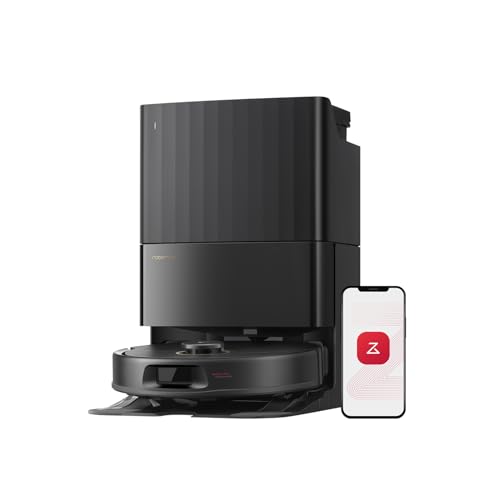
The Roborock Qrevo S5V is the first model here that feels like a floor-care station rather than a robot with a charger. It returns to the dock to empty its dust, wash the mop pads, dry them with warm air, and refill its water supply. That changes the ownership routine: you still need to handle the dock eventually, but ordinary mop-pad rinsing is no longer a daily task.
Its 12, 000Pa brushless-motor suction is suited to embedded dirt, pet hair, and debris on both carpets and hard floors. The rubberized floating main brush resists tangles, while the arc-shaped side brush is designed for edge cleaning. The Qrevo S5V also raises its mop by 10mm when it detects carpet, giving it more clearance than the Q10 S5+ during transitions.
Mopping is the reason to choose this model. The FlexiArm extends a pad toward corners and furniture legs, and the dual pads spin at 200 RPM. The app offers 30 water-flow levels, which is unusually fine control for homes with delicate flooring, kitchen splashes, and areas that need a more restrained pass. Roborock says the dock can support cleaning across 3, 552 square feet, and the system can store up to four floor plans.
The Roborock Qrevo S Pro has more suction and a more extensive maintenance dock, while the Eufy C28 uses a continuously cleaned roller mop that is better suited to liquid marks. The S5V wins when edge coverage, spinning-pad scrubbing, and map management are the priority. Its weakness is physical: the dock is 20.51 inches high, 19.17 inches wide, and 13.38 inches deep, so it needs a deliberate home.
Choose this Qrevo when mopping is a routine rather than an occasional extra. It is a particularly good fit for a large, mostly hard-floor home where automatic pad washing matters as much as vacuuming.
4. ROPVACNIC S1: Best Basic Mop Combo

Pros
- 5, 200Pa suction with three suction levels
- Four-stage water adjustment
- Compact 2.99-inch profile
- App and voice control
- Designed to reduce hair entanglement
Cons
- No LiDAR mapping
- No self-emptying dock
- Less suited to thick or high-pile carpet
Best for: smaller, mostly hard-floor homes that need scheduled vacuuming and light mopping without advanced mapping.
The ROPVACNIC S1 keeps the proposition simple. It vacuums, mops, avoids obstacles, returns to recharge, and can be scheduled from a phone. Its 2.99-inch height is one of its most useful traits because it can reach under furniture that blocks taller mapped robots.
The 5, 200Pa suction works across wood, hard floors, and low-pile carpets, with three levels to choose from. A three-point cleaning system and dual rotating side brushes help collect debris from the robot's path, while the no-entanglement design is aimed at reducing pet-hair wrap. This is a sensible setup for crumbs, dust, and everyday hair, but it does not provide the same carpet-focused cleaning reserve as the 10, 000Pa Roborock models.
Mopping is electronically controlled, with a high-capacity water tank and four water-adjustment stages. That makes it easier to use a lighter pass on finished floors and a wetter one for more persistent marks. The S1 can switch among multiple cleaning modes and supports Alexa or Google Assistant commands, though its sensing system is based on coverage and obstacle detection rather than the room maps produced by the Roborock Q7 L5.
The trade-off is clear. The S1 is smaller and less complicated than the Roborock Qrevo S5V, but it cannot match that model's room targeting, edge-focused mop arm, or automatic mop care. It is also not the pick for a home with thick carpet, a complicated floor plan, or a desire to send the robot to a specific room from a detailed map.
For light daily maintenance on hard flooring, the ROPVACNIC S1 does the useful basics. Buyers who want a robot that learns the layout of several floors should step up to a LiDAR-equipped model instead.
5. Roborock Qrevo S Pro: Best Suction and Automation

Pros
- 18, 500Pa suction
- Dock with self-emptying, mop washing, and drying
- 2.7L sealed dust bag
- 10mm mop lift for carpet
- Low 3.8-inch robot profile
Cons
- Large dock requires significant floor space
- Only supports 2.4GHz Wi-Fi
- Mop system is more involved than a simple cloth pad
Best for: pet households that want maximum listed suction and a dock capable of handling most routine maintenance.
The Roborock Qrevo S Pro is built around the idea that the robot should be ready to work with as little intervention as possible. Its dock empties the dust into a sealed 2.7L bag, cleans the mop pads with 167-degree Fahrenheit water, and dries them with 113-degree Fahrenheit warm air. The dock is doing much of the unpleasant work that normally falls to the owner.
The headline is 18, 500Pa suction, the highest figure in this group. That does not turn every pass into a deep carpet extraction, but it gives the Qrevo S Pro substantial airflow for pet hair, cat litter, kibble, and fine debris. The all-rubber main brush, zero-tangle side brush, and easy-clean omnidirectional wheel are sensible supporting features for homes where hair is a daily problem.
The robot is 3.8 inches high and can lift its mop by 10mm when it detects carpet. Its obstacle system is designed to avoid shoes, toys, and furniture legs, while SmartPlan 2.0 can adjust cleaning settings around the home's layout, floor types, and cleaning history. Roborock also lists a 55dB operating level, which should make its routine passes less intrusive than a machine that runs constantly at maximum power.
The Roborock Qrevo S5V is the more balanced choice if you want flexible 30-level water control and a FlexiArm for edges. The Qrevo S Pro is the better fit for pet hair, longer unattended intervals, and buyers who want the strongest suction specification here. Its real weakness is the dock: at 20.51 inches high, 19.17 inches wide, and 13.38 inches deep, it is not something to tuck casually beside a cabinet.
This is the premium automation pick for a home that can accommodate the station. If your floors see constant fur, crumbs, and paw prints, the S Pro's brush design and dock maintenance make a stronger case than suction alone.
6. Roborock Q7 M5+: Best Self-Emptying Pet Pick
Pros
- 10, 000Pa suction
- Sealed 2.7L bag designed for 7 to 9 weeks
- LiDAR navigation
- JawScrapers brush and anti-tangle side brush
- Three adjustable water-flow settings
Cons
- Mop pads are not automatically washed
- Dock is larger than a charging base
- App supports only 2.4GHz Wi-Fi
Best for: pet owners who want a long-running self-emptying vacuum with strong mapping and simple mopping.
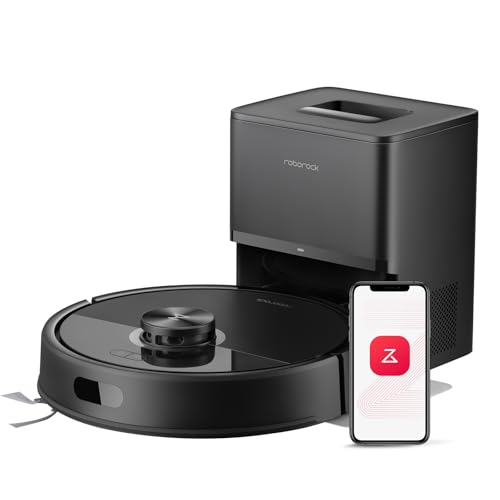
The Roborock Q7 M5+ focuses on the chore most owners want to avoid: emptying the bin after every run. Its RockDock Plus uses a sealed 2.7L bag intended to hold up to 7 to 9 weeks of dirt and pet hair, depending on the home. That makes it a better fit than the Q7 L5 for people who want the convenience of a dock but do not need automatic mop washing.
With 10, 000Pa HyperForce suction, the Q7 M5+ sits alongside the Q10 S5+ for vacuuming power. The JawScrapers main brush and zero-tangle side brush are aimed at long pet hair, and the robot can combine vacuuming and mopping in one run. Three water-flow settings let the owner adjust the amount of moisture instead of treating every room the same.
Its PreciSense LiDAR system builds precise maps and plans routes across multiple rooms. The app can schedule cleaning, target a spot, establish no-go zones, and show progress and battery information. That is a considerable step up from the Eufy 11S Max, which has no Wi-Fi or app connectivity and relies on a remote and onboard buttons.
The Q7 M5+ gives up the Q10 S5+'s sonic vibration mopping and carpet-specific mop lift. It also lacks the Qrevo S5V's pad washing and warm-air drying. Buyers with mostly hard floors and recurring pet hair may not miss those features, but anyone expecting a fully self-cleaning mop should choose a Qrevo or the Eufy C28 instead.
This is the sensible middle ground for a pet household that wants a large dust capacity and dependable mapping. It is less demanding than a basic robot, while avoiding the larger maintenance system of a full mop-washing dock.
7. Eufy 11S Max: Best Slim Cleaner

Pros
- Slim 2.85-inch profile
- Quiet operation
- Up to 100 minutes on hardwood floors
- BoostIQ adjusts suction within 1.5 seconds
- Self-recharges and uses drop sensing
Cons
- No Wi-Fi or app connectivity
- No mopping
- Remote and onboard buttons are the only controls
Best for: homes with low furniture and owners who prefer a simple remote-controlled vacuum.
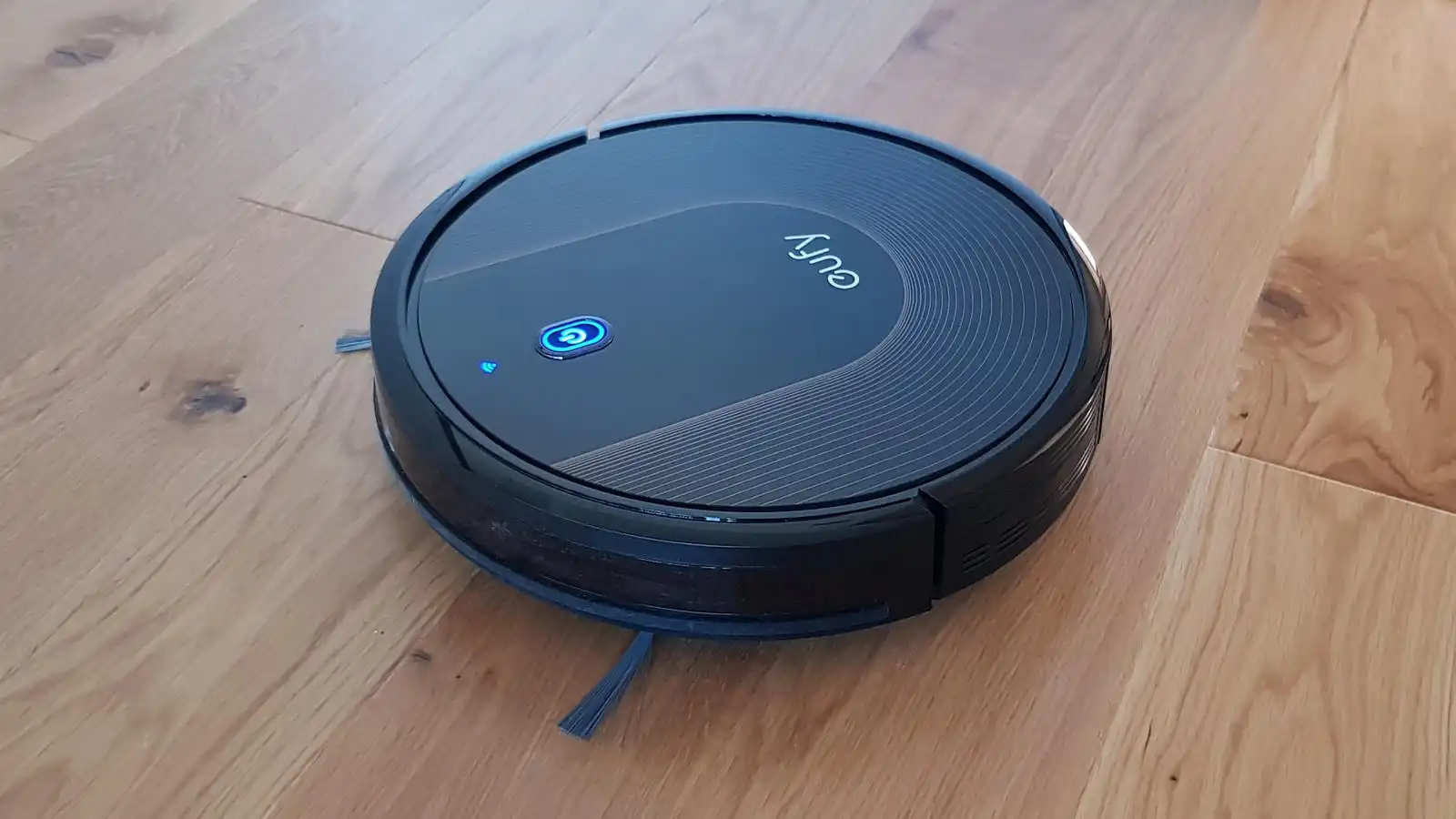
The Eufy 11S Max is refreshingly uncomplicated. It is 2.85 inches high, making it the easiest model here to send under low sofas, beds, and cabinets. It also operates quietly enough for owners who want to run a cleaning cycle without bringing a loud appliance into the room.
Its BoostIQ system adjusts suction within 1.5 seconds when the surface changes. Eufy lists up to 100 minutes of cleaning on hardwood floors, and the robot returns to its charger when it needs more power. Infrared sensors help it avoid obstacles, while drop sensing protects it around stairs and other ledges. A tempered-glass top adds protection to the upper surface.
The simplicity is both the appeal and the limitation. The 11S Max does not connect to Wi-Fi, has no app, and cannot save maps or create room-specific schedules. You control it with the remote or the buttons on the machine. That is much less flexible than the Roborock Q7 L5, but it also means there is no network setup or 2.4GHz compatibility issue to solve.
There is no mop attachment, no self-emptying station, and no advanced obstacle recognition. The single-side-brush design is intended to prevent scattering and preserve suction, but it will not offer the edge behavior or pet-hair handling features of the Qrevo models. Skip it if you need hands-free scheduling from outside the home or regular wet cleaning.
The 11S Max remains a strong Best robo vac option for low-clearance rooms and owners who want a quiet machine with physical controls. It is a cleaner, not a connected household system.
8. Tikom G8000 Max: Best Control Options

Pros
- App, remote, voice, and button controls
- 5, 000Pa suction
- 450ml dustbin and 300ml water tank
- Up to 150 minutes in quiet mode
- Four cleaning modes
Cons
- No self-emptying dock
- Navigation uses sensors rather than LiDAR mapping
- Mopping and dust collection share a combo design
Best for: households that want several ways to control a robot and need a long quiet-mode run time.
The Tikom G8000 Max is the most accommodating model for different users. It supports an app, remote, voice commands, and buttons, so a household is not forced into one control method. That can be useful when one person wants schedules from a phone and another wants a quick start from the remote.
Its 5, 000Pa suction handles dust, pet hair, and debris on hard floors, short-pile carpet, and medium-pile carpet. The 450ml dustbin and 300ml water tank are combined for simultaneous vacuuming and mopping, and Tikom says the design can reduce cleaning time by allowing both jobs in one pass. Up to 150 minutes in quiet mode gives it enough endurance for routine floor coverage.
Four cleaning modes cover spot, edge, zig-zag, and manual cleaning. The zig-zag pattern is designed for fuller coverage, while large wheels help the robot move between floor surfaces and over thresholds. At 3 inches high, it can also reach beneath some furniture that blocks taller machines.
The key difference between this and the ROPVACNIC S1 is control flexibility rather than a major jump in navigation. Neither provides the LiDAR mapping of the Q7 L5, so neither is the right choice for precise room-by-room cleaning in a complicated home. The Tikom's 5, 000Pa suction is also below the 8, 000Pa Q7 L5 and 10, 000Pa Q10 S5+.
Choose the G8000 Max when remote control and long quiet-mode operation are more important than a self-emptying dock. It is a versatile routine cleaner for homes with mixed floors, provided you are comfortable emptying and refilling it yourself.
9. Shark AI Ultra: Best Bagless Dock

Pros
- Bagless base holds up to 60 days of debris
- Matrix Clean makes multiple passes over messes
- Self-cleaning brushroll
- Designed for carpets, hard floors, and pet hair
- Recharge and resume function
Cons
- No mopping
- Runtime is up to 90 minutes
- The base is larger than a simple charger
Best for: pet owners who want a self-emptying robot without buying or replacing disposable dust bags.
The Shark AI Ultra takes a different approach to unattended cleaning. Its base is bagless and holds up to 60 days of dirt and debris, so there are no disposal bags to replace. That is a meaningful distinction from the Roborock docks, which use sealed bags, and it will appeal to anyone who wants a reusable collection system.
Shark's Matrix Clean pattern sends the robot over a mess in a precision grid, making multiple passes rather than relying on one straight sweep. Combined with strong suction and a self-cleaning brushroll, the setup is aimed squarely at pet hair, dirt, and debris across carpet and hard floors. The robot can run for up to 90 minutes before returning to recharge.
Recharge and resume keeps a larger home from being limited to one battery cycle. The Shark returns to the base, charges, and continues where it stopped. That is a useful capability for thorough coverage, though the available feature set is more focused on vacuuming than the mopping and detailed water control found on the Roborock Q10 S5+.
The obvious omission is wet cleaning. The AI Ultra cannot handle kitchen marks or paw prints with a mop pass, and its base still needs room for access and emptying. Its 2022 release date also makes it a less modern platform than the newer all-in-one mop stations in this group, though the bagless design remains distinctive.
Pick the Shark when pet hair and bag-free dust disposal are your priorities. If you want one robot to vacuum and mop, the Q10 S5+ or Eufy C28 is a better match.
10. Eufy C28: Best Dedicated Mopping

Pros
- HydroJet roller mop continuously cleans itself
- 15, 000Pa suction
- 3L dust bag and automated wastewater collection
- Hot-air mop drying
- Laser navigation without cameras
Cons
- Large, heavy station
- Roller-mop system needs more specialized maintenance
- Only supports 2.4GHz Wi-Fi
Best for: homes with frequent spills, paw prints, and hard-floor messes that need more than a passive mop pad.
The Eufy C28 is the most unusual robot in this roundup because its mop is a roller rather than a pair of spinning pads or a flat cloth. The 28cm HydroJet roller uses 24 water ports and spins at 270 RPM, or nine rotations per second. As it works, the roller continuously cleans itself and a scraper separates dirty water into a dedicated tank.
That design is made for marks that a light wipe can leave behind. Paw prints, spills, and kitchen messes are the jobs the C28 is trying to improve, and the roller has a more active contact with the floor than the mop pad on the Roborock Q7 M5+. The C28 also lifts its mop 10.8mm on short carpets, helping keep those surfaces dry during mixed-floor cleaning.
Vacuuming is not an afterthought. Its 15, 000Pa turbo suction automatically boosts on carpet, and the DuoSpiral brush is designed to handle hair up to 30cm long without wrapping around the roller. Eufy cites 54.89dB operation, and its laser navigation avoids objects at least 3 by 3 by 3cm without using cameras. That gives privacy-minded owners a useful alternative to camera-based obstacle systems.
The all-in-one station empties dust into a 3L bag, washes the mop, dries it with 50-degree Celsius hot air, and collects wastewater. Eufy says it handles 95 percent of maintenance for up to 75 days. The station is also 18.14 inches high, 15.47 inches long, and 14.6 inches wide, so it is not a compact addition to a narrow hallway.
The C28 is not the natural pick for someone who only wants occasional damp wiping. It makes more sense for hard floors that regularly see food, drinks, or pets. For those homes, its HydroJet system gives it a clear reason to choose it over a conventional pad mop.
How to choose best robo vac
The right robot depends less on one impressive headline number than on how its navigation, brushes, mop, and dock fit your floor plan and cleaning routine.
Suction and brush design
Pa figures describe the suction specification, but brush design determines how well the robot gathers hair and debris into that airflow. The models here range from 5, 000Pa on the Tikom G8000 Max to 18, 500Pa on the Roborock Qrevo S Pro. Higher listed suction is useful for carpets and scattered litter, while rubber or anti-tangle brushes matter more in homes with long hair.
Look for carpet boost, a brush that resists wrapping, and a side brush that can pull debris from edges. A strong motor cannot compensate for a roller that needs frequent cleaning.
Navigation and obstacle avoidance
LiDAR gives a robot a structured map of rooms, allowing it to clean specific areas, save floor plans, and plan more efficient routes. The Roborock Q10 S5+, Q7 L5, Q7 M5+, and Qrevo models use LiDAR-based mapping. The Eufy 11S Max and Tikom G8000 Max rely on simpler sensors, which can work well in open layouts but provide less room-by-room control.
Obstacle detection matters around cords, toys, bowls, and table legs. A robot that maps accurately but repeatedly catches cables still needs supervision, so structured-light or other obstacle sensors can be worthwhile in a busy room.
A robot that cannot map your real floor plan will make you clean around its limitations.
Mopping system
A passive mop pad is fine for light dust and routine marks, but it will not replace manual scrubbing on sticky spills. The Q10 S5+ uses sonic vibration, the Qrevo S5V uses spinning pads and a FlexiArm, and the Eufy C28 uses a continuously cleaned roller. Those approaches are more capable than the basic combo systems in the ROPVACNIC S1 and Tikom G8000 Max.
Check how the robot handles rugs. Mop lift is important in mixed-floor homes, and the Q10 S5+, Qrevo S5V, Qrevo S Pro, and Eufy C28 list lift capability. If wet cleaning is occasional, a simpler removable pad may be easier to live with.
Dock maintenance
Self-emptying is not the same as a fully automatic dock. The Q10 S5+ and Q7 M5+ empty dust into bags, while the Qrevo S5V, Qrevo S Pro, and Eufy C28 also wash and dry the mop system. Shark takes a bagless approach with the AI Ultra.
A mop-washing dock reduces hands-on work, but it needs clean-water and wastewater attention and takes more floor space. Before choosing one, measure the available height, width, and depth around the intended parking spot.
Robot height and floor coverage
Low-profile robots reach farther under beds and sofas. The Eufy 11S Max is 2.85 inches high, while the ROPVACNIC S1 and Tikom G8000 Max are about 3 inches high. Docked models can have a much taller station even when the robot itself is relatively low.
Battery behavior also affects coverage. The Tikom G8000 Max lists up to 150 minutes in quiet mode, the Eufy 11S Max lists up to 100 minutes on hardwood floors, and the Shark AI Ultra lists up to 90 minutes with recharge and resume. A larger home benefits from automatic continuation, while a smaller layout may benefit more from a compact body.

Frequently asked questions
Do robot vacuums mop as well as they vacuum?
Most robot mops are best at routine dust, footprints, and light marks rather than heavy scrubbing. Spinning pads, sonic vibration, and the Eufy C28's HydroJet roller provide more active cleaning than a basic damp cloth, but dried spills may still need manual attention.
Is LiDAR important in a robot vacuum?
LiDAR is useful when you want accurate maps, room-specific cleaning, multiple floor plans, and planned routes. It is less essential in a small open room where simple sensor-based navigation can cover the available floor without much intervention.
Which model is best for pet hair?
The Roborock Qrevo S Pro has the highest listed suction and combines an all-rubber main brush with an anti-tangle side brush. The Roborock Q10 S5+ and Q7 M5+ also use anti-tangle brush systems, while the Eufy C28 is designed to handle long hair without wrapping around its brush.
Can these robot vacuums avoid wetting carpets?
Several can lift their mop when carpet is detected. The Q10 S5+ lists up to 8mm of lift, the Qrevo S5V and Qrevo S Pro list 10mm, and the Eufy C28 lists 10.8mm. A robot may still need carpet zones or no-mop settings for unusual rugs and thresholds.
Do robot vacuums need 2.4GHz Wi-Fi?
The Roborock models in this roundup specify 2.4GHz Wi-Fi support. The Eufy 11S Max does not use Wi-Fi at all, since it is controlled by a remote and onboard buttons. Check your router settings before setup if you choose an app-controlled Roborock.
Are self-emptying docks worth choosing?
A self-emptying dock reduces how often you handle dust and pet hair. It does not eliminate maintenance, since bags, filters, brushes, water tanks, and mop components still need attention. A wash-and-dry dock adds convenience for frequent mopping but requires more space and care than a charging stand.
Can one robot clean multiple floors?
Models with saved floor maps are better suited to multi-level homes. The Roborock Qrevo S5V supports up to four floor plans, while the other mapped Roborock models offer multiple-map features. The robot may still need to be carried between floors unless each level has its own dock.

The bottom line
The Roborock Q10 S5+ is the strongest all-purpose pick because it combines 10, 000Pa suction, anti-tangle brushes, LiDAR mapping, obstacle avoidance, carpet-aware sonic mopping, and a self-emptying dock. It is the Best robo vac for most homes, although buyers who mop every day should consider the pad-washing Roborock Qrevo S5V instead.
For pet-heavy homes that want more automation, the Roborock Qrevo S Pro has the strongest suction specification and a dock that washes and dries its mops. The Eufy C28 is the more distinctive choice for hard floors with recurring spills, while the Eufy 11S Max remains the right answer for low furniture and simple remote control.
If you are undecided, choose the Q10 S5+ unless automatic mop washing or an ultra-slim body matters more than balanced performance.
As an Amazon Associate we earn from qualifying purchases.