

A gaming CPU can look powerful on paper and still be the wrong part for your build. The biggest split here is not simply Ryzen 5 versus Ryzen 9. It is between AMD's gaming-focused 3D V-Cache chips, general-purpose processors, older AM4 parts, and complete desktops that already include the CPU and graphics card.
Our Best best ryzen cpu for gaming picks range from the fast, efficient Ryzen 7 9800X3D to the older Ryzen 5 5500, with two complete gaming PCs included for readers who want a finished system rather than a standalone processor. The best pick for most new gaming builds is the AMD Ryzen 7 9800X3D. The rest cover high-end content creation, AM4 upgrades, and plug-and-play gaming.
Comparison table
| # | Product | Award | Cores and threads | Platform | Best for |
|---|---|---|---|---|---|
| 1 | AMD Ryzen 7 9800X3D | Best overall | 8 cores, 16 threads | AM5 | High-refresh gaming |
| 2 | AMD Ryzen 9 9950X3D | Best for gaming and creation | 16 cores | AM5 | Gaming plus heavy workloads |
| 3 | AMD Ryzen 7 7800X3D | Best previous-generation gaming chip | 8 cores, 16 threads | AM5 | AM5 gaming builds |
| 4 | AMD Ryzen 5 5500 | Best entry-level AM4 option | 6 cores, 12 threads | AM4 | Basic discrete-GPU builds |
| 5 | iBUYPOWER Element 7900X | Best complete high-end PC | Ryzen 9 7900X | Desktop | Ready-made gaming systems |
| 6 | AMD Ryzen 5 9600X | Best efficient AM5 choice | 6 cores, 12 threads | AM5 | Mainstream AM5 gaming |
| 7 | KOTIN Ryzen 7 8700F | Best complete 1440p starter PC | 8 cores | Desktop | Ready-to-use 1080p and 1440p gaming |
| 8 | AMD Ryzen 7 5800X3D | Best AM4 gaming upgrade | 8 cores, 16 threads | AM4 | Extending an existing AM4 build |
| 9 | AMD Ryzen 9 7900X | Best high-core-count AM5 chip | 12 cores, 24 threads | AM5 | Gaming and multitasking |
| 10 | AMD Ryzen 9 5900XT | Best AM4 workstation-style upgrade | 16 cores, 32 threads | AM4 | Rendering and game workloads |
1. AMD Ryzen 7 9800X3D: Best Overall
Pros
- 3D V-Cache is designed around gaming performance
- Zen 5 architecture with improved instruction throughput
- 96MB of L3 cache
- Boost clock up to 5.2GHz
- Compatible with Socket AM5
Cons
- Cooler is not included
- Eight cores are less suited to the heaviest workstation workloads
Best for: a new AM5 gaming build where frame rate and responsiveness matter most.
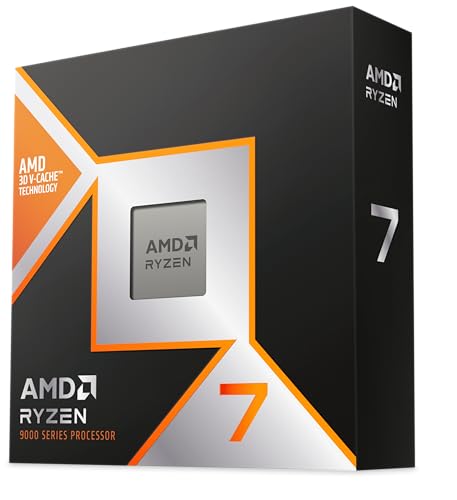
The AMD Ryzen 7 9800X3D is the processor we would start with for a gaming-first desktop. It has the right balance of eight cores and 16 threads without turning the build into a workstation project. The important part is the 3D V-Cache design, which gives the chip 96MB of L3 cache. Games that benefit from keeping more frequently used data close to the CPU can feel smoother, especially when a powerful graphics card is paired with a high-refresh display.
This is also the most modern standalone chip here. AMD uses Zen 5 technology, and the listing cites an approximate 16 percent IPC uplift over the previous generation. Its boost clock reaches up to 5.2GHz, while the cache and architecture work together rather than relying on clock speed alone. That makes the 9800X3D a more focused gaming part than the Ryzen 9 7900X, even though the latter has four more cores.
The AM5 socket is a practical advantage for a new build. You can use current AM5 infrastructure instead of committing to the older AM4 platform used by the Ryzen 7 5800X3D, Ryzen 5 5500, and Ryzen 9 5900XT. The trade-off is that this is a bare processor. No cooler is included, so the rest of the build needs a suitable cooling solution and an AM5 motherboard.
The Ryzen 9 9950X3D is the faster choice for someone who spends as much time rendering or creating content as gaming. It has twice the core count, but the 9800X3D is the cleaner gaming recommendation because its eight-core layout is plenty for current gaming and keeps the purchase focused. Skip it if your main workload is heavily threaded production work. For a gaming-led AM5 build, this is the chip to keep.
2. AMD Ryzen 9 9950X3D: Best for Gaming and Creation

Pros
- 16 cores for demanding multitasking
- 3D V-Cache gaming design
- Zen 5 architecture
- Boost clock up to 5.7GHz
- AM5 desktop platform
Cons
- More processor than a gaming-only build needs
- Cooler is not included
Best for: a high-end desktop that must handle modern games and demanding creation work.
The AMD Ryzen 9 9950X3D is the dual-purpose monster in this group. It combines AMD's Ryzen 9 core count with the gaming-oriented X3D designation, so it makes sense for someone who wants one desktop to play games, edit video, and handle other CPU-heavy work. The 16-core design gives it a much wider workload range than the eight-core Ryzen 7 9800X3D.
Its Zen 5 architecture and up to 5.7GHz boost clock put it firmly at the top of the specification list here. The boost figure does not mean every game runs at that speed all the time, but it shows the chip has substantial single-threaded headroom alongside its large multi-core capacity. That combination is more compelling for creators than the Ryzen 7 7800X3D, whose eight cores are easier to justify in a pure gaming build.
The AM5 platform also makes this a current-generation foundation. You will need a motherboard and cooler that suit a high-performance desktop processor, since this boxed processor does not include a cooling solution. That extra planning matters more here than with a simpler six-core build. A weak cooling setup would make it harder for the processor to sustain its capabilities during long workloads.
For gaming alone, the Ryzen 7 9800X3D is the more sensible direction. Choose the Ryzen 9 9950X3D when game performance is only one part of the brief and the machine will regularly run serious creation or multitasking jobs. It is not the pick for someone who just wants a straightforward gaming tower, but it is the most complete processor in this roundup.
3. AMD Ryzen 7 7800X3D: Best Previous-Generation Gaming Chip

Pros
- Eight cores and 16 threads
- 96MB of L3 cache
- AM5 platform
- Radeon graphics controller included
- 5nm process technology
Cons
- Older than the Zen 5 X3D options
- Base clock is 4.20GHz
- Better suited to gaming than broad workstation use
Best for: an AM5 gaming build centered on the proven 7800X3D design.
The AMD Ryzen 7 7800X3D remains an easy processor to understand. It has eight cores, 16 threads, and a generous 96MB of L3 cache, with a design aimed squarely at games. That makes it a particularly clean match for someone who wants a gaming CPU rather than a general-purpose workstation part with gaming ability on the side.
The processor uses a 5nm process and lists a 4.20GHz clock speed. Its cache capacity is the more meaningful detail for this audience, since it can help the CPU keep game data readily available during play. The included AMD Radeon graphics controller is useful for basic display output and troubleshooting, but a gaming system still needs a discrete graphics card for serious modern games.
Compared with the Ryzen 7 9800X3D, this is the older AM5 route. The newer chip brings Zen 5 and a boost clock up to 5.2GHz, so it is the stronger choice for a fresh build when you want the latest design. The 7800X3D still makes sense for a buyer who specifically wants its gaming-focused eight-core layout and does not need the newer processor's headroom.
The weakness is flexibility. The 7800X3D is not the first processor we would choose for heavy content creation, where the Ryzen 9 9950X3D has a clear core-count advantage. It also requires an AM5 board, so it is not a drop-in upgrade for an older AM4 system. For a focused AM5 gaming machine, however, it remains a capable and uncomplicated option.
4. AMD Ryzen 5 5500: Best Entry-Level AM4 Option

Pros
- Six cores and 12 threads
- Wraith Stealth cooler included
- Supports DDR4-3200
- Unlocked for overclocking
- Compatible with Socket AM4
Cons
- Older AM4 platform
- Requires a discrete graphics card for gaming
- Lower cache capacity than the X3D processors
Best for: a basic AM4 gaming build that needs a bundled cooler.
The AMD Ryzen 5 5500 is the straightforward pick for a simple AM4 build. Six cores and 12 threads give it enough parallel capacity for everyday gaming and normal multitasking, while the included Wraith Stealth cooler means the processor arrives with a basic cooling solution. That bundled cooler is a meaningful convenience for a first build.
AMD lists a 4.2GHz maximum boost, 19MB of cache, and support for DDR4-3200 memory. It is also unlocked for overclocking, though any overclocking plan should account for cooling and motherboard support. The Ryzen 5 5500 needs a discrete graphics card for gaming, so it is not a complete graphics solution by itself.
This chip belongs to the older Socket AM4 platform. That makes it a different proposition from the AM5 Ryzen 5 9600X, which supports DDR5-5600 and can support PCIe 5.0 on select motherboards. AM4 can still be the right foundation when the rest of the build already uses compatible memory and a compatible motherboard. For a new high-end gaming system, the newer socket is the more forward-looking route.
The main limitation is its modest cache compared with the 96MB X3D designs. The Ryzen 7 5800X3D is the more interesting AM4 gaming upgrade, while the Ryzen 9 5900XT is stronger for heavily threaded work. Pick the 5500 when you want six cores, a bundled cooler, and a clean path into basic discrete-GPU gaming without rebuilding around AM5.
5. iBUYPOWER Element 7900X: Best Complete High-End PC

Pros
- Ryzen 9 7900X processor
- GeForce RTX 5070 with 12GB of graphics memory
- 32GB DDR5 memory
- 1TB NVMe SSD
- Windows 11 Home and peripherals included
Cons
- Complete tower is less flexible than choosing each component
- Large 36-pound chassis
- No X3D gaming processor
Best for: someone who wants a powerful gaming desktop assembled and ready to use.
The iBUYPOWER Element 7900X changes the question from which CPU to install to which complete system makes sense. It pairs the Ryzen 9 7900X with an Nvidia GeForce RTX 5070 featuring 12GB of graphics memory, so the processor is not left waiting for a weak graphics card in the intended gaming setup. It also includes 32GB of DDR5 memory and a 1TB NVMe SSD.
That combination is the reason to consider it over a standalone CPU. The machine arrives with Windows 11 Home, Wi-Fi, a tempered-glass RGB case, and a gaming keyboard and mouse. Its connectivity includes six USB 3.1 ports, gigabit Ethernet, and onboard audio. The system is ready for someone who would rather connect a monitor than source, assemble, and troubleshoot every component.
The Ryzen 9 7900X has 12 cores and 24 threads, a 5nm process, a 4.70GHz clock speed, and an AMD Radeon graphics controller. In this desktop, the discrete RTX 5070 does the gaming graphics work, while the CPU's core count helps with streaming, multitasking, and creation jobs. The component choices that shape a gaming PC are already made here, which is convenient but leaves less room to tailor the system.
This is not the right pick for someone chasing the highest possible CPU-limited frame rates with an X3D processor. The Ryzen 7 9800X3D is the more focused standalone gaming choice, and a custom build gives you more control over cooling and future changes. Choose the Element 7900X when a complete, strong desktop matters more than selecting every part yourself.
6. AMD Ryzen 5 9600X: Best Efficient AM5 Choice

Pros
- Zen 5 architecture
- Six cores and 12 threads
- Boost clock up to 5.4GHz
- 38MB of cache
- DDR5-5600 and AM5 support
Cons
- Cooler is not included
- Six cores are less suited to heavy content creation
- PCIe 5.0 support depends on the motherboard
Best for: a modern AM5 gaming build with a compact six-core focus.
The AMD Ryzen 5 9600X is the sensible middle ground in the current AM5 group. It has six cores and 12 threads, but its Zen 5 architecture and up to 5.4GHz boost clock give it a more modern profile than the Ryzen 5 5500. It is aimed at gaming performance, and AMD lists smooth 100-plus FPS in popular games when paired with suitable hardware.
Its 38MB cache and DDR5-5600 support help define the platform around it. DDR5 support means this is not a drop-in part for an older AM4 system, but the AM5 socket gives a new build a current foundation. PCIe 5.0 is available on select motherboards, so the board choice matters if you want to use that capability.
The six-core design makes the 9600X easier to place in a gaming build than a 12-core or 16-core Ryzen 9. The Ryzen 7 9800X3D is the stronger choice when maximum gaming performance is the priority, while the Ryzen 9 9950X3D makes more sense for gaming combined with serious creation work. The 9600X sits between those extremes without trying to do everything.
You will need to supply a cooler, and six cores may not be enough for someone who regularly renders or runs large threaded workloads. It is a good fit for a new AM5 gaming machine that values modern platform support, a high boost clock, and a restrained processor design. If your existing system is AM4, look at the Ryzen 7 5800X3D instead of replacing the motherboard and memory.
7. KOTIN Ryzen 7 8700F: Best Complete 1440p Starter PC

Pros
- Ryzen 7 8700F with eight cores
- GeForce RTX 5060 Ti with 8GB
- 16GB DDR5-6000 memory
- 1TB PCIe Gen4 NVMe SSD
- Wi-Fi 7 and three M.2 slots
Cons
- Only 16GB of memory is installed
- Standalone CPU comparisons are not direct
- RTX 5060 Ti graphics are part of a fixed system configuration
Best for: a ready-to-use desktop for high-refresh 1080p and 1440p gaming.
The KOTIN Ryzen 7 8700F is another complete desktop rather than a loose processor. Its Ryzen 7 8700F has eight cores and can boost up to 5.0GHz, while a GeForce RTX 5060 Ti with 8GB handles the graphics. The pairing is aimed at 1080p and 1440p gaming, with the listing also calling out ray tracing and DLSS 4 Multi Frame Generation.
The rest of the system is well specified for a ready-made machine. It uses 16GB of DDR5-6000 memory and a 1TB PCIe Gen4 NVMe SSD with a claimed read speed of up to 6, 000 MB/s. Five 120mm ARGB fans and a six-copper-heat-pipe air cooler help move heat through the case, and the cooler has a digital display for CPU temperature.
Expansion is a strong point. The desktop has four memory slots supporting up to 256GB of DDR5, three M.2 SSD slots, Wi-Fi 7, Bluetooth, and a 650W 80 PLUS Gold power supply. It ships with Windows 11 Home and is assembled and tested before use. Those details make it more practical than buying a CPU and then sourcing every supporting part.
The drawback is that this is not a clean alternative to the Ryzen 7 9800X3D or Ryzen 5 9600X, because it is a complete system with a fixed graphics card and memory configuration. It also starts with 16GB rather than the iBUYPOWER system's 32GB. Choose it when you want a functional 1080p or 1440p tower immediately, and consider the iBUYPOWER model when the extra CPU and system headroom matter more.
8. AMD Ryzen 7 5800X3D: Best AM4 Gaming Upgrade

Pros
- Eight cores and 16 threads
- 100MB of listed cache
- 3D V-Cache gaming design
- Supports DDR4-3200
- PCIe 4.0 support on X570 and B550 boards
Cons
- Older AM4 platform
- Cooler is not included
- High-performance cooling is recommended
Best for: an existing AM4 gaming PC that needs a substantial CPU upgrade.
The AMD Ryzen 7 5800X3D is the upgrade specialist here. It uses eight cores and 16 threads with AMD 3D V-Cache technology, and its listed 100MB of cache is the defining feature. For a gaming PC already built around AM4, that makes it far more interesting than simply moving to another conventional Ryzen processor on the same socket.
The chip reaches a 4.5GHz maximum boost and supports DDR4-3200, so it fits naturally into an existing DDR4-oriented platform. PCIe 4.0 is supported on X570 and B550 motherboards. That means the rest of the system can remain familiar, though motherboard compatibility and firmware support should be checked before installation.
Compared with the Ryzen 5 5500, the 5800X3D gives you two more cores, four more threads, and a much larger cache design. The newer Ryzen 7 9800X3D is the better foundation for a new AM5 build, but choosing it means replacing the platform around the processor. The 5800X3D earns its place by letting an AM4 owner focus on the CPU rather than starting from scratch.
The listing specifically says a high-performance cooler is recommended, and no cooler is included. That is the main practical catch, along with the fact that AM4 has less forward-looking platform support than AM5. If you are building new, choose the Ryzen 7 9800X3D or Ryzen 5 9600X. If you already own a solid AM4 board and DDR4 memory, the 5800X3D is the more targeted path. For a closer look at the platform's remaining options, the upgrade trade-offs on AM4 systems are worth considering before you buy.
9. AMD Ryzen 9 7900X: Best High-Core-Count AM5 Chip

Pros
- 12 cores and 24 threads
- 5nm process technology
- 64MB of L3 cache
- 4.70GHz clock speed
- AM5 platform with Radeon graphics controller
Cons
- Not a gaming-focused X3D design
- Cooler is not included
- More cores than a gaming-only build requires
Best for: a new AM5 desktop that combines gaming with demanding multitasking.
The AMD Ryzen 9 7900X is built for the person whose gaming PC is also a work machine. Its 12 cores and 24 threads provide a broad workload cushion, while the 5nm process and 4.70GHz clock speed give it a strong general-purpose specification. AMD also lists 12MB of L2 cache and 64MB of L3 cache.
That core count is useful for streaming, compiling, rendering, and heavy multitasking around a game. It is not the same kind of gaming specialist as the Ryzen 7 9800X3D or Ryzen 7 7800X3D, because it does not use the X3D cache design. The distinction matters most when the game is limited by the CPU and the graphics card is already capable of pushing very high frame rates.
The processor uses the AM5 platform and includes an AMD Radeon graphics controller for display output. A discrete graphics card is still the appropriate choice for serious gaming. No cooler is supplied, so the build needs a suitable solution, especially if the system will spend long periods under multi-core loads.
The iBUYPOWER Element 7900X uses this same processor in a complete desktop with an RTX 5070, 32GB of DDR5 memory, and a 1TB NVMe SSD. That is the simpler route for someone who wants a finished machine. Choose the standalone 7900X when you already have a graphics card and want a flexible AM5 system that can game, stream, and work without centering everything on gaming frame rates.
10. AMD Ryzen 9 5900XT: Best AM4 Workstation-Style Upgrade

Pros
- 16 cores and 32 threads
- 72MB of cache
- Boost clock up to 4.8GHz
- Unlocked for overclocking
- PCIe 4.0 and DDR4-3200 support
Cons
- Older AM4 platform
- Cooler is not included
- Not a gaming-focused X3D processor
Best for: an AM4 owner who needs more threaded performance alongside gaming.
The AMD Ryzen 9 5900XT is the high-core-count AM4 option. It has 16 cores and 32 threads based on Zen 3, which gives it more parallel capacity than every standalone CPU here except the Ryzen 9 9950X3D. Its 72MB of cache and up to 4.8GHz boost clock round out a specification aimed at content creation and game performance.
For gaming, the extra cores are not automatically better than the Ryzen 7 5800X3D's 3D V-Cache design. The 5800X3D has a more direct gaming focus, while the 5900XT makes more sense when the PC will also run rendering, encoding, or other heavily threaded tasks. That is the key reason to choose it rather than treating core count as the only measure.
It supports DDR4-3200 and PCIe 4.0 on the AM4 platform, so it can fit into an existing system with compatible hardware. The processor is unlocked for overclocking, though the cooler situation needs attention. No cooler is included, and a sustained 16-core workload calls for a capable cooling setup.
The Ryzen 9 7900X is the more modern platform choice, using AM5 and a 5nm process, while the Ryzen 7 9800X3D is better aligned with a new gaming-first build. The 5900XT is for the person who already has AM4 infrastructure and wants more CPU threads without changing the whole platform. If gaming is the only priority, choose the 5800X3D instead.

How to choose best ryzen cpu for gaming
Start with the games you play, the graphics card you plan to use, and whether the machine will also handle work outside gaming. The right processor is usually the one that fits those constraints without forcing an unnecessary platform change.
3D V-Cache
AMD's X3D processors use extra cache to keep more game data close to the CPU. That can help CPU-limited games and high-refresh gaming, which is why the Ryzen 7 9800X3D, Ryzen 9 9950X3D, Ryzen 7 7800X3D, and Ryzen 7 5800X3D stand apart from conventional Ryzen chips.
X3D is not a substitute for a capable graphics card, and it is not automatically the right answer for rendering or other heavily threaded work. Choose it when gaming performance is the central requirement.
Core and thread count
Six cores and 12 threads are a reasonable starting point for a gaming desktop, as shown by the Ryzen 5 9600X and Ryzen 5 5500. Eight cores and 16 threads add room for streaming and multitasking, while the 12-core and 16-core Ryzen 9 processors are better suited to simultaneous gaming and creation workloads.
More cores do not guarantee higher frame rates. A gaming-focused eight-core X3D processor can be a better fit than a conventional 12-core chip when the graphics card and display are fast enough to expose CPU differences.
AM4 and AM5 compatibility
AM4 processors use DDR4 memory and include options such as the Ryzen 5 5500, Ryzen 7 5800X3D, and Ryzen 9 5900XT. AM5 chips such as the Ryzen 7 9800X3D and Ryzen 5 9600X use a newer platform with DDR5 support.
Do not choose a CPU by model name alone. The socket, motherboard, firmware, and memory must match. An AM4 owner can often make a targeted upgrade with the 5800X3D, while a new build should weigh the long-term flexibility of AM5.
Buy the processor for the platform you actually have, not the platform you wish the rest of the PC used.
Clock speed and cache
Clock speed helps describe how quickly a processor can work, but it is not a complete gaming verdict. The Ryzen 9 9950X3D lists a boost up to 5.7GHz, the Ryzen 5 9600X reaches up to 5.4GHz, and the Ryzen 7 9800X3D reaches up to 5.2GHz. Their architecture, cache, cores, and workload all affect real performance.
Cache is especially important in this group because the X3D models have large gaming-oriented cache designs. Compare the complete processor rather than selecting the largest clock figure.
Cooling and complete systems
The Ryzen 5 5500 includes a Wraith Stealth cooler. The Ryzen 7 9800X3D, Ryzen 5 9600X, Ryzen 7 5800X3D, Ryzen 9 7900X, and Ryzen 9 5900XT do not include one, and the 5800X3D listing specifically recommends high-performance cooling.
The iBUYPOWER and KOTIN systems solve the cooler, case, memory, storage, operating system, and graphics-card decisions as complete desktops. A standalone processor gives you more control, but a ready-made PC reduces the number of compatibility choices you must make.

Frequently asked questions
Is the Ryzen 7 9800X3D a good gaming CPU?
Yes. Its eight cores, 16 threads, Zen 5 design, 96MB of L3 cache, and boost clock up to 5.2GHz make it the strongest gaming-focused standalone pick in this group. It is especially well suited to a new AM5 build with a powerful discrete graphics card.
Is a Ryzen 9 processor better than a Ryzen 7 for gaming?
Not necessarily. Ryzen 9 models have more cores, which helps with rendering, streaming, and other multi-threaded work, but the Ryzen 7 9800X3D and 7800X3D are more directly focused on gaming. Choose Ryzen 9 when the PC has substantial workloads beyond games.
Should an AM4 owner buy the Ryzen 7 5800X3D?
The Ryzen 7 5800X3D is the most gaming-focused AM4 upgrade in this roundup. It uses DDR4 and supports PCIe 4.0 on X570 and B550 motherboards, but compatibility and cooling should be checked before installation.
Do these processors include a cooler?
The Ryzen 5 5500 includes the AMD Wraith Stealth cooler. The Ryzen 7 9800X3D, Ryzen 5 9600X, Ryzen 7 5800X3D, Ryzen 9 7900X, and Ryzen 9 5900XT do not include a cooler, so the build needs a compatible cooling solution.
Is AM5 better than AM4 for a new gaming PC?
AM5 is the newer platform represented by the Ryzen 7 9800X3D, Ryzen 9 9950X3D, Ryzen 7 7800X3D, Ryzen 5 9600X, and Ryzen 9 7900X. It uses DDR5 memory, while AM4 uses DDR4. An existing AM4 owner may still get a more practical upgrade by staying on AM4.
Are the iBUYPOWER and KOTIN products CPUs?
No. They are complete gaming desktops that include Ryzen processors. They belong in this comparison for readers who want a finished PC rather than a standalone component, but their graphics cards, memory, storage, and cooling are part of the purchase.
The bottom line
The Best best ryzen cpu for gaming in this roundup is the AMD Ryzen 7 9800X3D. It combines a gaming-focused 3D V-Cache design, eight cores, 16 threads, Zen 5 architecture, and AM5 compatibility without the extra workstation emphasis of the Ryzen 9 9950X3D.
Choose the AMD Ryzen 9 9950X3D if gaming shares the desktop with serious content creation, or choose the AMD Ryzen 7 5800X3D if you already have a compatible AM4 system. For readers who want a complete machine, the iBUYPOWER Element 7900X is the more powerful finished system, while the KOTIN Ryzen 7 8700F desktop is built around 1080p and 1440p play.
If you are undecided, match the CPU to your motherboard first, then choose X3D for gaming focus or Ryzen 9 for heavier work.
As an Amazon Associate we earn from qualifying purchases.