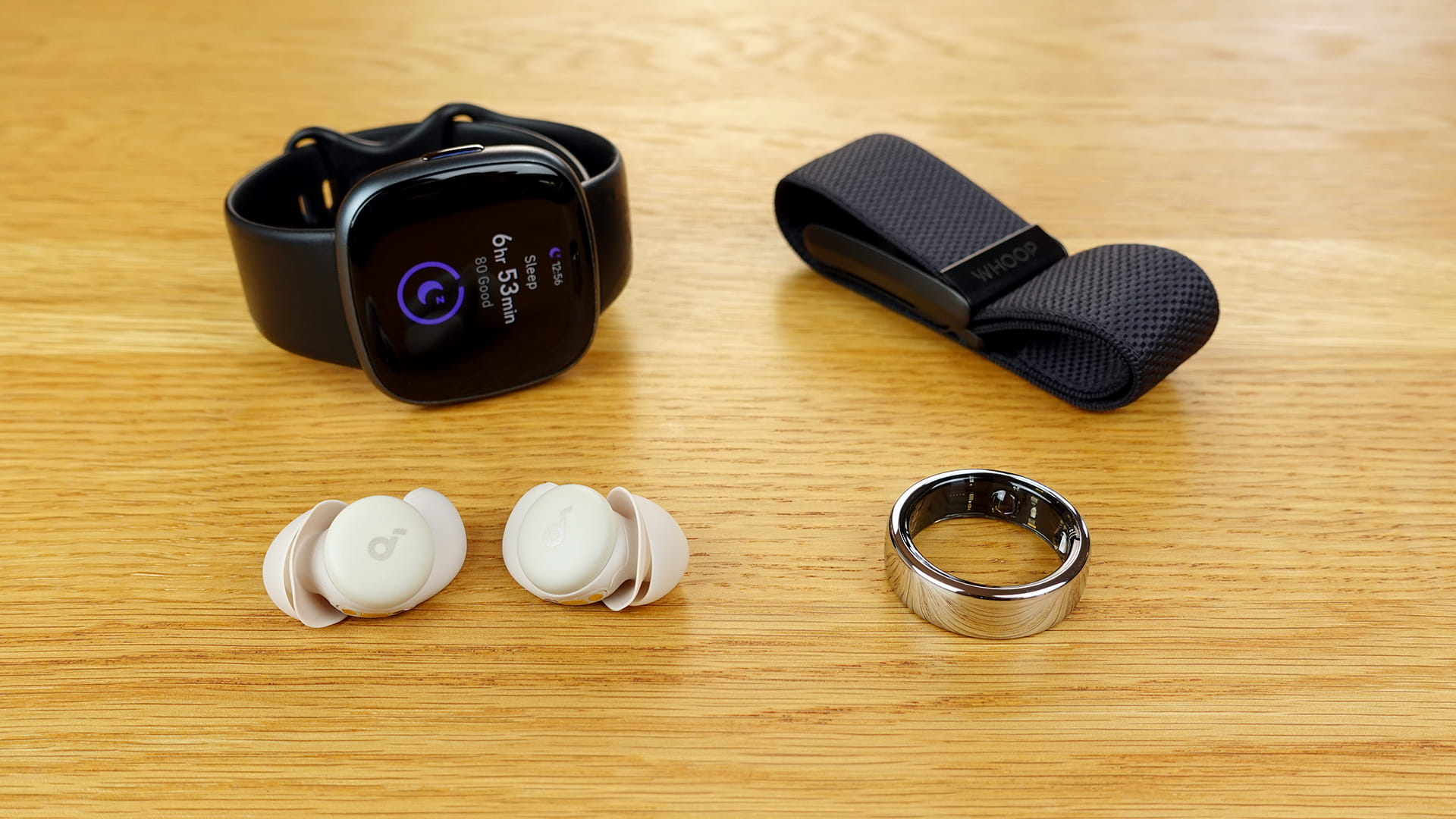

A sleep tracker should disappear at bedtime, then give you useful information in the morning. That is harder than it sounds. A wristband can disturb light sleepers, a ring needs the right fit, and an under-mattress sensor is comfortable but cannot follow you outside the bedroom.
The Best sleep trackers here range from the tiny Fitbit Inspire 3 to WHOOP's coaching-focused screenless bands and contactless pads from OZI and Withings. We have also included Garmin's dedicated upper-arm monitor and several inexpensive smartwatch-style options.
Fitbit Inspire 3 is our top pick for most people, with WHOOP Peak, Garmin Index Sleep Monitor, OZI Sleep Tracker, and Withings Sleep covering more specialized needs.
Comparison table
| # | Product | Award | Sleep data | Battery or setup | Best for |
|---|---|---|---|---|---|
| 1 | Fitbit Inspire 3 | Best overall | Sleep Score, stages, automatic tracking | Wearable, smart wake alarm | Everyday sleep and activity tracking |
| 2 | WHOOP Peak | Best for coaching | Sleep, Recovery, Strain, HRV | 14+ days | Training-focused users |
| 3 | Garmin Index Sleep Monitor S-M | Best sleep-only wearable | Stages, HRV, rest duration | Up to 7 nights | Garmin Connect users |
| 4 | Bestinn Smart Watch | Best smartwatch features | Light and deep sleep, wake time | 1.58-inch display | Notifications and basic sleep data |
| 5 | BIEMHA Smart Ring | Best ring-style option | Sleep cycle and daily activity | 2 to 3 days, case extends use | Screen-free ring tracking |
| 6 | Moremore Fitness Tracker | Best small-screen tracker | Deep, light, and wake time | Up to 7 days | Simple overnight monitoring |
| 7 | WHOOP Life | Best advanced health insights | Sleep, Recovery, ECG, stress | 14+ days | Detailed cardiovascular tracking |
| 8 | Garmin Index Sleep Monitor L-XL | Best large-size sleep band | Stages, HRV, rest duration | Up to 7 nights | Larger upper arms |
| 9 | OZI Sleep Tracker | Best non-wearable | Stages, breathing, movement, snoring | Under-sheet setup | People who dislike wearables |
| 10 | Withings Sleep | Best for snoring detection | Sleep phases, interruptions, snoring | Under-mattress setup | Passive bedroom monitoring |
1. Fitbit Inspire 3: Best Overall

Pros
- Automatic sleep tracking and a daily Sleep Score
- Smart wake vibrating alarm
- Small, lightweight design with two band sizes
- Tracks activity, heart rate, exercise, and stress
Cons
- Small display is not ideal for reading notifications
- Sleep insights depend on wearing it overnight
- Some health readings are estimates, not medical measurements
Best for: someone who wants one unobtrusive tracker for sleep, activity, and everyday wellness.
The Fitbit Inspire 3 is the easiest recommendation here because it treats sleep as part of daily life rather than a separate project. It is slim enough to wear overnight, then useful during the day for steps, heart rate, exercise, and reminders to move. The small form also avoids the bulky feeling of a full smartwatch.
Its sleep feature set is well balanced. Automatic tracking produces a detailed Sleep Score, while sleep mode reduces interruptions and the smart wake alarm uses vibration instead of an audible alarm. Fitbit also includes all-day heart-rate tracking, resting heart rate, SpO2, stress information, menstrual health tracking, and more than 40 exercise modes. That mix gives the morning sleep summary some useful context.
The tracker works with Apple devices running iOS 16.4 or higher and Android devices running Android 11 or higher. It weighs 0.2375 pounds and measures about 1.54 by 0.71 by 0.43 inches, so it is considerably less intrusive than a watch. The included small and large bands make fit easier than with a fixed-size ring.
WHOOP Peak and WHOOP Life go deeper into coaching, but they are more committed systems built around membership features. The Fitbit is more approachable than either, and it gives more general activity information than Garmin Index Sleep Monitor. Its weakness is the small screen and the fact that the most useful sleep patterns appear in the companion app, not on the device itself. Skip it if you want a completely non-wearable solution or advanced training analysis. For everyone else, it is the sensible starting point and the Fitbit we would keep on the nightstand.
2. WHOOP Peak: Best for Coaching

Pros
- Tracks sleep, Recovery, Strain, HRV, and stress
- Up to 14 or more days of battery life
- Screenless design avoids notifications at bedtime
- Journal and AI coaching connect habits with recovery
Cons
- Requires a membership
- No screen or on-device alarm display
- More focused on performance than casual sleep summaries
Best for: athletes and data-minded users who want sleep guidance tied to training and daily habits.
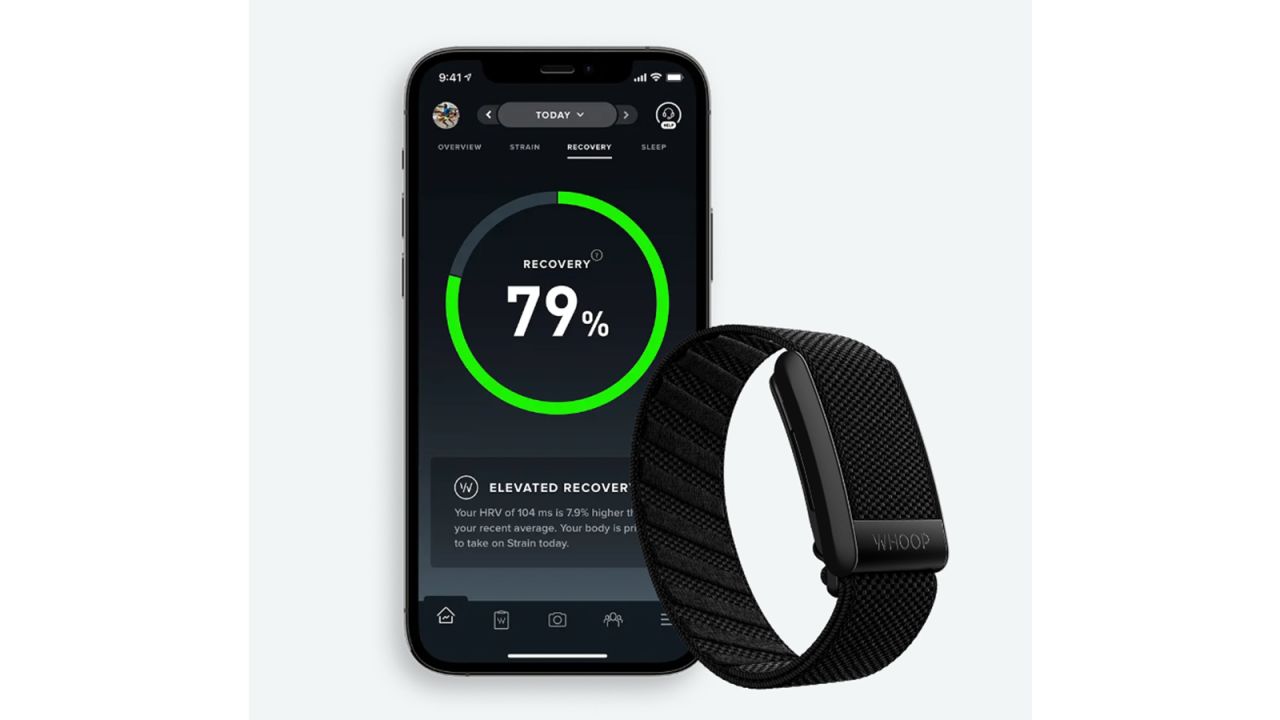
WHOOP Peak is not a conventional watch. There is no screen, buzzing notification stream, or distracting collection of apps. You wear the device, sleep with it, and use the app to understand how your night affected Recovery and how much Strain your body can handle next.
The supplied 12-month membership includes the WHOOP 5.0 device, a SuperKnit band, and a waterproof Wireless PowerPack. Battery life of up to 14 or more days makes continuous wear practical, especially because the power pack can charge the tracker without removing it from your body. WHOOP says it monitors heart rate every second and turns that information into Sleep, Strain, Recovery, VO2 max, menstrual cycle, and stress insights.
The more interesting part is the interpretation. The Journal can record more than 300 daily behaviors, including training, diet, wake time, and stress. WHOOP AI analyzes more than 140 metrics and turns them into sleep targets and Strain guidance. That is much more prescriptive than the Fitbit Inspire 3's daily summary. The integrations with Apple Health, Google Health Connect, Strava, and Natural Cycles also help pull activity and health information into one place.
The tradeoff is clear: Peak is not the right pick for someone who simply wants to see when they fell asleep. Garmin Index Sleep Monitor is quieter and more sleep-specific, while WHOOP Life adds advanced heart features. Peak's weakness is the ongoing membership requirement and the lack of any display or standalone experience. Choose it if you want coaching that changes with your behavior, not just a record of last night's sleep.
3. Garmin Index Sleep Monitor S-M: Best Sleep-Only Wearable

Pros
- Designed specifically for overnight wear
- Tracks sleep stages, HRV, rest duration, and Sleep Score
- Up to seven nights of battery life
- Smart wake alarm and Garmin Connect syncing
Cons
- Does not replace a daytime fitness watch
- Upper-arm placement may not suit everyone
- Metrics are described as close estimates
Best for: Garmin users who want a dedicated overnight band rather than another wrist device.
The Garmin Index Sleep Monitor S-M takes a useful middle path. It is not a smartwatch and does not try to be one. The lightweight, breathable band sits on the upper arm, leaving the wrist free for a regular watch or a daytime Garmin device.
Garmin lists sleep stages, sleep duration, HRV, and a Sleep Score among its tracked metrics. Pulse Ox supports breathing-variation information while sleeping, although Garmin makes clear that the device is not a medical tool and the readings are estimates. The smart wake alarm vibrates gently, which is a better match for a sleep-focused product than a loud alert from a phone.
The S-M band measures 12.8 by 2.5 by 0.02 inches and weighs 0.03125 pounds. Up to seven nights of battery life means less charging than the BIEMHA Smart Ring, though it does not reach the 14-plus-day endurance of WHOOP Peak. Without a Garmin smartwatch, the sleep metrics can sync directly to Garmin Connect. With a compatible Garmin watch, the overnight data can join the daytime health and fitness record.
The biggest reason to choose it over Fitbit Inspire 3 is separation. You can wear your preferred daytime watch and keep sleep tracking on the upper arm. The Fitbit remains better for an all-purpose tracker, and OZI Sleep Tracker is more comfortable for people who dislike any wearable. Skip Garmin Index if you want exercise tracking on the device itself. It suits Garmin households and anyone who wants a deliberately focused sleep band.
4. Bestinn Smart Watch: Best Smartwatch Features

Pros
- 1.58-inch touch display with always-on clock
- Tracks light and deep sleep plus wake time
- More than 120 exercise modes
- Includes call and message notifications
Cons
- Sleep features share attention with many smartwatch tools
- Blood pressure and blood oxygen readings should not replace medical equipment
- Compatibility claims are broad and app-dependent
Best for: someone who wants overnight sleep information alongside notifications and a large watch display.
The Bestinn Smart Watch is for people who would rather see information on their wrist than open a phone app. Its 1.58-inch high-resolution display, full touch controls, side button, and always-on clock make it feel more like a conventional smartwatch than the screenless WHOOP Peak or the compact Fitbit Inspire 3.
For sleep, Bestinn lists light and deep sleep stages and the time you wake up. It also tracks heart rate, blood pressure, and blood oxygen around the clock, with records visible in the app. Those readings can be useful for observing trends, but they should not be treated as a diagnosis or a replacement for clinical equipment.
The watch also includes more than 120 exercise modes, step, distance, and calorie tracking, phone notifications, incoming call alerts, weather, alarms, breathing training, and music controls. Phone-connected GPS can map an outdoor workout through the app. Compatibility is listed for Android 4.4 or newer and iOS 8.4 or newer, with a replaceable and washable strap.
That breadth is both its advantage and its limitation. The Bestinn offers more visible daily functionality than Garmin Index Sleep Monitor, while the Fitbit has a more clearly established sleep-first experience. Its large screen can also be less comfortable at night than a thin upper-arm band. Pick it if notifications, watch faces, and exercise modes matter as much as sleep stages. Those seeking the cleanest sleep analysis should look elsewhere.
5. BIEMHA Smart Ring: Best Ring-Style Option

Pros
- Small, screen-free ring design
- Tracks sleep, steps, calories, exercise, and heart rate
- No app subscription required
- Waterproof design rated to 80 meters
Cons
- Correct sizing is essential
- Battery lasts 2 to 3 days without the charging case
- Heart rate sampling is listed every 30 minutes
Best for: someone who wants a discreet ring and does not want a recurring app subscription.
The BIEMHA Smart Ring is appealing because it removes the screen, notifications, and wristband from the sleep equation. A ring is easy to forget during the night, and its water resistance makes it suitable for ordinary daily wear, workouts, and swimming.
BIEMHA says the ring monitors sleep quality, sleep cycles, steps, calories, and exercise performance. Its sensors measure heart rate every 30 minutes when worn, which is a different approach from WHOOP Peak's stated every-second monitoring. That interval may be sufficient for general wellness trends, but it is not the choice for users who want dense continuous data.
Battery life is listed as 2 to 3 days, with the smart charging case extending total use beyond five days. The listing also identifies this version as size 8 in rose gold, so sizing deserves attention before ordering. BIEMHA specifically recommends measuring finger circumference and checking the size chart. There is no app subscription requirement, and the ring supports iOS and Android.
Compared with Fitbit Inspire 3, the BIEMHA is less useful for on-device information and has a shorter standalone battery window. It is more discreet than a watch, but OZI Sleep Tracker is still the better answer for anyone who does not want to wear anything. Choose BIEMHA when ring comfort and no subscription matter most. Skip it if your fingers change size overnight or if you dislike charging small devices every few days.
6. Moremore Fitness Tracker: Best Small-Screen Tracker

Pros
- Sleep Score with deep, light, and wake periods
- Up to seven days of regular-use battery life
- 1.1-inch AMOLED touch display
- 25 sports modes and phone notifications
Cons
- Limited sleep detail compared with WHOOP and Garmin
- Health readings are for wellness tracking, not diagnosis
- Small display limits on-device review
Best for: someone who wants a straightforward tracker with a bright display and basic sleep summaries.
The Moremore Fitness Tracker keeps the formula simple. Its 1.1-inch AMOLED color display is large enough for basic information without turning the device into a full smartwatch. The magnetic charger and claimed seven-day regular-use battery life also make it easier to leave on overnight.
Sleep tracking covers deep sleep, light sleep, and wake time, then produces a nightly Sleep Score in the app. Moremore also lists all-day heart rate, blood pressure, blood oxygen, steps, distance, and calories. As with other wellness trackers in this roundup, those health readings should be treated as general information rather than clinical measurements.
There are 25 sports modes, including walking, running, dancing, and yoga. The watch can show incoming calls and app messages, and it includes sedentary and water reminders, an alarm, stopwatch, remote camera control, and device finding. Android 5.0 and iOS 9.0 or later are supported.
The Moremore is more focused than Bestinn's 120-plus-mode watch, but its sleep analysis is not as ambitious as Garmin Index Sleep Monitor's HRV and breathing-variation information. Fitbit Inspire 3 is the stronger all-round recommendation, especially for automatic exercise tracking and stress features. Moremore makes sense for a buyer who wants a bright, compact screen and a basic overnight record without a complicated device.
7. WHOOP Life: Best Advanced Health Insights

Pros
- Sleep and Recovery coaching with 14-plus-day battery life
- On-demand ECG through Heart Screener
- Daily blood pressure insights and irregular rhythm notifications
- Luxe SuperKnit band and wireless charging pack included
Cons
- Requires a 12-month membership
- No screen for quick checks
- Advanced features may exceed casual sleep-tracking needs
Best for: users who want WHOOP's coaching platform with the most extensive health feature set in this group.
WHOOP Life is the most ambitious tracker here. Like WHOOP Peak, it has no screen and is built around continuous wear, app analysis, and personalized guidance. The difference is the expanded health toolkit, including Heart Screener with on-demand ECG, daily blood pressure estimates, and irregular heart rhythm notifications.
The package includes a 12-month membership, the WHOOP MG device, a SuperKnit Luxe band, and a waterproof Wireless PowerPack. Battery life reaches 14 or more days, so sleep tracking does not need to stop every night for charging. WHOOP says the device monitors heart rate continuously and uses that information for Sleep, Strain, Recovery, VO2 max, menstrual cycle, and stress insights.
Its AI coaching analyzes more than 140 metrics, while the app can connect with Apple Health, Google Health Connect, Strava, and Natural Cycles. Daily blood pressure information and ECG readings may be meaningful to users who want a closer look at cardiovascular trends, although the product should not replace professional medical care.
WHOOP Peak is the better fit for training and recovery without the extra heart features. Fitbit Inspire 3 is much easier to recommend to a casual user. Life's weakness is not hardware, but commitment: it is a membership-based system with no on-device experience. Choose it only if you will use the coaching and advanced health tools. If you mainly want sleep stages and a gentle alarm, Garmin Index Sleep Monitor is the more focused answer.
8. Garmin Index Sleep Monitor L-XL: Best Large-Size Sleep Band
Pros
- Dedicated upper-arm sleep design
- Sleep stages, HRV, rest duration, and breathing variations
- Up to seven nights of battery life
- Syncs with Garmin Connect and includes smart wake
Cons
- Larger band is not suitable for every arm
- Does not provide daytime smartwatch functions
- Metrics are estimates and not medical measurements
Best for: Garmin users who need the larger Index Sleep Monitor band size.
The Garmin Index Sleep Monitor L-XL has the same concept and sleep tools as the S-M version, but the larger band is the important distinction. It measures 17.8 by 2.5 by 0.02 inches and is intended for a larger upper arm. Choosing the right size matters because a loose sensor can be uncomfortable and may undermine consistent overnight wear.
Sleep stages, HRV, rest duration, and Sleep Score are available through Garmin Connect. Pulse Ox supports breathing-variation information, and the smart wake alarm vibrates when it is time to get up. Garmin says the band can run for up to seven nights before charging, which is enough to avoid daily battery management.
The device can sync directly to Garmin Connect even without a Garmin smartwatch. Owners of compatible Garmin watches can combine nighttime data with daytime health and fitness information. That makes it a sensible companion rather than a replacement for a full Garmin ecosystem.
The L-XL has the same limits as the S-M: it is a sleep monitor, not an exercise watch, and the readings are close estimates rather than medical measurements. Fitbit Inspire 3 is more versatile, while OZI Sleep Tracker is the better option for people who refuse all wearables. Pick this version when the upper-arm format suits you and the S-M would be too tight. The size distinction is the reason to choose it over the other Garmin listing.
9. OZI Sleep Tracker: Best Non-Wearable

Pros
- No watch, ring, camera, or wearable required
- Tracks sleep stages, movement, breathing, and heart rate
- Bed-exit and unusual-pattern alerts
- No monthly subscription
Cons
- Tracks sleep only when used in bed
- Requires under-sheet placement and app setup
- Less useful for daytime activity and exercise
Best for: couples, families, and light sleepers who do not want anything attached to the body.
The OZI Sleep Tracker solves the biggest problem with wearable sleep devices by eliminating the wearable. Its thin sensor pad sits under the sheet and monitors the night without a watch, ring, wristband, or camera in the room. For anyone who finds a band irritating or cannot wear a ring comfortably, that change is substantial.
The OZI app displays sleep stages, heart rate, breathing rate, movement, awake moments, time to fall asleep, sleep duration, and a nightly Sleep Score. It can also send alerts for bed exits, unusual movement, or changes in heart-rate and breathing patterns. Those alerts make it more relevant for monitoring a child, partner, older parent, or anyone who needs remote visibility.
The sensor measures 33.5 by 2.6 by 0.07 inches. Setup involves placing it under the sheet, connecting the app, and beginning the tracking process. OZI says there is no monthly subscription, and the product is designed for adults, children aged five and older, couples, and households.
The compromise is that OZI is tied to the bed. It cannot record a walk, workout, or daytime heart-rate pattern the way Fitbit Inspire 3 can. Withings Sleep is a similar under-mattress concept, but OZI lists more explicit alerts and a wider set of overnight measurements. If comfort is your first concern, this is the one to choose. If you want a tracker that follows your routine beyond the bedroom, choose a wearable instead.
10. Withings Sleep: Best for Snoring Detection

Pros
- Passive under-mattress design
- Detects snoring episodes
- Analyzes sleep phases and interruptions
- Tracks heart rate through a pneumatic sensor
Cons
- No daytime activity tracking
- Older, more limited feature set than OZI
- Requires suitable under-mattress placement
Best for: sleepers who want passive monitoring with a specific interest in snoring and interruptions.
The Withings Sleep is a mattress pad rather than a wrist device. Put it under the mattress and it records the night without asking you to remember a charging routine or tolerate a sensor on your skin. That passive approach remains its strongest feature.
Withings says the pad analyzes sleep phases, depth, and interruptions while monitoring heart rate through a pneumatic sensor. It can also detect snoring episodes automatically. That makes the device more specifically useful for people trying to understand noisy or repeatedly interrupted nights, rather than only looking at a single sleep score.
The pad measures 9 by 7.4 by 8 inches and weighs 0.6 pounds according to the product information. Its format is more substantial than OZI Sleep Tracker's listed thin sensor, and it does not provide OZI's stated bed-exit or unusual-pattern alerts. It is built around sleep-cycle analysis instead of a broader household monitoring system.
Fitbit Inspire 3 remains more useful for people who want sleep data connected to exercise and daytime habits. OZI is the stronger under-sheet choice when alerts, breathing patterns, and multiple household use cases matter. Withings is the more focused pick for passive sleep analysis and snoring detection. Choose it when you want the least wearable experience possible and do not need a daytime tracker.
How to choose the best sleep trackers
The right sleep tracker depends less on the number of metrics than on whether you will actually wear or use it every night.
Wearability and comfort
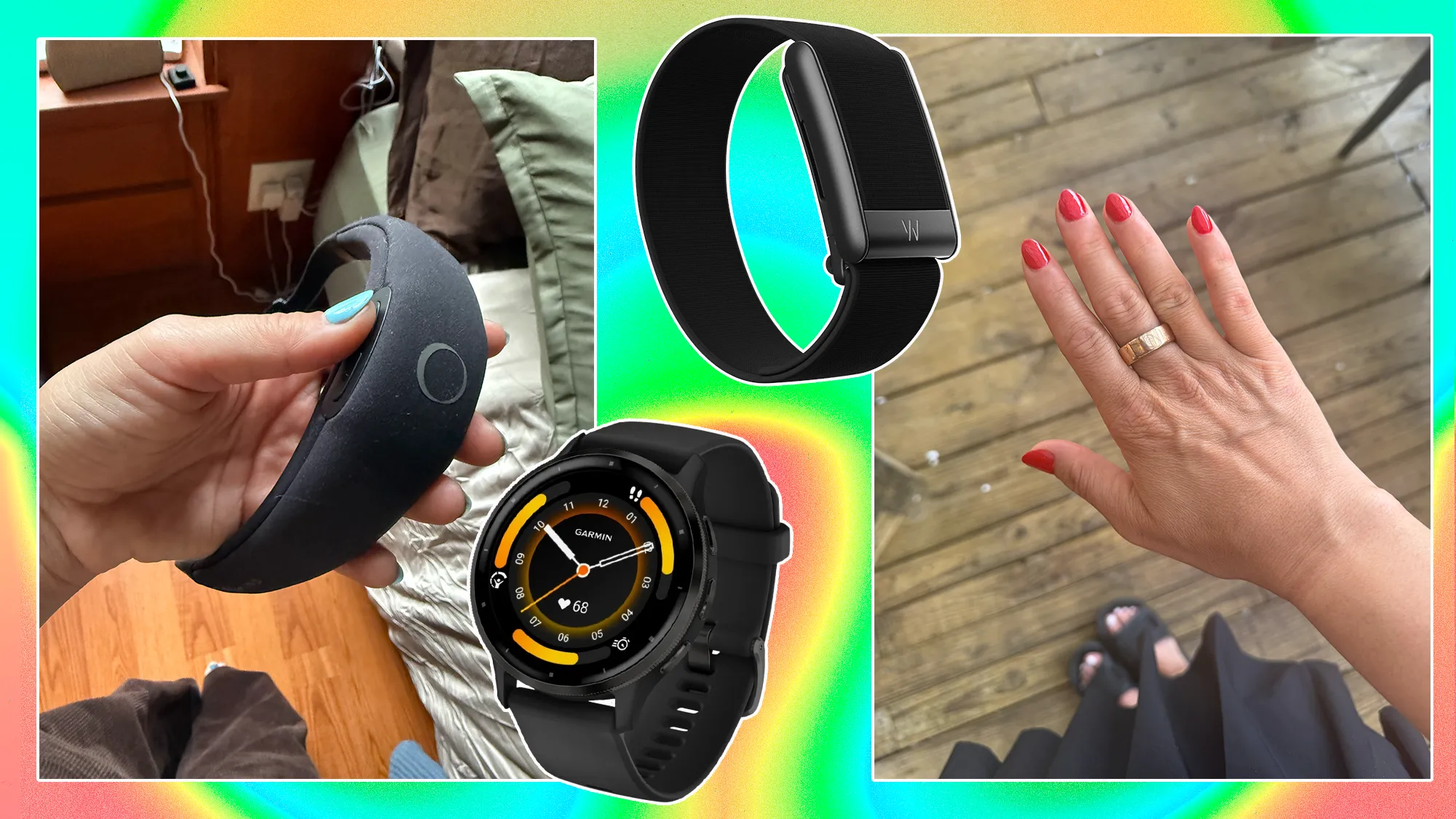
Wristbands are familiar and usually combine sleep with daytime activity, but they can feel intrusive in bed. Upper-arm bands move the sensor away from the wrist, while rings reduce the visible footprint but require careful sizing. Under-sheet pads are the least intrusive option, though they only work at home.
The most useful sleep tracker is the one that does not change the way you sleep.
Fitbit Inspire 3 is the strongest general wearable here, Garmin Index is the focused upper-arm alternative, and OZI or Withings make more sense for people who do not want body contact.
Sleep measurements
Look for the details that answer a real question. Sleep stages and duration show how the night was divided, while HRV, breathing rate, movement, heart rate, and snoring can help explain interruptions. A Sleep Score is convenient, but it is only useful when the app explains what influenced it.
WHOOP Peak and WHOOP Life connect sleep to Recovery and training. Garmin Index adds HRV and breathing variations, while OZI lists breathing, movement, awake moments, and time to fall asleep. Withings is the clearest choice when snoring detection is central.
Battery and charging
A tracker that needs frequent removal creates gaps in the record. Fitbit is designed for continuous wear, Garmin lists up to seven nights, BIEMHA lists 2 to 3 days without its charging case, and WHOOP lists 14 or more days. Under-mattress products avoid wearable charging altogether.
Consider how often you are willing to interrupt tracking. WHOOP's power pack supports charging without removing the device, while the Moremore tracker uses magnetic fast charging. The best battery figure is not always the most important one if the charging method is inconvenient.
App and coaching
Basic apps show a nightly summary. More advanced systems interpret patterns and connect sleep with activity, stress, recovery, or habits. WHOOP's Journal and AI coaching are the most prescriptive here, while Fitbit adds stress and readiness information. Garmin Connect is particularly useful when you already use compatible Garmin hardware.
If you want to compare sleep with other health data, how sleep tracking fits into a broader health routine can help clarify which features matter. People who only need bedtime and wake-time information should not choose a complicated coaching platform by default.
Household and privacy needs
A wearable follows one person. An under-sheet sensor can be more practical for a partner, child, or older adult, and it avoids a camera in the bedroom. OZI specifically includes bed-exit and unusual-pattern alerts, while Withings emphasizes snoring and sleep interruptions.
For a broader look at which overnight sensors work without wearing a device, compare placement and alert functions carefully. These products are wellness monitors, not substitutes for clinical evaluation.

Frequently asked questions
Are sleep trackers accurate?
Sleep trackers estimate sleep from signals such as movement, heart rate, breathing, and related measurements. They can be useful for spotting patterns, but the product data in this roundup describes the measurements as estimates or wellness information rather than medical diagnosis. A persistent sleep concern should be discussed with a healthcare professional.
Is a ring or wristband better for sleep?
A ring is smaller and screen-free, but it must fit correctly and may need charging every few days. A wristband usually offers more daytime features and easier adjustment. Fitbit Inspire 3 is the most versatile wrist option here, while BIEMHA is aimed at people who prefer a ring.
Do I need to wear a tracker every night?
Consistent overnight use creates a more useful record, especially when comparing changes in bedtime, wake time, and interruptions. WHOOP and Garmin are designed for extended wear, while OZI and Withings collect data without attaching anything to your body. A device that feels uncomfortable may produce less useful information because you will remove it.
Can sleep trackers detect snoring?
Withings Sleep specifically lists automatic snoring detection. OZI Sleep Tracker lists breathing patterns, movement, and awake moments, but its feature description does not specifically promise snoring detection. A tracker is not a diagnosis for sleep apnea or another sleep disorder.
Do sleep trackers need a subscription?
Not all of them. BIEMHA and OZI state that no app subscription is required, while WHOOP Peak and WHOOP Life include 12-month memberships as part of their packages. Check the service terms before choosing a device based on its app features.
Can these devices replace a sleep study?
No. These products are consumer wellness devices and should not replace a clinical sleep study or professional advice. Their sleep stages, heart-rate trends, and breathing information can help you notice patterns, but they cannot establish a medical diagnosis.
The bottom line
The Best sleep trackers choice for most people is Fitbit Inspire 3. It is small, covers sleep and daytime activity, includes a smart wake alarm, and avoids the narrow focus of a dedicated sleep band. WHOOP Peak is the better pick for athletes who want coaching that connects sleep, Recovery, Strain, and daily habits.
Choose Garmin Index Sleep Monitor if you already use Garmin Connect and prefer an upper-arm band, or choose OZI Sleep Tracker if wearing anything in bed is a deal breaker. Withings Sleep remains a focused option for passive monitoring and snoring detection.
If you are undecided, start with Fitbit for general use, WHOOP Peak for training guidance, and OZI for completely non-wearable tracking.
As an Amazon Associate we earn from qualifying purchases.