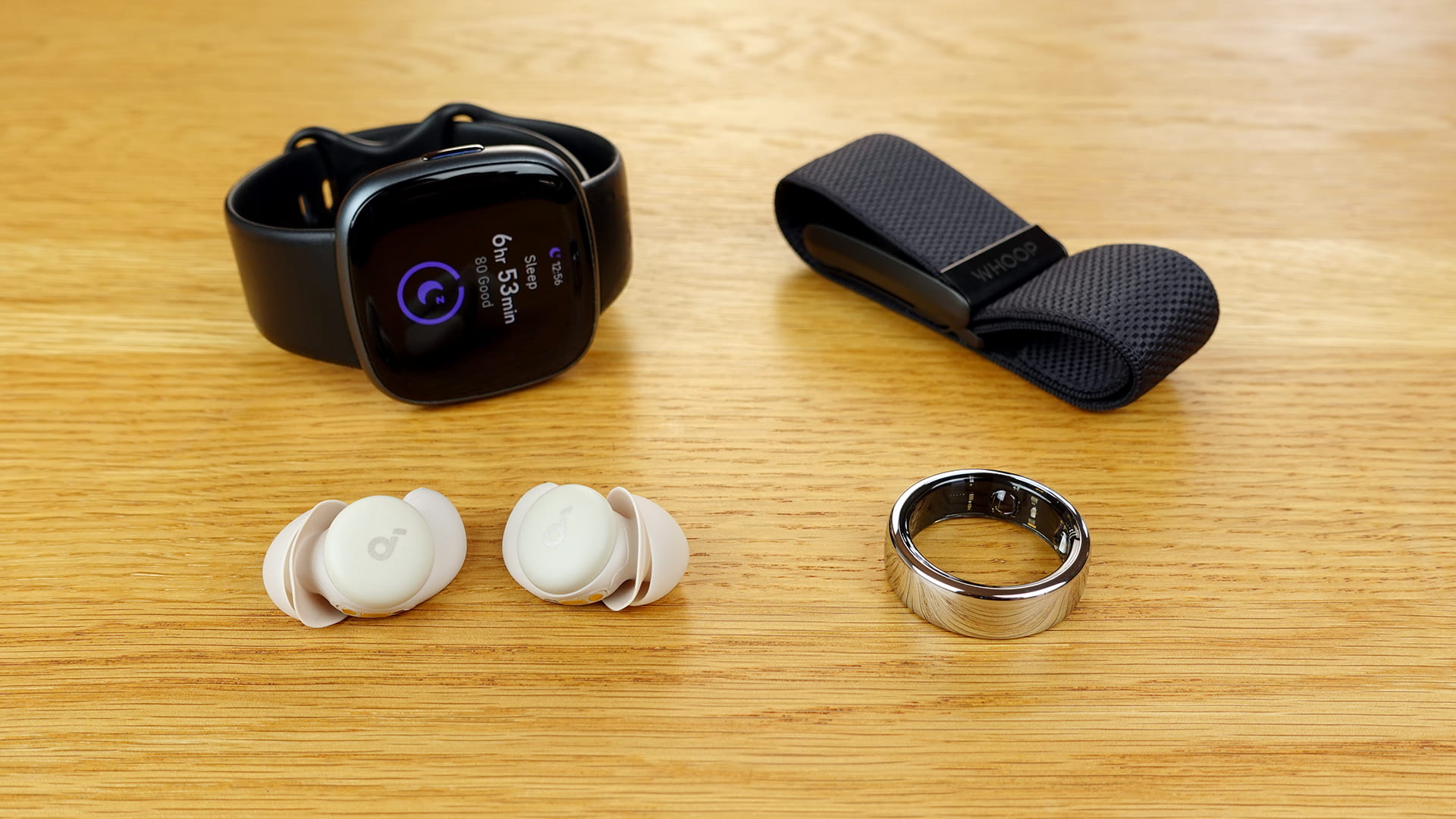

A useful sleep tracker has to disappear at bedtime. A bright watch, a bulky sensor, or a band that needs charging every night can turn sleep measurement into another nighttime nuisance. The right device should collect useful information with as little interruption as possible, then explain what the data means when you wake up.
Our Best sleep tracking device picks range from full-featured fitness trackers to dedicated oxygen and breathing monitors. Fitbit Inspire 3 is the best starting point for most people, while WHOOP Peak suits serious data-driven training and the EMAY monitors are better for focused overnight respiratory information.
Comparison table
| # | Product | Award | Sleep data | Battery or recording | Best for |
|---|---|---|---|---|---|
| 1 | Fitbit Inspire 3 | Best overall | Sleep Score, sleep stages, smart wake alarm | Not specified | Everyday sleep and activity tracking |
| 2 | EMAY Oxygen Monitor | Best for oxygen trends | Continuous blood oxygen and pulse rate | 40 hours of built-in memory | Overnight oxygen recording |
| 3 | WHOOP Peak | Best for coaching | Sleep, Recovery, Strain, HRV, VO2 max | 14+ days | Training-focused sleep insights |
| 4 | Garmin Index Sleep Monitor | Best screen-free sleep band | Sleep stages, HRV, breathing variations | Up to 7 nights | Garmin users and quiet wearables |
| 5 | WHOOP One | Best for recovery tracking | Sleep, Recovery, Strain, HRV, blood oxygen | 14+ days | Sleep and training baselines |
| 6 | Withings Sleep Pad | Best under-mattress design | Sleep phases, interruptions, snoring, heart rate | Under-mattress sensor | People who dislike wearables |
| 7 | Fitbit Air | Best screenless all-day band | Health tracking and sleep tracking | Up to 1 week | Distraction-free daily wear |
| 8 | EMAY Breathing Monitor | Best for airflow data | Nasal airflow, AHI, snoring, respiratory events | Continuous recording through app | Focused breathing observation |
| 9 | ZKSSGY Fitness Tracker | Best for a color display | Sleep stages, awake periods, sleep quality | Not specified | Basic sleep and activity tracking |
1. Fitbit Inspire 3: Best Overall

Pros
- Automatic sleep tracking with a daily Sleep Score
- Smart wake vibrating alarm
- 24/7 heart-rate tracking and SpO2
- Small, light design with small and large bands
Cons
- The display and body are less substantial than a smartwatch
- Some health features are better suited to Fitbit users already in its ecosystem
Best for: someone who wants sleep information alongside everyday activity and wellness tracking.
The Fitbit Inspire 3 is the easiest device here to recommend because it treats sleep as one part of a wider daily routine. It is small enough to wear overnight, yet it does not reduce the experience to a single oxygen reading or a basic movement graph. The automatic sleep tracking, daily Sleep Score, sleep mode, and vibrating smart alarm form a coherent set of features for someone trying to understand bedtime habits.
Fitbit also gives the Inspire 3 more context than a dedicated sleep sensor. It tracks heart rate around the clock, supports SpO2, records resting heart rate, and includes all-day activity tracking. Its 40-plus exercise modes and automatic exercise tracking are useful because daytime activity often matters when interpreting a restless night. The tracker is compatible with Apple iOS 16.4 or higher and Android OS 11.0 or higher, so it is not limited to one phone platform.
The smart wake alarm is a particularly practical touch. A vibration on the wrist is more private than a phone alarm, and sleep mode helps keep the tracker from becoming a source of nighttime distraction. The daily Stress Management Score, mindfulness sessions, and relax breathing sessions extend the device beyond sleep without turning it into a full-size watch.
The limitation is that this is still a small fitness tracker, not a dedicated clinical-style respiratory monitor. Someone specifically investigating overnight oxygen patterns should choose the EMAY Oxygen Monitor, while a serious athlete will get deeper coaching from WHOOP Peak. For the person who wants one unobtrusive band to cover sleep, movement, heart rate, and general wellness, the Inspire 3 is the most balanced pick.
2. EMAY Oxygen Monitor: Best for Oxygen Trends

Pros
- Records blood oxygen and pulse rate continuously
- Stores up to 40 hours of data
- Works without a real-time phone connection
- Historical data can be reviewed second by second
Cons
- It is not a general-purpose sleep or activity tracker
- The manufacturer says it is not for medical or diagnostic use
- Data must be synced to the app after recording
Best for: someone who wants focused overnight oxygen and pulse-rate data rather than a broad fitness platform.
The EMAY Oxygen Monitor is built around a narrower question: what happened to your blood oxygen and pulse rate while you slept? That focus makes it more useful than a general tracker when those two measurements are the reason you are shopping. It continuously records both metrics and keeps the information in built-in memory, so the phone does not need to remain connected beside the bed.
The 40 hours of storage is enough to record multiple nights before syncing, although the product is more compelling when you review the information regularly. The free iOS and Android app can display historical readings second by second and export a summary report. That gives the data a clearer timeline than a single morning number, and the report can be shared with a physician.
A large, rotating digital LCD display makes the monitor easier to view when it is being used during the day. The rotating design means you do not have to twist your neck to read it. For overnight use, the more important feature is the record-first, sync-later workflow. Put it on, let it collect information, and review it when convenient.
This is not the right replacement for the Fitbit Inspire 3 if you want sleep stages, exercise tracking, reminders to move, or wellness features. It also carries an important limitation that should not be glossed over: the manufacturer states that it is intended for sports and aviation use only, not for medical or diagnostic purposes. Choose it when continuous oxygen and pulse recording are the priority, not when you want a complete sleep diary.
3. WHOOP Peak: Best for Coaching

Pros
- Screenless design supports continuous wear
- Up to 14+ days of battery life
- Personalized Sleep, Strain, and Recovery insights
- Journal supports more than 300 daily behaviors
- Includes a waterproof Wireless PowerPack
Cons
- The screenless design means information is viewed in the app
- Its coaching is most useful for people willing to log habits and training
- The membership-based setup is more involved than a basic tracker
Best for: athletes and committed health trackers who want sleep recommendations tied to training and recovery.
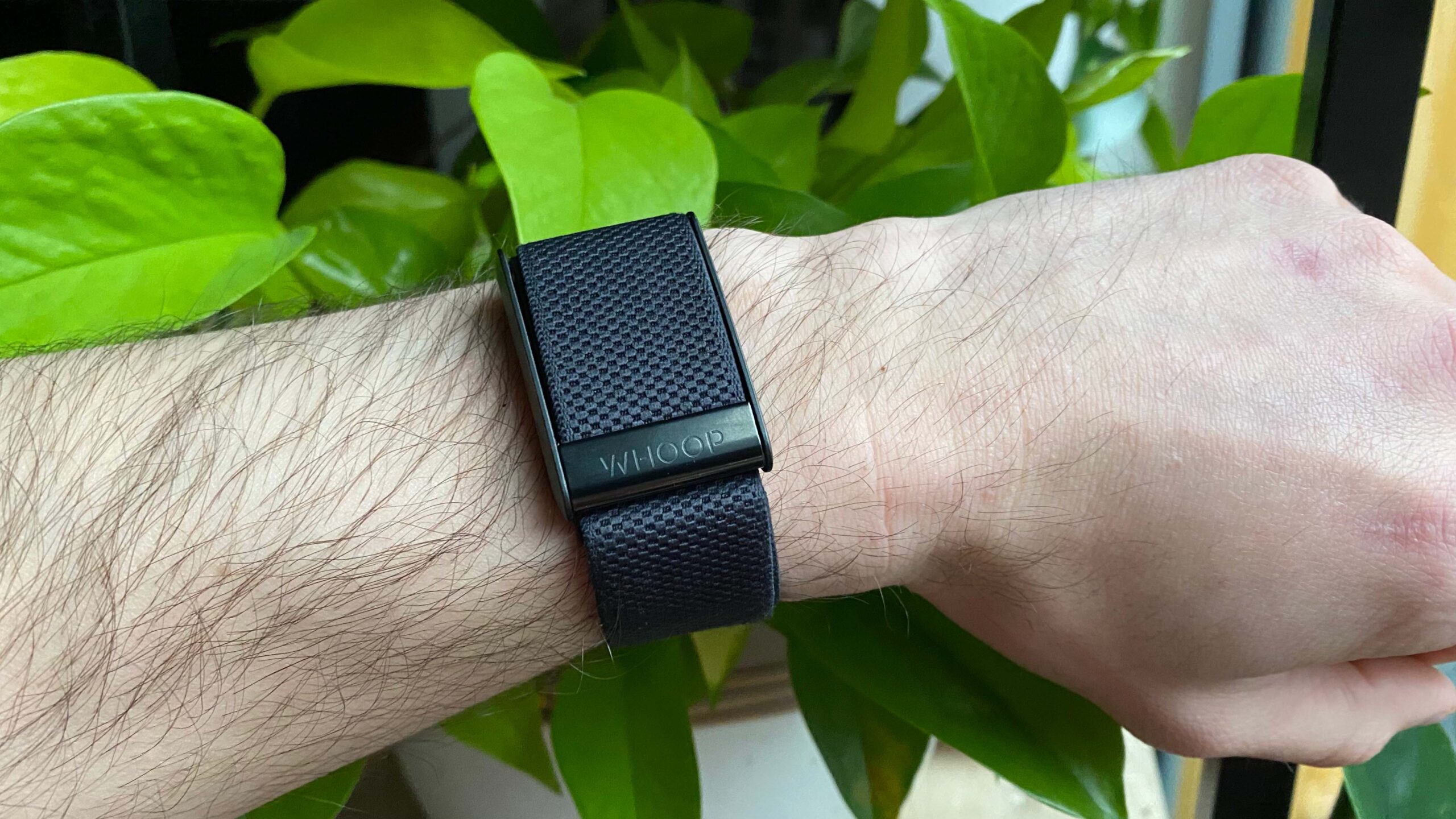
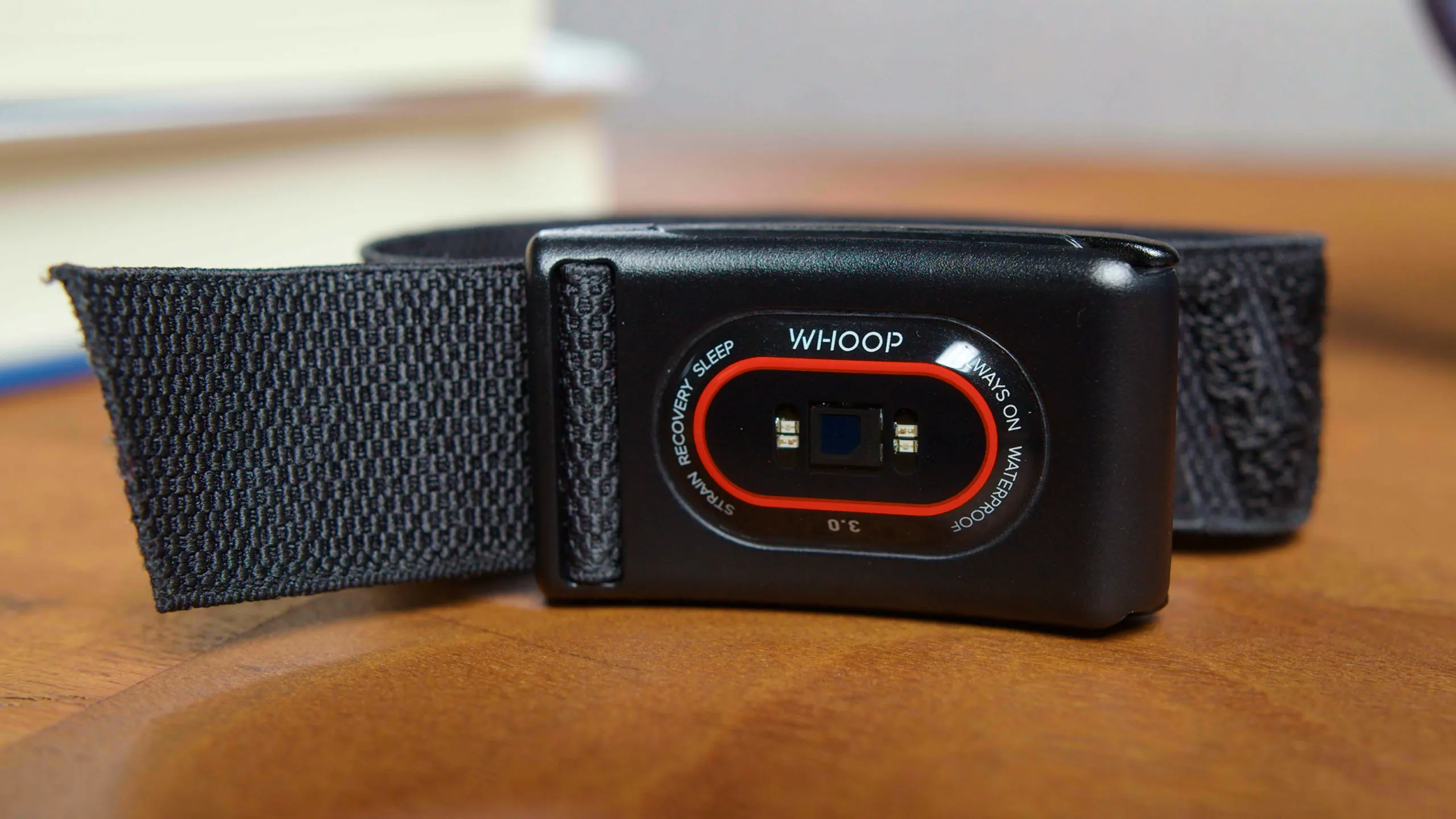
WHOOP Peak is less a watch and more a continuous data system. There is no screen and no buzzing notification, which is exactly the point. You wear the WHOOP 5.0 device, let it collect information throughout the day and night, then use the app to understand how sleep affects strain, recovery, stress, and future training.
Its battery can last 14 or more days, a useful advantage for sleep tracking because frequent charging creates gaps in the record. The included SuperKnit band is intended for all-day wear, and the waterproof Wireless PowerPack can charge the device while it remains part of your routine. That combination makes it easier to maintain a long-running baseline than a tracker that has to come off every night.
WHOOP Peak reports Sleep, Strain, Recovery, VO2 max, menstrual cycle, and heart-rate insights. Its Real-time Stress Monitor is designed to show how the body responds to stressors, while WHOOP AI analyzes 140 or more metrics to provide guidance on sleep targets and strain goals. The Journal can capture more than 300 behaviors, including training, diet, wake time, and stress levels. Those features are unusually deep, but they ask for active participation.
The trade-off is commitment. A Garmin Index Sleep Monitor is quieter and more narrowly focused, while Fitbit Inspire 3 is simpler for a person who wants a daily score without building a detailed journal. WHOOP Peak makes sense for someone who will act on coaching and wants to connect sleep with performance. Skip it if you only want a quick bedtime summary and have no interest in a screenless app-centered system.
4. Garmin Index Sleep Monitor: Best Screen-Free Sleep Band

Pros
- Lightweight, breathable upper-arm design
- Tracks sleep stages, HRV, rest duration, and sleep score
- Up to 7 nights of battery life
- Smart wake alarm with gentle vibration
- Syncs with Garmin Connect
Cons
- Battery life is shorter than the WHOOP options
- The S-M band requires attention to fit
- Some features depend on Pulse Ox availability
Best for: Garmin users or anyone who prefers a dedicated upper-arm sleep band without a screen.
The Garmin Index Sleep Monitor takes a more specialized approach than a wrist tracker. It sits on the upper arm, where the lightweight, breathable band can stay out of the way of a watch or other daytime wearable. Its physical size is 12.8 by 2.5 by 0.02 inches, and the listed S-M model is designed for people who need that smaller fit.
The sleep information is more substantial than a simple duration estimate. Garmin lists sleep score, sleep stages, HRV, and duration of rest, with the clear warning that these are close estimations rather than medical measurements. The band also uses Pulse Ox for breathing variations while sleeping, when that feature is available in the user’s country. Skin temperature supports menstrual-cycle insights, including period predictions and past ovulation estimates.
Battery life reaches up to seven nights, which is enough for a useful weekly picture but not as carefree as WHOOP Peak or WHOOP One, both of which list 14-plus days. The smart wake alarm is a strong practical feature, since a gentle vibration can wake the wearer without adding a phone alarm to the room.
Garmin Connect is the main reason to choose this over the Fitbit Inspire 3. People who already use a compatible Garmin smartwatch can bring daytime and nighttime information together, while owners without one can sync the sleep metrics directly to Garmin Connect. The weakness is the more limited S-M sizing and the shorter battery window. It is a focused, quiet choice for Garmin households, but less versatile for someone who wants one tracker to cover exercise and daily notifications too.
5. WHOOP One: Best for Recovery Tracking

Pros
- Up to 14+ days of battery life
- Continuous heart-rate and HRV monitoring
- Tracks blood oxygen and skin temperature
- Screenless design avoids bedtime distractions
- Includes CoreKnit performance band and Basic Charger
Cons
- App access is central to the experience
- There is no on-device display
- The system is more complicated than a basic sleep tracker
Best for: people who want sleep data interpreted alongside recovery, stress, and exercise load.
WHOOP One shares the same fundamental idea as WHOOP Peak: wear a screenless device continuously and let the app turn health measurements into guidance. It includes the WHOOP 5.0 device, a CoreKnit performance band, and a Basic Charger. The absence of a display is useful at bedtime because the tracker does not invite checking notifications or the time.
The key data set includes Sleep, Strain, Recovery, heart rate, HRV, blood oxygen, and skin temperature. WHOOP describes continuous HRV as an indicator of physiological readiness, then uses that information to recommend daily strain targets. For sleep, the value comes from seeing how a short or interrupted night changes what the system expects your body can handle the next day.
Battery life is listed at 14 or more days, which helps protect the continuity of an overnight record. The device also connects with Apple Health, Google Health Connect, Strava, and Natural Cycles. Its Journal can record more than 300 daily behaviors, giving users a way to associate changes in recovery with wake times, training, diet, stress, and other routines.
The distinction between WHOOP One and WHOOP Peak is less about the basic sleep-tracking concept than the package and feature emphasis. Peak adds the Wireless PowerPack and expands the stated coaching and Healthspan features, while One keeps the experience centered on sleep, recovery, strain, and health monitoring. Choose One if that core system is what you need. Choose Garmin Index Sleep Monitor instead if you want a simpler dedicated sleep band and fewer training-oriented layers.
6. Withings Sleep Pad: Best Under-Mattress Design

Pros
- No wearable required
- Sits under the mattress
- Tracks sleep phases and interruptions
- Detects snoring episodes
- Measures heart-rate information through a pneumatic sensor
Cons
- It does not provide the all-day activity features of a wrist tracker
- Under-mattress placement may not suit every bed setup
- It is an older, more focused design than the newest screenless bands
Best for: sleepers who dislike wearing a band, ring, or watch overnight.
The Withings Sleep Pad solves the comfort problem by moving the sensor out of the way. It sits under the mattress, so there is nothing on the wrist or upper arm to adjust when you turn over. For people who abandon wearable trackers because they notice them in bed, that design matters more than a long list of app features.
The pad analyzes sleep phases, depth, and interruptions, then uses that information to help the user understand the shape of the night. It can also detect snoring episodes, a detail that many general activity trackers do not emphasize. The sensor measures cardiovascular information through a pneumatic system that detects the mechanical wave produced by each heartbeat.
That makes Withings Sleep different from EMAY Oxygen Monitor, which focuses on continuous oxygen and pulse readings, and from EMAY Breathing Monitor, which records airflow. The Withings pad is a broader sleep environment tool. It looks at phases, interruptions, snoring, and heart-rate information without requiring a probe or finger-mounted sensor.
The weakness is the lack of portability. A wearable can follow you to another bed or on a trip, while an under-mattress pad belongs to one sleeping setup. It also does not replace the daytime activity, heart-rate, or exercise features of Fitbit Inspire 3. Pick it when your highest priority is sleeping without a device on your body. If you are comparing non-wearable options, the differences between under-mattress and wearable sleep sensors can help narrow the choice.
7. Fitbit Air: Best Screenless All-Day Band

Pros
- Screenless design avoids bedtime distractions
- One-size fit adjusts from 130 to 210 mm
- Battery lasts up to a week
- Five minutes of charging can provide a day of battery life
- Can shift between bracelet, workout band, and sleep band
Cons
- The tracker has no screen for on-device information
- Premium coaching requires a separate membership
- The listing does not specify sleep metrics as deeply as Inspire 3
Best for: someone who wants a discreet tracker that can stay on through work, exercise, and sleep.
The Fitbit Air is designed to be forgettable. It has no screen, and its micro-adjustable one-size tracker fits wrists from 130 to 210 mm. That combination should appeal to people who find a watch too visually prominent or who do not want a glowing display near the bed.
Its strongest practical feature is flexibility. The tracker can move from bracelet to workout band to sleep band, and the product says the change can be made by pressing the pebble in and clicking it into place. Advanced sensors and newer algorithms are intended to support precise, continuous health tracking, though the listing does not provide the same detailed sleep metric list as the Fitbit Inspire 3.
Battery life reaches up to a week, with fast charging that can provide one day of battery life in five minutes. That is a useful safeguard when the tracker is nearly empty at bedtime. Fewer charging interruptions mean fewer missing nights, which is often more important than a complicated set of measurements.
The trade-off is that the Air is less explicit about sleep reporting in the provided product information. It is also tied to an optional Google Health Premium membership for Gemini-built personalized coaching, which is sold separately. Choose Fitbit Air for comfort, low distraction, and all-day wear. Choose Inspire 3 if you want the clearest stated combination of Sleep Score, automatic sleep tracking, sleep mode, and smart wake alarm. Readers deciding between wrist-based health platforms may also want to compare how everyday fitness tracking differs from sleep-focused monitoring.
8. EMAY Breathing Monitor: Best for Airflow Data

Pros
- Records nasal airflow continuously
- Three sensors are built into the probe
- App analyzes airflow, AHI, and snoring
- Small 10-gram design
- Three sizes of elastic straps support fit adjustment
Cons
- Designed for nasal breathing, not mouth breathing
- It cannot record SpO2 or pulse rate
- It cannot be used with a CPAP mask at the same time
- It is not a diagnostic replacement for a doctor
Best for: someone who wants to observe overnight breathing patterns and respiratory events.
The EMAY Breathing Monitor is a specialist tool for people who care more about airflow than general sleep scores. It records breathing continuously through a probe and sends the information to an app for analysis after the night. The product describes a smooth waveform as a normal breath pattern and an abnormal waveform as an event that requires analysis.
Three sensors are built into the probe, and the device starts monitoring as soon as it is put on. The app presents overnight breathing information and can report airflow, AHI, snoring, and respiratory events. That makes it a more targeted option than Withings Sleep Pad, which detects snoring and analyzes sleep phases but is not built around a nasal airflow probe.
Comfort depends heavily on fit. The silicone mask uses three sizes of high-elasticity straps, and the device weighs 10 grams. Its small form makes it easier to carry for travel, but any face-mounted sensor will feel more involved than a wrist band or an under-mattress pad.
The limitations are unusually important here. This monitor is intended for nasal breathing, is not recommended for mouth breathers, cannot be used with a CPAP mask at the same time, and does not record SpO2 or pulse rate. It monitors breathing data and does not help the wearer breathe. The manufacturer also says it cannot replace a doctor’s diagnosis. Choose it for structured airflow observation, not as a general sleep tracker or medical conclusion.
9. ZKSSGY Fitness Tracker: Best for a Color Display

Pros
- 1.1-inch AMOLED color touchscreen
- Tracks heart rate, blood oxygen, and sleep
- Records deep sleep, light sleep, and awake periods
- More than 20 stated sport modes
- IP68 waterproof rating
Cons
- Sleep data depends on the Keep Health app
- The brand provides less detail about the sleep methodology
- The watch-style design is more noticeable in bed than a screenless band
Best for: someone who wants basic sleep tracking on a small color-screen activity tracker.
The ZKSSGY Fitness Tracker takes the familiar smartwatch approach. Its 1.1-inch AMOLED touchscreen shows activity information directly on the wrist, and the device supports more than 20 sports modes, including walking, running, cycling, indoor running, and free training. For someone who wants a visible daily activity device that also records sleep, the screen is the main attraction.
Sleep tracking includes deep sleep, light sleep, and awake periods, along with a sleep-quality rating. The tracker also monitors heart rate and blood oxygen, records steps, distance, and calories burned, and offers automatic all-day activity tracking. Those features give it a broader everyday role than the dedicated EMAY monitors.
The watch supports message notifications from services such as SMS, WhatsApp, Facebook, and Twitter, plus incoming call notifications and call rejection. It stores the last five exercise records and includes more than 70 cloud-based watch faces according to the product information. The device connects through the Keep Health app, which means the phone app is central to setup and review.
The compromise is clarity. The listing gives less information about how its sleep measurements are produced than Garmin Index Sleep Monitor, WHOOP One, or Fitbit Inspire 3. Its display and notifications can also be less appealing at bedtime than a screenless band. Pick it when you want a visible activity tracker with basic sleep stages. If sleep analysis is the main purpose, the more focused options above are easier to trust and interpret.
How to choose the best sleep tracking device
The right tracker depends on which sleep signal you actually need and how much hardware you are willing to wear overnight.
Sleep metrics
Start with the information you want to see in the morning. General trackers such as Fitbit Inspire 3 and ZKSSGY Fitness Tracker cover sleep duration, stages, and overall sleep quality, while WHOOP Peak and WHOOP One connect sleep with recovery and training. Dedicated monitors go narrower, with oxygen, pulse, or airflow data.
Sleep stages and sleep scores are estimates, not a replacement for a clinical sleep study. A good device should make the data understandable and show patterns over time rather than encouraging you to obsess over one unusual night.
Sensor placement
A wrist or upper-arm band is portable and can follow you from bed to daytime activity. The Garmin Index Sleep Monitor uses the upper arm, while Fitbit Inspire 3 and the WHOOP devices are designed for continuous body wear. The Withings Sleep Pad sits under the mattress and avoids skin contact altogether.
Face-mounted airflow monitors and oxygen sensors can provide more focused readings, but they require more attention to fit. The comfort and accuracy trade-offs between different sleep sensor placements are worth considering before choosing a specialist device.
The most useful sleep tracker is the one that stays on, or stays under the mattress, for the entire night.
Battery and recording continuity
A tracker that needs frequent charging can create gaps in the record. WHOOP Peak and WHOOP One list 14-plus days of battery life, Fitbit Air lists up to a week, and Garmin Index Sleep Monitor lists up to seven nights. The EMAY Oxygen Monitor takes a different approach by storing up to 40 hours of readings for later syncing.
Look for a charging routine that fits your habits. Fast charging is useful on Fitbit Air, while record-first operation is useful on the EMAY Oxygen Monitor. Under-mattress sensors avoid wearable charging at bedtime but are less convenient to move.
Comfort and fit
Sleep tracking is unusually sensitive to comfort. A band that feels tight, a display that lights up, or a probe that shifts while you sleep can make the device less useful. Fitbit Air offers a one-size fit from 130 to 210 mm, Garmin’s listed model is S-M, and the EMAY Breathing Monitor uses three strap sizes.
Consider whether you sleep alone, move frequently, use a CPAP mask, or breathe through your mouth. The EMAY Breathing Monitor is designed for nasal breathing and cannot be used with a CPAP mask at the same time, so those details should guide the decision.
App and coaching
Some products simply record information, while others turn it into recommendations. Fitbit provides Sleep Score and wellness features, Garmin organizes information in Garmin Connect, and WHOOP builds a larger coaching system around Sleep, Recovery, Strain, and HRV. Specialist EMAY devices focus on reviewing and exporting recorded data.
If you want advice about how sleep affects training, WHOOP has the deepest stated coaching system. If you prefer a straightforward morning check-in, Fitbit is easier to approach. People interested in broader wellness platforms can also compare which health measurements are genuinely useful day to day.
Frequently asked questions
Are sleep trackers accurate?
Sleep trackers estimate sleep patterns using sensors and algorithms, so their results should be treated as useful trends rather than a diagnosis. The products in this roundup describe sleep stages, sleep scores, oxygen, pulse, or breathing information in different ways. A persistent concern about sleep or breathing should be discussed with a qualified medical professional.
Is a wrist tracker better than an under-mattress sensor?
Neither placement is automatically better. A wrist tracker is portable and can combine sleep with daytime activity, heart rate, and exercise information, while an under-mattress pad is appealing if you dislike wearing anything overnight. Withings Sleep Pad is the dedicated under-mattress choice here, while Fitbit and WHOOP offer more all-day context.
Which device tracks blood oxygen during sleep?
EMAY Oxygen Monitor is specifically designed to record blood oxygen and pulse rate continuously, with up to 40 hours of built-in memory. WHOOP One, Fitbit Inspire 3, and the ZKSSGY tracker also list blood oxygen or SpO2-related tracking. The EMAY device states that it is intended for sports and aviation use and is not for medical or diagnostic purposes.
Which tracker is best for sleep and exercise together?
Fitbit Inspire 3 is the most balanced option for combining sleep with everyday movement and exercise. It includes automatic sleep tracking, Sleep Score, 24/7 heart rate, 40-plus exercise modes, Active Zone Minutes, and automatic exercise tracking. WHOOP Peak is better suited to people who want training and recovery coaching rather than a simple activity tracker.
Can a sleep tracker detect sleep apnea?
The products here can record signals associated with sleep or breathing, but they should not be treated as diagnostic devices. EMAY Breathing Monitor records nasal airflow and reports AHI, snoring, and respiratory events, while Garmin uses Pulse Ox for breathing variations where available. The EMAY product specifically says it cannot replace a doctor’s diagnosis.
Do screenless trackers work better for sleep?
A screenless tracker can be less distracting because it does not show notifications or invite bedtime checking. WHOOP Peak, WHOOP One, and Fitbit Air use that approach, while Garmin Index Sleep Monitor is also designed as a dedicated sleep band without a listed display. A screenless design is not automatically more accurate, but it can make continuous wear easier.
How long should I wear a sleep tracker?
Wear it for as many complete nights as the device and your comfort allow. Several nights reveal more useful patterns than a single reading, especially when you are comparing bedtime, wake time, interruptions, or recovery. Keep in mind that battery charging, fit, and app syncing can create missing data.
The bottom line
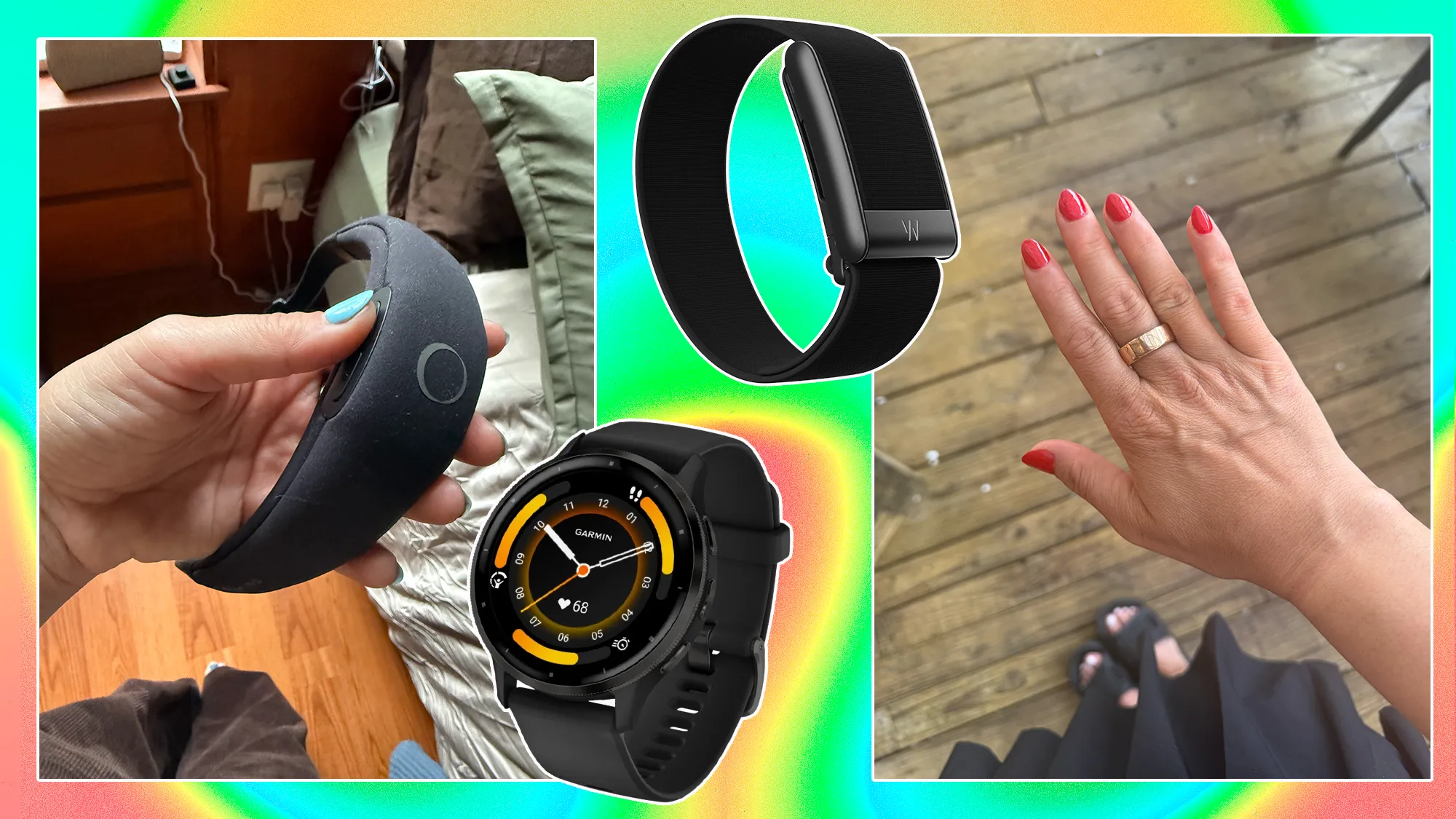
The Best sleep tracking device for most people is Fitbit Inspire 3 because it combines automatic sleep tracking, Sleep Score, a smart wake alarm, heart-rate data, SpO2, and activity features in a small wearable. It is broad enough for daily use without forcing you into the specialist workflow of an oxygen or airflow monitor.
Choose WHOOP Peak if sleep is part of a serious training and recovery plan, or Withings Sleep Pad if wearing a device to bed is the problem you need to solve first. The EMAY monitors are the more focused choices for oxygen, pulse, or nasal airflow data, but their limitations make them poor substitutes for a general tracker.
If you are undecided, choose Fitbit Inspire 3 for broad everyday tracking, WHOOP Peak for coaching, or Withings Sleep Pad for a completely non-wearable setup.
As an Amazon Associate we earn from qualifying purchases.