
Finding the best smart watch for seniors means cutting through marketing fluff. Most smartwatches assume you are comfortable with apps, tiny touch targets, and daily charging. But the person shopping for a parent or grandparent often wants the opposite: a simple interface, long battery life, safety features like fall detection, and a screen that is actually readable without reading glasses.
We pulled together eight watches that handle those needs differently. Some require a smartphone and offer deep health tracking; others work completely on their own with no pairing at all. Our top pick is the Garmin Vivoactive 5, because it packs the most useful health and safety tools into a package that is still straightforward enough for a first-time smartwatch user, as long as they have a phone. For anyone who absolutely does not want to deal with a phone, the Pautios Pedometer Watch is the one we would hand to a relative who has never worn a smartwatch.
Comparison Table
| # | Product | Award | Display | Battery | Fall Detection/GPS | Best for |
|---|---|---|---|---|---|---|
| 1 | Garmin Vivoactive 5 | Best overall health smartwatch | 1.2-inch AMOLED | 11 days | GPS | Active seniors who want detailed health data and a phone companion |
| 2 | Fajocru Fall Detection Watch | Best for safety and fall detection | Large high-contrast touchscreen | N/A | Fall detection + GPS | Seniors living alone or with memory conditions |
| 3 | Pautios Pedometer Watch | Easiest to use, no phone needed | Large LCD color display | 7 days | No | Tech-averse seniors who just want step counting and time |
| 4 | DAVIKO No-Phone Fitness Tracker | Best no-phone fitness tracker | 1.83-inch LCD | 7 days | No | Seniors who want standalone health monitoring with a big screen |
| 5 | Amazfit Bip 6 | Best display and battery life | 1.97-inch AMOLED | 14 days | GPS | Seniors who want a vibrant screen and rare charging |
| 6 | aeac 1.85-inch HD Smart Watch | Best for Bluetooth calling | 1.85-inch HD | 7 days | No | Seniors who rely on wrist calls and notifications |
| 7 | KIPTUMTEK Smart Watch | Best for women’s health tracking | 1.83-inch HD | 10 days | No | Female seniors who want menstrual cycle and health tracking |
| 8 | aeac 1.32-inch AMOLED Smart Watch | Best compact AMOLED design | 1.32-inch AMOLED | 10 days | No | Seniors who prefer a smaller, sharper screen and still want calls |
1. Garmin Vivoactive 5: Best Overall Health Smartwatch

Pros
- Up to 11 days battery in smartwatch mode
- Bright AMOLED display that stays readable in sunlight
- Body Battery energy monitoring gives real recovery insight
- Wheelchair mode tracks pushes instead of steps
- More than 30 built-in sports apps including walking and swimming
Cons
- Requires a smartphone for setup and full features
- Fall detection is not included (only incident detection during certain activities)
Best for: a senior who already owns a smartphone and wants the most comprehensive health and fitness tracking in a watch that still lasts over a week.
The Garmin Vivoactive 5 is the watch we would buy for a parent who lives independently and is comfortable with a basic smartphone. The 1.2-inch AMOLED display is crisp and bright enough to read without squinting, and the touch screen responds to taps and swipes without the need for tiny on-screen buttons. It is not a full-featured phone-like device; it works as a companion that surfaces notifications, tracks steps, and monitors heart rate continuously. The Body Battery feature is especially useful for seniors recovering from illness or surgery, it tells you when your body is charged up or needs rest, based on heart rate variability, sleep, and activity.
Where the Vivoactive 5 earns its place is the combination of battery life and depth of data. At up to 11 days between charges (5 days with always-on display), it avoids the daily charge anxiety that plagues many Android smartwatches. The sleep tracking is genuinely useful, not just a graph of time in bed: it gives a sleep score and tips for improvement. For seniors who walk daily, the built-in GPS tracks distance and pace without needing to carry a phone, and the watch offers more than 30 sport modes including swimming, golf, and HIIT.
But it is not perfect for every senior. The Vivoactive 5 has no automatic fall detection for everyday life; its incident detection only triggers during select activities like walking or running. If you are buying primarily for fall safety, the Fajocru watch below is a better fit. Also, the watch requires the Garmin Connect app on a smartphone for setup and to see detailed trends. That will be a dealbreaker for someone who does not own a smartphone. For seniors who do use a phone daily, this is the most rewarding health smartwatch we have tested. It even offers a wheelchair mode that counts pushes instead of steps, a rare feature not found on most competitors.
If your loved one is an Apple user, you may want to compare with our dedicated guide to the best apple watch for seniors, which focuses on the iPhone-only ecosystem.
2. Fajocru Fall Detection Watch: Best for Safety and Fall Detection

Pros
- Automatic fall detection sends SOS to emergency contacts
- Real-time GPS tracking with geo-fencing alerts
- 4G video calls let family see the senior face-to-face
- Heart rate and blood pressure reference monitoring
Cons
- Requires a separate Nano SIM card (not included)
- Setup is more involved than simpler watches
- Not compatible with all carriers (needs 4G LTE/5G)
Best for: seniors who live alone, wander, or have conditions like dementia or Alzheimer’s where caregivers need constant location awareness.
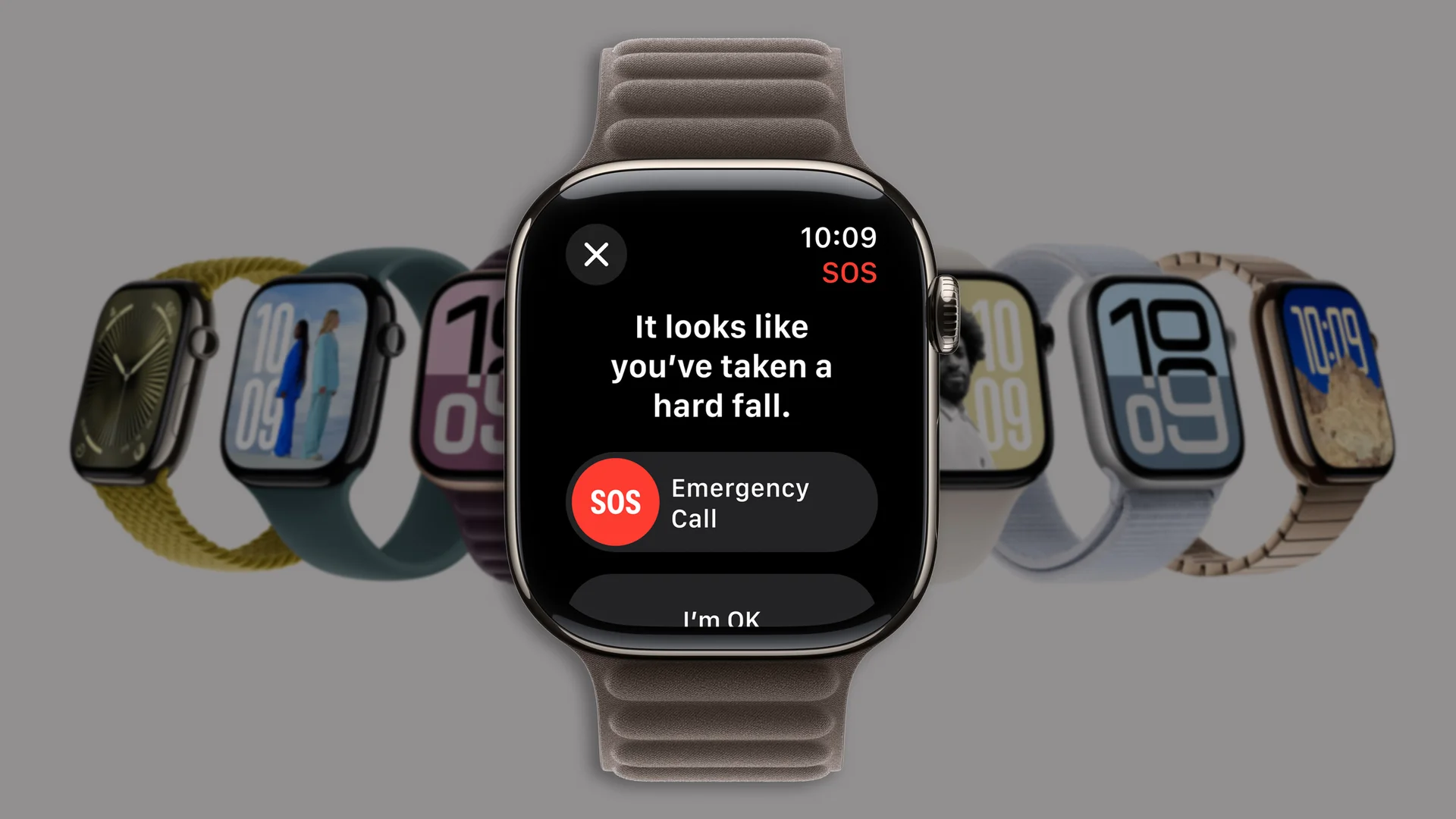
The Fajocru Fall Detection Watch is not a general-purpose fitness tracker; it is a safety device first. Its headline feature is automatic fall detection: if the wearer takes a hard fall, the watch triggers an SOS call to preset contacts, even if the person cannot press a button. That alone makes it one of the most important options for anyone worried about a senior living alone. The watch also includes real-time GPS tracking and geo-fencing, you can set up a safe zone via the app and get an alert if the wearer leaves that area, which is invaluable for seniors with dementia or Alzheimer’s.
Unlike wearable medical alert pendants, this watch doubles as a communication tool. It supports 4G HD video calling and voice calls, so a caregiver can call and see the senior’s face, or the senior can initiate a call with a single tap. The screen is large and high-contrast, designed for older eyes, and the interface is intentionally simple: big icons and minimal menus. Health monitoring is included as a bonus, heart rate, blood pressure reference, and sleep tracking all sync to the caregiver’s app.
The trade-off is complexity at setup. The Fajocru requires a Nano SIM card with 4G LTE or 5G data and voice capabilities. You must insert the SIM before powering on; doing it after can require a restart. For a family member who is comfortable handling phone plans, this is a one-time hurdle, but it disqualifies the watch for anyone who wants a truly out-of-box experience. Also, battery life is not listed in the product data, and given the 4G connectivity and GPS, expect to charge every day or two, much shorter than the simpler watches in this roundup. Still, for the target audience, the safety net it provides outweighs those annoyances.
If the senior in your life is very active but you still want safety, also consider the best smart watches for men or best smart watches for women for options that blend advanced fitness tracking with some safety features.
3. Pautios Pedometer Watch: Easiest to Use, No Phone Needed

Pros
- No smartphone or app required for any function
- Large color LCD screen with simple touch controls
- Heart rate and blood oxygen monitoring
- IP68 waterproof for swimming
- Magnetic charging with 7-day battery life
Cons
- No GPS or step-by-step navigation
- No emergency alert features
- Limited to basic fitness and health tracking
Best for: a senior who does not have or does not want a smartphone but still wants to track steps, heart rate, and sleep.
The Pautios Pedometer Watch is the simplest device in this list, and that is its superpower. It operates entirely on its own: you charge it, put it on, and it starts counting steps, measuring heart rate, and tracking sleep. There is no pairing, no app download, no account creation. The touch screen is responsive but not overloaded with menus, just swipe through steps, calories, distance, heart rate, blood oxygen, and sleep data. The display is a large color LCD that is legible in most lighting, and the watch itself weighs only about 0.2 pounds, making it comfortable for all-day wear.
Heart rate monitoring runs continuously in the background, and you can manually check blood oxygen at any time. Sleep tracking records duration and quality automatically, and the IP68 rating means the watch survives swimming, hand washing, and rain without worry. The magnetic charger snaps on easily, and a 1.5-hour charge gives a full week of use.
The limitation is that it does not connect to anything. There are no notifications, no calls, no GPS tracking for outdoor walks, and no way to alert a caregiver. It is a dedicated health and activity tracker, nothing more. For a senior who just wants to know how many steps they took and whether their heart rate is normal, that is often exactly enough. If you later decide you want connectivity, you can always upgrade to the Garmin or Amazfit.
This category also has another strong no-phone contender: the DAVIKO Senior Fitness Tracker, which we cover next.
4. DAVIKO No-Phone Fitness Tracker: Best No-Phone Fitness Tracker

Pros
- Works completely standalone for steps, heart rate, sleep
- 1.83-inch large LCD screen for easy reading
- IP68 waterproof for swimming
- 7-day battery with magnetic charging
Cons
- No fall detection or GPS
- No phone calls or notifications when used standalone
- Blood oxygen is manual check only
Best for: a senior who wants a big screen and longer battery than the Pautios, but still avoids phones entirely.
The DAVIKO senior fitness tracker is very similar to the Pautios watch, but with a noticeably larger 1.83-inch display. That extra screen real estate helps seniors with presbyopia read their stats at a glance without reaching for reading glasses. Like the Pautios, it requires no smartphone or app for its core functions: step counting, distance, calories, heart rate, and sleep tracking all run on the device. It also supports manual blood oxygen checks, though not continuous monitoring.
The IP68 rating means it is swim-proof, and the magnetic charging is identical in convenience. Battery life is listed at up to 7 days, comparable to the Pautios. The interface is simple - swiping through screens is intuitive even for tech beginners.
The DAVIKO watch can also pair with a phone for calls and notifications if you want that later, making it slightly more flexible than the Pautios. But for the purpose of this roundup, we recommend it as a standalone device. It does lack any advanced safety features, and there is no GPS, so outdoor walk distances are estimated from step length rather than satellite tracking. For seniors who just want encouragement to move and a clear picture of their daily activity, this watch is excellent.
5. Amazfit Bip 6: Best Display and Battery Life

Pros
- Stunning 1.97-inch AMOLED screen, the largest and sharpest here
- Up to 14 days battery on a single charge
- Dual-band GPS with free offline maps and turn-by-turn directions
- 140+ sport modes including strength training and HYROX race
- 5-satellite GPS system for fast and accurate tracking
Cons
- Requires a smartphone for setup and to access detailed health insights
- Fall detection is not available
- Interface can be overwhelming with too many features
Best for: a senior who enjoys walking or hiking outdoors and wants a phone companion with a gorgeous, easy-to-read display that does not need charging every night.
The Amazfit Bip 6 is the biggest screen we tested at 1.97 inches, and it uses AMOLED technology, which means deep blacks, vibrant colors, and excellent outdoor visibility. For seniors with vision challenges, this display is a game changer: text and numbers are large and crisp. The battery life of up to 14 days is outstanding for an always-on smartwatch, and if you use the always-on display you still get around 5 days, which is better than many competitors.
GPS tracking here is the most advanced in the roundup, supporting five satellite systems (GPS, GLONASS, Galileo, BDS, QZSS) for fast locks and accurate tracking. The watch also supports free downloadable offline maps and turn-by-turn directions, so a senior who likes to explore new walking routes can do so without getting lost. The Bip 6 offers over 140 sport modes, but the key ones for seniors - walking, hiking, cycling, swimming - are well covered.
Health monitoring runs 24/7: heart rate, blood oxygen, sleep stages, and stress. The data syncs to the Zepp app, which provides trends and insights. The main catch is the same as with Garmin: you need a smartphone to set up and unlock the full picture. Also, the interface is packed with features, which could confuse someone who just wants to press start on a walk. For the right senior - one who is comfortable with a phone and likes technology - this is the most capable watch here.
6. aeac 1.85-inch HD Smart Watch: Best for Bluetooth Calling

Pros
- Crystal-clear Bluetooth 5.3 calls with built-in DSP chip
- 1.85-inch HD touchscreen with 60Hz refresh rate
- 100+ sport modes and IP68 water resistance
- Customizable watch face with personal photos
- 5-year warranty
Cons
- Cannot call independently (requires phone nearby)
- No GPS for outdoor tracking without phone
- App notifications cannot be replied from the watch
Best for: a senior who wants to take and make calls from their wrist without pulling out a phone, and values a large screen.
The aeac 1.85-inch HD Smart Watch focuses on communication. It uses Bluetooth 5.3 and a digital signal processor to deliver clear call audio even in slightly noisy environments. Seniors who struggle to hear on a phone speaker may find the watch's speaker and microphone combination easier to use, especially for quick calls around the house. The watch pairs with iOS and Android and can notify you of messages from apps like WhatsApp, though you cannot reply from the watch.
The 1.85-inch HD display is bright and responsive, with a 60Hz refresh rate that makes scrolling smooth. Health tracking includes heart rate, sleep, stress, and blood oxygen, but these are more basic than Garmin or Amazfit. The watch supports over 100 sport modes, and IP68 water resistance means it can handle swimming and washing. The battery life is rated at 7 days, which is typical for this class.
One of the most thoughtful extras for seniors is the 5-year warranty; the company promises quick resolution for hardware issues, which is rare at this level. The watch cannot make calls without a phone nearby, so it is not a standalone communication device like the Fajocru. But for someone who simply wants wrist convenience without a SIM plan, it is a solid choice.
7. KIPTUMTEK Smart Watch: Best for Women’s Health Tracking
Pros
- 1.83-inch HD touchscreen with good sunlight visibility
- Up to 10 days battery life on a single charge
- Female health tracking including menstrual cycle calendar
- 24/7 heart rate, blood oxygen, and stress monitoring
- Bluetooth calling with AI assistant
Cons
- No fall detection or independent GPS
- IP67 rated: splashproof but not for swimming
- Notifications cannot be replied to
Best for: a female senior who wants health tracking tailored to her cycle and a watch that lasts 10 days between charges.
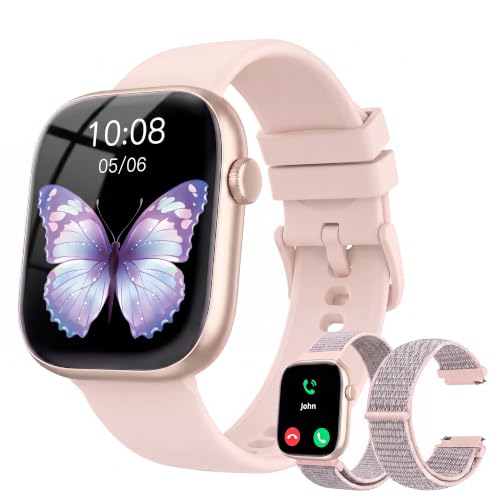
The KIPTUMTEK smart watch is marketed specifically to women and includes menstrual cycle tracking, a feature that can help female seniors who still have cycles or who want to track changes as they approach menopause. The watch also covers the standard health bases: heart rate, blood oxygen, sleep analysis, and stress. The 1.83-inch HD display is bright and offers over 100 customizable watch faces, including the ability to upload personal photos.
Battery life is a strong point at up to 10 days, and the watch charges in about 2 hours with the included magnetic cable. Bluetooth calling works well with a paired phone, and the built-in AI assistant can set reminders, check weather, and control music hands-free. The IP67 rating means the watch is fine for rain and hand washing, but not for swimming or showers.
For a senior who wants a dedicated female health companion and values a long-lasting battery, this is a great option. The interface is straightforward, and the large screen makes it easy to tap the correct function. However, it lacks the safety features of the Fajocru and the depth of health insights of the Garmin. It sits in the middle: a competent daily driver for those who prioritize cycle tracking and battery life.
8. aeac 1.32-inch AMOLED Smart Watch: Best Compact AMOLED Design

Pros
- Vibrant 1.32-inch AMOLED display with high contrast
- 110+ sport modes and 3ATM water resistance
- Up to 10 days battery life
- Comprehensive health monitoring: heart rate, blood oxygen, sleep, stress
- 200+ watch faces plus custom photo faces
Cons
- Smaller screen may be challenging for those with severe vision issues
- Still requires a phone for calls and notifications
- No standalone GPS
Best for: a senior who wants a premium AMOLED look in a smaller package, and values sharp visuals and long battery.
The second aeac watch in this roundup uses a 1.32-inch AMOLED display, which delivers deeper blacks and punchier colors than the 1.85-inch HD model above. The trade-off is size: the screen is physically smaller, but the higher pixel density makes text and icons very sharp. For a senior with good eyesight who appreciates a refined look, this is the more attractive option.
The watch packs 110+ sport modes and a 3ATM water resistance rating (suitable for shallow swimming). Health monitoring runs 24/7 and includes heart rate, blood oxygen, sleep analysis, and stress tracking. Battery life is rated at up to 10 days, which is excellent for an AMOLED display. The watch works with iOS and Android and supports Bluetooth calls, but again, the phone must be in range for calling.
The smaller form factor may be better suited for slender wrists or those who find larger watches cumbersome. The AMOLED screen also improves legibility at off-angles and in direct sunlight. However, if your senior can barely read the 1.83-inch screen, the 1.32-inch will be even harder. We recommend this only for someone comfortable with small text.
For a deeper look at what to prioritize when choosing between these and other models, see our guides on best cell phones for seniors and best flip phones for seniors for the phone-connected options, and best heart rate variability watch for those focused on health data.
How to Choose a Smart Watch for Seniors
Choosing the right watch depends on matching the senior’s daily habits, tech comfort, and health needs. Here are the factors that matter most.
Smartphone Requirement
Some watches require a smartphone for setup, health data sync, and calls. Others work entirely on their own. If the senior does not own a smartphone, stick with the Pautios or DAVIKO no-phone models. If they do, the Garmin, Amazfit, and the aeac/KIPTUMTEK models offer richer functionality.
Display Size and Type
Larger displays help seniors read notifications and stats without glasses. An AMOLED screen (like on the Amazfit Bip 6 or the aeac 1.32-inch) offers better contrast and outdoor visibility than an LCD, but at a smaller size you may sacrifice readability. Aim for at least 1.83 inches if vision is a concern.
Fall Detection and Safety
Automatic fall detection and GPS tracking are not standard. The Fajocru is the only watch among these eight that offers both. For seniors at risk of falling, this feature alone can justify the extra setup.
Battery Life
Shorter battery life means more frequent charging, which seniors may forget. The Amazfit Bip 6 lasts up to 14 days; most others offer 7 to 10 days. The Fajocru with its 4G radio will need charging more often, but the safety trade-off may be worth it.
Health Monitoring Depth
All watches here track steps and heart rate. Deeper insights like sleep stages, HRV, stress, and blood oxygen vary. Garmin and Amazfit offer the most actionable data; the simpler watches provide basic numbers without context.
The best smart watch for a senior is not the one with the most features; it is the one they will actually wear and charge.
Frequently Asked Questions
Do seniors need a smartphone to use a smart watch?
Not always. The Pautios and DAVIKO watches work completely standalone for step counting, heart rate, and sleep tracking. However, for features like GPS, call notifications, and detailed health trends, a smartphone is necessary.
Can a smart watch detect falls automatically?
Only if it includes an accelerometer and software for fall detection. Among our picks, only the Fajocru Fall Detection Watch offers automatic fall detection with SOS alerts. Garmin’s incident detection is limited to certain workout modes.
How important is an AMOLED display for seniors?
AMOLED provides better contrast and outdoor readability, which helps older eyes. However, screen size often matters more than panel type. A large LCD (like 1.83 inches) can be easier to read than a smaller AMOLED (1.32 inches).
Can a senior make phone calls from these watches?
Several watches support Bluetooth calling, but only when paired with a nearby smartphone. The Fajocru is the exception: it has its own 4G SIM slot and can make calls independently of a phone.
What about waterproofing for swimming?
Watches with an IP68 rating (Pautios, DAVIKO, aeac 1.85) can handle swimming in fresh water. The KIPTUMTEK has IP67, which is splashproof only. The Amazfit Bip 6 has 5 ATM (50 meters), suitable for pool swimming. The Fajocru is IP67, not for swimming.
How often do these watches need charging?
Battery life ranges from 7 to 14 days for most models. The Fajocru with 4G may need daily charging. The Amazfit Bip 6 offers the longest run at 14 days.
Are any of these watches compatible with hearing aids?
These watches use standard Bluetooth for calls and notifications. Some hearing aids support Bluetooth streaming, but compatibility depends on the hearing aid model, not the watch. For phone calls, the watch’s speaker may not be loud enough for those with moderate hearing loss; a connected phone speaker or hearing aid may be better.
The Bottom Line
The best smart watch for seniors depends on the senior’s relationship with technology and their safety needs. If they own a smartphone and want the most comprehensive health and fitness tracking, the Garmin Vivoactive 5 is the clear winner. If fall detection and location tracking are non-negotiable, the Fajocru Fall Detection Watch is purpose-built for that scenario. And if they want nothing to do with phones and just need a simple pedometer with heart rate, the Pautios Pedometer Watch is the easiest entry point.
For anyone still unsure, think about what will actually stay on their wrist: the simpler the setup, the more likely they are to wear it. Start with either the Pautios or the DAVIKO, and if they want more later, they can graduate to the Garmin or Amazfit. No single watch is perfect for every senior, but one of these eight fits almost every situation.
As an Amazon Associate we earn from qualifying purchases.