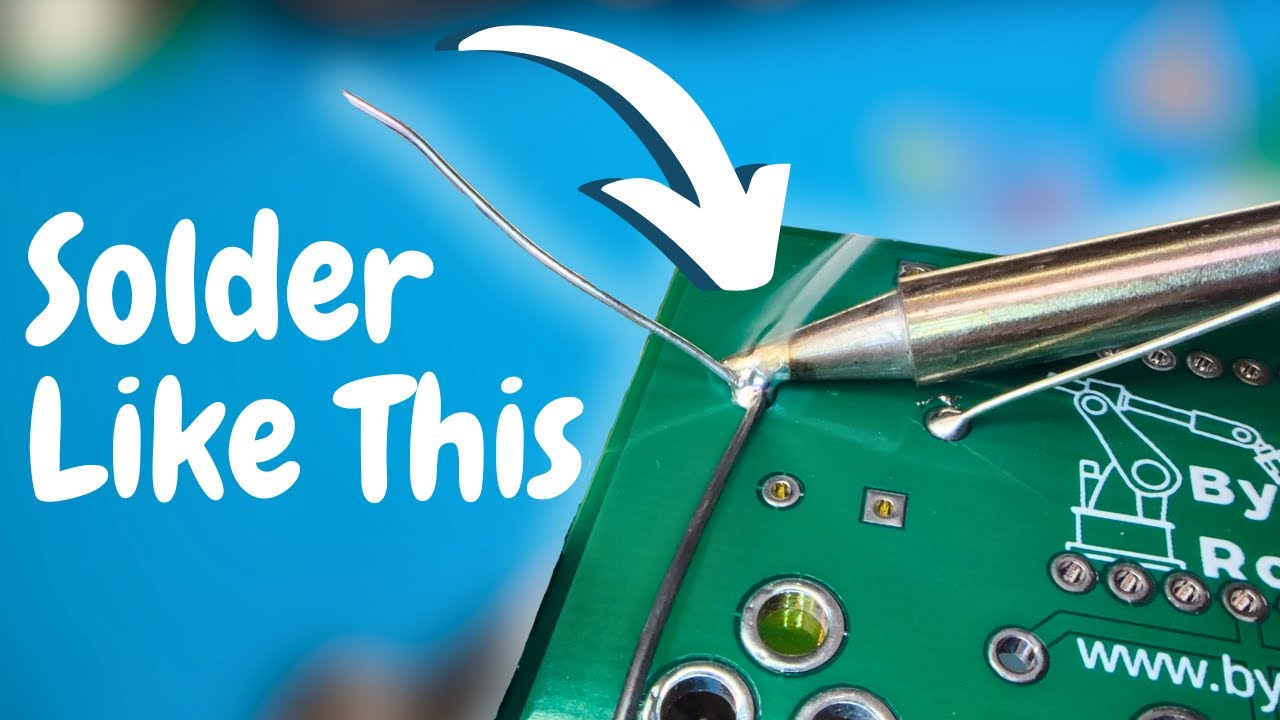

A soldering job can go wrong before the iron touches the board. Wire that is too thick floods small pads, wire that melts reluctantly makes beginners overheat joints, and flux that leaves too much residue turns a tidy repair into a cleanup project. The right choice depends on the component size, alloy, and whether you are soldering, desoldering, or practicing.
Our best solder for PCB soldering pick is the MAIYUM 63-37 0.8mm 100g, a leaded rosin-core wire with a low 183°C melting point and a useful middle-ground diameter. The list also includes a finer lead-free wire, ultra-thin enameled copper wire, two fluxes, a wick kit, helping-hands stations, and a practice board.
Comparison table
| # | Product | Award | Type | Diameter or size | Best for |
|---|---|---|---|---|---|
| 1 | MAIYUM 63-37 0.8mm 100g | Best overall | Tin-lead rosin core | 0.8mm, 100g | General PCB work |
| 2 | MAIYUM 63-37 0.8mm 50g | Best compact spool | Tin-lead rosin core | 0.8mm, 50g | Portable repair kits |
| 3 | VIRALLOY 0.3mm Lead Free | Best lead-free precision wire | Sn97/Ag0.3/Cu0.7 rosin core | 0.3mm, 50g | Micro soldering |
| 4 | Jxiwfvl 0.1mm Enameled Copper | Best jumper wire | Enameled copper | 0.1mm, 2-pack | Fine board repairs |
| 5 | QUIMTECH Liquid Flux | Best liquid flux | RMA rosin flux | 30ml dropper | Oxidized joints |
| 6 | TOWOT Liquid Flux | Best no-clean flux | RMA rosin flux | 30ml dropper | Routine rework |
| 7 | TOWOT Wick and Flux Kit | Best desoldering kit | Wick and rosin flux paste | 10ft wick, 10cc paste | Removing excess solder |
| 8 | Kaisiking Helping Hands | Best magnified work holder | Helping-hands station | 2.5X glass, four clips | Small components |
| 9 | NOEVSBIG Dual Clamp Holder | Best dual-clamp holder | Adjustable third hand | 3.94 by 3.94-inch base | Holding board and wire |
| 10 | Zyghjort SMD Practice Board | Best practice kit | SMD training board | 100-plus components | Learning board assembly |
1. MAIYUM 63-37 0.8mm 100g: Best Overall

Pros
- 63/37 tin-lead alloy
- Rosin core with 1.8 percent flux
- Low 183°C melting point
- Useful 0.8mm diameter
- 100g spool for repeated repairs
Cons
- Contains lead
- Too broad for the smallest fine-pitch work
- Requires careful handling and ventilation
Best for: general PCB repairs where easy flow matters more than lead-free construction.
The MAIYUM 63-37 0.8mm 100g is the one we would put beside a general-purpose electronics bench. Its 0.8mm wire is narrow enough for ordinary through-hole leads and board repairs without feeding so slowly that every joint becomes a fiddly exercise. It is a practical middle ground, not a specialist micro-soldering wire.
The 63/37 tin-lead alloy is paired with a rosin core containing 1.8 percent flux. The headline number that matters most here is the 183°C melting point, listed as 361°F. That lower melting temperature can make joints easier to form and helps reduce the temptation to keep an iron on a pad while waiting for the solder to liquefy. The wire is designed to flow smoothly and form strong solder points, according to its listed features.
The 100g spool separates it from the otherwise similar MAIYUM 63-37 0.8mm 50g. Both share the same alloy, diameter, flux content, melting point, and intended electrical repair use. The smaller spool makes more sense for a portable kit, while this version is the better fit for a bench that sees regular cable, radio, toy, and circuit-board work.
The weakness is not hidden: this is leaded solder. The product carries a lead exposure warning, so it is not the right pick for anyone specifically avoiding lead or working without sensible ventilation and hand-cleaning habits. It is also not as fine as VIRALLOY 0.3mm Lead Free for tiny pads and micro components.
For conventional PCB soldering, though, the alloy, rosin core, diameter, and low melting point make this the most balanced wire here. Choose it when you want forgiving handling for ordinary board work and do not need a lead-free formulation.
2. MAIYUM 63-37 0.8mm 50g: Best Compact Spool

Pros
- 63/37 tin-lead alloy
- 0.8mm general-purpose diameter
- 1.8 percent rosin flux content
- 183°C melting point
- Compact 50g format
Cons
- Contains lead
- Less solder than the 100g version
- Not intended for the finest pads
Best for: a small repair kit or occasional PCB work using conventional leaded solder.
The MAIYUM 63-37 0.8mm 50g has the same useful working character as the top pick, but in a smaller spool. It is easier to justify when soldering is an occasional task or when the roll needs to live in a compact toolkit. The 0.8mm diameter remains suitable for ordinary circuit boards, wires, and electrical repairs.
Its 63/37 tin-lead composition and rosin core are the important details. The listed 1.8 percent flux content gives the wire built-in assistance with wetting, while the 183°C melting point keeps the operating threshold relatively low. That combination is friendlier to learners than a wire that demands prolonged heating before it begins to flow.
There is no performance mystery separating this product from MAIYUM 63-37 0.8mm 100g. They are effectively the same solder format in different quantities. The smaller roll is the sensible choice for portability, while the 100g roll is less likely to run out during a longer series of repairs.
Like the larger version, this wire contains lead and carries a lead exposure warning. It should be skipped by readers who need lead-free solder, and its 0.8mm thickness can still put too much material onto very small surface-mount pads. VIRALLOY 0.3mm Lead Free gives finer control for that job, although its lead-free alloy is a different proposition.
This is a straightforward pick for anyone who wants the top pick's alloy and diameter without a larger spool. It belongs in a portable electronics kit, a drawer for household repairs, or a beginner's bench that handles normal PCB joints rather than dense micro work.
3. VIRALLOY 0.3mm Lead Free: Best Lead-Free Precision Wire

Pros
- Lead-free Sn97/Ag0.3/Cu0.7 alloy
- Very fine 0.3mm diameter
- Rosin flux core
- Designed for micro soldering
- 50g spool
Cons
- Lead-free alloys can require more heat
- Fine wire is slower for large joints
- Smaller spool than the MAIYUM 100g option
Best for: lead-free PCB repair involving small components, fine wires, and controlled solder placement.
The VIRALLOY 0.3mm Lead Free is the specialist solder wire in this group. Its thin profile gives you much more control over how much solder reaches a small pad. That matters on dense boards, where a full-size 0.8mm wire can dispense more material than the joint needs before the operator has time to react.
The alloy is Sn97/Ag0.3/Cu0.7, a lead-free blend based on tin with silver and copper. The built-in rosin core is intended to help the wire flow and wet evenly without requiring separate flux for most common electronics work. The 0.3mm diameter is the real differentiator. It suits micro components, phone repair, LED projects, circuit boards, and precision DIY work listed by the manufacturer.
Compared with MAIYUM 63-37 0.8mm 100g, this wire is much easier to meter onto a small connection and avoids lead. The MAIYUM wire has the easier low melting point and is the more relaxed option for standard joints. Readers working on broader pads or through-hole connections may find the VIRALLOY wire unnecessarily slow.
The drawbacks follow directly from its strengths. Fine wire takes more feeding for a large joint, and lead-free solder typically asks more from the iron than the 183°C MAIYUM alloy. The available product information does not provide a melting temperature for this wire, so it would be a mistake to assign one. Its 50g spool is also half the listed quantity of the larger MAIYUM option.
Pick VIRALLOY when cleanliness requirements, component density, and lead-free construction matter more than fast filling of ordinary joints. It is the clearest choice here for careful micro soldering, provided the iron and technique are suited to lead-free work.
4. Jxiwfvl 0.1mm Enameled Copper: Best Jumper Wire

Pros
- Extremely fine 0.1mm diameter
- High-conductivity copper
- Enameled insulation
- Intended for motherboard and phone repairs
- Two-wire pack
Cons
- Not conventional solder wire
- Insulation handling needs care
- Limited product specifications
Best for: delicate jumper and trace repair where a very fine insulated copper conductor is needed.
The Jxiwfvl 0.1mm Enameled Copper is included because PCB repair sometimes needs more than solder. This is a fine copper repair wire, not a spool of solder alloy. Its job is to bridge a damaged connection or replace a tiny conductor, so comparing it directly with the MAIYUM and VIRALLOY wires would be misleading.
At 0.1mm, it is much thinner than the 0.3mm VIRALLOY wire and the 0.8mm MAIYUM options. The listed construction is enameled copper with high electrical conductivity, intended for mobile phones, laptops, motherboards, and other precision electronics. The insulation helps keep the conductor from making unwanted contact with nearby traces.
The product is supplied as a two-pack, and each wire is described as having ample length for multiple home or professional repair projects. The listing says the wire supports direct welding without scraping the insulation layer. That is a notable convenience, but users should still follow the actual handling behavior of the wire and avoid assuming that every soldering iron or joint will treat the enamel identically.
Its main limitation is category fit. This wire does not replace solder for attaching components, filling pads, or making conventional joints. It also has fewer disclosed technical details than the dedicated solder products. For a normal board repair, VIRALLOY 0.3mm Lead Free is the more appropriate consumable, while this Jxiwfvl wire becomes useful when the repair specifically calls for a jumper.
Choose it as a precision repair accessory rather than as your main solder. If you are restoring broken traces or making microscopic connections on a phone or laptop board, its narrow copper conductor is the reason to keep it nearby.
5. QUIMTECH Liquid Flux: Best Liquid Flux

Pros
- RMA rosin flux formulation
- 30ml dropper bottle
- Lead-free and zinc chloride-free
- Neutral pH formula
- Intended for tin-lead and lead-free alloys
Cons
- Flux only, not solder wire
- Extra liquid flux is often unnecessary with fresh rosin-core wire
- Residue claims do not eliminate the need for sensible cleanup
Best for: improving wetting on oxidized joints and supporting both leaded and lead-free electronics work.
The QUIMTECH Liquid Flux is for the moment when solder sits on a pad instead of spreading across it. It is not a replacement for wire, but it can make a stubborn joint more workable by helping remove oxide from the surfaces being joined. The dropper format also makes it easier to place a small amount where it is needed.
This is an RMA, or rosin mildly activated, liquid flux. The listed formulation is designed for electronic soldering and is described as effective with tin-lead, lead-free, gold, silver, and copper alloys. Its 30ml net volume is enough to serve as a bench bottle rather than a tiny emergency vial.
The formula is listed as neutral pH, non-corrosive, and non-conductive when dry. It is also described as lead-free, zinc chloride-free, and ammonium chloride-free. Those details matter because harsh plumbing fluxes are not suitable substitutes for electronics flux. The product is intended for circuit boards and electronic processes, not general metalwork.
Compared with TOWOT Liquid Flux, QUIMTECH provides much more disclosed information about the formula and alloy compatibility. TOWOT is the simpler choice when the main requirement is a no-clean RMA flux with a precision dropper. Neither product replaces the built-in flux in a fresh solder wire for every joint, and applying too much liquid can still make the work messy.
This is a good companion to either MAIYUM 63-37 0.8mm 100g or VIRALLOY 0.3mm Lead Free when oxidation, rework, or difficult wetting gets in the way. Skip it if you only need a basic rosin-core wire for clean, fresh pads.
6. TOWOT Liquid Flux: Best No-Clean Flux

Pros
- No-clean RMA rosin formula
- 30ml bottle
- Precision dropper
- Designed for PCB repair
- Lead-free soldering applications
Cons
- Flux only
- Limited published feature detail
- No alloy or melting-point information because it is not solder wire
Best for: targeted flux application during routine electronics repair and rework.
The TOWOT Liquid Flux is a small bench aid that solves a specific problem: solder needs help wetting a board, but you do not want to flood the area with a large amount of liquid. Its precision dropper is the useful part of the design, allowing controlled application around a pad or component lead.
The listed formula is high-purity RMA rosin flux with mild activation. TOWOT says it promotes fast wetting and smooth solder flow, and that the no-clean formulation leaves minimal non-conductive, non-corrosive residue. Those properties suit PCB repair, circuit-board rework, and DIY electronics where cleaning every small area can be awkward.
It pairs naturally with the fine VIRALLOY 0.3mm Lead Free wire, particularly when a small joint needs a little extra assistance. QUIMTECH Liquid Flux is the stronger alternative if you want more disclosed information about compatibility with different metals and a neutral-pH formulation. TOWOT is more narrowly appealing as a simple no-clean dropper.
The weakness is the sparse specification sheet. The listing does not provide a volume unit alongside the size field, although the title identifies the product as 30ml. It also does not disclose a solder alloy or melting temperature, because this is flux rather than solder. Buyers looking for a complete soldering consumable need to add wire separately.
Choose TOWOT when you already have solder and want a controlled way to improve flow during rework. It is especially sensible for users who want a no-clean RMA flux rather than a jar of paste or a general-purpose metalworking flux.
7. TOWOT Wick and Flux Kit: Best Desoldering Kit

Pros
- 10ft of braided copper solder wick
- 10cc rosin flux paste
- Wick absorbs excess solder
- Low-residue, no-clean design
- Made for electronics rework
Cons
- Primarily a desoldering kit
- Wick is 2.5mm wide according to the listed size
- Not a replacement for solder wire
Best for: clearing bridges, removing excess solder, and preparing PCB pads for rework.
The TOWOT Wick and Flux Kit earns its place because good PCB soldering often includes undoing a bad joint. Solder wick gives you a controlled way to pull away excess material, and the included flux paste helps the braid make contact with solder that has become dull or stubborn.
The kit includes 10ft, or 3m, of braided copper solder wick and 10cc of high-activity rosin flux paste. The listed size describes the braid as 2.5mm wide, although one feature also mentions a 0.1-inch braid. Either way, this is a substantially useful desoldering width for general board work rather than an ultra-fine strand intended only for the smallest pads.
TOWOT says the wick absorbs excess solder and breaks down oxidation while leaving minimal non-conductive, non-corrosive residue. It is described as RoHS and MSDS compliant, and the no-clean approach is aimed at reducing post-work cleanup. Those claims make it more suitable for electronics than an unidentified copper braid intended for another kind of metalwork.
This kit complements MAIYUM 63-37 0.8mm 100g rather than competing with it. The MAIYUM supplies fresh solder, while the TOWOT removes bridges or prepares a joint for another attempt. For tiny surface-mount work, the braid may be broader than ideal, and a careful operator should avoid dragging it across fragile pads with excessive force.
If your repairs involve replacing components, correcting solder bridges, or cleaning up crowded boards, this is the most complete rework-oriented pick here. It is not the answer for someone who only needs new solder wire, but it can save a board when the first joint does not go as planned.
8. Kaisiking Helping Hands: Best Magnified Work Holder

Pros
- 2.5X magnifying glass
- Four adjustable 8.34-inch gooseneck arms
- Four rubber-booted alligator clips
- 7.87 by 5.51-inch steel base
- Five anti-slip feet
Cons
- Not solder or flux
- Larger than the compact dual-clamp holder
- Multiple screws require setup
Best for: holding small PCBs steady while viewing detailed joints through magnification.
The Kaisiking Helping Hands addresses the physical side of PCB soldering. A board that shifts when the iron touches it can turn a good technique into a crooked joint, particularly when the component is too small to hold comfortably. This station uses a broad metal base, flexible arms, and a magnifying glass to make the workpiece easier to position and see.
Its 2.5X magnifier is the headline feature for small components. Four adjustable metal gooseneck arms are listed at 8.34 inches, and the alligator clips rotate 360 degrees before being locked into position. Rubber boots on the clips are intended to reduce scratching and avoid short circuits against conductive surfaces.
The base measures 7.87 by 5.51 inches and is made from painted steel. Five anti-slip rubber pads help prevent movement and protect the bench. The package includes a handheld magnifier, four clips, eight Phillips screws, eight anti-slip feet, and a user manual, so this is a station that asks for more setup than a simple clamp.
Compared with NOEVSBIG Dual Clamp Holder, Kaisiking offers better viewing and more arm positions, while NOEVSBIG has the more direct two-clamp concept for holding a board and wire at the same time. Kaisiking is also the larger and heavier option, with a listed weight of about 2.07 pounds. That extra presence is useful on a crowded repair bench, but less attractive for a portable kit.
This is the right accessory for readers who struggle to see tiny joints or need several fixed points around a board. It will not improve solder flow by itself, and anyone who already has a stable microscope and board fixture may not need the magnifier.
9. NOEVSBIG Dual Clamp Holder: Best Dual-Clamp Holder

Pros
- Two clamps for board and wire
- Quick-release mechanism
- Rubber-coated jaws
- Rotating adjustable arms
- 3.94 by 3.94-inch iron base
Cons
- Small format limits larger workpieces
- Not solder wire or flux
- Less viewing assistance than Kaisiking
Best for: freeing both hands while holding a PCB and wire in separate clamps.
The NOEVSBIG Dual Clamp Holder is a focused third hand rather than a full inspection station. Its defining idea is simple: one clamp holds the PCB and the other holds a wire or component. That arrangement can remove the awkward balancing act that makes it hard to heat a joint and feed solder at the same time.
The two clamps use a quick-release mechanism, and the listing says the arms lock with screw adjustments to resist drooping or rebounding. The arms rotate so the clamping position can be changed, while rubber-coated jaws are intended to hold delicate boards, wires, and jewelry without leaving marks.
Its iron base measures 3.94 by 3.94 inches and is paired with a non-slip pad. That is a much smaller footprint than the Kaisiking station's 7.87 by 5.51-inch base. The compact design makes NOEVSBIG easier to move around a crowded bench or place in a toolkit, but it also gives you less room for multiple arms and less built-in assistance for viewing tiny work.
This holder is more task-specific than Kaisiking Helping Hands. Kaisiking wins when magnification and several adjustable arms matter. NOEVSBIG wins when the goal is simply to restrain two parts at once. Neither replaces careful heat control, and the available data does not state the maximum board size or clamp opening.
Choose it for straightforward PCB repairs, wire attachment, hobby work, and small projects where a second pair of hands is more important than magnification. It is also a useful pairing with the MAIYUM 63-37 0.8mm 50g when a portable repair setup needs a stable workpiece.
10. Zyghjort SMD Practice Board: Best Practice Kit

Pros
- 100-plus resistors, capacitors, and logic gates
- Graduated SMD challenges
- Double-sided PCB
- Components have clear markings
- Designed for repeated rework
Cons
- Not finished electronic equipment
- SMT tweezers are not included
- No solder wire or iron included
Best for: learning component placement, solder control, and SMD rework without risking a working device.
The Zyghjort SMD Practice Board is a training surface, not a conventional solder product. That distinction matters, but it is still relevant to anyone learning PCB soldering. Practicing on a board designed for repeated mistakes is much less stressful than attempting a first fine-pitch repair on a phone or motherboard.
The kit includes one SMD circuit board with more than 100 micro resistors, capacitors, and logic gates. The challenges progress from simple pads to more complex IC components, and the components have clear markings to reduce guesswork. That progression gives a beginner somewhere to start before attempting dense joints.
The board is described as double-sided and resistant to oxidation, with a durable base intended to withstand repeated rework. Easy solder adhesion is also listed as a design goal. The product does not include SMT tweezers, so a learner will need to supply those along with an iron, solder, and any flux required for the chosen technique.
This kit pairs better with VIRALLOY 0.3mm Lead Free than with the 0.8mm MAIYUM wire if the exercises involve small SMD parts. The fine VIRALLOY wire allows more controlled deposits, while the TOWOT flux products can help when a practice pad is not wetting cleanly. Readers seeking a ready-to-use circuit or a replacement board should skip this because it is an exercise kit.
For students, makers, and first-time repairers, the practice board provides a low-risk way to build hand control. It is the right choice when the goal is to learn soldering, not simply to finish one urgent repair.
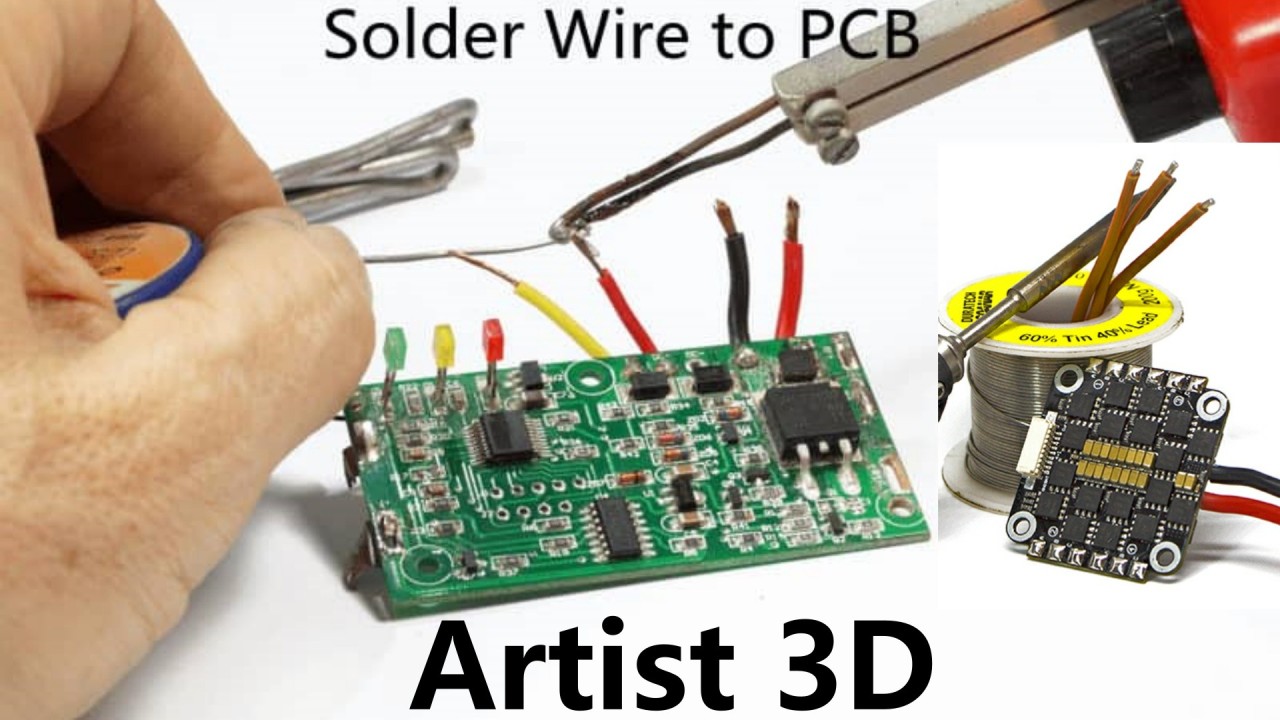
How to choose best solder for PCB soldering
The right pick starts with the joint size and alloy requirements, then expands to flux, rework tools, and a stable way to hold the board.
Alloy and lead content
Tin-lead solder such as the MAIYUM 63/37 wire melts at the listed 183°C and is generally easier to work with for ordinary joints. Its trade-off is the presence of lead and the handling precautions that follow. Lead-free wire such as VIRALLOY avoids lead, but its listed alloy and fine format should be matched with an iron capable of handling lead-free work.
Wire diameter
Diameter controls how much solder reaches the joint with each feed. The 0.8mm MAIYUM wire is a general-purpose size for normal PCB and wire connections, while the 0.3mm VIRALLOY wire offers finer control on small pads. The 0.1mm Jxiwfvl wire is a different product type altogether, intended as an enameled copper jumper rather than solder alloy.
Flux core and liquid flux
Rosin-core wire carries flux inside the solder, which is convenient for routine joints. Liquid RMA flux can help when a pad or lead is oxidized, when solder does not wet evenly, or during rework. No-clean claims refer to reduced residue, not permission to ignore every cleaning or ventilation consideration.
Desoldering control
A good repair setup needs a way to remove solder as well as add it. The TOWOT wick kit combines 10ft of braid with 10cc of paste, making it useful for bridges and component removal. Choose braid width according to the pad size, since a broad wick can be awkward on tiny surface-mount connections.
Workholding and magnification
A stable board makes solder placement more predictable. NOEVSBIG is aimed at holding a board and wire in separate clamps, while Kaisiking adds a 2.5X magnifier, four flexible arms, and a larger steel base. A practice board such as Zyghjort is useful when the missing ingredient is hand control rather than another consumable.
For most PCB repairs, diameter and alloy matter first. Flux and workholding solve the problems that solder wire alone cannot.
For related electronics bench planning, the components that matter in an audio amplifier can help when a repair extends beyond solder joints. A stable power source also matters for any powered repair setup, so how a PC power supply handles demanding components is useful background when building a larger electronics workspace.
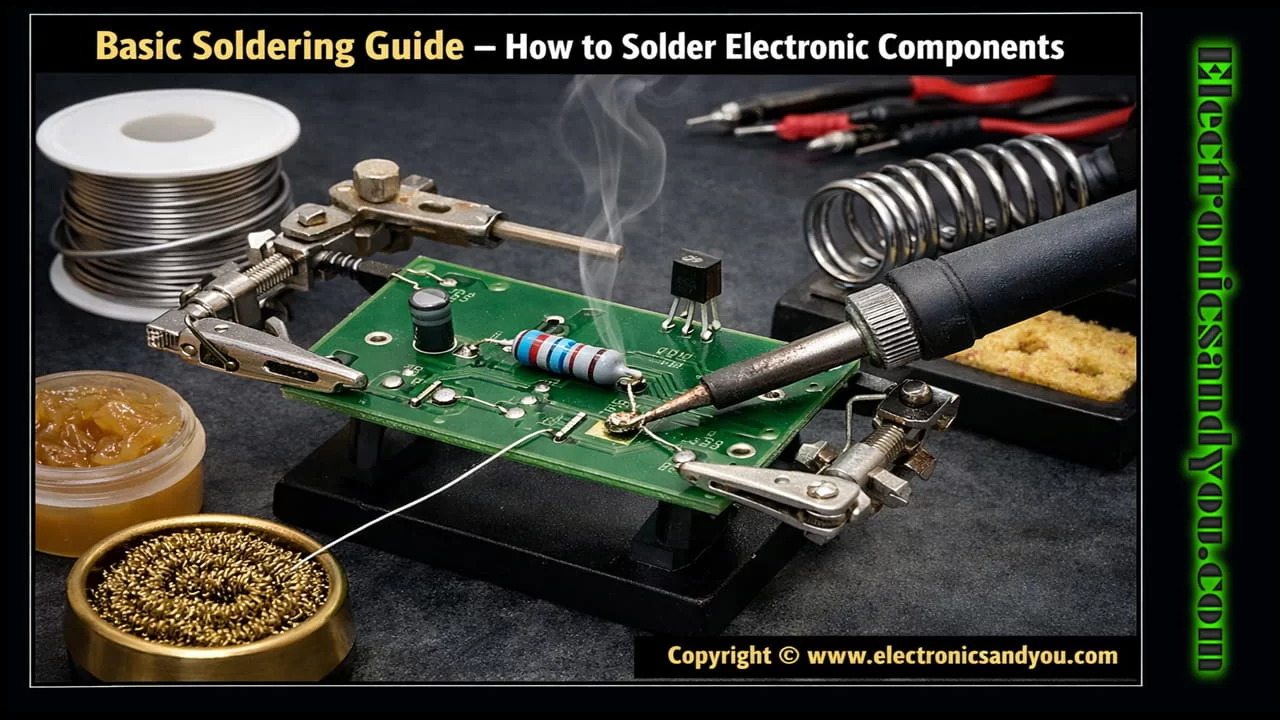
Frequently asked questions
Is 0.8mm solder suitable for PCB soldering?
Yes. A 0.8mm wire is a practical general-purpose size for many through-hole joints, wires, and ordinary board repairs. It can be too thick for very small surface-mount pads, where 0.3mm wire provides more controlled feeding.
Is leaded solder better for beginners?
Leaded 63/37 solder has a listed melting point of 183°C, which can make it easier to flow than many lead-free alternatives. It still contains lead, so users must follow sensible handling, ventilation, and hand-cleaning practices. Anyone who needs a lead-free setup should choose the VIRALLOY wire instead.
What does rosin core mean?
Rosin-core solder contains flux inside the wire. That flux helps remove surface oxidation and encourages the molten solder to wet the pad and lead. Extra liquid flux may still help with old, dirty, or difficult joints.
Do I need liquid flux with rosin-core solder?
Not for every routine joint. Fresh rosin-core solder often provides enough flux for standard work, but liquid flux can help on oxidized pads, during desoldering, or when solder refuses to spread. Apply it carefully because more flux is not automatically better.
Is the Jxiwfvl 0.1mm wire solder?
No. It is enameled copper repair wire, intended for very fine jumpers and conductor replacement. It does not replace solder wire for attaching components or filling PCB pads.
What is the purpose of solder wick?
Solder wick is braided copper used to absorb molten solder. It helps remove bridges, clear excess solder, and prepare a pad for another component. The TOWOT kit adds flux paste to help the braid contact and absorb solder more effectively.
Should beginners practice before repairing a motherboard?
Practicing first is sensible, especially for small surface-mount work. The Zyghjort board provides graduated exercises with more than 100 components, so learners can develop placement and heat-control skills without starting on an important device.
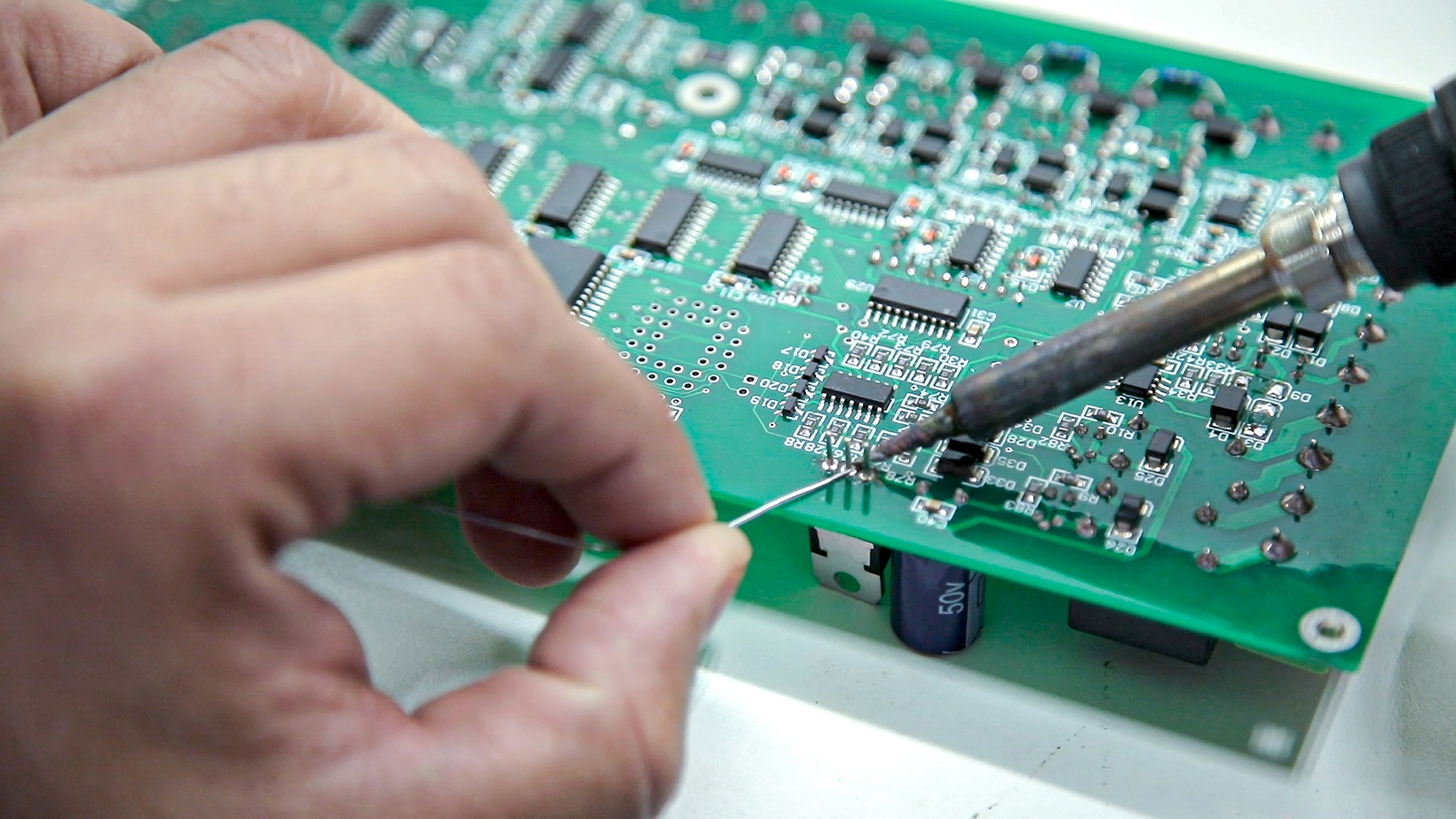
The bottom line
For the Best solder for PCB soldering, MAIYUM 63-37 0.8mm 100g is the strongest all-purpose pick when leaded solder is acceptable. Its 0.8mm diameter, rosin core, 1.8 percent flux content, and listed 183°C melting point suit ordinary PCB repairs. Choose VIRALLOY 0.3mm Lead Free instead for fine pads, micro work, and a lead-free bench.
The rest of the list fills the gaps around the wire. QUIMTECH and TOWOT supply liquid flux, the TOWOT kit handles desoldering, Kaisiking and NOEVSBIG stabilize the workpiece, Jxiwfvl handles microscopic jumper repairs, and Zyghjort gives beginners a dedicated practice board.
If you are undecided, start with the MAIYUM 100g for general joints, or choose VIRALLOY when the board is small and lead-free construction is essential.
As an Amazon Associate we earn from qualifying purchases.