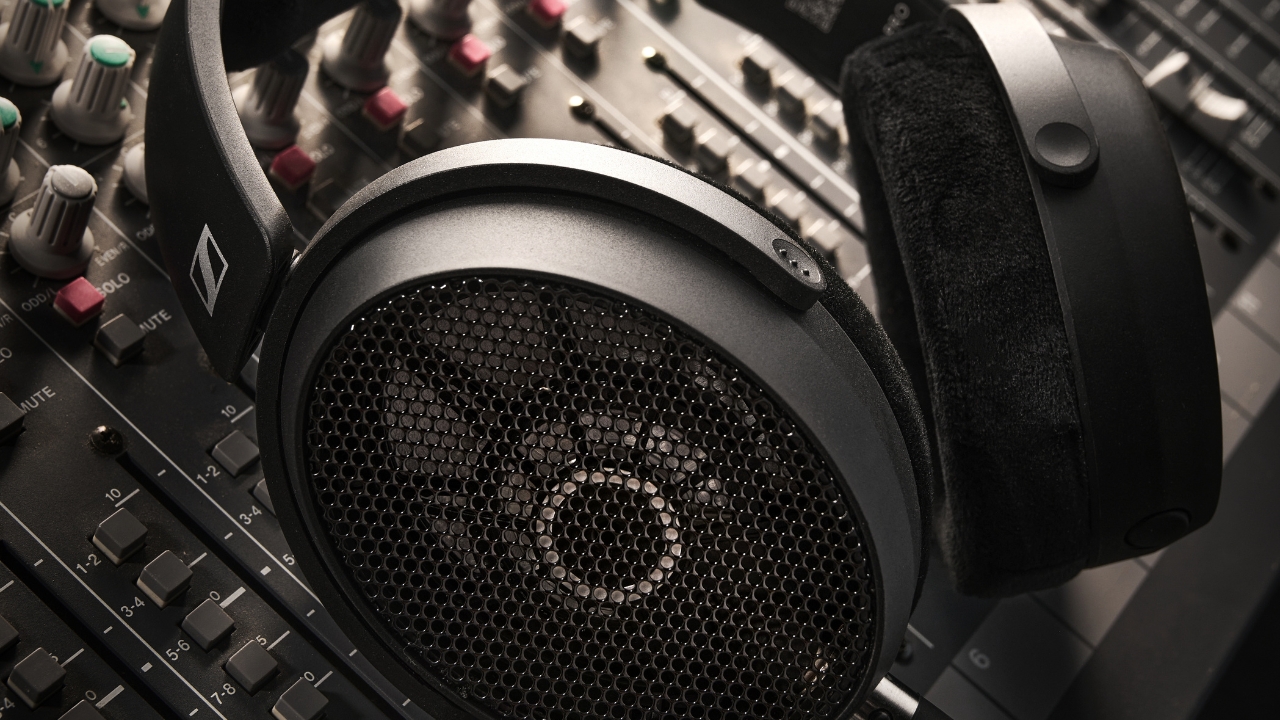

A good pair of studio headphones should reveal what is actually in a recording without making every session feel like work. The wrong pair can exaggerate bass, clamp too tightly, leak sound into a microphone, or leave you guessing whether a harsh vocal is in the mix or in the headphones. Our Best studio headphones picks cover closed-back monitoring, open-back editing, wireless listening, and straightforward home recording.
The Audio-Technica ATH-M50x is our top pick for most people who want one dependable wired model. The list also includes the more affordable ATH-M20x, isolation-focused Sennheiser HD 280 Pro, open-back beyerdynamic DT 990 Pro, and travel-ready Beats Studio Pro in two finishes.
Comparison table
| # | Product | Award | Design | Driver or key feature | Best for |
|---|---|---|---|---|---|
| 1 | Audio-Technica ATH-M50x | Best overall | Closed-back, wired | 45 mm drivers, swiveling earcups | Mixing and tracking |
| 2 | beyerdynamic DT 770 Pro X | Best closed-back upgrade | Closed-back, wired | 48 ohms, detachable 3 m cable | Studio sessions and isolation |
| 3 | Audio-Technica ATH-M40x | Best for monitoring | Closed-back, wired | 40 mm drivers, 90-degree swivel | One-ear monitoring |
| 4 | Sony MDR7506 | Best classic design | Closed-back, wired | 40 mm drivers, folding build | Reliable reference work |
| 5 | Sennheiser HD 280 Pro | Best for isolation | Closed-back, wired | Up to 32 dB attenuation | Recording in noisy rooms |
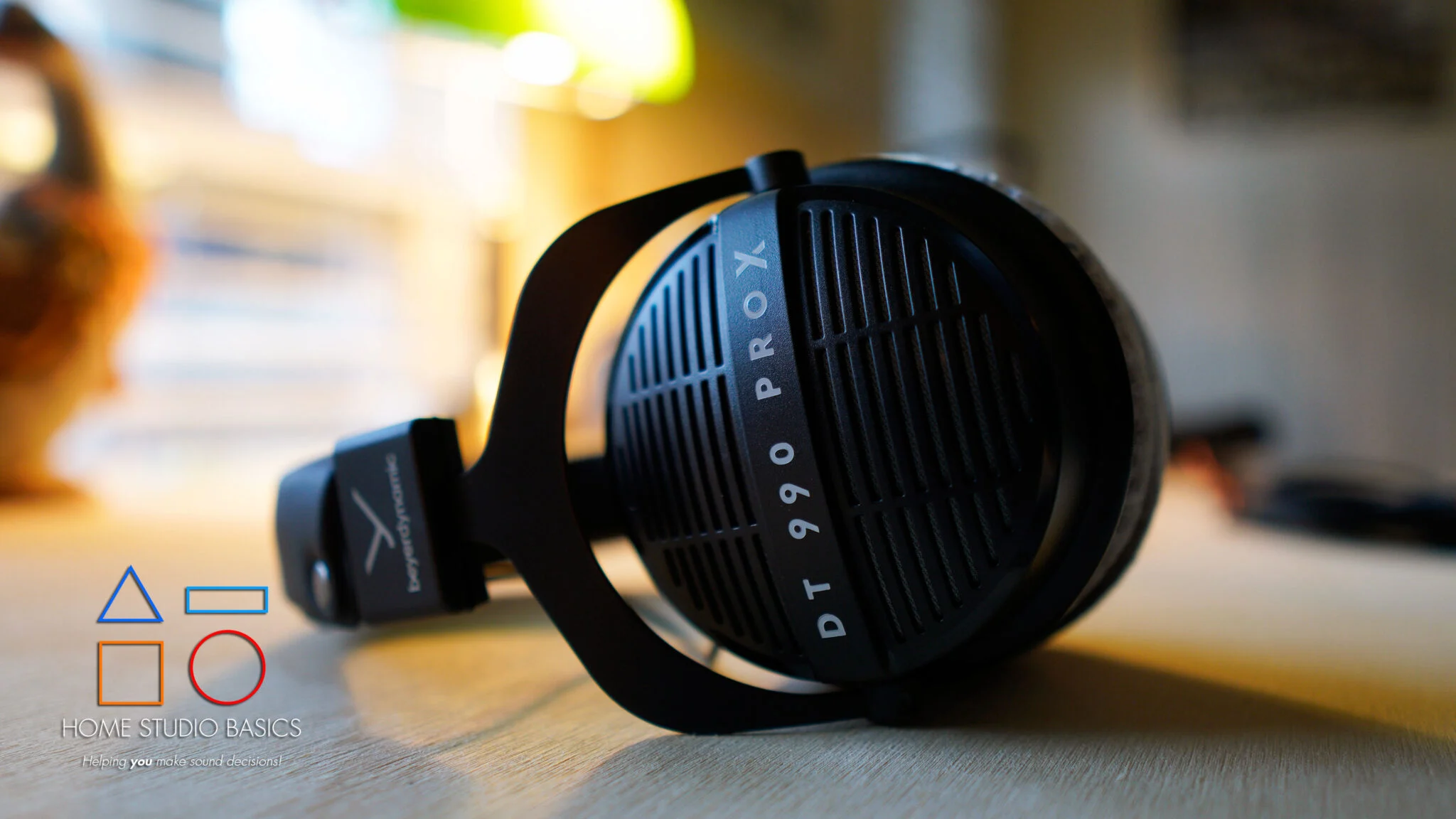
| 6 | beyerdynamic DT 990 Pro | Best open-back pick | Open-back, wired | 250 ohms, replaceable velour pads | Editing and critical listening |
| 7 | Beats Studio Pro Black | Best wireless option | Wireless, closed-back | ANC, USB-C lossless audio | Travel and commuting |
| 8 | Audio-Technica ATH-M20x | Best simple starter | Closed-back, wired | 40 mm drivers, single-side cable | Basic tracking |
| 9 | OneOdio Pro-10 | Best for flexible connections | Closed-back, wired | 50 mm drivers, 3.5 mm and 6.35 mm | DJing and home setups |
| 10 | Beats Studio Pro Sandstone | Best wireless alternative finish | Wireless, closed-back | ANC, 40-hour battery claim | Mobile listening |
1. Audio-Technica ATH-M50x: Best Overall

Pros
- Clear, detailed presentation across an extended range
- 45 mm drivers provide accurate bass response
- Swiveling earcups support one-ear monitoring
- Detachable cable improves everyday practicality
Cons
- Heavier than the ATH-M20x and ATH-M40x
- Closed-back design feels less open than the DT 990 Pro
- Wired operation only
Best for: musicians, editors, and home engineers who want one versatile monitoring headphone.
The ATH-M50x is the pair we would keep when the job changes from tracking a vocal to checking a finished mix. It has enough isolation for recording, enough detail to expose problems, and a practical shape that does not make one-ear monitoring awkward. The sound has authority without turning the headphones into a bass-only listening device.
Audio-Technica uses proprietary 45 mm large-aperture drivers with rare earth magnets and copper-clad aluminum wire voice coils. That combination is not just a line on the box. The larger drivers help the M50x present bass with weight while keeping vocals and upper-frequency detail easy to follow. The circumaural cups sit around the ears and reduce outside sound, which matters when a click track, a nearby computer fan, or a vocalist in the room could otherwise pull attention away from the recording.
The 90-degree swiveling earcups are one of the model's most useful studio features. Rotate one cup away and monitor a live source without removing the headphones completely. The earpad and headband materials are described as professional grade, and the detachable cable is a meaningful advantage over the Sony MDR7506, whose long cord is fixed. Three cable options are included according to the product listing, though the exact lengths are not specified here, so we would not choose it on cable variety alone.
Compared with the ATH-M40x, the M50x sounds fuller and gives bass more presence. The beyerdynamic DT 770 Pro X has a more premium replaceable-parts approach and a lower 48-ohm impedance, while the M50x is the easier all-purpose recommendation for a mixed studio and home setup. Its real weakness is weight. At about 0.64 pounds, it is heavier than the ATH-M20x, and its closed-back presentation can feel more confined than the open DT 990 Pro.
Skip it if you need wireless listening, a genuinely airy soundstage, or an especially light headset. For wired tracking, mixing, and critical everyday listening, the M50x is the most balanced choice in this group.
2. beyerdynamic DT 770 Pro X: Best Closed-Back Upgrade

Pros
- STELLAR.45 drivers aim for detailed monitoring
- 48-ohm impedance suits laptops, interfaces, and amplifiers
- Detachable locking mini-XLR cable
- Soft velour pads and replaceable components
- Handmade in Germany
Cons
- Heavier than several simpler wired models
- Closed-back sound does not have the openness of the DT 990 Pro
- Long cable is less convenient for casual mobile use
Best for: serious home studios that need isolation and broad device compatibility.
The DT 770 Pro X is the most complete closed-back tool here. It feels designed for repeated studio use rather than occasional editing, with a detachable connection, replaceable components, and the sort of soft velour pads that make long sessions easier to tolerate. It is not the lightest model in the group, but the headband and ear cushions give it a more substantial, professional feel than the OneOdio Pro-10.
Its STELLAR.45 driver technology is intended to reveal small imperfections in recordings, from brittle treble to uneven bass. The closed-back construction keeps the performance from spilling into a nearby microphone and helps separate the monitoring feed from the room. That makes it a more natural choice for tracking than the open-back beyerdynamic DT 990 Pro, which lets room sound in and sends headphone sound out.
The 48-ohm impedance is especially useful. It is low enough to work with a laptop or ordinary interface while remaining suited to a DAC, amplifier, or hi-fi component. The included 3 m straight cable attaches through a locking mini-XLR connector, and a threaded adapter supports both 1/8-inch and 1/4-inch connections. That is more adaptable than the fixed 9.8-foot cable on the Sony MDR7506 and more serviceable than a permanently attached lead.
The main drawback is physical bulk. At roughly 0.86 pounds, it is heavier than the Audio-Technica ATH-M40x and ATH-M20x. The long cable also makes it less appealing for listening from a phone on a sofa. The M50x is a better fit for someone who wants a slightly more familiar all-purpose design, but the DT 770 Pro X is the stronger choice when repairability, isolation, and device flexibility matter most.
Readers building a recording setup should also consider how monitoring headphones affect music production decisions, especially if the headphones will be used for both recording and mix checks. Skip this model if you want wireless convenience or an expansive open-back presentation. Choose it when closed-back focus and long-term studio use are the priority.
3. Audio-Technica ATH-M40x: Best for Monitoring

Pros
- 90-degree swiveling earcups
- 40 mm drivers suit tracking and monitoring
- Circumaural cups help block outside sound
- Detachable cable design
- Durable ear pads and headband
Cons
- No wireless mode
- Less bass extension than the ATH-M50x
- Firm fit may not suit every listener
Best for: musicians who need practical one-ear monitoring during recording or DJ work.
The ATH-M40x occupies a useful middle ground in Audio-Technica's wired lineup. It is less imposing than the M50x, yet it keeps the features that matter when a headphone is used as a tool. The cups surround the ears, the cable detaches, and either earcup can swivel 90 degrees for quick monitoring.
Its 40 mm drivers use rare earth magnets and copper-clad aluminum wire voice coils. Audio-Technica does not provide a full frequency response figure in the supplied information, so we will not invent one. What the design suggests in practice is a focused closed-back monitor rather than a deliberately spacious headphone. That focus helps when tracking a part and trying to avoid room distractions.
The ear pads and headband use professional-grade materials, and the overall construction feels made for repeated handling. The circumaural shape helps reduce outside noise, although it does not claim the specific attenuation figure listed for the Sennheiser HD 280 Pro. The detachable cable is another advantage over the Sony MDR7506, particularly for a setup where cables are often moved, packed, or replaced.
The ATH-M50x is the better choice for listeners who want more low-end authority and a more versatile everyday sound. The M40x makes more sense for someone who values monitoring behavior over added fullness. It is also lighter than the M50x at about 0.53 pounds, though the fit remains firm enough that sensitive listeners should try it before committing to marathon sessions.
There is no Bluetooth, ANC, or open-back option here. The DT 990 Pro is more revealing for spacious editing, while the M40x is safer around microphones and in noisier rooms. Pick the M40x for a straightforward wired monitor with useful swiveling cups and a replaceable cable.
4. Sony MDR7506: Best Classic Design

Pros
- Familiar professional monitoring design
- 40 mm drivers with neodymium magnets
- Closed ear construction reduces outside noise
- Folds for storage and travel
- 1/4-inch adapter included
Cons
- Cable is not detachable
- Fixed 9.8-foot cord can be awkward away from a desk
- Less flexible than newer alternatives
Best for: editors and recording setups that favor a proven, uncomplicated wired design.
The MDR7506 has the unmistakable feel of a studio workhorse. It folds, packs into the supplied soft case, and uses a closed design that keeps external distractions under control. It is not trying to be a wireless lifestyle product. This is a wired headphone for plugging in and listening closely.
Sony equips it with 40 mm drivers and neodymium magnets. The listed frequency response runs from 10 Hz to 20 kHz, which describes the range the product is designed to cover, not a guarantee that every frequency will sound equally prominent. In use, the large-diaphragm approach gives the MDR7506 a direct, monitor-like character that suits spoken-word editing and recording checks.
The fixed 9.8-foot cord is both a strength and a nuisance. It gives a seated engineer plenty of reach and ends in a gold-plated plug with a 1/4-inch adapter, but it can gather on a small desk. The ATH-M50x and ATH-M40x are more convenient for users who want detachable cables. The MDR7506 does counter with a folding design and a weight of about 0.5 pounds, making it one of the lighter wired choices here.
The Sennheiser HD 280 Pro blocks more outside sound on paper, while the beyerdynamic DT 770 Pro X feels more modern and serviceable. Sony's advantage is simplicity and a long-established professional format. Its weakness is that the fixed cable limits how easily the headphone can be refreshed or adapted.
Choose the MDR7506 if you want a compact, closed wired monitor with a clear purpose. Skip it if your setup needs a short cable, wireless listening, or easy cable replacement.
5. OneOdio Pro-10: Best for Flexible Connections

Pros
- 50 mm drivers with neodymium magnets
- Works with 3.5 mm and 6.35 mm audio jacks
- 90-degree swiveling earcups
- Adjustable, stretchable headband
- Shared audio port for listening together
Cons
- Wired only
- Heavier than the ATH-M20x and Sony MDR7506
- Bass-forward description may not suit neutral mixing
Best for: DJs, keyboard players, and home users with several audio sources.
The OneOdio Pro-10 is built around convenience. Its standout feature is not a wireless mode or a complex control system. It is the ability to connect directly to equipment with either a 3.5 mm or 6.35 mm audio jack, which saves time when moving between a laptop, mixer, amplifier, audio interface, or keyboard.
Inside are 50 mm speaker drivers with neodymium magnets. The product description emphasizes powerful bass, clear vocals, and crisp highs, so this is not presented as an aggressively flat reference monitor. That can be enjoyable for general listening and DJ work, but someone making delicate mix decisions may prefer the more controlled presentation of the ATH-M40x or the more revealing open sound of the DT 990 Pro.
The 90-degree swiveling earcups support single-ear monitoring, a practical touch for DJs and anyone checking a live source. The padded cushions are designed for noise isolation, and the adjustable, stretchable headband allows the fit to be changed without a complicated mechanism. At about 0.66 pounds, it is not especially heavy, but the construction feels less refined than the beyerdynamic DT 770 Pro X.
A shared audio port lets another pair of headphones connect for listening to music or video without a splitter. That is a rare and useful feature, though it is less relevant to a solo mixing workflow. The Pro-10 also lacks a detachable cable, so the ATH-M50x remains the more flexible long-term studio pick.
For readers comparing simpler wired models, the trade-offs between straightforward headphones and extra features can help clarify which conveniences matter. Choose the Pro-10 for multiple jack sizes, single-ear monitoring, and a lively sound. Skip it if neutral mixing accuracy and serviceable connections are your first concerns.
6. beyerdynamic DT 990 Pro: Best Open-Back Pick

Pros
- Wide, natural open-back presentation
- Replaceable circumaural velour pads
- Designed for critical listening and editing
- Handcrafted in Germany
- Comfortable for extended sessions
Cons
- Open-back design leaks sound
- 250-ohm impedance needs suitable equipment
- Fixed 3 m coiled cable
Best for: editing, critical listening, and quiet rooms with a capable interface or amplifier.
The DT 990 Pro sounds and behaves differently from every closed-back model in this roundup. Its open-back construction gives music room to breathe, making stereo placement and reverb tails easier to judge. It is the pair to reach for when the room is quiet and the task is editing rather than recording a vocalist beside an active microphone.
The product is built around a 250-ohm design intended for professional studio interfaces, dedicated headphone amplifiers, home hi-fi equipment, and audiophile systems. That impedance is a real system requirement. A weak source may not provide enough level or control, so this is not the automatic choice for plugging into every phone or laptop.
Its circumaural velour pads are soft, replaceable, and designed for extended sessions. The headband applies firm pressure, which helps keep the headphones stable, but people who dislike a secure fit may find it tiring. The 3 m coiled cable gives useful reach at a desk and resists dragging across the floor, though it adds bulk compared with a short straight lead.
The DT 770 Pro X is the better beyerdynamic choice for tracking because its closed cups isolate sound. The M50x is easier to pair with ordinary devices and is more versatile in a shared room. The DT 990 Pro wins when openness and spatial precision matter more than isolation.
Do not buy it for commuting, vocal recording, or a noisy office. Sound escapes in both directions, and the 250-ohm load deserves an appropriate source. In a quiet editing room, though, it is the strongest specialist option for hearing the shape of a mix.
7. Beats Studio Pro Black: Best Wireless Option

Pros
- Active noise cancelling and Transparency mode
- USB-C lossless audio support
- Up to 40 hours of battery life
- Fast Fuel gives up to 4 hours after a 10-minute charge
- Apple and Android compatibility
Cons
- Wireless features are not needed for a traditional studio chain
- Battery operation adds another maintenance task
- ANC and travel features do not replace a dedicated wired monitor
Best for: listeners who want one headphone for travel, calls, and occasional studio work.
The Beats Studio Pro is the only model here that makes a serious attempt to cover studio-adjacent listening and everyday travel in one device. It pairs wirelessly with Apple and Android devices, offers active noise cancelling for commutes and flights, and includes a 3.5 mm cable for a conventional analog connection. That versatility is its reason to exist.
Beats says the Studio Pro supports USB-C lossless audio and includes sound profiles for different environments. The same listing specifies personalized spatial audio with dynamic head tracking, which is useful for compatible movies and immersive listening but is not the mode we would use to judge a stereo mix. For production, the USB-C lossless option and analog cable are more relevant than spatial effects.
Battery life is listed as up to 40 hours, and a 10-minute Fast Fuel charge is said to provide up to 4 hours. Those figures make sense for travel planning, where a short charge before boarding can matter. ANC helps reduce external noise, while Transparency mode brings the surroundings back into the mix. Voice-targeting microphones are intended to improve calls in busy spaces.
The Audio-Technica ATH-M50x remains the better dedicated wired monitor, and the DT 770 Pro X offers a more studio-specific closed-back design. The Beats wins for people who move between a phone, a laptop, a plane, and a desk. Its weakness is that battery management, wireless processing, and listening modes introduce variables a traditional studio headphone avoids.
The black version has the same listed feature set as the Sandstone version below. Choose it if you want an understated finish and a single headset for commuting, calls, entertainment, and occasional wired monitoring. Skip it if your main task is building a consistent reference chain for mixing.
8. Audio-Technica ATH-M20x: Best Simple Starter

Pros
- 40 mm drivers for tracking and mixing
- Circumaural design helps isolate outside sound
- Single-side cable exit
- Light weight at about 0.46 pounds
- Straightforward wired operation
Cons
- Cable is not detachable
- No swiveling earcups
- Less refined than the ATH-M40x and ATH-M50x
Best for: first recording setups and listeners who want a basic closed-back monitor.
The ATH-M20x keeps the studio headphone brief refreshingly narrow. Plug it in, put it over your ears, and monitor a performance without navigating wireless modes or adjusting a collection of sound profiles. That simplicity makes it a sensible first pair for tracking vocals, instruments, and spoken word.
Its 40 mm drivers use rare earth magnets and copper-clad aluminum wire voice coils. Audio-Technica describes the tuning as enhanced for low-frequency performance, so the M20x is not presented as a strictly neutral tool. The circumaural cups contour around the ears and help reduce sound from the room, which is useful when recording in an untreated space.
The single-side cable exit keeps the lead from crossing both sides of the head, an understated feature that makes movement around a microphone easier. At about 0.46 pounds, the M20x is the lightest headphone in this group by the listed product dimensions. That helps during longer sessions, although the fixed cable is less convenient to replace than the detachable lead on the ATH-M50x or ATH-M40x.
The M40x adds 90-degree swiveling cups and a detachable cable, while the M50x adds larger 45 mm drivers and a fuller, more capable presentation. The M20x is therefore best understood as the uncomplicated option, not a scaled-down replacement for every model here. Its weakness is limited flexibility, especially for one-ear monitoring.
Choose it if you need a light, closed wired headphone for a first home setup. Skip it if you expect to move between multiple devices, monitor one ear at a time, or make high-stakes mix decisions where greater refinement is important.
9. Audio-Technica ATH-M40x: Best Flexible Audio-Technica Design
Pros
- Swiveling earcups simplify single-ear monitoring
- Detachable cable improves serviceability
- 40 mm drivers with rare earth magnets
- Around-ear cups provide sound isolation
- Robust construction
Cons
- Wired only
- Does not have the M50x's 45 mm drivers
- Closed-back soundstage is limited
Best for: readers who need a practical monitor with one-ear use and a replaceable connection.
The ATH-M40x appears twice in the supplied product list, so the two entries point to the same model and image. To keep the roundup honest, this section covers that second listing without pretending it is a different headphone. Its useful identity is the same: a closed-back Audio-Technica monitor with swivel functionality and detachable cabling.
The 40 mm drivers use rare earth magnets and copper-clad aluminum wire voice coils. The driver size sits below the M50x's 45 mm units, and the product is aimed at a controlled monitoring role rather than a feature-packed wireless experience. Its around-ear construction helps cut down room noise while keeping the listening setup electrically simple.
The 90-degree swiveling earcups are the defining physical feature. They make it easier to listen to a live source with one ear uncovered, which is useful for DJing, cueing, and tracking. The professional-grade ear pads and headband material are intended to withstand repeated use, and the detachable cable is more convenient than the fixed lead on the ATH-M20x.
The M50x is the stronger recommendation when the same headphone must also serve as a broad everyday listener. The Sony MDR7506 folds more compactly, while the DT 770 Pro X offers a more substantial replaceable-parts design and 48-ohm compatibility. The M40x remains a sensible middle pick for users who prioritize monitoring mechanics over added bass presence.
Its limitations are clear. There is no Bluetooth, ANC, or open-back spaciousness, and the firm fit may not suit every head. Choose this duplicate listing only if the product details and available configuration are the one you want. For the model itself, it suits practical wired monitoring rather than travel or relaxed listening.
10. Beats Studio Pro Sandstone: Best Wireless Alternative Finish

Pros
- Active noise cancelling with Transparency mode
- USB-C lossless audio and 3.5 mm analog connection
- Up to 40 hours of battery life
- Spatial audio with dynamic head tracking
- Works with Apple and Android
Cons
- Same limitations as the black Studio Pro for studio work
- Requires charging for wireless use
- Wireless processing is unnecessary for a pure monitoring setup
Best for: mobile listeners who prefer the Sandstone finish and need travel features.
The Sandstone Studio Pro is functionally the same wireless headphone as the black version in this list. Its place here is for readers who prefer the lighter finish, not because it has a different acoustic platform. It combines over-ear comfort cushions with ANC, Transparency mode, Bluetooth connectivity, and a wired fallback.
The important studio-facing feature is USB-C lossless audio. The headphone also supports a standard 3.5 mm analog connection, so it can be used with conventional audio equipment when wireless listening is not appropriate. The product listing describes its sound as rich and balanced for music, calls, and everyday listening, which is a broader brief than the explicitly studio-focused Audio-Technica and beyerdynamic models.
The claimed battery life is up to 40 hours, and Fast Fuel is said to provide up to 4 hours from a 10-minute charge. A stable Class 1 Bluetooth connection and one-touch pairing across Apple and Android devices make the Sandstone model better suited to moving between devices than any wired pick here. Its microphones also target clearer calls by reducing background noise.
The black Beats Studio Pro is the direct alternative, with the same listed dimensions of roughly 7.1 by 7.0 by 3.1 inches and the same approximate weight of 0.57 pounds. Both lose to the M50x for a consistent wired monitoring workflow, and both are less suitable than the DT 990 Pro for open, spacious editing. The weakness is not the color. It is the compromise inherent in a wireless headphone that also tries to serve as a studio tool.
Pick the Sandstone version when the finish matters and travel is part of the brief. Skip it if the headphone will stay beside an interface and never leave a recording desk.
How to choose best studio headphones
The Best studio headphones are separated less by marketing language than by the way their design changes monitoring, comfort, and compatibility.
Closed-back or open-back construction
Closed-back headphones keep external sound out and reduce leakage into microphones. That makes the ATH-M50x, DT 770 Pro X, and HD 280 Pro appropriate for tracking, commuting, and rooms where other sounds compete with the recording. Open-back headphones such as the DT 990 Pro sound more spacious, but they need a quiet room and should not be worn beside a live microphone.
Driver size and tuning
Driver diameter can influence bass authority and how much air a headphone moves, but it does not determine quality by itself. The OneOdio Pro-10 uses 50 mm drivers, the ATH-M50x uses 45 mm drivers, and several Audio-Technica and Sony models use 40 mm drivers. Listen for controlled bass, intelligible vocals, and treble that exposes detail without making every recording tiring.
Impedance and source compatibility
Impedance affects how much electrical drive a headphone needs. The DT 990 Pro's 250-ohm design is intended for studio interfaces, headphone amplifiers, and hi-fi systems, while the DT 770 Pro X's 48 ohms are easier to pair with laptops, interfaces, and DACs. If the source is unknown, a lower impedance wired model is usually easier to integrate.
A headphone that sounds impressive for five minutes is not necessarily the one that lets you make a better mix after two hours.
Cable and connection design
A detachable cable is easier to replace and usually makes packing simpler. The M50x, M40x, and DT 770 Pro X offer more connection flexibility than the fixed-cable Sony MDR7506, ATH-M20x, and HD 280 Pro. The OneOdio Pro-10 stands out for accepting both 3.5 mm and 6.35 mm connections, while the Beats models add wireless, USB-C, and analog options.
Comfort and serviceability
Look at earcup shape, pad material, headband pressure, and weight before focusing on sound. Velour pads on the beyerdynamic models feel different from the synthetic materials used elsewhere, while the HD 280 Pro, M50x, and M40x use around-ear designs intended for longer sessions. Replaceable pads and cables can keep a heavily used studio headphone working longer.
Frequently asked questions
Are closed-back headphones better for recording?
Closed-back headphones are usually better for recording because they limit sound leakage into a nearby microphone. They also reduce outside noise, helping a performer hear the cue mix. The ATH-M50x, DT 770 Pro X, and Sennheiser HD 280 Pro all fit this role.
Are open-back headphones suitable for mixing?
Open-back headphones can be useful for mixing and editing in a quiet room. Their design allows outside sound in and lets headphone sound escape, so they are poor choices beside a live microphone or in a noisy office. The beyerdynamic DT 990 Pro is the open-back model in this roundup.
Do studio headphones need an amplifier?
Not always. The DT 990 Pro has a 250-ohm impedance and is intended for equipment such as studio interfaces and dedicated headphone amplifiers. Models with lower impedance, including the DT 770 Pro X at 48 ohms, are easier to use with ordinary laptops and a wider range of audio sources.
Can wireless headphones be used for studio work?
Wireless headphones can be useful for general listening, travel, and checking how a track sounds away from the desk. Bluetooth processing and battery requirements add variables, so a wired model remains the safer main monitor for recording and mixing. The Beats Studio Pro also offers USB-C lossless audio and a 3.5 mm cable when a wired connection is preferred.
Which headphones are easiest to use with a microphone?
Closed-back models are the easiest starting point because they reduce leakage. The ATH-M50x and ATH-M40x also have swiveling earcups, which can help a performer monitor one ear while hearing the room with the other. Fit still matters, since a loose seal can allow more sound to escape.
Is a detachable cable important?
A detachable cable is useful if the headphones are moved between rooms, packed for travel, or used frequently. It makes replacement easier and can reduce strain at the earcup. It is not essential for a stationary setup, but it is one reason the ATH-M50x, ATH-M40x, and DT 770 Pro X rank above fixed-cable alternatives for long-term flexibility.

The bottom line
The Best studio headphones for most buyers are the Audio-Technica ATH-M50x because its closed-back design, 45 mm drivers, swiveling cups, and detachable cable cover tracking, mixing, and ordinary listening without a complicated setup. The beyerdynamic DT 770 Pro X is the better specialist choice for users who want a more serviceable closed-back build, 48-ohm compatibility, and soft velour pads for long sessions.
Choose the beyerdynamic DT 990 Pro instead when you work in a quiet room and want an open, spacious presentation. For travel and daily commuting, the Beats Studio Pro brings ANC, wireless connectivity, USB-C lossless audio, and long battery life that the wired studio models do not offer.
If you are undecided, choose the ATH-M50x for a traditional studio setup, or the Beats Studio Pro if one headphone must also handle travel and calls.
As an Amazon Associate we earn from qualifying purchases.