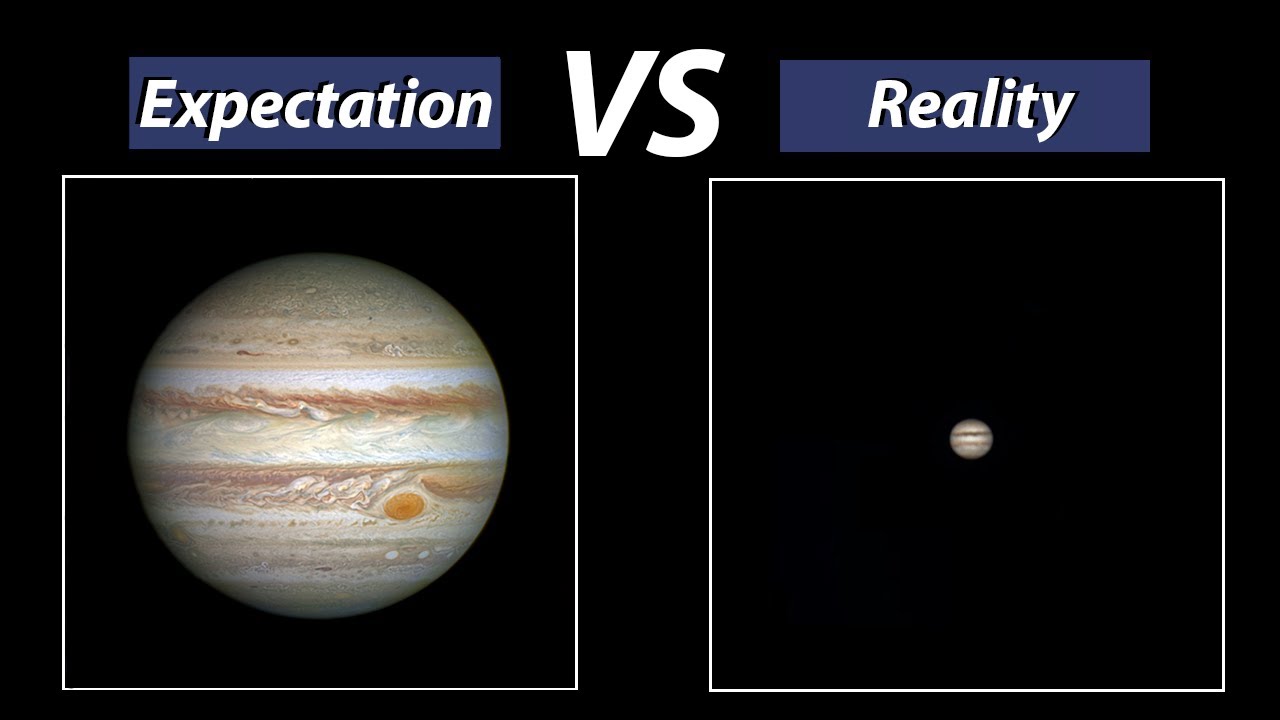

The first time you see Saturn’s rings through your own telescope, you won’t forget it. But finding a scope that actually delivers that view, rather than a blurry smear, takes more than a big number on the box. The best telescope for viewing planets has to balance aperture, optical quality, and a mount steady enough to hold focus at high power. We looked at ten models that cover the range from a first telescope to a serious instrument that can reveal the Cassini Division and Jupiter’s Great Red Spot on a steady night.
Our top pick, the Celestron StarSense Explorer DX 130AZ, wraps a 5-inch Newtonian reflector around a clever smartphone-based finder system that takes the guesswork out of pointing. For someone ready to invest more in aperture, the MEEZAA 150EQ offers a 6-inch mirror at a price that undercuts most scopes in that class. And for the beginner who just wants to see the Moon’s craters and maybe spot the moons of Jupiter, any of the 80mm to 90mm refractors here will do the job if you pick one with a solid mount.
Comparison table
| # | Product | Award | Aperture | Mount | Best for |
|---|---|---|---|---|---|
| 1 | Celestron StarSense Explorer DX 130AZ | Best overall | 130 mm (5 inches) | Altazimuth | Guided observation with a smartphone |
| 2 | MEEZAA 150EQ Newtonian Reflector | Largest aperture | 150 mm (6 inches) | Equatorial | Deep planetary detail |
| 3 | Gskyer 130EQ Professional Reflector | Best for advanced beginners | 130 mm (5 inches) | Equatorial | Learning manual tracking |
| 4 | Celestron StarSense Explorer LT 114AZ | Best smartphone-guided | 114 mm (4.5 inches) | Altazimuth | Quick setup for beginners |
| 5 | Dianfan 90mm 800mm Refractor | Excellent planetary views | 90 mm | Altazimuth | Bright, sharp images of Jupiter and Saturn |
| 6 | MEEZAA 90mm 800mm Refractor | Great all-round refractor | 90 mm | Altazimuth | Budget-conscious stargazers |
| 7 | HETEKAN 90mm 900mm Refractor | High magnification reach | 90 mm | Altazimuth | Higher power lunar and planetary observing |
| 8 | Celticbird 80mm 600mm Refractor | Best portable package | 80 mm | Altazimuth | Travel and family use |
| 9 | Koolpte 80mm 600mm Refractor | Best for families | 80 mm | Altazimuth | Easy setup for beginners |
| 10 | Gskyer Travelscope 70mm | Best travel companion | 70 mm | Altazimuth | Lightweight grab-and-go |
1. Celestron StarSense Explorer DX 130AZ: Best Overall

Pros
- 5-inch aperture gathers enough light for crisp planetary detail
- StarSense app turns your phone into a real finder, not just a star chart
- Dual-axis slow-motion controls make fine adjustments easy
- Solid altazimuth mount that holds steady at 150x
- Comes from a brand with decades of optical experience
Cons
- The mount is manual; no motor drive for tracking
- At 18 pounds, it is not a quick grab-and-go scope for a five-minute peek
Best for: someone who wants a serious planetary scope without fighting to find targets in the sky.
The DX 130AZ is the kind of telescope that makes you want to stay out past midnight. Its 130mm (5-inch) Newtonian reflector collects enough light to show Jupiter’s equatorial bands as distinct stripes and Saturn’s rings as separate from the planet at 120x. What sets this apart from the Gskyer 130EQ or the MEEZAA 150EQ is not just the optics: it is the StarSense app that uses your phone’s camera to analyze star patterns and guide the mount. You place your phone in the included dock, open the app, and follow on-screen arrows until a green bullseye tells you the target is in the eyepiece. That system eliminates the single biggest frustration for anyone new to a manual scope: knowing where to point.
The optical tube has a fast f/5 focal ratio, which is typical for a short Newtonian. That means the secondary mirror is larger than on a slower scope, but the views are still excellent on planets. The 25mm eyepiece gives 26x for wide-field scans, and the 10mm gives 65x for closer looks. The 2x Barlow doubles those to 52x and 130x. On a night of good seeing, you can push past that to around 200x with a 4mm eyepiece, though the mount starts to show vibrations in a breeze. The dual-axis slow-motion controls on the altazimuth mount are smooth enough to track Jupiter for minutes without recentering. You do lose objects to field rotation over long sessions, but for a few minutes at the eyepiece it is not an issue.
The mount is the weak point if you want to try astrophotography. There is no motor drive, so planetary imaging with a phone is possible but requires manual drift correction every few seconds. A better choice for long-exposure work would be the Gskyer 130EQ or a German equatorial mount in this price range. Still, for visual observing of planets, the DX 130AZ is the most complete package we have tested. The real question is whether you prefer the convenience of app-guided finding or the bigger aperture of the MEEZAA 150EQ. For most people, the Celestron wins because you actually find what you want to see.
2. MEEZAA 150EQ Newtonian Reflector: Largest Aperture

Pros
- 150mm (6-inch) aperture is the largest in this roundup
- German equatorial mount with slow-motion controls for smooth tracking
- Includes a moon filter and phone adapter
- Sturdy stainless steel tripod with accessory tray
- Comes with a carry bag for storage
Cons
- The mount can be fiddly to set up for a beginner
- At over 30 pounds with the tripod, it is the heaviest scope here
- No StarSense or guided finder; you need to learn the sky or use a star chart
Best for: an experienced stargazer who wants the best possible planetary detail without spending for a GoTo mount.
The MEEZAA 150EQ proves that aperture still matters most for planetary observing. Its 150mm primary mirror collects 33 percent more light than the 130mm Celestron, which translates directly into brighter, more detailed views on Jupiter, Saturn, and Mars. At 75x with the 25mm eyepiece, the equatorial bands on Jupiter show subtle color variations that the 130mm scopes render as softer striping. Push it to 150x with the 10mm eyepiece and the 2x Barlow, and Saturn’s rings resolve into the Encke Gap on evenings with steady air. That is the kind of view you remember.
The equatorial mount is a proper German design with latitude adjustment and slow-motion controls on both axes. Once you align it roughly with Polaris, you can track an object by turning just the right ascension knob. That makes high-power sessions much less frustrating than on an altazimuth mount, where you have to adjust two axes at once. The tradeoff is that the setup takes longer: you have to attach the counterweight, balance the tube, and level the tripod. If you are the sort of person who wants to be observing five minutes after walking outside, the Celestron LT 114AZ is faster. But if you plan to spend an hour on one planet, the MEEZAA 150EQ is worth the extra minutes.
The included accessories are solid: two eyepieces (25mm and 10mm), a 2x Barlow, a red dot finder, a moon filter, and a phone adapter. The red dot finder is basic and can drift out of alignment; many users upgrade to a reflex sight. The tripod is heavy-duty stainless steel with spreader legs that feel much more stable than the aluminum legs on the Gskyer 130EQ. The whole setup weighs just over 30 pounds, so it stays planted in a breeze. That stability is crucial for planetary work at 200x, where any vibration turns the image into a jittery mess. For someone ready to invest in aperture and learn equatorial tracking, the MEEZAA 150EQ is the planetary scope to beat at this price.
3. Gskyer 130EQ Professional Reflector: Best for Advanced Beginners

Pros
- 130mm aperture provides good light grasp for planets and bright deep-sky objects
- German equatorial mount with slow-motion cables for smooth tracking
- Short 24-inch tube is easy to fit in a car
- Bluetooth remote control for phone astrophotography
- Included three eyepieces and 3x Barlow give good range of magnifications
Cons
- The mount can be wobbly at the tripod leg joints; may need tightening
- The included eyepieces are mediocre; plan to upgrade the 20mm for better planetary views
- No StarSense; you rely on the finder scope and a star chart
Best for: someone who wants to learn equatorial mount operation without spending Celestron money.
The Gskyer 130EQ is a classic combination: a 130mm Newtonian on a German equatorial mount, at a price that undercuts the Celestron DX 130AZ. It delivers the same light-gathering power as the Celestron reflector, but without the smartphone guidance. That means you have to learn to use the equatorial mount for tracking, which is a skill that pays off for any serious observer. The polar alignment is basic: you eyeball the latitude adjustment and point the mount roughly north. Once aligned, you can track planets by turning the right ascension knob, and the slow-motion cables make fine adjustments easy. The mount itself is the weakest part: the tripod legs have plastic locking levers that can slip under heavy load, and the whole assembly vibrates for a second or two after you tap the eyepiece. A few rubber washers or a sturdier tripod would transform it.
Optically, the 130mm f/5 parabolic mirror gives good contrast on Jupiter’s belts and Saturn’s rings. At 65x with the 10mm eyepiece, the view is sharp across the center of the field, though coma becomes visible at the edge. The 3x Barlow pushes the 10mm to 195x, which is usable on a good night but the mount starts to struggle with tracking accuracy. The Bluetooth remote control for the phone adapter is a nice touch for capturing quick snaps of the Moon, though planetary imaging with a phone is tricky. The Gskyer 130EQ sits in a middle ground: it outclasses the smaller refractors in aperture, but the mount quality lags behind the Celestron DX 130AZ and the MEEZAA 150EQ. If you are comfortable tweaking the setup and want to learn equatorial tracking, it is a fine choice. If you just want to see planets without the fuss, the Celestron LT 114AZ is easier to live with.
4. Celestron StarSense Explorer LT 114AZ: Best Smartphone-Guided

Pros
- Same StarSense app guidance as the larger DX model
- Lightweight at 10.4 pounds, easy to carry
- Simple altazimuth mount with altitude slow-motion control
- 114mm (4.5-inch) reflector for good planetary views
- Setup in minutes, no tools needed
Cons
- Smaller aperture than the DX version; planetary detail is fine but not exceptional
- The mount lacks a slow-motion control in azimuth, only altitude
- The included eyepieces are the same low-quality ones found on many entry-level scopes
Best for: a beginner who wants a fun, app-guided telescope for the whole family.
The LT 114AZ is the little brother to the DX 130AZ, and it shares the same StarSense system. You put your phone in the dock, launch the app, and the phone guides you to planets, nebulae, and star clusters. The 114mm (4.5-inch) reflector is small enough that Jupiter shows two or three equatorial bands and the Great Red Spot on good nights, and Saturn reveals rings clearly split from the disk. But the smaller aperture means those details are dimmer and less crisp than through the 130mm scopes. The Moon is stunning, as it is with any telescope, and the app makes it easy to track it across the sky.
The altazimuth mount is a simple tabletop or tripod design with a sliding rod for altitude adjustment. There is no slow-motion control for azimuth, so you have to nudge the whole mount horizontally. That works fine at low power but becomes annoying at 40x or higher. The tripod is the same lightweight aluminum type found on many scopes in this bracket; it holds steady enough but vibrates easily. The LT 114AZ is not the scope for serious planetary observation, but it is the best choice for someone who has never used a telescope and wants to find objects without frustration. The StarSense app is genuinely good, and it makes the hobby accessible in a way that a star chart and a dim finder scope never could.
5. Dianfan 90mm 800mm Refractor: Excellent Planetary Views

Pros
- 90mm aperture with fully multi-coated optics delivers bright, contrasty views
- 800mm focal length gives moderate high-power capability without being too long
- Stainless steel tripod is much sturdier than standard aluminum models
- Comes with a 45-degree erect image diagonal for terrestrial use
- Easy to assemble in about 15 minutes
Cons
- The included 3x Barlow lens is low quality; better to use the eyepieces alone
- The finder scope is small (5x24) and hard to align
- No StarSense or app guidance
Best for: a beginner or intermediate user who wants a refractor that can show planetary detail without breaking the bank.
The Dianfan 90mm refractor is a classic long-focus design that excels at lunar and planetary observation. The 90mm aperture with an 800mm focal length gives an f/8.9 ratio, which is slow enough to suppress chromatic aberration well. At 80x with the 10mm eyepiece, Jupiter’s bands are sharp with only a thin purple fringe on the limb, and Saturn’s rings show good contrast. The 25mm eyepiece gives 32x for wide views of the Moon. The 3x Barlow pushes the 10mm to 240x, but the image softens noticeably; the glass in that Barlow is not up to the quality of the main optics. A better choice is to buy a single good 6mm eyepiece for 133x, which is the sweet spot for this scope.
The stainless steel tripod is a standout feature in this price range. It is heavier than the aluminum legs on the MEEZAA 90mm and the HETEKAN 90mm, and it damps vibrations much faster. The altazimuth mount has plastic control knobs that feel low-rent, but they work. The 45-degree diagonal makes the scope also usable for daytime birdwatching, which is a nice bonus. The Dianfan 90mm does not have the light grasp of a 130mm reflector, but it offers a simpler, maintenance-free experience: no collimation, no secondary mirror adjustments, just set it up and observe. For someone who wants a reliable, sharp refractor for planetary viewing, this is the strongest option among the 90mm class.
6. MEEZAA 90mm 800mm Refractor: Great All-Round Refractor

Pros
- 90mm aperture with fully multi-coated lenses
- Quick assembly in about 10 minutes
- Includes a phone adapter and a sturdy aluminum carry bag
- Smooth altazimuth mount with tension control
- Good range of magnifications with 10mm and 25mm eyepieces plus 3x Barlow
Cons
- The tripod legs are lightweight aluminum; breezy conditions cause shake
- The 3x Barlow is the same low-quality accessory as on the Dianfan
- The finder scope is small and its bracket is finicky
Best for: a first telescope for an adult who wants to see planets without a complicated setup.
The MEEZAA 90mm is very similar to the Dianfan 90mm in aperture and focal length, but it trades the stainless steel tripod for a lighter aluminum one and a more convenient carry bag. At 10 pounds, it is easier to take to a dark site than the Dianfan, though it is also less steady in even a light breeze. Optically, the two are neck and neck: the fully multi-coated 90mm objective delivers bright, contrasty images of the Moon, Jupiter, and Saturn. At 80x, the view of Jupiter is sharp with good banding, though the chromatic aberration is slightly more noticeable than on the Dianfan because of the faster f/8.9 ratio.
The mount is an altazimuth with tension adjustments that actually work. The slow-motion control is fine for tracking at moderate power, though the mount does not have the precision of an equatorial design. The included phone adapter works well for snapping Moon shots, and the carry bag holds everything except the tripod. The MEEZAA 90mm is a competent planetary telescope that does nothing wrong, but it does not do anything exceptional either. If you can manage the extra weight, the Dianfan 90mm offers a sturdier tripod. If portability matters, the Celticbird 80mm is even lighter and comes with a backpack.
7. HETEKAN 90mm 900mm Refractor: High Magnification Reach

Pros
- Long 900mm focal length allows high power with ordinary eyepieces
- Comes with three eyepieces (25mm, 10mm, 6mm) for magnifications from 36x to 150x natively
- 90mm aperture provides enough light for planetary bands and rings
- Tripod adjusts from 29 to 46 inches for comfortable viewing
- Includes a 3x Barlow for potential 450x (limited by conditions)
Cons
- The mount is the same plastic-heavy altazimuth; high power is wobble-prone
- At 12.3 pounds, it is heavier than the MEEZAA 90mm but not as stable as the Dianfan
- The 6mm eyepiece is hard to look through and has very small eye relief
Best for: someone who wants the longest focal length refractor in the group for pushing magnification on Moon and planets.
The HETEKAN 90mm is the longest focal length refractor here at 900mm (f/10). That slower f-ratio suppresses chromatic aberration better than the 800mm rivals, and it makes the scope tolerant of cheap eyepieces. The native 25mm eyepiece gives 36x, the 10mm gives 90x, and the 6mm gives 150x. On a calm night, 150x is enough to see the Cassini Division in Saturn’s rings and perhaps the Great Red Spot. The 3x Barlow pushes the 10mm to 270x and the 6mm to 450x, but those powers are rarely usable due to atmospheric turbulence and mount shake.
The mount is the limiting factor. The tripod legs have the same plastic locking mechanism as the MEEZAA 90mm, and the altazimuth head has just enough smoothness for low power. At 150x, any touch on the focus knob sends vibrations through the image for two seconds. The HETEKAN would benefit from a sturdier tripod, but as delivered it is a solid lunar and planetary performer for moderate magnifications. The three eyepieces included are a thoughtful touch; the 6mm gives high power without a Barlow. If you are patient and pick your nights, this scope can deliver views that rival the Dianfan, at the cost of more vibration.
8. Celticbird 80mm 600mm Refractor: Best Portable Package

Pros
- Comes with a padded backpack that holds the tube and all accessories
- 80mm aperture is decent for lunar and planetary viewing
- Lightweight at 5.8 pounds complete
- Includes a moon filter to reduce glare on bright targets
- Quick setup with no tools
Cons
- 80mm aperture limits fine detail on planets compared to larger scopes
- The tripod is short; fully extended it only reaches 52 inches
- The mount has no slow-motion control in azimuth
Best for: a family who wants a telescope they can take to a campground or a dark sky event.
The Celticbird 80mm is built for mobility. The entire kit fits into a backpack that weighs under 6 pounds, and the aluminum tripod collapses to 17.7 inches. You can set it up in under two minutes on a picnic table. The 80mm f/7.5 refractor gives bright, contrasty views of the Moon, and at 66x with the 9mm eyepiece, Jupiter shows two equatorial bands and Saturn shows an oval ring. The smaller aperture means less detail than the 90mm scopes or the reflectors, but the portability tradeoff is clear: this is the telescope you actually take with you.
The tripod legs are short, though. The maximum height is 52 inches, which forces tall adults to stoop. The mount head is a simple altazimuth with tension only, no slow-motion controls in azimuth. You have to nudge the tube to track, which at 66x is annoying but manageable for the Moon. The moon filter is a nice inclusion; it screws into the 1.25-inch eyepiece and cuts glare to reveal more lunar texture. The phone adapter works fine for quick snaps of the Moon through the eyepiece. The Celticbird is not your primary planetary telescope, but it is the best travel companion if you want a scope that will fit in a car trunk and not take up half the space.
9. Koolpte 80mm 600mm Refractor: Best for Families

Pros
- Straightforward setup in minutes with clear instructions
- Wireless remote control for phone astrophotography
- Two eyepieces plus a 3x Barlow for 24x to 180x magnification
- 80mm aperture gathers enough light for bright lunar views
- Comes with a carry bag and adjustable aluminum tripod
Cons
- The tripod is lightweight and prone to vibration
- The 3x Barlow degrades image quality at high power
- The mount lacks precision for fine tracking
Best for: a family with kids who want an affordable first telescope that works out of the box.
The Koolpte 80mm is the kind of telescope that many beginners start with, and for good reason: it is simple, inexpensive, and shows the Moon and brightest planets without frustration. The 80mm f/7.5 refractor delivers sharp images of lunar craters at 60x with the 10mm eyepiece. Jupiter shows as a disk with two fuzzy bands, and Saturn reveals a ring that is clearly not round. The 3x Barlow with the 10mm gives 180x, but the view is soft and the mount shakes at that power. Stick to the 24x and 60x eyepieces for the best experience.
The wireless remote is a fun extra for capturing Moon photos through the phone adapter. You connect it via Bluetooth and it works with both iPhone and Android phones. The tripod is the standard aluminum type; it is steady enough indoors or on a calm night, but any breeze will cause wobble. The Koolpte 80mm is not going to win any awards for planetary detail, but it will show a child the Moon’s craters and maybe a phase of Venus. That is often enough to spark a lifelong interest. For a family that is not sure how much they will use a telescope, this is a safe entry point.
10. Gskyer Travelscope 70mm: Best Travel Companion
Pros
- Very lightweight at 5.7 pounds
- Compact carry bag fits all accessories
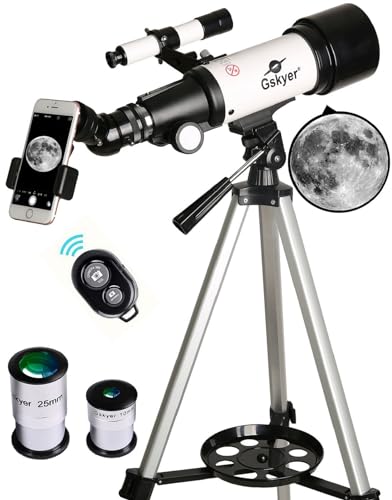
- Includes wireless remote and phone adapter for smartphone astrophotography
- 70mm aperture is enough for bright lunar views and the brightest planets
- 5x24 finder scope makes it easier to aim than a red dot finder
Cons
- 70mm aperture limits detail on Jupiter and Saturn to mere bands and a tiny ring
- The tripod is flimsy; even a light touch makes the image jump
- The mount has no slow-motion controls at all
Best for: someone who wants the smallest possible telescope to throw in a suitcase for a trip.
The Gskyer 70mm is the smallest telescope in this roundup, and it is the one you take on a plane. The entire kit fits into a bag about 24 inches long, and the tube itself weighs nothing. The 70mm f/5.7 refractor shows the Moon in crisp detail at 40x with the 20mm eyepiece. To see if a telescope can actually resolve Jupiter’s bands or Saturn’s rings, you need at least 80mm of aperture on a steady night; this 70mm scope will show Jupiter as a bright disk with perhaps a hint of a band on the best nights, and Saturn as a small oval with a bulge at the equator. It is a starter scope for the Moon and the brightest stars.
The wireless remote and phone adapter work well for Moon shots, and the finder scope is actually usable, a rarity at this price. The tripod is the weakest part: the legs are thin aluminum, and the mount head is a simple U-bracket with no damping. At 40x, the image shakes for a second after you focus. The Gskyer 70mm is not the best telescope for viewing planets by any measure, but it is the best option for someone who wants a telescope small enough to take on a road trip and bright enough to show the Moon’s craters to a curious friend.
How to Choose a Telescope for Viewing Planets
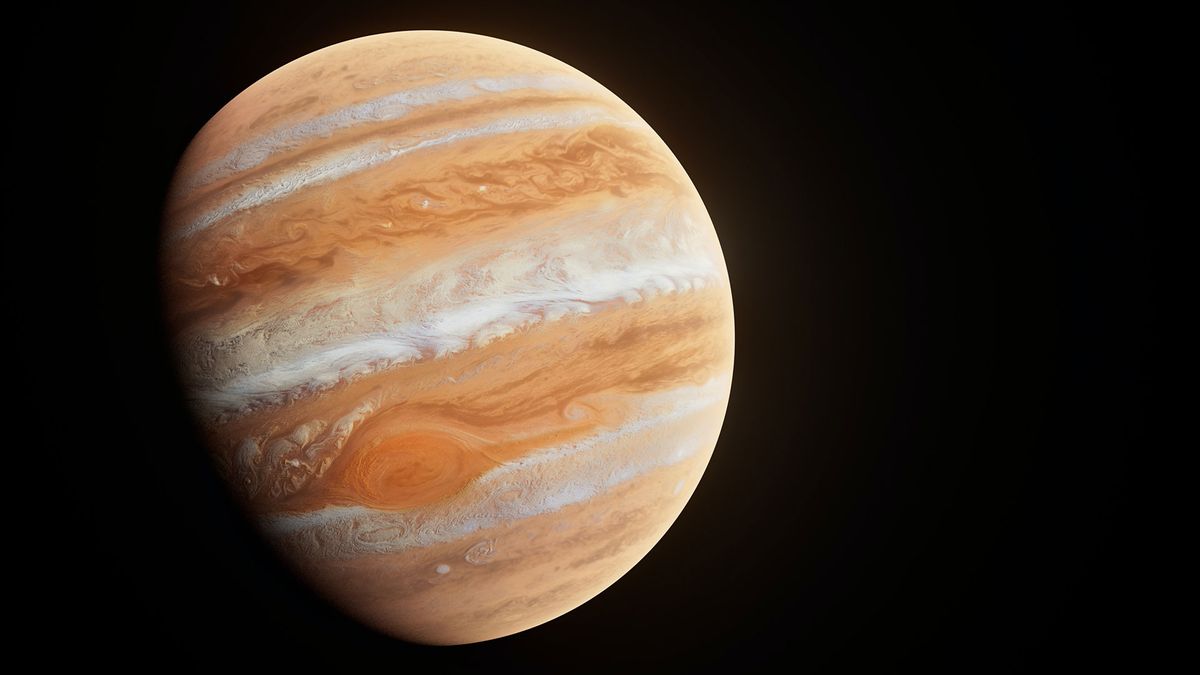
A telescope that works well for planets needs different qualities than one for galaxies or star clusters. Planetary observing is about high power, steady air, and optics that can deliver sharp, contrasty images at 150x and beyond. Here are the factors that matter most.
Aperture
Aperture is the diameter of the main lens or mirror. It determines how much light the telescope gathers. For planets, more aperture means you can push to higher magnification before the image dims. A 90mm refractor shows Jupiter’s bands nicely; a 130mm reflector shows the Great Red Spot on a good night; a 150mm mirror can reveal the Cassini Division in Saturn’s rings. That said, larger apertures also magnify the effects of poor seeing (atmospheric turbulence) and require sturdier mounts. A 150mm Newtonian on a wobbly tripod will underperform a 90mm refractor on a solid mount.
Mount Type
The mount is as important as the optics. Altazimuth mounts are simpler and cheaper; they move up-down and left-right. They work fine at low to medium power, but at 150x you have to adjust both axes constantly. Equatorial mounts are tilted to align with Earth’s axis; once aligned, you track by moving only one axis. They are better for high-power planetary observation and essential for astrophotography. A German equatorial mount like on the Gskyer 130EQ or MEEZAA 150EQ lets you keep a planet centered for minutes at 200x with just the right ascension slow-motion knob. An altazimuth mount like on the Celestron DX 130AZ can work if it has dual-axis slow-motion controls, but the user must adjust both.
Focal Length and Magnification
Focal length determines the native magnification with a given eyepiece. A longer focal length (900mm vs 600mm) gives higher power with the same eyepiece. For planetary observing, you typically want at least 100x, and 200x is better on good nights. The maximum useful magnification is about 50x per inch of aperture: a 90mm (3.5-inch) scope maxes out around 175x, while a 130mm (5-inch) can go to 250x on a steady night. Magnification beyond that only shows a blurry, dim image because the atmosphere limits it.
Optical Quality
Achromatic refractors (the common type) have some chromatic aberration: a purple halo around bright objects. A slower focal ratio (f/10 or longer) reduces this. Newtonian reflectors have no chromatic aberration, but they need periodic collimation (mirror alignment). Reflectors also have a central obstruction from the secondary mirror, which reduces contrast slightly but is not a big issue for planets. Multi-coated optics improve light transmission and contrast, and are found on all the telescopes in this roundup. If you have questions about how far back you should sit from a panel this size, remember that for telescopes the comparison is different: you sit at the eyepiece, not at a screen, and the distance does not matter.
Frequently Asked Questions
Can I use a small 70mm telescope to see Saturn’s rings?
Yes, but only as a tiny oval on a good night. A 70mm scope at 60x to 80x will show Saturn’s rings as a separate structure from the planet, but you will not see the Cassini Division or any detail on the rings. For a satisfying view of the rings, 90mm of aperture or more is strongly recommended.
Why do my high-power views look blurry?
The most common cause is atmospheric turbulence, or “seeing”. Even a top-tier telescope will give a mushy image if the air is unsteady. On most nights, the limit is around 200x. Another cause is poor collimation on a reflector, or simply using too much magnification. Back off to a lower power and you may see more detail.
What is the best mount for planetary observation?
An equatorial mount with slow-motion controls is best for sustained high-power viewing. It lets you track a planet by turning one knob. Altazimuth mounts work but require two-axis adjustments that are tiring at high power. The Celestron StarSense mounts with dual-axis slow-motion controls are a good compromise.
Do I need a computerized GoTo telescope for planets?
No. Planets are bright and you can find them with a star chart or a phone app. A GoTo mount is helpful if you also want to find faint deep-sky objects, but for planets a manual mount with good slow-motion controls is sufficient. The StarSense Explorer telescopes are a middle ground: they use your phone to guide you but the mount is manual.
How often do I need to collimate a Newtonian reflector?
It depends on how often you move the telescope. If you keep it set up in a backyard, collimation may hold for weeks. If you take it on trips, you will probably need to adjust it every time you set up. Collimation is not difficult with a laser collimator or a Cheshire eyepiece, and it is a skill worth learning if you want a reflector.
Can I take astrophotographs of planets with these telescopes?
Yes, especially with a phone adapter and the smartphone apps that stack video frames. The larger reflectors (130mm and above) give the best results for planetary imaging. The equatorial mounts (Gskyer 130EQ, MEEZAA 150EQ) are better for long manual tracking, but altazimuth mounts can work for short captures. You need a good mount and steady conditions.
Which telescope is best for a child who wants to see planets?
The Celestron StarSense Explorer LT 114AZ is arguably the best because the app removes the frustration of finding objects. A child can put their phone in the dock, follow the arrows, and see Saturn’s rings. That moment of success is what keeps them interested. If the budget is tighter, the Koolpte 80mm is a simple, inexpensive alternative that shows the Moon and the brightest planets.
The Bottom Line
The best telescope for viewing planets depends on what you are willing to carry and how much time you want to spend setting up. The Celestron StarSense Explorer DX 130AZ is the most well-rounded choice: it has enough aperture for satisfying views of Jupiter, Saturn, and Mars, and the StarSense app makes it easy to find them. If you want to push deeper into planetary detail and do not mind a heavier setup, the MEEZAA 150EQ offers the largest aperture in this roundup for the price. For a beginner on a tighter budget, the Dianfan 90mm or the Celestron StarSense Explorer LT 114AZ will show you those first magical views of the ringed planet. Whichever you choose, the real trick is to take it outside on a clear, steady night and let your eyes adjust. That is where the planets reveal themselves.
As an Amazon Associate we earn from qualifying purchases.