

A thermal camera earns its place in a toolbox when it helps you find a problem before opening a wall, removing a panel, or waiting for a machine to fail. The challenge is separating genuinely useful image detail and measurement controls from a colorful heat map that looks impressive but tells you little.
Our Best Thermal Imaging Camera picks cover pocket-friendly inspection tools, rugged handheld units, high-resolution models, and cameras with PC or phone reporting. TOPDON TC004 Mini is the strongest choice for most home and field inspections, while the other nine make sense for specific workloads.
Comparison
| # | Product | Award | Thermal detail | Temperature range | Best for |
|---|---|---|---|---|---|
| 1 | TOPDON TC004 Mini | Best overall | 128 × 128 enhanced to 240 × 240 TISR | -4°F to 842°F | Portable home and electrical inspections |
| 2 | TOPDON TC004 3.5-inch | Best for reporting | 256 × 192 enhanced to 512 × 384 TISR | -4°F to 1022°F | Detailed field documentation |
| 3 | HSFTOOLS HF96 | Best smart detection | 240 × 240 live enhancement | -4°F to 1022°F | Leak and insulation scanning |
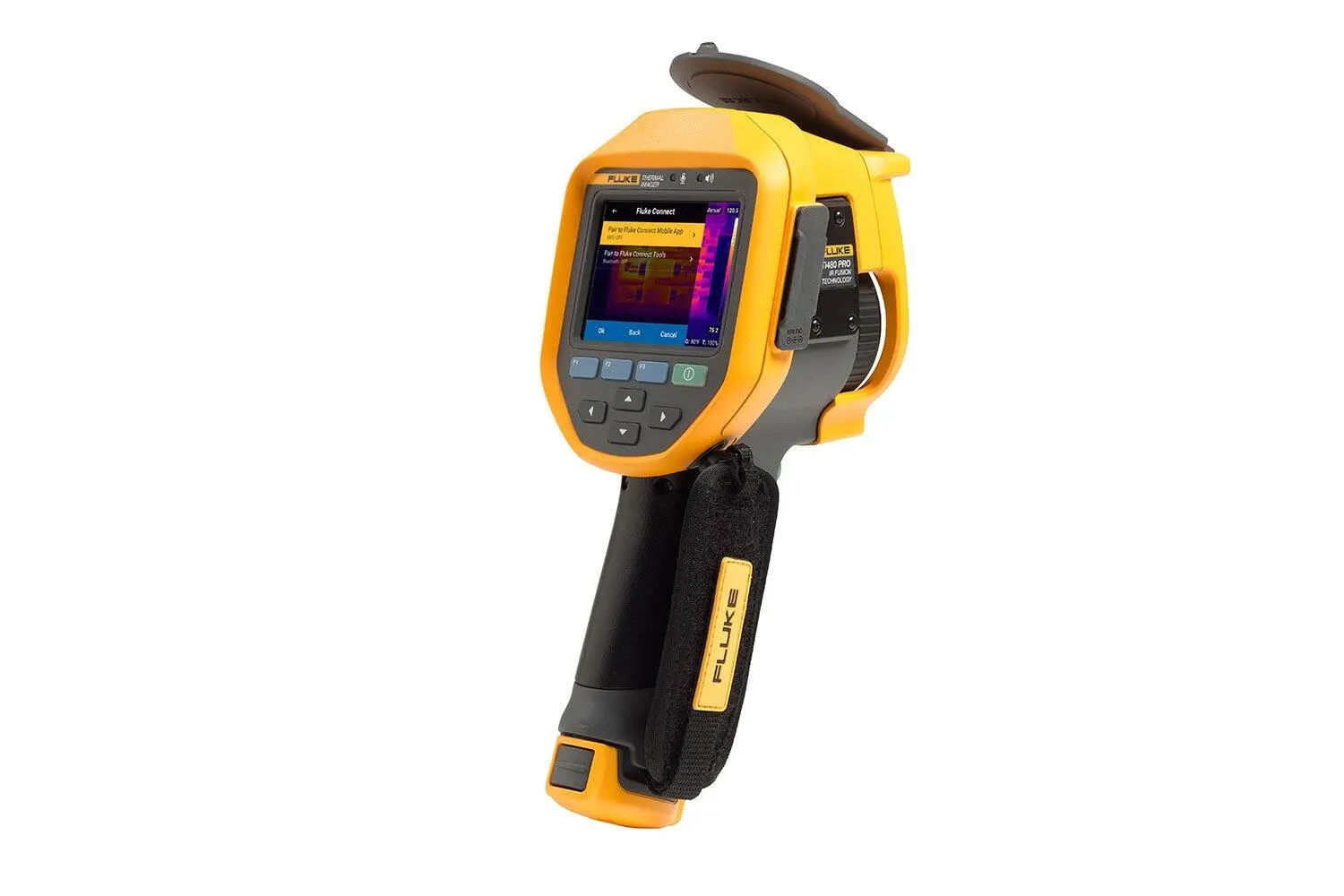
| 4 | FLIR TG165-X | Best rugged simplicity | 4, 800-pixel IR camera with MSX | -13°F to 572°F | Straightforward professional checks |
| 5 | AccuMEMS GT14S 240g | Best lightweight | NETD below 50mK | -4°F to 1022°F | Long handheld inspections |
| 6 | AccuMEMS GT14S Edge | Best simple controls | NETD below 50mK | -4°F to 1022°F | Fast spot measurements |
| 7 | Flagfront YXI96 | Best wide scanning | 240 × 240 enhancement | -4°F to 1022°F | Home inspection coverage |
| 8 | FOXWELL RT280 | Best PC analysis | 120 × 90 enhanced to 240 × 180 TISR | -4°F to 1022°F | Windows-based reports |
| 9 | Thermal Master Thor002 | Best high resolution | 256 × 192 enhanced to 512 × 384 X³ | -4°F to 1022°F | Detailed professional diagnostics |
| 10 | TOPDON TC005 | Best dual-camera workflow | Dual-lens thermal and visible camera | -4°F to 1022°F | Structured inspection reporting |
1. TOPDON TC004 Mini: Best Overall

Pros
- 240 × 240 enhanced thermal images
- 25Hz refresh rate and 40° × 30° field of view
- Automatic high, low, and center temperature tracking
- 15-hour battery life
- IP54 protection and 2-meter drop resistance
Cons
- Temperature range stops at 842°F
- Charging head is not included
- No wireless transfer listed
Best for: homeowners and technicians who want a compact inspection camera with strong battery life.
The first thing that makes the TOPDON TC004 Mini easy to recommend is its size. It is built to be carried rather than left in a workshop drawer, yet it does not reduce the inspection experience to a basic single-point thermometer. The 25Hz refresh rate keeps the image fluid while scanning a wall, electrical cabinet, pipe run, or engine bay.
Its sensor starts at 128 × 128 and uses TISR enhancement to produce a 240 × 240 thermal image. That distinction matters because the enhanced image is intended to show more usable structure, not simply a larger number on a specification sheet. The 40° × 30° field of view is narrower than the 50° view on the HSFTOOLS HF96 and Flagfront YXI96, but it can make a close inspection feel more focused.
The camera measures from -4°F to 842°F with an error within ±3.6°F or 2 percent. It can identify the highest, lowest, and center points automatically, then warn you when a preset limit is exceeded. The five palettes include White Hot, Black Hot, Iron, Rainbow, and Red Hot, enough variety for electrical, HVAC, plumbing, and building work. Its built-in 512MB storage holds up to 8, 000 photos.
Battery life is a major advantage here. TOPDON claims up to 15 hours, and automatic shutoff options at 5, 10, and 20 minutes help prevent accidental drain. The camera also has IP54 protection and 2-meter drop resistance. The compromise is the lower maximum temperature range and the lack of listed wireless reporting. If you need PC analysis or app transfers, the larger TOPDON TC004 3.5-inch is the better fit. If you want a small tool that can stay ready for a long day, this is the one we'd keep.
2. TOPDON TC004 3.5-inch: Best for Reporting

Pros
- 256 × 192 thermal resolution enhanced to 512 × 384
- Large 3.5-inch display
- 64GB internal storage
- Wi-Fi transfers through the TopInfrared app
- Laser pointer and integrated LED light
Cons
- Weighs about 2.12 pounds
- Larger than the TC004 Mini
- The feature set is more than casual users may need
Best for: inspectors who need clear on-site viewing and organized digital reports.
The TOPDON TC004 3.5-inch feels like a field documentation tool rather than a pocket scanner. Its display gives you more room to study a thermal pattern before deciding where to aim next. That extra viewing area is useful when several components sit close together and a small screen makes every anomaly harder to interpret.
Its 256 × 192 infrared resolution is enhanced by TISR up to 512 × 384. The higher effective detail gives this model an advantage over the TC004 Mini when you need to distinguish neighboring hot areas or preserve a clearer image for later review. The built-in red laser pointer also helps connect the spot on screen with the physical target, which is especially useful around panels and machinery.
The measurement range runs from -4°F to 1022°F, covering the full range offered by the HSFTOOLS HF96, FOXWELL RT280, and Thermal Master Thor002. A 64GB storage capacity leaves substantial room for images and videos. Wi-Fi transfer to the TopInfrared mobile app adds a practical reporting path, so files do not have to remain on the camera until you return to a computer.
The trade-off is physical bulk. At about 2.12 pounds, it is much heavier than the FLIR TG165-X and the 240g AccuMEMS GT14S models. Its IP54 protection, 2-meter drop resistance, and built-in LED light support field use, but this is not the camera we'd choose for carrying around a house all afternoon. Choose it when image review and reporting matter more than minimum weight.
3. HSFTOOLS HF96: Best Smart Detection

Pros
- AI scene detection for leaks and insulation gaps
- 240 × 240 live super-resolution enhancement
- 50° field of view and 25Hz refresh rate
- Up to 11 hours of battery life
- Windows analysis software and tripod support
Cons
- Scene detection does not provide moisture readings
- Large listed dimensions
- PC software is Windows-focused
Best for: home inspectors who want guided anomaly detection alongside manual thermal analysis.
The distinctive feature on the HSFTOOLS HF96 is its IntellFault scene mode. It is designed to identify likely water leaks and insulation gaps, which can shorten the process of scanning a large wall or floor. This is assistance, not a substitute for confirming the cause, and the listing specifically says the feature does not provide moisture readings.
Live super-resolution enhancement turns the camera's thermal view into 240 × 240 clarity during both viewing and photo capture. The sensor sensitivity is listed below 50mK, with the ability to detect temperature differences as small as 0.05°C. A 50° field of view covers more of a surface per pass than the TOPDON TC004 Mini, while the 25Hz refresh rate helps moving scans stay comfortable to follow.
The HF96 measures from -4°F to 1022°F with ±3.6°F accuracy. Distance and emissivity settings let you account for different materials such as cement and brick. It tracks hot, cold, and center spots, supports custom high and low alarms, and offers manual level and span adjustment when the automatic view does not separate an anomaly clearly.
There is a useful documentation layer here too. The camera includes 4GB of storage for more than 30, 000 images and 14 hours of video according to the listing, plus HSF Studio software for Windows with image analysis, screen projection, real-time monitoring, and 3D plotting. Its 6.6-foot drop test and IP54 rating are reassuring. The weakness is that this is a fairly large handheld, and buyers who want a simpler camera may prefer the AccuMEMS GT14S 240g. For building diagnostics, though, the guided scene tools give the HF96 a clear identity.
4. FLIR TG165-X: Best Rugged Simplicity

Pros
- Compact 0.87-pound design
- MSX image enhancement adds visible detail
- Bullseye laser indicates the measurement area
- IP54 enclosure
- Detector coverage listed for 10 years
Cons
- Lower thermal detail than newer high-resolution picks
- Temperature range ends at 572°F
- No PC or phone workflow listed
Best for: technicians who want a durable, focused tool without a complicated interface.
The FLIR TG165-X takes a different approach from the newer high-resolution models. It is a compact instrument for finding a hot or cold spot and understanding where it sits in the real scene. That simplicity can be an advantage when the job calls for a quick decision rather than a large archive of images and a formal report.
Its 4, 800-pixel IR camera is paired with FLIR's MSX image enhancement. MSX embosses visual details onto the thermal image, helping edges and physical features remain understandable when a plain heat map would be ambiguous. The Bullseye laser indicates the size of the measurement area, giving you a more useful aiming reference than a pointer that merely marks a general direction.
The TG165-X measures from -13°F to 572°F. That is a respectable range for many building, electrical, automotive, and HVAC checks, but it does not reach the 1022°F ceiling offered by most of the other cameras here. Its 0.87-pound body is also notably easier to carry than the TOPDON TC004 3.5-inch and Thermal Master Thor002.
Ruggedness is the strongest reason to choose it. The IP54 enclosure is designed to protect against dirt, dust, and oil, and the product information lists a 2-year parts and labor warranty on the camera plus 10-year coverage on the detector. The limitation is not build quality but capability. If you need high-resolution documentation, the FOXWELL RT280 or TOPDON TC004 3.5-inch is more suitable. If you need a dependable spot-checking tool with a clear visual overlay, the FLIR remains compelling.
5. AccuMEMS GT14S 240g: Best Lightweight

Pros
- Weighs 240g
- Dual thermal imaging and thermometer modes
- NETD below 50mK
- 50° field of view
- Up to 14 hours of operation
Cons
- No image resolution is specified
- No PC or wireless reporting feature is listed
- One-year warranty
Best for: mobile users who value a light, comfortable camera for repeated spot checks.
The AccuMEMS GT14S 240g is the camera to pick when weight changes how often you will actually use the tool. At 240g, it is far lighter than the larger display-led models. The non-slip grip and balanced design are aimed at longer inspections, where a heavier camera becomes tiring before the work is finished.
It has two useful operating modes. Thermal imaging shows a full-screen heat pattern and can follow moving animals, machinery, vehicles, or HVAC components. Thermometer mode is better when you simply need a point-and-shoot temperature reading with a clear digital result. Center, hot, and cold spot modes help bridge the gap between those two uses.
The sensor sensitivity is listed below 50mK, with detection of temperature differences as small as 0.05°C. A 50° field of view lets you cover broad surfaces quickly, and adjustable emissivity and distance settings can improve readings across materials such as cement and ceramic. High and low alarms, plus level and span controls, help bring a subtle thermal change forward.
The camera claims up to 14 hours from its built-in 2500mAh rechargeable battery, which is the longest stated runtime in this group. Its main omission is detail about image resolution and connected reporting. The very similar AccuMEMS GT14S Edge has the same 240g design, operating range, sensitivity, and battery claim, so the choice comes down to the listed edge-enhancement distinction. Pick this version when low weight and straightforward inspection modes matter most.
6. AccuMEMS GT14S Edge: Best Simple Controls

Pros
- Edge enhancement for clearer thermal boundaries
- 240g handheld design
- Thermometer mode and spot tracking
- NETD below 50mK
- Up to 14 hours of battery life
Cons
- Image resolution is not specified
- No reporting software is listed
- Warranty is one year
Best for: users who want a light camera with simple buttons and enhanced edges.
The AccuMEMS GT14S Edge is a close relative of the 240g model above, but its defining feature is edge enhancement. Thermal images can be difficult to interpret when a warm section blends into a similarly warm background. Emphasized edges can make the boundary easier to follow, particularly during quick building or equipment scans.
It combines full-screen thermal imaging with a thermometer mode for direct readings. Center, hot, and cold spot views are available, and the full-screen mode is intended for monitoring moving targets without losing the larger heat pattern. Physical controls cover power, menus, image capture, and palette selection, so the camera does not depend on a phone for basic operation.
The sensor has NETD below 50mK and can detect temperature changes as small as 0.05°C according to the product details. Its -4°F to 1022°F measurement range is broad enough for household work, automotive checks, HVAC service, and higher-heat diagnostics. A 50° field of view, adjustable emissivity, distance settings, and high and low alarms round out the measurement controls.
Like the other GT14S, this model weighs 240g and uses a 2500mAh battery rated for up to 14 hours. It does not list a thermal image resolution or a computer reporting system, which makes it less suitable for professional documentation than the FOXWELL RT280. Compared with the AccuMEMS GT14S 240g, this is the better pick if edge clarity is more useful to you than the simpler feature description of its sibling.
7. Flagfront YXI96: Best Wide Scanning

Pros
- 240 × 240 super-resolution imaging
- 50° field of view
- Six color palettes
- High and low temperature alarms
- 6.6-foot drop resistance and IP54 protection
Cons
- No storage capacity is specified
- No connected reporting workflow is listed
- The display size is not specified
Best for: home inspection users who need broad coverage and simple anomaly alerts.
The Flagfront YXI96 is built around fast coverage. Its 50° field of view allows a wider section of a wall, floor, vehicle, or circuit area to appear in one scan. That is useful when the first task is locating a suspicious region before moving closer for a more careful measurement.
Its thermal image is enhanced to 240 × 240, and the 25Hz refresh rate keeps the live view smooth while you move across a surface. The camera displays highest, lowest, and center temperatures, then uses high and low alarms to call attention to abnormal areas. Those controls are more useful than a palette alone because they connect the visual pattern to a threshold you have chosen.
The measurement range is -4°F to 1022°F, with an accuracy error within 2 percent. Adjustable distance and emissivity settings are included for more accurate readings across different materials. Six palettes cover common inspection preferences, including White Heat, Rainbow, Red Heat, Black Heat, and Iron.
Durability is a strong point for a handheld intended to move between rooms and job sites. The YXI96 is rated for a 6.6-foot drop and IP54 dust and water resistance. The trade-off is a thin documentation feature set in the supplied information. The TOPDON TC004 Mini offers longer stated battery life and photo storage, while the FOXWELL RT280 has a defined Windows analysis path. Choose Flagfront when broad scanning and rugged everyday handling come before connected reports.
8. FOXWELL RT280: Best PC Analysis

Pros
- 2.8-inch 320 × 240 LCD
- 240 × 180 TISR-enhanced thermal resolution
- Windows software with 2D and 3D analysis
- 8GB storage for more than 20, 000 images
- Laser pointer and LED light
Cons
- Software is not compatible with Mac
- The base thermal resolution is 120 × 90
- No battery runtime is specified
Best for: inspectors who want to transfer images to a Windows PC for deeper analysis.
The FOXWELL RT280 makes the strongest case for a computer-based workflow. Its 2.8-inch 320 × 240 LCD gives you a useful on-camera view, but the more important distinction is what happens after the inspection. Images can be transferred to Windows software for point, line, and area temperature analysis, along with 2D and 3D thermal views.
The camera starts with 120 × 90 thermal resolution and uses TISR to enhance the effective image to 240 × 180. That is less detailed than the 512 × 384 enhancement on the TOPDON TC004 3.5-inch and Thermal Master Thor002, but it remains suited to home, electrical, mechanical, and automotive checks. Its 50° × 38° field of view gives broad coverage, and the 25Hz frame rate supports smooth scanning.
The RT280 measures from -4°F to 1022°F with ±3.6°F or 2 percent accuracy. Automatic highest, lowest, and center readings, high and low alarms, nine color palettes, and laser targeting provide plenty of ways to isolate an anomaly. The LED light is helpful in dark panels and confined areas where the thermal view alone does not show the physical layout.
Storage is generous at 8GB, with the listing stating room for more than 20, 000 images and videos. The body is rated for 6.6-foot drops and IP54 protection. The important limitation is software compatibility: the supplied details specify Windows and not Mac. If you need reports and already work on Windows, the RT280 is more practical than the simpler Flagfront YXI96. If maximum image detail matters more than analysis tools, move up to the Thermal Master Thor002.
9. Thermal Master Thor002: Best High Resolution

Pros
- 512 × 384 X³ enhanced thermal resolution
- 3.5-inch 640 × 480 IPS display
- 40mK sensitivity
- Six-point temperature measurement
- Wi-Fi, USB, voice notes, and QR file management
Cons
- Weighs about 3.13 pounds
- Battery life is rated at up to 10.5 hours
- Large and more complex than basic inspection cameras
Best for: professional users who need detailed images, flexible documentation, and long-range inspection tools.
The Thermal Master Thor002 is the most ambitious camera in this group. Its 3.5-inch 640 × 480 IPS display gives the thermal image enough space to inspect without constantly zooming or squinting. This is the model that makes sense when a thermal pattern needs to be examined on site, not merely spotted and forgotten.
Its X³ technology enhances a 256 × 192 thermal image to 512 × 384. The 40mK sensitivity, 25Hz refresh rate, 2MP visible camera, and 4X digital zoom create a more complete inspection view than the compact models provide. The supplied details also say the 4.3mm lens extends detection range by 34.4 percent, which can help when a target is difficult or unsafe to approach.
Temperature measurement covers -4°F to 1022°F with ±3.6°F accuracy. Six points can be measured at once, including center, hottest, coldest, and three user-defined spots. Emissivity controls, automatic high and low alarms, and laser positioning give the camera the measurement flexibility expected for electrical, HVAC, mechanical, and building diagnostics.
The Thor002 is also built for documentation. It has USB PC analysis, Wi-Fi pairing with smartphones and iPads, 8GB RAM, and 32GB storage. Voice notes and QR code file management can make a busy inspection easier to organize. The large body weighs about 3.13 pounds, however, and the stated battery life is up to 10.5 hours despite the 5000mAh battery and 18W fast charging. The TOPDON TC004 3.5-inch is a more manageable field choice, but the Thor002 is the better tool when image detail and multi-point analysis take priority.
10. TOPDON TC005: Best Dual-Camera Workflow

Pros
- Thermal and visible camera design
- 3.5-inch display
- Laser distance measurement up to 4 meters
- 64GB internal storage
- Wi-Fi app and USB PC reporting
Cons
- Battery life is rated at up to 8 hours
- Thermal resolution is not specified
- Heavier documentation features may be unnecessary for casual checks
Best for: professionals who need thermal findings connected to visible images and formal reports.
The TOPDON TC005 is designed around context. A thermal image can show an abnormal area, but a visible image makes it easier to identify the exact panel, pipe, connector, or room feature later. The dual-lens design therefore fits inspection work where images need to be shared with someone who was not present.
Its 3.5-inch display provides room to check findings on site. The integrated laser can measure distance up to 4 meters, giving you a measurable reference point without bringing another tool. That is a meaningful distinction from the laser pointers on the TOPDON TC004 3.5-inch and FOXWELL RT280, which help aim but are not described as distance-measuring systems.
The TC005 includes 64GB of internal storage and connects by Wi-Fi to the TopInfrared mobile app. USB connection to TopView PC software adds a computer workflow for thermal analysis and professional report generation. The supplied information does not state the thermal resolution, so buyers focused on pixel detail should consider the Thor002 or TOPDON TC004 3.5-inch instead.
Field handling is supported by IP54 protection, 2-meter drop resistance, an integrated LED light, and a carrying case. Battery life is listed at up to eight hours, with a two-hour recharge time. That is shorter than the TC004 Mini and both AccuMEMS models, but the TC005 is aimed at a different job. Choose it when a report needs thermal evidence, visible context, and distance information in one organized workflow.

How to choose best thermal imaging camera
The right thermal camera depends on how much detail you need, how long you will hold it, and whether the final result is a quick diagnosis or a shareable report.
Thermal resolution and enhancement
Thermal resolution affects how clearly the camera separates nearby hot and cold areas. A 512 × 384 enhanced image, such as the one listed for the TOPDON TC004 3.5-inch and Thermal Master Thor002, can show more structure than a 240 × 180 enhanced image. Enhancement technology can improve presentation, but it does not replace a higher native sensor resolution.
For broad home scans, 240 × 240 enhancement can be useful. For small electrical components, distant targets, or formal documentation, prioritize the highest stated native and enhanced resolutions.
Temperature range and accuracy
A camera that measures from -4°F to 1022°F covers more situations than one that ends at 572°F. That wider range matters for high-heat equipment, engines, electrical faults, and industrial checks, even if most household work stays well below the maximum.
Accuracy claims also need context. Emissivity and distance adjustments help compensate for different surfaces, but a thermal camera is still measuring emitted infrared energy rather than directly touching the object. Look for adjustable emissivity, defined error limits, and high or low alarms.
A wide temperature range matters only when the camera can also help you identify exactly where the reading came from.
Field of view and refresh rate
A wide field of view scans more wall, floor, machinery, or wiring in one pass. The 50° view on the HF96, AccuMEMS models, and Flagfront YXI96 favors broad searching, while the TOPDON TC004 Mini's 40° × 30° view is more focused.
A 25Hz refresh rate keeps the live image smoother as you move. This is especially helpful when following a moving target or scanning a large surface without stopping after every few inches.
Storage and reporting
Internal storage matters when inspections create many photos or videos. The TOPDON TC004 3.5-inch and TC005 each list 64GB, while the FOXWELL RT280 lists 8GB and the TC004 Mini lists 512MB with capacity for up to 8, 000 photos.
For professional work, check the transfer method as carefully as storage. Wi-Fi apps, USB PC software, automatic reports, voice notes, and image analysis can turn a thermal finding into useful documentation. The FOXWELL RT280 is Windows-only according to its supplied details, so Mac users should verify compatibility before relying on its software workflow.
Weight, protection, and battery
Weight has a direct effect on how comfortable repeated scans feel. The AccuMEMS GT14S models weigh 240g, while the Thermal Master Thor002 is listed at about 3.13 pounds. A larger camera may provide a better display and more controls, but a compact model is easier to carry through a full inspection.
IP54 protection and drop resistance are useful safeguards for field work. Battery claims range from up to eight hours on the TOPDON TC005 to up to 15 hours on the TC004 Mini. Choose based on the longest likely inspection, then check charging and transfer requirements before heading out.
If thermal imaging is part of a wider wildlife setup, a separate guide to choosing a camera that can handle unattended outdoor monitoring may be more relevant than a handheld inspection tool. For nighttime observation, the trade-offs between thermal viewing and night hunting optics are also worth understanding.
Frequently asked questions
What can a thermal imaging camera detect?
A thermal camera can reveal temperature differences caused by electrical resistance, heat loss, HVAC behavior, leaks, insulation gaps, and mechanical friction. It shows surface temperature patterns, so the image still needs interpretation and does not automatically prove the cause of an anomaly.
Is higher thermal resolution always better?
Higher resolution generally makes it easier to separate nearby heat sources and inspect distant or small targets. It is not the only factor, though. Field of view, sensitivity, focus, measurement controls, and the quality of the visible reference image can matter just as much for a home inspection.
Do these cameras measure moisture directly?
The HSFTOOLS HF96 listing specifically says its scene detection does not provide moisture readings. A thermal pattern may suggest a possible leak or damp area, but confirmatory moisture testing requires a dedicated moisture meter or another appropriate method.
What does TISR mean on a thermal camera?
TISR is an image enhancement technology used by several cameras in this list. It increases the effective displayed resolution from a lower native thermal image, which can make edges and patterns easier to inspect. It should not be treated as identical to a sensor with that higher native pixel count.
Are thermal cameras useful for electrical inspections?
They can help identify unusual heat on connections, breakers, cables, and other components. The camera does not replace safe electrical procedures, and users should follow appropriate precautions around energized equipment.
Should I choose a camera with a visible-light lens?
A visible-light camera can make reports easier to understand because it shows the physical object alongside the heat pattern. The TOPDON TC005 is the clearest fit for this workflow, while the FLIR TG165-X uses MSX to add visible details to the thermal image.
How important is a laser pointer?
A laser helps you aim at the physical area represented by the thermal reading, which is useful around small components and dark spaces. A distance-measuring laser, such as the one listed for the TOPDON TC005, adds another layer of reference. It does not improve the thermal sensor itself.
The bottom line
The Best Thermal Imaging Camera for most people is the TOPDON TC004 Mini. It combines enhanced 240 × 240 imaging, a 25Hz view, automatic temperature spots, a useful field of view, IP54 protection, and up to 15 hours of stated battery life in a compact body.
For detailed reporting, choose the TOPDON TC004 3.5-inch. For maximum listed thermal detail and multi-point analysis, the Thermal Master Thor002 is the more capable specialist, while the FLIR TG165-X remains the sensible pick for rugged, uncomplicated spot checks.
If you are undecided, choose the smallest model that still has the resolution, measurement range, and reporting tools your inspections actually require.
As an Amazon Associate we earn from qualifying purchases.