

Thin aluminum, stainless panels, and awkward repair jobs expose the limits of a basic stick machine quickly. A TIG welder needs more than a high amperage number. Arc starting, current control, AC balance, pulse settings, and the power available in your shop all shape the weld you can actually make.
We compared ten machines ranging from compact 110V lift-TIG units to serious AC/DC systems with foot-pedal control. The strongest choices offer room to grow, while the smaller machines make sense for light work and portability. The Weldpro 200A AC/DC is our top pick, with the YESWELDER TIG-200P AC/DC close behind for aluminum-focused work.
Comparison table
| # | Product | Award | Output and power | TIG modes | Best for |
|---|---|---|---|---|---|
| 1 | Weldpro 200A AC/DC | Best overall | 200A, 110V/220V | AC/DC pulse, HF start | The widest mix of capability and control |
| 2 | YESWELDER TIG-205P | Best compact DC TIG | Up to 200A, 110V/220V | DC pulse, HF start | Portable steel and stainless work |
| 3 | YESWELDER TIG-200P AC/DC | Best aluminum control | 200A, 110V/220V | AC/DC pulse, spot | Aluminum and mixed-metal projects |
| 4 | ARCCAPTAIN ARC200 Lift TIG | Best lightweight lift TIG | 200A, 110V/220V | Lift TIG, stick | Mobile repairs and beginners |
| 5 | Sunstac 250A AC/DC | Best high-output AC/DC | Up to 250A, 110V/220V | AC/DC pulse, spot | Aluminum with demanding settings |
| 6 | ARCCAPTAIN TIG200 | Best simple HF TIG | 200A, 110V/220V | HF TIG, stick | Entry-level steel and stainless work |
| 7 | TOOLIOM 135A Stick | Best starter kit | 135A, 110V | Lift TIG, stick | Small household projects |
| 8 | ARCCAPTAIN MIG205MP | Best multiprocess platform | Up to 205A, 120V/240V | HF/lift TIG, MIG, stick | Shops needing cutting and MIG too |
| 9 | YESWELDER 135A MIG | Best portable hybrid | 135A, 110V | Lift TIG, MIG, stick | Flux-core work with occasional TIG |
| 10 | Lincoln Square Wave 205 | Best established design | 120V/230V | TIG, stick, AC control | Welders who want straightforward aluminum control |
1. Weldpro 200A AC/DC: Best Overall

Pros
- AC and DC TIG with pulse control
- High-frequency non-contact arc start
- Included foot pedal and welding accessories
- Automatic 110V/220V input detection
- Five welding modes in one machine
Cons
- Heavy at 61.8 pounds
- Full 200A output has a 40% duty cycle
- The broad control set may take time to learn
Best for: welders who want one machine for aluminum, steel, stainless, pulse work, and stick welding.
The Weldpro 200A AC/DC is the most complete TIG machine here without forcing you into a single specialty. It has the controls that make TIG feel deliberate rather than improvised, but it also includes stick mode for outdoor jobs and thicker material. The included rocker-style foot pedal is a particularly useful advantage. You can adjust amperage as the joint changes instead of stopping to reach for a panel control.
Its AC/DC design gives it a much broader working range than the YESWELDER TIG-205P, which cannot weld aluminum. AC TIG supports aluminum and other non-ferrous metals, while DC TIG handles steel, stainless steel, and similar materials. High-frequency, non-contact starting helps preserve the tungsten and avoids the scratch-start technique that can contaminate a clean joint. The machine also offers AC balance and frequency adjustment, so the operator can tune cleaning action and bead behavior rather than accepting one fixed setting.
Pulse control is unusually substantial for this group. The frequency can be adjusted from 0.5 to 200Hz, with peak amperage, upslope, downslope, and 2T or 4T trigger modes available. That matters when working on thin sheet, where reducing heat input can help limit distortion and burn-through. The large LED display keeps those settings visible, and automatic dual-voltage detection lets the machine work from either a household 110V outlet or a 220V supply.
The weakness is portability. At 61.8 pounds, it is not the machine we would carry between distant job sites, especially when the 10.7-pound YESWELDER TIG-205P or 7.2-pound ARCCAPTAIN ARC200 is available. Its 40% duty cycle at full 200A output also means the highest setting is not intended for uninterrupted welding. The control panel has more to learn than a basic lift-TIG unit, but that complexity is tied to useful control rather than decoration.
Choose the Weldpro when aluminum is part of the plan and you want a foot pedal, pulse settings, and stick capability in the same enclosure. It is the one we'd keep for a mixed home shop because the capability is broad enough to delay the next upgrade.
2. YESWELDER TIG-205P: Best Compact DC TIG

Pros
- Up to 200A output
- Automatic 110V/220V sensing
- HF start and pulse TIG
- Very light 10.7-pound design
- Hot start, arc force, and anti-stick in stick mode
Cons
- Cannot weld aluminum
- Foot pedal is not included
- Fewer TIG modes than AC/DC machines
Best for: portable welding of steel and stainless steel where aluminum is not required.
The YESWELDER TIG-205P is the easy machine to recommend to someone who needs real DC TIG control but does not want to move a large shop unit. It weighs 10.7 pounds and automatically senses 110V or 220V input, so it can move from a garage outlet to a workshop supply without manual voltage selection. That combination makes it far more practical for field repairs than the 61.8-pound Weldpro.
This is a DC-only TIG welder, and the limitation is explicit: the TIG-205P cannot be used for aluminum welding. It is well suited to stainless and mild steel, though. High-frequency start initiates the arc without touching the tungsten to the workpiece, and the TIG controls include 2T, 4T, and spot operation. Pulse mode has independent adjustment for pulse frequency, duty cycle, and current, giving the operator a way to reduce heat on thin materials.
The stick side is more capable than the small size suggests. Hot start helps ignition, arc force can support the arc when the puddle becomes difficult, and anti-stick reduces the chance of an electrode welding itself to the work. An auto-memory function saves settings and recalls them after power-off, which is useful when several projects call for similar parameters. The large LED display is clear enough to make setup less frustrating, particularly when the machine is sitting beside a workbench rather than at eye level.
Compared with the ARCCAPTAIN ARC200, this YESWELDER offers pulse TIG and HF starting instead of lift TIG simplicity. Compared with the YESWELDER TIG-200P AC/DC, it is much easier to carry but loses AC aluminum capability and the broader seven-mode design. A five-pin foot-pedal interface is reserved, but the pedal is not part of the listed package, so anyone who wants hands-free current adjustment needs to plan around that.
The TIG-205P is the right pick for a mobile steel and stainless setup, not a general aluminum machine. Skip it if aluminum is even a likely future project. For everyone else, its low weight and useful pulse controls make it a more serious TIG tool than its compact body suggests.
3. YESWELDER TIG-200P AC/DC: Best Aluminum Control

Pros
- AC and DC TIG with pulse modes
- Square, triangle, and sine wave options
- Automatic 110V/220V input sensing
- Seven welding functions
- High-frequency start and foot-pedal interface
Cons
- Foot pedal is not included
- Aluminum capability is listed up to 1/8 inch
- More complicated than a basic two-mode welder
Best for: aluminum work where waveform choice and AC control matter more than minimum weight.
The YESWELDER TIG-200P AC/DC is the specialist choice for someone who has already decided aluminum belongs in the workshop. Its AC TIG mode is built around square, triangle, and sine wave options, not just a basic AC switch. That gives the operator more ways to balance cleaning action, penetration, and bead character. The machine is still a 200A unit, but its useful distinction is how much control it offers around that output.
The seven functions include AC TIG, DC TIG, AC pulse, DC pulse, mixed TIG, stick, and spot welding. AC handles aluminum, while DC covers steel and stainless steel. The product information specifically describes square wave as useful for aluminum up to 1/8 inch thick. That is a meaningful boundary for buyers planning small fabrication, brackets, panels, and similar work, though it should not be treated as a promise for every joint design or material condition.
Automatic dual-voltage sensing supports both 110V and 220V supplies. High-frequency, non-contact ignition makes starts cleaner and reduces tungsten wear, while the large LED display keeps current and other settings visible. A five-pin foot-pedal interface allows current adjustment from the pedal, but the pedal itself is not listed as included. That is a notable difference from the Weldpro, which arrives with a rocker-style pedal.
The TIG-200P AC/DC weighs 16.47 pounds, so it is still manageable compared with the Weldpro and Lincoln Electric machines. The trade-off is a denser control system and a narrower stated aluminum thickness capability than the Sunstac's 4mm on 110V and 6mm on 220V. It also lacks the Weldpro's included pedal and accessory emphasis. If you want a compact AC/DC machine with waveform choices, however, this is more focused than either of the simple lift-TIG options.
Buy this YESWELDER for deliberate aluminum work and mixed-metal projects. It is not the simplest machine for a first weld, but it gives an advancing welder controls that a basic DC unit cannot provide. For a broader look at a different process, the differences between MIG setups and TIG control can help clarify which machine belongs in your shop.
4. ARCCAPTAIN ARC200 Lift TIG: Best Lightweight Lift TIG

Pros
- Only 7.2 pounds
- Includes a lift-TIG torch
- Automatic 110V/220V input
- Adjustable hot start and arc force
- Shoulder strap and carrying handle
Cons
- No AC TIG for aluminum
- Lift start is less refined than HF start
- Limited to TIG and stick
Best for: beginners and mobile repair work involving mild steel or stainless steel.
The ARCCAPTAIN ARC200 Lift TIG is built around the simplest useful idea in this roundup: keep the machine light, include the torch, and make it easy to move. At 7.2 pounds, it is the lightest TIG-focused option here. A handle and shoulder strap make more sense for repair work than a large cabinet that stays on one bench. It supports both lift TIG and MMA stick welding, so the operator can switch to rods when conditions are less suited to TIG.
Lift TIG requires touching the tungsten to the work and lifting it to start the arc. That is less clean and controlled than the high-frequency start on the Weldpro, TIG-205P, or TIG-200P AC/DC, but it can be perfectly serviceable for basic steel and stainless work. The ARC200 also has a synergic control mode that matches current and voltage after the electrode diameter is selected. Beginners get a simpler starting point, while experienced users can adjust current directly.
Adjustable hot start and arc force help the stick side start more easily and maintain a smoother arc. Anti-stick protection reduces electrode sticking, and the large LED display is designed to remain readable without removing a helmet. Automatic 110V/220V input broadens where it can be used, though the machine remains more about convenient transport than advanced TIG refinement.
The key omission is AC TIG. This machine is not for aluminum, and it has no pulse mode, foot-pedal control, or HF ignition listed in the product details. The ARCCAPTAIN TIG200 costs more in capability because it adds HF TIG, post-gas adjustment, downslope, and 2T/4T operation. The ARC200 wins on weight and straightforward handling, which is why it remains the better fit for a repair kit.
Choose it for outdoor maintenance, garage repairs, and a first step into TIG on steel. Skip it if you want smooth aluminum work or fine control over thin sheet. If your projects involve cutting as often as joining, how a plasma cutter fits into a welding setup is a useful next question.
5. Sunstac 250A AC/DC: Best High-Output AC/DC

Pros
- Up to 250A output
- AC and DC pulse modes
- LCD display
- 110V/220V dual-voltage operation
- Spot and 2T, 4T TIG modes
Cons
- Foot pedal is not included
- AC current measurement can be inaccurate
- AC balance may vary
Best for: aluminum work that benefits from higher stated output and multiple TIG modes.
The Sunstac 250A AC/DC stands out because it puts the highest stated TIG output in this group into a dual-voltage machine. It supports high-frequency AC and DC TIG, pulsed AC and DC, AC and DC spot welding, and stick welding. That is a substantial mode list, especially for a shop that moves between aluminum, stainless steel, carbon steel, and repair work.
Its aluminum figures are unusually concrete. The product information lists aluminum welding up to 5/32 inch, or 4mm, at 110V and 6/25 inch, or 6mm, at 220V. Those figures help set expectations better than a generic claim that a machine handles thick material. Actual results still depend on joint design, preparation, tungsten choice, and available power, but the voltage distinction matters when a workshop has only a standard household circuit.
The LCD screen is a practical touch. It shows voltage, current, and other settings clearly, including when viewed through a helmet. The machine can save parameters and restore them after a restart, and it supports 2T, 4T, and spot TIG modes. A foot pedal can be used for control, but it is not included, so the machine's hands-free potential depends on adding compatible equipment.
There is a serious caveat in the product description: current measurement in AC mode can be inaccurate, and inconsistent AC balance can create variations in the measured current. That does not automatically make the machine unusable, but it makes the Sunstac less reassuring than the YESWELDER TIG-200P AC/DC for someone who wants predictable panel feedback. Its high output also matters less if most work is thin sheet on 110V.
The Sunstac is a sensible choice for buyers who want AC/DC flexibility and a higher ceiling than 200A machines. It is not our first choice for someone who wants the cleanest ownership experience because of the AC measurement warning. Choose it when the extra output and explicit aluminum capability matter more than the simplest controls.
6. ARCCAPTAIN TIG200: Best Simple HF TIG

Pros
- HF TIG and stick in one machine
- 110V/220V input
- Adjustable post-gas and downslope
- 2T and 4T operation
- Under 12 pounds
Cons
- No AC TIG or aluminum capability
- No pulse mode
- Foot pedal is not listed
Best for: straightforward HF TIG on stainless and mild steel.
The ARCCAPTAIN TIG200 sits between a basic lift-TIG unit and a full AC/DC machine. It keeps the process list focused on HF TIG and stick, then adds the settings that make TIG easier to control. High-frequency arc starting avoids striking the tungsten against the work, which helps protect the electrode and reduces contamination at the start of a weld.
Post-gas can be set from 1 to 10 seconds, and downslope can be set from 0 to 10 seconds. Post-gas continues shielding after the torch is switched off, helping protect the weld and cool the torch head. Downslope lets the current taper rather than ending abruptly. Those details are more useful in day-to-day TIG work than a long list of modes that you never use.
The machine also supports 2T and 4T operation. Two-touch operation suits short welds, while four-touch operation can be more comfortable during longer runs. Stick mode adds hot start, arc force, and anti-stick functions for thicker material or outdoor work. Automatic 110V/220V input and a weight below 12 pounds make it easier to move than the Weldpro, Lincoln, or Sunstac.
Its limitation is clear. There is no AC mode, so aluminum is outside its intended range, and there is no pulse setting for managing heat on thin material. The YESWELDER TIG-205P is the stronger choice when pulse control matters, while the ARC200 is lighter and simpler if lift TIG is sufficient. The TIG200 earns its place by offering HF starting and useful timing controls without becoming a large multiprocess system.
Pick it for steel and stainless fabrication where clean HF starts, post-gas, and downslope are more important than aluminum. It is a good fit for someone who wants to learn TIG without immediately managing AC balance and waveform controls.
7. TOOLIOM 135A Stick: Best Starter Kit

Pros
- Lift TIG and stick modes
- Includes rods and welding gloves
- Runs from standard 110V power
- LCD display
- Adjustable shoulder strap
Cons
- 135A maximum output
- No AC TIG or pulse mode
- Lift TIG is less refined than HF start
Best for: small steel repairs and beginners who need a compact 110V kit.
The TOOLIOM 135A Stick is the least ambitious machine here, and that is part of its appeal. It is a compact 110V welder with stick and lift-TIG capability, an LCD display, E6013 rods, and welding gloves in the kit. For someone making a first repair at home, having the torch and basic consumables in the package removes some setup friction.
The 135A output is suited to smaller jobs rather than heavy fabrication. The machine runs on standard household power and includes VRD, hot start, and arc force functions. Hot start helps the electrode ignite, while arc force can support a weak arc. The product guidance recommends increasing the setting if the arc feels weak, which tells you this is a simple machine that may require hands-on adjustment rather than a highly automated TIG platform.
Lift TIG is useful for occasional clean welds on suitable steel, but it does not provide the non-contact HF start found on the TIG-205P or ARCCAPTAIN TIG200. There is no AC mode for aluminum and no pulse mode for reducing heat on delicate sheet. The shoulder strap does make it easy to carry, and the small footprint suits a garage where the welder is stored between projects.
The comparison with the ARCCAPTAIN ARC200 is straightforward. The ARC200 reaches 200A, accepts 110V or 220V, and weighs 7.2 pounds, while the TOOLIOM stays at 135A and 110V but includes rods and gloves. The YESWELDER 135A MIG is more versatile if flux-core wire is useful, though the TOOLIOM is more directly focused on stick and lift TIG.
Choose the TOOLIOM when your work is light, your power supply is limited to 110V, and you want an approachable kit. It is not the right foundation for aluminum, long TIG seams, or a shop that expects to grow into advanced pulse and AC work.
8. ARCCAPTAIN MIG205MP: Best Multiprocess Platform

Pros
- MIG, TIG, stick, and plasma cutting functions
- 120V/240V operation
- HF and lift TIG support
- App control and memory
- Rated 60% duty cycle
Cons
- TIG is only one part of a complex system
- Spool gun for aluminum MIG is extra
- Much heavier than TIG-only portable units
Best for: workshops that need TIG alongside MIG, stick, and plasma cutting.
The ARCCAPTAIN MIG205MP is not a pure TIG-first machine, but it belongs in this comparison for a reader who wants one power source to cover a broader fabrication workload. Its nine modes include gas and gasless MIG, DC HF TIG, DC lift TIG, stick, cleaning, spot welding, and plasma cutting. That makes it fundamentally different from the Weldpro or Lincoln, which concentrate more directly on TIG and stick.
For TIG, the machine supports a 20A to 205A range and offers both DC HF and DC lift torches. It also supports foot pedals for enhanced control. DC TIG is appropriate for steel and stainless, but there is no AC TIG mode listed, so this is not the machine to choose for aluminum TIG. The spool-gun aluminum MIG function requires an extra spool gun, another detail that matters when planning a workshop around the machine.
The 60% rated duty cycle is stronger on paper than the Weldpro's 40% at full 200A. The machine also switches between 120V and 240V, though the instructions say not to change voltage while the screen is on. Its smart parameter-matching system can set current and voltage based on the selected material or electrode size, while the app allows remote adjustment, monitoring, troubleshooting access, and unlimited preset memory.
The trade-off is bulk and focus. At 46.3 pounds, it is far less convenient to carry than the TIG-205P, and the interface has to accommodate cutting and MIG controls as well as TIG. Someone who mainly wants careful aluminum TIG should choose an AC/DC machine instead. Someone who needs a plasma cutter and MIG machine in the same shop may reasonably accept the TIG limitations.
Buy the MIG205MP when TIG is one process among several, not when TIG bead control is the entire assignment. It is the most capable platform here for a mixed fabrication bench, provided you understand that its TIG side is DC-only.
9. YESWELDER 135A MIG: Best Portable Hybrid

Pros
- Flux-core MIG, lift TIG, and stick modes
- 135A output from 110V power
- Only 11.4 pounds
- Includes flux-core wire
- Synergic wire-feed control
Cons
- TIG torch is extra
- No AC TIG or HF start
- Intended for lighter material
Best for: portable flux-core welding with occasional lift-TIG work.
The YESWELDER 135A MIG makes the most sense for a person who primarily wants gasless flux-core MIG but would like stick and TIG as backup processes. At 11.4 pounds, it is easy to take to a repair site, and it runs from 110V power. The package includes .030 and .035 inch E71T-GS flux-core wire, so the machine is oriented toward getting started with outdoor or windy work without a shielding-gas cylinder.
Its TIG mode is lift TIG, and the torch is extra. That makes it less immediately complete as a TIG purchase than the TOOLIOM, which includes a lift-TIG torch, or the ARCCAPTAIN ARC200, which also includes one. There is no AC mode, so aluminum TIG is not an option. The machine is better understood as a small flux-core MIG unit with TIG capability than as a dedicated TIG welder.
The synergic control automatically matches a recommended voltage to wire-feed speed, helping beginners establish an arc. Experienced users can make a plus or minus 3V adjustment to fine-tune it. The oversized LED display shows current during operation, and the upgraded drive system is intended to keep wire feeding smooth. For thin automotive panels, the product describes this control as a way to reduce burn-through, though the listed output remains 135A.
Against the TOOLIOM, this YESWELDER offers wire welding and a more useful route for outdoor seams, while the TOOLIOM is the cleaner pick for someone specifically learning stick or lift TIG. Against the ARCCAPTAIN MIG205MP, it is dramatically lighter and simpler, but it lacks plasma cutting, 240V operation, HF TIG, and the higher output ceiling. Its safety systems cover over-current, overload, and overheating.
Choose it if flux-core MIG will handle most of your work and TIG is occasional. Skip it if TIG quality, aluminum, or foot-pedal current control is central to the purchase. For beginners who need several processes in a small carryable box, it is a practical hybrid rather than a full TIG workstation.
10. Lincoln Square Wave 205: Best Established Design

Pros
- AC frequency control for aluminum
- Adjustable AC balance
- TIG and stick in one machine
- 120V and 230V operation
- Portable 36-pound design
Cons
- Heavier than compact inverter machines
- Fewer listed modes than the Weldpro
- No pulse feature listed
Best for: welders who want focused AC/DC TIG and stick capability from an established design.
The Lincoln Square Wave 205 takes a more focused approach than the multiprocess machines in this roundup. It is designed for TIG and stick, with particular attention to aluminum. AC frequency control lets the user make the bead wider or tighter, while AC balance can increase cleaning action on dirty aluminum or maximize penetration on thicker material. Those are the adjustments that matter when the goal is a controlled aluminum weld rather than a long list of unrelated modes.
The machine plugs into either a standard 120V circuit or a 230V supply for maximum output. Its 36-pound weight is not light beside the 10.7-pound YESWELDER TIG-205P, but it remains portable enough to move around a workshop. Stick capability provides a practical alternative for outdoor work or thicker material, where TIG's shielding-gas requirements can become inconvenient.
The product details do not list pulse functionality, spot operation, foot-pedal inclusion, or a specific maximum aluminum thickness. That makes the Square Wave 205 less adjustable on paper than the Weldpro, Sunstac, and YESWELDER TIG-200P AC/DC. Its strength is the directness of the design: AC frequency and balance for aluminum, TIG for precision, and stick for jobs where portability and simplicity matter more than a highly configurable pulse program.
The Weldpro is the stronger all-around pick because it adds pulse, a foot pedal, five modes, and a fuller accessory package. The Lincoln makes more sense for a buyer who prefers a focused TIG and stick machine and values its established design over maximum feature count. It is not the lightest choice, and the lack of listed pulse control will matter to anyone concentrating on thin sheet.
Choose the Square Wave 205 for a dedicated TIG and stick setup centered on aluminum and controlled AC adjustments. It is a deliberate tool for the welder who does not need MIG or plasma cutting and would rather keep the process list focused.
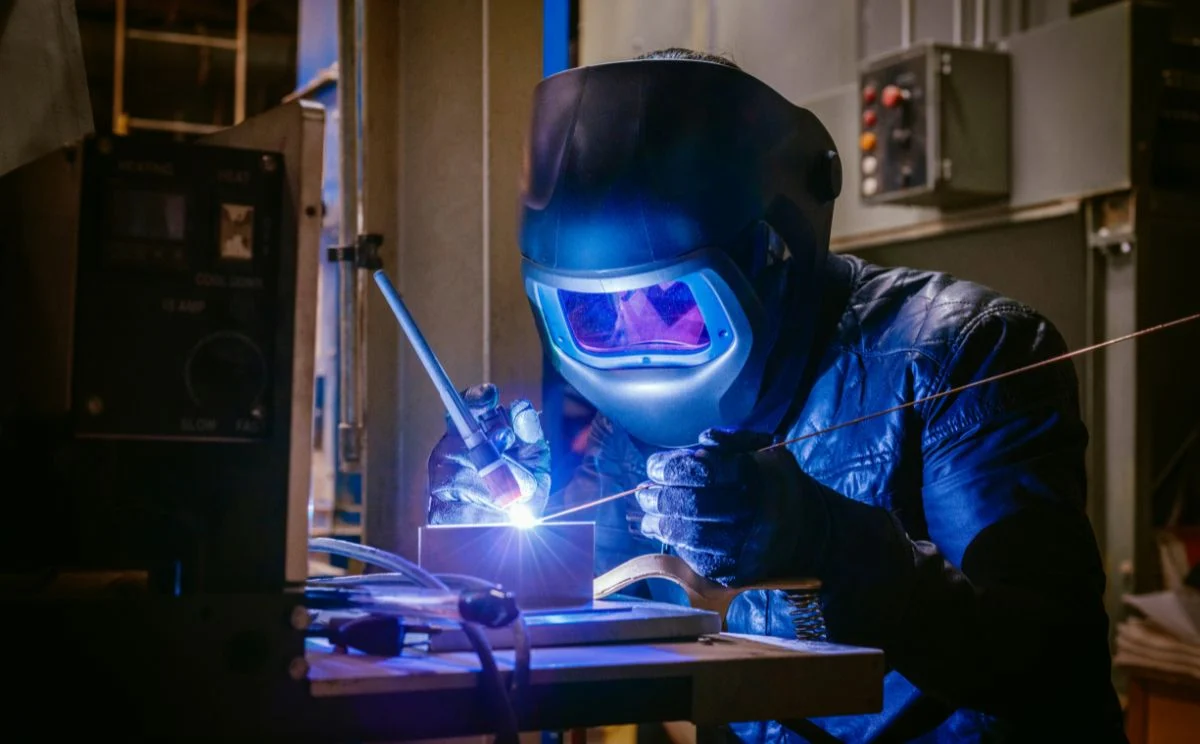
How to choose best tig welder
The right TIG machine is determined by the metals you weld, the power available, and how much control you need over the arc.
AC and DC capability
DC TIG is used for steel, stainless steel, and many other common metals. AC TIG is the important feature for aluminum because it alternates the current behavior at the arc and supports cleaning action on the oxide layer. A DC-only machine such as the YESWELDER TIG-205P can be excellent for steel, but it is the wrong tool if aluminum is part of the brief.
AC/DC models such as the Weldpro, YESWELDER TIG-200P AC/DC, Sunstac, and Lincoln give you a wider working range. If a listing says only lift TIG or DC TIG, do not assume it can weld aluminum.
Arc starting
High-frequency start creates the arc without touching the tungsten to the workpiece. That helps keep the electrode clean and makes starts more repeatable. Lift TIG is simpler and can work well for repairs, but it requires contact and a controlled lift.
The ARCCAPTAIN ARC200 and TOOLIOM use lift TIG, while the Weldpro, YESWELDER TIG-205P, YESWELDER TIG-200P AC/DC, ARCCAPTAIN TIG200, and MIG205MP list HF TIG capability. For fine stainless work and repeated starts, HF is the more refined option.
Pulse control
Pulse alternates between higher and lower current to help manage heat input. It can reduce distortion and burn-through on thin material, though it adds another setting to learn. The Weldpro allows pulse frequency from 0.5 to 200Hz, and the YESWELDER TIG-205P offers independent pulse frequency, duty cycle, and current control.
A basic lift-TIG machine can still make good welds in skilled hands, but it gives you fewer ways to manage heat. Pulse is most useful when thin sheet, appearance, and heat-sensitive work are regular parts of the job.
Buy AC/DC for aluminum, HF start for clean repeatability, and pulse when thin material makes heat control difficult.
Input voltage and output
A 110V machine is easier to use in a home garage, but it may have less usable output on that circuit. Dual-voltage machines can run from 110V or 220V, giving you more flexibility as the workshop changes. The Weldpro, TIG-205P, TIG-200P AC/DC, ARC200, Sunstac, TIG200, and Lincoln support two voltage levels in their listed specifications.
Do not judge a machine only by its peak amperage. The Sunstac lists up to 250A, while several others list 200A or 205A, but the available supply, material thickness, duty cycle, and joint design all affect the result. A compact 135A unit can be perfectly appropriate for small repairs and light work.
Weight and controls
Portable welders are easier to take to a repair site, but compact size often comes with fewer controls or lower output. The ARC200 weighs 7.2 pounds, the TIG-205P weighs 10.7 pounds, and the Weldpro weighs 61.8 pounds. That difference matters if the welder has to move often.
A foot pedal provides live amperage adjustment while welding. It is included with the Weldpro, while the YESWELDER AC/DC machines provide a five-pin foot-pedal interface and the Sunstac supports a foot pedal that is not included. Check this detail before choosing a machine for intricate work.

Frequently asked questions
Can every TIG welder in this roundup weld aluminum?
No. Aluminum TIG requires AC capability. The Weldpro, YESWELDER TIG-200P AC/DC, Sunstac, and Lincoln Square Wave 205 support AC TIG. The DC-only and lift-TIG models are intended for materials such as steel and stainless steel instead.
Is HF start better than lift TIG?
HF start is generally cleaner and more repeatable because the tungsten does not need to touch the workpiece to begin the arc. Lift TIG can be useful for basic repairs and simpler machines, but it requires more careful technique at the start.
Do I need a foot pedal for TIG welding?
No, but a foot pedal can make current control easier during a weld. It is especially useful when the joint changes thickness or when you need to reduce heat near the end. The Weldpro includes one, while several other machines only provide an interface or list pedal compatibility.
What does pulse TIG do?
Pulse TIG alternates between higher and lower current. This can reduce average heat input, help control a puddle on thin material, and limit distortion. It is not essential for every weld, and it adds settings that beginners may need time to understand.
Can a 110V outlet run a TIG welder?
Several machines in this roundup support 110V operation, including the Weldpro, YESWELDER TIG-205P, YESWELDER TIG-200P AC/DC, Sunstac, ARCCAPTAIN models, TOOLIOM, and Lincoln. The available output may differ from what the machine can produce on 220V or 230V, so check the machine's voltage-specific guidance before planning thick-material work.
Is a multiprocess welder suitable for TIG?
It can be, especially when MIG, stick, or plasma cutting are also important. The ARCCAPTAIN MIG205MP supports DC HF TIG and DC lift TIG, but it does not offer AC TIG. A TIG-focused AC/DC machine is the better fit when aluminum weld quality and TIG controls are the main priorities.

The bottom line
The Weldpro 200A AC/DC is the best TIG welder in this group for most mixed workshops because it combines AC and DC TIG, pulse control, HF starting, stick mode, dual-voltage input, and an included foot pedal. The YESWELDER TIG-200P AC/DC is the sharper alternative for aluminum-focused buyers who want waveform choices in a lighter machine.
Choose the YESWELDER TIG-205P if you only weld steel and stainless and need a compact DC unit. Choose the ARCCAPTAIN ARC200 or TOOLIOM 135A Stick for simple portable repairs, and choose the ARCCAPTAIN MIG205MP when TIG must share the bench with MIG and plasma cutting.
If you are undecided, buy the Weldpro unless aluminum is definitely outside your work or portability matters more than control.
As an Amazon Associate we earn from qualifying purchases.