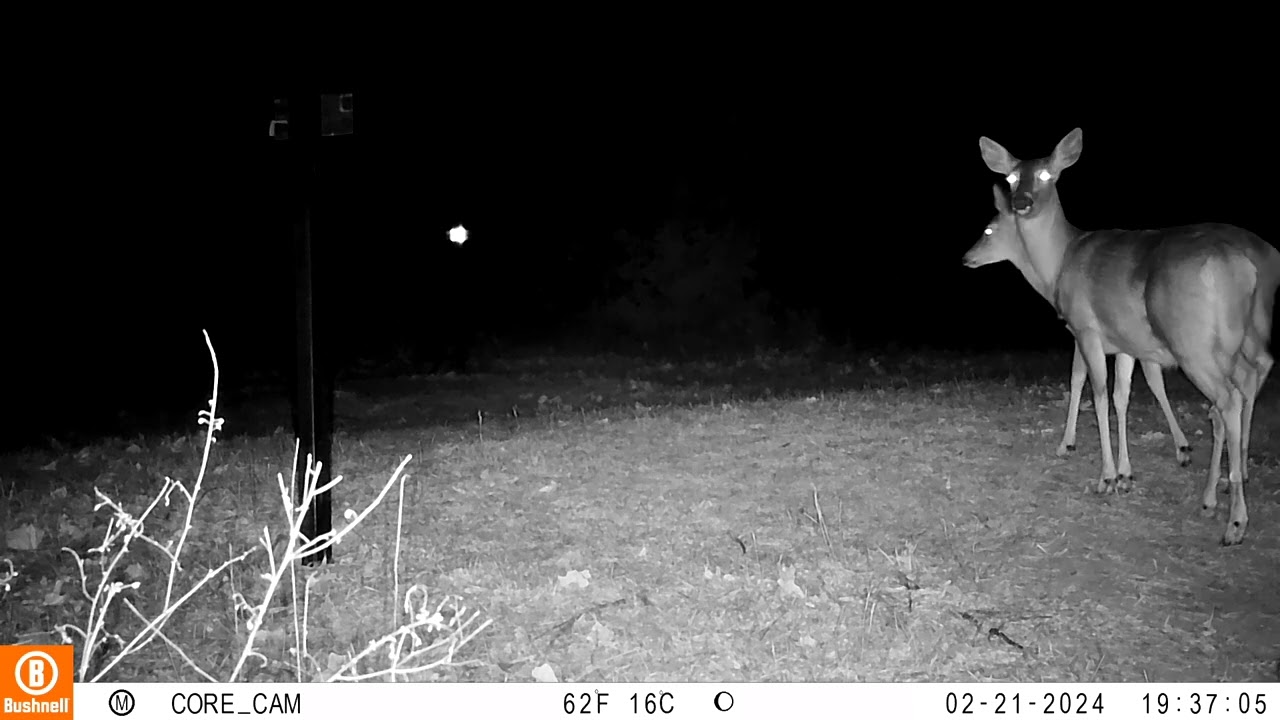

A trail camera is only useful if it catches the animal, survives the weather, and lets you retrieve the evidence without turning every check into a hike. The hard part is choosing between cellular models that send alerts, simpler cameras that save everything to a card, and solar designs built for long deployments.
We compared 10 Best trail cams across cellular connectivity, trigger speed, night vision, image quality, remote control, and power options. The TACTACAM Reveal X 3.0 is our top pick for most remote scouting setups, while the list also includes capable two-camera kits, a strong non-cellular option, and unusual 360-degree monitoring.
Comparison table
| # | Product | Award | Capture | Connectivity | Night vision | Best for |
|---|---|---|---|---|---|---|
| 1 | TACTACAM Reveal X 3.0 | Best overall | Sub-half-second trigger, 3-shot burst | Multi-carrier LTE, GPS | Night vision | Reliable remote scouting |
| 2 | SPYPOINT Flex-M Twin Pack | Best two-camera kit | 28MP photos, 720p video with sound | Dual-SIM LTE, GPS | Night vision | Covering two locations |
| 3 | Moultrie Edge 3 2-Pack | Best for detailed scouting | 40MP photos, 1080p video | Four-carrier auto-connect | Low-glow, 100-foot range | Deer activity tracking |
| 4 | MAXDONE Solar 4K | Best solar non-cellular camera | 64MP photos, 4K video | Short-range Wi-Fi and Bluetooth | Infrared, 65-foot range | Long-term local recording |
| 5 | TACTACAM Reveal Pro 3.0 | Best cellular controls | Burst mode, on-demand video | Auto-connect 4G LTE, GPS | No-glow infrared | Advanced remote management |
| 6 | GardePro E5S | Best non-cellular camera | 64MP photos, 1296p video | SD card | No-glow, 100-foot range | Straightforward wildlife monitoring |
| 7 | KJK Mini Trail Camera | Best wide-angle compact camera | 36MP photos, 2.7K video | No Wi-Fi or app | Low-glow, 75-foot range | Compact local monitoring |
| 8 | Moultrie Edge Solar | Best integrated solar cellular camera | 40MP photos, 1080p video with audio | Four-carrier auto-connect | Low-glow, 100-foot range | Hands-off cellular deployment |
| 9 | Moultrie Edge 2 2-Pack | Best two-camera Moultrie setup | 36MP photos, 1080p video with audio | Nationwide auto-connect | Low-glow, 100-foot range | Multi-point property scouting |
| 10 | TKENPRO 360 LTE | Best live-view design | 2K video, 0.2-second trigger | 4G LTE | Infrared, 85-foot range | Remote panoramic monitoring |
1. TACTACAM Reveal X 3.0: Best Overall

Pros
- Multi-carrier LTE can select between AT&T and Verizon
- Built-in GPS and storage simplify remote deployment
- Sub-half-second trigger with three-shot burst mode
- Setup is designed to take only a few minutes
Cons
- No SD card slot for local removable storage
- The cellular features depend on an active service plan
- One-camera package
Best for: hunters and landowners who want dependable remote alerts with minimal setup.
The TACTACAM Reveal X 3.0 is the camera we'd put in a remote corner of a property and want to hear from without making a special trip. Its central advantage is not a flashy resolution claim. It is the combination of automatic network selection, built-in storage, GPS, and a quick setup process. The integrated SIM can choose between AT&T and Verizon based on the stronger signal at the camera's location, which removes one of the most annoying decisions in cellular trail-camera installation.
The trigger is listed as sub-half a second, and the three-shot burst mode gives a moving animal more than one chance to appear in frame. That matters at a crossing or trail where an animal may pass quickly rather than pause in front of the lens. The camera also supports real-time LTE alerts, so it is better suited to active scouting than a camera that requires a card retrieval every time you want to see what happened.
TACTACAM says the X 3.0 can run for more than six months, and the design supports a Lithium Cartridge, solar panel, folding solar panel, or battery belt for longer deployments. Those accessories are useful if the camera is covering a gate, feeder area, equipment, or a large rural property rather than a short seasonal setup. Built-in GPS keeps the camera's location available in the REVEAL app, an understated feature that becomes valuable when several cameras are spread across unfamiliar ground.
The weakness is storage flexibility. The X 3.0 sends images to your phone and does not require an SD card, but that also means you do not get the removable local backup offered by the TACTACAM Reveal Pro 3.0. The Pro is the better fit if on-demand video and SD support matter more than a simpler configuration. For most people who want a cellular camera that gets online quickly and does the basics with little fuss, the X 3.0 is the more balanced pick.
2. SPYPOINT Flex-M Twin Pack: Best Two-Camera Kit

Pros
- Two cameras cover separate trails or property zones
- Cross-carrier connectivity needs no manual carrier selection
- Photo, video, time-lapse, and Time-Lapse+ modes
- App supports remote settings and firmware updates
Cons
- 28MP photos and 720p video are less detailed than several Moultrie options
- Requires a microSD card for camera storage
- The kit is less compelling for a single-camera deployment
Best for: scouting two locations at once through one cellular app.
The SPYPOINT Flex-M Twin Pack makes sense when one camera is not enough. Put one unit on a main trail and another near a water source, field edge, or access point, then manage both from the SPYPOINT app. The appeal is operational rather than photographic: two viewpoints produce a more useful picture of movement patterns than repeatedly shifting one camera around.
Each camera captures 28MP photos and 720p video with sound. That is adequate for identifying activity and following movement, but it does not match the 40MP stills and 1080p video offered by the Moultrie Edge 3 2-Pack. SPYPOINT counters with flexible capture modes. Photo, video, time-lapse, and Time-Lapse+ let you monitor a broad area at intervals while still allowing the detection sensor to react to movement.
Connectivity is handled across cellular networks without requiring you to swap a SIM or choose a carrier yourself. The app sends photos to a phone, tablet, or computer and allows remote configuration, map management, weather updates, and firmware updates. Its Buck Tracker AI can filter for species, which may help reduce the time spent sorting a busy stream of images. Constant Capture is also intended to keep capturing while files are being transmitted.
This is a practical kit, but it has two clear limits. The cameras need a microSD card, and the image specification is modest beside the higher-resolution Moultrie and MAXDONE models. The TACTACAM Reveal X 3.0 is a stronger single-camera choice because of its built-in storage and three-shot burst mode. Choose the Flex-M Twin Pack when two placements matter more than maximum detail and you want both cameras managed from one app.
3. Moultrie Edge 3 2-Pack: Best for Detailed Scouting
Pros
- 40MP photos and 1080p HD video
- Two cameras extend coverage across a property
- Four-carrier auto-connect reduces network guesswork
- AI buck detection and instant alerts
- Live Aim helps with placement
Cons
- The 2-pack is excessive for a single monitoring point
- Cellular operation requires a service plan
- Larger than the compact KJK camera
Best for: hunters who want two detailed cellular viewpoints and app-based deer analysis.
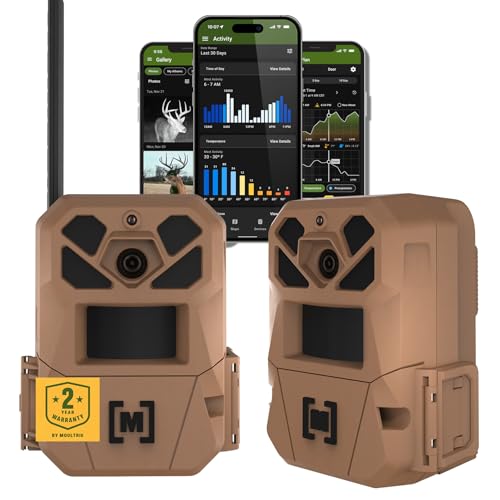
The Moultrie Edge 3 2-Pack is built around a more analytical style of scouting. Its two cameras can watch separate approaches, while the Moultrie app turns incoming images into a broader record of deer movement. AI buck detection is designed to identify bucks and send alerts, which is more useful than a generic motion notification when the camera is pointed at a busy area.
The capture hardware is a strong part of the package. A 40MP photo setting preserves plenty of detail for examining an animal, and 1080p video gives moving footage more clarity than the 720p video on the SPYPOINT Flex-M Twin Pack. The 0.5-second trigger and 100-foot detection range are designed to catch a moving deer before it leaves the frame. Low-glow infrared helps keep nighttime captures discreet.
Moultrie uses four-carrier auto-connect, so the camera can select the strongest of four major US networks rather than locking you into a single carrier. Live Aim lets you preview the camera view for more precise placement, and built-in GPS maps each camera. The app can also monitor battery life, check compatible feeder levels, and provide movement tools such as activity charting and maps.
The trade-off is scale. This is a substantial setup for someone who only needs one camera at a backyard water source, and its cellular features come with an ongoing service requirement. The Moultrie Edge Solar is more convenient for a single location that gets useful sun, while the Edge 3 2-Pack is the better choice when two angles and higher-resolution scouting matter. It suits the buyer who wants a system rather than a single isolated camera.
4. MAXDONE Solar 4K: Best Solar Non-Cellular Camera

Pros
- Integrated adjustable solar panel
- 64MP photos and 4K video
- 0.1-second trigger and five-shot burst mode
- 32GB SD card included
- IP66 weather resistance
Cons
- Wi-Fi is only a short-range camera hotspot
- No remote viewing over home Wi-Fi or cellular networks
- Best results depend on suitable sun exposure
Best for: local recording where solar power matters more than remote alerts.
The MAXDONE Solar 4K looks like a connected camera, but its connection model needs careful explanation. It does not join a home Wi-Fi network and cannot provide remote viewing from anywhere. Instead, it creates a short-range hotspot for downloading files and setup. The stated range is up to 10 to 15 meters in open areas, with a recommended app connection within 10 feet. That makes it a local camera with convenient wireless retrieval, not a cellular trail camera.
Its hardware is ambitious for that role. The camera records 64MP photos and 4K video, offers a 0.1-second trigger, and supports five-shot burst mode. Infrared night vision reaches up to 65 feet, while time-lapse, scheduled shooting, motion detection, and customizable detection zones make it flexible for a garden, farm, or woodland. The included 32GB SD card means local recording can begin without another storage purchase.
Solar power is the defining feature. The split panel can be adjusted to face the sun, and the camera combines that panel with a 6000mAh rechargeable battery and Type-C charging. A panel that can be angled independently is useful when the tree or post faces the wrong direction, although a shaded location will still limit what solar charging can accomplish. The IP66 rating is appropriate for year-round exposure to rain and humidity.
The GardePro E5S is a simpler local alternative with a 100-foot night range, but it lacks the MAXDONE's solar system and wireless file transfer. The MAXDONE is the better fit for a fixed location where you can occasionally walk within range to retrieve footage. Skip it if you need an alert when an animal appears or want to check the camera from a distant town. For that use, cellular models such as the Moultrie Edge Solar are more appropriate.
5. TACTACAM Reveal Pro 3.0: Best Cellular Controls

Pros
- On-demand video through the REVEAL app
- Optional SD card plus built-in memory
- GPS and automatic 4G LTE connection
- Live Wi-Fi aiming and a 2-inch LCD screen
- Solar-panel compatible
Cons
- Heavier than the Reveal X 3.0
- More controls can mean a more involved setup
- One-camera package
Best for: experienced users who want remote video requests and local backup options.
The TACTACAM Reveal Pro 3.0 is the more configurable TACTACAM. It keeps the useful cellular fundamentals, including automatic 4G LTE connection and built-in GPS, but adds controls that matter when the camera will stay in place for a long time. On-demand video lets you request footage from the REVEAL app instead of waiting for the next event, and live Wi-Fi aiming helps set the frame accurately before you close the housing.
Storage is where it separates itself from the TACTACAM Reveal X 3.0. The Pro supports built-in memory and an optional SD card, so cellular delivery can be paired with a local backup. That is useful when a scene is busy, when you want to preserve more files than an app stream shows, or when a network connection is intermittent. A 2-inch LCD screen also makes it easier to inspect settings and aim the camera at the tree.
The camera uses motion-activated no-glow infrared night vision, burst mode, improved sensors, and a solar-panel compatibility option. Its dimensions are similar to the X 3.0, but the listed weight is about 1.7 pounds, making it notably heavier than that model. The longer battery life is intended to reduce field visits, though the actual deployment length will depend on activity, settings, and the power setup.
This is not the pick for someone who wants the fewest decisions. The X 3.0 is cleaner and easier to recommend for a first cellular deployment, while the Moultrie Edge 3 2-Pack covers more ground when two cameras are needed. The Pro earns its place for a user who understands why SD backup, on-demand video, and live aiming are worth having.
6. GardePro E5S: Best Non-Cellular Camera

Pros
- 64MP photos and 1296p HD video
- 0.1-second trigger with three PIR sensors
- No-glow night vision reaches up to 100 feet
- IP66 weather-resistant housing
- Lightweight design with a quarter-inch mounting thread
Cons
- No cellular alerts or Wi-Fi file transfer
- Requires eight AA batteries
- SD card retrieval is part of normal use
Best for: dependable local wildlife recording without an app or cellular connection.
The GardePro E5S is refreshingly direct. It records to an SD card, uses motion detection, and leaves remote connectivity out of the design. That means fewer communications settings and no need to position the camera where a network signal is available. It also means you must return to the camera to retrieve what it captured, so this is best for land that is easy enough to visit.
The camera records 64MP photos and 1296p video, with a 0.1-second trigger supported by three PIR sensors. Those sensors are intended to detect movement across the camera's coverage area quickly, while the 100-foot no-glow infrared range gives nighttime scenes more reach than the MAXDONE Solar 4K's stated 65 feet. The no-glow system is useful when keeping the camera less noticeable to wildlife is important.
An IP66 rating protects the housing against outdoor exposure, and a quarter-inch, 20-thread mounting point gives you more placement options than a strap alone. The camera weighs 0.66 pounds, which is light enough to carry into a remote spot without making the installation feel burdensome. It uses eight AA batteries and supports the GardePro SP350 solar panel separately, so long deployments do not have to rely on frequent battery changes.
The clear compromise is the lack of connectivity. The KJK Mini Trail Camera also avoids Wi-Fi and cellular service, but it adds a built-in screen and a wider 130-degree detection view. The GardePro is the stronger choice for longer night range and higher-resolution still images. Pick it when you want a conventional trail camera that quietly records and you are comfortable collecting the card yourself. Readers comparing simpler setups can also consider how a camera without remote connectivity changes routine wildlife monitoring.
7. KJK Mini Trail Camera: Best Wide-Angle Compact Camera

Pros
- 130-degree detection range
- 0.1-second trigger and one to three shot selection
- 2-inch color screen for setup and playback
- 2.7K video with sound
- IP66 design and compact body
Cons
- No Wi-Fi, cellular connection, or app
- SD card is not included
- Night vision range is shorter than the GardePro E5S
Best for: compact, easy-to-check monitoring at a nearby trail or property.
The KJK Mini Trail Camera is the small, self-contained option in this group. Its 2-inch HD TFT color screen means you can configure the camera and review files at the tree rather than relying on a phone or carrying a separate reader. That makes it appealing for a feeder, garden, or short walk from the house where immediate playback is more useful than remote alerts.
The camera records 36MP stills and 2.7K video with sound. Its trigger is listed at less than 0.1 seconds, and you can choose from one to three shots when motion is detected. The 130-degree detection range is the standout specification because it gives a broad view of an open area, though a wide detection zone can also require thoughtful placement to avoid capturing too much irrelevant movement.
At night, 850nm low-glow infrared LEDs are rated for visibility up to 75 feet. Adaptive illumination is intended to avoid scenes that are too bright or too dim, and the camera includes noise reduction for recorded sound. Its IP66 construction is designed for outdoor exposure, with an operating range listed from minus 22 to 158 degrees Fahrenheit. A strap and stand are included, while an SD card is not.
Compared with the GardePro E5S, the KJK has a screen and wider detection angle but a shorter stated night range. Compared with the MAXDONE Solar 4K, it has no solar system or short-range phone hotspot. That leaves the KJK as a straightforward local camera for someone who values compact installation and instant playback. It is not the right choice for a remote property where checking a card is inconvenient.
8. Moultrie Edge Solar: Best Integrated Solar Cellular Camera

Pros
- Integrated adjustable solar panel
- Built-in rechargeable battery pack
- 40MP photos and 1080p video with audio
- Four-carrier auto-connect
- Cloud storage and remote settings
Cons
- Larger and heavier than the Moultrie Edge 2 2-Pack
- Solar performance depends on placement and sunlight
- Cellular service is required for remote features
Best for: a single cellular camera intended to stay deployed for a long stretch.
The Moultrie Edge Solar is designed to reduce the most routine maintenance task in a cellular trail-camera setup: opening the housing to change batteries. Its integrated solar panel feeds a built-in rechargeable battery pack, and the panel angle can be adjusted to improve sun exposure. That is a more cohesive design than attaching a separate panel, especially when the camera is meant to remain in one place through changing conditions.
It records 40MP photos and 1080p video with audio. The 0.4-second trigger is a little faster than the Edge 3's listed 0.5 seconds, and the 100-foot PIR detection range gives it a broad reach. Low-glow infrared covers up to 100 feet at night. AI buck detection can identify bucks and send alerts, while the app provides remote access to photos, on-demand video, settings, and cloud storage without requiring SD card retrieval.
Four-carrier auto-connect is useful for remote locations where it is difficult to know which network will perform best before installation. The Easy Aim mount provides a real-time preview for positioning, and the housing is designed for rain, heat, and extended outdoor exposure. At 2.45 pounds and 14.125 inches tall, it is considerably larger than the Moultrie Edge 2 2-Pack, so mounting stability matters.
Solar does not eliminate the need to think about shade, seasonal sun, or sustained cloudy weather. If the site is covered by dense trees, the TACTACAM Reveal X 3.0 offers a more flexible battery and accessory path. If the site gets consistent light and you want fewer service visits, the Edge Solar is the more convenient choice. It is especially well matched to a single camera that needs to send detailed images without regular card collection.
9. Moultrie Edge 2 2-Pack: Best Two-Camera Moultrie Setup

Pros
- Two cellular cameras for separate locations
- 36MP photos and 1080p video with audio
- 100-foot detection range
- Built-in 8GB memory and cloud storage
- App includes maps and activity charting
Cons
- No integrated solar panel
- Older Edge 2 design has less photo resolution than Edge 3
- Cellular plans are needed for remote delivery
Best for: covering two parts of a property with Moultrie's app and mapping tools.
The Moultrie Edge 2 2-Pack is a sensible way to build coverage around two separate activity zones. One camera can watch a trail while the other monitors a field edge, feeder, or access route. Because both use the Moultrie Mobile app, alerts, settings, battery information, and captured files stay in the same management system.
The cameras record 36MP photos and 1080p video with audio. That is still enough detail for day and night scouting, though the Moultrie Edge 3 2-Pack raises the photo resolution to 40MP and adds newer AI-focused features. The Edge 2 uses a 100-foot detection range and low-glow infrared flash, which gives it the reach needed for a broad trail or open clearing without using a conspicuous visible flash.
Storage is a practical strength. Each camera has 8GB of internal memory, and the Moultrie app provides unlimited cloud storage according to the product information. That removes the need to retrieve an SD card for every visit. The cameras also fit Moultrie mounting accessories and other mounts using a quarter-inch, 20-thread male post, giving you more options for stable positioning.
The omission here is solar power. The cameras can work with compatible Moultrie accessories, but the panels and power packs are separate, unlike the Moultrie Edge Solar, which integrates its panel and battery. The Edge 2 2-Pack is the better choice for two locations where conventional battery operation is acceptable and you want Moultrie's app, internal memory, and mapping tools without moving up to the newer Edge 3 system.
10. TKENPRO 360 LTE: Best Live-View Design

Pros
- 355-degree pan and 120-degree tilt control
- 2K live streaming and 4x digital zoom
- 0.2-second trigger
- Built-in 5W solar panel
- Two-way audio and up to three simultaneous app viewers
Cons
- Built-in SIM is not removable
- Cellular service is limited to use in the United States
- IP65 is a lower protection rating than several competitors
Best for: farms, ranches, and properties that benefit from remote panoramic viewing.
The TKENPRO 360 LTE is unlike the fixed-view cameras above. Its 355-degree pan and 120-degree tilt let you reposition the view remotely, while 4x digital zoom helps inspect a particular part of the scene. That can be useful on a farm or ranch where the camera needs to watch a broad area rather than a single narrow trail. Up to three users can view through the app at the same time.
The camera provides 2K HD live streaming and infrared night vision rated up to 85 feet. A 0.2-second trigger sends alerts when the PIR sensor detects movement, and the built-in microphone and speaker enable two-way audio. Those features make it more like a remotely operated outdoor monitoring camera than a conventional still-image game camera, although the added controls also create more ways for the setup to differ from a simple trail-camera installation.
A built-in 5W solar panel is intended to maintain power for extended outdoor use. The camera has an IP65 weatherproof rating and is specified to operate from minus 20 to 50 degrees Celsius. It automatically connects to the strongest nearby 4G network through its built-in SIM. That SIM is non-removable and intended for use in the United States only, so it is a poor fit for anyone who needs to move the camera between regions.
The Moultrie Edge Solar is a better conventional scouting camera because it offers higher-resolution stills, a 100-foot detection range, and a more familiar fixed view. The TKENPRO earns consideration when live control and panoramic coverage are the point. It should be chosen by a property owner who will actually use remote panning and live streaming, not by someone who simply needs a camera to capture animals crossing one trail.
How to choose best trail cams
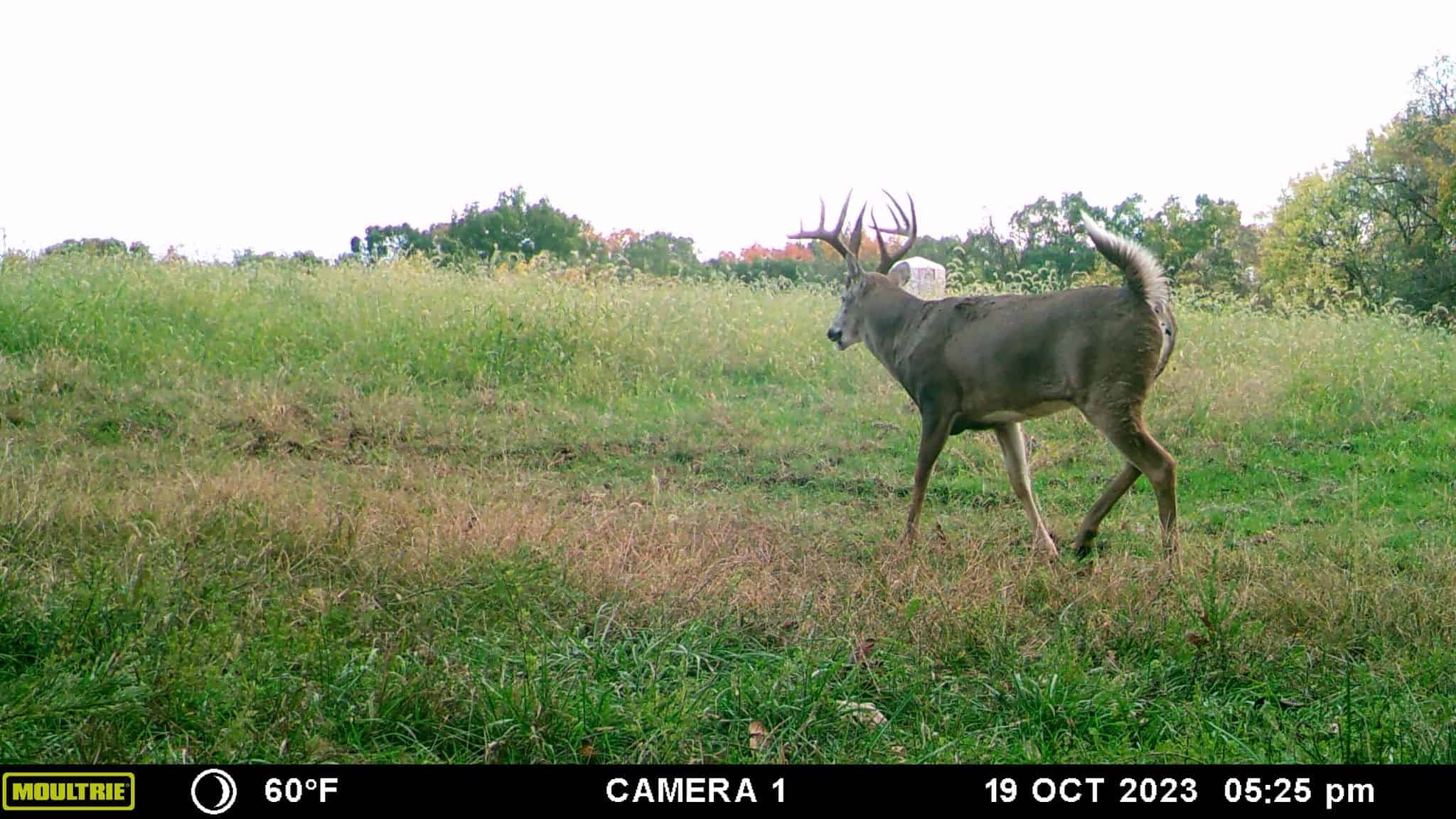
The right trail camera depends on where it will sit, how often you can visit it, and whether you need an alert or only a recording.
Cellular connection
Cellular cameras send photos, video, and alerts to an app without requiring nearby Wi-Fi. That is essential for remote land, but it also means checking network compatibility and understanding how the camera handles carrier selection. Multi-carrier models such as the TACTACAM Reveal X 3.0, SPYPOINT Flex-M, and Moultrie cameras reduce the risk of choosing the wrong network for a particular location.
Non-cellular cameras such as the GardePro E5S and KJK Mini Trail Camera are simpler, but you must retrieve their storage manually. The MAXDONE's Wi-Fi is only a short-range hotspot for local file transfers, not an internet connection.
Trigger speed and detection range
A fast trigger helps capture an animal that is already moving through the frame. The difference between 0.1 seconds and 0.5 seconds can matter at a narrow trail, while a longer detection range is more useful across an open field. Do not treat the largest range as automatically better. A wide sensor aimed at a busy area can create more irrelevant captures unless detection zones and placement are handled carefully.
A fast trigger cannot rescue a badly aimed camera, so frame the trail first and compare specifications second.
Image and video resolution
Higher stated megapixels can preserve more detail in still images, but they do not guarantee a better nighttime capture. Lens quality, infrared illumination, movement, and distance all affect what you can identify. The Moultrie Edge 3 and Moultrie Edge Solar combine 40MP stills with 1080p video, while the GardePro E5S and MAXDONE advertise 64MP photos. The KJK records 2.7K video, and the TKENPRO focuses on 2K live streaming.
Think about what you actually need to see. Species identification at a feeder may not require the same detail as examining antler shape at the far end of a clearing.
Night vision and flash type
No-glow infrared is designed to avoid a visible flash that could disturb wildlife or reveal the camera. Compare the stated night range, but also consider the size of the area the camera must illuminate. The GardePro E5S and Moultrie models list 100-foot night coverage, while the MAXDONE reaches 65 feet and the KJK reaches 75 feet.
A low-glow system may still produce useful nighttime images, but the camera's placement and the animal's distance remain critical. A camera mounted too far from the trail may produce a dark or indistinct subject regardless of its headline resolution.
Power and weather protection
Solar power reduces visits but works best when the panel receives suitable light. The MAXDONE has an adjustable split panel and a 6000mAh rechargeable battery, while the Moultrie Edge Solar integrates a panel with a rechargeable battery pack. Other models can support separate solar accessories.
Weather ratings also differ. IP66 appears on the MAXDONE, GardePro, and KJK cameras. The SPYPOINT Flex-M lists IP65 water resistance, and the TKENPRO lists IP65 weather protection. A strong rating helps, but mounting the camera beneath a useful natural overhang and keeping seals clean still matters.
Storage and app controls
Built-in memory and cloud storage reduce the need to visit a camera. The TACTACAM Reveal X 3.0 avoids an SD card entirely, the Reveal Pro 3.0 supports optional SD backup, and the Moultrie Edge 2 includes 8GB of internal memory alongside cloud storage. By contrast, the GardePro and KJK require local card retrieval, while the SPYPOINT Flex-M needs a microSD card.
App features can be just as important as image quality. Remote aiming, on-demand video, maps, activity charts, AI filtering, and firmware updates all reduce field work, but they also add setup choices. If your needs are straightforward, a simple non-cellular camera may be easier to live with.
Frequently asked questions
Do cellular trail cameras need Wi-Fi?
No. Cellular trail cameras use a mobile network to send images and alerts through their app. The camera still needs adequate cellular signal, and cellular service may require a separate plan.
Which trail camera is easiest to monitor remotely?
The TACTACAM Reveal X 3.0 is a straightforward remote-monitoring option because it uses automatic carrier selection, built-in GPS, built-in storage, and app alerts. The Moultrie Edge Solar adds cloud storage, on-demand video, and integrated solar power for a more hands-off setup.
Are non-cellular trail cameras useful?
Yes. A non-cellular camera can be a good fit when the site is easy to visit or when you do not want cellular setup and service. The GardePro E5S records to an SD card, while the KJK Mini Trail Camera adds a built-in color screen for local playback.
Is a higher megapixel count always better?
No. Resolution can preserve detail, but lens quality, motion, infrared illumination, and subject distance have a major effect on the final image. A well-placed 36MP or 40MP camera may produce more useful evidence than a poorly positioned camera with a larger stated number.
What is the benefit of solar power on a trail camera?
Solar power can reduce battery changes during a long deployment. It works best when the panel can receive dependable sunlight, and integrated designs such as the Moultrie Edge Solar avoid some of the complexity of attaching a separate panel.
What does no-glow night vision mean?
No-glow infrared night vision is designed to capture images without a visible flash that could reveal the camera or disturb wildlife. It is useful for discreet monitoring, though the actual image quality still depends on distance, placement, and available infrared illumination.
Can a trail camera watch a wide area?
Yes, but wide coverage comes in different forms. The KJK Mini Trail Camera has a 130-degree detection range, while the TKENPRO 360 LTE can pan 355 degrees and tilt 120 degrees remotely. A wide fixed sensor covers more of the scene, while a pan-and-tilt camera lets you change the view after installation.

The bottom line
The TACTACAM Reveal X 3.0 is the best trail cams pick for most people who need dependable remote scouting. Automatic selection between AT&T and Verizon, built-in GPS, built-in storage, a sub-half-second trigger, and three-shot bursts make it easy to deploy without giving up the features that matter in the field.
Choose the Moultrie Edge Solar when integrated solar power and detailed cellular monitoring are more important, or the GardePro E5S when you want a straightforward non-cellular camera with strong night range. The SPYPOINT Flex-M Twin Pack and Moultrie Edge 3 2-Pack are the better routes to two-camera coverage.
If you are undecided, start by choosing between remote alerts and local card retrieval, then match the camera's power system and night range to the actual location.
As an Amazon Associate we earn from qualifying purchases.