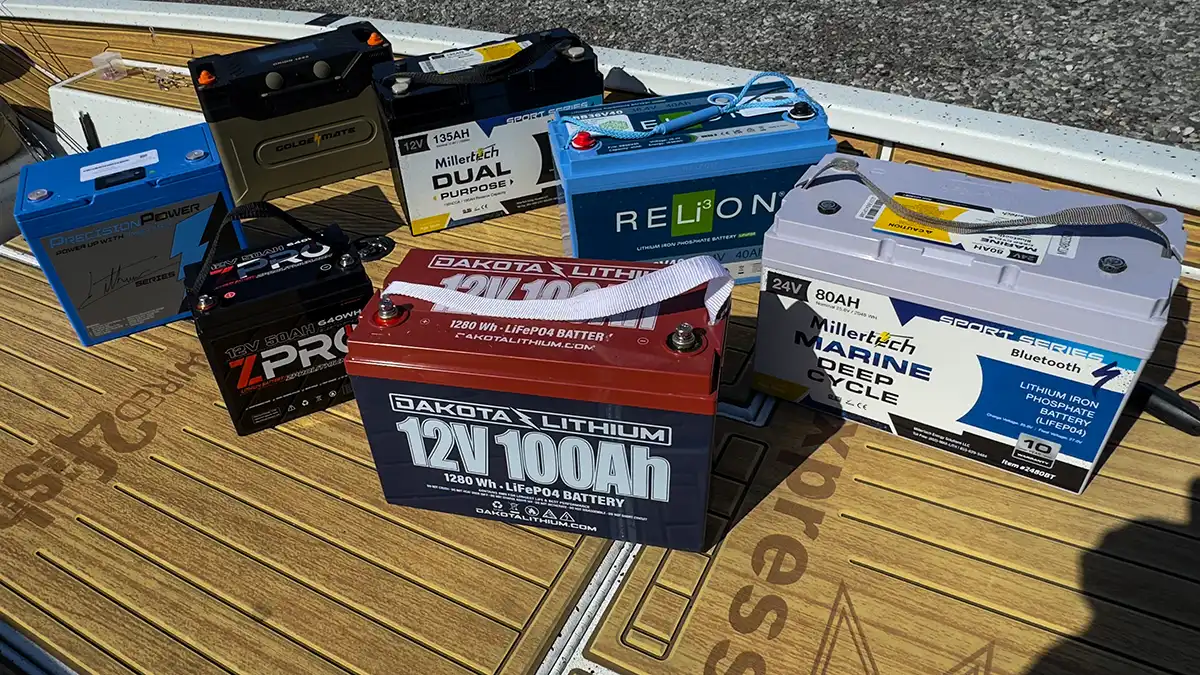

A trolling motor can turn a quiet fishing spot into a frustrating exercise in battery management when the battery is too heavy, too small, or poorly matched to the charger. The right choice depends on more than the 12V label. Capacity, chemistry, physical size, cold-weather behavior, and the motor's draw all matter.
Our Best trolling motor battery picks range from compact 50Ah AGM models to lightweight 100Ah LiFePO4 batteries with Bluetooth monitoring and expandable configurations. Newport 12V50Ah is our top pick for straightforward marine use, while Litime Bluetooth 100Ah is the more capable upgrade for boaters who want lithium capacity and phone monitoring.
| # | Product | Award | Capacity | Chemistry | Weight | Best for |
|---|---|---|---|---|---|---|
| 1 | Newport 12V50Ah | Best overall | 50Ah | Sealed AGM | 32 lb | Simple marine setups |
| 2 | SUPER EMPOWER Group 24 | Best compact lithium | 100Ah | LiFePO4 | 21.6 lb | Group 24 battery boxes |
| 3 | Litime Marine 100Ah | Best marine protection | 100Ah | LiFePO4 | 22.1 lb | Saltwater and larger motors |
| 4 | Mighty Max ML55 | Best simple AGM | 55Ah | SLA/AGM | Not listed | Basic trolling setups |
| 5 | SUPER EMPOWER Group 31 | Best expandable lithium | 100Ah | LiFePO4 | 20.9 lb | Larger battery banks |
| 6 | Litime Bluetooth 100Ah | Best smart lithium | 100Ah | LiFePO4 | 22.2 lb | App-based monitoring |
| 7 | HeyFuture Bluetooth 100Ah | Best Group 24 Bluetooth | 100Ah | LiFePO4 | 21.5 lb | Compact boats and RVs |
| 8 | Weize AGM 100Ah | Best high-capacity AGM | 100Ah | AGM | 57 lb | Lead-acid replacements |
| 9 | Dyness Mini TM | Best compact motor battery | 100Ah | LiFePO4 | 20.94 lb | 30 to 68 lb motors |
| 10 | LIPULS Smart 100Ah | Best app-controlled option | 100Ah | LiFePO4 | 23.28 lb | App monitoring and expansion |
1. Newport 12V50Ah: Best Overall

Pros
- Sealed, leak-proof AGM construction
- 32-pound marine battery
- Designed for trolling motor use
- Straightforward 12V, 50Ah format
Cons
- Half the stated capacity of the 100Ah lithium picks
- Heavier than most lithium alternatives
- No listed low-temperature charging protection
Best for: boat owners who want a simple sealed AGM battery for a modest trolling motor setup.
The Newport 12V50Ah is the battery we'd choose when simplicity matters more than maximum capacity. It is a conventional sealed AGM design, but that is not a criticism for every boat. AGM batteries are familiar, sealed, and easy to integrate into a basic marine electrical system. The 32-pound weight is manageable when the battery box is close to the stern and you do not need to carry it far.
Its 12V, 50Ah rating puts it below every 100Ah option here for stored energy. That makes the Newport a better fit for smaller trolling motors, shorter trips, or boats where a 100Ah battery would add unnecessary bulk. The sealed construction is described as leak-proof, and the battery is specifically intended for trolling motor use. Its listed dimensions are 13 by 6.75 by 9.9 inches, so measure the compartment rather than assuming the box will fit.
The Newport is easier to understand than the lithium alternatives. There is no Bluetooth app, expandable battery-bank discussion, or special lithium charging profile to sort through. That simplicity can be useful for an occasional angler. If you want to check the condition of a battery before heading out, a reliable charger for maintaining stored batteries belongs in the same setup.
The weakness is endurance. A 50Ah AGM battery cannot match the runtime potential of the 100Ah LiFePO4 models, and its 32-pound weight is more than the lithium choices that offer twice the stated capacity. Skip it if your motor runs hard for long sessions or if you are trying to reduce weight at the bow. Choose the Newport for a conventional, sealed marine battery that keeps the installation uncomplicated.
2. SUPER EMPOWER Group 24: Best Compact Lithium

Pros
- 100Ah capacity in a compact Group 24 format
- 21.6-pound weight
- Built-in 100A BMS
- Low-temperature charging and discharge protection
- Supports series and parallel expansion
Cons
- Not suitable for engine starting
- Requires a lithium-compatible charging setup
- No Bluetooth monitoring listed
Best for: boat owners replacing a Group 24 lead-acid battery with a lighter 100Ah lithium model.
The SUPER EMPOWER Group 24 stands out because it puts 100Ah of LiFePO4 capacity into a battery format many boat owners already recognize. At 21.6 pounds, it is substantially easier to lift than the 57-pound Weize AGM. The listed dimensions are 6.49 by 10.24 by 8.98 inches, and M8 terminals are included in the design, giving this model a practical drop-in shape for compatible battery boxes.
A built-in 100A BMS manages charging, discharging, current, and temperature conditions. That is important in a trolling motor battery because the protection system is part of the product's day-to-day usability. Charging pauses below 32 degrees Fahrenheit, while discharge stops below minus 4 degrees Fahrenheit and resumes above 41 degrees. Those limits do not make it a winter battery for every climate, but they provide a clear layer of cold-weather protection.
This model supports up to four batteries in series and four in parallel. The claimed maximum configuration is 51.2V and 400Ah, or 20.48kWh. Most trolling motor owners will never need that arrangement, yet the expansion option gives it a path into RV, solar, or off-grid use. The battery is designed for energy storage and is not intended for engine cranking, so it should not replace a dedicated starting battery.
Compared with the Newport 12V50Ah, the SUPER EMPOWER offers twice the stated capacity at a lower listed weight. The trade-off is that it needs a charger with a LiFePO4 profile. It also lacks the phone monitoring found on the Litime Bluetooth 100Ah and LIPULS Smart 100Ah. This is the pick for a clean, compact lithium upgrade when app controls are not important.
3. Litime Marine 100Ah: Best Marine Protection

Pros
- Protection against dust, water, and salt spray
- 100Ah capacity at about 22 pounds
- Low-temperature charging and discharge cutoffs
- Designed for 12V to 36V motors
- Supports 4P4S expansion
Cons
- Group 31 size takes more compartment space
- No Bluetooth monitoring listed
- Not intended for starting applications
Best for: marine users who want lightweight lithium capacity with extra environmental protection.
The Litime Marine 100Ah is built around the realities of boat use rather than just the capacity number. It weighs about 22.1 pounds and uses a standard Group 31 format, with listed dimensions of roughly 10.24 by 6.61 by 8.27 inches. That is a useful weight reduction compared with AGM, but the Group 31 footprint may be too large for a compartment designed around a smaller battery.
Its protection package is the reason to consider it over the more basic lithium choices. Litime describes triple protection against dust, water, and salt spray, along with safeguards for overcharge, overheating, and short circuits. The battery also includes a TVS feature intended to shield 12V to 36V trolling motors from voltage spikes. Those details are more relevant on a wet boat than a generic claim about long battery life.
Cold-weather behavior is clearly defined. Charging stops below 32 degrees Fahrenheit, and discharge stops below minus 4 degrees. The battery is rated for 4, 000 cycles at 100 percent depth of discharge, with expansion up to four batteries in parallel and four in series. It is also described as supporting 30 to 70-pound trolling motors, giving it a wider stated motor range than the smaller Newport.
The SUPER EMPOWER Group 24 is easier to fit into a compact battery box, while the Litime offers a more marine-focused protection package and the same broad 100Ah class. The limitation is the lack of Bluetooth monitoring. It is also for energy storage, not starting batteries, golf carts, or jacks. Pick it when the boat sees spray and rough conditions, and skip it when available compartment space is tight.
4. Mighty Max ML55: Best Simple AGM

Pros
- 12V, 55Ah sealed AGM design
- Spill-proof and maintenance-free
- Can be mounted in any position
- Resists shock and vibration
- Compact listed footprint
Cons
- Battery and screws only
- No wire harness or mounting accessories
- Lower capacity than the 100Ah models
Best for: anglers who need a compact replacement AGM battery for a basic electric trolling motor.
The Mighty Max ML55 is a no-nonsense sealed lead-acid battery. Its 12V, 55Ah specification puts it close to the Newport 12V50Ah, but the physical package is smaller at 9.06 by 5.43 by 8.98 inches. That compact shape may solve a fit problem when a larger Group 24 or Group 31 lithium battery cannot sit securely in the existing compartment.
The SLA/AGM construction is spill-proof and maintenance-free, and the listing says it can be mounted in any position. It is also designed to resist shock and vibration, useful traits on a boat that moves over wakes and rough water. High discharge performance, broad operating temperatures, and deep-discharge recovery are also cited, although the listing does not provide a more specific operating-temperature range.
One important detail is what does not come with it. The package includes the battery and screws, but no wire harness or mounting accessories. That is easy to overlook when replacing a battery, so inspect the boat's existing terminals and hold-down hardware before ordering. This is a battery replacement, not a complete wiring kit.
The Newport has a slightly lower listed capacity but is explicitly framed as a marine trolling motor battery, while the Mighty Max offers a more compact footprint and position flexibility. Neither can approach the runtime potential of a 100Ah lithium model. Choose the ML55 when the boat already has a compatible AGM setup and compact dimensions matter more than extended runtime.
5. SUPER EMPOWER Group 31: Best Expandable Lithium

Pros
- 100Ah LiFePO4 capacity
- 20.9-pound weight
- Grade A+ cells and 100A smart BMS
- Group 31 drop-in format
- Five-year warranty and 4S4P expansion
Cons
- Longer Group 31 body needs careful measurement
- Not for engine starting
- Requires a lithium charger
Best for: users who want a lightweight Group 31 replacement with room to build a larger battery system.
The SUPER EMPOWER Group 31 is the larger-format sibling to the Group 24 model above. It carries the same 100Ah LiFePO4 chemistry and 100A BMS concept, but the listed dimensions expand to 6.77 by 13.18 by 9.05 inches. Despite that larger footprint, the battery weighs only 20.9 pounds. That makes it a particularly useful replacement for a heavy Group 31 AGM battery when the existing box has enough length.
The BMS manages charging, discharging, cell balancing, and temperature protection. Charging pauses below 32 degrees Fahrenheit, and discharge stops below minus 4 degrees. The battery supports a 4S4P configuration, which the listing describes as up to 51.2V, 400Ah, and 20.48kWh. Those features suit a boat owner who may later add solar or RV energy storage, not just someone running a single trolling motor.
The five-year warranty and stated support are meaningful ownership details, though they do not eliminate the need to verify charger compatibility. The manufacturer says to use a 12V LiFePO4 charger, a lithium-configured solar controller, or a suitable generator and DC-to-DC charging arrangement. Non-lithium chargers are not recommended.
This model is a better fit than the Group 24 version when a Group 31 box is already installed and expansion is part of the plan. The Group 24 battery is easier to place in a tighter compartment, while the Litime Marine 100Ah brings more explicit saltwater protection. Skip this SUPER EMPOWER model if the boat needs engine starting or if the existing compartment cannot accommodate its 13.18-inch length.
6. Litime Bluetooth 100Ah: Best Smart Lithium

Pros
- Bluetooth monitoring from a phone
- 1280Wh stated energy capacity
- 100Ah LiFePO4 chemistry
- IP65 dustproof and waterproof construction
- Up to 15, 000 cycles at 60 percent depth of discharge
Cons
- Bluetooth activation requires a lithium activation or MPPT charger
- Group 31 dimensions need substantial space
- Not intended for starting batteries
Best for: boaters who want to monitor battery status and protection data from a phone.
The Litime Bluetooth 100Ah is the most informative battery in this group. Its Bluetooth connection lets you check battery status, control discharge, and run system checks from a phone. That is useful when the battery is tucked into a compartment or when you want to spot a problem before leaving the dock. It weighs 22.2 pounds and uses a Group 31 format measuring 13 by 6.77 by 8.5 inches.
The listing gives the battery a 1280Wh energy capacity and cites 4, 000 cycles at 100 percent depth of discharge, 6, 000 at 80 percent, and up to 15, 000 at 60 percent. Those figures describe different usage patterns, so they should not be treated as one universal lifespan claim. The practical point is that the battery is built for repeated deep-cycle use rather than engine cranking.
Marine protection is another strength. The case is described as IP65 dustproof and waterproof, salt-resistant, and protected by more than 20 safety measures. Charging stops below 32 degrees Fahrenheit, while discharge stops below minus 4 degrees. The battery supports 4P4S expansion and is stated to fit 30 to 70-pound trolling motors.
The HeyFuture Bluetooth 100Ah is smaller in Group 24 form, while the Litime has a more detailed marine protection package and a larger stated energy figure. The trade-off is setup complexity. Bluetooth must be activated with a lithium-activation or MPPT charger on first use or after being switched off. Choose this model if battery information on your phone is genuinely useful, not simply because the app exists.
7. HeyFuture Bluetooth 100Ah: Best Group 24 Bluetooth

Pros
- Bluetooth monitoring and intelligent BMS
- Compact Group 24 size
- 21.5-pound weight
- Supports series and parallel connection
- Protection against water, dust, and temperature conditions
Cons
- Older lead-acid charging systems may need upgrades
- No specific cycle figure listed in the features
- Not a starting battery
Best for: boat owners who need a compact Group 24 lithium battery with phone-based monitoring.
The HeyFuture Bluetooth 100Ah combines the capacity of a full-size lithium battery with a compact Group 24 enclosure. It weighs 21.5 pounds and measures 6.61 by 10.24 by 8.3 inches. That makes it easier to place than the Group 31 SUPER EMPOWER and Litime models, especially in a boat designed around a smaller battery compartment.
Its intelligent BMS protects against overcharging, over-discharging, overcurrent, and overheating. The listing also describes dustproof, waterproof, and low-temperature cutoff functions, plus a shock-resistant design for marine use. There is no separate cycle-life figure in the listed features, so we would not rank it above the LiTime models on longevity claims alone.
Bluetooth is the key differentiator. Monitoring a battery's status from a phone can make it easier to understand remaining charge and spot abnormal behavior, but it adds another layer that a basic AGM battery does not require. The battery supports series or parallel connections up to 4S4P, with a stated maximum of 48V and 400Ah.
The SUPER EMPOWER Group 24 has more explicit cold-weather limits and a five-year warranty, while the HeyFuture counters with Bluetooth in the same general compact format. The important compatibility warning is charging: the listing says some older lead-acid charging systems are not compatible without an upgrade. Choose this battery when the Group 24 footprint fits and app monitoring matters more than a documented cycle count.
8. Weize AGM 100Ah: Best High-Capacity AGM

Pros
- 100Ah AGM capacity
- Maintenance-free sealed construction
- Low 1 to 3 percent monthly self-discharge
- Defined charging and discharge temperature ranges
- Familiar lead-acid installation
Cons
- Listed weight is 57 pounds
- One-year warranty
- Much heavier than every lithium model here
Best for: users who specifically want a conventional 100Ah AGM battery and have strong lifting and mounting support.
The Weize AGM 100Ah takes the traditional route. It offers 100Ah in a sealed absorbent glass mat design, with no need to maintain electrolyte levels. The listed dimensions are 12.99 by 6.73 by 8.43 inches, and the stated weight is 57 pounds. That weight is the defining ownership issue. It can be acceptable in a permanently mounted compartment, but it is a chore to carry between the boat and a charger.
AGM still has practical benefits. The familiar chemistry works with many existing lead-acid systems, and the sealed construction helps prevent acid leakage. Weize lists a charging range from 14 to 122 degrees Fahrenheit and a discharge range from 5 to 122 degrees, with 77 degrees described as the best operating temperature. It also states a 1 to 3 percent monthly self-discharge rate, which helps during storage when the battery is kept charged.
The battery is intended for RV, solar, wheelchair, scooter, golf cart, and other deep-cycle applications. The listing also cites a maximum discharge current of 1, 100A for five seconds. That figure is not a reason to use this as an engine-starting replacement without checking the boat's requirements, but it does show that the battery is designed to handle short high-current demands.
The SUPER EMPOWER Group 31 offers the same 100Ah class at roughly one-third the listed weight, while the Newport and Mighty Max are easier to handle because they store less energy. The Weize makes sense when existing charging equipment and lead-acid familiarity matter more than weight. Skip it if you regularly remove the battery or want maximum capacity without a heavy lift.
9. Dyness Mini TM: Best Compact Motor Battery

Pros
- Compact 20.94-pound Group 24 design
- Intended for 30 to 68-pound trolling motors
- IP65 waterproof and dustproof casing
- 100A BMS with low-temperature protection
- Supports 4S4P expansion
Cons
- Requires a LiFePO4-specific charger
- No Bluetooth monitoring listed
- Cold-weather charging pauses below 32 degrees Fahrenheit
Best for: anglers who need 100Ah lithium capacity in a small compartment for a mid-size trolling motor.
The Dyness Mini TM is one of the easiest batteries here to justify on a space-constrained boat. Its case measures 10.2 by 6.6 by 8.2 inches in the feature description, while the product information lists 6.61 by 10.23 by 8.22 inches. Either way, the shape is notably compact, and the listed 20.94-pound weight keeps it easy to move.
Dyness specifically positions this battery for 30 to 68-pound trolling motors. That is a useful match range for many small and mid-size fishing boats. The IP65-rated casing is described as resistant to water, dust, and corrosion, and the 100A BMS protects against overcharging, over-discharging, overcurrent, overheating, and short circuits.
Cold-weather behavior is unusually clear. Charging cuts off below 32 degrees Fahrenheit and resumes above 41 degrees, while the battery shuts down at minus 4 degrees to prevent damage. Dyness recommends a LiFePO4-specific charger and a recharge rate of 0.2C for battery health. It also supports up to four batteries in series and four in parallel for larger energy systems.
The Dyness is more compact than the Group 31 SUPER EMPOWER and Litime batteries, while the SUPER EMPOWER Group 24 offers similar compact positioning with a stated five-year warranty. Dyness adds the motor-specific 30 to 68-pound guidance and IP65 enclosure. It does not include Bluetooth, so choose it for size, protection, and motor matching rather than remote monitoring.
10. LIPULS Smart 100Ah: Best App-Controlled Option

Pros
- 120A BMS
- Bluetooth app monitoring and diagnostics
- 1280Wh stated energy capacity
- Group 24 dimensions
- Low-temperature charging protection
Cons
- Heavier than the smallest lithium picks
- App features may be unnecessary for simple setups
- No stated warranty in the listed features
Best for: boaters who want app controls, a stronger BMS rating, and a compact Group 24 lithium format.
The LIPULS Smart 100Ah is aimed at boat owners who want more visibility into the battery than a basic voltmeter can provide. Its app can show voltage and charge status, set alerts, and perform fault diagnostics. The battery weighs 23.28 pounds and measures 10.2 by 6.57 by 8.27 inches, giving it a compact Group 24 shape without being the lightest battery in this roundup.
Its 12.8V, 100Ah LiFePO4 design is paired with a 120A BMS. That is a higher stated BMS current than the 100A systems used by SUPER EMPOWER and Dyness, though the BMS figure alone does not determine actual trolling motor runtime. The listing gives a maximum energy figure of 1280Wh and says the battery uses Grade A cells.
Low-temperature charging stops below 32 degrees Fahrenheit and resumes above 41 degrees. LIPULS also describes six-layer protection against overcharge, over-discharge, overcurrent, short circuit, and high and low temperatures. For larger projects, up to four batteries can be connected in a 4P4S arrangement, with the listing describing 20.48kWh capacity and 24.57kW peak power for the expanded system.
The HeyFuture Bluetooth 100Ah is similarly compact and lighter by a small margin, while the Litime Bluetooth 100Ah offers more explicit marine protection and a longer set of cycle figures. LIPULS is the better fit when app diagnostics and the 120A BMS are the features you will actually use. It is not the obvious pick for someone who wants to install a battery and never open an app.
How to choose best trolling motor battery
Start with the motor's voltage, the space available for the battery, and the amount of time you expect to run at meaningful power. Those three details narrow the field faster than marketing claims.
Voltage and capacity
A 12V battery belongs with a 12V motor system unless the motor is designed for a higher-voltage configuration. Capacity is expressed in amp hours, and a 100Ah battery has twice the stated capacity of a 50Ah battery under comparable conditions. Actual runtime changes with motor speed, load, battery temperature, wiring, and battery chemistry.
A 50Ah AGM battery can be perfectly sensible for shorter trips, while a 100Ah lithium battery gives more reserve for long sessions. Do not use capacity alone to judge compatibility. Check the motor's voltage and the manufacturer's battery recommendations first.
Battery chemistry
AGM and SLA batteries are sealed, familiar, and compatible with many traditional charging systems. Their main drawback in this group is weight. The Weize AGM weighs 57 pounds, while the 100Ah lithium models are generally close to 21 to 23 pounds.
LiFePO4 batteries offer a large weight reduction and are designed for repeated deep cycling. They need a charger or charging system configured for lithium, and some models stop charging below freezing. If you are replacing AGM with lithium, confirm the charger profile before connecting the new battery.
For a trolling motor, the right battery is the one that fits the compartment and the charger as well as the motor.
Physical dimensions
Battery labels such as Group 24 and Group 31 describe common form factors, but products can still vary in their exact measurements. The SUPER EMPOWER Group 24, HeyFuture, Dyness, and LIPULS models are more compact than the Group 31 Litime and SUPER EMPOWER batteries.
Measure length, width, and height inside the battery box. Leave room for terminals, cables, ventilation requirements where applicable, and the hold-down system. A battery that technically fits can still be unusable if the cables bend sharply or the lid cannot close.
BMS and cold-weather protection
A lithium battery's BMS helps manage overcharge, over-discharge, current, temperature, and short-circuit conditions. Some models add protection against water, dust, salt spray, or voltage spikes. Those details matter more in a wet marine environment than they do in a dry storage cabinet.
Cold-weather limits vary. SUPER EMPOWER, Dyness, HeyFuture, LIPULS, and the Litime batteries describe charging cutoffs around 32 degrees Fahrenheit. Store and charge the battery according to its instructions, and do not assume a low-temperature cutoff makes every battery safe to charge while frozen.
Monitoring and expansion
Bluetooth monitoring can show charge status, voltage, alerts, or diagnostics without opening the battery compartment. Litime, HeyFuture, and LIPULS include smart monitoring features, while the other models keep the system simpler.
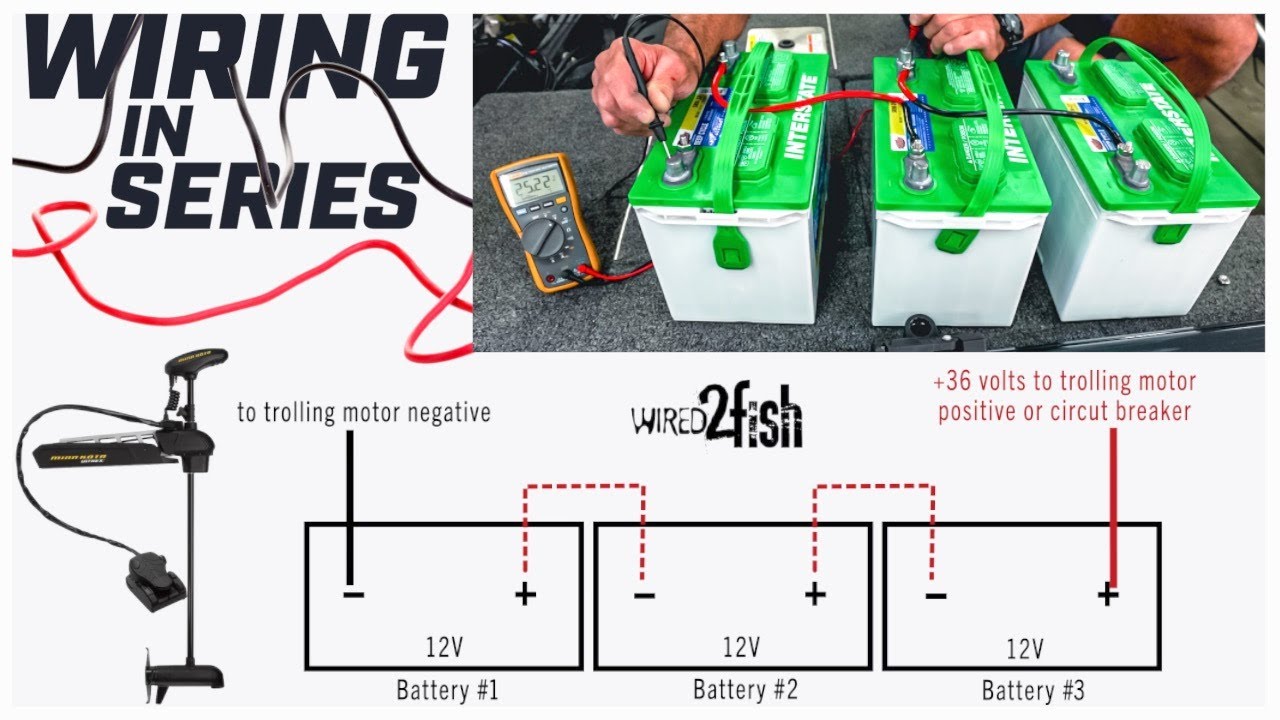
Series and parallel support matters if you plan to build a larger power bank for an RV, solar system, or off-grid application. It is less important for a single trolling motor. Make sure batteries connected together are compatible and follow the manufacturer's configuration instructions.
Frequently asked questions
How many amp hours should a trolling motor battery have?
The answer depends on motor voltage, thrust, speed, and expected runtime. A 50Ah battery can suit shorter outings or smaller motors, while 100Ah is the more flexible capacity in this roundup. Check the motor's specifications and your typical time on the water before choosing.
Is LiFePO4 better than AGM for a trolling motor?
LiFePO4 is much lighter than AGM at the same stated capacity in these products and is designed for repeated deep cycling. AGM remains useful when you want familiar charging equipment and a conventional sealed battery. The lithium option requires a compatible charger and careful attention to cold-weather charging limits.
Can a trolling motor battery also start an engine?
Not necessarily. SUPER EMPOWER, Litime, and other products in this roundup are described as energy-storage batteries rather than engine-starting batteries. Use a battery specifically rated for starting if your boat requires one, or keep the starting and trolling motor systems separate.
Can I use a regular lead-acid charger with a lithium battery?
The listed lithium models recommend a LiFePO4-specific charger or a charging system set to lithium mode. The SUPER EMPOWER batteries specifically say non-lithium chargers are not recommended. Confirm the charger profile before connecting it to a LiFePO4 battery.
Do lithium trolling motor batteries work in cold weather?
They can operate in cold conditions within the limits specified by the manufacturer. Several batteries stop charging below 32 degrees Fahrenheit, and some stop discharging below minus 4 degrees. Cold-weather protection does not mean the battery should be charged while frozen.
Does a larger battery make a trolling motor more powerful?
A larger capacity battery primarily provides more stored energy and potential runtime. It does not automatically increase the motor's thrust or change its voltage. The motor, propeller, wiring, and system voltage determine performance.
Is Bluetooth monitoring necessary?
No. Bluetooth is useful if you want to check charge status, view voltage, set alerts, or diagnose faults from a phone. A simple battery without Bluetooth may be easier to maintain when you only need a dependable power source.
The bottom line
The Best trolling motor battery for most straightforward marine setups is the Newport 12V50Ah. Its sealed AGM construction, clear 12V and 50Ah rating, and trolling motor focus make it easy to understand and install, though it is not the choice for maximum runtime.
For longer trips and lighter carrying, the Litime Bluetooth 100Ah is the stronger upgrade. It combines 100Ah LiFePO4 capacity with marine protection and phone monitoring, while the Dyness Mini TM is the better alternative when a compact Group 24 footprint and a 30 to 68-pound motor match are more important.
If you are undecided, measure the battery compartment first, then choose the largest compatible capacity your charger and motor system can support.